
 LMS
LMS- Kick off your tech path with our Data Science and AI Training Institute in Siruseri taking you from core basics to advanced AI skills.
- Our Data Science and AI Course in Siruseri takes you from essential concepts to advanced, industry-ready applications for real growth.
- Choose a learning pace that fits your routine weekday, weekend, or fast-track batches.
- Work on real-time projects and enhance your skills with expert guidance today.
- Complete the course with a recognized Data Science & AI certificate and placement support.
- Get tailored career help Resume help, interview prep, and AI career guidance.
Join Our 100% Job Guaranteed
Data Science and AI Training in Siruseri
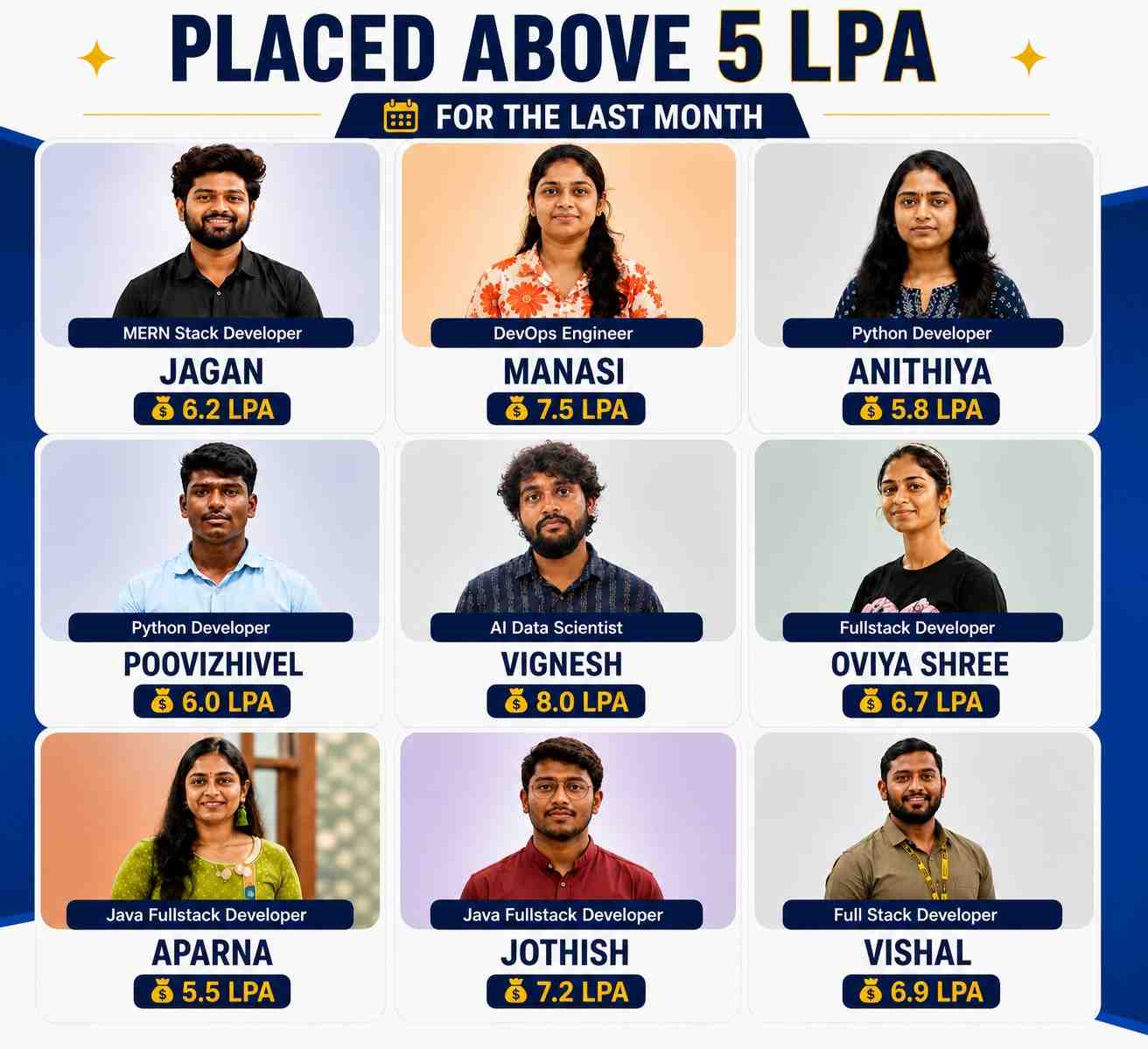
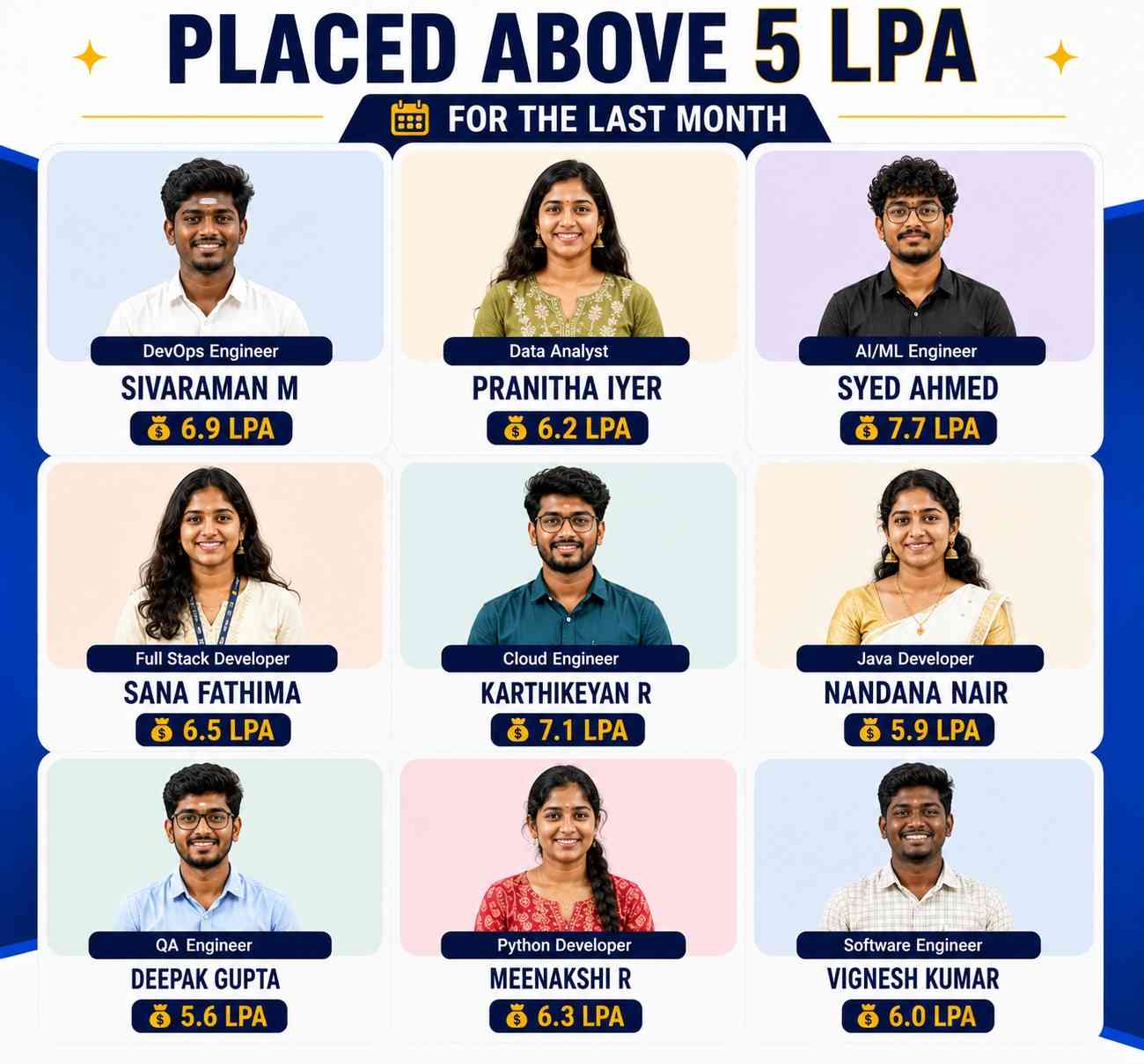
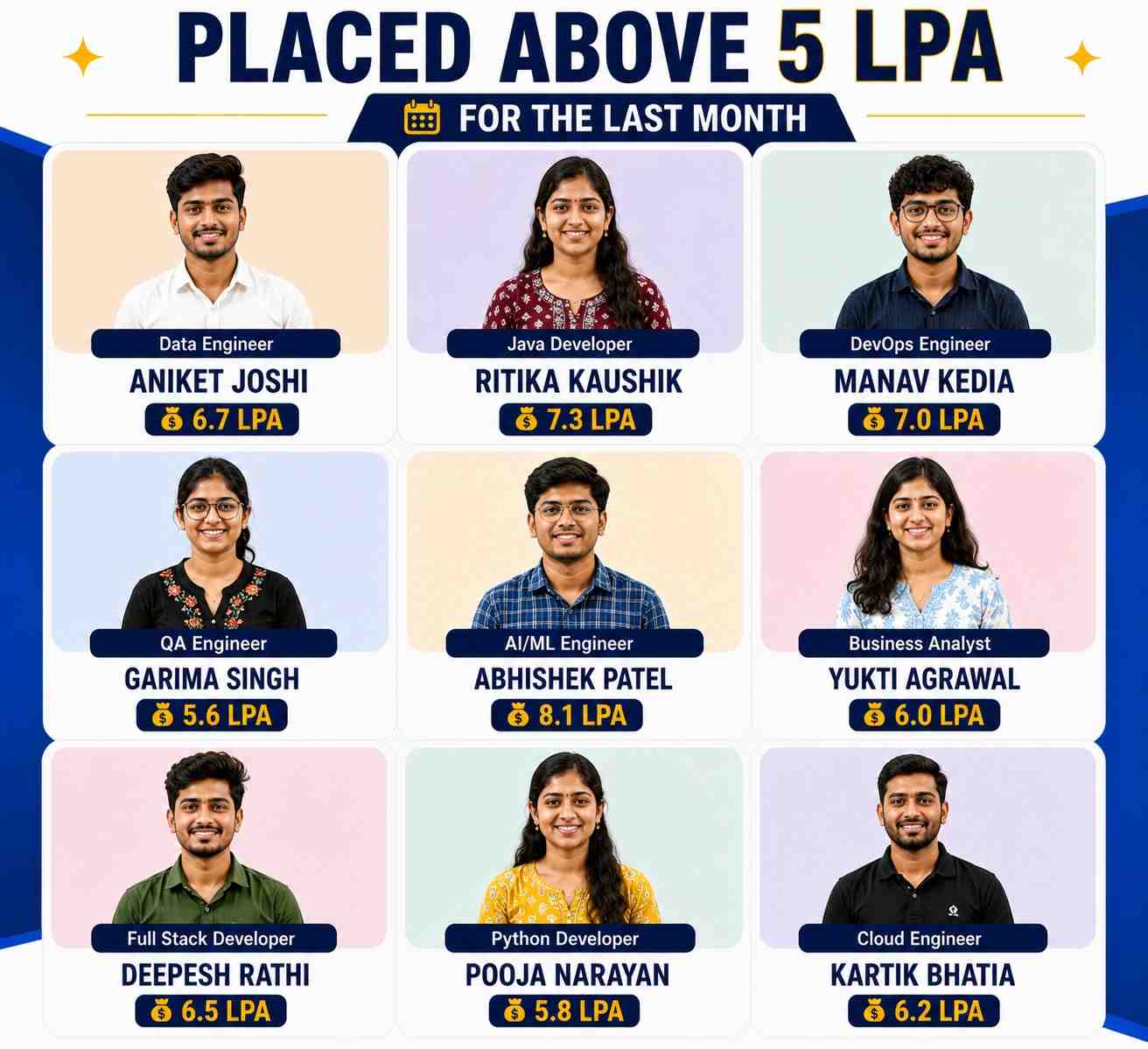
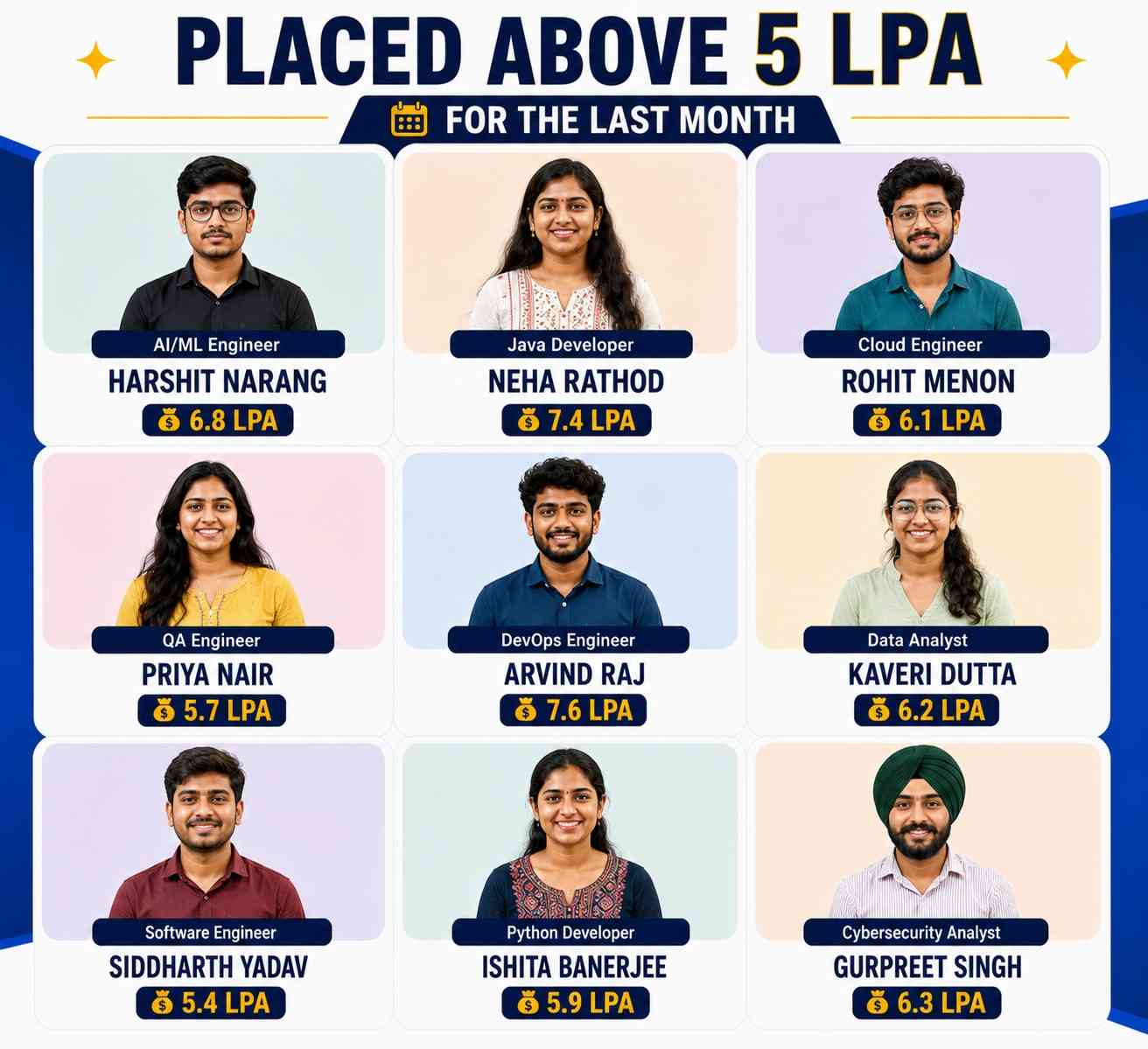
Explore Active Opportunities on
 by ACTE
Live
1000+
Jobs and Internships
Quality Training With Affordable Fees in Siruseri!
 Fees Starts From
INR
36,000
INR 16,500

11645+
(Placed)
5764+
(Placed)
7834+
(Placed)
4978+
(Placed)Our Hiring Partners

Overview of The Data Science and AI Course
The Data Science and AI Training in Siruseri helps newcomers build solid skills in AI, machine learning, and data analytics through a simple, structured path. This course is tailored for freshers, making real-world tools and concepts easy to grasp. You’ll work on live projects and take part in Data Science and AI internships in Siruseri, giving you the practical exposure companies actually look for. The program includes hands-on sessions, expert guidance, and a clear journey from the basics to advanced topics. With dedicated placement support, you’re set to step confidently into this fast-growing field. Jump in, learn consistently, and level up your future in Data Science and AI.
What You'll Learn From Data Science and AI Training
Start your Data Science and AI Training in Siruseri with a strong foundation in Python, Machine Learning, and Data Visualization from the basics.
Understand how to gather, clean, and interpret data using widely used tools and techniques followed in real industry workflows.
Get hands-on experience through projects and case studies that help you apply AI and Data Science concepts to real business challenges.
Explore important topics like predictive modeling, deep learning, and data-based decision-making with clear, guided learning.
Build strong programming and analytical abilities that prepare you for AI, Data Science, and the real-world demands of the tech industry.
Earn an industry-recognized certification that boosts your profile and supports your AI and Data Science career growth.
Additional Info
Course Highlights
- Kickstart your Data Science and AI career with our Siruseri course covering Python, Machine Learning, Deep Learning, and Data Visualization.
- Receive full career guidance with dedicated placement opportunities from companies seeking skilled Data Science and AI professionals.
- Become part of a strong learning community of 11,000+ students trained and placed through our network of 350+ hiring partners.
- Learn directly from seasoned instructors with 10+ years of hands-on experience in AI, Data Analytics, and Automation.
- Gain practical skills through beginner-friendly sessions, live projects, and personalized career mentorship designed to support your growth.
- Enjoy flexible batch options, budget-friendly fees, and 100% placement support ideal for both freshers and those shifting careers.
Benefits of Enrolling in Data Science and AI Training in Siruseri
- Smarter Decision Making – Artificial Intelligence and Data Science empower organizations to make faster and more informed decisions by analyzing data effectively. They identify patterns and trends that improve planning, increase efficiency, and reduce uncertainty. With these insights, businesses can meet customer needs and adapt quickly to market changes.
- Exciting Career Growth – Mastering Data Science and AI opens doors to diverse career paths in top industries. Freshers can start as Data Analysts, Machine Learning Engineers, or AI Developers. These skills are highly valued across sectors like banking, healthcare, and marketing. As AI continues to evolve, demand for skilled professionals grows, offering strong job security and attractive salaries.
- Real-World Problem Solving – Data Science and AI are powerful tools for tackling practical challenges, from improving business outcomes to predicting trends. They help organizations save time, reduce costs, and enhance operational efficiency through data-driven solutions. Learners gain hands-on experience applying these concepts to real projects, preparing them to solve industry-specific problems.
- Enhanced Efficiency & Automation – AI automates repetitive and time-consuming tasks, minimizing human errors and boosting productivity. This allows professionals to focus on creative thinking and strategic decision-making. Automation ensures faster, more accurate business processes, resulting in improved performance and long-term efficiency.
- High Demand & Job Security – AI and Data Science are among the most sought-after career fields in today’s digital era. Professionals skilled in data handling and analysis are crucial across all industries. High demand ensures excellent job stability and growth opportunities. Freshers proficient in these technologies can build future-ready careers with global prospects.
Popular Tools Covered in Data Science and AI Course
- Python – Python is one of the most widely used programming languages in Artificial Intelligence and Data Science. With powerful libraries like NumPy, Pandas, and Scikit-learn for data analysis and machine learning, it’s beginner-friendly yet robust for advanced projects. Python enables building AI models, visualizing data, and automating workflows efficiently.
- TensorFlow – TensorFlow, developed by Google, is a versatile open-source framework for building and training machine learning and deep learning models. It helps create smart applications that can recognize images, voices, and patterns. Widely used in AI projects like chatbots, recommendation engines, and image classification, TensorFlow is essential for anyone pursuing AI.
- R Programming – R is a specialized statistical programming language for data analysis, visualization, and predictive modeling. It’s ideal for understanding trends through charts and graphs and supports complex data manipulation. R is perfect for research-oriented projects and helps learners perform statistical operations on large datasets with ease.
- Jupyter Notebook – Jupyter Notebook provides an interactive environment to write, execute, and visualize code seamlessly. It allows combining code, text, and visuals in one platform, making it perfect for learning, experimenting, and presenting AI and Data Science projects clearly.
- Power BI – Power BI is a leading data visualization tool that converts raw data into actionable insights using interactive dashboards and reports. It supports multiple data sources and helps businesses make informed decisions through real-time analytics. For beginners, it’s an excellent tool to learn how to visually represent and communicate data effectively.
Top Frameworks Every Data Science and AI Enthusiast Should Know
- TensorFlow – Developed by Google, TensorFlow is one of the most popular frameworks for Artificial Intelligence and Data Science. It simplifies building and training machine learning and deep learning models, supporting image recognition, natural language processing, and predictive analytics. With a strong community and flexible architecture, TensorFlow suits both beginners and advanced users.
- PyTorch – PyTorch, created by Facebook, is a widely used framework for deep learning and AI research. Its intuitive interface and dynamic computation make building models straightforward. Many data scientists prefer PyTorch for experimenting with neural networks and automation, with GPU acceleration enabling faster training and testing of models.
- Scikit-learn – Scikit-learn is an easy-to-use framework for data science and machine learning tasks. It offers tools for regression, classification, clustering, and data preprocessing. Ideal for beginners looking to understand algorithms practically, it integrates seamlessly with libraries like NumPy and Pandas for efficient data handling.
- Keras – Keras is a high-level neural network framework that makes deep learning accessible and user-friendly. Running on top of TensorFlow, it allows quick building and testing of AI models with minimal code. Its simple interface makes it especially suitable for students and beginners learning AI concepts.
- Apache Spark – Apache Spark is a powerful framework for processing and analyzing large-scale datasets in Data Science. It outperforms traditional tools in speed and scalability, enabling real-time analytics, graph processing, and machine learning. Widely adopted by data scientists and engineers, Spark efficiently handles massive data volumes with ease.
Essential Skills You’ll Gain in an Offline Data Science and AI Course
- Programming Skills – Programming is a core skill in Artificial Intelligence and Data Science. Languages like Python and R enable you to write code for data analysis, automation, and AI model development. Strong programming skills allow you to handle large datasets, build intelligent systems, and work confidently on real-time projects to solve practical problems.
- Data Analysis and Visualization – Data analysis and visualization help you identify patterns and present insights clearly. Tools like Power BI, Tableau, and Matplotlib make it easy to convert raw data into meaningful charts and graphs. These skills are essential for explaining findings effectively, supporting informed decisions, and enhancing business strategies.
- Machine Learning Expertise – Machine learning forms the backbone of AI and Data Science. It teaches you to develop systems that can learn from data and make predictions. You’ll gain hands-on knowledge of regression, classification, and clustering algorithms, enabling you to build models that solve real-world challenges automatically.
- Statistical and Mathematical Skills – A solid foundation in statistics and mathematics is crucial for understanding AI and data models. Concepts from calculus, linear algebra, and probability are applied to train and evaluate models. These skills ensure accurate data interpretation, better predictions, and the ability to select the right algorithms for specific tasks.
- Problem-Solving and Critical Thinking – Problem-solving and critical thinking are essential in AI and Data Science. You’ll learn to analyze challenges, identify solutions, and implement data-driven strategies. These skills allow you to evaluate results, make informed decisions, and handle complex projects with confidence and efficiency.
Key Roles and Responsibilities in Data Science and AI Careers
- Data Scientist – Data Scientists collect, analyze, and interpret large datasets to help organizations make informed decisions. They leverage programming, statistical tools, and visualization techniques to uncover insights, build predictive models, and identify patterns that guide business strategy. They play a critical role in transforming unstructured data into actionable intelligence.
- Machine Learning Engineer – Machine Learning Engineers design, implement, and optimize algorithms that enable systems to learn autonomously. This role requires strong skills in programming, mathematics, and data structures. Engineers develop AI models that predict outcomes or automate tasks, making systems smarter and more efficient through advanced machine learning techniques.
- AI Engineer – AI Engineers build intelligent systems capable of speech recognition, image processing, and decision-making. They create AI models using frameworks like TensorFlow and PyTorch, test and refine algorithms, and ensure high accuracy and performance. Collaborating closely with data scientists, they integrate AI solutions into real-world applications.
- Data Analyst – Data Analysts examine datasets to identify patterns, trends, and correlations that support business objectives. Using tools like Excel, Power BI, or Tableau, they visualize data and create reports and dashboards to enable better decision-making. They turn raw data into actionable insights for organizational growth.
- Research Scientist (AI & Data Science) – Research Scientists focus on developing new algorithms, models, and technologies to advance the field of AI. They conduct experiments, analyze results, and publish research papers, collaborating with developers and engineers to test innovative ideas. Their work helps improve AI applications and shape the future of intelligent systems.
Why Data Science and AI Is an Ideal Choice for Freshers
- High Career Demand – Artificial Intelligence and Data Science are among the fastest-growing fields today. Companies across industries are actively seeking skilled professionals to manage data and automation tasks. With increasing reliance on AI-driven solutions, demand for fresh talent is rising, making it an excellent field for beginners to launch a secure and rewarding career.
- Attractive Salary Packages – AI and Data Science roles often offer some of the highest-paying positions for freshers. Organizations value professionals who can analyze data and develop intelligent systems. With the right skills and training, beginners can quickly advance to higher roles, combining high demand with lucrative pay for a financially rewarding career.
- Diverse Career Opportunities – This field provides multiple career paths, including Data Analyst, AI Engineer, Machine Learning Developer, and Research Scientist. Opportunities span industries such as healthcare, finance, education, and e-commerce. Freshers can choose roles that match their interests and even pivot to different specializations as they grow.
- Practical, Hands-On Learning – AI and Data Science emphasize experiential learning through real-world projects. Beginners get to tackle challenges like predicting trends, automating systems, and analyzing customer behavior. Modern tools and technologies make learning interactive and practical, building confidence and preparing students for workplace applications.
- Future-Proof Career – Data Science and AI are shaping the future of technology and innovation. As automation and data-driven systems continue to expand, these skills will remain in high demand. Freshers entering this field can expect stable, evolving career paths with long-term growth, job security, and opportunities to work with cutting-edge technologies.
Landing Remote Jobs with Data Science and AI Skills
- Global Job Opportunities – Data Science and AI skills open doors to remote positions worldwide. Companies from various countries hire professionals who can analyze data and develop AI models online. These roles eliminate the need for physical presence, allowing freshers to work on global projects and grow their careers from anywhere.
- High Demand for Remote Talent – Organizations increasingly prefer hiring remote AI and Data Science experts to efficiently manage digital tasks. As businesses expand online, the need for data analysis, automation, and AI integration rises. Skilled professionals can secure remote roles in startups, tech companies, and research firms, ensuring steady job opportunities.
- Flexible Work Environment – Careers in AI and Data Science offer the flexibility to work on projects independently from home or any location. Professionals can maintain a healthy work-life balance while contributing to meaningful projects. Tasks like coding, data analysis, and model development can be handled remotely using collaboration tools, enabling effective time management.
- Seamless Collaboration with Technology – Tools like GitHub, Jupyter Notebook, and cloud platforms make remote teamwork efficient and smooth. Data professionals can share code, analyze results, and communicate with global teams in real time. These technologies ensure productivity and connectivity without the need for physical meetings.
- Continuous Learning and Career Growth – The online ecosystem offers endless opportunities to enhance AI and Data Science skills from home. Remote professionals can participate in virtual workshops, webinars, and certification programs to stay up-to-date. Continuous learning boosts job performance and career advancement while enjoying the convenience of remote work.
What to Expect in Your First Data Science and AI Role
- Hands-On Project Experience – Your first AI and Data Science role often involves working on real-world projects that put classroom knowledge into practice. Tasks may include collecting, cleaning, and analyzing data to build models or generate reports. These projects help you understand how data drives business decisions while building confidence and technical expertise.
- Team Collaboration – Most roles require close collaboration with developers, analysts, and business teams. Working together fosters idea-sharing, faster problem-solving, and better project outcomes. Regular teamwork teaches effective communication and how to contribute successfully to group efforts.
- Learning New Tools and Technologies – Early roles expose you to essential tools like Python, TensorFlow, and Power BI. Learning to use these tools efficiently becomes part of your daily workflow. Each project introduces new methods and technologies, helping you explore and master the right skills for AI development and data analysis.
- Real-World Problem Solving – AI and Data Science professionals are expected to apply data to solve actual business challenges. Tasks can include trend prediction, process optimization, and automation. Problem-solving enhances critical thinking and decision-making, giving insight into how data influences organizational growth.
- Continuous Learning and Growth – The first role is a foundation for your career in AI and Data Science. Continuous learning is key as technology evolves rapidly. Staying updated with new tools, algorithms, and industry trends accelerates career advancement, helping you become a confident and skilled AI professional.
Top Companies Hiring Data Science and AI Professionals
- Google – Google is a leading global employer for AI and Data Science experts, utilizing AI across products like Google Search, Assistant, and Cloud services. Professionals work on large-scale projects involving machine learning, automation, and analytics, gaining excellent learning opportunities and a strong career growth path.
- IBM – IBM is a global technology leader offering diverse roles in AI and Data Science. It focuses on areas such as data analytics, automation, and cognitive computing through its Watson AI platform. Professionals at IBM develop smart business solutions using data-driven insights within a supportive environment that fosters continuous skill development.
- Amazon – Amazon hires thousands of AI and Data Science professionals to enhance its e-commerce, logistics, and cloud computing operations. From product recommendations to Alexa, AI plays a key role in Amazon’s success. Data experts handle large datasets to optimize user experience and business efficiency while enjoying global career opportunities.
- Microsoft – Microsoft invests heavily in AI and Data Science research, offering roles across products like Azure AI, Microsoft 365, and cloud analytics solutions. Data professionals contribute to creating intelligent solutions that improve productivity and business performance, with excellent growth prospects and a balanced work environment.
- Accenture – Accenture is a global consulting and technology firm employing AI and Data Science professionals for digital transformation initiatives. Employees work on advanced analytics, machine learning, and automation projects to enhance decision-making, customer experience, and operational efficiency. Accenture is known for strong training programs and career development support.
Show More
Upcoming Batches For Classroom and Online
Weekdays
19 - Oct - 2026
08:00 AM & 10:00 AM
Weekdays
21 - Oct - 2026
08:00 AM & 10:00 AM
Weekends
24 - Oct - 2026
(10:00 AM - 01:30 PM)
Weekends
25 - Oct - 2026
(09:00 AM - 02:00 PM)
Can't find a batch you were looking for?
Who Should Take an Data Science and AI Course
IT Professionals
Non-IT Career Switchers
Fresh Graduates
Working Professionals
Diploma Holders
Professionals from Other Fields
Salary Hike
Graduates with Less Than 60%
Show More
Job Roles For Data Science and AI Course
Data Scientist
Machine Learning Engineer
AI Engineer
Data Analyst
Business Intelligence (BI) Analyst
Deep Learning Specialist
NLP (Natural Language Processing) Engineer
Computer Vision Engineer
Show More
Tools Covered in Data Science and AI Course in Offline








What’s included ?

📊 Free Aptitude and Technical Skills Training
- Learn basic maths and logical thinking to solve problems easily.
- Understand simple coding and technical concepts step by step.
- Get ready for exams and interviews with regular practice.

🛠️ Hands-On Projects
- Work on real-time projects to apply what you learn.
- Build mini apps and tools daily to enhance your coding skills.
- Gain practical experience just like in real jobs.

🧠 Launch Your Career in Top MNC Companies
- Master technical and HR interview rounds.
- Gain confidence with expert mock interview practice.
- Improve your chances of getting hired faster.

🎯 Interview Preparation For Freshers
- Practice company-based interview questions.
- Take online assessment tests to crack interviews
- Practice confidently with real-world interview and project-based questions.

🧪 LMS Self Learning Platform
- Explore expert trainer videos and documents to boost your learning.
- Study anytime with on-demand videos and detailed documents.
- Top MNC interview questions & self coding practice.
Data Science and AI Course Syllabus
- 🏫 Classroom Training
- 💻 Online Training
- 🚫 No Pre Request (Any Vertical)
- 🏭 Industrial Expert
Our Data Science and AI Training in Siruseri provides a comprehensive curriculum tailored for beginners and aspiring data professionals. The course covers essential topics including Python programming, Machine Learning, Deep Learning, and Data Visualization. Students gain practical, hands-on experience through live projects and Data Science and AI internships, building real-world skills. The program also includes data preprocessing, model deployment, and analytics tools to ensure practical learning. Additionally, dedicated placement support guides learners with resume preparation, interview coaching, and opportunities with top companies.
- Foundation in AI and Data Science – Begin by learning the core concepts of data collection, cleaning and analysis.
- Core Machine Learning and Deep Learning Concepts – Advance your skills by exploring supervised and unsupervised learning, neural networks.
- Hands-On Project Experience – Gain practical experience through real-time projects such as predictive modeling, image recognition and data visualization.
- Tools and Technologies – Learn to use Python, TensorFlow, Power BI, and Jupyter Notebook for data analysis, model building, and deployment.
Python for Data Science
R Programming Basics
Data Visualization
SQL & Database Management
Machine Learning Fundamentals
Deep Learning & AI Frameworks
Data Preprocessing & Feature Engineering
Learn the core Python programming concepts for Data Science and AI:
- Introduction to Python – Syntax, Variables, Data Types
- Data Structures – Lists, Tuples, Dictionaries, Sets
- Functions & Loops – Defining Functions, Control Flow
- Libraries – NumPy, Pandas for data manipulation
Understand the fundamentals of R for statistical analysis:
- Introduction to R – Syntax, Data Types, Operators
- Data Frames and Vectors – Creating and Managing Data
- Statistical Functions – Mean, Median, Standard Deviation
- Data Handling – dplyr and tidyr packages
Learn techniques to visually interpret data insights:
- Matplotlib & Seaborn – Charts, Graphs and Plots
- Tableau Basics – Dashboards and Interactive Reports
- Plotly – Interactive Visualizations for Web
- Visual Storytelling – Representing Data Clearly
Master database concepts for handling structured data:
- Introduction to SQL – Queries, Joins and Functions
- Data Extraction – SELECT, WHERE GROUP BY
- Database Management – MySQL/PostgreSQL basics
- Integration – Connecting SQL with Python & R
Learn key machine learning algorithms and techniques:
- Supervised Learning – Regression, Classification
- Unsupervised Learning – Clustering, Dimensionality Reduction
- Model Evaluation – Accuracy, Precision Recall
- Tools – Scikit-learn and basic ML pipelines
Explore neural networks and AI development frameworks:
- Neural Network Basics – Perceptron, Activation Functions
- Frameworks – TensorFlow, Keras PyTorch
- Image & Text Processing – CNNs, RNNs NLP Basics
- Model Training & Optimization – Gradient Descent Epochs
Learn techniques to prepare data for AI and ML models:
- Handling Missing Data – Imputation Techniques
- Data Normalization & Scaling – StandardScaler, MinMaxScaler
- Feature Selection – Correlation, PCA
- Data Transformation – Encoding, Binning and Aggregation
🎁 Free Addon Programs
Aptitude, Spoken English.
🎯 Our Placement Activities
Daily Task, Soft Skills, Projects, Group Discussions, Resume Preparation, Mock Interview.
Gain Experience in Data Science and AI Projects
Project 1
Crop Disease Detection
Build a plant disease detection system using Python, TensorFlow, and CNN models to analyze leaf images. Apply image classification and deep learning techniques to identify crop diseases accurately.
Project 2
Sales Forecasting Dashboard
Create an interactive Power BI dashboard integrated with Python and ARIMA models. Analyze historical sales data to identify trends and forecast future sales for informed business decisions.
Project 3
Voice Emotion Recognition
Develop an AI model using Python, Librosa, and RNNs to detect emotions from speech. Process audio signals and classify emotions such as happiness, anger, and sadness for human-computer interaction applications.
Project 4
Spam Email Classifier
Implement a spam email detection system using Python, Scikit-learn, and NLP techniques such as TF-IDF. Train advanced classification models to accurately filter spam from legitimate emails efficiently.
Project 5
Stock Market Sentiment Analysis
Combine Python, BeautifulSoup, and NLP to scrape financial news and predict stock market trends. Use sentiment analysis and machine learning models to provide actionable investment insights.
Placement Support Overview
Today's Top Job Openings for Data Science and AI Professionals
Junior Data Analyst
Company Code: TGR345
Chennai, Tamil Nadu
₹ 4.0 LPA – ₹ 6.0 LPA
B.Sc / B.Com / B.E.
Exp 0–2 years
AI & Data Science Associate
Company Code: ABC287
Chennai, Tamil Nadu
₹ 42,000 – ₹ 58,000 per month
B.Tech / B.E. – in Computer Science
Exp 0–2 years
Machine Learning Trainee (Data Science Track)
Company Code: DTA789
Chennai, Tamil Nadu
₹ 37,000 – ₹ 54,000 per month
B.Sc / B.E. / B.Tech – in Mathematics, Statistics
Exp 0–2 yearS
Data Engineer
Company Code: TSS923
Chennai, Tamil Nadu
₹ 42,000 – ₹ 67,000 per month
B.E./B.Tech – in Computer Science, IT or Data Engineering related
Exp 0–2 years
Business Intelligence & Data Science Analyst
Company Code: IGS598
Chennai, Tamil Nadu
₹ 33,000 – ₹ 50,000 per month
B.Sc / B.Com / B.E. – in Statistics, Analytics, Computer Science
Exp 0–2 yearS
AI Model Development Associate
Company Code: SAL312
Chennai, Tamil Nadu
₹ 42,000 – ₹ 58,000 per month
B.Tech / B.E. – in Computer Science, Electronics or allied engineering
Exp 0–2 years
Data Science Research Associate
Company Code: NGA657
Chennai, Tamil Nadu
₹ 4.0 LPA – ₹ 6.5 LPA
MSc / M.Tech / B.E. / B.Tech – in Data Science, Computer Science, Statistics or equivalent
Exp 0–2 years
Analytics & AI Solutions Developer
Company Code: VTA843
Chennai, Tamil Nadu
₹ 42,000 – ₹ 67,000 per month
B.E. / B.Tech / B.Sc – in Computer Science, Data Science or Math/Stats
Exp 0–2 year
Highlights for Data Science and AI Internships in Siruseri
- 1. Gain hands-on experience by working on live Data Science and AI-based applications.
- 2. Understand real-world problem-solving through scenarios.
- 1. Participate in focused sessions on trending technologies and tools.
- 2. Learn directly from industry experts through guided practical exercises.
- 1. Enjoy benefits like health coverage, flexible hours, and wellness programs.
- 2. Companies prioritize mental well-being and work-life balance for all employees.
- 1. Learn under experienced mentors who guide your technical and career growth.
- 2. Collaborate with peers to enhance learning through code reviews and group projects.
- 1. Improve communication, teamwork, and time management skills.
- 2. Prepare for interviews and workplace dynamics with mock sessions and guidance.
- 1. Earn recognized credentials to validate your Data Science and AI skills.
- 2. Boost your resume with course or project completion certificates from reputed platforms.
Sample Resume for Data Science and AI (Fresher)
- 1. Simple and Neat Resume Format
– Use a clean layout with clear sections like summary, skills, education, and projects.
- 2. List of Technologies You Know
– Mention skills like Machine Learning, Deep Learning, NLP, Computer Vision, Data Preprocessing, Model Evaluation, AI Optimization.
- 3. Real-Time Projects and Achievements
– Add 1–2 real-time projects with a short description and the tools used.
Top Data Science and AI Interview Questions & Answers (2025 Guide)
Ans:
Data Science is a multidisciplinary field focused on extracting meaningful insights from large datasets using techniques from computer science, statistics, and domain knowledge. It involves collecting, cleaning, analyzing, and visualizing data, often leveraging machine learning and predictive analytics to support decision-making.
Ans:
- Supervised Learning: The model is trained using labeled data with known inputs and outputs. It learns patterns to make predictions on new, unseen data.
- Unsupervised Learning: The model works on unlabeled data to discover hidden patterns or structures automatically using clustering or association techniques.
Ans:
The bias-variance tradeoff represents the balance between model simplicity and complexity. High variance models overfit the training data, while high bias models underfit by oversimplifying. Achieving an optimal balance improves prediction accuracy.
Ans:
Overfitting occurs when a model learns not only the patterns but also the noise in the training data, performing well on it but failing to generalize to new data.
Ans:
Popular data visualization tools include Matplotlib and Seaborn for static Python visualizations, and Plotly for creating interactive charts and dashboards to effectively communicate data insights.
Ans:
Precision measures the proportion of correctly predicted positive results out of all predicted positives. Recall measures how well the model identifies actual positive cases. Together, they evaluate classification performance.
Ans:
A confusion matrix is a table that compares predicted and actual values, showing True Positives (TP), True Negatives (TN), False Positives (FP), and False Negatives (FN), to evaluate model performance.
Ans:
Missing data can be handled by removing rows with null values or by imputation using mean, median, mode, or advanced methods like KNN or decision tree imputation to predict missing values.
Ans:
Decision Trees are machine learning models that use a flowchart-like structure for prediction. Branches represent decisions based on data attributes, and leaf nodes show outcomes. They are used for both classification and regression tasks.
Ans:
Regularization is a technique to prevent overfitting by adding a penalty term to the loss function. It controls model complexity and improves generalization. Common types are L1 (Lasso) and L2 (Ridge) regularization.
Company-Specific Interview Questions from Top MNCs
1. Why pursue a career in Data Science and AI?
Ans: I want to convert data into actionable insights, automate intelligent solutions, and solve complex problems that enhance decision-making and efficiency.
2. How would you build a recommendation system?
Ans: Analyze user behavior, use collaborative and content-based filtering, leverage frameworks like TensorFlow Recommenders, and refine iteratively for accuracy.
3. How to evaluate a large-scale search ranking model?
Ans: Use precision, recall, NDCG, CTR, and latency; validate offline and via A/B testing to measure relevance, efficiency, and user satisfaction.
4. Advantages of AI & Data Science certification?
Ans: It validates skills, demonstrates tool proficiency (TensorFlow, PyTorch), enhances credibility, and bridges academic knowledge with practical expertise.
5. How to improve user engagement with data science?
Ans: Define metrics, analyze behavior patterns, predict churn, run A/B tests, and create dashboards for iterative product improvements.
6. Essential technical and analytical skills?
Ans: Python/R programming, ML algorithms, big data tools, visualization, statistical analysis, business acumen, and critical thinking to turn analytics into solutions.
7. Describe handling conflicting feedback on a model.
Ans: Review stakeholder concerns, adjust model assumptions and thresholds, refine features, recalibrate predictions, and communicate transparent results.
8. How do you manage missing or inconsistent data?
Ans: Identify patterns, apply imputation (mean/median/KNN), interpolation for time-series, and flag missing entries to retain reliability in modeling.
9. Explain bias-variance trade-off.
Ans: Balance complexity and generalization; high bias underfits, high variance overfits. Optimal trade-off ensures learning patterns without memorizing noise.
10. How to evaluate a new AI-driven feature?
Ans: Define success metrics, create control and treatment groups, randomize for unbiased results, run A/B tests, and analyze statistically for deployment decisions.
1. Main goal of AI in data-driven projects?
Ans: AI enables learning from data patterns, automates decisions, optimizes processes, accelerates insights, and improves accuracy across business operations.
2. How does data preprocessing help ML models?
Ans: It cleans, transforms, and normalizes data to reduce noise, prevent bias, and ensure accurate model training, improving predictive reliability.
3. Difference between supervised and unsupervised learning?
Ans: Supervised learning uses labeled data to predict outcomes; unsupervised learning finds patterns in unlabeled data, like clustering and dimensionality reduction.
4. Techniques to handle class imbalance?
Ans: Use oversampling (SMOTE), undersampling, adjust class weights, or ensemble methods to ensure balanced predictions and better model accuracy.
5. How does feature selection improve model performance?
Ans: Retaining relevant features reduces complexity, prevents overfitting, speeds up training, and enhances accuracy and interpretability of models.
6. Role of NLP in AI applications?
Ans: NLP processes text data for tasks like sentiment analysis, chatbots, summarization, and voice recognition, improving automation and user interaction.
7. How to prevent overfitting?
Ans: Apply cross-validation, regularization, dropout, early stopping, simpler models, or data augmentation to ensure generalization to unseen data.
8. Key factors in algorithm selection?
Ans: Consider problem type, data volume, dimensionality, computational resources, interpretability, scalability, and real-time requirements for optimal algorithm choice.
9. How is model performance evaluated?
Ans: Metrics like accuracy, precision, recall, F1-score, ROC-AUC, along with robustness, interpretability, and real-world impact ensure reliable model evaluation.
10. Challenges in AI deployment?
Ans: Common issues include data drift, scalability, and integration; solved via monitoring, retraining pipelines, cloud deployment, and version control.
1. Key phases in a data science project?
Ans: Problem definition, data collection, cleaning, exploratory analysis, feature engineering, model training, validation, deployment, and continuous monitoring.
2. How does AI improve business operations?
Ans: Automates repetitive tasks, predicts outcomes, discovers insights, enhances decisions, reduces errors, increases efficiency, and improves customer experience.
3. Importance of data cleaning?
Ans: Removes duplicates, outliers, and inconsistencies, ensuring accurate, reliable models and preventing incorrect learning from flawed data.
4. Deep learning vs traditional ML?
Ans: Deep learning uses multi-layer neural networks to learn features automatically, handling complex high-dimensional data better than manual feature-based ML.
5. How to evaluate classification model accuracy?
Ans: Use metrics like accuracy, precision, recall, F1-score, ROC-AUC, providing a complete view of model performance across tasks.
6. Typical obstacles in applying AI?
Ans: Data scarcity, quality issues, high compute demands, bias, interpretability challenges, and integration with existing systems.
7. How does feature engineering help?
Ans: Transforms raw data into meaningful features, capturing complex patterns, reducing noise, and improving predictive accuracy and generalization.
8. Difference between reinforcement and supervised learning?
Ans: Reinforcement learning trains an agent through trial and error and rewards, while supervised learning uses labeled data for direct input-output mapping.
9. Why is model interpretability important?
Ans: Ensures transparency, identifies bias, satisfies legal and ethical standards, and helps stakeholders understand predictions for trust and accountability.
10. Cloud computing benefits for AI?
Ans: Provides scalable compute, storage, distributed training, versioning, monitoring, and global accessibility for efficient AI deployment and experimentation.
1. Difference between structured and unstructured data?
Ans: Structured data is organized in tables and easy to query; unstructured data like text, images, or video requires NLP or CV techniques for insights.
2. How does AI aid data-driven decisions?
Ans: Analyzes historical and real-time data, identifies trends, predicts outcomes, and suggests actions to optimize business strategies.
3. Feature selection importance?
Ans: Selects relevant variables, reduces dimensionality, eliminates noise, improves accuracy, interpretability, and ensures better generalization.
4. What is data normalization?
Ans: Scales numeric values into a standard range to prevent dominance, improve convergence, and stabilize algorithms sensitive to feature scale.
5. Common ML algorithms?
Ans: Linear regression, decision trees, random forests, SVM, K-Means, neural networks, XGBoost, used for prediction, classification, clustering, and feature learning.
6. How does NLP work in AI?
Ans: NLP tokenizes, stems, and analyzes text data to extract meaning, enabling chatbots, sentiment analysis, translation, and automated textual insights.
7. Strategies for imbalanced datasets?
Ans: Resampling, SMOTE, or adjusting class weights; evaluate using F1-score or AUC-ROC to ensure reliable performance with skewed data.
8. Model deployment in real-world projects?
Ans: Package models, create APIs, deploy on cloud platforms, monitor, ensure scalability and version control for consistent production performance.
9. Key components of EDA?
Ans: Data visualization, statistical summaries, correlation analysis, outlier detection, and missing value checks, using Pandas, Matplotlib, and Seaborn.
10. Role of cloud in AI and data science?
Ans: Provides scalable compute and storage, supports distributed training, version control, monitoring, collaboration, and reduces infrastructure costs for AI.
1. Steps to build an ML model for e-commerce?
Ans: Define objectives, collect and clean data, feature engineering, select/train models, validate, and deploy to scalable production environment.
2. How can data insights improve online customer experience?
Ans: Analyze behavior, personalize recommendations, predict needs, offer relevant promotions, and reduce churn for improved engagement.
3. Handling missing/inconsistent data?
Ans: Use imputation (mean/median), predictive estimation, normalization, or remove poor-quality records to maintain reliable datasets.
4. How do recommendation systems work?
Ans: Combine content-based and collaborative filtering to predict user preferences and deliver personalized product or content suggestions.
5. NLP use in e-commerce?
Ans: Enables sentiment analysis, chatbots, review mining, keyword extraction, and automated responses to improve communication and service.
6. How to monitor model performance post-deployment?
Ans: Track accuracy, precision, recall, detect data drift, retrain models, and use dashboards for ongoing reliability and stability.
7. Example of big data aiding business decisions?
Ans: Real-time sales and traffic analytics optimize inventory, pricing, marketing, and predict trends for data-driven business choices.
8. Role of deep learning in visual data?
Ans: CNNs automate image classification, detection, and recognition, enhancing accuracy, scalability, and reducing manual effort for visual tasks.
9. How can reinforcement learning be applied in business?
Ans: RL improves recommendations, dynamic pricing, and supply chain management using feedback and reward-based learning for smarter decisions.
10. Ensuring ethical AI in business?
Ans: Use diverse datasets, fairness testing, transparency, accountability, and strong governance frameworks to comply with ethical and legal standards.
Disclaimer Note:
The details mentioned here are for supportive purposes only. There are no tie-ups or links with the corresponding PGs.
Ladies PG Accommodation
- Sanz Live Women's PG : 72007 19990
- Krishnaveni Castle : 90801 95007
- Pentos Women's PG : 93427 57797
- Women's Nest - Ladies PG : 94451 25894
- MSR Luxury PG : 89399 91922
- Sree Shakthi Ladies Hostel : 90031 98767
- Friends Ladies Hostel : 73389 19836
- CK HIVE Girls Ladies PG90948 58303
- Layaa Women’s Hostel63797 00573
Velachery
Anna Nagar
OMR
Porur
Tambaram
Mens PG Accommodation
- Stayflix PG for Men's : 96000 45088
- DJ Men's PG Velachery : 90803 19242
- Stay Inn Men's Hostel(PG) : 94454 87884
- Brights Boys Hostel : 88387 88921
- Sree Siddhi Vinayaka Mens PG : 95577 95579
- Rudhra Men’s PG : 93636 45199
- SIDDHANS Men's PG : 88259 71908
- Jaswanth Raaj Mens PG : 89255 15888
- Sri Sai Grn Men's PG : 81228 24076
- Rolexx Men's PG : 80988 84848
Velachery
Anna Nagar
OMR
Porur
Tambaram
Top Data Science and AI Job Opportunities for Freshers
- 1. AI/ML Developer Jobs at Startups and IT Companies
- 2. Campus Placements and IT Service Jobs
- 3. Internship-to-Job Programs
- 4. Apply Through Job Portals
- 5. Skills That Help You Get Hired
Getting Started With Artificial Intelligence Course in Siruseri
Easy Coding
8 Lakhs+ CTC
No Work Pressure
WFH Jobs (Remote)
Why Data Science and AI is the Ultimate Career Choice
High Demand
Companies prefer multi-skilled professionals who can handle entire project cycles.
Global Opportunities
Open doors to remote and international job markets.
High Salary
Enjoy competitive salaries and rapid career advancement.
Flexible Career Path
Explore roles such as developer, architect, freelancer, or entrepreneur.
Future-Proof Career
Stay relevant with skills that are consistently in demand in the evolving tech landscape.
Versatility Across Industries
Work in various domains like e-commerce, healthcare, finance, and more.
Career Support


Placement Assistance

Exclusive access to ACTE Job portal

Mock Interview Preparation

1 on 1 Career Mentoring Sessions

Career Oriented Sessions

Resume & LinkedIn Profile Building
Get Advanced Data Science and AI Certification
You'll receive a certificate proving your industry readiness.Just complete your projects and pass the pre-placement assessment.This certification validates your skills and prepares you for real-world roles.
📜 Industry-Recognized Certification
Earn official, shareable certifications recognized by top companies — a powerful proof of your job-ready skills.
🚀 Get Discovered by Top Employers
Let recruiters come to you with your verified profile — focus on learning while we connect you to real opportunities.
💼 Real-World Project Experience
Work on real-world projects to sharpen your skills and build a portfolio that impresses employers instantly.

What certifications can be earned through an Data Science and AI course?
Learners can seek a number of internationally recognized credentials after finishing the Artificial Intelligence and Data Science Training, such as:
- Microsoft Certified: Azure AI Engineer Associate
- Google Professional Machine Learning Engineer
- IBM AI Engineering Professional Certificate
- TensorFlow Developer Certificate
Does an Artificial Intelligence and Data Science certification guarantee job placement?
Earning an Artificial Intelligence and Data Science certification guarantees a 100% boost in your job prospects. It proves your expertise in AI algorithms, data analysis, and real-world projects. With hands-on training and full placement support, certified professionals become top picks for employers seeking skilled AI talent.
How long does it typically take to complete an Artificial Intelligence and Data Science certification?
The duration of the certification varies based on each learner’s pace and background knowledge. For beginners, it typically takes around three to six months with consistent practice and project participation. Learners with prior experience in programming or data analytics may complete it within one to three months through continuous practical engagement.
What are the main benefits of earning an Data Science and Artificial Intelligence certification?
Achieving certification in this field offers several career and professional advantages such as:
- Validation of expertise in artificial intelligence, data analytics and machine learning techniques
- Access to diverse career opportunities across technology and research-driven industries
- Improved salary potential and accelerated career growth
- Enhanced professional credibility among peers, employers and global organizations
What is the best way to prepare for an Data Science and Artificial Intelligence certification exam?
To prepare effectively for the certification exam, focus on:
- Studying all foundational AI and Data Science topics in detail
- Practicing model-building with real-world datasets regularly
- Taking mock exams to assess preparation and improve accuracy
- Joining study groups or expert sessions for deeper insights
- Working on practical projects to strengthen technical and analytical skills
Complete Your Course
A Downloadable Certificate in PDF Format, Immediately Available to You When You Complete Your Course.Get Certified
A Physical Version of Your Officially Branded and Security-Marked Certificate.Lowest Data Science and AI Course Fees
Affordable, Quality Training for Freshers to Launch IT Careers & Land Top Placements.
How is ACTE's Data Science Course in Siruseri Different?
Feature
ACTE Technologies
Other Institutes
Affordable Fees
Competitive Pricing With Flexible Payment Options.
Higher Data Science and AI Fees With Limited Payment Options.
Industry Experts
Well Experienced Trainer From a Relevant Field With Practical Data Science and AI Training
Theoretical Class With Limited Practical
Updated Syllabus
Updated and Industry-relevant Data Science and AI Course Curriculum With Hands-on Learning.
Outdated Curriculum With Limited Practical Training.
Hands-on projects
Real-world Data Science and AI Projects With Live Case Studies and Collaboration With Companies.
Basic Projects With Limited Real-world Application.
Certification
Industry-recognized Data Science and AI Certifications With Global Validity.
Basic Data Science and AI Certifications With Limited Recognition.
Placement Support
Strong Placement Support With Tie-ups With Top Companies and Mock Interviews.
Basic Placement Support
Industry Partnerships
Strong Ties With Top Tech Companies for Internships and Placements
No Partnerships, Limited Opportunities
Batch Size
Small Batch Sizes for Personalized Attention.
Large Batch Sizes With Limited Individual Focus.
LMS Features
Lifetime Access Course video Materials in LMS, Online Interview Practice, upload resumes in Placement Portal.
No LMS Features or Perks.
Training Support
Dedicated Mentors, 24/7 Doubt Resolution, and Personalized Guidance.
Limited Mentor Support and No After-hours Assistance.
FAQs on Data Science and AI Course
1. What prior knowledge is recommended before starting this course?
A basic understanding of Python, algebra, statistics, and probability is helpful. These concepts provide a foundation for learning algorithms, analyzing data, and training AI models effectively.
2. How will AI and Data Science skills enhance my career?
AI and Data Science open opportunities in industries like IT, finance, healthcare, retail, and automation. Roles include Data Scientist, AI Engineer, Business Analyst, and Machine Learning Developer. The demand for these skills is rapidly growing globally.
3. What topics are covered in the syllabus?
The course includes supervised and unsupervised learning, data preprocessing, machine learning models, natural language processing, deep learning, and tools like Python, TensorFlow, and data visualization. These modules provide a strong foundation for AI solutions.
4. Does the course include hands-on projects?
Yes, students work on real-time projects like data prediction, image recognition, and automation models. These projects enhance practical skills, problem-solving abilities, and confidence in handling real business scenarios.
5. Will I be able to create a professional portfolio?
Absolutely. The training helps you build a portfolio showcasing your projects, coding skills, and analytical abilities. This boosts visibility with recruiters and strengthens your chances in the AI and Data Science job market.
1. Who can enroll in this course?
This course is for students, professionals, and career changers aiming to enter AI and Data Science. Basic math and logical skills are sufficient. No degree is mandatory, but curiosity and willingness to learn are key.
2. Is a formal qualification required?
No formal degree is required, but basic coding and mathematical skills are advantageous. Preparatory sessions are often provided to build foundational knowledge before advanced topics.
3. Do I need prior AI experience?
No experience is needed. The course starts from fundamentals and progresses to advanced techniques like machine learning, predictive analytics, and data modeling, making it ideal for beginners and upskilling professionals.
4. Can beginners in coding join advanced programs?
Yes, beginners can join. Knowing Python or basic programming logic helps, and advanced courses often provide bridge modules to cover fundamental concepts before moving to complex AI systems.
1. What placement support is provided after course completion?
Institutes typically offer resume building, mock interviews, career guidance, and connections to companies seeking AI and Data Science talent.
2. How do projects help with job placement?
Projects showcase your ability to solve real-world problems, work with datasets, design algorithms, and build AI applications, making your resume more appealing to employers.
3. Can I get opportunities with top companies?
Yes, graduates can explore roles in IT, healthcare, banking, and manufacturing, as companies increasingly recruit AI and Data Science experts.
4. Are there special services for freshers and career changers?
Yes, institutes provide mentorship, interview prep, and counseling to help beginners or career changers enter the AI field confidently.
1. Will I receive a certification?
Yes, a globally recognized certification is awarded upon completion, validating your AI and Data Science skills for career and networking purposes.
2. Does certification help career growth?
Absolutely. Certification proves your technical expertise, enhances credibility, and qualifies you for high-paying roles in AI and data analytics.
3. What should I know before enrolling?
Basic Python, math concepts, and logical thinking are helpful. The course starts with beginner-friendly lessons to ease learners into advanced AI topics.
4. How does certification improve career prospects?
It equips learners with skills to apply AI algorithms, build predictive models, and analyze large datasets, boosting employability in tech and research roles.
5. Which technical skills will I gain?
You’ll master data preprocessing, model building, neural networks, NLP, data visualization, and ethical AI practices, aligning skills with industry standards.
1. Does the course fee include placement support?
Yes, placement guidance is included in the course fee, covering everything from skill development to job assistance.
2. Why do fees vary between institutes?
Fees vary due to trainer experience, course duration, teaching format, mentorship, and additional benefits like lifetime access or one-on-one coaching.
3. Are courses affordable for beginners?
Yes, flexible installments, EMI options, and discounts make the courses accessible to learners from various financial backgrounds.
4. Does location impact course fees?
No, pricing is generally consistent across locations, whether learning online or in-person, ensuring equal access to quality education.
Learn Data Science and AI Course (Machine Learning + Deep Learning + Python + Data Analytics + AI Projects) Starting at 16,500/- Only
