 LMS
LMS- Join the Best R Programming Training Institute to Master Data Analysis and Statistical Skills.
- Our R Programming Training Covers RStudio, ggplot2, dplyr, Data Visualization.
- Gain Hands-on Experience by Working on Real-world Projects Guided by Experts.
- Earn a Recognized R Programming Certification With Placement Assistance.
- Receive Expert Guidance in Building a Winning Resume and Excelling in Interviews.
- Learn on Your Terms With Flexible Weekday, Weekend, and Accelerated Batches.
R Programming Course
- Our R Programming Training Covers RStudio, ggplot2, dplyr, Data Visualization.
- Gain Hands-on Experience by Working on Real-world Projects Guided by Experts.
- Earn a Recognized R Programming Certification With Placement Assistance.
- Receive Expert Guidance in Building a Winning Resume and Excelling in Interviews.
Job Assistance

4.7/5

4.8/5

4.8/5

1,200+ Enrolled
In collaboration with

65+ Hrs.
Duration
Online/Offline
Format
LMS
Life Time Access
Quality Training With Affordable Fee
⭐ Fees Starts From
INR
36,000
INR 16,500
Our Hiring Partners

Build a Strong Career Foundation with R Programming
- Our R Programming Course provides comprehensive training on the core concepts and capabilities of R, enabling students to analyze, manipulate, and visualize data effectively.
- Through hands-on exercises, real-world datasets, and practical projects, students develop the skills needed to perform data analysis, create statistical models, and generate meaningful insights using R.
- Our Career Support Team offers interview preparation and career guidance, helping students build confidence and get ready for job opportunities in data analytics, statistics, and data science.
- Stay competitive in the IT and analytics field by learning R programming fundamentals, data analysis techniques, and best practices for working with data efficiently.
- The course curriculum is designed with industry input and is regularly updated to align with the latest tools, packages, and industry standards, ensuring students gain in-demand skills.
- This course covers key topics such as R basics, data manipulation, data visualization, statistical analysis, packages, functions, and introductory machine learning concepts.
- After completing the course, students are prepared for roles such as R Programmer, Data Analyst, Statistical Analyst, Junior Data Scientist, and other data-focused positions.
What You'll Learn From R Programming Training
Gain hands-on experience in R Programming Training, including data analysis, statistical modeling, and visualization using tools like RStudio, ggplot2, and dplyr.
Understand the fundamentals of R programming, including data manipulation, exploratory analysis, and handling datasets efficiently.
Work on real-world projects and case studies to apply R concepts in practical scenarios relevant to industries like finance, healthcare, and marketing.
Learn advanced R techniques such as writing functions, automating workflows, and performing predictive analytics for informed decision-making.

Your IT Career Starts Here
550+ Students Placed Every Month!
Get inspired by their progress in the Career Growth Report.
Other Categories Placements
- Non-IT to IT (Career Transition) 2371+
- Diploma Candidates3001+
- Non-Engineering Students (Arts & Science)3419+
- Engineering Students3571+
- CTC Greater than 5 LPA4542+
- Academic Percentage Less than 60%5583+
- Career Break / Gap Students2588+
Upcoming Batches For Classroom and Online
Weekdays
12 - Oct - 2026
08:00 AM & 10:00 AM
Weekdays
14 - Oct - 2026
08:00 AM & 10:00 AM
Weekends
17 - Oct - 2026
(10:00 AM - 01:30 PM)
Weekends
18 - Oct - 2026
(09:00 AM - 02:00 PM)
Can't find a batch you were looking for?
Who Should Take a R Programming Course
IT Professionals
Non-IT Career Switchers
Fresh Graduates
Working Professionals
Diploma Holders
Professionals from Other Fields
Salary Hike
Graduates with Less Than 60%
Show More
Job Roles For R Programming Course
Data Analyst
Data Scientist
Business Analyst
Statistical Analyst
Machine Learning Engineer
R Shiny Developer
Quantitative Analyst
Research Analyst
Show More
What’s included ?

📊 Free Aptitude and Technical Skills Training
- Learn basic maths and logical thinking to solve problems easily.
- Understand simple coding and technical concepts step by step.
- Get ready for exams and interviews with regular practice.

🛠️ Hands-On Projects
- Work on real-time projects to apply what you learn.
- Build mini apps and tools daily to enhance your coding skills.
- Gain practical experience just like in real jobs.

🧠 Launch Your Career in Top MNC Companies
- Master technical and HR interview rounds.
- Gain confidence with expert mock interview practice.
- Improve your chances of getting hired faster.

🎯 Interview Preparation For Freshers
- Practice company-based interview questions.
- Take online assessment tests to crack interviews
- Practice confidently with real-world interview and project-based questions.

🧪 LMS Self Learning Platform
- Explore expert trainer videos and documents to boost your learning.
- Study anytime with on-demand videos and detailed documents.
- Top MNC interview questions & self coding practice.
Curriculum
Syllabus For R Programming Training
Module 1 : Introduction to R Programming- R language overview and features
- Installation of R and RStudio
- Understanding R console, scripts, and workspace
- Basic syntax, comments, and help commands
- Using R as a statistical and analytical tool
Module 2 : R Data Types and Variables
- Learning how R stores and manages different types of data
- Variables and assignment operators
- Numeric, character, logical, and complex data types
- Type conversion and checking data types
- Working with NULL, NA, NaN, and Inf values
Module 3 : R Data Structures
- Working with structured data formats in R
- Vectors and vector operations
- Matrices and matrix functions
- Lists and nested data structures
- Data frames and basic data handling techniques
Module 4 : Control Statements and Functions
- Implementing logic and reusable code in R
- Conditional statements (if, if-else, switch)
- Looping concepts (for, while, repeat)
- Creating and using user-defined functions
- Scope rules and function arguments
Module 5 : Data Import and Export in R
- Handling data from different sources
- Reading CSV, Excel, and text files
- Importing data from databases and external sources
- Writing data to files
- Understanding file paths and data formats
Module 6 : Data Manipulation and Transformation
- Cleaning and transforming data for analysis
- Using built-in R functions for data manipulation
- Subsetting and filtering data
- Sorting and merging datasets
- Introduction to dplyr functions and techniques
Module 7 : Data Visualization Using R
- Creating meaningful visual representations of data
- Base R plotting functions
- Introduction to ggplot2
- Creating bar charts, line graphs, histograms, and scatter plots
- Customizing plots and adding labels and legends
Module 8 : Statistical Analysis Using R
- Applying statistical methods for data interpretation
- Descriptive statistics and summary measures
- Probability distributions
- Hypothesis testing concepts
- Correlation and covariance analysis
Module 9 : Working with R Packages
- Extending R functionality using packages
- Installing and loading packages
- Understanding CRAN and package documentation
- Commonly used packages for data analysis
- Managing package dependencies
Module 10 : Introduction to Advanced R Concepts
- Exploring advanced features used in real-world analysis
- Apply functions and family
- Data reshaping techniques
- Basic time series concepts
- Error handling and debugging in R
Show More
Show Less
Course Objectives
What does an R Programming Certification course cover?
An R Programming course focuses on building strong foundations in data analysis and statistical computing. It teaches learners how to work with data, perform calculations, and draw insights using R. The course emphasizes practical understanding of data handling, visualization, and statistical methods. Learners also gain experience using popular R tools and packages widely used in the analytics industry.
Which programming language is used in the R Programming Certification Training?
- The course primarily uses the R programming language
- R is designed for statistical computing and data analysis
- It is widely used in data science, research, and analytics
- The course also introduces R packages and libraries
Which topics are covered in the R Programming Certifiation Course?
- R fundamentals and syntax
- Data types, structures, and functions
- Data manipulation and transformation
- Data visualization and statistical analysis
What are the goals of the R Programming course?
The main goal of the R Programming course is to help learners understand how to analyze and interpret data effectively. It aims to build confidence in using R for real-world data scenarios. The course focuses on developing analytical thinking and problem-solving skills. By the end, learners can comfortably work with datasets and perform meaningful analysis.
Is the R Programming Certification Course useful for future career growth?
Yes, the R Programming course is highly useful for future career growth, especially in data-driven fields. R is widely used in data analytics, statistics, research, and data science roles. Learning R helps individuals stay competitive in industries that rely on data-based decision-making. The skills gained are applicable across multiple domains such as finance, healthcare, and technology.
What career opportunities are available after completing the R Programming Certification Course?
What are the requirements for enrolling in the R Programming Certification Training?
- Basic understanding of computers
- Interest in data and analysis
- No prior programming experience is mandatory
- Willingness to learn analytical concepts
Is R Programming a high-paying skill?
R Programming is considered a valuable and well-paying skill, especially in data-focused careers. Professionals with R expertise often work in analytics, research, and data science roles. Salaries vary based on experience, industry, and location. As data-driven decision-making grows, demand for R skills continues to increase.
What are the advantages of taking an R Programming course?
- Strong foundation in data analysis and statistics
- Widely used open-source tools and libraries
- Applicable across multiple industries
- Enhances analytical and problem-solving skills
Is R Programming easy to learn?
R Programming is beginner-friendly, especially for those interested in data analysis and statistics. The language is designed to work naturally with data, making learning more intuitive. With consistent practice, learners can quickly understand core concepts. The availability of libraries and community support also makes learning R easier.
Is the R Programming course well recognized in the industry?
The R Programming course is highly regarded in industries that rely on data analysis and research. R is a trusted tool used by analysts, statisticians, and data scientists worldwide. Many organizations value R skills for analytical roles. Completing an R Programming course adds strong credibility to a learner’s skill set.
Show More
Overview of R Programming Certification Training
Our R Programming Training is designed for freshers to learn data analysis, statistics, and R programming tools in an easy and practical way. The course includes hands-on projects and R Programming Internships to give real-world experience. You will also get guidance on using popular tools like RStudio, ggplot2, and dplyr. A dedicated 30-day placement preparation program is included, which focuses on resume building, mock interviews, and soft skills training to boost your confidence. Our goal is to help you secure R Programming Placement opportunities and start your career with strong practical skills. By the end of the course, you will be confident in applying R programming in real projects and interviews.
Additional Info
Key Roles and Responsibilities of R Programming Profession:
- Data Analyst: A Data Analyst uses R to clean, manipulate, and interpret large datasets. They generate insights and summaries to help organizations make informed decisions. Data visualization and reporting are key responsibilities in this role. Analysts often collaborate with teams to support business strategies.
- Data Scientist: Data Scientists apply R for statistical analysis, machine learning, and predictive modeling. They work on complex datasets to uncover trends and forecast future outcomes. Developing models and evaluating their performance is a core responsibility. Communication of insights through reports and dashboards is also important.
- Business Intelligence Analyst: Business Intelligence Analysts leverage R to convert data into actionable business insights. They create interactive dashboards and visualizations for decision-makers. Analyzing trends, performance metrics, and KPIs is part of their role. They help organizations optimize processes and strategies based on data.
- Statistician: Statisticians use R to perform hypothesis testing, regression, and other statistical analyses. They interpret data results to support research, healthcare, finance, or marketing decisions. Preparing reports and presenting findings clearly is essential. They ensure data-driven decisions are accurate and reliable.
- R Programmer / Developer: R Programmers write, debug, and optimize code for data processing and analysis. They build applications, scripts, and tools using R and related packages. Collaborating with analysts or scientists to implement data solutions is a key responsibility. Maintaining code quality and documentation is also crucial for efficient workflows.
Important Tools Covered in R Programming Certification Course
- RStudio: RStudio is the most commonly used tool for writing and running R programs. It provides a clean interface where users can write code, see results, and manage files easily. RStudio makes learning R simpler with features like code highlighting and auto-complete. It is widely used by beginners and professionals.
- ggplot2: ggplot2 is a powerful tool used to create charts and graphs in R. It helps users turn data into clear and attractive visualizations. With ggplot2, you can create bar charts, line graphs, and scatter plots easily. It is popular because it produces professional-quality visuals.
- dplyr: dplyr is a tool used for cleaning and transforming data in R. It allows users to filter, sort, and modify data quickly. The functions are easy to read and understand, even for beginners. It helps save time when working with large datasets.
- tidyr: tidyr is used to organize and clean messy data. It helps arrange data into a proper format for analysis. This tool makes it easier to work with columns and rows. Clean data makes analysis faster and more accurate.
- Shiny: Shiny is a tool used to build interactive web applications using R. It allows users to create dashboards without learning web programming. With Shiny, users can display charts and tables that update automatically. It is useful for sharing data insights with others.
- caret: caret is a tool that helps in building and testing predictive models. It provides simple functions to train and compare models. This tool reduces the complexity of machine learning tasks. It is helpful for beginners learning data modeling in R.
- readr: readr is a tool used to import data files into R quickly. It supports common file types like CSV and text files. The tool is faster and easier than basic data-reading functions. It helps users start data analysis without delay.
Essential Skills You’ll Learn in a R Programming Training
- Data Analysis Skills: You will learn how to analyze data to find useful information. R helps you understand patterns, trends, and relationships in data. This skill is important for making better decisions using data. It is widely used in many industries.
- Data Cleaning and Preparation: You will gain the ability to clean messy and incomplete data. This includes fixing errors, removing duplicates, and handling missing values. Clean data makes analysis more accurate and reliable. This is one of the most important skills in data work.
- Data Visualization Skills: You will learn how to create charts and graphs to explain data clearly. R allows you to build visual reports that are easy to understand. Good visuals help others quickly grasp insights. This skill improves communication of data findings.
- Statistical Analysis Knowledge: You will understand basic statistical concepts using R. This includes averages, probability, and hypothesis testing. Statistics help you interpret data correctly. These skills are useful in research and analytics roles.
- Programming Fundamentals: You will learn the basics of programming using R. This includes writing functions, using loops, and applying conditions. These skills help automate tasks and save time. Programming fundamentals are useful across many tools.
- Data Manipulation Skills: You will learn how to filter, sort, and transform data easily. R provides simple functions to work with large datasets. This skill helps prepare data for analysis and reporting. It improves efficiency in data handling tasks.
- Problem-Solving and Logical Thinking: You will develop logical thinking while working with data problems. R helps break complex problems into smaller steps. This improves analytical thinking and decision-making ability. These skills are valuable in many technical roles.
- Working with R Libraries and Tools: You will learn how to use R libraries to extend functionality. These libraries help perform tasks faster and more effectively. Knowing how to use tools saves time and effort. This skill helps you work like a professional R user.
Future Trends of R Programming Training:
- Growing Use in Data Science: R is becoming more popular in data science and analytics roles. Many companies rely on R for analyzing large datasets. Its strong statistical features make it a trusted choice. This trend is expected to grow as data usage increases.
- Strong Role in Artificial Intelligence: R is increasingly used in machine learning and AI tasks. New packages make it easier to build smart models. R helps analyze data before applying AI techniques. This makes R important in intelligent systems development.
- Integration with Big Data Tools: R is being used more with big data platforms like Hadoop and Spark. This helps handle large and complex datasets efficiently. R can now work with cloud-based data systems. This integration expands R’s capabilities in modern data environments.
- Rise of Interactive Dashboards: R is widely used to create interactive dashboards and reports. Tools like Shiny allow real-time data updates. Businesses prefer visual and interactive data insights. This trend increases demand for R dashboard skills.
- Growing Demand in Business Analytics: Many companies use R for business reporting and forecasting. It helps organizations make data-driven decisions. R is useful across finance, healthcare, and marketing. This demand will continue as analytics becomes essential.
- Expansion of R Libraries and Community: The R community continues to grow worldwide. New libraries are regularly developed and improved. This makes learning and using R easier over time. Strong community support keeps R relevant and updated.
Show More
Need customized curriculum?
Get Practical Experience in R Programming Projects
Project 1
Sales Dashboard
Build an interactive sales dashboard using R, Shiny, and ggplot2 to visualize sales trends, revenue, and KPIs for better business decision-making.
Project 2
Predictive Analytics Model
Use R, dplyr, and caret to analyze historical data and predict future trends, helping businesses forecast sales, customer behavior, or demand.
Project 3
Customer Segmentation
Apply R, k-means clustering, and ggplot2 to segment customers based on behavior and demographics for targeted marketing strategies.
Project 4
Stock Market Analysis Tool
Analyze stock price trends using R, tidyverse, and visualization libraries to create predictive models and visualize market insights effectively.
Project 5
HR Analytics Dashboard
Use R, Shiny, and data visualization packages to monitor employee performance, attrition, and recruitment trends for better HR decision-making.
Build Advanced Skills with Expert R Programming Career Support
- Our R Programming interview preparation workshops are designed to build confidence and improve practical understanding. Learners work through common interview questions and real-world problem scenarios.
- The R Programming Job Support program provides structured guidance and mentorship from experienced data professionals. Participants gain exposure to real analytical tasks.
- Personalized career guidance is offered to help align individual goals with opportunities in data analytics, statistics, and data science roles. This support helps learners make informed career choices and grow in data-focused positions.
- Completing the program strengthens resumes by highlighting R programming expertise, hands-on analytical experience, and skills in data analysis and visualization.
- Through focused learning, practical exposure, and professional networking, participants get opportunities to connect with analytics teams and data-driven organizations, helping them expand their professional network.
- In addition, placement assistance supports learners in exploring job opportunities with leading companies such as Accenture, IBM, TCS, Wipro, Capgemini, and other organizations.










Earn an Industry-Recognized R Programming Certification:
Our R Programming Certification Course is widely recognized by leading companies globally, making it ideal for professionals at any experience level. This certification is highly valued in data analysis, statistics, and data science domains, enhancing career prospects and strengthening your professional profile. The course provides comprehensive training with practical exercises and hands-on projects, enabling learners to gain a solid understanding of R programming, data manipulation, statistical modeling, data visualization, working with packages, and applying R to real-world analytical tasks.

Complete Your Course
a downloadable Certificate in PDF format, immediately available to you when you complete your CourseGet Certified
a physical version of your officially branded and security-marked Certificate.About Our R Programming Trainer
- Our mentors guide learners using real-world R programming examples and help with performing data analysis tasks while teaching industry best practices.
- We maintain strong connections with analytics and IT teams worldwide to support learners in exploring job opportunities.
- Our trainers are experienced data professionals who focus on practical, industry-relevant R programming skills.
- They bring hands-on experience from real projects, including data cleaning, manipulation, visualization, statistical modeling, and working with R packages.
- The program combines online lessons with live virtual classes, mentorship, and practical labs to ensure effective and engaging learning.
- From fundamental R concepts to advanced data analysis techniques and hands-on exercises, the course is designed to fully prepare learners for a successful career in data analytics and data-driven roles.
Authorized Partners
ACTE TRAINING INSTITUTE PVT LTD is the unique Authorised Oracle Partner, Authorised Microsoft Partner, Authorised Pearson Vue Exam Center, Authorised PSI Exam Center, Authorised Partner Of AWS .




Career Support
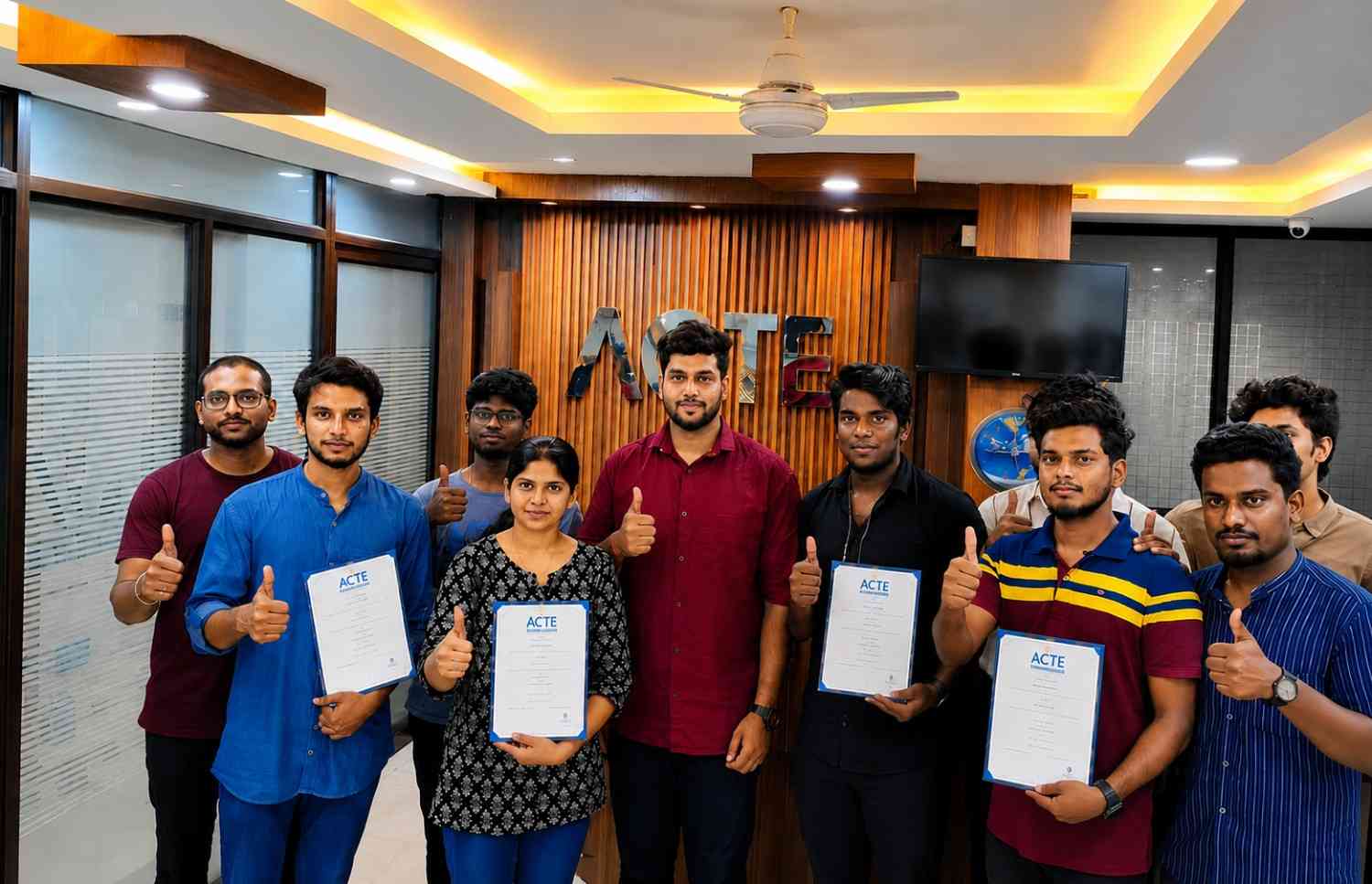

Placement Assistance

Exclusive access to ACTE Job portal

Mock Interview Preparation

1 on 1 Career Mentoring Sessions

Career Oriented Sessions

Resume & LinkedIn Profile Building
We Offer High-Quality Training at The Lowest Prices.
Affordable, Quality Training for Freshers to Launch IT Careers & Land Top Placements.
What Makes ACTE Training Different?
Feature
ACTE Technologies
Other Institutes
Affordable Fees
Competitive Pricing With Flexible Payment Options.
Higher Fees With Limited Payment Options.
Industry Experts
Well Experienced Trainer From a Relevant Field With Practical Training
Theoretical Class With Limited Practical
Updated Syllabus
Updated and Industry-relevant Course Curriculum With Hands-on Learning.
Outdated Curriculum With Limited Practical Training.
Hands-on projects
Real-world Projects With Live Case Studies and Collaboration With Companies.
Basic Projects With Limited Real-world Application.
Certification
Industry-recognized Certifications With Global Validity.
Basic Certifications With Limited Recognition.
Placement Support
Strong Placement Support With Tie-ups With Top Companies and Mock Interviews.
Basic Placement Support
Industry Partnerships
Strong Ties With Top Tech Companies for Internships and Placements
No Partnerships, Limited Opportunities
Batch Size
Small Batch Sizes for Personalized Attention.
Large Batch Sizes With Limited Individual Focus.
LMS Features
Lifetime Access Course video Materials in LMS, Online Interview Practice, upload resumes in Placement Portal.
No LMS Features or Perks.
Training Support
Dedicated Mentors, 24/7 Doubt Resolution, and Personalized Guidance.
Limited Mentor Support and No After-hours Assistance.
R Programming Course FAQs
Looking for better Discount Price?
Call now: +91-7669 100 251 and know the exciting offers available for you!
Does ACTE provide placement?
- ACTE is the Legend in offering placement to the students. Please visit our Placed Students List on our website
- We have strong relationship with over 700+ Top MNCs like SAP, Oracle, Amazon, HCL, Wipro, Dell, Accenture, Google, CTS, TCS, IBM etc.
- More than 3500+ students placed in last year in India & Globally
- ACTE conducts development sessions including mock interviews, presentation skills to prepare students to face a challenging interview situation with ease.
- 85% percent placement record
- Our Placement Cell support you till you get placed in better MNC
- Please Visit Your Student Portal | Here FREE Lifetime Online Student Portal help you to access the Job Openings, Study Materials, Videos, Recorded Section & Top MNC interview Questions
Is ACTE certification good?
-
ACTE Gives Certificate For Completing A Course
- Certification is Accredited by all major Global Companies
- ACTE is the unique Authorized Oracle Partner, Authorized Microsoft Partner, Authorized Pearson Vue Exam Center, Authorized PSI Exam Center, Authorized Partner Of AWS.
Work On Live Projects?
- The entire R Programming training has been built around Real Time Implementation
- You Get Hands-on Experience with Industry Projects, Hackathons & lab sessions which will help you to Build your Project Portfolio
- GitHub repository and Showcase to Recruiters in Interviews & Get Placed
Who are the Trainers?
All the instructors at ACTE are practitioners from the Industry with minimum 9-12 yrs of relevant IT experience. They are subject matter experts and are trained by ACTE for providing an awesome learning experience.
What if I miss one (or) more class?
No worries. ACTE assure that no one misses single lectures topics. We will reschedule the classes as per your convenience within the stipulated course duration with all such possibilities. If required you can even attend that topic with any other batches.
What are the modes of training offered for this R Programming Course?
We offer this course in “Class Room, One to One Training, Fast Track, Customized Training & Online Training” mode. Through this way you won’t mess anything in your real-life schedule.
Why Should I Learn R Programming Course At ACTE?
- R Programming Course in ACTE is designed & conducted by R Programming experts with 10+ years of experience in the R Programming domain
- Only institution in India with the right blend of theory & practical sessions
- In-depth Course coverage for 60+ Hours
- More than 50,000+ students trust ACTE
- Affordable fees keeping students and IT working professionals in mind
- Course timings designed to suit working professionals and students
- Interview tips and training
- Resume building support
- Real-time projects and case studies
Can I Access the Course Material in Online?
Yes We Provide Lifetime Access for Student’s Portal Study Materials, Videos & Top MNC Interview Question.
What certification will I receive after course completion?
Earn an ACTEglobally recognized course completion certificate, gain real-world project experience, receive job support, and enjoy lifetime access to resources.
What Will Be The Size Of A R Programming Batch At ACTE?
We at ACTE believe in giving individual attention to students so that they will be in a position to clarify all the doubts that arise in complex and difficult topics. Therefore, we restrict the size of each R Programming batch to 5 or 6 members
Will I Be Given Sufficient Practical Training In R Programming?
Our courseware is designed to give a hands-on approach to the students in R Programming. The course is made up of theoretical classes that teach the basics of each module followed by high-intensity practical sessions reflecting the current challenges and needs of the industry that will demand the students’ time and commitment.
How Do I Enroll For The R Programming Course At ACTE?
You can contact our support number at +91 76691 00251 / Directly can do by ACTE.in's E-commerce payment system Login or directly walk-in to one of the ACTE branches in India
Show More
Job Opportunities in R Programming
More Than 35% of Developers Prefer R Programming. R Programming is One of the Most Popular and in-demand HTML in the Tech World.
Salary In R Programming
- Data Analyst ₹3 LPA – ₹4 LPA
- Data Visualization Specialist ₹4 LPA – ₹5 LPA
- Statistical Analyst ₹5 LPA – ₹6 LPA
- Bioinformatician ₹6 LPA – ₹7 LPA
- Machine Learning Engineer ₹7 LPA – ₹8 LPA
- Data Scientist ₹8 LPA – ₹9 LPA
- Quantitative Analyst ₹9 LPA – ₹10 LPA
