No.1 Data Science and AI Course in Marathahalli| Data Science and AI Training With Placements | Updated 2025
Join Our 100% Job Guaranteed

Data Science and AI Course in Marathahalli
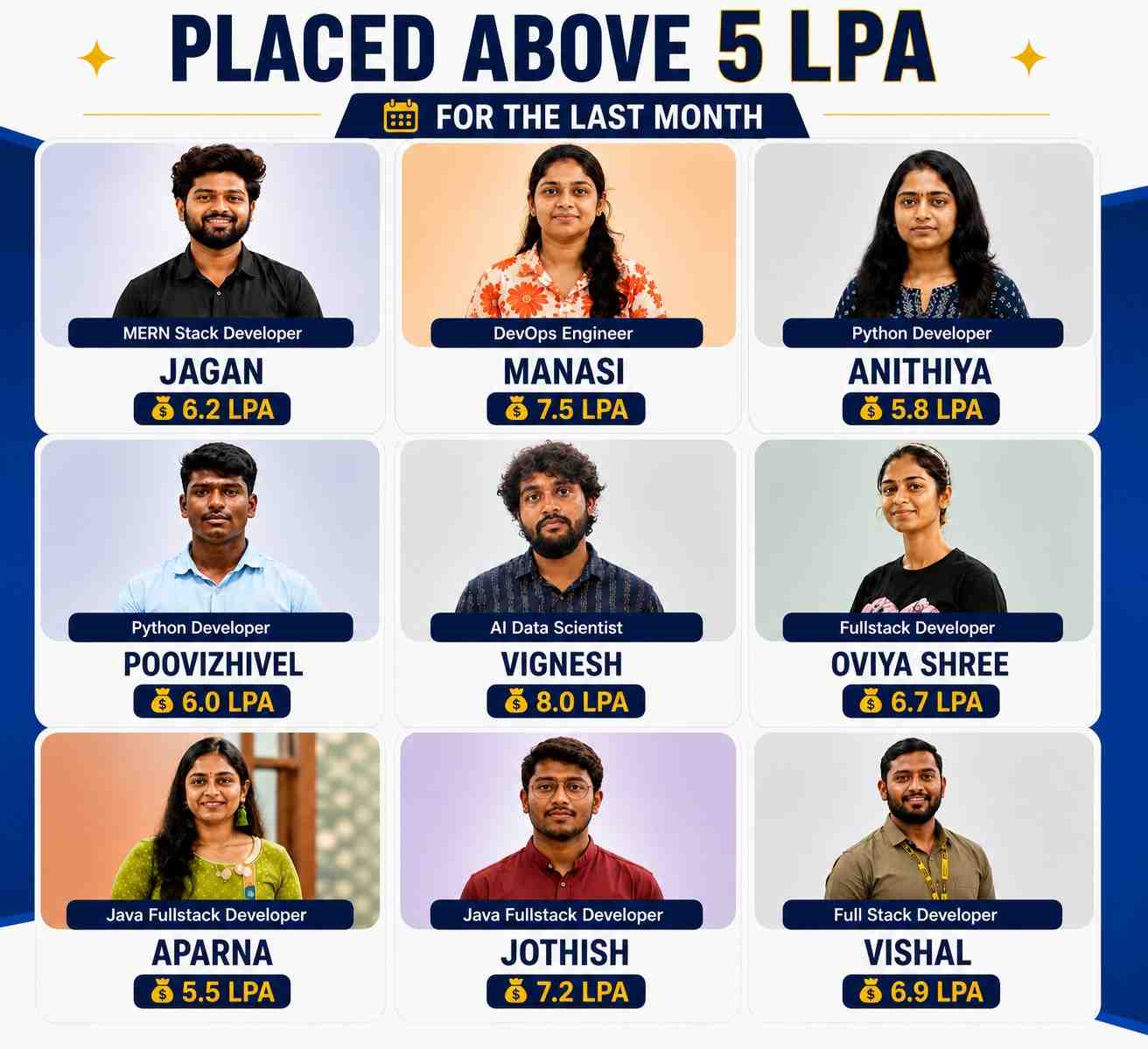
  • Enroll In The Top Data Science And AI Training Institute In Marathahalli And Develop Strong Skills In Data Analytics, Machine Learning, And Artificial Intelligence.
  • Our Data Science And AI Course In Marathahalli Covers Python & Deep Learning.
  • Choose Flexible Weekday, Weekend, Or Fast-Track Batches For Professionals And Freshers.
  • Gain Hands-On Experience With Real-Time Projects Under Expert Industry Guidance.
  • Get A Globally Recognized Data Science & AI Certification With 100% Placement Support.
  • Get Career Guidance To Build A Resume And Crack Data Science & AI Interviews.

WANT IT JOB

Become a AI Engineer in 3 Months

Freshers Salary

3 LPA

To

8 LPA

Quality Training With Affordable Fees in Marathahalli!

⭐ Fees Starts From

INR 36,000
INR 16,500

11547+

(Placed)
Freshers To IT

5587+

(Placed)
NON-IT To IT

7689+

(Placed)
Career Gap

4634+

(Placed)
Less Then 60%

Our Hiring Partners

Overview of The Data Science and AI Course

The Data Science and AI Course in Marathahalli is ideal for freshers looking to build a strong career in technology and analytics, covering essential concepts like data handling, machine learning, and artificial intelligence through a simple step-by-step approach. Gain practical exposure with Data Science and AI Internships in Marathahalli to understand real-world project workflows, while our trainers ensure easy learning through clear explanations and real-time examples. With hands-on projects and continuous support, you will develop the skills needed for Data Science and AI placements in top companies and confidently begin a rewarding career in this field.
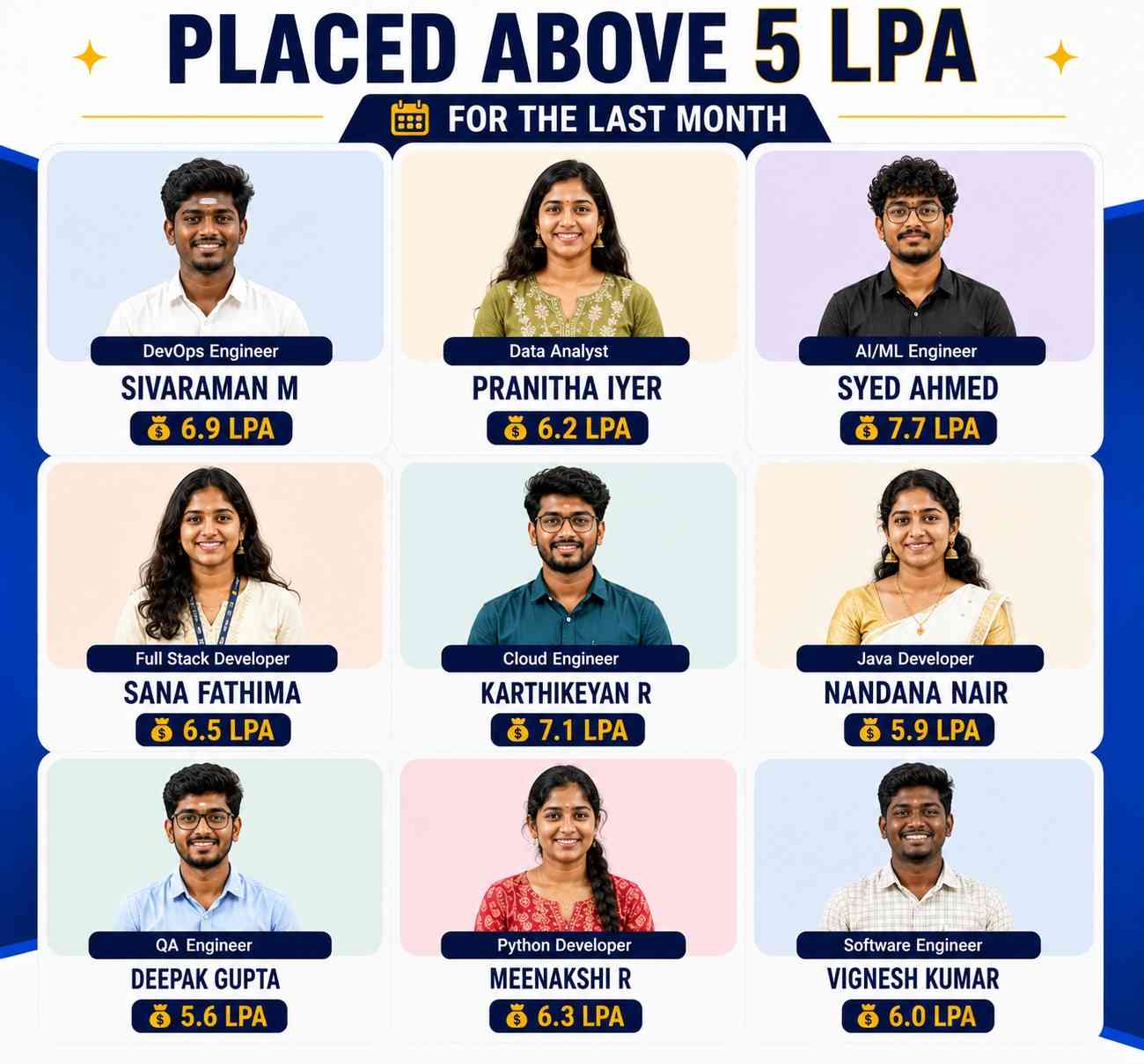
What You'll Learn From Data Science and AI Training in Marathahalli

Start your journey with the Data Science and AI Course in Marathahalli by learning essential tools like Python, Power BI, Tableau, and SQL used in real-world analytics.
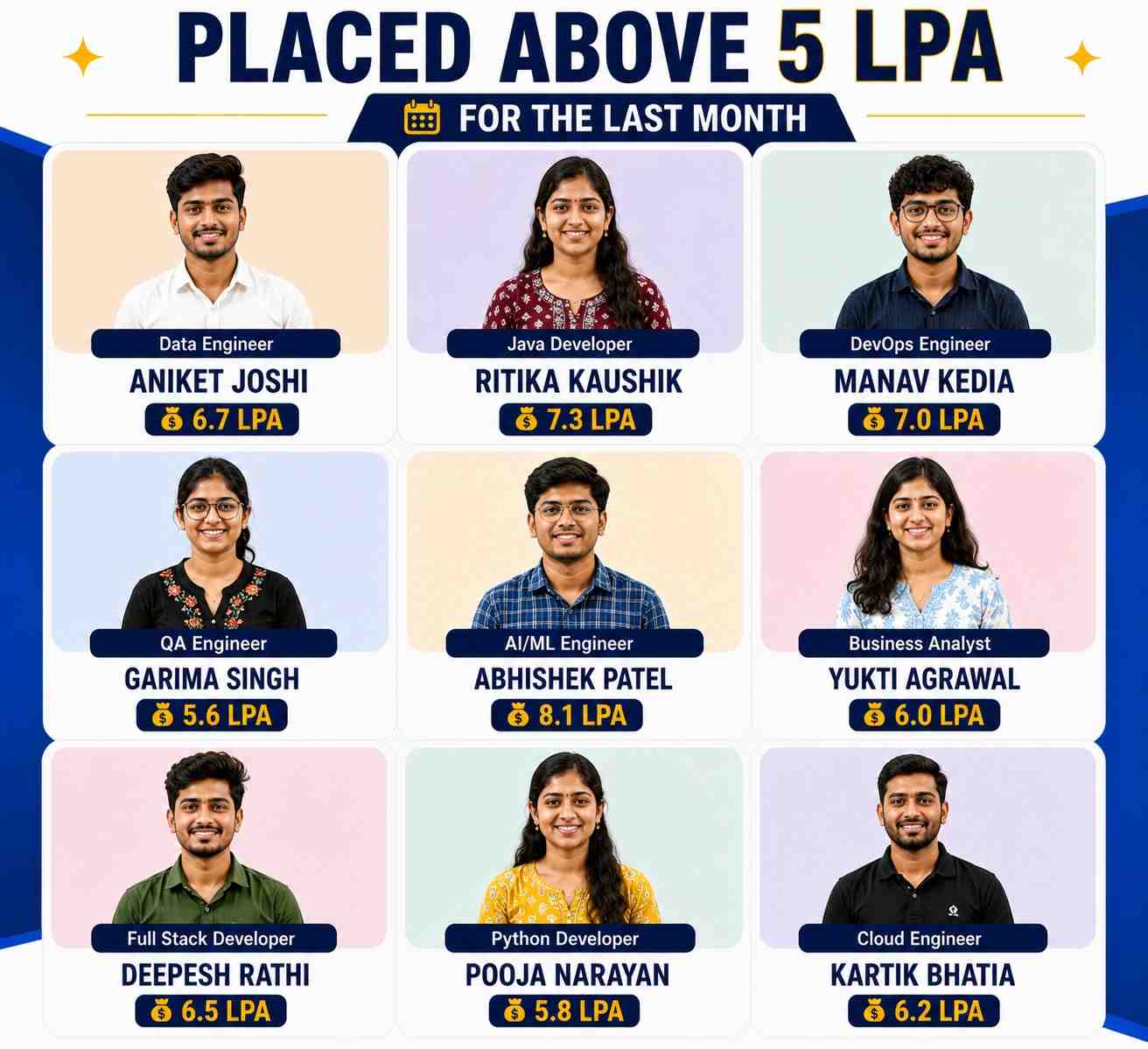
Gain a clear understanding of core concepts like data visualization, machine learning, and predictive analytics through simple and interactive lessons.

Gain practical experience and build confidence by working on live projects and hands-on case studies that solve real-world business problems.

Explore advanced concepts such as neural networks, natural language processing, and deep learning to build intelligent, data-driven solutions.

Enhance your analytical and problem-solving skills by working with large datasets and applying AI techniques effectively.

Earn an industry-recognized certification in Data Science and AI and unlock exciting career opportunities with leading tech companies.

Additional Info

Course Highlights

  • Kickstart your Data Science & AI career by mastering Python, ML, Deep Learning, Data Visualization & AI in one comprehensive course.
  • Receive dedicated career support with placement opportunities in Marathahalli from top companies seeking skilled Data Science and AI professionals.
  • Join a thriving community of over 11,000 learners trained and placed successfully through our network of 350+ hiring partners.
  • Learn from expert trainers with 10+ years of experience in Data Science, AI, and real-world analytics projects.
  • Benefit from beginner-friendly sessions, live projects, and complete career guidance designed to help you grow step by step.
  • Take advantage of affordable course fees, flexible class schedules, and 100% placement assistance, perfect for freshers and working professionals.

Benefits You Gain from an Data Science and AI Training

  • High Career Demand – Data Science and AI professionals are highly sought after across industries. Companies need experts to analyze data and drive smart decisions, offering numerous job opportunities with competitive salaries and long-term growth. With businesses relying more than ever on data-driven strategies, skilled professionals in this field can expect a wide range of roles, rapid career progression, and the chance to influence major business outcomes.
  • Real-World Problem Solving – AI and Data Science leverage technology and data to address real-world challenges. From predicting trends to enhancing business performance, these skills let you solve problems intelligently and make a meaningful impact. By applying machine learning algorithms and predictive analytics, you can tackle complex issues across sectors such as healthcare, finance, and e-commerce, contributing to smarter decisions and innovative solutions that drive measurable results.
  • Wide Career Options – Learning Data Science and AI opens doors across sectors like healthcare, finance, marketing, and technology. Roles such as Data Analyst, Machine Learning Engineer, and AI Developer provide versatility and opportunities to explore multiple industries. Professionals can pivot between domains, pursue specialized tracks like NLP, computer vision, or robotics, and continuously upskill to adapt to emerging technologies, giving a dynamic, flexible, and future-proof career path.
  • Hands-on Learning and Projects – This field emphasizes practical learning through live projects and case studies. Working with real datasets, tools, and models builds confidence, strengthens problem-solving skills, and prepares you to be job-ready. By engaging in hands-on assignments, internships, and collaborative projects, learners gain a deep understanding of data workflows, algorithm implementation, and project lifecycle management, ensuring that theoretical knowledge translates effectively into professional competence.
  • Excellent Salary Growth – Data Science and AI are among today’s highest-paying careers. With experience, your earnings grow rapidly as your skills advance, making it a highly rewarding and lucrative field. Experts who can analyze complex datasets, implement AI solutions, and deliver actionable insights are highly valued, and companies are willing to offer premium compensation, bonuses, and benefits, making it one of the most financially satisfying and future-secure professions available today.

Popular Tools Taught in Data Science and AI Course in Marathahalli
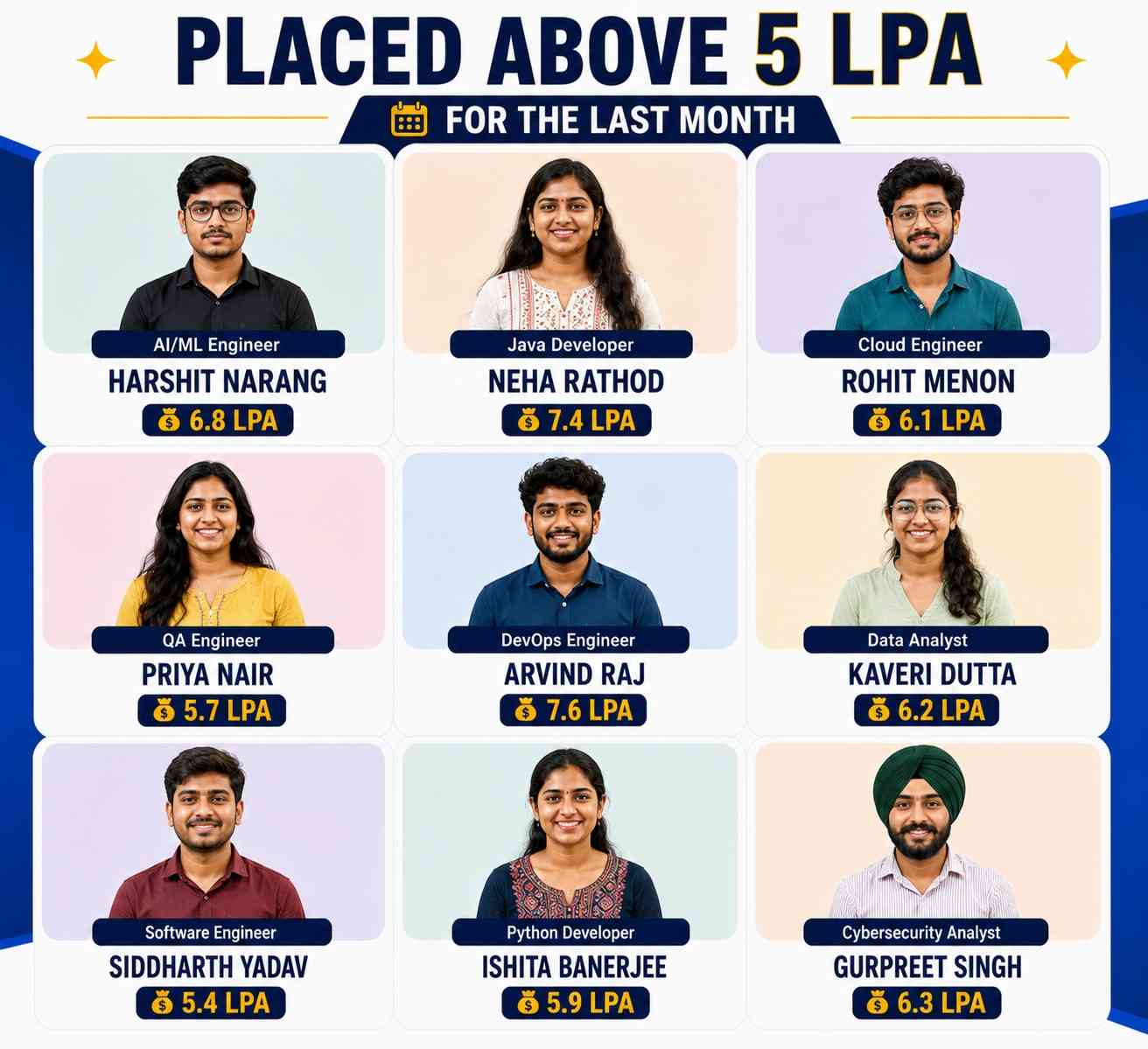
  • Python – Python is one of the most popular and versatile tools used in Data Science and AI due to its simplicity and power. It supports data analysis, machine learning, automation, and AI model development with an easy-to-learn syntax. Libraries like NumPy, Pandas, Matplotlib, and TensorFlow enable beginners to quickly start building smart, data-driven applications, while professionals use it to develop advanced analytics and scalable solutions across industries.
  • TensorFlow – Developed by Google, TensorFlow is a robust framework for creating and optimizing deep learning and machine learning models. It allows building intelligent systems capable of recognizing images, voice patterns, text, and more. Efficiently handling large datasets and integrating with Python makes it widely used by organizations to implement AI solutions, automate processes, and deploy predictive analytics models in real-world applications.
  • Power BI – Power BI is a leading data visualization tool used to create interactive dashboards and reports. With charts, graphs, and visual analytics, it simplifies complex datasets, helping users extract actionable insights quickly. Its ability to connect multiple data sources and generate professional reports makes it ideal for beginners and professionals who want to communicate data-driven stories effectively and support business decision-making.
  • Jupyter Notebook – Jupyter Notebook is an interactive environment for writing, testing, and sharing Python code. It allows combining live code, visualizations, and explanatory text in one document, making it easier to understand data and demonstrate results step by step. Widely used for learning, prototyping, and professional data projects, it helps beginners and experts alike organize experiments, visualize outcomes, and document their workflows efficiently.
  • SQL – Structured Query Language (SQL) is essential for managing and analyzing data stored in relational databases. It enables users to retrieve, update, and organize large datasets efficiently. SQL knowledge is critical for Data Science and AI professionals, forming the foundation for data manipulation, reporting, and integration with analytics tools, while also supporting real-world projects and decision-making processes in business environments.

Top Frameworks Every Data Science and AI Should Know

  • TensorFlow – TensorFlow is a widely adopted framework for deep learning and machine learning. It enables the development and training of models that can analyze data, identify patterns, and make accurate predictions. Developed by Google, it offers versatile tools suitable for beginners and experts alike and is extensively used for AI applications such as automation, speech recognition, and image analysis.
  • PyTorch – PyTorch is a flexible and user-friendly framework for building deep learning models. Known for its adaptability and fast performance, it is ideal for real-time applications and research. PyTorch supports rapid model development and experimentation, making it a preferred choice for AI tasks like neural networks and natural language processing.
  • Keras – Keras, built on top of TensorFlow, is an intuitive framework designed for simplicity. It allows beginners to quickly design and train deep learning models without writing complex code. With pre-built layers and helpful tools, Keras streamlines AI model creation and is perfect for learning and developing AI projects efficiently.
  • Scikit-learn – Scikit-learn is an excellent framework for beginners in data science. It provides tools for machine learning, predictive modeling, and data analysis. With ready-to-use algorithms, users can easily build models for classification, regression, and clustering, making it ideal for small to medium-sized machine learning projects.
  • Apache Spark – Apache Spark is a high-performance framework for processing large-scale data efficiently. It supports multiple programming languages including Python, Java, and Scala, and is widely used in industries where big data processing speed is critical, such as finance, e-commerce, and analytics-driven enterprises.

Essential Skills You’ll Learn in a Data Science and AI Training in Banglalore

  • Data Analysis – Data analysis is a core skill in Data Science and AI. It involves collecting, cleaning, and examining data to extract meaningful insights. You’ll learn to use tools like Excel, Python, and Power BI to analyze data efficiently, enabling informed business decisions based on real facts and numbers.
  • Machine Learning – Machine learning teaches systems to learn from data without explicit programming. You’ll understand how algorithms work to predict outcomes, detect patterns, and solve practical problems. This skill is crucial for developing AI models that can make intelligent decisions and adapt over time.
  • Data Visualization – Data visualization allows you to present complex information clearly using charts, graphs, and dashboards. By working with tools like Tableau, Power BI, and Matplotlib, you’ll learn to communicate insights effectively, making reports easy to understand for both technical and non-technical audiences.
  • Programming Knowledge – Programming forms the backbone of Data Science and AI. You’ll gain skills in languages such as Python, R, and SQL to manipulate data, build models, and automate workflows. Coding knowledge also strengthens logical thinking and problem-solving abilities.
  • Statistical Thinking – Statistical thinking helps you understand data behavior and draw accurate conclusions. You’ll learn concepts like probability, correlation, and sampling in a practical way, which allows you to identify patterns, make reliable predictions, and confidently work with real-world datasets.

Key Roles and Responsibilities of Data Science and AI Professions

  • Data Scientist – A Data Scientist collects, examines, and interprets large datasets to help organizations make informed decisions. Using statistical methods, machine learning, and visualization tools, they identify patterns and trends and build predictive models that solve business problems and improve overall performance and efficiency.
  • Machine Learning Engineer – A Machine Learning Engineer designs algorithms that allow systems to learn from data automatically. They create, test, and implement machine learning models for various applications, collaborating with data scientists to turn concepts into practical AI solutions, including speech recognition, recommendation systems, and predictive analytics.
  • Data Analyst – Data Analysts focus on collecting and interpreting data to create clear, actionable reports and dashboards. They use tools like Excel, SQL, and Power BI to convert raw data into insights that help organizations track performance, identify trends, and make informed decisions. Accuracy and attention to detail are critical in this role.
  • AI Engineer – AI Engineers develop intelligent systems using neural networks and deep learning to emulate human-like thinking and behavior. They build applications such as automation systems, chatbots, and image recognition tools, working with large datasets and algorithms to create smart, data-driven solutions that enhance technology’s adaptability and intelligence.
  • Data Engineer – Data Engineers design and maintain large-scale data processing and storage systems. Their work includes building efficient data pipelines and ensuring that data is clean, organized, and accessible for analysis. Using tools like Hadoop, Spark, and SQL, they provide the essential infrastructure that supports data science and AI operations.

Why Data Science and AI Is the Smart Choice for Freshers

  • Growing Industry Demand – Data Science and AI are among the fastest-growing sectors in technology. Almost every industry requires skilled professionals to analyze data and develop intelligent solutions. The widespread adoption of AI has created thousands of job opportunities, providing freshers with long-term career stability.
  • High Salary Opportunities – Careers in Data Science and AI rank among the highest-paying today. Even entry-level roles offer competitive compensation, and salaries grow rapidly as experience and expertise increase. This field encourages continuous learning and skill development, making it financially rewarding and intellectually engaging.
  • Wide Range of Career Roles – Data Science and AI offer a variety of job roles such as Data Analyst, Machine Learning Engineer, and AI Developer. Freshers can choose roles aligned with their interests and strengths. The versatility to work across multiple industries provides ample opportunities for growth and skill expansion.
  • Practical and Hands-on Learning – This field emphasizes learning by doing through projects, data analysis, and AI model building. Working with real datasets helps freshers gain practical knowledge, strengthens problem-solving and analytical skills, and accelerates readiness for professional roles.
  • Future-Proof Career – As technology continues to evolve, Data Science and AI skills will remain in high demand. These skills are applied in automation, healthcare, finance, and many other sectors. Entering this field equips freshers with a career path that will stay relevant and rewarding for decades, making it a smart long-term choice.

Landing Remote Jobs with Data Science and AI Skills

  • Global Job Opportunities – Data Science and AI skills are in demand worldwide. Many international companies hire professionals remotely, allowing freshers to collaborate with global teams without relocating. This opens up career opportunities beyond local markets.
  • Strong Technical Skills – Proficiency in tools like Python, SQL, and TensorFlow makes professionals highly valuable for remote roles. These technical skills can be applied effectively in virtual environments, and employers rely on skilled candidates who can deliver results independently.
  • Project-Based Work – Most roles in Data Science and AI are project-oriented, which suits remote work perfectly. Professionals can manage reporting, model building, and data analysis from anywhere, while online resources and clear project objectives enable smooth collaboration and an efficient work-life balance.
  • High Demand for Freelancers – The growth of freelance platforms has increased demand for AI and data expertise. Many companies hire remote talent for short-term or specialized projects, allowing professionals to select assignments based on interest and skill level, build strong portfolios, and earn consistent income.
  • Cloud-Based Collaboration Tools – Modern organizations use cloud platforms like Google Colab, JupyterHub, and AWS for collaborative work. These tools allow real-time sharing of code, data, and models, enabling remote professionals to contribute efficiently to global projects without communication barriers.

What to Expect in Your First Data Science and AI Job

  • Learning Real-World Data – One of the first tasks in a Data Science and AI role is handling real-world data. Datasets are often messy and require cleaning and organization. Mastering this process is essential for solving business problems effectively, as every successful data project begins with properly managed data.
  • Team Collaboration – Data Science and AI roles frequently involve working with teams of developers, analysts, and business stakeholders. Collaboration ensures clear understanding of project goals and enhances results. Strong communication and teamwork are vital to completing tasks efficiently and contributing to overall business success.
  • Hands-On Project Work – Beginners often start by assisting with data analysis, model building, and testing. Working on real projects allows you to apply theoretical knowledge to practical problems, such as building dashboards, predicting trends, or automating reports. This hands-on experience strengthens both technical skills and professional confidence.
  • Continuous Learning – Data Science and AI constantly evolve with new tools and techniques. Staying updated with emerging technologies is critical to remain competitive. Continuous learning ensures professionals can adapt to industry changes and maintain a strong edge in their careers.
  • Problem-Solving Challenges – Every Data Science and AI project comes with its own complexities. Identifying patterns, training models, and interpreting results require logical thinking and analytical skills. Tackling these challenges helps develop creative problem-solving abilities, shaping professionals into highly capable data experts over time.

Top Companies are Hiring for Data Science and AI Professionals

  • Google – Google is a leading global employer for Data Science and AI professionals. The company leverages AI for search optimization, speech recognition, and data-driven advertising. Data scientists at Google work with advanced technologies such as machine learning and automation, making it an ideal environment for those who want to innovate with data and AI.
  • Amazon – Amazon extensively uses Data Science and AI for product recommendations, logistics, and enhancing customer experience. By analyzing big data, the company predicts customer behavior and optimizes operations. Professionals here work on projects in machine learning, forecasting, and automation, gaining valuable experience and growth opportunities.
  • Microsoft – Microsoft employs Data Science and AI experts to develop intelligent solutions for cloud computing and business analytics. Products like Azure AI and Power BI rely on data-driven technologies. Professionals have the chance to work on real-world applications across various domains, making Microsoft a strong platform for career development and innovation.
  • IBM – IBM has been a pioneer in data analytics and AI development. Its AI platform, Watson, is widely used in healthcare, finance, and business automation. Data Science professionals at IBM focus on creating intelligent systems that solve complex challenges, in an environment that fosters innovation and continuous learning.
  • Accenture – Accenture provides AI and Data Science solutions to clients across industries worldwide. The company helps businesses leverage data for improved performance and decision-making. Professionals work on projects involving AI strategy, analytics, and automation, gaining exposure to diverse technologies and real-world applications.
Show More

Upcoming Batches For Classroom and Online

Weekdays
09 - Mar - 2026
08:00 AM & 10:00 AM
Weekdays
11 - Mar - 2026
08:00 AM & 10:00 AM
Weekends
14 - Mar - 2026
(10:00 AM - 01:30 PM)
Weekends
15 - Mar - 2026
(09:00 AM - 02:00 PM)
Can't find a batch you were looking for?
INR ₹16500
INR ₹36000

OFF Expires in

Who Should Take an Data Science and AI Course

IT Professionals

Non-IT Career Switchers

Fresh Graduates

Working Professionals

Diploma Holders

Professionals from Other Fields

Salary Hike

Graduates with Less Than 60%

Show More

Job Roles For Data Science and AI Course

Data Scientist

Machine Learning Engineer

AI Engineer

Data Analyst

BI Analyst

Deep Learning Specialist

NLP Engineer

Computer Vision Engineer

Show More

Tools Covered in Data Science and AI Course in Offline

VS Code Virtualenv Pycharm Pytest Pylint Anaconda Jupyter PIP

What’s included ?

Convenient learning format

📊 Free Aptitude and Technical Skills Training

  • Learn basic maths and logical thinking to solve problems easily.
  • Understand simple coding and technical concepts step by step.
  • Get ready for exams and interviews with regular practice.
Dedicated career services

🛠️ Hands-On Projects

  • Work on real-time projects to apply what you learn.
  • Build mini apps and tools daily to enhance your coding skills.
  • Gain practical experience just like in real jobs.
Learn from the best

🧠 AI Powered Self Interview Practice Portal

  • Practice interview questions with instant AI feedback.
  • Improve your answers by speaking and reviewing them.
  • Build confidence with real-time mock interview sessions.
Learn from the best

🎯 Interview Preparation For Freshers

  • Practice company-based interview questions.
  • Take online assessment tests to crack interviews
  • Practice confidently with real-world interview and project-based questions.
Learn from the best

🧪 LMS Online Learning Platform

  • Explore expert trainer videos and documents to boost your learning.
  • Study anytime with on-demand videos and detailed documents.
  • Quickly find topics with organized learning materials.

Data Science and AI Course Syllabus

  • 🏫 Classroom Training
  • 💻 Online Training
  • 🚫 No Pre Request (Any Vertical)
  • 🏭 Industrial Expert

The Data Science and AI Course in Marathahalli offers a comprehensive syllabus that balances theory with practical skills. Students will learn essential modules such as Python programming, machine learning, data visualization, SQL, and deep learning. The course also covers important topics like data preprocessing, model evaluation, and analytics frameworks. Emphasis is placed on hands-on learning through real-time projects and Data Science and AI internships, enabling learners to apply concepts effectively while receiving dedicated placement support to prepare for career opportunities.

  • Basics Data Science and AI – Learn the basics of Python, data handling and core AI concepts to build a strong foundation.
  • Advanced Machine Learning – Explore deep learning, neural networks and NLP to create smart predictive models.
  • Hands-On Projects – Work on real-time projects like data visualization, image recognition and analytics.
  • Tools and Deployment – Use tools like Jupyter, TensorFlow and Power BI to deploy AI models on cloud platforms.
Python for Data Science
R Programming Basics
Data Visualization
SQL & Database Management
Machine Learning Fundamentals
Deep Learning & AI Frameworks
Data Preprocessing & Feature Engineering

Learn the core Python programming concepts for Data Science and AI:

  • Introduction to Python – Syntax, Variables, Data Types
  • Data Structures – Lists, Tuples, Dictionaries, Sets
  • Functions & Loops – Defining Functions, Control Flow
  • Libraries – NumPy, Pandas for data manipulation

Understand the fundamentals of R for statistical analysis:

  • Introduction to R – Syntax, Data Types, Operators
  • Data Frames and Vectors – Creating and Managing Data
  • Statistical Functions – Mean, Median, Standard Deviation
  • Data Handling – dplyr and tidyr packages

Learn techniques to visually interpret data insights:

  • Matplotlib & Seaborn – Charts, Graphs and Plots
  • Tableau Basics – Dashboards and Interactive Reports
  • Plotly – Interactive Visualizations for Web
  • Visual Storytelling – Representing Data Clearly

Master database concepts for handling structured data:

  • Introduction to SQL – Queries, Joins and Functions
  • Data Extraction – SELECT, WHERE GROUP BY
  • Database Management – MySQL/PostgreSQL basics
  • Integration – Connecting SQL with Python & R

Learn key machine learning algorithms and techniques:

  • Supervised Learning – Regression, Classification
  • Unsupervised Learning – Clustering, Dimensionality Reduction
  • Model Evaluation – Accuracy, Precision Recall
  • Tools – Scikit-learn and basic ML pipelines

Explore neural networks and AI development frameworks:

  • Neural Network Basics – Perceptron, Activation Functions
  • Frameworks – TensorFlow, Keras PyTorch
  • Image & Text Processing – CNNs, RNNs NLP Basics
  • Model Training & Optimization – Gradient Descent Epochs

Learn techniques to prepare data for AI and ML models:

  • Handling Missing Data – Imputation Techniques
  • Data Normalization & Scaling – StandardScaler, MinMaxScaler
  • Feature Selection – Correlation, PCA
  • Data Transformation – Encoding, Binning and Aggregation

🎁 Free Addon Programs

Aptitude, Spoken English.

🎯 Our Placement Activities

Daily Task, Soft Skills, Projects, Group Discussions, Resume Preparation, Mock Interview.

Gain Practical Experience in Data Science and AI Projects

Placement Support Overview

Today's Top Job Openings for Data Science and AI Professionals

Data Scientist

Company Code: TAL156

Bangalore, Karnataka

₹35,000 – ₹50,000 per month

B.E./B.Tech in Computer Science, Statistics, Mathematics or related field

Exp 0–2 years

  • We’re actively seeking freshers for the role of Data Scientist who are eager to work with real-world data, build predictive models and help drive business decision-making. You’ll get guidance from senior data professionals and opportunities to work on meaningful analytical tasks.
  • Easy Apply

    Machine Learning Engineer (Junior)

    Company Code: AIL723

    Bangalore, Karnataka

    ₹45,000 – ₹60,000 per month

    B.Tech/M.Tech in Computer Science

    Exp 0–2 years

  • We’re looking for a Junior Machine Learning Engineer to help design, implement and test machine learning models under mentorship. This role offers hands-on exposure to ML pipelines algorithms and real-time deployments.
  • Easy Apply

    Data Engineer (Entry Level)

    Company Code: BDS534

    Bangalore, Karnataka

    ₹3.0 – ₹4.5 LPA

    B.E./B.Tech in Computer Science, Information Technology or Data Engineering

    Exp 0–2 yearS

  • Now accepting applications for Data Engineer – Entry Level, where you’ll build data pipelines, work with ETL tools and ensure data is usable for analytics and AI work across teams.
  • Easy Apply

    Data Analyst (Junior)

    Company Code: IAC687

    Bangalore, Karnataka

    ₹30,000 – ₹45,000 per month

    BSc/BA in Statistics, Mathematics, Economics or equivalent

    Exp 0–2 years

  • We have an opening for Junior Data Analyst fresh graduate to gather, clean and analyze data, produce dashboards and reports and support decision-making across departments. Analytical mindset and strong Excel/SQL basics help.
  • Easy Apply

    AI Engineer (Junior)

    Company Code: SAL978

    Bangalore, Karnataka

    ₹50,000 – ₹65,000 per month

    B.Tech/M.Tech in AI, Computer Science or related engineering

    Exp 0–2 yearS

  • We’re hiring an AI Engineer Trainee to work with deep learning, NLP and computer vision tasks under guidance. You’ll train models, integrate AI components and gain experience in advanced AI technologies.
  • Easy Apply

    Business Intelligence (BI) Developer – Junior

    Company Code: DVS489

    Bangalore, Karnataka

    ₹ 42,000 – ₹ 58,000 per month

    BSc/B.Tech in Computer Science, IT or Business Analytics

    Exp 0–2 years

  • We’re looking for a Junior BI Developer to design and build dashboards, convert raw data into insights and partner with business users. Basic visualization and database skills preferred; training provided.
  • Easy Apply

    NLP Engineer – Junior

    Company Code: TXT423

    Bangalore, Karnataka

    ₹40,000 – ₹55,000 per month

    B.Tech/MTech in Computer Science, AI, Linguistics or related field

    Exp 0–2 years

  • Opportunities are available for a Junior NLP Engineer to assist in building algorithms for text classification, chatbot systems and sentiment analysis. Exposure to Python, NLTK/spaCy and data annotation is a plus.
  • Easy Apply

    Data Visualization Specialist – Junior

    Company Code: VDA968

    Bangalore, Karnataka

    ₹30,000 – ₹45,000 per month

    BSc/BA in Statistics, Computer Science, Design or Data Analytics

    Exp 0–2 year

  • We’re looking for a Junior Data Visualization Specialist to create interactive dashboards, translate analytics into visuals and collaborate with data teams. Familiarity with Power BI/Tableau and storytelling skills are advantageous.
  • Easy Apply

    Highlights for Data Science and AI Internships in Marathahalli

    Real Time Projects

    • 1. Gain hands-on experience by working on live Data Science and AI-based applications.
    • 2. Understand real-world problem-solving through scenarios.
    Book Session

    Skill Development Workshops

    • 1. Participate in focused sessions on trending technologies and tools.
    • 2. Learn directly from industry experts through guided practical exercises.
    Book Session

    Employee Welfare

    • 1. Enjoy benefits like health coverage, flexible hours, and wellness programs.
    • 2. Companies prioritize mental well-being and work-life balance for all employees.
    Book Session

    Mentorship & Peer Learning

    • 1. Learn under experienced mentors who guide your technical and career growth.
    • 2. Collaborate with peers to enhance learning through code reviews and group projects.
    Book Session

    Soft Skills & Career Readiness

    • 1. Improve communication, teamwork, and time management skills.
    • 2. Prepare for interviews and workplace dynamics with mock sessions and guidance.
    Book Session

    Certification

    • 1. Earn recognized credentials to validate your Data Science and AI skills.
    • 2. Boost your resume with course or project completion certificates from reputed platforms.
    Book Session

    Sample Resume for Data Science and AI (Fresher)

    • 1. Simple and Neat Resume Format

      – Use a clean layout with clear sections like summary, skills, education, and projects.

    • 2. List of Technologies You Know

      – Mention skills like Machine Learning, Deep Learning, NLP, Computer Vision, Data Preprocessing, Model Evaluation, AI Optimization.

    • 3. Real-Time Projects and Achievements

      – Add 1–2 real-time projects with a short description and the tools used.

    Top Data Science and AI Interview Questions and Answers (2026 Guide)

    Ans:

    Data Science combines computer science, statistics, and domain expertise to collect, clean, analyze, and visualize large datasets. It uses techniques like machine learning, predictive analytics, and big data tools to extract insights and enable smarter decision-making.

    Ans:

      Supervised Learning:
    • Uses labeled data to train models. The system learns to predict outputs for new input data based on known results.
    • Unsupervised Learning:
    • Works with unlabeled data. The model identifies hidden patterns, clusters, or relationships without predefined outputs.

    Ans:

    • The bias-variance tradeoff balances model simplicity and complexity.
    • Bias occurs when a model is too simple and misses patterns (underfitting).
    • Variance occurs when a model is too complex and captures noise (overfitting).
    • An effective model keeps both bias and variance low to make accurate predictions.

    Ans:

    Overfitting happens when a model learns the training data too well, including noise and errors. It performs excellently on training data but fails to generalize to new or unseen data.

    Ans:

    • Matplotlib & Seaborn: Python libraries for creating static, animated, and interactive charts.
    • Plotly: A tool for building interactive and visually engaging graphs easily.

    Ans:

    Reinforcement learning trains an agent by interaction with its environment, giving rewards for correct actions and penalties for mistakes. Over time, the agent learns strategies that maximize rewards, useful in robotics, gaming, and adaptive systems.

    Ans:

    Supervised learning uses labeled data to predict outputs or classifications. Unsupervised learning works with unlabeled data, detecting patterns or clusters independently. Supervised learning is used for prediction/classification, while unsupervised learning aids clustering and relationship discovery.

    Ans:

    • Challenges include vanishing gradients, which prevent earlier layers from learning, and overfitting, where the model performs poorly on new data.
    • Techniques like proper weight initialization, batch normalization, and dropout help stabilize training and improve model accuracy.

    Ans:

    Bias refers to consistent errors caused by overly simplistic assumptions or inadequate data representation. Reducing bias through better data, adjusted model complexity, or data augmentation improves prediction accuracy and fairness.

    Ans:

    Transfer learning allows a pre-trained model to apply its knowledge to a new but related task, reducing the need for large labeled datasets. Fine-tuning a pre-trained model saves time and improves performance, making it an efficient approach to tackle new problems.

    Company-Specific Data Science & AI Interview Questions

    1. What motivates your interest in Data Science and AI?

    Ans:

    The drive comes from transforming complex datasets into actionable insights that solve real-world problems. AI and Data Science combine logic with creativity, revealing patterns that guide smarter decisions. Watching predictive models improve performance, accuracy, and innovation across sectors is highly rewarding.

    2. How would you design a recommendation engine for personalized suggestions?

    Ans:

    Start by analyzing user behavior like search history, clicks, and ratings. Use content-based and collaborative filtering to identify patterns between users and items. Tools such as TensorFlow Recommenders or Spark MLlib can handle scale, while iterative feedback ensures improved personalization and accuracy.

    3. How can the performance of a large-scale search ranking system be evaluated?

    Ans:

    Define objectives like relevance and user satisfaction, then measure performance using metrics like precision, recall, NDCG, and click-through rate. Conduct offline validation and A/B testing to ensure reliability before rolling out to all users.

    4. What are the benefits of earning a certification in AI and Data Science?

    Ans:

    Certification validates both theoretical knowledge and practical skills, while showing proficiency with tools like TensorFlow, PyTorch, and Power BI. It signals commitment to continuous learning and helps professionals stand out in competitive job markets.

    5. How can user engagement be enhanced for a digital product using data science?

    Ans:

    Identify engagement metrics like retention, session length, or activity frequency. Analyze user behavior to pinpoint areas for improvement. Predictive models and A/B testing validate new strategies, while dashboards monitor performance and guide refinements.

    6. What technical and analytical skills are essential for Data Science and AI?

    Ans:

    Proficiency in Python or R is critical for data processing and modeling. Understanding algorithms, statistics, and visualization is key for insights. Familiarity with Spark, Tableau, or Power BI boosts efficiency, and strong problem-solving skills ensure practical results.

    7. Describe handling conflicting feedback on a model or analysis.

    Ans:

    Conflicting feedback was resolved by reviewing concerns, revisiting assumptions, and refining evaluation criteria. After adjusting parameters and retesting, the model achieved balanced performance, demonstrating the importance of communication and teamwork.

    8. How do you manage missing or inconsistent data during model development?

    Ans:

    First, assess the extent and pattern of missing values. Apply imputation techniques like mean, median, or KNN. For time-series data, interpolation works best, while indicators signal the model about unreliable sources.

    9. Explain the bias-variance trade-off in machine learning.

    Ans:

    The trade-off balances simplicity and complexity. High bias underfits, missing patterns, while high variance overfits, memorizing noise. Proper tuning ensures strong performance on both training and unseen data.

    10. How would you structure an experiment to measure the impact of a new AI feature?

    Ans:

    Define measurable goals like engagement or conversions. Use control and test groups with randomization, validate outcomes via A/B testing, and apply insights to optimize and refine the feature.

    1. What is the main objective of AI in data-driven projects?

    Ans:

    AI enables systems to learn, predict, and make decisions automatically, improving productivity and accuracy by converting raw data into actionable intelligence and automating processes across sectors.

    2. How does data preprocessing support reliable ML models?

    Ans:

    Preprocessing ensures high-quality, consistent input by cleaning, formatting, and transforming raw data. Techniques like normalization, encoding, and scaling improve training speed, performance, and prediction accuracy.

    3. How do supervised and unsupervised learning differ?

    Ans:

    Supervised learning uses labeled data to map inputs to outputs (for classification/regression), whereas unsupervised learning discovers patterns in unlabeled data, identifying clusters or hidden relationships.

    4. How to handle class imbalance in datasets?

    Ans:

    Use oversampling, undersampling, or adjust class weights. Ensemble techniques like balanced random forests improve model precision and recall for imbalanced datasets.

    5. How does feature selection enhance AI model performance?

    Ans:

    Selecting relevant features reduces complexity, prevents overfitting, and accelerates training. Methods like correlation analysis, recursive feature elimination, and regularization improve accuracy and interpretability.

    6. Why is NLP important in AI applications?

    Ans:

    NLP enables machines to interpret human language for chatbots, sentiment analysis, voice recognition, and translation, turning raw text into actionable insights through tokenization, vectorization, and deep learning.

    7. How to reduce overfitting during model training?

    Ans:

    Use early stopping, dropout, regularization (L1/L2), cross-validation, simplify architectures, or increase dataset diversity to improve generalization and performance on unseen data.

    8. What factors influence algorithm selection?

    Ans:

    Consider problem type, data size, interpretability, and computational resources. Simple models fit structured data, while deep learning handles high-dimensional tasks. Evaluate multiple algorithms with metrics to ensure optimal choice.

    9. How is model accuracy measured in AI projects?

    Ans:

    Use metrics aligned with objectives: classification models use accuracy, precision, recall, F1-score; regression models use MAE, RMSE, R². Also assess stability, interpretability, and business value.

    10. How to overcome challenges in AI model deployment?

    Ans:

    Address data drift, performance drops, and integration issues with continuous monitoring, retraining, and scalable deployment on cloud/container platforms. Use version control and governance for reliability.

    1. What are the key stages in a data science project?

    Ans:

    Projects progress through problem identification, data collection, cleaning, feature selection, exploratory analysis, model development, validation, deployment, and continuous monitoring for performance.

    2. How does AI enhance business operations?

    Ans:

    AI automates repetitive tasks, extracts insights from large datasets, predicts trends, and personalizes customer experiences, improving efficiency, reducing costs, and supporting informed decision-making.

    3. Why is data cleaning essential in AI workflows?

    Ans:

    Data cleaning ensures accuracy by fixing errors, handling missing values, removing duplicates, and standardizing data, allowing models to identify correct patterns and avoid misleading predictions.

    4. How do deep learning models differ from traditional ML models?

    Ans:

    Deep learning uses multi-layer neural networks to automatically extract complex features from raw data, unlike traditional ML which relies on manual feature engineering, excelling in image, speech, and text tasks.

    5. How do you evaluate classification model accuracy?

    Ans:

    Use metrics such as accuracy, precision, recall, F1-score, and ROC-AUC to assess model performance, ensuring a complete view of predictive reliability.

    6. What challenges exist in real-world AI implementation?

    Ans:

    Challenges include scarce or uneven data, computational limits, system integration, bias mitigation, and ethical considerations. Robust data handling, transparent models, and scalable infrastructure are required.

    7. How does feature engineering improve model accuracy?

    Ans:

    Transform raw data into meaningful features by creating new variables, combining or applying transformations, allowing algorithms to capture relationships and reduce noise for more reliable predictions.

    8. How is reinforcement learning different from supervised learning?

    Ans:

    Reinforcement learning learns optimal strategies via interaction and feedback, while supervised learning relies on labeled data. RL suits adaptive environments like robotics, gaming, or autonomous systems.

    9. Why is model interpretability important in AI?

    Ans:

    Interpretability ensures AI decisions are understandable and trusted, allowing detection of bias, validation of assumptions, and compliance with regulations using techniques like SHAP, LIME, and feature importance visualization.

    10. How does cloud computing aid AI deployment?

    Ans:

    Cloud platforms provide scalable compute, distributed training, storage, version control, and monitoring, making AI model deployment faster, collaborative, and cost-efficient.

    1. How does structured differ from unstructured data?

    Ans:

    Structured data is organized (like SQL tables), easy to query and analyze. Unstructured data, such as text, images, and videos, lacks a fixed format, often requiring NLP or computer vision to extract insights.

    2. How does AI aid data-driven decisions?

    Ans:

    AI analyzes large datasets to detect patterns, forecast trends, and generate actionable insights, enabling faster, more reliable business strategies and improved customer engagement.

    3. What is feature selection and why is it important?

    Ans:

    Feature selection identifies the most impactful variables, reduces complexity, improves accuracy, and enhances generalization, leading to robust model predictions.

    4. What is data normalization and its importance?

    Ans:

    Normalization scales features to a standard range, ensuring equal contribution, faster convergence, and improved accuracy for algorithms sensitive to feature magnitude.

    5. Common ML algorithms used?

    Ans:

    Random Forest, Decision Trees, Linear Regression, K-Means, SVM, Neural Networks, and XGBoost are widely used depending on task type and dataset complexity.

    6. How does NLP work in AI systems?

    Ans:

    NLP allows machines to process language using tokenization, stemming, embeddings, and transformer models like BERT or GPT, powering chatbots, translation, and sentiment analysis.

    7. How to manage imbalanced datasets?

    Ans:

    Resample via oversampling/undersampling, generate synthetic data using SMOTE, and evaluate performance using metrics like F1-score and AUC ROC rather than simple accuracy.

    8. How is model deployment handled in real-world AI?

    Ans:

    Deploy trained models to live environments via packaging, APIs, monitoring, and cloud/container platforms like AWS, Azure, Docker, or Kubernetes for scalability and integration.

    9. Key components of Exploratory Data Analysis (EDA)?

    Ans:

    EDA includes visualization, statistical summaries, correlation analysis, missing value detection, outlier identification, and distribution analysis using tools like Pandas, Matplotlib, and Seaborn.

    10. Why is cloud computing significant in AI & Data Science?

    Ans:

    Cloud provides high compute, scalable storage, collaboration, and automated services, facilitating fast model training, efficient processing, and seamless deployment.

    1. Key stages in building a large-scale ML model for e-commerce?

    Ans:

    Define business goals, collect and clean data, perform feature engineering, train models like Random Forest or XGBoost, tune hyperparameters, evaluate with precision/recall/AUC, and deploy at scale.

    2. How can data-driven strategies boost customer satisfaction?

    Ans:

    Analyze interactions, purchases, and browsing to predict needs, personalize recommendations, design promotions, reduce cart abandonment, and create smoother shopping experiences.

    3. Methods for handling missing/inconsistent data?

    Ans:

    Impute values via mean/median/mode, remove excessive missing records, standardize/normalize data, and use automation tools for consistency.

    4. How do recommendation systems work on online platforms?

    Ans:

    They predict user preferences via content-based, collaborative, or hybrid filtering, analyzing interaction data to deliver personalized recommendations that enhance engagement and conversion.

    5. Benefits of NLP in e-commerce?

    Ans:

    NLP enables chatbots, sentiment analysis, review evaluation, and context-aware customer support to improve service and efficiency.

    6. How to monitor models after deployment?

    Ans:

    Track metrics like accuracy, precision, recall; detect drift or performance drops; retrain with updated data; and use automated dashboards for real-time insights.

    7. Role of big data analytics in decision-making?

    Ans:

    Analyze real-time and historical data to identify trends, optimize pricing, marketing, inventory, and forecast demand, enabling informed and strategic business decisions.

    8. How does deep learning help analyze visual data?

    Ans:

    CNNs process images for recognition, classification, and object detection, improving visual operations like product tagging and counterfeit detection in e-commerce.

    9. How is reinforcement learning applied in business systems?

    Ans:

    RL learns from feedback, optimizing decisions in dynamic pricing, personalized recommendations, and supply chain automation to improve efficiency and customer satisfaction.

    10. How to ensure ethical AI implementation?

    Ans:

    Promote transparency, fairness, and accountability. Use unbiased datasets, conduct audits, maintain governance, comply with data regulations, and implement explainable AI to build trust.

    Disclaimer Note:

    The details mentioned here are for supportive purposes only. There are no tie-ups or links with the corresponding PGs.

    Ladies PG Accommodation

      Electronic City
    • 7 Hills PG for Ladies : 79752 78904
    • Sanjeeva PG for Ladies : 94937 94737
    • BTM Layout
    • GRACE Ladies Paying Guest : 99029 46624
    • The princess Luxury pg for ladies : 85534 06098
    • Marathahalli
    • Amaravate ladies pg : 81234 23355
    • Royal Luxury PG for Ladies : 97402 91555
    • Rajaji Nagar
    • Shree Kalika P.G For Ladies : 74061 02629
    • N M Ladies PG : 91084 46056
    • Jaya Nagar
    • Shreeniketana Luxurious Ladies P.G : 96202 49962
    • Aashirwad ladies pg : 77600 55115

    Mens PG Accommodation

      Electronic City
    • SRI SAI BALAJI PG : 77608 88889
    • VSL PG FOR GENTS : 93536 53275
    • BTM Layout
    • Atithi executive Pg for Gents : 97393 07626
    • Fine Stay PG for Gents : 74111 13997
    • Marathahalli
    • Sri Vasavi Kanyaka Pg : 90667 40874
    • GVS PG FOR GENTS : 88805 82244
    • Rajaji Nagar
    • Sri Guru P.G For Men : 70197 67606
    • Sri Siddaganga mens Pg : 99456 41316
    • Jaya Nagar
    • Sri Manjunatheshwara Men's Luxury PG : 93804 14376
    • Sri Lakshmi pg for men's : 91582 44933

    Top Data Science and AI Job Opportunities for Freshers

    • 1. AI/ML Developer Jobs at Startups and IT Companies
    • 2. Campus Placements and IT Service Jobs
    • 3. Internship-to-Job Programs
    • 4. Apply Through Job Portals
    • 5. Skills That Help You Get Hired

    Getting Started With Artificial Intelligence Course in Marathahalli

    Easy Coding
    8 Lakhs+ CTC
    No Work Pressure
    WFH Jobs (Remote)

    Why Data Science and AI is the Ultimate Career Choice

    High Demand

    Companies prefer multi-skilled professionals who can handle entire project cycles.

    Global Opportunities

    Open doors to remote and international job markets.

    High Salary

    Enjoy competitive salaries and rapid career advancement.

    Flexible Career Path

    Explore roles such as developer, architect, freelancer, or entrepreneur.

    Future-Proof Career

    Stay relevant with skills that are consistently in demand in the evolving tech landscape.

    Versatility Across Industries

    Work in various domains like e-commerce, healthcare, finance, and more.

    Career Support

    Placement Assistance

    Exclusive access to ACTE Job portal

    Mock Interview Preparation

    1 on 1 Career Mentoring Sessions

    Career Oriented Sessions

    Resume & LinkedIn Profile Building

    Get Advanced Data Science and AI Certification

    You'll receive a certificate proving your industry readiness.Just complete your projects and pass the pre-placement assessment.This certification validates your skills and prepares you for real-world roles.

    Upon completing the Artificial Intelligence and Data Science course, learners can pursue several globally recognized certifications, including:

    • Microsoft Certified: Azure AI Engineer Associate
    • Google Professional Machine Learning Engineer
    • IBM AI Engineering Professional Certificate
    • TensorFlow Developer Certificate

    Completing the Artificial Intelligence and Data Science certification opens doors to excellent career opportunities with dedicated placement support. The program equips learners with high-demand skills in AI, data analytics, and machine learning, preparing them for real-world projects and industry roles. Through guided training, resume building, and interview preparation, candidates receive comprehensive placement assistance to help secure rewarding positions in leading organizations.

    The completion period for the certification depends on each learner’s previous knowledge and learning speed. Typically beginners complete the program within three to six months through consistent study and practice. However, those who already have experience in programming, analytics or related fields can finish the certification in about one to three months with continuous hands-on learning.

    Earning certification in domain provides several professional and career-related benefits such as

    • Recognition of expertise in artificial intelligence, machine learning and data analytics
    • Opportunities to explore diverse career paths across technology, research and innovation fields
    • Better earning potential and faster career progression
    • Increased professional credibility among industry peers and global employers

    To prepare effectively for the certification exam, focus on:

    • To perform well in the certification exam, candidates should
    • Review all key AI and Data Science fundamentals thoroughly
    • Work on real-world datasets to enhance model-building experience
    • Take practice tests to measure readiness and accuracy
    • Join peer study groups or expert-led sessions for additional support
    • Build practical projects to strengthen problem-solving and analytical skills

    Complete Your Course

    A Downloadable Certificate in PDF Format, Immediately Available to You When You Complete Your Course.

    Get Certified

    A Physical Version of Your Officially Branded and Security-Marked Certificate.

    Get Certified

    Lowest Data Science and AI Course Fees

    Affordable, Quality Training for Freshers to Launch IT Careers & Land Top Placements.

    Call Course Advisor

    How is ACTE's Data Science Course in Marathahalli Different?

    Feature

    ACTE Technologies

    Other Institutes

    Affordable Fees

    Competitive Pricing With Flexible Payment Options.

    Higher Data Science and AI Fees With Limited Payment Options.

    Industry Experts

    Well Experienced Trainer From a Relevant Field With Practical Data Science and AI Training

    Theoretical Class With Limited Practical

    Updated Syllabus

    Updated and Industry-relevant Data Science and AI Course Curriculum With Hands-on Learning.

    Outdated Curriculum With Limited Practical Training.

    Hands-on projects

    Real-world Data Science and AI Projects With Live Case Studies and Collaboration With Companies.

    Basic Projects With Limited Real-world Application.

    Certification

    Industry-recognized Data Science and AI Certifications With Global Validity.

    Basic Data Science and AI Certifications With Limited Recognition.

    Placement Support

    Strong Placement Support With Tie-ups With Top Companies and Mock Interviews.

    Basic Placement Support

    Industry Partnerships

    Strong Ties With Top Tech Companies for Internships and Placements

    No Partnerships, Limited Opportunities

    Batch Size

    Small Batch Sizes for Personalized Attention.

    Large Batch Sizes With Limited Individual Focus.

    LMS Features

    Lifetime Access Course video Materials in LMS, Online Interview Practice, upload resumes in Placement Portal.

    No LMS Features or Perks.

    Training Support

    Dedicated Mentors, 24/7 Doubt Resolution, and Personalized Guidance.

    Limited Mentor Support and No After-hours Assistance.

    Data Science and AI Course FAQs

    1. What foundational skills are recommended before enrolling in a Data Science and AI course?

    Having a basic understanding of Python programming, mathematics, and statistics makes learning easier. Familiarity with algebra, probability, and data concepts helps you understand how AI models work and how data is processed, analyzed, and used to make predictions.
    Gaining skills in Data Science and Artificial Intelligence opens up opportunities in IT, healthcare, finance, and e-commerce. Roles include Data Scientist, AI Engineer, Machine Learning Developer, and Business Analyst. AI professionals are in high demand across industries.
    The course covers key topics such as data preprocessing, machine learning, supervised and unsupervised learning, deep learning, and natural language processing. Students also learn to use tools like Python, TensorFlow, and data visualization software to analyze and build intelligent systems.
    Yes, the training includes real-time projects and case studies on real business scenarios. Students work on image classification, prediction models, and automation systems, gaining hands-on experience to solve real-world challenges.
    Yes, the course helps build a professional portfolio showcasing your projects, coding ability, and analytical skills. A strong portfolio enhances visibility with employers and highlights practical knowledge.
    This course is open to students, professionals, and individuals wanting to start a career in AI and Data Science. Anyone with basic math knowledge and logical thinking can apply. A college degree is not required—interest in technology and willingness to learn are enough.
    No, a formal qualification isn’t mandatory. However, knowing basic programming or mathematical reasoning can be helpful. Many institutes provide beginner sessions to cover the basics before advancing to complex topics.
    No prior experience is required. The course begins with beginner-friendly lessons and gradually introduces advanced concepts like machine learning, predictive analytics, and AI modeling. It’s perfect for beginners and working professionals alike.
    Yes, even those new to coding can join. Having some idea of Python or programming logic helps but isn’t required. Most advanced programs include preparatory tutorials to cover fundamentals.

    1. What kind of job support is offered after completing the Data Science and AI training?

    Learners receive full placement support, including resume preparation, interview coaching, and one-on-one job counseling. Institutes also connect students with companies seeking skilled AI and Data Science professionals.
    Projects demonstrate your ability to apply learning to real business problems. They highlight skills in handling datasets, building models, and designing AI applications. A strong project portfolio boosts employability.
    Yes, completing the training can open doors to leading companies in banking, healthcare, manufacturing, and IT. Organizations hire AI and Data Science experts for automation tools, predictive systems, and analytics platforms.
    Yes, special placement support is provided for beginners and career changers. This includes mentorship, career guidance, and interview preparation to help learners confidently enter the AI job market.
    Yes, upon completion you’ll receive a globally recognized certificate in Data Science and AI. This certification validates your skills, enhances your resume, and helps you stand out to employers.
    Yes, certification acts as proof of your technical knowledge and commitment. It helps qualify for better positions and higher salaries in the AI and Data Science industry.
    It’s good to have basic skills in Python, logic building, and math concepts like algebra and statistics. Even beginners can follow step-by-step lessons that guide through each topic.
    Certification equips learners with practical AI skills for real-world business applications, predictive modeling, and data management making them more employable and career-ready.
    You’ll learn data cleaning, machine learning, deep learning, natural language processing, data visualization, and responsible AI practices to ensure you are ready for professional use.

    1. Is placement assistance included in the course fee?

    Yes, placement support is generally included in the total course fee. Learners receive complete job guidance and skill-building assistance without extra charges.
    Course fees vary based on trainer experience, course duration, learning mode, and additional perks like advanced modules or lifetime access.
    Most institutes offer EMI options, flexible payments, and discounts, making quality training accessible for students from various backgrounds.
    No, the pricing generally remains the same across locations. Online or classroom learning typically has standard fees to ensure equal access for all.
    Learn Data Science and AI Course (Machine Learning + Deep Learning + Python + Data Analytics + AI Projects) Starting at 16,500/- Only
    Acte Technologies WhatsApp