Oracle PL SQL Training | PL SQL Certification Course Online | ACTE | Updated 2025
Home » Database Courses Online » Oracle SQL/PL SQL Online Training

Oracle SQL/PL SQL Online Training

Rated #1 Recognized as the No.1 Institute for Oracle SQL/PL SQL Online Training

Acte Institute, One of the Top Oracle Sql/plsql Online Course Providers, Has an in-depth Program That Enables Students and Professionals to Master Oracle Sql and Pl/sql Course. It Helps You Develop Strong Foundational Knowledge in Database Management and Development.

Enrollment in the Best Oracle Sql/plsql Developer Training With Placement Support Will Equip You With Industry-specific Skills and Hands-on Experience. The Expert-led Training Equips You With Real-world Challenges and Enhances Your Expertise to Perform Well in Oracle Course Certifications, Opening High-paying Career Opportunities.

  • 100% Placement Assistance and Career Guidance.
  • Top-rated Oracle Sql/plsql Online Training Program.
  • Learn From Certified Experts With 10+ Years of Experience.
  • Flexible Learning Options With Interactive Online Sessions.
  • Hands-on Training With Real-time Projects and Case Studies.
  • Over 11,462 Successful Graduates and 350+ Employing Clients.

Job Assistance

1,200+ Enrolled

In collaboration with

65+ Hrs.

Duration

Online/Offline

Format

LMS

Life Time Access

Quality Training With Affordable Fee

⭐ Fees Starts From

INR 38,000
INR 18,500
Get Training Quote for Free

      Our Hiring Partners

      Learn From Experts, Practice On Projects & Get Placed in IT Company

      • We train students for interviews and Offer Placements in corporate companies.
      • Ideal for graduates with 0 – 3 years of experience & degrees in B. Tech, B.E and B.Sc. IT Or Any Computer Relevent
      • You will not only gain knowledge of Oracle SQL/PLSQL and Advance tools, but also gain exposure to Industry best practices, Aptitude & SoftSkills
      • Experienced Trainers and Lab Facility
      • Oracle SQL/PLSQL Professional Certification Guidance Support with Exam Dumps
      • For Corporate, we act as one stop recruiting partner. We provide right skilled candidates who are productive right from day one
      • Resume & Interviews Preparation Support
      • Concepts: Intensive Practical, Advanced Learning Materials & Tools, Friendly Classrooms, Data Definition language (DDL), Data Manipulation statements (DML), Client/Server Architecture, Use of DML in PL/SQL, Understand the Scope, CASE Expression.
      • START YOUR CAREER WITH Oracle SQL/PLSQL COURSE THAT GETS YOU A JOB OF UPTO 10 LACS IN JUST 65 DAYS!

      Your IT Career Starts Here

      550+ Students Placed Every Month!

      Get inspired by their progress in the Career Growth Report.

      Other Categories Placements
      • Non-IT to IT (Career Transition) 2371+
      • Diploma Candidates3001+
      • Non-Engineering Students (Arts & Science)3419+
      • Engineering Students3571+
      • CTC Greater than 5 LPA4542+
      • Academic Percentage Less than 60%5583+
      • Career Break / Gap Students2588+

      Upcoming Batches For Classroom and Online

      Weekdays
      01 - Dec - 2025
      08:00 AM & 10:00 AM
      Weekdays
      03 - Dec - 2025
      08:00 AM & 10:00 AM
      Weekends
      06 - Dec - 2025
      (10:00 AM - 01:30 PM)
      Weekends
      07 - Dec - 2025
      (09:00 AM - 02:00 PM)
      Can't find a batch you were looking for?
      INR 18,500
      INR 38,000

      OFF Expires in

      What’s included ?

      Convenient learning format

      📊 Free Aptitude and Technical Skills Training

      • Learn basic maths and logical thinking to solve problems easily.
      • Understand simple coding and technical concepts step by step.
      • Get ready for exams and interviews with regular practice.
      Dedicated career services

      🛠️ Hands-On Projects

      • Work on real-time projects to apply what you learn.
      • Build mini apps and tools daily to enhance your coding skills.
      • Gain practical experience just like in real jobs.
      Learn from the best

      🧠 AI Powered Self Interview Practice Portal

      • Practice interview questions with instant AI feedback.
      • Improve your answers by speaking and reviewing them.
      • Build confidence with real-time mock interview sessions.
      Learn from the best

      🎯 Interview Preparation For Freshers

      • Practice company-based interview questions.
      • Take online assessment tests to crack interviews
      • Practice confidently with real-world interview and project-based questions.
      Learn from the best

      🧪 LMS Online Learning Platform

      • Explore expert trainer videos and documents to boost your learning.
      • Study anytime with on-demand videos and detailed documents.

      • Quickly find topics with organized learning materials.

      Curriculum

      Syllabus of SQL/PLSQL Online Training Course
      Module 1: Writing Basic SQL SELECT Statements
      • 1. Basic SELECT Statement
      • 2. Selecting All Columns
      • 3. Selecting Specific Columns
      • 4. Writing SQL Statements
      • 5. Column Heading Defaults
      • 6. Arithmetic Expressions
      • 7. Using Arithmetic Operators
      • 8. Operator Precedence
      • 9. Using Parentheses
      • 10. Defining a Null Value
      • 11. Null Values in Arithmetic Expressions
      • 12. Defining a Column Alias
      • 13. Using Column Aliases
      • 14. Concatenation Operator
      • 15. Using the Concatenation Operator
      • 16. Literal Character Strings
      • 17. Using Literal Character Strings
      • 18. Duplicate Rows
      • 19. Eliminating Duplicate Rows
      Module 2: Restricting and Sorting Data
      • 1. Limiting Rows Using a Selection
      • 2. Limiting the Rows Selected
      • 3. Using the WHERE Clause
      • 4. Character Strings and Dates
      • 5. Comparison Conditions
      • 6. Using Comparison Conditions
      • 7. Other Comparison Conditions
      • 8. Using the BETWEEN Condition
      • 9. Using the IN Condition
      • 10. Using the LIKE Condition
      • 11. Using the NULL Conditions
      • 12. Logical Conditions
      • 13. Using the AND Operator
      • 14. Using the OR Operator
      • 15. Using the NOT Operator
      • 16. Rules of Precedence
      • 17. ORDER BY Clause
      • 18. Sorting in Descending Order
      • 19. Sorting by Column Alias
      • 20. Sorting by Multiple Columns
      Module 3: Single-Row Functions
      • 1. SQL Function
      • 2. Two Types of SQL Functions
      • 3. Single-Row Functions
      • 4. Single-Row Functions
      • 5. Character Functions
      • 6. Character Functions
      • 7. Case Manipulation Functions
      • 8. Using Case Manipulation Functions
      • 9. Character-Manipulation Functions
      • 10. Using the Character-Manipulation Functions
      • 11. Number Functions
      • 12. Using the ROUND Function
      • 13. Using the TRUNC Function
      • 14. Using the MOD Function
      • 15. Working with Dates
      • 16. Arithmetic with Dates
      • 17. Using Arithmetic Operators with Dates
      • 18. Date Functions
      • 19. Using Date Functions
      • 20. Practice 3, PartOne
      • 21. Conversion Functions
      • 22. Implicit Data Type Conversion
      • 23. Explicit Data Type Conversion
      • 24. Using the TO_CHAR Function with Dates
      • 25. Elements of the Date Format Model
      • 26. Using the TO_CHAR Function with Dates
      • 27. Using the TO_CHAR Function with Numbers
      Module 4: Displaying Data from Multiple Tables
      • 1. Obtaining Data from Multiple Tables
      • 2. Cartesian Products
      • 3. Generating a Cartesian Product
      • 4. Types of Joins
      • 5. Joining Tables Using Oracle Syntax
      • 6. What is an Equijoin?
      • 7. Retrieving Records with Equijoins
      • 8. Additional Search Conditions Using the AND Operator
      • 9. Qualifying Ambiguous Column Names
      • 10. Using Table Aliases
      • 11. Joining More than Two Tables
      • 12. Non-Equijoins
      • 13. Retrieving Records with Non-Equijoins
      • 14. Outer Joins Outer Joins Syntax
      • 15. Using Outer Joins
      • 16. Self Joins
      • 17. Joining a Table to Itself
      • 18. Joining Tables Using SQL: 1999 Syntax
      • 19. Creating Cross Joins
      • 20. Creating Natural Joins
      • 21. Retrieving Records with Natural Joins
      • 22. Creating Joins with the USING Clause
      Module 5: Subqueries
      • 1. Objectives
      • 2. Using a Subquery to Solve a Problem
      • 3. Subquery Syntax
      • 4. Using a Subquery
      • 5. Guidelines for Using Subqueries
      • 6. Types of Subqueries
      • 7. Single-Row Subqueries
      • 8. Executing Single-Row Subqueries
      • 9. Using Group Functions in a Subquery
      • 10. The HAVING Clause with Subqueries
      • 11. What is Wrong with this Statement?
      • 12. Will this Statement Return Rows?
      • 13. Multiple-Row Subqueries
      • 14. Using the ANY Operator in Multiple-Row Subqueries
      • 15. Using the ALL Operator in Multiple-Row Subqueries
      • 16. Null Values in a Subquery
      Module 6: Manipulating Data
      • 1. Data Manipulation Language
      • 2. Adding a New Row to a Table
      • 3. The INSERT Statement Syntax 8-5
      • 4. Inserting New Rows
      • 5. Inserting Rows with Null Values
      • 6. Inserting Special Values
      • 7. Inserting Specific Date Values
      • 8. Creating a Script
      • 9. Copying Rows from Another Table
      • 10. Changing Data in a Table
      • 11. The UPDATE Statement Syntax
      • 12. Updating Rows in a Table
      • 13. Updating Two Columns with a Subquery
      • 14. Updating Rows Based on Another Table
      • 15. Updating Rows: Integrity Constraint Error
      • 16. Removing a Row from a Table
      • 17. The DELETE Statement
      • 18. Deleting Rows from a Table
      • 19. Deleting Rows Based on Another Table
      • 20. Deleting Rows: Integrity Constraint Error
      • 21. Using a Subquery in an INSERT Statement
      • 22. Using the WITH CHECK OPTION Keyword on DML Statements
      • 23. Overview of the Explicit Default Feature.
      • 24. Using Explicit Default Values
      • 25. The MERGE Statement
      • 26. The MERGE Statement Syntax
      Module 7: Creating and Managing Tables
      • 1. Database Objects
      • 2. Naming Rules
      • 3. The CREATE TABLE Statement
      • 4. Referencing Another User?s Tables
      • 5. The DEFAULT Option
      • 6. Creating Tables
      • 7. Tables in the Oracle Database
      • 8. Querying the Data Dictionary 9-10
      • 9. Data Types
      • 10. DateTime Data Types
      • 11. TIMESTAMP WITH TIME ZONE Data Type
      • 12. TIMESTAMP WITH LOCAL TIME Data Type
      • 13. INTERVAL YEAR TO MONTH Data Type
      • 14. INTERVAL DAY TO SECOND Data Type
      • 15. Creating a Table by Using a Subquery Syntax
      • 16. Creating a Table by Using a Subquery
      • 17. The ALTER TABLE Statement
      • 18. Adding a Column
      • 19. Modifying a Column
      • 20. Dropping a Column
      • 21. The SET UNUSED Option
      Module 8: Creating Views
      • 1. Database Objects
      • 2. What is a View?
      • 3. Why use Views?
      • 4. Simple Views and Complex Views
      • 5. Creating a View
      • 6. Retrieving Data from a View
      • 7. Querying a View
      • 8. Modifying a View
      • 9. Creating a Complex View
      • 10. Rules for Performing DML Operations on a View
      • 11. Using the WITH CHECK OPTION Clause
      • 12. Denying DML Operations
      Module 9: Other Database Objects
      • 1. Database Objects
      • 2. What is a Sequence?
      • 3. The CREATE SEQUENCE Statement Syntax
      • 4. Creating a Sequence
      • 5. Confirming Sequences
      • 6. NEXTVAL and CURRVAL Pseudocolumns
      • 7. Using a Sequence
      • 8. Modifying a Sequence
      • 9. Guidelines for Modifying a Sequence
      • 10. Removing a Sequence
      • 11. What is an Index?
      • 12. How Are Indexes Created?
      • 13. Creating an Index
      • 14. When to Create an Index
      • 15. When Not to Create an Index
      • 16. Confirming Indexes
      • 17. Function-Based Indexes
      • 18. Removing an Index
      • 19. Creating and Removing Synonyms
      Module 10: Controlling User Access
      • 1. Objectives
      • 2. Controlling User Access
      • 3. Privileges
      • 4. System Privileges
      • 5. Creating Users
      • 6. User System Privileges
      • 7. Granting System Privileges
      • 8. What is a Role?
      • 9. Creating and Granting Privileges to a Role
      • 10. Changing Your Password
      • 11. Object Privileges
      • 12. Granting Object Privileges
      • 13. Using the WITH GRANT OPTION and PUBLIC Keywords
      • 14. Confirming Privileges Granted
      • 15. How to Revoke Object Privileges
      • 16. Revoking Object Privileges
      • 17. Database Links
      Module 11: SQL Workshop
      • 1. Workshop Overview
      Module 12:Using SET Operators
      • 1. The SET Operators
      • 2. Tables Used in This Lesson
      • 3. The UNION Operator
      • 4. Using the UNION Operator
      • 5. The UNION ALL Operator
      • 6. Using the UNION ALL Operator
      • 7. The INTERSECT Operator
      • 8. Using the INTERSECT Operator
      • 9. The MINUS Operator
      • 10. SET Operator Guidelines
      • 11. The Oracle Server and SET Operators
      • 12. Matching the SELECT Statements
      • 13. Controlling the Order of Rows
      Show More
      Show Less

      About Oracle SQL/PLSQL Online Training Course

      ACTE Offers the SQL/PLSQL Online Training Course. PL/SQL is Oracle Corporation's procedural extension for SQL and the Oracle relational database. PL/SQL is available in Oracle Database, Times Ten in-memory database, and IBM DB 2. Oracle Corporation usually extends PL/SQL functionality with each successive release of the Oracle Database.

      Benefits:

      SQL is a declarative language. PL/SQL is a procedural language. ... SQL is used to write queries, create and execute DDL and DML statments. PL/SQL is used to write program blocks, functions, procedures, triggers and packages.

      Most Job Oriented SQL/PLSQL Online Topics Covered
      • PL/SQL Concept

        Programming Language Fundamentals

        SQL PL/SQL

      • Conditional Control:IF

        Iterative Control

        Procedures

      • Function

        Packages

        Exceptions

      Once you choose to opt your careers in PL/SQL, your job as a developer will be to write SQL based queries so that the performance of the database can be improved significantly. ... A good understanding of programming constructs, procedures, packages, triggers and query writing.

      A scope is a module: a stored procedure, trigger, function, or batch. Therefore, if two statements are in the same stored procedure, function, or batch, they are in the same scope.

      “Oracle has two strategic products that will determine the future of our company: Cloud ERP and the Autonomous Database… But more than being simply the technology leader in ERP applications, the analysts also confirmed that Oracle has translated that technology leadership into market leadership in Cloud ERP, ...

      Yes, you'll need some other language as well, but if you know SQL you will have a much easier time getting a job. ... Yes, you'll need some other language as well, but if you know SQL you will have a much easier time getting a job.

      To use the Easy Connect naming method, PHP must be linked with Oracle 10g or greater Client libraries. The Easy Connect string for Oracle 10g is of the form: [//]host_name[:port][/service_name]. ... ora file can be in the Oracle Net search path, which includes $ORACLE_HOME/network/admin and /etc .

      SQL is also good for personal development. If you just want to learn a new skill, getting started with SQL is easy and relatively inexpensive. You may even decide that you like working with SQL enough to become an administrator or developer in the future. Knowing SQL is a huge plus for almost any job.

      You can learn SQL without knowing any programming language. The good thing about SQL is that it does not have complex syntax or Keyword. ... Structured Query Language (SQL) is a standard computer language for relational database management and data manipulation. SQL is used to query, insert, update and modify data.

      Both together should take you approximately 45 days. SQL is quite simple and it is not difficult to code. Make some notes when you code/read something.

      PL/SQL is an extension of Structured Query Language (SQL) that is used in Oracle. Unlike SQL, PL/SQL allows the programmer to write code in a procedural format. Full form of PL/SQL is "Procedural Language extensions to SQL".

      It takes two to three weeks to learn SQL basics. Depending on your study method it may take longer to learn SQL, and you will still need to continue to learn SQL throughout your career.

      Is it worth learning SQL in 2020?

      Relational storage works. That's why it's been used for over 40 years. SQL works. ... I'd say that absolutely solidifies that, yes, it's probably worth it to learn SQL in the year 2020.

      Show More
      Need customized curriculum?

      Hands-on Real Time Oracle SQL/PLSQL Projects

      Our Top Hiring Partner for Placements

      ACTE offers placement opportunities as add-on to every student / professional who completed our classroom or online training. Some of our students are working in these companies listed below.

      • We are associated with top organizations like HCL, Wipro, Dell, Accenture, Google, CTS, TCS, IBM etc. It make us capable to place our students in top MNCs across the globe
      • We have separate student’s portals for placement, here you will get all the interview schedules and we notify you through Emails.
      • After completion of 70% Oracle SQL/PLSQL training course content, we will arrange the interview calls to students & prepare them to F2F interaction
      • Oracle SQL/PLSQL Trainers assist students in developing their resume matching the current industry needs
      • We have a dedicated Placement support team wing that assist students in securing placement according to their requirements
      • We will schedule Mock Exams and Mock Interviews to find out the GAP in Candidate Knowledge

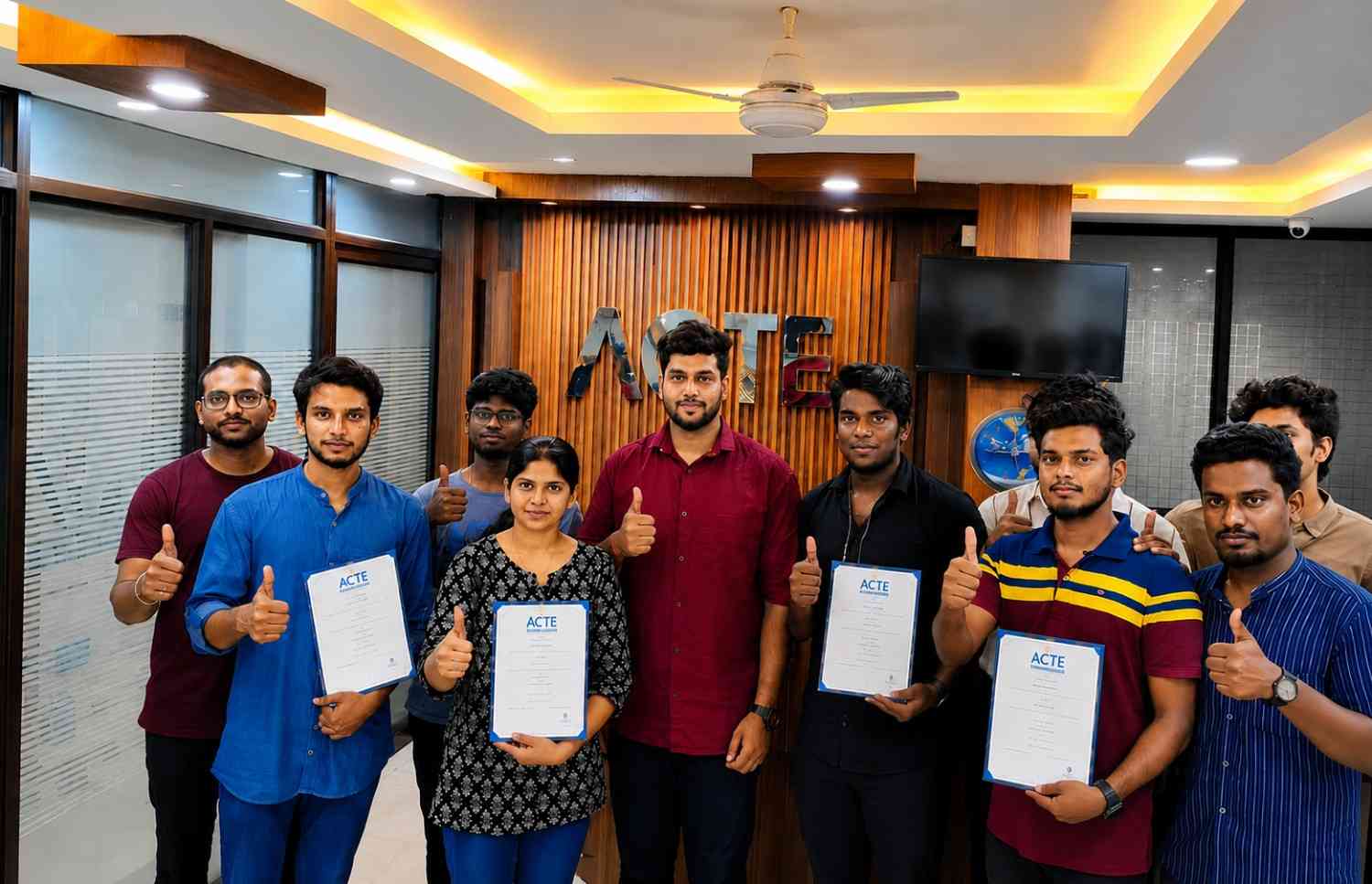
      Get Certified By Oracle SQL/PLSQL & Industry Recognized ACTE Certificate

      Acte Certification is Accredited by all major Global Companies around the world. We provide after completion of the theoretical and practical sessions to fresher's as well as corporate trainees.

      Our certification at Acte is accredited worldwide. It increases the value of your resume and you can attain leading job posts with the help of this certification in leading MNC's of the world. The certification is only provided after successful completion of our training and practical based projects.

      Complete Your Course

      a downloadable Certificate in PDF format, immediately available to you when you complete your Course

      Get Certified

      a physical version of your officially branded and security-marked Certificate.

      Get Certified

      About Experienced Oracle SQL/PLSQL Trainer

      • Our Oracle SQL/PLSQL Training in . Trainers are certified professionals with 7+ years of experience in their respective domain as well as they are currently working with Top MNCs.
      • As all Trainers are Oracle SQL/PLSQL domain working professionals so they are having many live projects, trainers will use these projects during training sessions.
      • All our Trainers are working with companies such as Cognizant, Dell, Infosys, IBM, L&T InfoTech, TCS, HCL Technologies, etc.
      • Trainers are also help candidates to get placed in their respective company by Employee Referral / Internal Hiring process.
      • Our trainers are industry-experts and subject specialists who have mastered on running applications providing Best Oracle SQL/PLSQL training to the students.
      • We have received various prestigious awards for Oracle SQL/PLSQL Training in from recognized IT organizations.

      Authorized Partners

      ACTE TRAINING INSTITUTE PVT LTD is the unique Authorised Oracle Partner, Authorised Microsoft Partner, Authorised Pearson Vue Exam Center, Authorised PSI Exam Center, Authorised Partner Of AWS .

      Get Training Quote for Free

            Career Support

            Placement Assistance

            Exclusive access to ACTE Job portal

            Mock Interview Preparation

            1 on 1 Career Mentoring Sessions

            Career Oriented Sessions

            Resume & LinkedIn Profile Building

            We Offer High-Quality Training at The Lowest Prices.

            Affordable, Quality Training for Freshers to Launch IT Careers & Land Top Placements.

            What Makes ACTE Training Different?

            Feature

            ACTE Technologies

            Other Institutes

            Affordable Fees

            Competitive Pricing With Flexible Payment Options.

            Higher Fees With Limited Payment Options.

            Industry Experts

            Well Experienced Trainer From a Relevant Field With Practical Training

            Theoretical Class With Limited Practical

            Updated Syllabus

            Updated and Industry-relevant Course Curriculum With Hands-on Learning.

            Outdated Curriculum With Limited Practical Training.

            Hands-on projects

            Real-world Projects With Live Case Studies and Collaboration With Companies.

            Basic Projects With Limited Real-world Application.

            Certification

            Industry-recognized Certifications With Global Validity.

            Basic Certifications With Limited Recognition.

            Placement Support

            Strong Placement Support With Tie-ups With Top Companies and Mock Interviews.

            Basic Placement Support

            Industry Partnerships

            Strong Ties With Top Tech Companies for Internships and Placements

            No Partnerships, Limited Opportunities

            Batch Size

            Small Batch Sizes for Personalized Attention.

            Large Batch Sizes With Limited Individual Focus.

            LMS Features

            Lifetime Access Course video Materials in LMS, Online Interview Practice, upload resumes in Placement Portal.

            No LMS Features or Perks.

            Training Support

            Dedicated Mentors, 24/7 Doubt Resolution, and Personalized Guidance.

            Limited Mentor Support and No After-hours Assistance.

            Oracle SQL/PLSQL Course FAQs

            Looking for better Discount Price?

            Call now: +91-7669 100 251 and know the exciting offers available for you!
            • ACTE is the Legend in offering placement to the students. Please visit our Placed Students List on our website
            • We have strong relationship with over 700+ Top MNCs like SAP, Oracle, Amazon, HCL, Wipro, Dell, Accenture, Google, CTS, TCS, IBM etc.
            • More than 3500+ students placed in last year in India & Globally
            • ACTE conducts development sessions including mock interviews, presentation skills to prepare students to face a challenging interview situation with ease.
            • 85% percent placement record
            • Our Placement Cell support you till you get placed in better MNC
            • Please Visit Your Student Portal | Here FREE Lifetime Online Student Portal help you to access the Job Openings, Study Materials, Videos, Recorded Section & Top MNC interview Questions
              ACTE Gives Certificate For Completing A Course
            • Certification is Accredited by all major Global Companies
            • ACTE is the unique Authorized Oracle Partner, Authorized Microsoft Partner, Authorized Pearson Vue Exam Center, Authorized PSI Exam Center, Authorized Partner Of AWS.
            • The entire Oracle SQL/PLSQL training has been built around Real Time Implementation
            • You Get Hands-on Experience with Industry Projects, Hackathons & lab sessions which will help you to Build your Project Portfolio
            • GitHub repository and Showcase to Recruiters in Interviews & Get Placed
            All the instructors at ACTE are practitioners from the Industry with minimum 9-12 yrs of relevant IT experience. They are subject matter experts and are trained by ACTE for providing an awesome learning experience.
            No worries. ACTE assure that no one misses single lectures topics. We will reschedule the classes as per your convenience within the stipulated course duration with all such possibilities. If required you can even attend that topic with any other batches.
            We offer this course in “Class Room, One to One Training, Fast Track, Customized Training & Online Training” mode. Through this way you won’t mess anything in your real-life schedule.

            Why Should I Learn Oracle SQL/PLSQL Course At ACTE?

            • Oracle SQL/PLSQL Course in ACTE is designed & conducted by Oracle SQL/PLSQL experts with 10+ years of experience in the Oracle SQL/PLSQL domain
            • Only institution in India with the right blend of theory & practical sessions
            • In-depth Course coverage for 60+ Hours
            • More than 50,000+ students trust ACTE
            • Affordable fees keeping students and IT working professionals in mind
            • Course timings designed to suit working professionals and students
            • Interview tips and training
            • Resume building support
            • Real-time projects and case studies
            Yes We Provide Lifetime Access for Student’s Portal Study Materials, Videos & Top MNC Interview Question.
            You will receive ACTE globally recognized course completion certification Along with project experience, job support, and lifetime resources.
            We have been in the training field for close to a decade now. We set up our operations in the year 2009 by a group of IT veterans to offer world class IT training & we have trained over 50,000+ aspirants to well-employed IT professionals in various IT companies.
            We at ACTE believe in giving individual attention to students so that they will be in a position to clarify all the doubts that arise in complex and difficult topics. Therefore, we restrict the size of each Oracle SQL/PLSQL batch to 5 or 6 members
            Our courseware is designed to give a hands-on approach to the students in Oracle SQL/PLSQL . The course is made up of theoretical classes that teach the basics of each module followed by high-intensity practical sessions reflecting the current challenges and needs of the industry that will demand the students’ time and commitment.
            You can contact our support number at +91 76691 00251 / Directly can do by ACTE.in's E-commerce payment system Login or directly walk-in to one of the ACTE branches in India
            Show More

            Job Opportunities in Oracle

            More than 35% of Developers Favor Oracle. Oracle Stands as the Most Sought-after and Widely Used Programming Language in the Tech Industry.