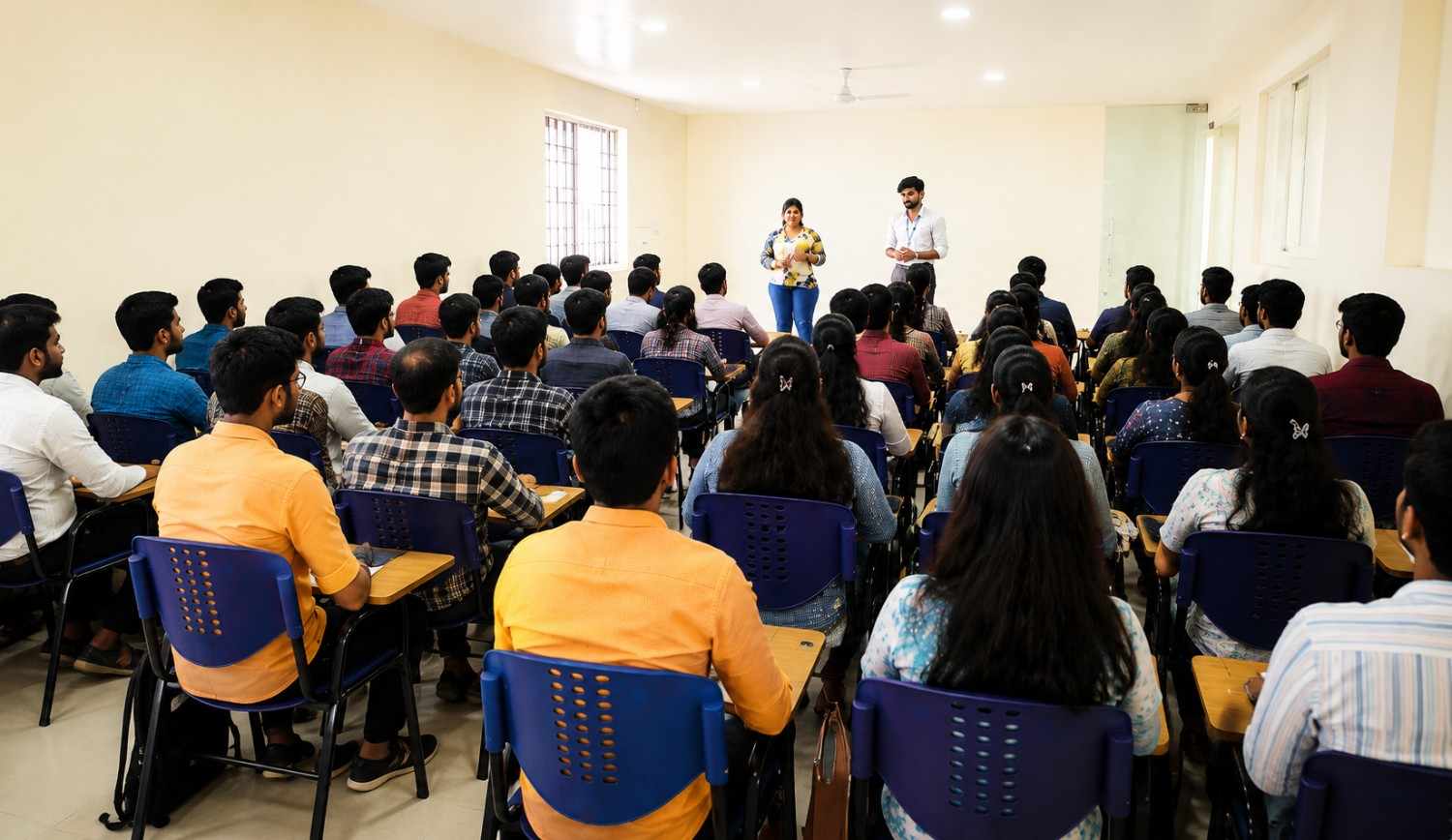
Overview Of Java Course in Erode
Java Course in Erode is designed to provide practical, industry-focused knowledge of programming, software development, backend technologies, and enterprise application solutions. The course helps learners understand essential Java concepts including variables, data types, operators, object-oriented programming, exception handling, collections, multithreading, JDBC, and database connectivity. It combines programming theory with practical coding sessions, enabling participants to develop confidence in building reliable Java applications. Learners understand how Java supports web applications, backend platforms, APIs, enterprise systems, and scalable business solutions. The Java Course in Erode covers Core Java, Advanced Java, Servlets, JSP, Spring, Spring Boot, Hibernate, REST APIs, Microservices, debugging, testing, and database integration. Through coding exercises, practical assignments, real-time projects, and software development scenarios, Java Course in Erode prepares learners for career opportunities in software development, backend programming, web applications, and enterprise technology domains.
Additional Java Course Information
Key Job Roles and Responsibilities for Java Developers
- Java Developer: Builds, tests, debugs, and maintains scalable Java applications using OOP concepts, databases, REST APIs, frameworks, coding standards, and modern software development methods.
- Backend Developer: Creates server-side applications, develops REST APIs, integrates databases, manages business logic, resolves technical issues, and improves backend application performance.
- Spring Boot Developer: Builds scalable Java applications with Spring Boot, REST APIs, dependency injection, databases, Microservices, testing practices, and modern application deployment techniques.
- Software Engineer: Designs application modules, develops reusable Java components, resolves software issues, maintains applications, and contributes to complete software development projects.
- Java Web Developer: Develops dynamic web applications using Java, Servlets, JSP, Spring, REST APIs, databases, frontend integration, security practices, and modern development techniques.
- Application Support Engineer: Monitors Java applications, identifies technical issues, analyzes errors, supports deployments, maintains software systems, and improves application reliability and performance.
Essential Tools and Technologies Covered in Java Placement Training
- Java Development Kit: Learn Java compilation, execution, debugging, standard libraries, runtime environments, command-line tools, and essential development capabilities for building Java applications.
- IntelliJ IDEA and Eclipse: Use popular Java IDEs for programming, debugging, testing, project management, code completion, refactoring, dependency handling, and efficient application development.
- Spring and Spring Boot: Build enterprise applications, REST APIs, backend services, and Microservices using dependency injection, Spring MVC, configuration, and modern Java development practices.
- Hibernate: Learn object-relational mapping, entity relationships, database operations, queries, transactions, annotations, persistence handling, and Java-based database integration techniques.
- Maven and Git: Manage project dependencies, automate builds, control source versions, track code modifications, collaborate with development teams, and maintain Java projects efficiently.
- JUnit and Postman: Test Java components and REST APIs, validate application behavior, detect errors, verify API responses, perform testing activities, and improve overall software quality.
Career Opportunities After Java Internship Training in Erode
- Software Development Careers: Explore Java opportunities across IT services, product organizations, startups, banking, healthcare, e-commerce, consulting, and enterprise technology companies.
- Expanding Developer Opportunities: Build Java expertise for careers in backend programming, REST APIs, enterprise software, Microservices, cloud platforms, and software development solutions.
- Practical Project Experience: Gain hands-on exposure to Java programming, database connectivity, REST APIs, Spring Boot, debugging, testing, deployment, and application development projects.
- Professional Certification Advantages: Strengthen your professional profile through Java programming knowledge, certification preparation, practical projects, and software development expertise.
- Practical Programming Skills: Improve knowledge of OOP, collections, exceptions, multithreading, JDBC, Spring Boot, Hibernate, REST APIs, databases, debugging, and application testing.
- Long-Term Career Progression: Advance toward positions such as Senior Java Developer, Technical Lead, Software Architect, Backend Lead, Engineering Manager, and Solution Architect.
Future Career Opportunities Through Java Certification Training
- Enterprise Application Development: Java supports scalable enterprise applications, backend platforms, financial solutions, business software, REST APIs, Microservices, and distributed technology environments.
- Microservices Software Development: Java with Spring Boot supports Microservices, REST APIs, distributed platforms, cloud-native services, and modern software architecture patterns.
- Expanding Cloud Career Opportunities: Java professionals can build, deploy, and maintain scalable cloud applications while working with containers, DevOps, REST APIs, automation, and Microservices.
- Extensive Industry Adoption: Java is widely used across banking, finance, healthcare, retail, e-commerce, telecommunications, insurance, consulting, and enterprise software industries.
- Advanced Backend Development: Java frameworks support REST APIs, distributed applications, database platforms, automation, Microservices, cloud integration, and reliable backend application services.
- Sustainable Career Growth: Java expertise can support advancement into senior development, technical leadership, software architecture, engineering management, and technology consulting roles.
Show More

 LMS
LMS