No.1 Python Course in Tambaram | Python Training in Tambaram With 100% Placement | Updated 2025

Python Training for All Graduates, NON-IT, Diploma & Career Gaps — ₹16,500/- only.

Download Brouchure
Join Our 100% Job Guaranteed

Python Course in Tambaram

  • Join Best Python Training Institute in Tambaram to Master Python Programming and Industry-relevant Skills.
  • Our Python Training in Tambaram Covers Data Analysis, AI, Automation, Django, Flask & ML.
  • Learn Flexible Options Weekday, Weekend or Fast-track Batches.
  • Gain Hands-on Experience by Working on Live Projects Guided by Expert Trainers.
  • Earn a Globally Recognized Python Certification with 100% Placement Support.
  • Receive Guidance in Building an Impressive Resume and Excelling in Interviews.

WANT IT JOB

Become a Python Developer in 3 Months

Freshers Salary

3 LPA

To

8 LPA

Quality Training With Affordable Fees in Tambaram!
INR ₹26000
INR ₹16500

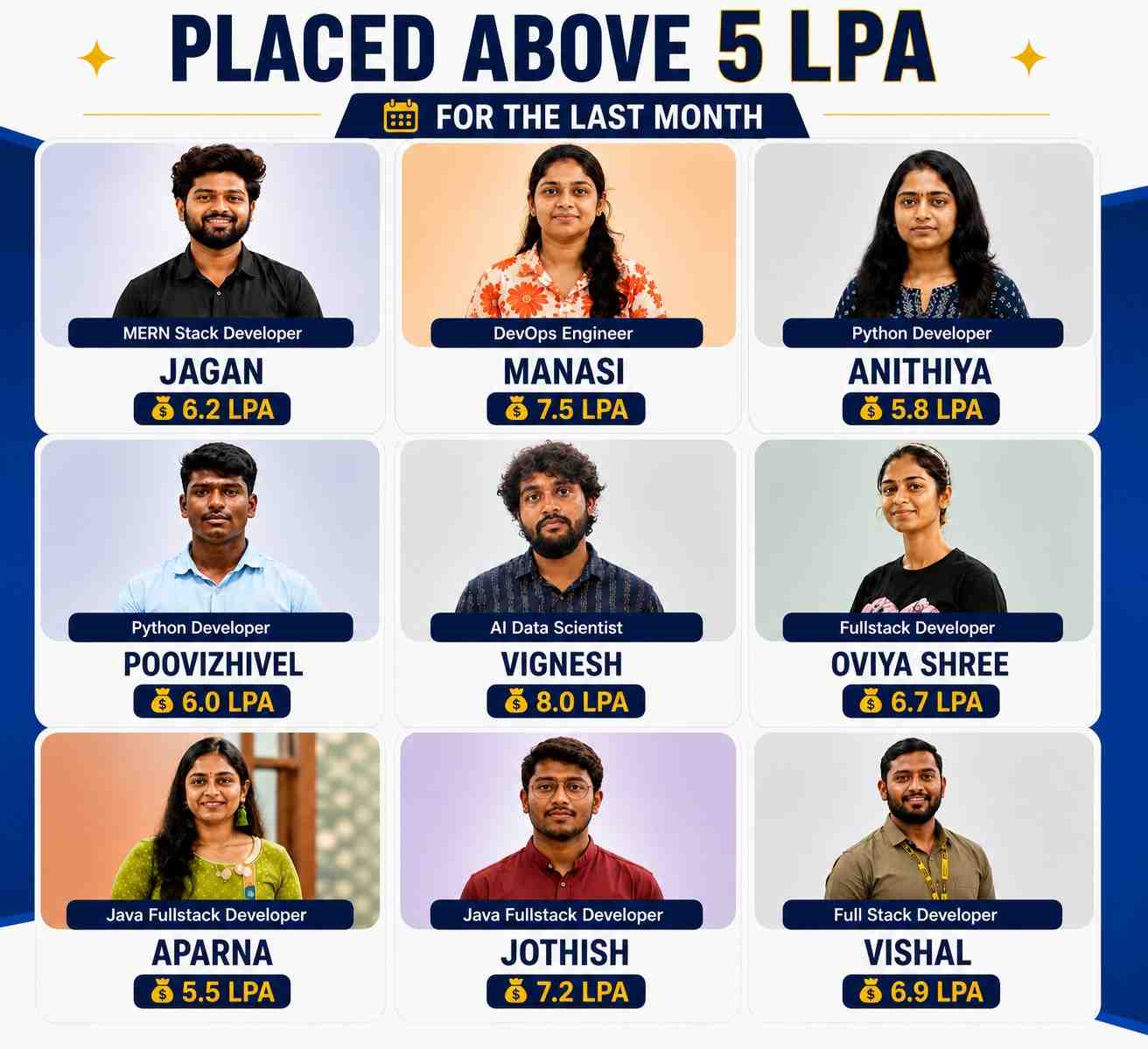
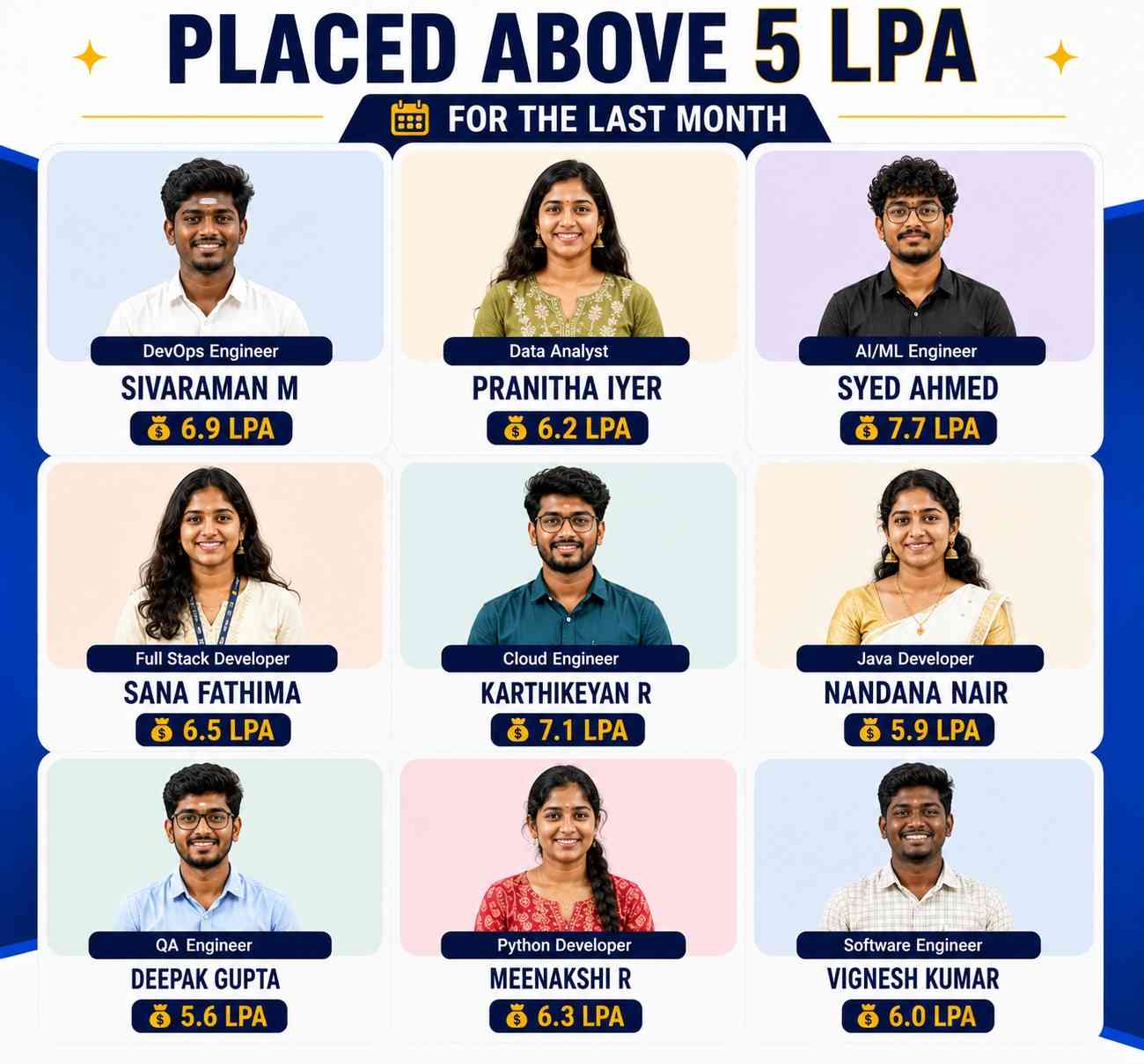
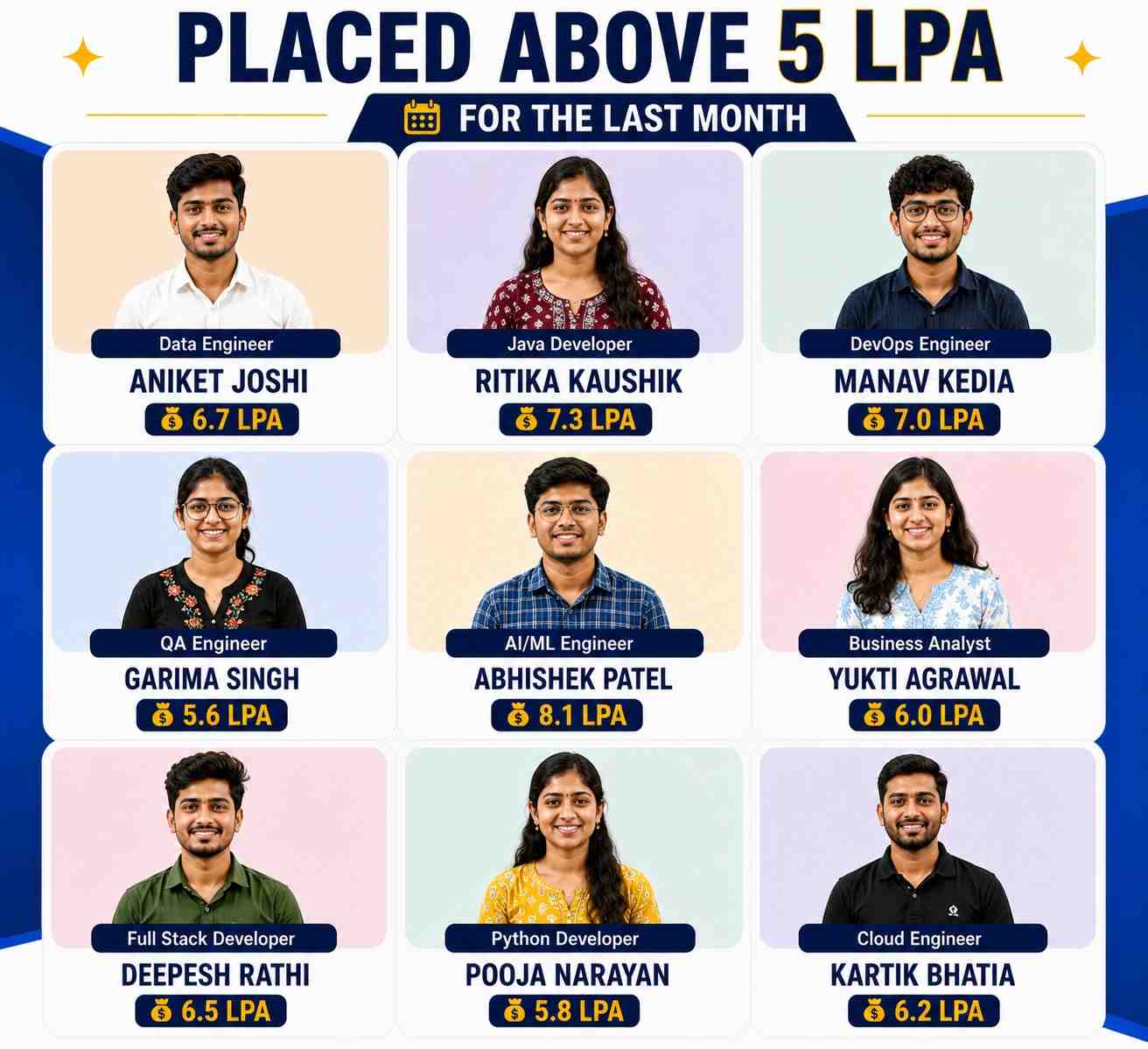
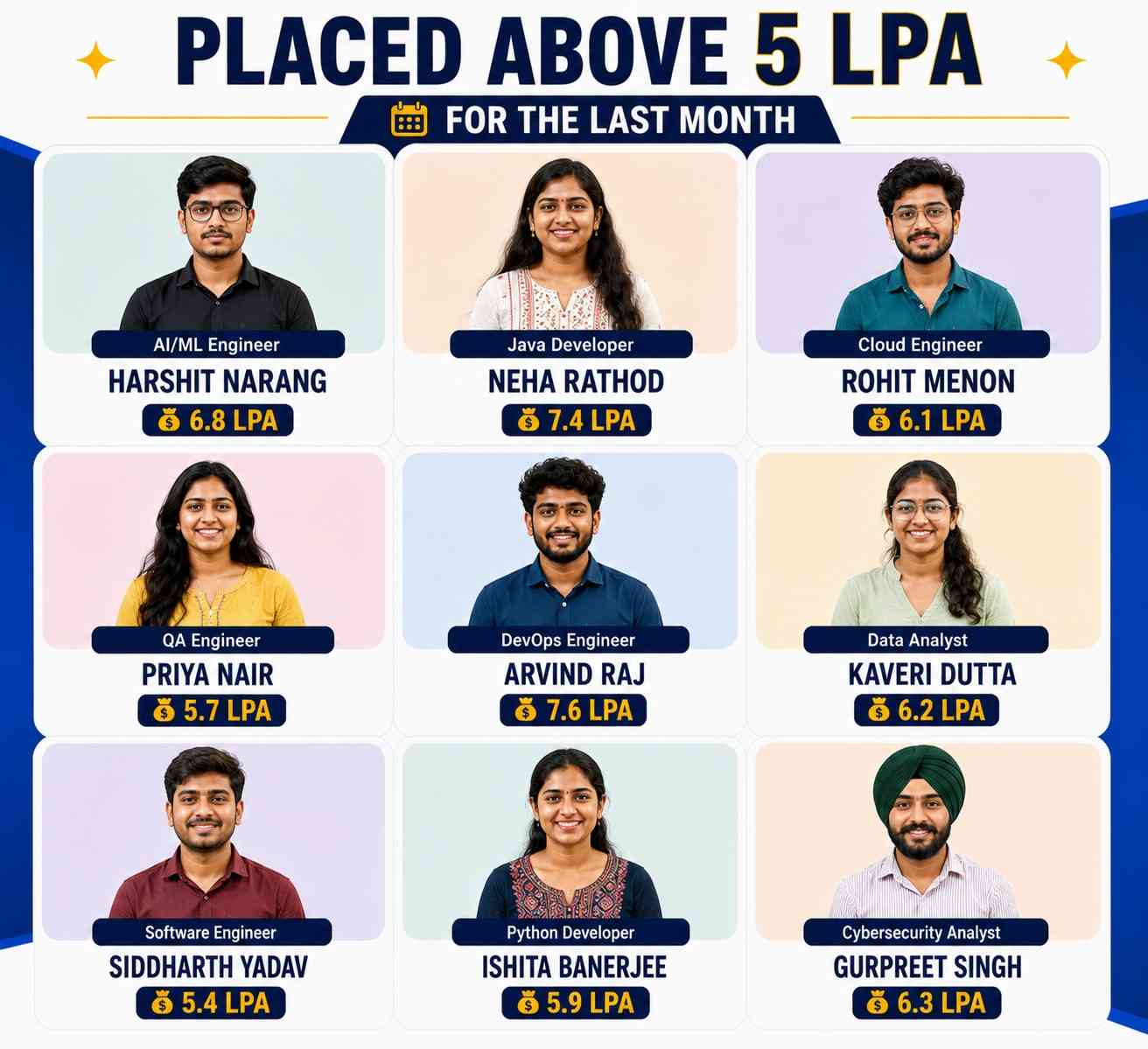
10452+

(Placed)
Freshers To IT

5417+

(Placed)
NON-IT to IT

7152+

(Placed)
Career Gap

3998+

(Placed)
Less Then 60%

Our Hiring Partners

Overview of the Python Course

The Python Course in Tambaram offers complete training for beginners to become proficient in Python programming. Students gain hands-on experience through Python Internships in Tambaram and practical projects that simulate real-world scenarios. The course covers core concepts, data analysis, automation, and AI applications, ensuring strong technical skills. With expert guidance and practical learning, learners are well-prepared for Python Placement opportunities. Flexible learning options make it easy for freshers to follow and complete the course successfully. Overall, this Python Training in Tambaram equips students with knowledge, skills and confidence to start a career in Python development.

What You'll Learn From Python Certification Course in Tambaram

Master the core Python concepts in the Python Course in Tambaram, including data structures, control flow, and object-oriented programming for real-world applications.

Gain hands-on experience with databases, SQL, and PL/SQL, learning how to efficiently manage and query data for professional projects.

Work on practical projects and industry-relevant case studies to reinforce learning and enhance problem-solving capabilities.

Dive into automation, scripting, and advanced Python techniques to streamline processes and improve productivity.

Learn to analyze, manipulate, and visualize data to make informed decisions and develop actionable insights.

Achieve an industry-recognized Python certification to boost your career prospects and demonstrate your expertise.

Additional Info

Course Highlights

  • Start Your Python Career: Learn Python programming, data handling, automation, SQL integration, and practical project development.
  • Dedicated Placement Support: Receive full job assistance with opportunities from top companies hiring skilled Python developers.
  • Trusted by Thousands: Join over 11,000 students trained and successfully placed through a network of 350+ recruitment partners.
  • Learn from Industry Experts: Gain insights from instructors with 10+ years of experience in Python development, data analytics, and software engineering.
  • Hands-On & Beginner-Friendly: Access interactive lessons, live projects, and complete career guidance to strengthen your skills and confidence.
  • Flexible Learning & Affordable Fees: Benefit from flexible batch timings, cost-effective training, and 100% placement support tailored for freshers and career switchers.

Benefits You Gain from an Python Training in Tambaram

  • Easy to Learn – Python has a simple and readable syntax, which makes it beginner-friendly. You can quickly understand how the code works without struggling with complicated rules. Because of its simplicity, students can concentrate more on problem-solving than language acquisition. Even those who have never coded before can begin programming effectively.
  • Versatile Language – Web development, data analysis, automation, artificial intelligence and more are all possible with Python. Its versatility makes it suitable for many types of projects and industries. You don’t need to learn multiple languages to work on different tasks. One language can handle multiple areas of programming.
  • Large Community Support – Python has a huge global community of developers and learners. You can easily find tutorials, forums, and libraries to help solve any problem. This support makes learning faster and troubleshooting easier. It’s comforting to know that help is available whenever you get stuck.
  • Extensive Libraries – Numerous libraries and frameworks, including NumPy, Pandas and Django are available in Python. By offering pre-built features and solutions, these tools save time. Rather than writing everything from scratch you can concentrate more on the development of your project. Libraries make Python powerful and efficient for various tasks.
  • Career Opportunities – Python is in high demand across IT, data science, AI, and web development jobs. Learning Python opens up many career paths and high-paying job opportunities. Companies prefer Python for its efficiency and ease of use. Mastering it gives you a strong advantage in the job market.

Important Tools Covered in Python Course

  • Jupyter Notebook – Python code may be written and executed in your web browser with Jupyter Notebook an interactive tool. It is perfect for data analysis, visualization and experimentation. You can mix code, text, and charts in one document, making it easy to explain your work. This tool is widely used by data scientists and educators.
  • PyCharm – PyCharm is powerful Integrated Development Environment (IDE) for Python programming. It helps you write code faster with features like auto-completion, debugging, and error detection. You can organize your projects and manage files efficiently. PyCharm is suitable for both beginners and professional developers.
  • Anaconda – Anaconda is a popular platform that simplifies Python installation and package management. It comes with many built-in libraries for data science, machine learning, and scientific computing. Its simple to set up distinct environments for various tasks. Anaconda makes working with Python faster and hassle-free.
  • Spyder – Spyder is an IDE designed for scientific programming and data analysis in Python. It offers an editor, console, and variable explorer all in one place. This tool helps you test code, inspect data, and debug efficiently. Spyder is beginner-friendly and widely used in research and academics.
  • Visual Studio Code (VS Code) – VS Code is lightweight and versatile code editor that supports Python through extensions. It provides syntax highlighting, debugging and Git integration for easy project management. You can customize it with plugins to suit your workflow. VS Code is ideal for developers who want a fast and flexible coding environment.

Top Frameworks Every Python Should Know

  • Django – Django is high-level Python framework used for building web applications quickly and efficiently. It comes with built-in features like authentication, database management, and an admin panel. This framework follows the “don’t repeat yourself” principle, which saves time for developers. Django is widely used by companies for building secure and scalable websites.
  • Flask – Flask is a lightweight Python framework that is simple and easy to use for small to medium web projects. It provides the basic tools to build web apps without too much complexity. Developers like Flask because it is flexible and allows adding only the components you need. It’s ideal for beginners learning web development with Python.
  • Pyramid – Pyramid is a versatile Python framework suitable for both small and large applications. It focuses on flexibility and lets developers choose their preferred database, URL structure, and templating style. Pyramid is known for its simplicity in creating RESTful APIs and web services. It helps build clean, maintainable, and scalable applications.
  • FastAPI – FastAPI is a modern Python framework designed for building APIs quickly and efficiently. It is fast, easy to use, and supports asynchronous programming for high-performance applications. FastAPI automatically generates documentation for APIs, making development smoother. It’s popular for creating scalable backend systems and microservices.
  • Tornado – Tornado is a Python framework and networking library for building high-performance web applications. It is perfect for real-time applications like chat programs since it can manage hundreds of concurrent connections. Tornado supports asynchronous programming, which improves speed and responsiveness. Developers use it for applications requiring real-time updates and scalability.

Essential Skills You’ll Learn in a Python Course in Tambaram

  • Data Analysis – Python teaches you how to analyze and interpret data using libraries like Pandas and NumPy. You can clean, organize, and process large datasets to extract meaningful insights. This skill helps in making informed business or project decisions. Data analysis is essential for roles in data science, business intelligence, and research.
  • Web Development – Python teaches how to create dynamic webpages and web apps with frameworks like Django and Flask. You can manage databases, create interactive pages, and handle user requests efficiently. Web development skills are in high demand across IT companies. This knowledge allows you to develop projects from scratch or enhance existing websites.
  • Automation and Scripting – Python enables you to automate repetitive tasks like file handling, web scraping, and data entry. You may cut down on human error and save time by writing scripts. Automation skills are highly valued in various industries, including IT, finance and operations. It allows you to focus on more important problem-solving tasks.
  • Problem-Solving and Logic Building – Python strengthens your ability to think logically and solve problems effectively. You learn to break complex tasks into smaller steps and write code that provides solutions. This skill is crucial not only for programming but also for analytical thinking in any profession. It helps in creating efficient and optimized programs.
  • Data Visualization – Python teaches you to create charts, graphs, and dashboards using tools like Matplotlib and Seaborn. It is simpler to share insights and trends with others when data is visualized. This skill is important for presentations, reporting, and decision-making processes. It transforms raw data into understandable and actionable information.

Key Roles and Responsibilities of Python Profession

  • Python Developer – Python Developers write, test, and maintain code for applications, software, and websites using Python. They collaborate with teams to design features and fix bugs efficiently. Their work involves integrating databases, APIs, and third-party services. Strong coding skills and problem-solving abilities are essential for this role.
  • Data Analyst – Data Analysts use Python to collect, process, and analyze data to extract meaningful insights. They create reports, visualizations, and dashboards to help businesses make informed decisions. Cleaning and organizing large datasets is a key part of their responsibility. They also work closely with management to support strategic planning.
  • Data Scientist – A Content Marketing Executive develops and manages blogs, videos, graphics and other digital content. They create material that attracts, informs and converts the audience. This role supports campaigns by delivering valuable content that drives traffic and engagement. It strengthens the brand’s online authority.
  • Automation Engineer – Automation Engineers develop Python scripts and tools to automate repetitive tasks and workflows. They improve efficiency, reduce errors, and save time across business processes. Monitoring, maintaining, and updating automation systems is part of the responsibility. Their work ensures smoother operations and higher productivity.
  • Machine Learning Engineer – Machine Learning Engineers use Python to design, implement, and optimize machine learning models. They train algorithms for classification and prediction tasks using massive datasets. Evaluating model performance and improving accuracy is a continuous responsibility. Their role is critical in developing intelligent systems and AI-driven applications.

Why Python is the Smart Choice for Freshers

  • High Demand in Job Market – Python is widely used across IT, data science, web development, and AI industries. Companies are constantly looking for skilled Python professionals. This high demand provides freshers with many job opportunities. Learning Python opens doors to multiple career paths early in a career.
  • Easy to Learn and Use – Python has a simple and readable syntax, making it beginner-friendly. Freshers can quickly grasp programming concepts without getting overwhelmed. This simplicity allows more focus on problem-solving and practical projects. It provides a strong foundation for learning other advanced technologies later.
  • Versatility Across Industries – Python is used in web development, automation, data analysis, machine learning, and more. This versatility allows freshers to explore different career options in one language. It makes professionals adaptable to various roles and projects. Learning Python provides a broad skill set valuable to multiple industries.
  • Opportunity for High-Paying Jobs – Python skills are highly valued by companies worldwide. Professionals with Python knowledge often earn competitive salaries even at entry-level positions. This makes it an attractive career choice for freshers starting their journey. Mastering Python increases earning potential and career growth opportunities.
  • Strong Community and Learning Support – Python has a large and active global community of developers. Freshers can easily access tutorials, forums, and libraries to solve problems and learn faster. Community support makes learning less stressful and more interactive. It ensures continuous growth and access to the latest industry trends.

Landing Remote Jobs with Python Skills

  • High Demand for Remote Python Roles – Many companies across the world hire Python professionals for remote work due to its versatility. Roles in web development, data analysis, and automation are often available online. Skilled Python programmers can work on projects from anywhere. This makes Python an ideal language for securing remote job opportunities.
  • Ability to Work on Diverse Projects – Python can be used for web apps, automation scripts, data analytics, and AI projects. This flexibility allows professionals to handle different types of remote assignments. Employers prefer candidates who can contribute to multiple areas. Python skills increase chances of being selected for varied remote projects.
  • Support for Collaboration Tools – Python integrates easily with tools like GitHub, Jira, and cloud platforms. This allows teams to collaborate efficiently, even when working remotely. Understanding these integrations makes managing code and tasks simpler. It ensures smooth communication and project delivery in remote settings.
  • Efficient Automation Capabilities – Python helps automate repetitive tasks, which is highly valuable for remote roles. Automation reduces manual work and improves productivity. Companies appreciate remote employees who can deliver more in less time. Python skills make professionals more effective and in-demand for remote positions.
  • Strong Community and Online Resources – Python has a large global community and many online resources. Remote workers can quickly find solutions, libraries, and support for their projects. This makes problem-solving faster without relying on in-office guidance. Python knowledge ensures smooth workflow even in a fully remote setup.

What to Expect in Your First Python Job

  • Hands-On Coding Experience – The first Python job involves writing real code for projects, applications, or scripts. Tasks focus on applying learned concepts to solve practical problems. This experience helps in understanding workflows and project structures. It builds confidence in coding and problem-solving skills.
  • Learning to Work with Databases – Working with databases is a key part of many Python roles. Writing SQL queries, managing data, and integrating Python with databases are common tasks. This experience helps in handling large datasets efficiently. It also improves analytical and data management abilities.
  • Collaboration with Team Members – First Python jobs often require working closely with developers, testers, and project managers. Communication and teamwork skills are crucial to coordinate tasks effectively. Collaborating on code, debugging, and project updates is part of daily work. It helps in learning professional workflow and project management practices.
  • Exposure to Tools and Frameworks – New Python developers get hands-on experience with tools like Jupyter Notebook, PyCharm, and frameworks like Django or Flask. These tools improve coding efficiency and project development speed. Exposure to professional tools prepares employees for complex real-world projects. It also enhances technical proficiency.
  • Understanding Industry Standards – First jobs provide insights into coding standards, best practices, and documentation requirements. Following these standards ensures high-quality, maintainable, and error-free code. It also helps in adapting to professional work environments quickly. Understanding these practices lays the foundation for career growth in Python development.

Leading Companies are Hiring for Python Professional

  • Google – Google uses Python for web applications, AI, machine learning, and data analysis projects. Python developers at Google work on innovative solutions and large-scale systems. The company encourages problem-solving and creative coding approaches. It offers excellent growth opportunities for Python professionals.
  • Microsoft – Microsoft hires Python professionals for software development, cloud computing, and data science projects. Developers work with Python to build applications, automation tools, and analytics solutions. The company provides exposure to advanced technologies and collaborative projects. It’s a top choice for career growth in Python.
  • Amazon – Amazon employs Python developers for backend development, automation, and data-driven decision-making. Python is used to handle large datasets, improve operations, and enhance customer experiences. Employees get to work on challenging, real-world projects. The company values efficiency, innovation, and technical expertise.
  • IBM – IBM hires Python professionals for AI, machine learning, cloud services, and enterprise software development. Python developers help create intelligent applications and automate business processes. The company emphasizes learning and professional development. IBM offers opportunities to work on cutting-edge technologies globally.
  • Facebook (Meta) – Facebook uses Python for backend services, data analysis, and machine learning applications. Developers work on building scalable systems and optimizing performance. The company provides a collaborative environment for innovation and coding excellence. Python professionals gain experience working with massive-scale applications and real-time data.
Show More

Upcoming Batches For Classroom and Online

Weekdays
01 - Dec - 2025
08:00 AM & 10:00 AM
Weekdays
03 - Dec - 2025
08:00 AM & 10:00 AM
Weekends
06 - Dec - 2025
(10:00 AM - 01:30 PM)
Weekends
07 - Dec - 2025
(09:00 AM - 02:00 PM)
Can't find a batch you were looking for?
INR ₹16500
INR ₹26000

OFF Expires in

Who Should Take a Python Training

IT Professionals

Non-IT Career Switchers

Fresh Graduates

Working Professionals

Diploma Holders

Professionals from Other Fields

Salary Hike

Graduates with Less Than 60%

Show More

Job Roles For Python Course

Python Developer

Data Analyst

Machine Learning Engineer

Data Scientist

Automation Engineer

Web Developer (Django/Flask)

DevOps Engineer

Game Developer (Python-based engines)

Show More

Tools Covered For Python Course in Offline

VS Code Virtualenv Pycharm Pytest Pylint Anaconda Jupyter PIP

What’s included ?

Convenient learning format

📊 Free Aptitude and Technical Skills Training

  • Learn basic maths and logical thinking to solve problems easily.
  • Understand simple coding and technical concepts step by step.
  • Get ready for exams and interviews with regular practice.
Dedicated career services

🛠️ Hands-On Projects

  • Work on real-time projects to apply what you learn.
  • Build mini apps and tools daily to enhance your coding skills.
  • Gain practical experience just like in real jobs.
Learn from the best

🧠 AI Powered Self Interview Practice Portal

  • Practice interview questions with instant AI feedback.
  • Improve your answers by speaking and reviewing them.
  • Build confidence with real-time mock interview sessions.
Learn from the best

🎯 Interview Preparation For Freshers

  • Practice company-based interview questions.
  • Take online assessment tests to crack interviews
  • Practice confidently with real-world interview and project-based questions.
Learn from the best

🧪 LMS Online Learning Platform

  • Explore expert trainer videos and documents to boost your learning.
  • Study anytime with on-demand videos and detailed documents.
  • Quickly find topics with organized learning materials.

Python Course Syllabus

  • 🏫 Classroom Training
  • 💻 Online Training
  • 🚫 No Pre Request (Any Vertical)
  • 🏭 Industrial Expert

Our Python Training in Tambaram offers a comprehensive syllabus designed for beginners and aspiring developers. Learn core Python concepts, data handling, control structures, and popular frameworks like Django and Flask. Gain hands-on experience through Python Internships and real-time projects to strengthen practical skills. The course also covers automation, API integration, and basic database management. Additionally, dedicated placement support guides students in resume building and interview preparation.

  • Python Basics – Learn Python syntax, variables, data types, and object-oriented programming to build a strong foundation.
  • Advanced Topics & Frameworks – Explore decorators, file handling, and frameworks like Django and Flask for web development.
  • Hands-On Projects – Work on real-time projects like automation tools, dashboards, and web apps to gain practical experience.
  • Tools & Deployment – Use PyCharm, Jupyter, Git, and cloud platforms to develop and deploy Python applications efficiently.
Python Fundamentals
Control Structures and Functions
Object-Oriented Programming in Python
File Handling and Exception Management
Modules, Packages and Virtual Environments
Working with Data and Libraries
Web Development with Django or Flask

These basics help you build a strong foundation in Python programming:

  • Python Interpreter – Run and test Python scripts
  • IDLE / PyCharm – IDEs for writing and executing Python code
  • Syntax and Indentation – Learn the structure of Python code
  • Variables and Data Types – Work with strings, numbers, lists and dictionaries
  • Environment Setup – Install Python and configure system PATH

Learn to reuse the code and manage program flow:

  • If, Else, Elif – Conditional logic
  • Loops – For and While loop operations
  • Functions – Define and call user defined functions
  • Scope and Parameters – Understand local/global variables
  • Lambda Functions – Write short, anonymous functions

Learn OOP to efficiently structure and arrange code:

  • Classes and Objects – Create and instantiate objects
  • Constructors – Initialize object properties
  • Inheritance – Reuse code between classes
  • Encapsulation – Protect class variables and methods
  • Polymorphism – Use method overriding and overloading

Manage bugs in software and data input/output:

  • File I/O – Read/write text, CSV and JSON files
  • Context Managers – Use ‘with’ statements for safe file operations
  • Exception Handling– Try, Except and Finally blocks
  • Built-in Exceptions– Identify common runtime errors
  • Custom Exceptions– Create and raise user defined exceptions

Organize code and manage dependencies:

  • Importing Modules – Use built in and third party modules
  • Creating Packages – Organize reusable code into packages
  • Pip – Install and manage Python packages
  • venv / virtualenv – Set up isolated Python environments
  • requirements.txt – Manage project dependencies

Use Python for data handling and analysis:

  • NumPy – Perform numerical operations and array manipulation
  • Pandas – Handle dataframes, filtering and cleaning datasets
  • Matplotlib / Seaborn – Visualize the data using plots and charts
  • CSV and JSON – Load and save structured data formats
  • Date and Time – Work with timestamps and date formatting

Build simple web apps using popular Python frameworks:

  • Flask / Django – Create routes, templates and views
  • Jinja2 Templates – Render HTML using dynamic data
  • SQLite / PostgreSQL – Integrate backend databases
  • REST APIs – Build basic API endpoints
  • Postman – Test and debug APIs locally

🎁 Free Addon Programs

Aptitude, Spoken English

🎯 Our Placement Activities

Daily Task, Soft Skills, Projects, Group Discussions, Resume Preparation, Mock Interview

Gain Practical Experience in Python Projects

Placement Support Overview

Today's Top Job Openings for Python Training

Python Developer

Company Code : CVT400

Chennai, Tamilnadu

₹26,000 – ₹45,000 a month

Any Degree

Exp 0-2 yrs

  • We're hiring a Python Developer to build web applications using Django and Flask. Knowledge of REST APIs, SQLite/MySQL and HTML/CSS is essential. Familiarity with Git and virtual environments is an added advantage.
  • Easy Apply

    Backend Python Engineer

    Company Code : TNS716

    Chennai, Tamilnadu

    ₹30,000 - ₹50,000 a month

    Any Degree

    Exp 0-3 yrs

  • Join us as a Backend Python Engineer to design server-side logic and data pipelines. Experience in Python 3+, PostgreSQL and ORM tools like SQLAlchemy is required. Exposure to Docker and unit testing is preferred.
  • Easy Apply

    Python Full Stack Developer

    Company Code : WIS805

    Chennai, Tamilnadu

    ₹32,000 - ₹52,000 a month

    Any Degree

    Exp 0-2 yrs

  • We’re looking for a Full Stack Python Developer skilled in Django/Flask and React or Angular. Must have strong understanding of APIs, JavaScript and database handling. Project-based experience is a plus.
  • Easy Apply

    Junior Python Programmer

    Company Code : ILS924

    Chennai, Tamilnadu

    ₹24,000 - ₹40,000 a month

    Any Degree

    Exp 0-1 yr

  • Seeking a Junior Python Programmer to support our software team. Basic knowledge of Python syntax, OOP and working with IDEs like PyCharm or VS Code is expected. Freshers with logic-building skills are welcome.
  • Easy Apply

    Python Automation Tester

    Company Code : QMT217

    Chennai, Tamilnadu

    ₹28,000 - ₹46,000 a month

    Any Degree

    Exp 0-2 yrs

  • Hiring Python Automation Testers with experience in Selenium WebDriver, PyTest or Robot Framework. Should be capable of writing test scripts and reports. Knowledge of CI/CD tools and Git is an added bonus.
  • Easy Apply

    Django Developer

    Company Code : CSS746

    Chennai, Tamilnadu

    ₹33,000 - ₹55,000 a month

    Any Degree

    Exp 0-3 yrs

  • Hiring Django Developers to work on scalable enterprise platforms. Must be confident with Django REST Framework, Python 3.10+ and PostgreSQL. Experience in APIs and Docker is a big plus.
  • Easy Apply

    Python Support Engineer

    Company Code : SPL466

    Chennai, Tamilnadu

    ₹25,000 - ₹42,000 a month

    Any Degree

    Exp 0-2 yrs

  • Join as a Python Support Engineer to debug, monitor and resolve production issues. Skills in log analysis, exception handling and script troubleshooting are needed. Knowledge of ticketing tools is helpful.
  • Easy Apply

    Python Cloud Developer

    Company Code : NCT551

    Chennai, Tamilnadu

    ₹30,000 - ₹50,000 a month

    Any Degree

    Exp 0-2 yrs

  • We're hiring Python Cloud Developers for cloud-based app deployment on AWS or Azure. Required skills include Python, API integration and cloud services like Lambda or Azure Functions. Freshers will receive guided training.
  • Easy Apply

    Highlights for Python Internship in Tambaram

    Real-Time Projects

    • 1. Gain hands-on experience by working on live industry-based applications.
    • 2. Understand real-world problem-solving through Python scenarios.
    Book Session

    Skill Development Workshops

    • 1. Participate in focused sessions on trending technologies and tools.
    • 2. Learn directly from industry experts through guided practical exercises.
    Book Session

    Employee Welfare

    • 1. Enjoy benefits like health coverage, flexible hours, and wellness programs.
    • 2. Companies prioritize mental well-being and work-life balance for all employees.
    Book Session

    Mentorship & Peer Learning

    • 1. Learn under experienced mentor guide your technical and career growth.
    • 2. Collaborate with peers to enhance learning through code reviews and group projects.
    Book Session

    Soft Skills & Career Readiness

    • 1. Improve communication, teamwork, and time management skills.
    • 2. Prepare for interviews and workplace dynamics with mock sessions and guidance.
    Book Session

    Certification

    • 1. Earn recognized credentials to validate your Python skills.
    • 2. Boost your resume with course or project completion certificates from reputed platforms.
    Book Session

    Sample Resume for Python (Fresher)

    • 1. Simple and Neat Resume Format

      – Use a clean layout with clear sections like summary, skills, education, and projects.

    • 2. List of Technologies You Know

      – Mention skills like Core Java, JDBC, Servlets, JSP, Spring Framework, Hibernate and more.

    • 3. Real-Time Projects and Achievements

      – Add 1–2 real-time projects with a short description and the tools used.

    Top Python Tricky Interview Questions and Answers (2025 Guide)

    Ans:

    Python's ease of use and effectiveness which enable quicker development and increased productivity make it a favorite among developers. It provides numerous built-in libraries for file handling, system functions and web development. Problem solving is made easier by the language's user-friendly data structures such as dictionaries and lists. Both brginners and seasoned programmers can use it because of the simple syntax.

    Ans:

    The %s symbol acts as a placeholder in Python strings, indicating where a value should be inserted. This format automatically converts any input into a string type if needed. It provides a convenient method for constructing dynamic messages by embedding values into pre-written text. This feature is commonly used for formatting outputs in Python programs.

    Ans:

    Python is versatile and powerful, offering several notable features. Being an interpreted language, code executes line by line without prior compilation. Python is portable and can run on multiple platforms like Windows, macOS, and Linux. It also supports integration with other languages such as C/C++ and enables GUI application development using frameworks like Tkinter or PyQt.

    Ans:

    An interpreted language executes code line by line rather than compiling it into machine language first. This approach allows rapid testing, debugging, and interactive development. Languages such as Python, JavaScript, and PHP follow this model. Interpreted languages enhance flexibility and accelerate the development process.

    Ans:

      Python is widely used due to its flexibility and comprehensive libraries. It supports the creation of desktop applications with graphical user interfaces. The language is also used for image processing, enterprise-level software, and rapid prototyping. Additionally, Python is popular in web development through frameworks such as Django and Flask.

    Ans:

    Global variables are defined outside functions and can be accessed throughout the program. They remain in memory unless explicitly modified. Local variables are declared inside functions and are only accessible within that function. They are removed from memory once the function finishes execution.

    Ans:

    PYTHONPATH is an environment variable that guides the Python interpreter on where to locate modules during imports. It is particularly helpful in larger projects where modules are organized across multiple directories. This variable ensures Python can efficiently find and access necessary files.

    Ans:

    Python code issues can be detected using tools like PyChecker, which spot bugs and errors. PyLint is another tool that checks both for coding errors and adherence to Python coding standards. These tools help maintain clean, reliable, and maintainable code by identifying problems early in the development cycle.

    Ans:

    Unit tests are automated tests designed to verify that specific parts of a program, such as functions or methods, work correctly. Running unit tests helps detect errors in particular sections before they affect the entire application. These tests are important for maintaining code quality and simplifying the debugging process.

    Ans:

    Python uses a private heap to manage memory automatically, storing all objects and data structures in this space. Developers do not access this heap directly; Python handles object creation, storage and deletion. To effectively manage memory and stop leaks, strategies such garbage collection and reference counting are employed.

    Company-Specific Interview Questions from Top MNCs

    1. How would you describe Python?

    Ans:

    Python is a versatile and user-friendly programming language widely used for web development, application creation, automation, and data analysis. Its clean syntax and readability make it suitable for both beginners and experienced developers. Python’s wide range of libraries enhances productivity and simplifies coding tasks.

    2. What makes Python stand out from other programming languages?

    Ans:

    Python is distinguished by its simplicity, platform independence and ease of learning. Object-oriented and functional programming are two of the programming paradigms it supports. Its extensive libraries and tools accelerate development, making Python an efficient and flexible choice for diverse projects.

    3. How does dynamic typing differ from static typing?

    Ans:

    Dynamic typing allows variables to be used without explicitly declaring their data type, as Python automatically determines it during execution. In contrast, static typing, used in languages like Java and C++, requires the type to be defined beforehand. This flexibility makes Python faster for prototyping and development.

    4. What are the main data types available in Python?

    Ans:

    Python provides several core data types to store and manipulate information. These include numbers for calculations, strings for text, lists for collections, sets for unique elements and Booleans to represent true or false values. Understanding these types is essential for effective programming.

    5. How is a list created in Python?

    Ans:

    A list in Python is a flexible collection that can hold multiple items in single variable. Items can be added, removed, or modified as needed, making lists highly versatile. They are commonly used to manage groups of data such as names, numbers, or any other ordered collection.

    6. What is a tuple in Python?

    Ans:

    A tuple is collection of multiple items stored in a single variable, similar to a list. Unlike lists, tuples are immutable, meaning their contents cannot be changed once created. This makes tuples suitable for storing data that should remain constant throughout the program.

    7. How does a list differ from a tuple?

    Ans:

    The main difference is lists are mutable and can be modified after creation, whereas tuples are immutable and cannot be changed. Lists are ideal when data needs to be updated, while tuples are better for fixed sets of information that should remain unchanged.

    8. How is a dictionary created in Python?

    Ans:

    A dictionary in Python stores data as key-value pairs, where each key maps to a specific value. It functions like a mini-database, allowing quick access to information using keys. Dictionaries are very useful for organizing, retrieving, and managing data efficiently.

    9. What types of function inputs does Python support?

    Ans:

    Python functions can accept inputs in multiple ways, including direct arguments, default values or named parameters. This flexibility allows functions to handle a variety of scenarios and makes code more adaptable. It simplifies the process of passing data to different functions.

    10. What does object-oriented programming (OOP) mean in Python?

    Ans:

    Object-oriented programming in Python involves structuring code around objects that encapsulate data and behavior. This method promotes modularity, code reusability, and easier maintenance. OOP is especially useful for building complex applications with organized and scalable code.


    1. What are the main features of Python?

    Ans:

    Python is a versatile and easy-to-learn programming language known for its simplicity and readability. It supports numerous libraries and works across multiple operating systems. Writing fewer lines of code to achieve more makes development faster. Python is suitable for both small-scale and large-scale projects and is freely available.

    2. How is memory managed in Python?

    Ans:

    Python automatically handles memory management, tracking which objects are in use and removing those that are no longer needed. This built-in process optimizes performance and reduces the risk of memory leaks. It allows developers to focus on coding rather than manual memory allocation.

    3. What are namespaces in Python?

    Ans:

    Namespaces in Python organize and separate identifiers like variables, functions, and classes to prevent conflicts. They ensure that each name refers to the correct object in the program. This organization is especially important in larger projects to maintain clarity and manageability of code.

    4. What is PEP 8 and why is it important?

    Ans:

    PEP 8 is a set of coding guidelines designed to promote clean, readable, and consistent Python code. Following PEP 8 ensures that code is easier for others to read, understand, and maintain. Adhering to these standards also encourages good programming habits and collaboration in teams.

    5. How do lists differ from tuples in Python?

    Ans:

    Lists are mutable collections, allowing items to be added, updated, or removed after creation. Tuples, on the other hand, are immutable and cannot be modified once defined. Tuples are ideal for storing fixed data that should remain constant throughout a program.

    6. What are Python decorators used for?

    Ans:

    Python decorators are special tools that enhance the functionality of a function without modifying its original code. They allow adding features in a modular and reusable manner. Decorators help keep code clean and maintainable while providing flexibility for extending functionality.

    7. What types of inheritance are available in Python?

    Ans:

    Python supports several types of inheritance to enable classes to reuse features from other classes. These include single inheritance (one parent), multiple inheritance (multiple parents), multilevel inheritance (across levels), and hierarchical inheritance (one parent, multiple children). Each type helps structure code efficiently.

    8. How does Python support multithreading?

    Ans:

    Python allows multiple tasks to run concurrently using threads, enabling parallel execution. This is useful for performing background operations such as file downloads, data processing, or other tasks without halting the main program. Multithreading improves efficiency in programs that require simultaneous operations.

    9. What is the difference between shallow copy and deep copy?

    Ans:

    A shallow copy creates a new object but references parts of the original object, so changes in nested data can affect both copies. A deep copy creates an entirely separate object, ensuring that modifications in one do not impact the other. This distinction is important for managing complex data safely.

    10. How are data structures like stacks and queues used in Python?

    Ans:

    Stacks and queues organize and process data in a controlled manner. Stacks follow a “last in, first out” approach, while queues follow “first in, first out.” These structures are used for task scheduling, managing resources, and maintaining order when processing items step-by-step.

    1. What is Python and why is it widely used?

    Ans:

    Python is a highly popular programming language known for its readability and ease of use. It is widely applied in web development, task automation, and data analysis. Its straightforward syntax, coupled with strong community support, makes it an ideal choice for both beginners and experienced developers.

    2. What is PEP 8 and why is it important?

    Ans:

    PEP 8 is a set of coding standards that guides developers to write clean and readable Python code. Following these guidelines ensures consistency across projects, improves readability, and reduces errors. It is particularly helpful when collaborating in team projects.

    3. How do lists and tuples differ in Python?

    Ans:

    Lists are mutable collections, meaning their content can be modified after creation. Tuples, in contrast, are immutable and cannot be changed once defined. Tuples also consume less memory and are slightly faster, making them suitable for fixed data that should remain constant.

    4. How does Python handle memory management?

    Ans:

    Python manages memory automatically by tracking active objects and removing those that are no longer needed. This automatic memory management improves program efficiency and prevents memory leaks. Developers do not need to manually allocate or free memory.

    5. What are the primary data types in Python?

    Ans:

    Python provides several built-in data types for different purposes. Common types include numbers for calculations, strings for text, lists for collections of items, tuples for fixed collections, sets for unique elements, and dictionaries for key-value mapping. These types allow efficient data organization and management.

    6. How are function arguments passed in Python?

    Ans:

    Python determines whether a function receives a copy of the data or the actual object depending on the data type. This behavior helps prevent unintended changes to data during function execution. Understanding this mechanism ensures more predictable and controlled programming.

    7. What is the Global Interpreter Lock (GIL) in Python?

    Ans:

    The Global Interpreter Lock, or GIL, ensures that only one thread executes Python code at a time. This prevents conflicts when multiple threads access shared data. While it safeguards data integrity, it may reduce performance for CPU-bound multi-threaded programs.

    8. What is the difference between a module and a package in Python?

    Ans:

    A module is a single Python file containing code such as functions, classes, or variables. A package is a collection of multiple modules organized in directories. Packages help keep larger projects structured, making code easier to manage and maintain.

    9. What are some commonly used built-in Python libraries?

    Ans:

    Python includes many built-in libraries to simplify tasks. The math library supports mathematical operations, datetime handles date and time processing, and os enables file and folder management. Using these libraries reduces the need to write code from scratch.

    10. How can memory usage be optimized in Python?

    Ans:

    Even with automatic memory management, writing clean and minimal code improves efficiency. Removing unnecessary data and being cautious with large datasets or files helps reduce memory consumption. This practice enhances program speed and overall performance.

    1. How do lists differ from tuples in Python?

    Ans:

    Lists and tuples are both used to store multiple items, but they differ in mutability. Lists are mutable, allowing items to be added, removed, or changed even after creation. Tuples are immutable, making them faster and more secure for storing data that should remain constant throughout the program.

    2. What is meant by list comprehension in Python?

    Ans:

    List comprehension is a concise method for creating new lists from existing ones in a single line of code. It allows performing operations on each element and collecting results efficiently. This approach reduces code length, improves readability, and simplifies data processing tasks.

    3. Why is 'self' used in Python classes?

    Ans:

    The keyword “self” refers to the instance of a class in Python. It helps distinguish between different objects of the same class and allows access to instance variables and methods. Without “self,” Python would be unable to identify which object’s data is being referenced or modified.

    4. What are generators in Python?

    Ans:

    Generators are functions that yield values one at a time, generating them only when needed. This approach conserves memory, especially when working with large datasets. By producing values on demand, generators make data processing more efficient and reduce overall resource usage.

    5. How does Python handle exceptions?

    Ans:

    Python uses an exception handling mechanism to manage errors during program execution. Instead of crashing, errors can be caught and handled using try-except blocks. This allows programs to respond gracefully, display custom messages, or take alternate actions, improving reliability and user experience.

    6. What are modules and packages in Python?

    Ans:

    Modules are individual Python files containing functions, classes, or variables that can be reused in other programs. Packages are collections of related modules organized in directories. Using modules and packages helps keep projects structured, promotes code reusability, and simplifies maintenance.

    7. What is the purpose of the 'pass' statement in Python?

    Ans:

    The ‘pass’ statement acts as a placeholder in Python code where a statement is syntactically required but no action is intended. It is useful during development when defining function or class structures before writing full logic. This prevents errors and allows the program to run smoothly.

    8. How do shallow copy and deep copy differ in Python?

    Ans:

    A shallow copy creates a new object but references the elements of the original object, so changes to nested data affect both. A deep copy duplicates the object and all its nested elements, making it completely independent from the original. This ensures that modifications do not interfere with the source data.

    9. What are the commonly used data types in Python?

    Ans:

    Python provides versatile built-in data types for different purposes. Numbers are used for calculations, strings for text, lists and tuples for ordered collections, dictionaries for key-value storage, sets for unique elements, and Booleans for true/false values. These types support diverse programming tasks.

    10. How can a list be converted into a dictionary in Python?

    Ans:

    A list can be transformed into a dictionary by pairing elements as keys and values. This allows organizing data for faster retrieval and better structure. Python provides simple methods and logic to perform this conversion efficiently for practical use cases.

    1. How can a string be reversed in Python?

    Ans:

    Reversing a string means rearranging its characters so the last character appears first and the first appears last. This transforms the entire sequence in the opposite order. Python provides built-in methods that make reversing strings quick, simple, and efficient.

    2. What is the difference between a list and a tuple in Python?

    Ans:

    The key difference lies in mutability. Lists are mutable, allowing elements to be added, removed, or changed after creation. Tuples are immutable, meaning their content cannot be altered once created. This distinction influences how each is used in programs.

    3. How do dictionaries work in Python?

    Ans:

    Dictionaries store data in key-value pairs, where each key uniquely identifies its associated value. Keys allow quick access to values, similar to looking up a word in a dictionary. This structure enables fast and efficient data retrieval based on specific identifiers.

    4. How can you check if two words contain the same letters in a different order?

    Ans:

    Two words are considered anagrams if they contain the exact same letters in the same quantities but arranged differently. Checking for anagrams involves comparing the frequency and presence of each character in both words. This ensures they are composed of the same letters.

    5. How can common elements between two lists be found?

    Ans:

    Common elements between two lists are identified by comparing the items in each list to see which ones appear in both. This process, called finding the intersection, produces a collection of shared items. It is useful for analyzing overlapping data efficiently.

    6. How does a NumPy array differ from a Python list?

    Ans:

    NumPy arrays are optimized for numerical computations and large datasets, offering better performance than standard Python lists. They consume less memory and provide advanced mathematical operations, making them ideal for scientific computing and data-intensive applications.

    7. How can Pandas be used to read spreadsheet-like files?

    Ans:

    Pandas allows importing files such as CSVs, which resemble spreadsheets, into a structured format with rows and columns. Once loaded, data can be efficiently managed and analyzed, similar to working in Excel. Pandas simplifies handling tabular data in Python.

    8. How does Python manage multiple threads with GIL?

    Ans:

    Python uses the Global Interpreter Lock (GIL), which allows only one thread to execute at a time within a single process. While threading is supported, true parallelism for CPU-bound tasks is limited. However, it works effectively for I/O-bound operations.

    9. What is the purpose of a decorator in Python?

    Ans:

    A decorator is a tool that enhances a function’s behavior without altering its original code. Acting like a wrapper, it adds extra functionality to the function while keeping the core logic intact. Decorators provide flexibility and code reusability.

    10. What are magic methods in Python?

    Ans:

    Magic methods are special functions surrounded by double underscores that automatically perform predefined actions. They manage operations such as object creation, comparison, and string representation. These methods enhance object behavior and improve Python’s functionality and flexibility.

    Disclaimer Note:

    The details mentioned here are for supportive purposes only. There are no tie-ups or links with the corresponding PGs.

    Ladies PG Accommodation

      Velachery
    • Sanz Live Women's PG : 72007 19990
    • Krishnaveni Castle : 90801 95007
    • Anna Nagar
    • Pentos Women's PG : 93427 57797
    • Women's Nest - Ladies PG : 94451 25894
    • OMR
    • MSR Luxury PG : 89399 91922
    • Porur
    • Sree Shakthi Ladies Hostel : 90031 98767
    • Friends Ladies Hostel : 73389 19836
    • Tambaram
    • CK HIVE Girls Ladies PG90948 58303
    • Layaa Women’s Hostel63797 00573

    Mens PG Accommodation

      Velachery
    • Stayflix PG for Men's : 96000 45088
    • DJ Men's PG Velachery : 90803 19242
    • Anna Nagar
    • Stay Inn Men's Hostel(PG) : 94454 87884
    • Brights Boys Hostel : 88387 88921
    • OMR
    • Sree Siddhi Vinayaka Mens PG : 95577 95579
    • Rudhra Men’s PG : 93636 45199
    • Porur
    • SIDDHANS Men's PG : 88259 71908
    • Jaswanth Raaj Mens PG : 89255 15888
    • Tambaram
    • Sri Sai Grn Men's PG : 81228 24076
    • Rolexx Men's PG : 80988 84848

    Top Python Job Opportunities for Freshers

    • 1. Python Jobs at Startups and IT Companies
    • 2. Campus Placements and IT Service Jobs
    • 3. Internship-to-Job Programs
    • 4. Apply Through Job Portals
    • 5. Skills That Help You Get Hired

    Getting Started With Python Training in Tambaram

    Easy Coding
    8 Lakhs+ CTC
    No Work Pressure
    WFH Jobs (Remote)

    Why Python is the Ultimate Career Choice

    High Demand

    Companies prefer multi-skilled professionals can handle entire project cycles.

    Global Opportunities

    Open doors to remote and international job markets.

    High Salary

    Enjoy competitive salaries and rapid career advancement.

    Flexible Career Path

    Explore roles such as developer, architect, freelancer, or entrepreneur.

    Future-Proof Career

    Stay relevant with skills that are consistently in demand in the evolving tech landscape.

    Versatility Across Industries

    Work in various domains like e-commerce, healthcare, finance, and more.

    Career Support

    Placement Assistance

    Exclusive access to ACTE Job portal

    Mock Interview Preparation

    1 on 1 Career Mentoring Sessions

    Career Oriented Sessions

    Resume & LinkedIn Profile Building

    Get Advanced Python Certification

    You'll receive a certificate proving your industry readiness.Just complete your projects and pass the pre-placement assessment.This certification validates your skills and prepares you for real-world roles.

    After finishing the Python training, students can earn the following certificates:

    • Python Course Completion Certificate
    • Certified Entry-Level Python Programmer
    • Certified Associate in Python Programming
    • Microsoft Python Certification
    • Google IT Automation with Python Certificate

    Earning a Python certification greatly improves job prospects and can act as a strong career booster. It guarantees that employers recognize verified skills and proper training, making certified candidates stand out. With certification, candidates are more likely to secure Python-related roles and advance quickly in their careers.

    The time to complete a Python certification usually ranges from one to three months. The exact duration depends on the course structure and the amount of time dedicated daily to learning and practicing Python concepts and exercises.

    Effective preparation strategies for a Python exam include:

    • Learning and mastering Python fundamentals and core concepts
    • Practicing regularly through coding exercises and real-world problems
    • Taking mock tests to evaluate readiness and identify weak areas
    • Using study materials and resources provided by the course
    • Following a structured learning plan and revising concepts frequently

    Holding a Python certification offers several advantages:

    • Demonstrates your programming skills to potential employers
    • Strengthens your resume and professional profile
    • Expands career opportunities within the technology industry
    • Builds confidence in your abilities as a Python programmer

    Complete Your Course

    A Downloadable Certificate in PDF Format, Immediately Available to You When You Complete Your Course.

    Get Certified

    A Physical Version of Your Officially Branded and Security-Marked Certificate.

    Get Certified

    Lowest Python Course Fees in Tambaram

    Affordable, Quality Training for Freshers to Launch IT Careers & Land Top Placements.

    Call Course Advisor

    How is ACTE's Python Course in Tambaram Different?

    Feature

    ACTE Technologies

    Other Institutes

    Affordable Fees

    Competitive Pricing With Flexible Payment Options.

    Higher Python Fees With Limited Payment Options.

    Industry Experts

    Well Experienced Trainer From a Relevant Field With Practical Python Training

    Theoretical Class With Limited Practical

    Updated Syllabus

    Updated and Industry-relevant Python Course Curriculum With Hands-on Learning.

    Outdated Curriculum With Limited Practical Training.

    Hands-on projects

    Real-world Python Projects With Live Case Studies and Collaboration With Companies.

    Basic Projects With Limited Real-world Application.

    Certification

    Industry-recognized Python Certifications With Global Validity.

    Basic Python Certifications With Limited Recognition.

    Placement Support

    Strong Placement Support With Tie-ups With Top Companies and Mock Interviews.

    Basic Placement Support

    Industry Partnerships

    Strong Ties With Top Tech Companies for Internships and Placements

    No Partnerships, Limited Opportunities

    Batch Size

    Small Batch Sizes for Personalized Attention.

    Large Batch Sizes With Limited Individual Focus.

    LMS Features

    Lifetime Access Course video Materials in LMS, Online Interview Practice, upload resumes in Placement Portal.

    No LMS Features or Perks.

    Training Support

    Dedicated Mentors, 24/7 Doubt Resolution, and Personalized Guidance.

    Limited Mentor Support and No After-hours Assistance.

    Python Course FAQs

    1. What are the prerequisites for enrolling in the Python course?

    No prior programming experience is needed to join the Python course. Beginners or career changers with basic computer knowledge can easily enroll. The curriculum is designed to take learners step by step from fundamental concepts to advanced Python skills, ensuring a smooth learning experience.
    Python is one of the most popular and versatile programming languages used in web development, data analysis, artificial intelligence, machine learning, and automation. Learning Python opens doors to high-demand job roles across multiple industries, offering strong career growth and competitive salaries.
    The course covers Python fundamentals, data types, loops, functions, object-oriented programming, file and exception handling, modules, and libraries like NumPy and Pandas. Real-time applications in web development, automation, and data analytics are included to ensure learners gain industry-ready skills.
    The training emphasizes hands-on coding through regular exercises, mini-projects, and real-world scenarios. These projects are designed to simulate professional work environments, allowing learners to apply Python concepts effectively while gaining confidence in handling real-time tasks.
    Comprehensive career assistance is provided with resume building tailored to Python roles, mock interviews, guidance on creating a professional GitHub profile, and expert coaching. This support prepares learners for real job interviews and enhances their confidence when entering the job market.
    The course is suitable for students, freshers, IT and non-IT professionals, and anyone aiming for a tech career. It is ideal for individuals looking to shift into software development, data analytics, or automation roles using Python, regardless of prior technical knowledge or educational background.
    A degree in computer science is not required for this course. The training focuses on practical, hands-on learning and ensures that committed learners acquire all essential Python skills from scratch, building a strong foundation for professional roles.
    No programming experience is necessary. The course is designed for beginners, gradually introducing programming concepts in a simple and easy-to-understand manner, while progressively moving to advanced topics as learners gain confidence.
    Non-technical professionals can successfully move into Python-related roles such as Python Developer, Data Analyst, or Automation Tester. With structured training, hands-on projects, and guidance, a prior IT background is not necessary to start a promising Python career.

    1. What kind of placement assistance is provided?

    Placement support includes resume building, interview preparation, job notifications, and direct connections with hiring companies. The program is designed to assist learners until they secure suitable Python-related positions and successfully start their careers.

    2. Will students work on real-world Python projects?

    Yes, learners gain experience through projects that reflect real-world business problems. These projects help demonstrate technical capabilities in resumes and GitHub portfolios, preparing students for professional work environments and boosting employability.

    3. Can graduates apply to top companies after the course?

    With hands-on experience, practical skills, and recognized certification, graduates are fully prepared to apply to leading MNCs, startups, and IT companies. The course equips learners to confidently enter competitive job markets and succeed in interviews.

    4. Is this Python course suitable for freshers?

    Freshers benefit significantly from this course as it equips them with job-ready skills, hands-on project experience, and full placement assistance. Roles like Python Developer, Data Analyst, and Automation Engineer become attainable for learners completing this program.
    Yes, an industry-recognized Python Course Completion Certificate is awarded upon successfully finishing the course. This certification adds value to resumes and demonstrates the ability to handle professional Python development tasks effectively.
    Python remains a strong long-term career choice due to its extensive use in software development, data science, machine learning, automation, and web technologies. Its continuous demand ensures steady job opportunities and consistent career growth in multiple industries.
    Basic computer knowledge is enough to start the Python course. The program begins with beginner-level topics and gradually introduces advanced concepts, making it suitable for learners of all backgrounds and ensuring a smooth progression in Python expertise.
    This training provides learners with in-demand skills required by employers for roles like Python Developer, Data Analyst, Automation Tester, and Backend Engineer. Practical project experience and exposure to real-time scenarios increase confidence and improve performance in interviews.
    The certification covers core Python, object-oriented programming, file handling, data structures, modules, exception handling, and popular libraries like Pandas and NumPy. It also includes real-world projects in automation, data processing, and application development for practical skill demonstration.

    1. Is job assistance provided after completing the course?

    Yes, placement support continues even after course completion. Services include interview guidance, job referrals, and regular updates on opportunities until learners secure suitable roles aligned with their career goals.
    Fees vary depending on factors such trainer experience, course depth, project involvement, certification recognition, and placement support. This program offers excellent value by combining top-quality instruction with strong career assistance at a reasonable cost.
    Yes, the course fee is designed to be affordable for beginners. EMI options, discounts during special batches, and flexible payment plans ensure accessibility for learners without compromising the quality of instruction.
    Yes, uniform pricing is maintained across all centers including Chennai, Bangalore, Pune, and Hyderabad. Students receive the same high-quality training, hands-on projects, and placement support regardless of their location.
    Learn (File Handiling + Functions + OOPS + JDBC + J2EE + AWT + Webserver + Django + SpringBoot) at 16,500/- Only.
    Acte Technologies WhatsApp

    Python Training for All Graduates, NON-IT, Diploma & Career Gaps — ₹16,500/- only.

    Download Brouchure