No.1 Gen AI and Machine Learning Course in Kalyan Nagar | Gen AI and ML Training in Kalyan Nagar | Updated 2025
Join Our 100% Job Guaranteed

Gen AI and Machine Learning Course in Kalyan Nagar

  • Join Gen AI and Machine Learning Training Institute in Kalyan Nagar to Master Advanced AI Technologies and Real-World Applications.
  • Our Gen AI and Machine Learning Training in Kalyan Nagar Covers Deep Learning, Prompt Engineering, NLP, and Industry-Relevant Tools.
  • Gain Hands-On Experience by Working on Live Projects Under Expert Mentorship.
  • Earn a Recognized Gen AI and ML Certification with 100% Placement Assistance.
  • Get Complete Support for Portfolio Building, Interview Preparation, and Career Growth.
  • Choose Flexible Learning Options Including Weekday, Weekend, and Fast-Track Batches.

WANT IT JOB

Become a AI/ML Developer in 3 Months

Freshers Salary

3 LPA

To

8 LPA

Quality Training With Affordable Fees in Kalyan Nagar!

⭐ Fees Starts From

INR 36,000
INR 16,500

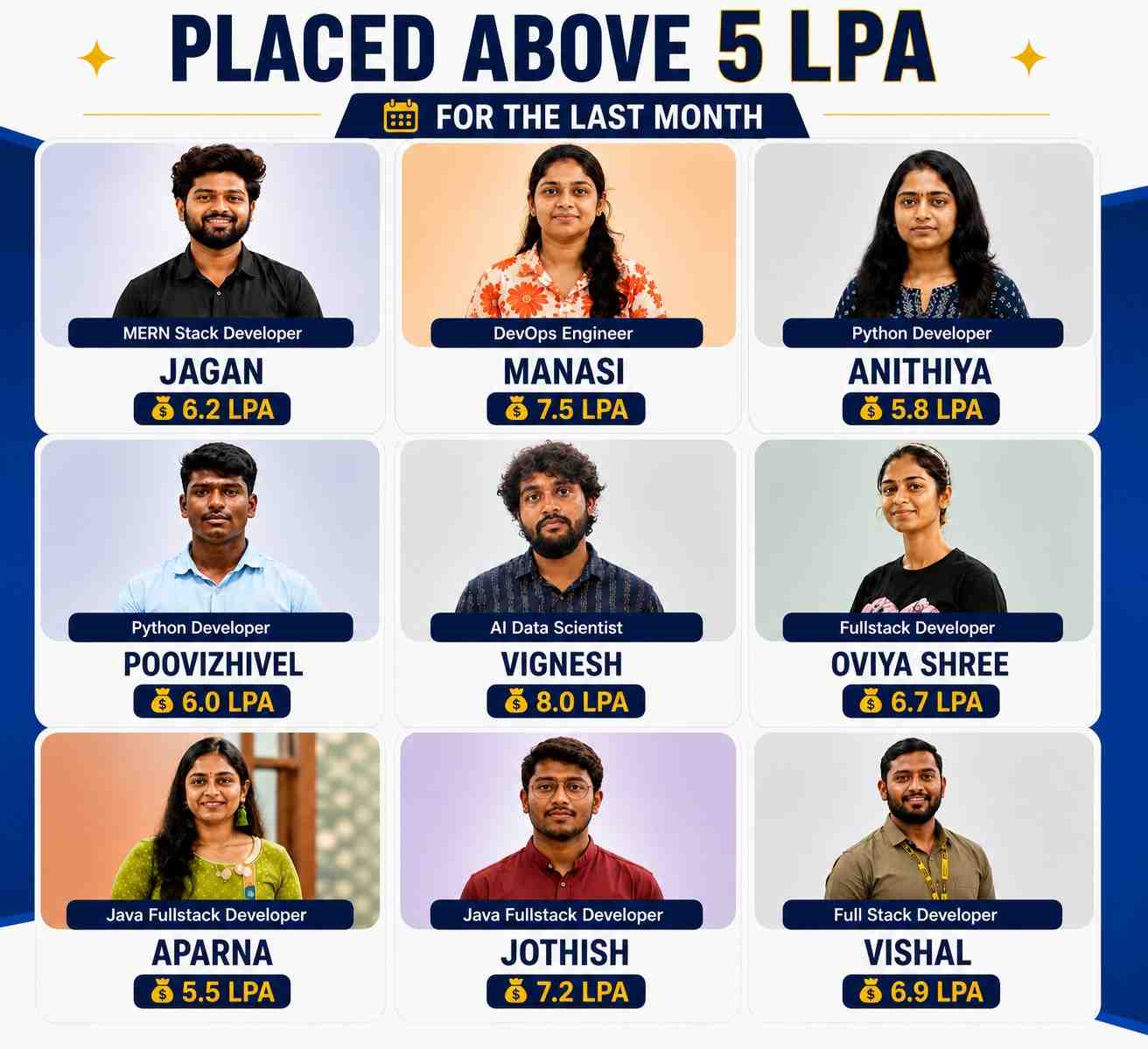
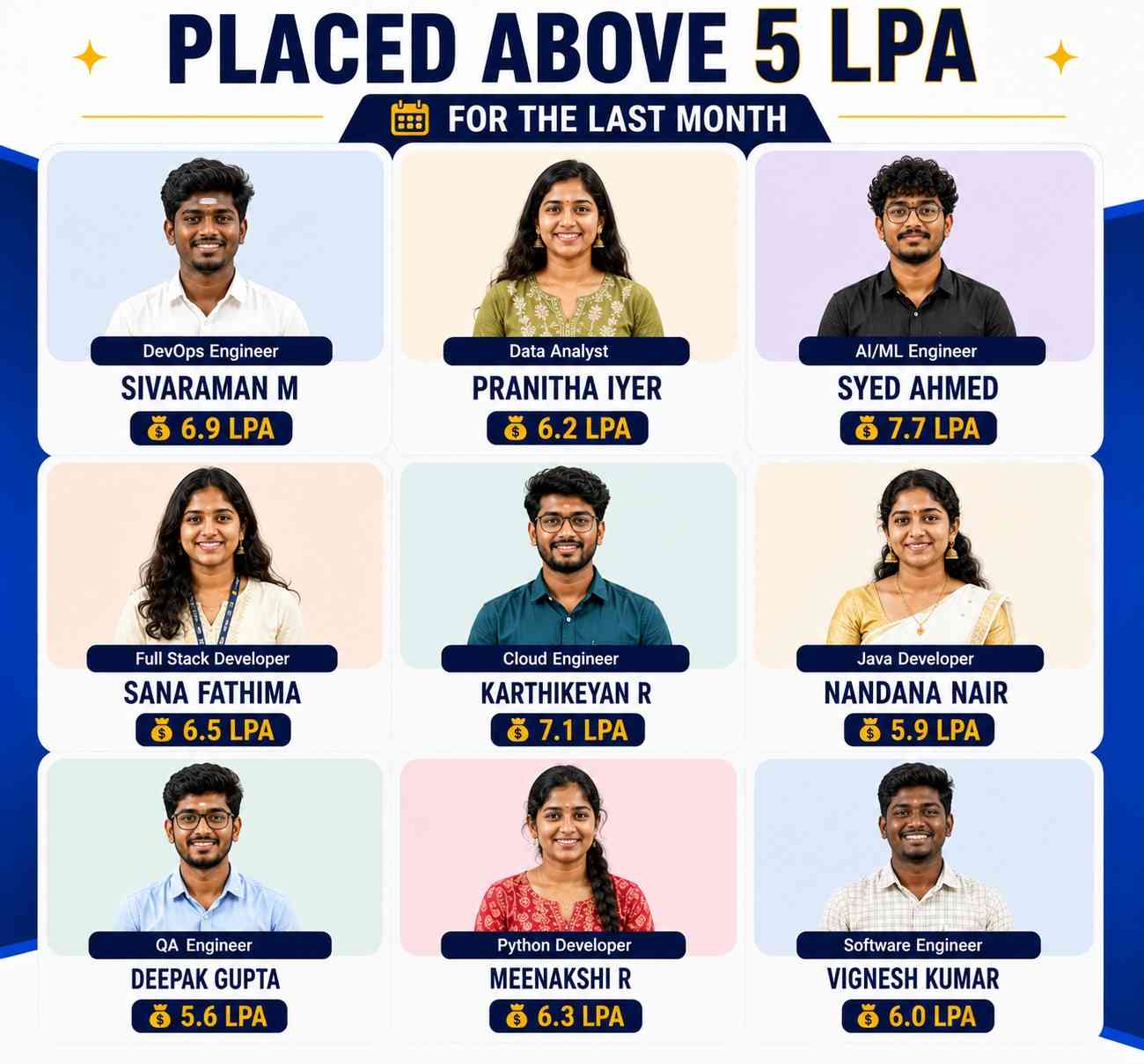
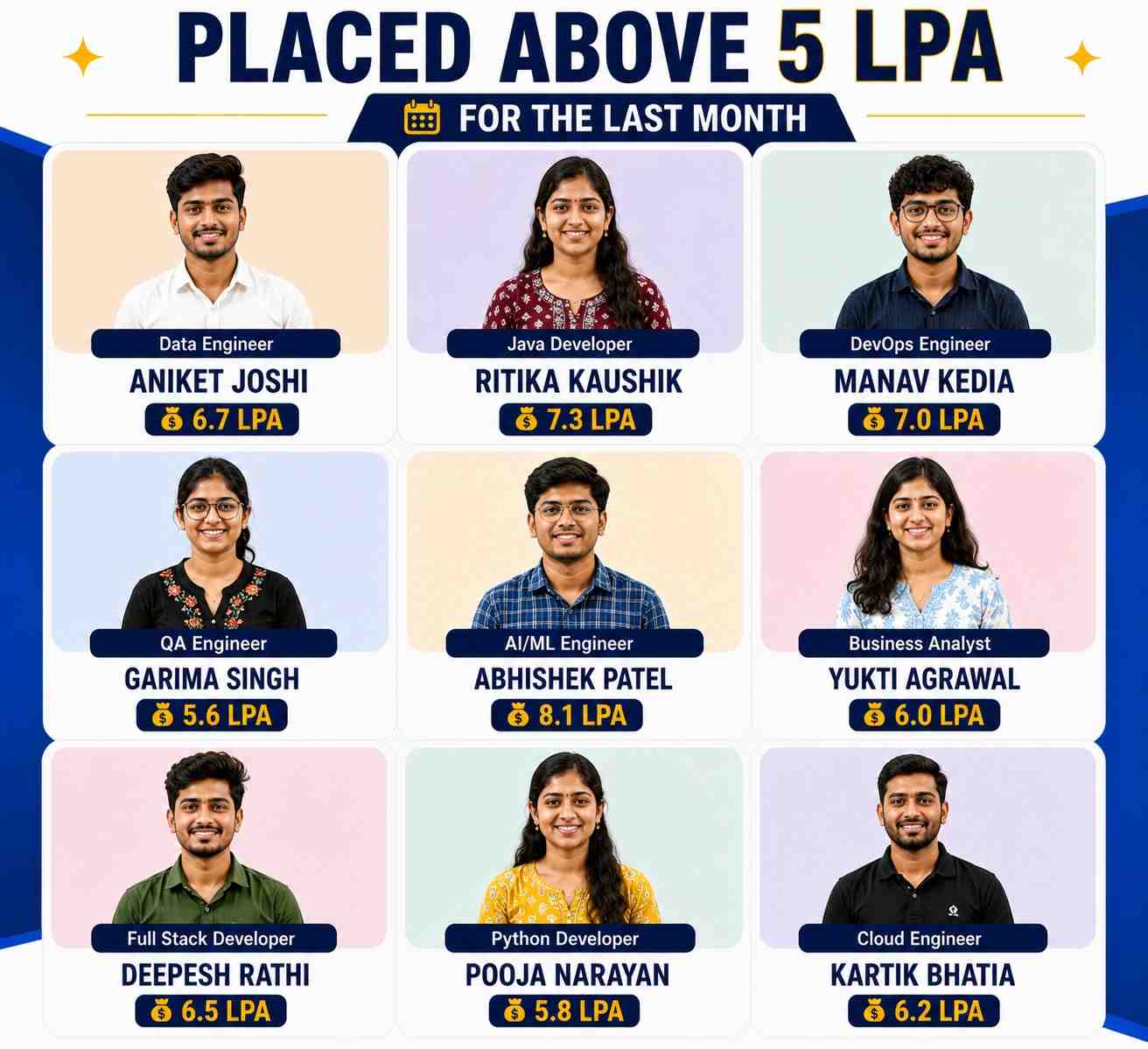
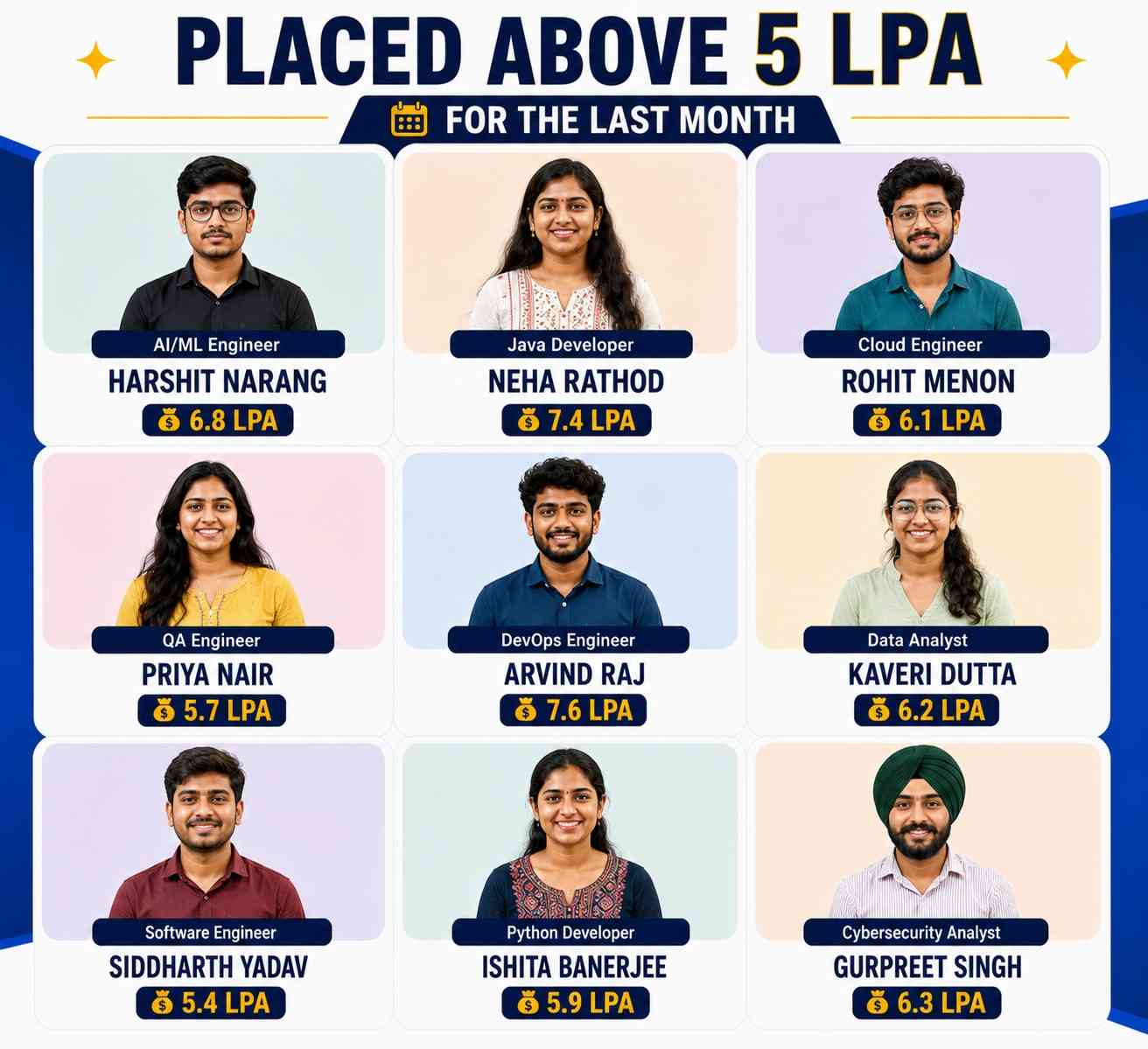
11678+

(Placed)
Freshers To IT

6182+

(Placed)
NON-IT To IT

9201+

(Placed)
Career Gap

5849+

(Placed)
Less Then 60%

Our Hiring Partners

Overview of Gen AI and Machine Learning Course

The Gen AI and Machine Learning Course in Kalyan Nagar is designed for freshers who want to start a career in Artificial Intelligence and Data Science. Our Gen AI and Machine Learning Training in Kalyan Nagar covers basic to advanced concepts in a simple and easy-to-understand way. You will learn Python, Machine Learning, Deep Learning, and Generative AI with practical examples and hands-on projects. We also provide Gen AI and Machine Learning Internships to help you gain real industry experience. Students receive support for Gen AI and Machine Learning Placement with interview preparation and resume building. After successful completion, you will earn a Gen AI and Machine Learning Certification course credential to boost your career opportunities.

What You'll Learn From Gen AI and ML Course

Learn the fundamentals of Artificial Intelligence, Machine Learning, and Generative AI with simple explanations and practical examples.

Understand how algorithms, data models, and neural networks work through our Gen AI and Machine Learning Training in Kalyan Nagar.

Gain hands-on experience in Python programming, data preprocessing, model building, and performance evaluation using real-time datasets.

Explore advanced concepts such as Deep Learning, NLP, prompt engineering, and AI model optimization in our Gen AI and Machine Learning Course in Kalyan Nagar.

Work on live projects, case studies, and industry-based assignments to build strong technical and analytical skills.

Develop problem-solving abilities and confidence to handle real-world AI challenges and prepare for job opportunities in the AI domain.

Additional Info

Course Highlights

  • Gain expertise in Gen AI and Machine Learning, including AI fundamentals, ML algorithms, Power Query, DAX, and interactive reporting.
  • Receive personalized job assistance with placement opportunities in AI & ML roles at top companies.
  • Join 11,000+ students who have successfully trained and been placed through 350+ hiring partners.
  • Learn from mentors with 10+ years of real-world experience in AI, Machine Learning, and data analytics.
  • Experience beginner-friendly lessons, live projects, and complete career guidance at every stage.
  • Enjoy flexible learning schedules, affordable pricing, and Gen AI & ML internships for freshers and career changers.
  • Enhance your career with a recognized Gen AI & ML certification to improve credibility and job opportunities.

Key Advantages of Taking an Gen AI And Machine Learning Training

  • Faster Problem Solving – Gen AI and ML can quickly analyze problems using large datasets. They identify patterns and root causes that humans might take hours to find. Solutions are generated efficiently and accurately, reducing downtime in operations. Businesses can respond to challenges immediately, saving time and resources. Faster problem solving improves overall productivity and decision-making confidence.
  • Personalized Experiences – AI can create tailored experiences for users by understanding their preferences and behavior. Customers receive relevant recommendations, products, or services that match their needs. Personalization makes interactions more engaging and improves satisfaction. Companies can strengthen loyalty by providing customized solutions consistently. Personalized experiences help businesses retain more customers and grow.
  • Resource Optimization – Machine Learning helps allocate resources in the most efficient way possible. It predicts demand, avoids shortages or overuse, and reduces waste. Time, manpower, and materials are used wisely, which increases productivity. By optimizing resources, businesses save costs while maintaining high performance. This ensures sustainable growth and better operational efficiency.
  • Learning and Adaptation – ML systems improve over time as they process more data, learning from past patterns. They adapt to changes in trends, customer behavior, and market conditions. Decisions get smarter and more reliable with continuous learning. Businesses can stay updated without constant manual adjustments. Adaptive AI ensures long-term effectiveness and keeps companies competitive.
  • New Business Opportunities – Gen AI opens doors for innovative products, services, and business models. Companies can explore ideas that were previously too complex or time-consuming. AI enables entry into new markets and creation of unique solutions. Businesses can experiment and innovate without high risk. This generates growth, revenue, and differentiation in the competitive market.

Important Tools Covered in Gen AI And Machine Learning Course in Kalyan Nagar

  • IBM Watson – IBM Watson is an AI platform that helps build intelligent applications and analytics solutions. It offers tools for language processing, speech recognition, and image analysis. Watson can understand and analyze unstructured data for insights. Companies use it in healthcare, finance, and customer support. Its user-friendly interface allows both beginners and professionals to develop AI solutions.
  • Apache Spark MLlib – Apache Spark MLlib is a machine learning library for big data processing. It provides scalable tools for classification, regression, and clustering. Spark MLlib can handle large datasets efficiently and integrates well with other big data tools. It is widely used for predictive analytics and data-driven applications. With Spark, businesses can gain insights from massive amounts of information.
  • H2O.ai – H2O.ai is an open-source AI platform for building machine learning models quickly. It supports automation of model training and deployment. H2O.ai is popular for its speed, scalability, and ease of use. Users can apply it to predictive analytics, fraud detection, and customer behavior analysis. It simplifies complex AI tasks for both beginners and professionals.
  • DataRobot – DataRobot is a platform that automates machine learning model building and deployment. It allows users to create accurate models without deep coding knowledge. DataRobot supports regression, classification, and time series analysis. It is widely used in business for predictive analytics and decision-making. The platform saves time and reduces human error in model development.
  • Colab by Google – Google Colab is a free cloud-based environment for writing and running Python code, especially for AI and ML projects. It allows users to build and test models without installing software locally. Colab provides access to GPUs for faster computations. Beginners can experiment with datasets and machine learning libraries easily. It is widely used by students, researchers, and developers for AI projects.

Top Frameworks Every Gen AI And Machine Learning Should Know

  • JAX – JAX is a Python library for high-performance numerical computing and machine learning. It combines automatic differentiation with optimized hardware acceleration for fast computations. JAX is often used in research for building AI models and experimenting with neural networks. Its functional programming style allows easy experimentation and reproducibility. JAX is gaining popularity for AI research and large-scale projects.
  • Chainer – Chainer is a flexible deep learning framework that allows dynamic computation graphs. It is ideal for building complex AI models that require flexibility during training. Chainer is widely used in academia and industry for research in AI and robotics. Its user-friendly interface helps beginners implement neural networks efficiently. Chainer supports multi-GPU training and distributed computing for large datasets.
  • TorchScript – TorchScript is part of the PyTorch ecosystem that helps convert Python-based models into deployable, production-ready code. It allows seamless transition from research to deployment without rewriting models. TorchScript improves model performance and enables faster execution in real-world applications. It is often used in AI-powered mobile and web apps. Developers appreciate it for simplifying production-level AI deployment.
  • OpenVINO – OpenVINO is a framework developed by Intel for optimizing and deploying AI models on Intel hardware. It improves performance for vision and deep learning applications. OpenVINO allows faster inference, making AI models run efficiently on edge devices. It supports multiple deployment platforms, from servers to embedded devices. OpenVINO is widely used in robotics, smart cameras, and industrial AI solutions.
  • TFLite (TensorFlow Lite) – TFLite is a lightweight version of TensorFlow for deploying AI models on mobile and embedded devices. It allows developers to run machine learning models on smartphones, IoT devices, and microcontrollers. TFLite optimizes models for low-latency and low-power applications. It supports image, audio, and text-based AI tasks. TFLite is widely used to bring AI capabilities to everyday devices efficiently.

Essential Skills You’ll Learn in a Gen AI and Machine Learning Certification Training

  • Programming for AI – In Gen AI and Machine Learning, you will master programming languages like Python to implement models. This skill allows you to write algorithms, manipulate datasets, and automate AI workflows. Coding skills are essential for both experimentation and deploying models in real applications. Learning programming also helps you integrate AI into real-world projects. It builds the foundation for advanced AI development.
  • Feature Engineering – You will learn how to select and transform relevant features from raw data to improve model performance. Feature engineering is key to making your AI models more accurate and effective. It involves creating new variables, normalizing data, and handling missing information. This skill is crucial for both beginner and advanced AI projects. Proper feature engineering often determines the success of machine learning models.
  • Natural Language Processing (NLP) – You will gain the ability to work with text data using NLP techniques. This includes tasks like sentiment analysis, text classification, and chatbot development. NLP allows AI systems to understand and interact using human language. It is widely used in customer support, content analysis, and AI-driven communication. This skill is highly valuable in the growing field of language-based AI applications.
  • AI Model Deployment – You will learn how to deploy AI and machine learning models in real-world applications. Deployment ensures that models work effectively outside the training environment. This includes integrating models into websites, apps, or business systems. Understanding deployment makes your AI solutions practical and usable. It is an essential skill for turning AI knowledge into real-world results.
  • Critical Analysis of Data – You will develop the ability to interpret data critically and make informed decisions. This skill helps in identifying trends, detecting anomalies, and validating AI model outputs. Critical data analysis ensures that your models provide accurate and actionable insights. It is important for solving complex problems and improving AI applications. Strong analytical thinking sets the foundation for a successful AI career.

Key Roles and Responsibilities of Gen AI and Machine Learning Profession

  • Generative AI Developer – Generative AI Developers build models that can create content such as text, images, or music. Responsibilities include training models, fine-tuning outputs, and deploying solutions for creative applications. They work with large datasets and optimize models for accuracy and creativity. Collaboration with designers, researchers, and engineers is common. This role focuses on creating AI systems that can generate original content for business or entertainment.
  • Computer Vision Engineer – Computer Vision Engineers develop AI systems that interpret visual data like images or videos. Responsibilities include designing convolutional neural networks, preprocessing visual data, and testing model performance. They implement AI solutions for object detection, facial recognition, or autonomous vehicles. Collaboration with AI teams ensures models are integrated effectively into applications. This role focuses on enabling machines to “see” and analyze visual information accurately.
  • AI Trainer / Model Annotator – AI Trainers or Model Annotators prepare labeled datasets for training AI models. Responsibilities include annotating images, text, or audio data accurately and consistently. They ensure the quality of data used to train models, which directly impacts AI performance. Collaboration with engineers and data scientists ensures models learn correctly from examples. This role is essential for building reliable and accurate AI systems.
  • Robotics AI Engineer – Robotics AI Engineers integrate machine learning into robotic systems for automation and intelligent behavior. Responsibilities include programming robots, training AI models, and testing performance in real environments. They implement solutions for navigation, object recognition, and task automation. Collaboration with hardware engineers ensures smooth system integration. This role focuses on creating intelligent robots that can perform complex tasks efficiently.
  • AI Quality Assurance Specialist – AI Quality Assurance Specialists test AI models to ensure they perform correctly and reliably. Responsibilities include validating model predictions, detecting biases, and monitoring system performance. They ensure that AI solutions meet quality standards before deployment. Collaboration with data scientists and engineers is essential for continuous improvement. This role ensures that AI applications are safe, accurate, and trustworthy.

Why Gen AI and Machine Learning is the Smart Choice for Freshers

  • Cutting-Edge Technology Exposure – A Gen AI and Machine Learning course introduces freshers to advanced technologies shaping the future. Exposure to AI tools, frameworks, and algorithms provides hands-on experience. Learning cutting-edge technologies increases marketability in the job market. It helps build knowledge relevant to real-world applications. Staying updated with AI innovations ensures a competitive edge in one’s career.
  • High Job Stability – With AI adoption growing in every sector, job stability in this field is strong. Companies are investing in AI solutions long-term, creating consistent demand for skilled professionals. Freshers entering AI have a lower risk of unemployment. The technology’s importance across industries ensures continuous opportunities. This makes AI a secure career choice in the evolving job market.
  • Problem-Solving Skills – AI and ML training develops analytical and problem-solving abilities. Freshers learn to approach challenges logically and design AI models to find solutions. This skill is valued across business, technology, and research domains. Working with complex data and algorithms improves critical thinking. Strong problem-solving skills also enhance employability and career versatility.
  • Exposure to Real-World Projects – Courses in Gen AI and Machine Learning often include practical projects that mirror industry challenges. Freshers gain hands-on experience with datasets, algorithms, and model deployment. Real-world project experience bridges the gap between theory and practice. It increases confidence and readiness for professional roles. Employers prefer candidates who have demonstrated practical AI skills.
  • Opportunities Across Industries – AI and ML skills are applicable in multiple domains such as healthcare, finance, e-commerce, and entertainment. Freshers trained in these technologies can work in diverse sectors and roles. The versatility allows career flexibility and exploration of different paths. Industry-wide demand ensures constant growth opportunities. This makes AI a dynamic and promising career option for beginners.

Landing Remote Jobs with Gen AI and Machine Learning Skills

  • Independent Work Capabilities – AI and ML projects often allow professionals to work independently, making remote work feasible. Model training, data processing, and analysis can be done without constant supervision. Independent work skills increase employability in virtual environments. Professionals can deliver results from any location with internet access. Independence in AI tasks makes remote roles highly manageable.
  • Remote-Friendly Tools and Platforms – Gen AI and Machine Learning rely on platforms like TensorFlow, PyTorch, and Colab that are accessible online. These tools enable coding, training, and testing models from home. Remote access to datasets and compute resources allows seamless project execution. Professionals can collaborate online while completing complex AI tasks. Familiarity with remote-friendly tools is crucial for virtual work.
  • Flexibility in Work Hours – Many AI tasks can be scheduled asynchronously, allowing flexible working hours. Professionals can train models, evaluate results, and adjust pipelines according to personal schedules. Flexibility suits global teams operating across different time zones. This reduces stress and increases productivity for remote workers. AI skills make it easier to adapt work hours without affecting output.
  • Diverse Remote Roles – AI and ML skills apply to various remote roles like data analyst, AI engineer, NLP developer, or computer vision specialist. This diversity provides multiple pathways to work remotely in different sectors. Professionals can explore different projects and industries without being tied to a single location. The variety of remote opportunities ensures continuous career options. AI expertise makes switching roles and projects easier.
  • Project Visibility and Impact – Remote AI projects often allow professionals to see measurable results from their work. Models deployed remotely can improve business decisions, automation, and analytics instantly. This visibility motivates individuals and demonstrates value to employers. Working on impactful projects enhances career growth and recognition. AI skills ensure meaningful contributions even in a remote environment.

What to Expect in Your First Gen AI and Machine Learning Job

  • Working with Large Datasets – Entry-level AI positions often involve handling large volumes of data. Responsibilities include storing, retrieving, and analyzing data efficiently. Learning to manage big datasets improves technical skills and problem-solving abilities. It teaches how data influences AI model performance. Early experience with large datasets prepares professionals for complex projects.
  • Experimenting with AI Algorithms – First jobs include testing multiple machine learning algorithms to find the best solution. Experimentation involves adjusting parameters, comparing models, and optimizing results. This helps in understanding algorithm behavior and model performance. It also develops critical thinking in evaluating solutions. Experimentation experience is key to becoming an effective AI professional.
  • Team Collaboration and Feedback – AI projects are rarely solo tasks; teamwork is essential. Freshers often collaborate with engineers, analysts, and product managers. Feedback from colleagues helps improve models and approaches. Learning to accept and implement feedback is an important professional skill. Collaboration ensures that AI solutions are practical and aligned with organizational goals.
  • Learning AI Development Tools – Using frameworks like Keras, Hugging Face, or scikit-learn is common in first jobs. Practical experience with these tools accelerates learning and efficiency. Familiarity with platforms helps in building, training, and deploying models. Early exposure to industry-standard tools is crucial for career growth. Tool proficiency becomes a valuable asset in AI roles.
  • Understanding Deployment and Maintenance – Even entry-level roles may involve helping deploy models or monitoring performance. Responsibilities include tracking predictions, identifying errors, and updating models when necessary. This experience teaches the full lifecycle of AI systems in practice. Understanding deployment ensures models remain effective in real-world use. It also prepares professionals for more advanced responsibilities in future roles.

Top Companies are Hiring for Gen AI and Machine Learning Professionals

  • Adobe – Adobe is a software company known for creative tools like Photoshop, Illustrator, and AI-powered Adobe Sensei. AI professionals work on machine learning models for image recognition, content recommendation, and automation. Employees collaborate on projects that enhance creative software with AI features. The company encourages innovation and hands-on learning with real datasets. Freshers can explore AI applications in media, design, and creative industries.
  • Uber – Uber is a global ride-sharing and logistics company using AI for route optimization, pricing, and predictive analytics. Machine learning professionals develop models for demand forecasting, driver allocation, and autonomous vehicles. The company emphasizes real-time data processing and scalable AI solutions. Working at Uber exposes employees to high-pressure, real-world AI challenges. Freshers can gain experience applying AI to solve operational and logistical problems.
  • LinkedIn – LinkedIn, a professional networking platform, uses AI for recommendations, job matching, and user engagement. Machine learning professionals develop algorithms for content personalization, connection suggestions, and analytics. Employees work on large-scale data and predictive models for global users. LinkedIn emphasizes data-driven decision-making and innovation in AI. Freshers can gain experience in AI applications that impact millions of professionals worldwide.
  • Spotify – Spotify is a music streaming platform using AI for recommendations, playlist generation, and user behavior analysis. Machine learning professionals develop models for music personalization and audio analysis. The company encourages experimentation with AI to enhance user experience. Employees gain experience with large datasets and real-time recommendation systems. Freshers can learn AI applications in entertainment, media, and user analytics.
  • Oracle – Oracle is a global software and cloud solutions company integrating AI into business intelligence, automation, and analytics. Machine learning professionals work on predictive analytics, data modeling, and AI-powered enterprise applications. The company offers opportunities to work on both cloud platforms and AI research projects. Employees gain exposure to AI solutions for multiple industries. Freshers can start careers applying AI in practical business and enterprise contexts.
Show More

Upcoming Batches For Classroom and Online

Weekdays
09 - Mar - 2026
08:00 AM & 10:00 AM
Weekdays
11 - Mar - 2026
08:00 AM & 10:00 AM
Weekends
14 - Mar - 2026
(10:00 AM - 01:30 PM)
Weekends
15 - Mar - 2026
(09:00 AM - 02:00 PM)
Can't find a batch you were looking for?
INR ₹16500
INR ₹36000

OFF Expires in

Who Should Take an Gen AI and Machine Learning Course

IT Professionals

Non-IT Career Switchers

Fresh Graduates

Working Professionals

Diploma Holders

Professionals from Other Fields

Salary Hike

Graduates with Less Than 60%

Show More

Job Roles For Gen AI And Machine Learning Course in Offline

Applied Researcher

Machine Learning Engineer

MLOps Engineer

Data Engineer

Data Scientist

AI Ethicist

AI Product Manager

Computer Vision Engineer

Show More

Tools Covered For Gen AI And Machine Learning Course

TensorFlow PyTorch Keras Scikit-learn Hugging Face OpenAI APIs Google Vertex AI Azure Machine Learning

What’s included ?

Convenient learning format

📊 Free Aptitude and Technical Skills Training

  • Learn basic maths and logical thinking to solve problems easily.
  • Understand simple coding and technical concepts step by step.
  • Get ready for exams and interviews with regular practice.
Dedicated career services

🛠️ Hands-On Projects

  • Work on real-time projects to apply what you learn.
  • Build mini apps and tools daily to enhance your coding skills.
  • Gain practical experience just like in real jobs.
Learn from the best

🧠 AI Powered Self Interview Practice Portal

  • Practice interview questions with instant AI feedback.
  • Improve your answers by speaking and reviewing them.
  • Build confidence with real-time mock interview sessions.
Learn from the best

🎯 Interview Preparation For Freshers

  • Practice company-based interview questions.
  • Take online assessment tests to crack interviews
  • Practice confidently with real-world interview and project-based questions.
Learn from the best

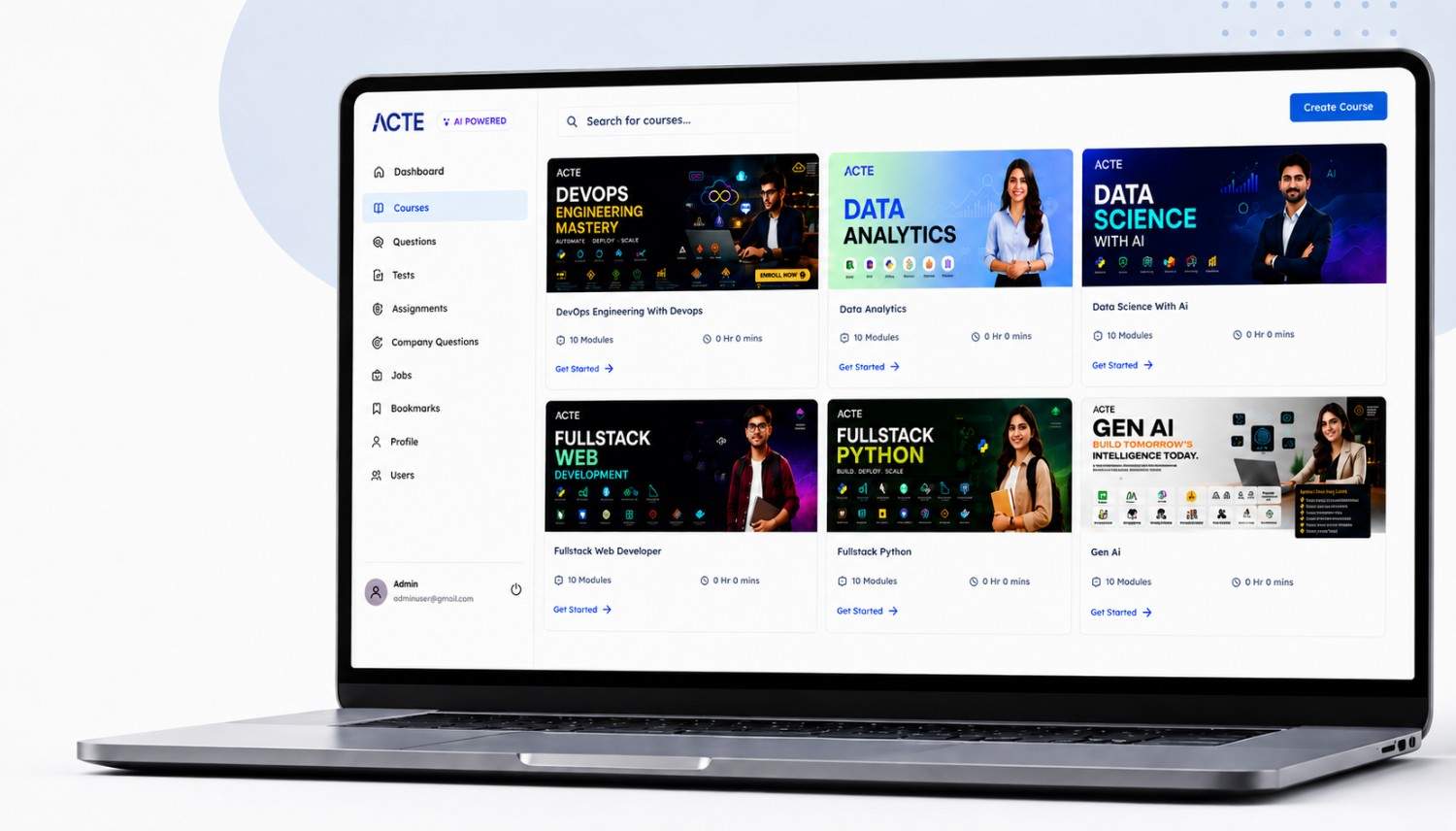
🧪 LMS Online Learning Platform

  • Explore expert trainer videos and documents to boost your learning.
  • Study anytime with on-demand videos and detailed documents.
  • Quickly find topics with organized learning materials.

Gen AI And Machine Learning course Curriculum

  • 🏫 Classroom Training
  • 💻 Online Training
  • 🚫 No Pre Request (Any Vertical)
  • 🏭 Industrial Expert

Our Gen AI and Machine Learning Training in Kalyan Nagar provides a comprehensive curriculum designed for beginners and aspiring AI professionals. This industry-focused Gen AI and Machine Learning Training covers core AI concepts, machine learning algorithms, data preprocessing, model building, and deployment techniques. As part of the Gen AI and Machine Learning Course in Kalyan Nagar, students gain practical exposure through real-time projects and hands-on assignments. We also offer Gen AI and Machine Learning Internships in Kalyan Nagar to help learners build real-world experience and strengthen their technical skills. The program includes training in data visualization, model optimization, and working with multiple datasets. Additionally, dedicated placement assistance supports resume building, interview preparation, and career guidance to help you secure a successful role in the AI industry.

  • Core Programming Concepts – Start with syntax, variables, data types, and OOP to build a strong coding foundation.
  • Advanced Learning & Frameworks – Learn file operations, decorators, and frameworks like Django and Flask for robust applications.
  • Practical Project Work – Apply knowledge in real-world dashboards, AI apps, and automation projects.
  • Tools & Cloud Deployment – Use PyCharm, Git, and Jupyter to deploy AI and ML programs seamlessly.
Introduction to Artificial Intelligence
Data Preprocessing and Exploratory Data Analysis (EDA)
Supervised Machine Learning Algorithms
Unsupervised Learning and Clustering Techniques
Neural Networks and Deep Learning Frameworks
Natural Language Processing (NLP) Essentials
Model Deployment and AI Ethics

Establish a strong foundation in programming and AI concepts:

  • AI Basics – History, types and real world applications
  • Python Fundamentals – Setting up and using interactive coding environment
  • Jupyter Notebook – Interactive coding environment setup and navigation
  • Essential Libraries – NumPy and Pandas for data manipulation

Prepare and explore data for better model results:

  • Data Cleaning – Handling missing data, duplicates and outliers
  • Feature Engineering – Creating new features and scaling data
  • Visualization – Using Matplotlib and Seaborn to visualize data patterns
  • Statistical Techniques – Correlation, distributions and summaries

Learn core predictive modeling techniques:

  • Regression Models – Linear and Logistic Regression fundamentals
  • Decision Trees and Random Forests – Understanding ensemble methods
  • Model Training – Concepts of training, testing, overfitting and underfitting
  • Evaluation Metrics – Accuracy, precision, recall and F1-score

Discover how to analyze unlabeled data:

  • Clustering Basics – K-Means and Hierarchical Clustering algorithms
  • Dimensionality Reduction – Principal Component Analysis (PCA)
  • Data Grouping – Identifying patterns without labels
  • Visualization of Clusters – Plotting clusters using Python tools

Explore deep learning models and frameworks:

  • Neural Network Fundamentals – Layers, neurons and activation functions
  • TensorFlow and Keras – Installing and using popular deep learning libraries
  • Model Training – Backpropagation, loss functions and optimizers
  • Building Deep Models – Creating and fine tuning neural networks

Understand how machines process human language:

  • Text Preprocessing – Tokenization, stop words removal, stemming and lemmatization
  • Text Representation – Bag of Words, TF-IDF and word embeddings (Word2Vec, GloVe)
  • Popular NLP Libraries – Using NLTK and SpaCy for language tasks
  • Applications – Sentiment analysis, text classification and chatbots basics

Learn to deploy models and understand ethical AI practices:

  • Model Serialization – Saving and loading models with Pickle and Joblib
  • Deployment Tools – Basics of Flask and FastAPI to serve AI models
  • Model Monitoring – Tracking model performance and updating models
  • Ethical Considerations – Addressing bias, fairness and transparency in AI

🎁 Free Addon Programs

Aptitude, Spoken English.

🎯 Our Placement Activities

Daily Task, Soft Skills, Projects, Group Discussions, Resume Preparation, Mock Interview.

Gain Practical Experience in Gen AI And ML Projects

Placement Support Overview

Today's Top Job Openings for Gen AI And Machine Learning Professionals

Junior Gen AI Engineer

Company Code: TCS896

Bangalore, Karnataka

₹50,000 to ₹75,000 per month

B.E/B.Tech in CS, IT or MCA

Exp 0–2 years

  • We’re seeking entry-level engineers to assist in building and fine-tuning generative AI models, work on model training pipelines and support deployment of AI services under senior supervision.
  • Easy Apply

    Machine Learning Developer

    Company Code: CTS328

    Bangalore, Karnataka

    ₹30,000 – ₹45,000 per month

    B.Sc/B.Tech in CS, Mathematics or Statistics

    Exp 0–2 years

  • We’re looking for freshers ready to perform data preprocessing, implement ML algorithms (classification/regression) and contribute to model validation and reporting tasks for various business use-cases.
  • Easy Apply

    NLP Engineer (Entry Level)

    Company Code: IMC664

    Bangalore, Karnataka

    ₹40,000 – ₹60,000 per month

    B.Tech/B.E (CS/IT) or M.Sc in Linguistics with programming

    Exp 0–2 years

  • Now accepting applications for engineers to design and train NLP pipelines, work with tokenization, embeddings and transformer models for text-based applications such as chatbots and language summarisation.
  • Easy Apply

    Computer Vision Engineer

    Company Code: WPI497

    Bangalore, Karnataka

    ₹45,000 – ₹65,000 per month

    B.E/B.Tech in Electronics, CS or M.Tech in Image Processing

    Exp 0–2 yearS

  • We’re hiring fresh graduates to assist in building vision models (object detection/segmentation), data annotation workflows and optimise model performance for image-based enterprise applications.
  • Easy Apply

    AI Data Scientist

    Company Code: IBM241

    Bangalore, Karnataka

    ₹50,000 – ₹70,000 per month

    B.Sc/B.Tech in CS/Data Science or M.Sc in Statistics

    Exp 0–2 yearS

  • Join our team of junior data scientists to perform exploratory data analysis, develop predictive models, create insightful visualizations, and assist in driving business decisions using data-driven techniques and machine learning frameworks.
  • Easy Apply

    MLOps Engineer

    Company Code: AWS826

    Bangalore, Karnataka

    ₹55,000 – ₹80,000 per month

    B.Tech/B.E in CS or Information Systems + certification in DevOps/ML

    Exp 0–2 years

  • Exciting opportunities available for skilled professionals to optimize ML model deployment pipelines, manage CI/CD workflows, monitor real-time model performance and support the scaling of advanced AI solutions across production environments.
  • Easy Apply

    Prompt Engineer

    Company Code: MSC437

    Bangalore, Karnataka

    ₹50,000 – ₹85,000 per month

    B.Tech/B.E in CS, IT or equivalent with strong Python and LLM understanding

    Exp 0–2 years

  • Opportunities available for skilled prompt engineers to design and refine prompts for large language models. Collaborate with product teams to improve generative AI features, evaluate model outputs and fine tune responses to achieve optimal performance and accuracy.
  • Easy Apply

    Deep Learning Research Engineer – Entry Level

    Company Code: NVI729

    Bangalore, Karnataka

    ₹60,000 – ₹90,000 per month

    M.E/M.Tech in Computer Science, Electrical Engineering or AI

    Exp 0–2 year

  • Opening for aspiring research professionals to explore advanced neural architectures such as GANs and VAEs, conduct deep learning experiments, analyze outcomes and contribute to innovative model development under the mentorship of experienced scientists.
  • Easy Apply

    Highlights for Gen AI and Machine Learning Internships in Kalyan Nagar

    Real Time Projects

    • 1. Gain hands-on experience by working on live Gen AI and Machine Learning-based applications.
    • 2. Understand real-world problem-solving through scenarios.
    Book Session

    Skill Development Workshops

    • 1. Participate in focused sessions on trending technologies and tools.
    • 2. Learn directly from industry experts through guided practical exercises.
    Book Session

    Employee Welfare

    • 1. Enjoy benefits like health coverage, flexible hours, and wellness programs.
    • 2. Companies prioritize mental well-being and work-life balance for all employees.
    Book Session

    Mentorship & Peer Learning

    • 1. Learn under experienced mentors who guide your technical and career growth.
    • 2. Collaborate with peers to enhance learning through code reviews and group projects.
    Book Session

    Soft Skills & Career Readiness

    • 1. Improve communication, teamwork, and time management skills.
    • 2. Prepare for interviews and workplace dynamics with mock sessions and guidance.
    Book Session

    Certification

    • 1. Earn recognized credentials to validate your Gen AI and Machine Learning skills.
    • 2. Boost your resume with course or project completion certificates from reputed platforms.
    Book Session

    Sample Resume for Gen AI And Machine Learning (Fresher)

    • 1. Simple and Neat Resume Format

      – Use a clean layout with clear sections like summary, skills, education, and projects.

    • 2. List of Technologies You Know

      – Mention skills like Machine Learning, Deep Learning, NLP, Computer Vision, Data Preprocessing, Model Evaluation, AI Optimization.

    • 3. Real-Time Projects and Achievements

      – Add 1–2 real-time projects with a short description and the tools used.

    Top Gen AI And Machine Learning Interview Questions and Answers (2026 Guide)

    Ans:

    Machine learning is a branch of AI where systems learn from data instead of fixed rules. By analyzing examples, models detect trends and make predictions, helping computers adapt and improve over time.

    Ans:

    ML methods include supervised learning, unsupervised learning, and reinforcement learning. Supervised learning uses labeled inputs, unsupervised finds hidden patterns, and reinforcement learning improves through trial-and-error with feedback.

    Ans:

    Overfitting occurs when a model memorizes training data, including noise, and performs poorly on new data. It’s like rote learning. Countermeasures include adding more data, regularization, dropout, and validation techniques to enhance generalization.

    Ans:

    The bias-variance balance deals with model accuracy and generalization. High bias models underfit by being too simple, while high variance models overfit by being too complex. Achieving the right balance leads to better predictions on unseen data.

    Ans:

    Cross-validation splits data into multiple folds for training and testing iteratively. This approach provides a reliable assessment of the model’s performance on unseen data, ensuring that evaluation is not biased by a single dataset.

    Ans:

    Feature engineering improves model efficiency and prediction quality by creating and refining input variables. Selecting relevant features and transforming raw data ensures better accuracy, faster training, and improved generalization.

    Ans:

    A confusion matrix displays predicted vs actual outcomes for classification tasks. It highlights true positives, true negatives, false positives, and false negatives, helping calculate metrics like precision, recall, and F1-score for model assessment.

    Ans:

    Gradient descent optimizes models by iteratively updating parameters to minimize the loss function. By moving in the direction opposite to the gradient, it gradually reduces errors and improves model performance.

    Ans:

    Ensemble modeling combines predictions from multiple models to improve accuracy and reduce errors. Techniques like bagging (Random Forest) and boosting (XGBoost, AdaBoost) aggregate outputs to produce more stable results.

    Ans:

    Deep learning uses neural networks with multiple layers to automatically learn complex patterns. Unlike traditional ML that requires manual feature selection, deep learning excels at handling large datasets for tasks like image, audio, and text analysis.

    Company-Specific Interview Questions from Top MNCs

    1. How can generative AI be distinguished from traditional ML?

    Ans:

    Traditional ML predicts results by learning from existing datasets, whereas generative AI creates new content that resembles real-world data. This includes generating text, images, audio, or video with realistic patterns learned from input data.

    2. What is the difference between labeled and unlabeled learning methods?

    Ans:

    Labeled learning, or supervised learning, trains models using known outputs, such as predicting product demand. Unlabeled learning, or unsupervised learning, explores hidden structures in data, like clustering users by behavior patterns, uncovering insights without labels.

    3. Why is the Transformer architecture vital in generative AI?

    Ans:

    Transformers use self-attention mechanisms to process long sequences efficiently. They form the foundation for advanced generative models like GPT, enabling them to create coherent, context-sensitive text or other sequential outputs.

    4. What problems does overfitting cause and how can it be addressed?

    Ans:

    Overfitting causes a model to perform well on training data but fail on new data. Techniques such as dropout, regularization, data augmentation, and cross-validation help models generalize better and avoid memorizing noise.

    5. How do Generative Adversarial Networks (GANs) function?

    Ans:

    GANs have a generator that creates synthetic data and a discriminator that evaluates its authenticity. The two networks compete, improving the generator over time to produce highly realistic outputs like images or audio.

    6. What does feature engineering involve in ML?

    Ans:

    Feature engineering is the process of preparing and refining data inputs for better model performance. It includes creating new features, scaling variables, and encoding categorical data to improve prediction accuracy and training efficiency.

    7. How does fine-tuning help in AI projects?

    Ans:

    Fine-tuning adapts large pre-trained models to domain-specific tasks using smaller datasets. It enhances accuracy, reduces computation, and allows leveraging prior learning without starting from scratch.

    8. What is reinforcement learning and its practical uses?

    Ans:

    Reinforcement learning trains agents to act in an environment using rewards and penalties. Applications include autonomous vehicles, robotics, game AI, and adaptive systems that improve decision-making over time.

    9. How is the quality of generative AI evaluated?

    Ans:

    Generative AI is assessed with both automated metrics like BLEU and ROUGE, and human evaluation for realism and creativity. Combining quantitative and qualitative approaches ensures comprehensive evaluation of generated content.

    10. What challenges arise when deploying generative AI solutions?

    Ans:

    Deployment challenges include high computational requirements, performance optimization, bias mitigation, and secure handling of sensitive data. Continuous updates, monitoring, and ethical practices are key for production-ready models.

    1. How do machine learning approaches differ for labeled vs unlabeled data?

    Ans:

    Labeled (supervised) learning trains models using data with known outputs for accurate prediction, while unlabeled (unsupervised) learning identifies hidden trends or clusters in data without predefined labels, like grouping customers by buying patterns.

    2. How does transfer learning help improve generative AI efficiency?

    Ans:

    Transfer learning allows knowledge from a large pre-trained model to be applied to a smaller, specific dataset. This reduces training requirements, improves accuracy, and is particularly useful for tasks with limited generative AI data.

    3. What is overfitting and how can it be mitigated?

    Ans:

    Overfitting happens when a model captures excessive detail from training data, reducing its ability to generalize. Methods like regularization, pruning, dropout, and cross-validation help maintain robustness on unseen datasets.

    4. How do GANs generate realistic data?

    Ans:

    GANs comprise a generator that creates synthetic outputs and a discriminator that evaluates their authenticity. Through this adversarial process, the generator learns to produce increasingly realistic data such as images, videos, or audio.

    5. What sets reinforcement learning apart in AI?

    Ans:

    Reinforcement learning trains agents through interaction with an environment, learning from feedback via rewards or penalties. Unlike supervised learning, it focuses on sequential decision-making to improve outcomes over time.

    6. What is the function of attention in transformer models?

    Ans:

    Attention helps the model focus on the most relevant parts of input sequences. Self-attention in transformers allows each element to consider all others, capturing dependencies and context to enhance accuracy in predictions.

    7. How is generative AI output measured for quality?

    Ans:

    Performance evaluation combines objective metrics like FID or Inception Score for quality and diversity, with subjective human evaluation for creativity, realism, and contextual appropriateness, ensuring well-rounded assessment.

    8. What difficulties exist in deploying ML models in real scenarios?

    Ans:

    Production deployment faces challenges like scaling, latency, model drift, and safeguarding data. Regular monitoring, retraining, and version control help maintain efficiency, accuracy, and adaptability.

    9. How important is feature engineering in model success?

    Ans:

    Feature engineering improves model learning by creating, selecting, and transforming data inputs. Well-chosen features help models detect meaningful patterns, increase efficiency, and enhance predictive accuracy.

    10. What ethical concerns should developers consider in AI projects?

    Ans:

    AI ethics involves fairness, transparency, and accountability. Reducing bias, protecting user privacy, and providing explainable decisions are essential to build trust and ensure socially responsible AI deployment.

    1. How are supervised and unsupervised learning approaches distinct?

    Ans:

    Supervised learning uses datasets with labeled inputs and outputs to train models for precise prediction. Unsupervised learning works with unlabeled data, identifying hidden relationships or clustering data points, such as grouping shoppers based on buying patterns.

    2. How does transfer learning support model training?

    Ans:

    Transfer learning applies the insights from a model trained on a large dataset to a smaller, task-specific dataset. This approach boosts accuracy, saves computational resources, and is especially useful when training generative AI models with limited data.

    3. What is overfitting in machine learning, and how is it reduced?

    Ans:

    Overfitting occurs when a model learns training data too specifically, including noise, which reduces its ability to generalize. Techniques like dropout, regularization, pruning, and cross-validation help models perform reliably on unseen data.

    4. What are GANs, and how do they generate data?

    Ans:

    GANs involve a generator that creates synthetic data and a discriminator that judges its authenticity. The adversarial process allows the generator to improve iteratively, producing outputs that closely resemble real-world data over time.

    5. How does attention improve transformer models?

    Ans:

    Attention mechanisms help models prioritize significant parts of the input sequence. Self-attention in transformers evaluates relationships across all tokens, enhancing context comprehension and improving performance in tasks like text translation or generation.

    6. Why is feature engineering important in AI workflows?

    Ans:

    Feature engineering transforms raw data into useful inputs. Creating, selecting, or modifying features allows models to detect meaningful patterns, improving learning efficiency and boosting prediction accuracy.

    7. How can missing dataset values be managed effectively?

    Ans:

    Missing values can be addressed using imputation (mean, median, or mode), models that handle gaps, or by removing rows/columns with excessive missingness. Proper handling ensures accurate analysis and model performance.

    8. How do Random Forest and XGBoost algorithms differ?

    Ans:

    Random Forest constructs independent trees and averages results to reduce variance and overfitting. XGBoost builds trees sequentially, correcting errors from previous iterations, often resulting in higher predictive accuracy but requiring careful tuning.

    9. How is model effectiveness measured?

    Ans:

    Evaluation metrics vary by task. Regression uses MSE, MAE, and R-squared, while classification relies on accuracy, precision, recall, F1-score, and ROC-AUC. These metrics help determine the reliability and robustness of the model.

    10. What ethical standards should guide AI development?

    Ans:

    AI development should ensure fairness, transparency, and accountability. Minimizing bias, safeguarding privacy, and providing interpretable decisions are key to creating responsible AI systems that gain user trust and operate ethically.

    1. What is one-hot encoding and how is it applied?

    Ans:

    One-hot encoding converts categorical variables into numeric vectors for algorithmic processing. Each category gets a binary position marked with 1 for presence and 0 for absence. For example, red, blue, and green become [1,0,0], [0,1,0], and [0,0,1], allowing models to process non-numeric inputs effectively.

    2. How do Lemmatization and Stemming differ?

    Ans:

    Lemmatization transforms words into their proper dictionary forms using linguistic rules, maintaining grammatical correctness. Stemming shortens words by removing affixes without context, sometimes producing non-words. For instance, “running” becomes “run” in lemmatization but may reduce to “runn” via stemming.

    3. What is conditional probability in simple terms?

    Ans:

    Conditional probability is the likelihood of an event occurring given that another event has already happened. Mathematically, it is expressed as P(A|B) = P(A and B)/P(B). It helps in ML to predict outcomes based on dependent relationships, such as estimating rainfall given cloudy skies.

    4. What does overfitting mean, and how can it be mitigated?

    Ans:

    Overfitting occurs when a model memorizes training data, including noise, and fails on unseen data. Strategies to avoid it include cross-validation, regularization, dropout, and pruning, which help the model generalize to new datasets.

    5. How should missing dataset values be addressed?

    Ans:

    Missing data can be treated by imputing with mean, median, or mode, applying predictive models, or removing rows or columns if missingness is high. Correct handling ensures data integrity and improves model performance.

    6. What is the precision-recall trade-off in classification?

    Ans:

    Precision measures correct positive predictions, while recall measures the proportion of actual positives detected. Increasing one can reduce the other. For example, recall is prioritized in medical diagnosis, while precision is key in spam filtering systems.

    7. How is XGBoost different from Random Forest?

    Ans:

    Random Forest builds multiple independent decision trees and averages their results to reduce overfitting. XGBoost constructs trees sequentially, correcting mistakes from prior trees using gradient boosting, often achieving higher accuracy with careful tuning.

    8. Can you give an example of an ML project implementation?

    Ans:

    A collaborative filtering-based recommendation system was built for an e-commerce website. User interactions were analyzed to suggest relevant products. Matrix factorization enhanced accuracy, while precision and recall metrics ensured reliable recommendations.

    9. How are supervised and unsupervised learning approaches distinct?

    Ans:

    Supervised learning uses labeled datasets to train models for prediction tasks, such as sales forecasting. Unsupervised learning works on unlabeled data to uncover clusters or patterns, using algorithms like k-means or PCA to reveal hidden relationships.

    10. How can categorical variables with many unique values be encoded efficiently?

    Ans:

    High-cardinality categorical variables can be handled via target encoding, replacing each category with the average of the target variable. Alternatively, one-hot encoding combined with dimensionality reduction, like PCA, simplifies the representation while preserving essential information.

    1. What is Generative AI and how does it work?

    Ans:

    Generative AI refers to artificial intelligence that produces new content, such as images, text, music, or video, that mimics real-world examples. It learns the underlying distribution of data and generates outputs that are novel yet realistic, enabling creative AI tools and advanced automation.

    2. How do GANs operate in creating synthetic data?

    Ans:

    Generative Adversarial Networks have a generator that creates fake data and a discriminator that evaluates authenticity. They compete with each other during training, leading to improved output quality. Over time, the generator becomes capable of producing highly realistic and convincing synthetic data.

    3. What distinguishes Generative models from Discriminative models?

    Ans:

    Generative models focus on learning how data is formed to create new examples, while discriminative models are designed to separate classes and make predictions. Essentially, one produces new data points, and the other classifies existing data.

    4. How does a Variational Autoencoder generate content?

    Ans:

    VAEs encode input data into a compressed representation and then reconstruct it. This process allows the model to capture essential patterns. By sampling from the encoded space, VAEs generate new data that retains key features while introducing controlled variability.

    5. What is the role of Transfer Learning in AI development?

    Ans:

    Transfer Learning adapts models pre-trained on large datasets to new, smaller datasets. It enhances performance, reduces training time, and is effective for tasks where data is scarce, allowing AI solutions to be built faster with fewer resources.

    6. How is Generative AI applied across industries?

    Ans:

    Generative AI is applied in content creation, entertainment, gaming, design, and healthcare. It generates text, images, videos, and music, creates virtual simulations, and automates creative workflows, helping companies innovate efficiently and reduce manual effort.

    7. What are Latent Variable Models and why are they used?

    Ans:

    Latent variables represent hidden patterns in data that cannot be directly observed. They allow models like VAEs and GANs to generate content by controlling features in latent space. This enables flexible and diverse content generation with specific characteristics.

    8. How does Attention improve Transformer-based AI models?

    Ans:

    Attention mechanisms help models focus on significant parts of input sequences. Self-attention allows each token to relate to all others in the input, improving understanding of context and dependencies. This boosts accuracy in translation, summarization, and generative text tasks.

    9. What ethical challenges arise in Generative AI?

    Ans:

    Generative AI may introduce bias, compromise privacy, or be used for harmful purposes such as deepfakes. Ensuring fairness, explainability, and accountability is critical. Ethical practices protect users, maintain trust, and promote responsible AI use in society.

    10. How is the success of machine learning models evaluated?

    Ans:

    Evaluation depends on the task type. For classification, metrics like precision, recall, F1-score, and ROC-AUC are used, while regression uses MSE, MAE, and R-squared. These metrics indicate how well the model predicts and generalizes on new data.


    Disclaimer Note:

    The details mentioned here are for supportive purposes only. There are no tie-ups or links with the corresponding PGs.

    Ladies PG Accommodation

      Electronic City
    • 7 Hills PG for Ladies : 79752 78904
    • Sanjeeva PG for Ladies : 94937 94737
    • BTM Layout
    • GRACE Ladies Paying Guest : 99029 46624
    • The princess Luxury pg for ladies : 85534 06098
    • Marathahalli
    • Amaravate ladies pg : 81234 23355
    • Royal Luxury PG for Ladies : 97402 91555
    • Rajaji Nagar
    • Shree Kalika P.G For Ladies : 74061 02629
    • N M Ladies PG : 91084 46056
    • Jaya Nagar
    • Shreeniketana Luxurious Ladies P.G : 96202 49962
    • Aashirwad ladies pg : 77600 55115

    Mens PG Accommodation

      Electronic City
    • SRI SAI BALAJI PG : 77608 88889
    • VSL PG FOR GENTS : 93536 53275
    • BTM Layout
    • Atithi executive Pg for Gents : 97393 07626
    • Fine Stay PG for Gents : 74111 13997
    • Marathahalli
    • Sri Vasavi Kanyaka Pg : 90667 40874
    • GVS PG FOR GENTS : 88805 82244
    • Rajaji Nagar
    • Sri Guru P.G For Men : 70197 67606
    • Sri Siddaganga mens Pg : 99456 41316
    • Jaya Nagar
    • Sri Manjunatheshwara Men's Luxury PG : 93804 14376
    • Sri Lakshmi pg for men's : 91582 44933

    Top Gen AI And Machine Learning Job Opportunities for Freshers

    • 1. AI/ML Developer Jobs at Startups and IT Companies
    • 2. Campus Placements and IT Service Jobs
    • 3. Internship-to-Job Programs
    • 4. Apply Through Job Portals
    • 5. Skills That Help You Get Hired

    Getting Started With Gen AI and ML Training in Kalyan Nagar

    Easy Coding
    8 Lakhs+ CTC
    No Work Pressure
    WFH Jobs (Remote)

    Why Gen AI and Machine Learning is the Ultimate Career Choice

    High Demand

    Companies prefer multi-skilled professionals who can handle entire project cycles.

    Global Opportunities

    Open doors to remote and international job markets.

    High Salary

    Enjoy competitive salaries and rapid career advancement.

    Flexible Career Path

    Explore roles such as developer, architect, freelancer, or entrepreneur.

    Future-Proof Career

    Stay relevant with skills that are consistently in demand in the evolving tech landscape.

    Versatility Across Industries

    Work in various domains like e-commerce, healthcare, finance, and more.

    Career Support

    Placement Assistance

    Exclusive access to ACTE Job portal

    Mock Interview Preparation

    1 on 1 Career Mentoring Sessions

    Career Oriented Sessions

    Resume & LinkedIn Profile Building

    Get Advanced Gen AI And ML Certification

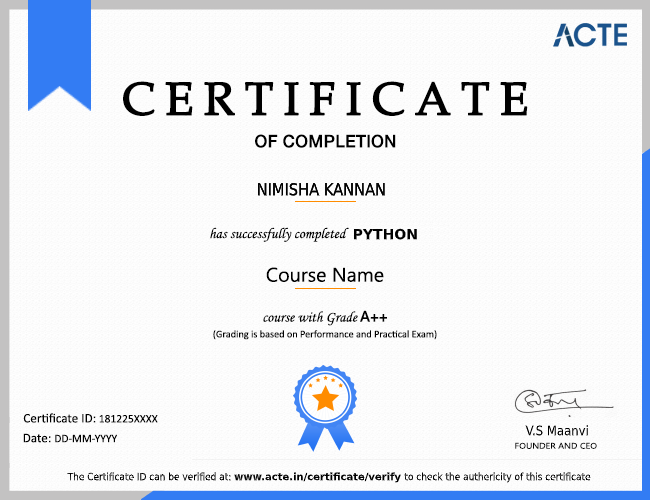
    You'll receive a certificate proving your industry readiness. Just complete your projects and pass the pre-placement assessment. This certification validates your skills and prepares you for real-world roles.

    Certification

    Students can obtain several industry-respected certifications, including:

    • Microsoft Certified: Azure AI Engineer Associate
    • Google Professional Machine Learning Engineer
    • IBM AI Engineering Professional Certificate
    • TensorFlow Developer Certificate

    We offer placement support as part of the course, and earning this certification guarantees employment. With practical learning, live projects, and expert mentoring, learners are fully prepared to start a career in Generative AI and Machine Learning.

    The duration depends on previous experience and dedication. Beginners generally require three to six months, including project work and practice exercises. Learners with prior programming or data analytics skills may finish in one to three months. Consistent hands-on practice helps solidify knowledge and accelerate learning.

    Benefits include:

    • Proving proficiency in AI and machine learning concepts
    • Accessing multiple career paths in technology and AI domains
    • Increasing salary potential and career progression opportunities
    • Establishing professional credibility and recognition
    • Gaining confidence in implementing AI/ML projects effectively

    Preparation steps include:

    • Studying the full official syllabus thoroughly
    • Creating and testing AI/ML models using real-world datasets
    • Attempting mock tests to monitor improvement and weak areas
    • Joining expert-led workshops or study groups
    • Engaging in hands-on AI challenges to enhance practical skills

    Complete Your Course

    A Downloadable Certificate in PDF Format, Immediately Available to You When You Complete Your Course.

    Get Certified

    A Physical Version of Your Officially Branded and Security-Marked Certificate.

    Get Certified

    Lowest Gen AI and Machine Learning Course Fees

    Affordable, Quality Training for Freshers to Launch IT Careers & Land Top Placements.

    Call Course Advisor

    How is ACTE's Gen AI and ML Course in Kalyan Nagar Different?

    Feature

    ACTE Technologies

    Other Institutes

    Affordable Fees

    Competitive Pricing With Flexible Payment Options.

    Higher Gen AI and Machine Learning Fees With Limited Payment Options.

    Industry Experts

    Well Experienced Trainer From a Relevant Field With Practical Gen AI and Machine Learning Training

    Theoretical Class With Limited Practical

    Updated Syllabus

    Updated and Industry-relevant Gen AI and Machine Learning Course Curriculum With Hands-on Learning.

    Outdated Curriculum With Limited Practical Training.

    Hands-on projects

    Real-world Gen AI and Machine Learning Projects With Live Case Studies and Collaboration With Companies.

    Basic Projects With Limited Real-world Application.

    Certification

    Industry-recognized Gen AI and Machine Learning Certifications With Global Validity.

    Basic Gen AI and Machine Learning Certifications With Limited Recognition.

    Placement Support

    Strong Placement Support With Tie-ups With Top Companies and Mock Interviews.

    Basic Placement Support

    Industry Partnerships

    Strong Ties With Top Tech Companies for Internships and Placements

    No Partnerships, Limited Opportunities

    Batch Size

    Small Batch Sizes for Personalized Attention.

    Large Batch Sizes With Limited Individual Focus.

    LMS Features

    Lifetime Access Course video Materials in LMS, Online Interview Practice, upload resumes in Placement Portal.

    No LMS Features or Perks.

    Training Support

    Dedicated Mentors, 24/7 Doubt Resolution, and Personalized Guidance.

    Limited Mentor Support and No After-hours Assistance.

    Gen AI And Machine Learning Course FAQs

    1. Which foundational knowledge is useful before starting AI & ML learning?

    A basic understanding of programming, elementary statistics, and data manipulation is highly beneficial. Skills in logical thinking, problem-solving, and analysis also make complex AI topics easier to grasp.
    There is an increasing need for AI and ML experts in industries such as finance, healthcare, media, and technology. Companies are integrating AI for automation, predictive modeling, and content generation, resulting in extensive career prospects.
    Courses cover machine learning basics, deep learning, neural network designs, natural language processing, computer vision, and AI model evaluation. Learners also get hands-on exposure to popular AI frameworks, programming tools, and cloud technologies.
    Engaging in real projects enables students to apply theories, handle datasets, and solve challenges similar to industry scenarios. This practical experience strengthens understanding, builds confidence, and enhances problem-solving capabilities in AI.
    Yes, learners are supported by experienced mentors who provide guidance on project completion, portfolio development, exam prep, and career planning. Personalized mentorship ensures technical and professional growth.
    Anyone curious about technology from students and professionals to those switching careers can enroll. A strong interest in AI, combined with structured lessons and practical exercises, ensures skill development for all participants.
    No, formal education is not a prerequisite. Commitment, curiosity, and consistent practice are key. Completing projects and earning a certification demonstrates readiness to join the AI/ML workforce.
    Critical thinking, analytical abilities, and curiosity are essential. Experience with programming or mathematics helps but is not mandatory. Regular practice and engagement with course exercises accelerate understanding and competence.
    No previous knowledge of AI is needed. Programs start from foundational concepts and gradually progress to advanced machine learning, deep learning, and generative AI, making them suitable for beginners.

    1. Is career guidance provided during the course?

    Yes, learners receive comprehensive career support, including resume optimization, mock interviews, and networking opportunities, helping them secure positions in AI and ML domains.

    2. Do courses include real-world project work?

    Definitely. Learners undertake projects like AI-based recommendations, predictive analytics, content generation, and other practical applications. These projects allow students to apply knowledge and build strong portfolios.

    3. Can certified participants target top organizations?

    Yes, certification validates technical expertise and opens opportunities for roles such as AI Developer, Data Scientist, Machine Learning Engineer, and NLP Specialist, giving learners an edge with employers.

    4. Is placement support available for newcomers?

    Yes, beginners receive workshops, resume assistance, mock interview practice, and mentorship to help them land their first AI/ML positions.
    Yes, students are awarded a certificate verifying both practical and theoretical AI & ML skills, boosting employability and professional credibility.
    These areas allow professionals to create advanced solutions, from automated content generation to smart analytics. Structured training and career support provide growth opportunities and skill development.
    No prior qualifications are needed. Genuine interest in AI and willingness to learn are sufficient. The program equips learners with the knowledge needed to earn certification.
    Certificates confirm hands-on experience in designing, deploying, and refining AI models. They improve credibility, competitiveness, and employability for advanced roles.
    Learners gain experience in building neural networks, generative AI models, analyzing datasets, using AI tools, and applying solutions to real-world industry challenges.

    1. Is placement assistance part of the course fee?

    Yes, features such as resume building, mock interviews, and career guidance are included in the cost of the program.
    Price is influenced by curriculum depth, access to labs, instructor expertise, certification inclusion, and project opportunities. Advanced modules, cloud training, and mentorship may also impact fees.
    Yes, flexible payment options and hands-on training make courses accessible to learners with varying financial capabilities.
    No, pricing is standardized, ensuring that high-quality AI and ML training is accessible to learners regardless of location.
    Learn (Gen AI + Machine Learning + LLMs + Prompt Engineering + Diffusion Models + Model Evaluation) Starting at 16,500/- Only.
    Acte Technologies WhatsApp