Top Oracle Course in HSR Layout | Oracle Certification Course With 100% Placement | Updated 2025

Oracle Course for All Graduates, NON-IT, Diploma & Career Gaps — ₹36,580/- only.

Download Brouchure
Join Our 100% Job Guaranteed

Oracle Course in HSR Layout

  • Join the Best Oracle Training Institute in HSR Layout to Master Database Skills.
  • Our Oracle Training in HSR Layout Covers SQL, PL/SQL, RAC, ERP, Cloud and Backup.
  • Gain Hands-on Experience by Working on Real-world Projects Guided by Experts.
  • Earn a Globally Recognized Oracle Certification With 100% Job Placement Assistance.
  • Receive Expert Guidance in Building a Winning Resume and Excelling in Job Interviews.
  • Learn on Your Terms With Flexible Weekday, Weekend, and Accelerated Batches.

WANT IT JOB

Become a Oracle Administrator in 3 Months

Freshers Salary

3 LPA

To

8 LPA

Quality Training With Affordable Fees in HSR Layout!

⭐ Fees Starts From

INR 36,000
INR 16,500

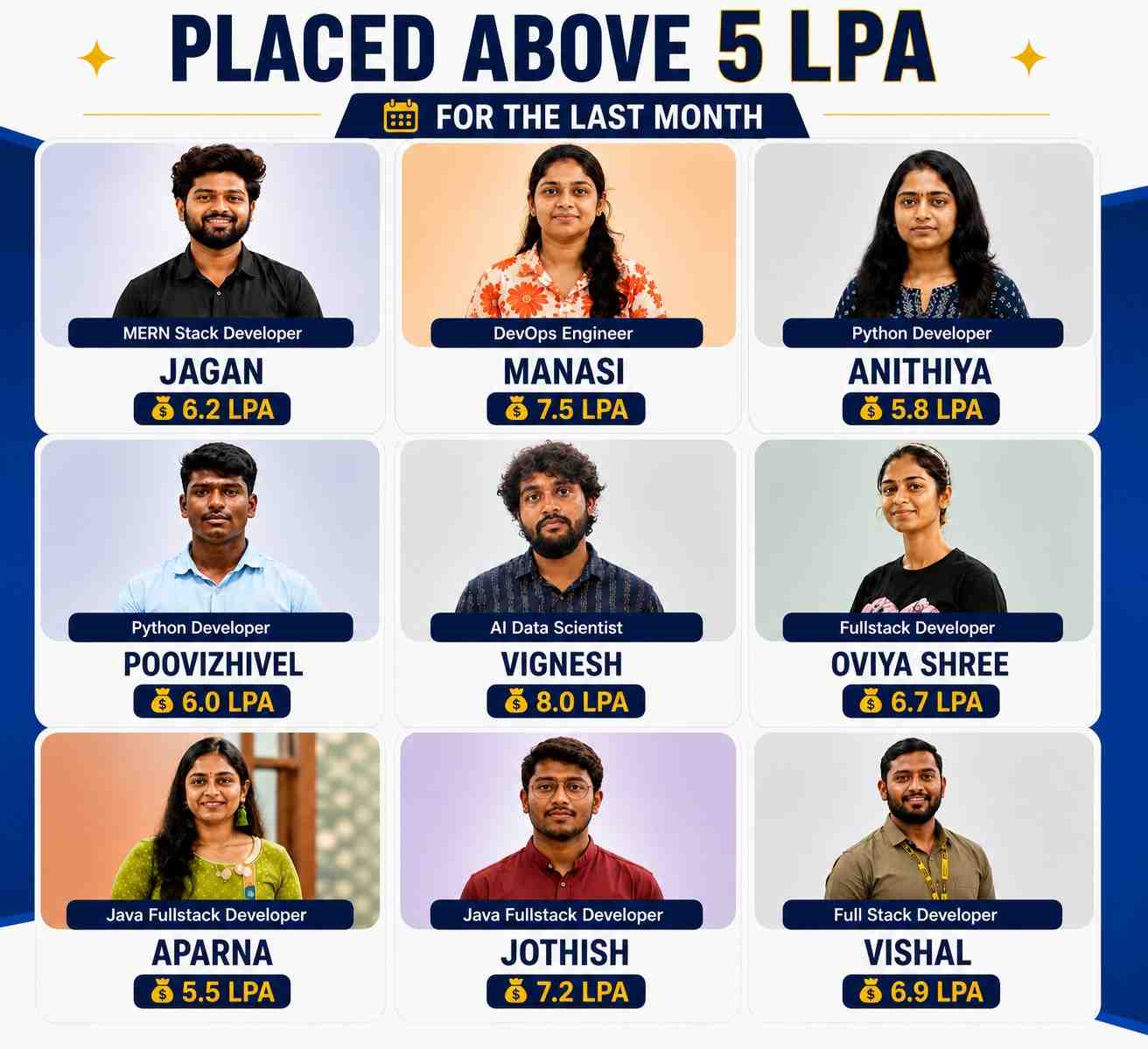
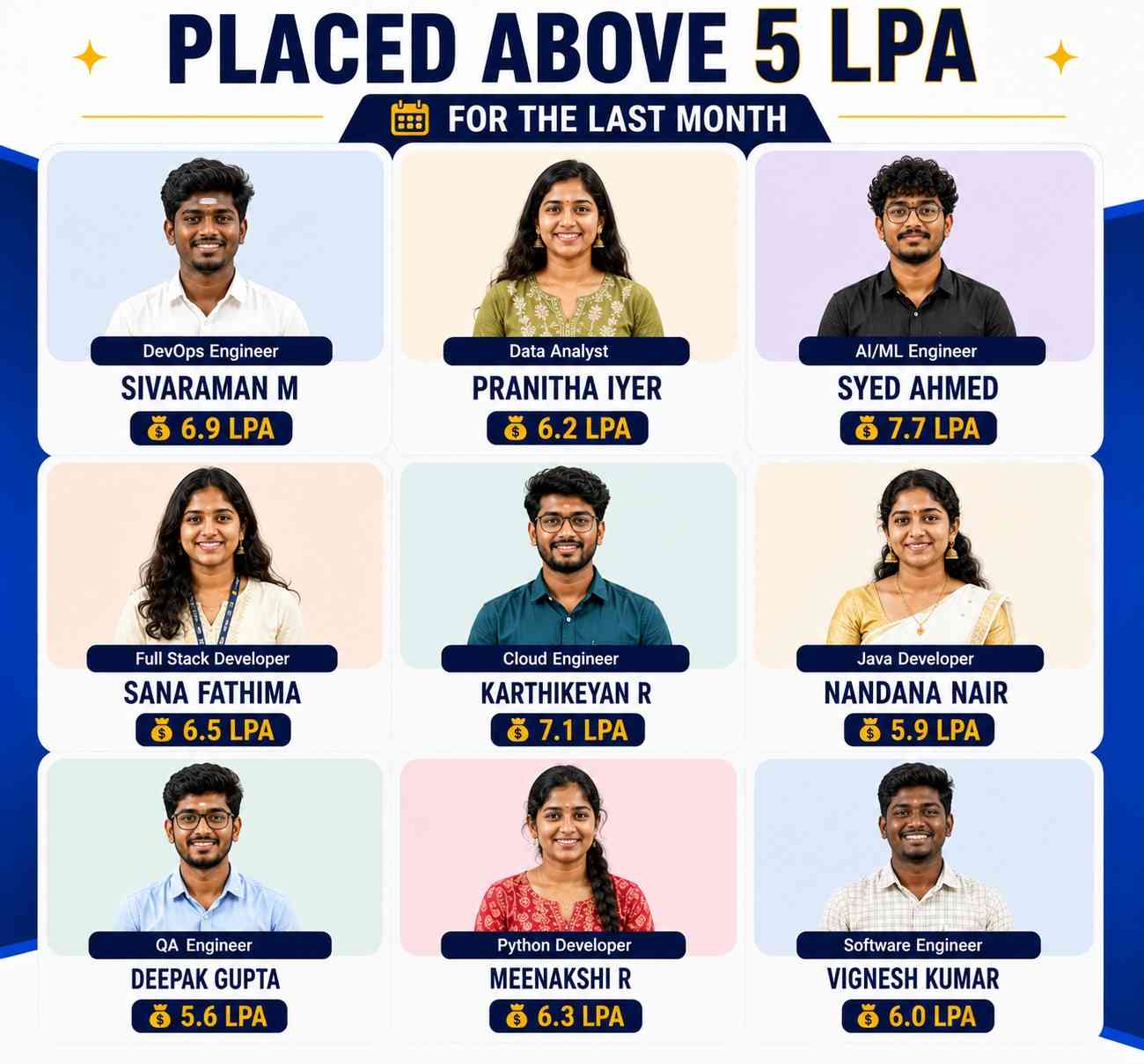
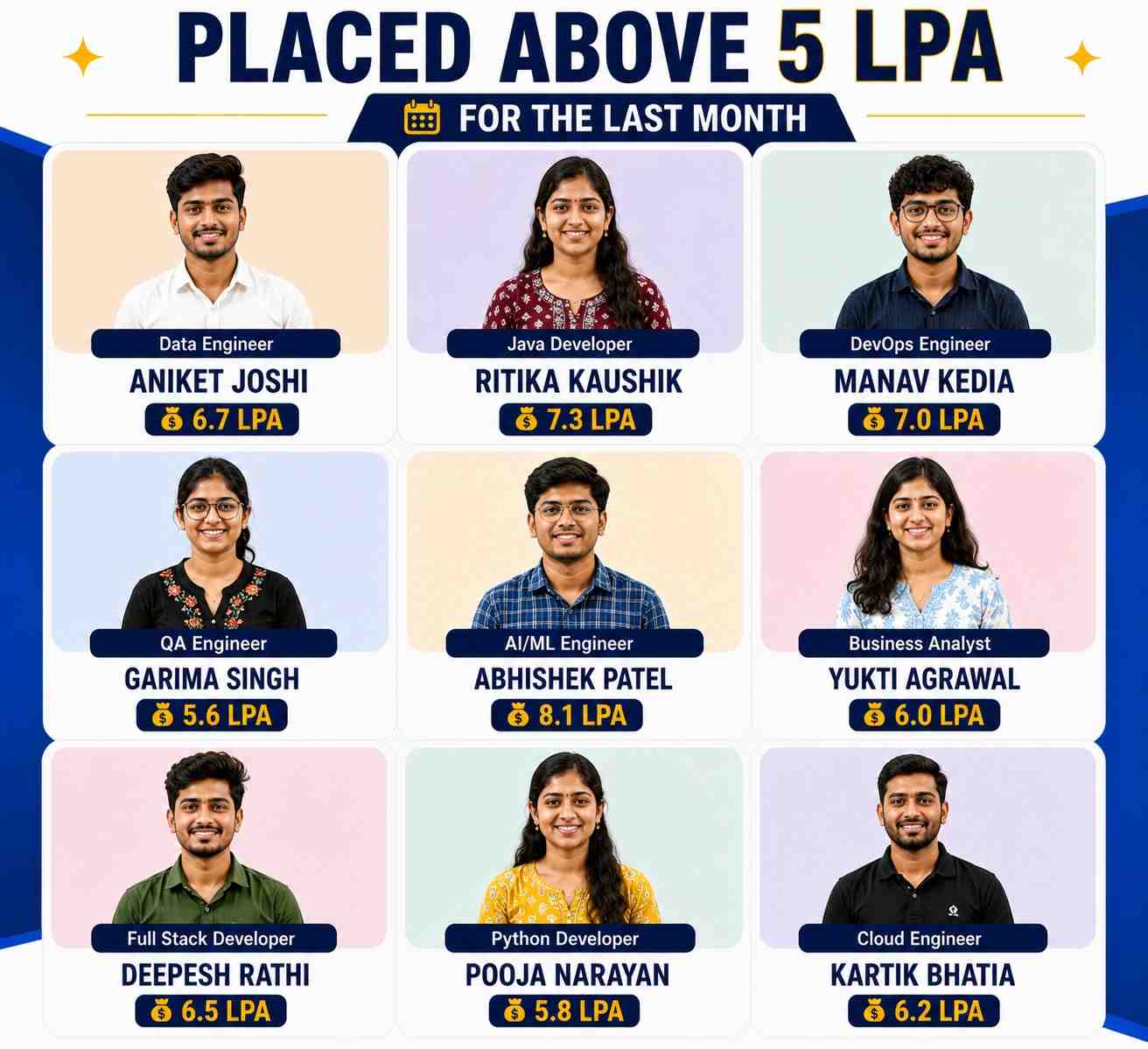
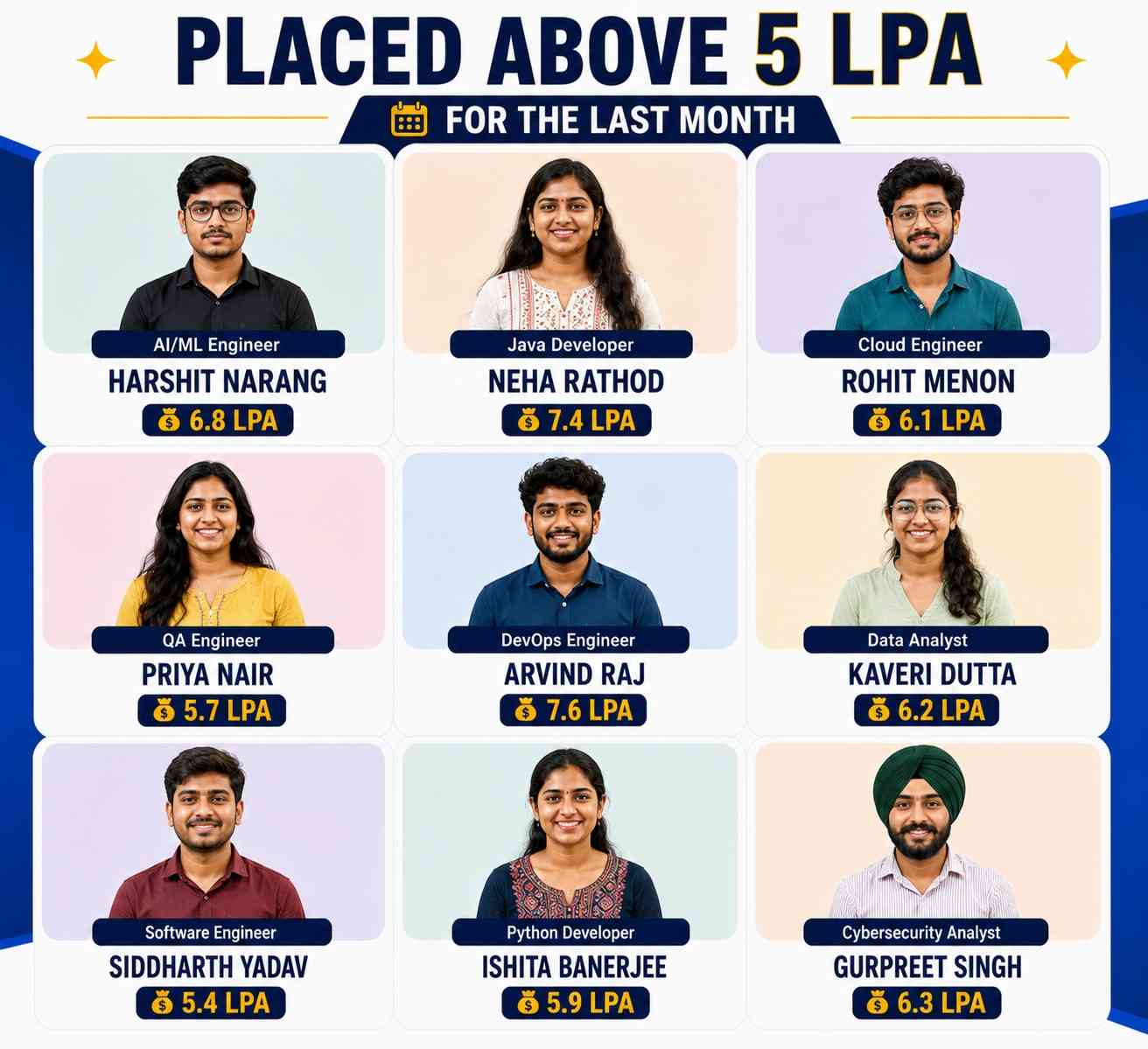
10865+

(Placed)
Freshers To IT

6244+

(Placed)
NON-IT To IT

8143+

(Placed)
Career Gap

4132+

(Placed)
Less Then 60%

Our Hiring Partners

Overview of the Oracle Course

Oracle Training is designed to help freshers learn Oracle from basics to advanced concepts in a simple and practical way. This Oracle Course in HSR Layout covers SQL, PL/SQL, and real-time database skills needed for IT jobs. The training focuses on hands-on practice so students can easily understand how Oracle works in real projects. We also offer Internships that give freshers real industry exposure and confidence. Our course supports Oracle Certification course preparation to help students clear certification exams easily. With expert trainers and updated content, learning becomes easy and career-focused. Dedicated Oracle Placement support is provided to help students get job opportunities. This course is ideal for freshers who want to start a strong career in Oracle technology.

What You'll Learn From Oracle Certification Training

Gain a strong foundation in database management with our Oracle Course in HSR Layout, covering SQL, PL/SQL, and Oracle Cloud essentials.

Understand core database concepts like tables, queries, joins, indexes, and data manipulation in an easy-to-follow, practical manner.

Work on real-time Internships and industry-relevant projects to apply your learning hands-on.

Learn advanced Oracle features such as performance tuning, backup and recovery, and automation for efficient database management.

Develop problem-solving and analytical skills by working with complex scenarios and practical database exercises.

Earn a globally recognized Oracle Certification and get guidance for placements to kickstart your IT career.

Additional Info

Course Highlights

  • Master Oracle skills including SQL, PL/SQL, Oracle Forms, Reports, Cloud, and advanced database management.
  • Receive personalized Oracle Placement support with opportunities from top companies hiring skilled database professionals.
  • Join thousands of students who have gained hands-on experience and launched successful careers through our strong network of 350+ hiring partners.
  • Learn from certified Oracle experts with over 10 years of industry experience to get practical and up-to-date training.
  • Enjoy beginner-friendly lessons, live projects, and complete career guidance to help you succeed in Oracle roles.
  • Take advantage of flexible batches, affordable fees, and Oracle Internships in HSR Layout, and earn a globally recognized Oracle Certification Course to boost your career prospects.

Exploring the Benefits of an Oracle Training in HSR Layout

  • Reliable Performance : Oracle databases are highly reliable and can handle large amounts of data without slowing down. They are designed to process transactions quickly and efficiently. This makes them suitable for businesses of all sizes. Users can trust Oracle to keep data safe and accessible at all times.
  • Advanced Security : Oracle provides strong security features to protect sensitive data from unauthorized access. It includes encryption, user authentication, and auditing tools. Businesses can store their data confidently without worrying about leaks. Security compliance is easier with Oracle’s built-in protections.
  • Scalability : Oracle databases can grow with your business, supporting more users and bigger datasets over time. You can start small and expand without changing the system. This flexibility makes it ideal for growing companies. Performance remains consistent even as demand increases.
  • Data Backup & Recovery : Oracle ensures that your data is safe even in case of hardware failure or accidental deletion. It provides automated backup and recovery tools. This minimizes downtime and prevents loss of important business information. Companies can restore data quickly when needed.
  • Supports Cloud & Integration : Oracle works well with cloud platforms and other business applications. It allows easy integration with software like ERP, CRM, and analytics tools. Businesses can streamline operations and share data across systems efficiently. This makes Oracle a versatile solution for modern IT needs.

Important Tools Covered in Oracle Certification Training

  • Oracle SQL Developer : Oracle SQL Developer is a free tool used to manage Oracle databases easily. It allows users to write and execute SQL queries, view database objects, and manage data. You can also debug PL/SQL code and generate reports. It simplifies database development and makes working with Oracle more efficient.
  • Oracle Forms : Oracle Forms is a tool used to create user-friendly applications for database interaction. It allows developers to design forms for data entry, validation, and reporting. This tool helps connect users to the database with minimal coding. It is widely used for business applications in Oracle environments.
  • Oracle Reports : Oracle Reports is used to design and generate professional reports from Oracle databases. Users can create interactive, formatted reports with charts and graphs. It helps businesses analyze and present data clearly. Reports can be scheduled or run on demand for decision-making purposes.
  • Oracle Data Guard : Oracle Data Guard helps protect your database by providing backup, recovery, and disaster recovery solutions. It ensures that your data is available even during hardware or software failures. Data Guard keeps a standby database synchronized with the main one. This tool is essential for business continuity and reliability.
  • Oracle Enterprise Manager (OEM) : Oracle Enterprise Manager is a tool for monitoring and managing Oracle databases and applications. It provides real-time insights into database performance and system health. Users can automate tasks, troubleshoot issues, and optimize resources. OEM makes database management simpler and more effective for administrators.

Top Frameworks Every Oracle Developer Should Know

  • Oracle ADF (Application Development Framework) : Oracle ADF is a Java-based framework used to build enterprise applications quickly. It simplifies user interface design, business logic, and data integration. Developers can create web, desktop, and mobile apps with less coding. ADF is widely used in Oracle environments for building scalable and maintainable applications.
  • Oracle SOA Suite (Service-Oriented Architecture) : Oracle SOA Suite is a framework for integrating applications and services across an organization. It allows different systems to communicate and share data seamlessly. This makes processes more efficient and reduces manual work. SOA Suite is essential for businesses that rely on multiple software applications.
  • Oracle BPM (Business Process Management) : Oracle BPM is a framework to model, automate, and optimize business processes. It helps organizations improve efficiency by tracking workflows and approvals. Users can create, monitor, and refine processes for better results. BPM ensures that business operations are smooth and well-coordinated.
  • Oracle JDeveloper : Oracle JDeveloper is an integrated development framework for building Java-based applications. It supports coding, debugging, and testing in a single environment. JDeveloper works well with Oracle ADF and other Oracle tools. It is beginner-friendly and widely used for enterprise application development.
  • Oracle WebLogic Framework : Oracle WebLogic is a framework for deploying and managing Java EE applications on servers. It ensures high performance, scalability, and security for web applications. Developers can deploy, monitor, and maintain applications efficiently. WebLogic is essential for organizations running critical Oracle-based applications.

Must-Have Skills You will Gain in a Oracle Training

  • SQL & PL/SQL Programming : Writing efficient SQL queries to retrieve, update, and manage data in Oracle databases is essential. PL/SQL enables creating stored procedures, functions, and triggers to automate tasks. These skills are fundamental for handling large databases. Strong knowledge of SQL & PL/SQL forms the foundation of Oracle expertise.
  • Database Administration : Installing, configuring, and maintaining Oracle databases ensures smooth operations. Backup, recovery, and user management techniques protect data and keep it available. Proper database administration prevents errors and maintains efficiency. This skill is vital for managing business-critical information.
  • Data Modeling & Analysis : Designing database structures and organizing data effectively helps optimize performance. Understanding relationships between tables allows accurate data retrieval and analysis. These skills support better business decisions. Strong data modeling improves both efficiency and reliability of database systems.
  • Performance Tuning & Optimization : Analyzing execution plans, creating indexes, and managing resources enhances database speed and efficiency. Optimized queries and configurations reduce system load and improve performance. Performance tuning ensures smooth operations even under heavy workloads. These skills are crucial for maintaining high-performing databases.
  • Oracle Cloud & Integration Skills : Managing data in cloud environments and integrating Oracle with ERP, CRM, or analytics systems expands technical capabilities. These skills support seamless business processes across applications. Expertise in cloud and integration increases efficiency and modernizes database operations.

Key Roles and Responsibilities of Oracle Training

  • Oracle Database Administrator (DBA) : Responsible for installing, configuring, and maintaining Oracle databases to ensure smooth operations. Tasks include monitoring performance, managing users, and implementing backup and recovery strategies. Ensures data security, availability, and integrity at all times. Plays a critical role in keeping business applications running efficiently.
  • Oracle Developer : Designs, develops, and maintains database applications using SQL, PL/SQL, and Oracle tools. Creates stored procedures, triggers, and functions to automate processes and improve efficiency. Works on building user-friendly applications and reports. Ensures seamless integration of applications with existing Oracle databases.
  • Oracle Business Intelligence (BI) Analyst : Analyzes business data stored in Oracle databases to generate actionable insights. Designs dashboards, reports, and visualizations for decision-making. Collaborates with teams to identify trends and optimize business processes. Supports strategic planning by converting raw data into meaningful information.
  • Oracle Cloud Specialist : Manages Oracle cloud databases and services for seamless access and integration. Implements cloud solutions, monitors performance, and ensures data security. Assists with migration from on-premise systems to the cloud. Helps organizations leverage Oracle Cloud for scalable and efficient operations.
  • Oracle Application Developer : Develops and customizes Oracle applications, including Forms, Reports, and ERP modules. Ensures applications meet business requirements and run efficiently. Performs testing, debugging, and performance tuning of Oracle applications. Supports users by maintaining and upgrading applications as needed.

Why Oracle is a Great Career Option for Freshers

  • High Demand in IT Industry : Oracle professionals are highly sought after in IT and business organizations worldwide. Companies rely on Oracle databases for critical operations, creating steady job opportunities. Freshers trained in Oracle can find roles in various industries. Strong demand ensures long-term career stability and growth.
  • Lucrative Salary Packages : Oracle skills often lead to well-paying jobs, even for entry-level positions. Companies value expertise in database management, PL/SQL, and Oracle Cloud. Competitive salaries make Oracle a financially rewarding career choice. Freshers with certifications can quickly start earning a good income.
  • Wide Range of Job Roles : Learning Oracle opens doors to multiple career paths like Database Administrator, Developer, Cloud Specialist, and Business Analyst. The variety allows freshers to choose roles matching their interests and strengths. This flexibility makes Oracle a versatile career option. Skills are applicable across many industries.
  • Hands-on Experience Opportunities : Oracle training includes practical exposure to real projects and internships. Working on live databases helps develop problem-solving and technical expertise. Practical experience boosts confidence and readiness for workplace challenges. It ensures freshers are job-ready from day one.
  • Industry-Recognized Certification : Completing an Oracle Certification Course adds credibility and enhances professional profiles. Certified skills increase employability and recognition in the IT sector. It serves as proof of expertise to employers worldwide. Certification improves chances of faster career growth and promotions.

How Oracle Skills Help You Get Remote Jobs

  • High Global Demand : Oracle skills are in demand by companies worldwide for managing databases, applications, and cloud services. Businesses often hire remote professionals to reduce costs and access talent anywhere. Expertise in Oracle makes candidates eligible for international and remote positions. Strong Oracle knowledge increases chances of securing work-from-home opportunities.
  • Flexible Work Opportunities : Oracle professionals can work on projects, database administration, or application development from any location. Remote jobs allow handling tasks like query optimization, report generation, and cloud management online. Companies prefer trained Oracle experts who can deliver results without being onsite. This makes Oracle an ideal skill for flexible career options.
  • Hands-on Technical Skills : Practical experience with SQL, PL/SQL, Oracle Forms, and cloud technologies makes remote work feasible. Employers trust candidates who can manage databases and troubleshoot issues independently. These skills allow handling tasks efficiently without direct supervision. Strong technical expertise is essential for performing remote responsibilities successfully.
  • Compatibility with Collaboration Tools : Oracle work integrates easily with remote collaboration tools like Oracle Cloud, ERP systems, and project management software. Tasks such as data migration, report sharing, and database monitoring can be done online. Familiarity with these tools ensures smooth remote operations. This compatibility makes Oracle professionals valuable for distributed teams.
  • Certification Boosts Credibility : An industry-recognized Oracle Certification Course validates skills for employers hiring remotely. Certifications demonstrate proficiency in managing databases, applications, and cloud systems. They increase trust in a candidate’s ability to perform independently from home. Certified professionals often get priority for high-paying remote opportunities.

What to Expect in Your First Oracle Job

  • Hands-On Database Work : The first Oracle job involves working directly with databases, managing data, and running queries. Tasks include writing SQL, troubleshooting issues, and maintaining database performance. This practical experience helps build a strong technical foundation. Daily exposure to real databases prepares for advanced responsibilities.
  • Learning from Experienced Professionals : New Oracle employees often work under guidance from senior DBAs or developers. Mentorship provides insights into best practices, problem-solving, and industry standards. Collaboration with experienced team members accelerates skill development. It also helps in understanding real-world applications of Oracle tools.
  • Working on Live Projects : Expect involvement in live projects that impact business operations. Tasks may include creating reports, optimizing queries, or supporting application development. This experience develops problem-solving skills and practical knowledge. Real projects teach handling challenges in a professional environment.
  • Understanding Company Processes : First jobs involve learning company workflows, policies, and system architecture. Understanding these processes ensures efficient management of databases and applications. Familiarity with organizational standards is crucial for smooth project execution. It also builds confidence in handling responsibilities independently.
  • Continuous Skill Development : The first Oracle role emphasizes continuous learning through challenges, training, and certifications. Employees improve skills in SQL, PL/SQL, Oracle Cloud, and performance tuning. Staying updated with Oracle tools increases career growth opportunities. A learning mindset is key to excelling in future roles.

Leading Companies are Hiring for Oracle Professionals

  • Oracle Corporation : Oracle Corporation is the leading company for database solutions and enterprise software. It regularly hires professionals skilled in SQL, PL/SQL, cloud services, and application development. Employees get opportunities to work on cutting-edge technology and large-scale projects. Oracle offers global exposure and excellent career growth for database experts.
  • Infosys : Infosys is a top IT services company that works with clients worldwide on Oracle-based solutions. The company hires Oracle professionals for database management, ERP solutions, and cloud projects. It provides extensive training and hands-on experience for freshers and experienced candidates. Infosys is known for career growth and learning opportunities in Oracle technologies.
  • Wipro : Wipro is a global IT consulting and services company that implements Oracle solutions for clients across industries. Oracle professionals handle database administration, performance tuning, and cloud integration tasks. Wipro offers exposure to live projects and mentoring from senior experts. It is a preferred company for freshers seeking Oracle career opportunities.
  • TCS (Tata Consultancy Services) : TCS is one of the largest IT companies in the world and actively hires Oracle professionals. The roles include database administration, application development, and business intelligence using Oracle tools. Employees gain experience working on international projects with top clients. TCS provides structured training programs to enhance Oracle skills and career growth.
  • Capgemini : Capgemini is a leading consulting and IT services company that relies heavily on Oracle solutions. Oracle professionals work on ERP implementation, cloud integration, and database optimization. The company offers opportunities to work on global projects and learn from industry experts. Capgemini is known for supporting skill development and providing excellent career prospects.
Show More

Upcoming Batches For Classroom and Online

Weekdays
02 - Feb - 2026
08:00 AM & 10:00 AM
Weekdays
04 - Feb - 2026
08:00 AM & 10:00 AM
Weekends
07 - Feb - 2026
(10:00 AM - 01:30 PM)
Weekends
08 - Feb - 2026
(09:00 AM - 02:00 PM)
Can't find a batch you were looking for?
INR ₹16500
INR ₹36000

OFF Expires in

Who Should Take a Oracle Training in HSR Layout

IT Professionals

Non-IT Career Switchers

Fresh Graduates

Working Professionals

Diploma Holders

Professionals from Other Fields

Salary Hike

Graduates with Less Than 60%

Show More

Job Roles For Oracle Certification Course

Database Administrator

PL&SQL Developer

Application Consultant

ERP Specialist

Cloud Engineer

Data Analyst

System Architect

Support Engineer

Show More

Tools Covered For Oracle Course in Offline

Application Express BI Publisher Cloud Infrastructure Data Integrator Enterprise Manager Forms Reports GoldenGate Oracle SQL Developer

What’s included ?

Convenient learning format

📊 Free Aptitude and Technical Skills Training

  • Learn basic maths and logical thinking to solve problems easily.
  • Understand simple coding and technical concepts step by step.
  • Get ready for exams and interviews with regular practice.
Dedicated career services

🛠️ Hands-On Projects

  • Work on real-time projects to apply what you learn.
  • Build mini apps and tools daily to enhance your coding skills.
  • Gain practical experience just like in real jobs.
Learn from the best

🧠 AI Powered Self Interview Practice Portal

  • Practice interview questions with instant AI feedback.
  • Improve your answers by speaking and reviewing them.
  • Build confidence with real-time mock interview sessions.
Learn from the best

🎯 Interview Preparation For Freshers

  • Practice company-based interview questions.
  • Take online assessment tests to crack interviews
  • Practice confidently with real-world interview and project-based questions.
Learn from the best

🧪 LMS Online Learning Platform

  • Explore expert trainer videos and documents to boost your learning.
  • Study anytime with on-demand videos and detailed documents.
  • Quickly find topics with organized learning materials.

Oracle Course Curriculum

  • 🏫 Classroom Training
  • 💻 Online Training
  • 🚫 No Pre Request (Any Vertical)
  • 🏭 Industrial Expert

Our Oracle Training in HSR Layout offers a complete curriculum for beginners and aspiring database professionals. The course covers core Oracle concepts, data modeling, PL/SQL, report creation, and interactive dashboard development. Gain hands-on experience through Oracle Internships in HSR Layout and real-time projects to build practical skills. The training also includes data cleaning, visualization best practices, and connecting to multiple data sources. Dedicated placement support assists with resume building and interview preparation for a successful career in Oracle.

  • Introduction to Oracle Programming – Start with the basics of Oracle, including SQL, PL/SQL, data types, and core database concepts.
  • Advanced Oracle Concepts – Explore advanced topics like stored procedures, triggers, performance tuning, and work with Oracle frameworks.
  • Hands-On Project Experience – Apply knowledge through real-time projects such as database management systems, reporting tools, and automated workflows.
  • Development Tools and Deployment – Learn to manage and deploy Oracle programs on servers and cloud platforms.
Introduction to Oracle
SQL and PL/SQL Basics
Advanced PL/SQL Programming
Oracle Database Administration
Oracle Applications Overview
Oracle Advanced Topics
Oracle Projects & Hands-on Practice

Forms the foundational knowledge to understand Oracle technologies:

  • Overview of Oracle – History, versions and architecture
  • Database Concepts – Relational databases, tables, schemas
  • Tools & Technologies – SQL Developer, Oracle APEX, Oracle Cloud
  • Career Paths – Roles such as Database Administrator, PL/SQL Developer, Oracle Apps Consultant

Covers fundamental database programming and queries:

  • SQL Fundamentals – DDL, DML, DCL commands
  • Joins & Subqueries – Retrieving and manipulating data efficiently
  • PL/SQL Basics – Procedures, functions, triggers and cursors
  • Data Handling – Transactions, commits, rollbacks, exception handling

Deep dive into complex Oracle programming concepts:

  • Procedures & Functions – Writing reusable code blocks
  • Packages – Organizing PL/SQL code for modularity
  • Triggers & Events – Automating database actions
  • Exception Management – Handling errors and debugging

Learn to manage and optimize Oracle databases:

  • Database Installation & Configuration – Setting up Oracle DB
  • User & Role Management – Creating users, privileges and roles
  • Backup & Recovery – RMAN and data recovery strategies
  • Performance Tuning – Optimizing SQL queries and database performance

Understand enterprise-level applications and integrations:

  • Oracle E-Business Suite – Modules and functionalities
  • Oracle Fusion Applications – Cloud-based ERP, HCM, SCM
  • Data Migration – Importing and exporting data using Oracle tools
  • Security & Compliance – Access control and audit management

Focus on specialized and emerging Oracle skills:

  • Oracle RAC & Data Guard – High availability and disaster recovery
  • PL/SQL Optimization – Improving code efficiency and performance
  • Oracle Cloud Services – Database cloud service, Autonomous DB
  • Integration & Reporting – Using Oracle BI and APEX

Apply all skills learned in practical scenarios:

  • Real-time Projects – Working on live database and application scenarios
  • Data Management – Performing complex queries, migrations and updates
  • Reporting & Dashboards – Building reports using Oracle tools
  • Documentation – Creating user manuals and project reports

🎁 Free Addon Programs

Aptitude, Spoken English.

🎯 Our Placement Activities

Daily Task, Soft Skills, Projects, Group Discussions, Resume Preparation, Mock Interview.

Gain Hands-on Experience With Oracle Projects

Placement Support Overview

Today's Top Job Openings for Oracle Training

Oracle Database Administrator

Company Code : DCS170

Bengaluru, Karnataka

₹28,000 – ₹50,000 a month

Any Degree

Exp 0-3 yrs

  • We are hiring an Oracle DBA to manage database installation, configuration and maintenance. You must be skilled in backup/recovery, performance tuning, user management and SQL optimization.
  • Easy Apply

    Oracle PL/SQL Developer

    Company Code : THS762

    Bengaluru, Karnataka

    ₹30,000 – ₹55,000 a month

    Any Degree

    Exp 0-3 yrs

  • Join us as an Oracle PL/SQL Developer to design, write and optimize stored procedures, functions and triggers. You’ll work on database integration, data manipulation and performance tuning for enterprise applications.
  • Easy Apply

    Oracle Apps Consultant

    Company Code : FLT594

    Bengaluru, Karnataka

    ₹25,000 - ₹45,000 a month

    Any Degree

    Exp 0-2 yrs

  • We are hiring an Oracle Apps Consultant to implement and support Oracle E-Business Suite modules. You’ll customize workflows, manage configurations and assist users with functional issues.
  • Easy Apply

    Oracle Cloud Developer

    Company Code : CVI790

    Bengaluru, Karnataka

    30,000 to ₹50,000 a month

    Any Degree

    Exp 0-2 yrs

  • Seeking an Oracle Cloud Developer to build and deploy cloud-based applications using Oracle Cloud Services. You’ll work on automation, integration and database-driven cloud solutions.
  • Easy Apply

    Oracle Functional Analyst

    Company Code : ASD118

    Bengaluru, Karnataka

    ₹28,000 - ₹48,000 a month

    Any Degree

    Exp 0-3 yrs

  • Become an Oracle Functional Analyst to gather business requirements, design process flows and implement Oracle Applications. You’ll collaborate with technical teams to ensure accurate deployment and reporting.
  • Easy Apply

    Oracle BI Developer

    Company Code : RSS349

    Bengaluru, Karnataka

    ₹32,000 - ₹50,000 a month

    Any Degree

    Exp 0-3 yrs

  • We’re looking for an Oracle BI Developer to create dashboards, reports and visualizations. You’ll analyze data, optimize queries and provide actionable insights for business decision-making.
  • Easy Apply

    Oracle Database Engineer

    Company Code : ATP431

    Bengaluru, Karnataka

    ₹30,000 - ₹50,000 a month

    Any Degree

    Exp 0-2 yrs

  • Hiring an Oracle Database Engineer to monitor, troubleshoot and optimize database performance. You’ll perform routine maintenance, replication and work closely with application teams.
  • Easy Apply

    Oracle ERP Specialist

    Company Code : TES249

    Bengaluru, Karnataka

    ₹35,000 - ₹55,000 a month

    Any Degree

    Exp 0-3 yrs

  • Join as an Oracle ERP Specialist to implement and support Oracle ERP solutions. You’ll configure modules, perform data migration and assist in workflow automation across business processes.
  • Easy Apply

    Highlights for Oracle Internships

    Real Time Projects

    • 1. Gain hands-on experience by working on live Oracle projects across web and mobile platforms.
    • 2.Apply design thinking to solve real-world user interface and user experience challenges.
    Book Session

    Skill Development Workshops

    • 1.Participate in interactive workshops on the latest UI/UX trends, tools, and techniques.
    • 2.Learn directly from industry experts through practical sessions on wireframing, prototyping, and usability testing.
    Book Session

    Employee Welfare

    • 1. Enjoy benefits such as health insurance, flexible work hours, and wellness initiatives.
    • 2. Organizations focus on mental health support and maintaining a healthy work-life balance.
    Book Session

    Mentorship & Peer Learning

    • 1. Learn under the guidance of experienced mentors who support your growth in design thinking and career planning.
    • 2. Collaborate with peers on design reviews, feedback sessions, and group projects for a richer learning experience.
    Book Session

    Soft Skills & Career Readiness

    • 1.Develop strong communication, collaboration, and presentation skills essential for design roles.
    • 2.Get interview-ready through mock sessions, portfolio reviews, and career coaching.
    Book Session

    Certification

    • 1. Earn recognized certifications to showcase your Oracle proficiency.
    • 2. Strengthen your resume with course completion and project-based credentials from reputed platforms.
    Book Session

    Sample Resume for Oracle (Fresher)

    • 1. Simple and Neat Resume Format

      Use a clean layout with clear sections like summary, skills, education, and projects.

    • 2. List of Technologies You Know

      Mention skills like SQL, PL/SQL, Oracle Database, Oracle Apps, Data Modeling, Reporting, Cloud Integration.

    • 3. Real-Time Projects and Achievements

      Add 1–2 real-time projects with a short description and the tools used.

    Top Oracle Tricky Interview Questions and Answers (2026 Guide)

    Ans:

    Oracle is a leading database platform used to efficiently handle large amounts of structured and unstructured information. It is well-known for high performance, strong security measures, and reliability. Organizations rely on Oracle for scalable, enterprise-level data solutions.

    Ans:

    An Oracle Database is a relational database system created by Oracle Corporation. It provides a secure and structured way to store, organize, and retrieve information. Widely adopted in enterprises, it supports complex applications while ensuring reliability and scalability.

    Ans:

    An Oracle instance is composed of memory components and background processes that manage database operations. These elements coordinate resources, optimize performance, and enable seamless access to data. Each instance works with a specific database, providing smooth and stable functionality.

    Ans:

    The initialization parameter file (init.ora) holds configuration settings used when starting a database instance. It defines memory allocation, process limits, and other operational parameters. Correctly setting this file ensures stable performance and consistent database behavior.

    Ans:

    The Server Parameter File (SPFILE) is a binary version of the initialization file that stores essential configuration parameters. It allows dynamic updates without manual editing. SPFILE ensures that Oracle instances start consistently and reliably every time.

    Ans:

    The SGA is a shared memory section that stores crucial database information like cached data, session info, and execution plans. It improves database performance and enables multitasking. SGA ensures faster access to frequently used information, making operations efficient.

    Ans:

    A user in Oracle refers to an account that can access the database system. Each account is assigned specific privileges and roles that define permitted actions. Users help manage security, maintain access control, and protect the integrity of stored data.

    Ans:

    Oracle supports several SQL operations to interact with data. Common types include SELECT to retrieve data, INSERT to add records, UPDATE to modify information, DELETE to remove entries, and MERGE to combine insert and update operations efficiently.

    Ans:

    A transaction is a group of database operations treated as a single unit. Either all operations succeed, or none are executed, ensuring data consistency. Transactions prevent partial updates and maintain the accuracy and integrity of information.

    Ans:

    A function is a code block that executes specific operations and returns a value, which can be used in SQL queries. A procedure performs defined tasks but does not necessarily return a value. Procedures are used to automate workflows and enforce business rules in the database.

    Company-Specific Interview Questions from Top MNCs

    1. How do UNION and UNION ALL differ in Oracle SQL?

    Ans:

    The UNION operator combines results from multiple SELECT statements into one dataset, automatically removing duplicates. In contrast, UNION ALL merges results without removing repeated rows, making it faster and more efficient for large data volumes.

    2. What are triggers in Oracle, and how are they different from procedures?

    Ans:

    A trigger is a PL/SQL block that runs automatically when specific database events occur, such as INSERT, UPDATE, or DELETE. Procedures are PL/SQL programs executed only when explicitly called. Triggers enforce rules automatically, while procedures require manual execution.

    3. What does context switching mean in PL/SQL?

    Ans:

    Context switching occurs when control shifts between the SQL engine (handling queries) and the PL/SQL engine (running procedural code). Frequent switches can reduce performance because of the overhead. Minimizing context switches improves execution speed and efficiency.

    4. Can you explain the different types of joins in Oracle SQL?

    Ans:

    Joins combine rows from two or more tables based on related columns. INNER JOIN returns matching rows only, LEFT JOIN keeps all rows from the first table and matches from the second, RIGHT JOIN retains all rows from the second table with matches from the first, and FULL OUTER JOIN returns all rows from both tables, including unmatched ones.

    5. What is the difference between a function and a procedure in PL/SQL?

    Ans:

    A function performs operations and returns a single value, usable directly in SQL statements. A procedure executes tasks but may not return a value. Functions are suitable for calculations, while procedures are used for automating processes and enforcing business rules.

    6. What is the purpose of the EXPLAIN PLAN command in Oracle?

    Ans:

    EXPLAIN PLAN provides a roadmap of how Oracle will execute a SQL query. It details table access methods, join strategies, and estimated costs. Developers use it to analyze query efficiency and identify performance bottlenecks for optimization.

    7. What are analytic functions in Oracle SQL, and give an example?

    Ans:

    Analytic functions perform calculations over a set of rows while returning results for each individual row. For example, RANK() assigns a ranking to rows based on a column but keeps all rows in the result. These functions are widely used for reporting, trends, and ranking analyses.

    8. How is SQL different from PL/SQL in Oracle?

    Ans:

    SQL is used to perform operations on data, like SELECT, INSERT, UPDATE, and DELETE, focusing on what to do with data. PL/SQL adds procedural capabilities, including loops, conditions, and variables, enabling automation and complex logic for applications.

    9. What is exception handling in PL/SQL?

    Ans:

    Exception handling manages errors during code execution. Oracle provides predefined exceptions like NO_DATA_FOUND or TOO_MANY_ROWS, and developers can define custom exceptions. This prevents abrupt program termination and ensures smooth execution.

    10. What are collections in PL/SQL, and how are they used?

    Ans:

    Collections are data structures in PL/SQL that store multiple elements in a single variable. They include associative arrays (key-indexed), nested tables (dynamic), and VARRAYs (fixed size). Collections simplify processing related datasets and enhance database programming efficiency.

    1. How are DELETE, TRUNCATE, and DROP different in Oracle SQL?

    Ans:

    DELETE removes specific rows from a table based on conditions and allows rollback if needed. TRUNCATE instantly removes all rows but cannot be undone. DROP completely deletes the table along with its structure. The choice depends on whether the table structure should be retained or changes need to be reversible.

    2. What are some techniques to improve SQL query efficiency?

    Ans:

    Query optimization involves using indexes effectively, selecting only necessary columns, and simplifying nested queries. Reviewing execution plans helps pinpoint bottlenecks. Optimized queries run faster, reduce server load, and use system resources more efficiently.

    3. What kinds of indexes are available in SQL, and when should they be used cautiously?

    Ans:

    Indexes include unique indexes, composite indexes on multiple columns, and full-text indexes. While they speed up data retrieval, excessive indexing can slow down inserts and updates. Avoid indexing columns with low uniqueness, such as status flags or boolean fields, to prevent unnecessary overhead.

    4. Can you explain the various SQL join types?

    Ans:

    Joins combine rows from multiple tables based on related columns. INNER JOIN returns only matching rows, LEFT JOIN keeps all rows from the first table plus matches from the second, RIGHT JOIN retains all rows from the second table plus matches from the first, and FULL OUTER JOIN returns all rows from both tables, including non-matching ones.

    5. What is a correlated subquery, and how does it work?

    Ans:

    A correlated subquery relies on columns from the main query and executes for each row individually. It enables dynamic, row-by-row comparison, making it useful for situations where query results depend on values in the outer query.

    6. What are cursors in Oracle PL/SQL, and what types exist?

    Ans:

    Cursors are pointers that allow processing query results one row at a time. Implicit cursors are automatically created for single-row queries, while explicit cursors are defined by the programmer for handling multiple rows. Cursors make row-level data processing more manageable.

    7. How is error management handled in PL/SQL?

    Ans:

    Errors are managed using exception handling blocks. Oracle provides predefined exceptions like NO_DATA_FOUND and TOO_MANY_ROWS, and developers can define custom exceptions for specific scenarios. This approach ensures smooth program execution without abrupt failures.

    8. What is SQL performance tuning, and why is it critical?

    Ans:

    Performance tuning involves improving query execution speed and minimizing resource consumption. Key techniques include analyzing execution plans, adding suitable indexes, simplifying complex queries, and monitoring system behavior. Efficient queries enhance database responsiveness and reduce server workload.

    9. How do procedures and functions differ in PL/SQL?

    Ans:

    A procedure performs one or more tasks but does not return a value. A function executes operations and returns a single result, usable in SQL statements. Functions can be called directly in queries, whereas procedures must be invoked explicitly.

    10. What are PL/SQL packages, and why are they important?

    Ans:

    Packages are collections of related procedures, functions, variables, and other PL/SQL objects. They have a specification that declares the components and a body that implements the logic. Packages encourage modular coding, reusability, and simplify maintenance for complex Oracle applications.

    1. How do DELETE, TRUNCATE, and DROP commands differ in Oracle SQL?

    Ans:

    DELETE is a DML operation used to remove specific rows based on a condition, allowing changes to be rolled back if needed. TRUNCATE is a DDL operation that instantly removes all rows from a table without conditions and cannot be reversed, making it faster. DROP completely removes the table structure and its data permanently. The choice depends on whether the table should remain and if rollback is necessary.

    2. What is the distinction between INNER JOIN and OUTER JOIN in Oracle?

    Ans:

    INNER JOIN returns only the rows that have matching values in both tables. OUTER JOIN returns all rows from one table and the matching rows from the other, with unmatched columns filled with NULLs. OUTER JOINs can be LEFT, RIGHT, or FULL depending on which table’s rows are fully retained.

    3. What is the role of the NVL function in Oracle?

    Ans:

    NVL is used to replace NULL values with a specified substitute, preventing errors in queries or calculations. For instance, NVL(salary, 0) replaces any NULL salary with 0. It ensures accurate results in reports, computations, and data analysis where NULL values exist.

    4. Can you explain the concept of a correlated subquery in Oracle?

    Ans:

    A correlated subquery is a query that references columns from the outer query and executes for each row individually. Unlike a normal subquery, which runs once, a correlated subquery evaluates data row by row. It is commonly used for conditional checks or calculations dependent on outer query values.

    5. How do views and materialized views differ in Oracle?

    Ans:

    A view is a virtual table that dynamically generates results from a query every time it is accessed, without storing data. A materialized view stores the query results physically on disk and can be refreshed periodically. Materialized views improve performance for repetitive queries like reports or analytics by avoiding recalculation.

    6. What is the difference between a primary key and a unique key?

    Ans:

    A primary key uniquely identifies each record in a table, does not allow NULLs, and there can be only one per table. A unique key also enforces uniqueness but can accept NULL values and multiple unique keys can exist per table. Both ensure unique data, but their structural rules differ.

    7. What is database normalization and why is it important?

    Ans:

    Normalization is the process of organizing database tables to reduce redundancy and maintain consistency. It involves dividing large tables into smaller related tables and defining relationships between them. This prevents duplicate data, avoids anomalies, and makes maintenance easier while improving efficiency.

    8. What are the different types of joins in Oracle SQL?

    Ans:

    Joins are used to combine rows from two or more tables. INNER JOIN returns only matching rows, LEFT JOIN keeps all rows from the first table plus matches from the second, RIGHT JOIN keeps all rows from the second table plus matches from the first, and FULL OUTER JOIN returns all rows from both tables, filling unmatched values with NULLs.

    9. How do DELETE and TRUNCATE differ in Oracle SQL?

    Ans:

    DELETE removes selected rows based on a condition and allows rollback if needed. TRUNCATE instantly deletes all rows without conditions, cannot be undone, and is faster because it does not log each row individually. DELETE is used for selective removal, while TRUNCATE is preferred for bulk deletion.

    10. What is a cursor in PL/SQL and what are its types?

    Ans:

    A cursor is a pointer in PL/SQL that stores the results of a query for row-by-row processing. Implicit cursors are automatically created for single-row queries, while explicit cursors are programmer-defined for handling multiple rows. Cursors simplify managing and processing large datasets efficiently.

    1. What is the concept of database normalization, and why is it essential?

    Ans:

    Normalization is the process of structuring database tables to eliminate redundancy and improve data consistency. It involves breaking down large tables into smaller, related tables and defining proper relationships. This prevents data anomalies during inserts, updates, or deletions, ensures integrity, and makes maintenance easier.

    2. How do the DELETE and TRUNCATE commands differ in Oracle SQL?

    Ans:

    DELETE is a DML operation that removes specific rows based on conditions and allows rollback. TRUNCATE is a DDL command that removes all rows instantly and cannot be undone. DELETE is suitable for selective removal, whereas TRUNCATE is faster for bulk deletion but irreversible.

    3. What is the function of a cursor in PL/SQL, and how is it utilized?

    Ans:

    A cursor is a pointer that holds query results for row-by-row processing in PL/SQL. Implicit cursors automatically handle single-row queries, while explicit cursors are programmer-defined for multiple rows. Cursors simplify data handling and make processing large datasets more efficient.

    4. What distinguishes a primary key from a unique key in Oracle?

    Ans:

    A primary key uniquely identifies each record, disallows NULL values, and only one exists per table, usually creating a clustered index. A unique key also ensures unique values but can accept NULLs and multiple unique keys can exist. Both enforce uniqueness but differ in rules and flexibility.

    5. What are indexes, and why are they important in databases?

    Ans:

    Indexes are database objects that speed up data retrieval by allowing quick access to records. While they improve SELECT query performance, they may slightly slow INSERT, UPDATE, and DELETE operations because index structures must also be updated. Proper indexing balances read efficiency with write performance.

    6. What is a trigger in Oracle PL/SQL, and what is its purpose?

    Ans:

    A trigger is a special PL/SQL program that executes automatically when certain events occur, such as INSERT, UPDATE, or DELETE. Triggers enforce business rules, maintain data consistency, and can update related tables automatically. They help automate tasks and ensure reliable data management.

    7. How does a view differ from a materialized view in Oracle?

    Ans:

    A view is a virtual table that dynamically shows results from underlying tables without storing data. A materialized view saves query results physically and can be refreshed periodically. Views always reflect the latest data, while materialized views enhance performance for repeated reporting by storing precomputed results.

    8. What is the role of the GROUP BY clause in SQL?

    Ans:

    GROUP BY organizes rows based on column values and is commonly used with aggregate functions like SUM, AVG, or COUNT. It summarizes data for each group, making it useful for reporting, analytics, and identifying patterns in large datasets.

    9. What is a deadlock in SQL, and how can it be handled?

    Ans:

    A deadlock occurs when two or more transactions block each other, waiting for resources in a circular loop, stopping operations. Deadlocks can be resolved by rolling back one transaction, using timeouts, or reallocating resources to break the cycle and allow other processes to continue.

    10. How is an outer join different from an inner join in Oracle SQL?

    Ans:

    INNER JOIN returns only rows with matching values in both tables. OUTER JOIN returns all rows from one table and matches from the other, filling unmatched columns with NULLs. Outer joins can be LEFT, RIGHT, or FULL depending on which table’s unmatched rows are included in the results.

    1. What is the role of an index in a database, and why is it used?

    Ans:

    An index is a database structure designed to accelerate data retrieval from tables. It allows the system to locate rows quickly without scanning every record. While indexes enhance query performance for SELECT operations, they consume extra storage and may slightly slow down INSERT, UPDATE, or DELETE actions due to maintenance requirements.

    2. How can SQL query efficiency be improved?

    Ans:

    Query efficiency can be enhanced by creating indexes on frequently filtered or joined columns, selecting only necessary fields, simplifying complex nested queries, reviewing execution plans, and keeping statistics up to date. Partitioning tables or reorganizing data can further reduce query execution time significantly.

    3. What is a subquery, and when is it used?

    Ans:

    A subquery is a query nested inside another SQL statement to provide results for filtering, calculations, or conditional operations. It can be used with SELECT, INSERT, UPDATE, or DELETE statements. Subqueries may depend on the outer query (correlated) or work independently, helping simplify complex queries and retrieve dynamic data efficiently.

    4. What is a self-join, and how is it applied?

    Ans:

    A self-join occurs when a table is joined with itself using different aliases to compare records within the same table. It is useful for analyzing hierarchical or relational data, such as employee-manager relationships. Self-joins allow structured examination of data that relates within a single table.

    5. How do DELETE and TRUNCATE operations differ in Oracle?

    Ans:

    DELETE is a DML command that removes specific rows based on conditions and supports rollback. TRUNCATE is a DDL operation that removes all rows instantly and cannot be undone. DELETE logs each deletion individually, making it slower, while TRUNCATE bypasses detailed logging for faster table clearance.

    6. What is a correlated subquery, and how does it function?

    Ans:

    A correlated subquery is a nested SQL query that references columns from the outer query for execution. It runs once per row in the main query, allowing row-specific comparisons. Unlike independent subqueries, correlated subqueries are useful for conditional calculations based on outer query data.

    7. What is database normalization, and why is it practiced?

    Ans:

    Normalization is the process of organizing database tables to reduce redundancy and ensure consistency. It involves dividing large tables into smaller, connected tables and establishing relationships between them. This approach prevents anomalies during inserts, updates, or deletions and ensures a logically structured and maintainable database.

    8. How does an OUTER JOIN differ from an INNER JOIN?

    Ans:

    An INNER JOIN retrieves only the rows that have matching values in both tables. An OUTER JOIN returns all rows from one table along with the matching rows from another, filling unmatched fields with NULLs. OUTER JOINs can be LEFT, RIGHT, or FULL depending on which table’s unmatched data should appear in the results.

    9. What is an Oracle trigger, and what is its purpose?

    Ans:

    A trigger is an automatic PL/SQL procedure that executes when specific events, such as INSERT, UPDATE, or DELETE, occur on a table. Triggers enforce business rules, maintain data consistency, and can log changes for auditing. They ensure important operations run automatically without manual intervention.

    10. What is a cursor in PL/SQL, and how is it used?

    Ans:

    A cursor is a pointer in PL/SQL that holds query results in memory for row-by-row processing. Implicit cursors handle single-row queries automatically, while explicit cursors are defined for processing multiple rows. Cursors provide precise control over large datasets and allow efficient data manipulation.


    Disclaimer Note:

    The details mentioned here are for supportive purposes only. There are no tie-ups or links with the corresponding PGs.

    Ladies PG Accommodation

      Electronic City
    • 7 Hills PG for Ladies : 79752 78904
    • Sanjeeva PG for Ladies : 94937 94737
    • BTM Layout
    • GRACE Ladies Paying Guest : 99029 46624
    • The princess Luxury pg for ladies : 85534 06098
    • Marathahalli
    • Amaravate ladies pg : 81234 23355
    • Royal Luxury PG for Ladies : 97402 91555
    • Rajaji Nagar
    • Shree Kalika P.G For Ladies : 74061 02629
    • N M Ladies PG : 91084 46056
    • Jaya Nagar
    • Shreeniketana Luxurious Ladies P.G : 96202 49962
    • Aashirwad ladies pg : 77600 55115

    Mens PG Accommodation

      Electronic City
    • SRI SAI BALAJI PG : 77608 88889
    • VSL PG FOR GENTS : 93536 53275
    • BTM Layout
    • Atithi executive Pg for Gents : 97393 07626
    • Fine Stay PG for Gents : 74111 13997
    • Marathahalli
    • Sri Vasavi Kanyaka Pg : 90667 40874
    • GVS PG FOR GENTS : 88805 82244
    • Rajaji Nagar
    • Sri Guru P.G For Men : 70197 67606
    • Sri Siddaganga mens Pg : 99456 41316
    • Jaya Nagar
    • Sri Manjunatheshwara Men's Luxury PG : 93804 14376
    • Sri Lakshmi pg for men's : 91582 44933

    Top Oracle Job Opportunities for Freshers

    • 1. Oracle Jobs at Startups and IT Companies
    • 2. Campus Placements and IT Service Jobs
    • 3. Internship-to-Job Programs
    • 4. Apply Through Job Portals
    • 5. Skills That Help You Get Hired

    Getting Started With Oracle Training in HSR Layout

    Easy Coding
    8 Lakhs+ CTC
    No Work Pressure
    WFH Jobs (Remote)

    Why Oracle is the Ultimate Career Choice

    High Demand

    Companies prefer multi-skilled professionals who can handle entire project cycles.

    Global Opportunities

    Open doors to remote and international job markets.

    High Salary

    Enjoy competitive salaries and rapid career advancement.

    Flexible Career Path

    Explore roles such as developer, architect, freelancer, or entrepreneur.

    Future-Proof Career

    Stay relevant with skills that are consistently in demand in the evolving tech landscape.

    Versatility Across Industries

    Work in various domains like e-commerce, healthcare, finance, and more.

    Career Support

    Placement Assistance

    Exclusive access to ACTE Job portal

    Mock Interview Preparation

    1 on 1 Career Mentoring Sessions

    Career Oriented Sessions

    Resume & LinkedIn Profile Building

    Get Advanced Oracle Certification

    You'll receive a certificate proving your industry readiness.Just complete your projects and pass the pre-placement assessment.This certification validates your skills and prepares you for real-world roles.

    • Oracle Certified Associate (OCA)
    • Oracle Certified Professional (OCP)
    • Oracle Certified Expert (OCE)
    • Oracle Database Administrator (DBA) Certification
    • Oracle PL/SQL Developer Certification
    • Oracle Cloud Infrastructure (OCI) Certification
    • Oracle Applications Certification (ERP/HCM)

    Oracle Certification greatly improves technical knowledge and strengthens professional credibility. Combined with hands-on practice, internships, and interview preparation, it significantly increases employment opportunities. Along with our placement support, this certification helps in gaining a competitive edge in the job market and boosts confidence for Oracle roles.

    The duration depends on prior experience and the level of certification. Beginners typically need around 3 to 6 months of consistent study and practical exercises. Professionals with prior database or programming experience may complete it in 2 to 4 months. The timeline also varies depending on preparation methods, learning pace, and the complexity of the chosen certification exam.

    • Validates expertise in Oracle technologies, tools, and database management.
    • Enhances credibility with employers, colleagues, and clients.
    • Opens up advanced career opportunities and potential promotions.
    • Provides access to global job markets and higher salary prospects.
    • Offers structured guidance for exam preparation and practical skill-building.
    • Study Oracle manuals, official documentation, and recommended learning resources.
    • Attend instructor-led or online Oracle training for hands-on experience.
    • Practice with previous exam papers and sample questions to assess readiness.
    • Engage in Oracle forums and communities to clarify doubts and share knowledge.
    • Follow expert guidance, exam strategies, and best practices to strengthen preparation.

    Complete Your Course

    A Downloadable Certificate in PDF Format, Immediately Available to You When You Complete Your Course.

    Get Certified

    A Physical Version of Your Officially Branded and Security-Marked Certificate.

    Get Certified

    Lowest Oracle Course Fees in HSR Layout

    Affordable, Quality Training for Freshers to Launch IT Careers & Land Top Placements.

    Call Course Advisor

    How is ACTE's Oracle Course in HSR Layout Different?

    Feature

    ACTE Technologies

    Other Institutes

    Affordable Fees

    Competitive Pricing With Flexible Payment Options.

    Higher Oracle Fees With Limited Payment Options.

    Industry Experts

    Well Experienced Trainer From a Relevant Field With Practical Oracle Training

    Theoretical Class With Limited Practical

    Updated Syllabus

    Updated and Industry-relevant Oracle Course Curriculum With Hands-on Learning.

    Outdated Curriculum With Limited Practical Training.

    Hands-on projects

    Real-world Oracle Projects With Live Case Studies and Collaboration With Companies.

    Basic Projects With Limited Real-world Application.

    Certification

    Industry-recognized Oracle Certifications With Global Validity.

    Basic Oracle Certifications With Limited Recognition.

    Placement Support

    Strong Placement Support With Tie-ups With Top Companies and Mock Interviews.

    Basic Placement Support

    Industry Partnerships

    Strong Ties With Top Tech Companies for Internships and Placements

    No Partnerships, Limited Opportunities

    Batch Size

    Small Batch Sizes for Personalized Attention.

    Large Batch Sizes With Limited Individual Focus.

    LMS Features

    Lifetime Access Course video Materials in LMS, Online Interview Practice, upload resumes in Placement Portal.

    No LMS Features or Perks.

    Training Support

    Dedicated Mentors, 24/7 Doubt Resolution, and Personalized Guidance.

    Limited Mentor Support and No After-hours Assistance.

    Oracle Course FAQs

    1. What prior knowledge is needed to join Oracle training?

    Basic computer skills and logical reasoning are sufficient to start learning Oracle. Familiarity with spreadsheets or databases can be useful but is not mandatory. The course is designed with step-by-step lessons and hands-on exercises, making it beginner-friendly and easy to understand core Oracle concepts.
    Oracle expertise is highly valued across sectors such as IT, banking, healthcare, and retail. Professionals skilled in SQL, PL/SQL, database management, and reporting enjoy strong career growth, stable job opportunities, and roles in analytics or business intelligence. Learning Oracle can significantly enhance employability and career advancement.
    Oracle training usually includes database fundamentals, SQL commands, PL/SQL programming, data modeling, and database design. Advanced modules may cover triggers, stored procedures, functions, query optimization, report generation, and building interactive dashboards, along with hands-on exercises and real-world examples.
    Yes, hands-on projects are a core part of the training. Students work on real datasets, design databases, execute queries, and automate workflows. These projects reinforce learning, simulate business scenarios, and help build a professional portfolio to showcase to employers.
    Most programs provide guidance for creating professional resumes. Support includes highlighting technical skills, certifications, and project experience, helping learners confidently present their expertise to potential employers.
    Oracle training is suitable for students, recent graduates, and working professionals looking to improve their database, analytics, and reporting skills. The program prepares learners for roles like database administrator, report developer, or business intelligence analyst.
    No academic degree is necessary. Employers prioritize practical skills, certifications, and project experience over formal qualifications. Oracle careers are accessible to individuals from diverse educational backgrounds.
    Basic computer knowledge and logical thinking are enough. Prior exposure to Excel or databases can help, but the course is designed for beginners to gradually develop Oracle skills.
    No programming background is required. SQL and PL/SQL are taught from scratch, allowing learners to build coding skills step by step during the course.

    1. Does Oracle training provide job support?

    Yes, many institutes offer placement assistance that includes resume guidance, mock interviews, and career counseling. Some programs collaborate with companies to help learners secure roles in IT, finance, and analytics.

    2. Can students showcase their projects to potential employers?

    Absolutely. Learners can demonstrate the databases, reports, and queries they developed during training, which highlights practical skills and problem-solving abilities.

    3. Are graduates eligible for top company applications after training?

    Yes, completing the course along with practical projects and certification equips students to apply for Oracle-related positions in leading organizations across various industries.

    4. Is placement support available for freshers?

    Yes, programs often provide special guidance for beginners, including hands-on projects, skill-building exercises, mock interviews, and career counseling to ensure a smooth transition into Oracle roles.
    Yes, most programs award an industry-recognized certificate after course completion. This validates technical knowledge, hands-on skills, and adds credibility to a professional profile.
    Oracle certification demonstrates proficiency in database management, SQL, and PL/SQL. It opens doors to roles in database administration, reporting, and analytics, enhancing professional credibility and job prospects.
    No prior technical expertise is required. Basic computer skills and logical thinking are sufficient, and structured lessons help students understand and apply Oracle concepts effectively.
    Hands-on projects and certifications enhance job readiness. Students gain experience in database management, query optimization, and report creation, which are highly valued by employers.
    Oracle certification courses generally include database fundamentals, SQL, PL/SQL, data modeling, triggers, procedures, functions, performance tuning, and report generation. Learners also get exposure to real-time projects and best practices in database management.

    1. Is placement assistance included in the course fee?

    Yes, most Oracle programs include placement support such as resume guidance, mock interviews, and career counseling to help learners secure employment after training.
    Fees differ based on institute reputation, curriculum quality, teaching methodology, access to tools, and lab facilities. Programs with advanced labs, live projects, and practical exercises may charge higher fees.
    Yes, courses are structured for beginners with simplified modules and lessons. Fees are designed to be accessible to learners from various backgrounds.
    Fees are generally the same across different cities, guaranteeing consistent training standards, practical exposure, and placement support for all learners.
    Learn (SQL + PL/SQL + Oracle Database + Oracle Apps + Data Modeling + Reporting + Cloud Integration) at 36,580/- Only.
    Acte Technologies WhatsApp

    Oracle Course for All Graduates, NON-IT, Diploma & Career Gaps — ₹36,580/- only.

    Download Brouchure