Best Oracle Course in Hyderabad| Oracle Training in Hyderabad With Placements | Updated 2025
Join Our 100% Job Guaranteed

Best Oracle Course in Hyderabad

  • Join The Top Oracle Training Institute In Hyderabad To Build Strong Database Skills.
  • Our Oracle Training In Hyderabad Covers SQL, PL/SQL, And Database Administration.
  • Select From Weekday, Weekend, Or Fast-Track Batches Based On Your Availability.
  • Gain Practical Experience Through Real-Time Projects And Expert Mentoring.
  • Earn A Recognized Oracle Certification Along With Dedicated Placement Assistance.
  • Get Resume And Interview Preparation Support To Enter The Job Market Confidently.

WANT IT JOB

Become a Oracle Administrator in 3 Months

Freshers Salary

3 LPA

To

8 LPA

Quality Training With Affordable Fees in Hyderabad!

⭐ Fees Starts From

INR 36,000
INR 16,500

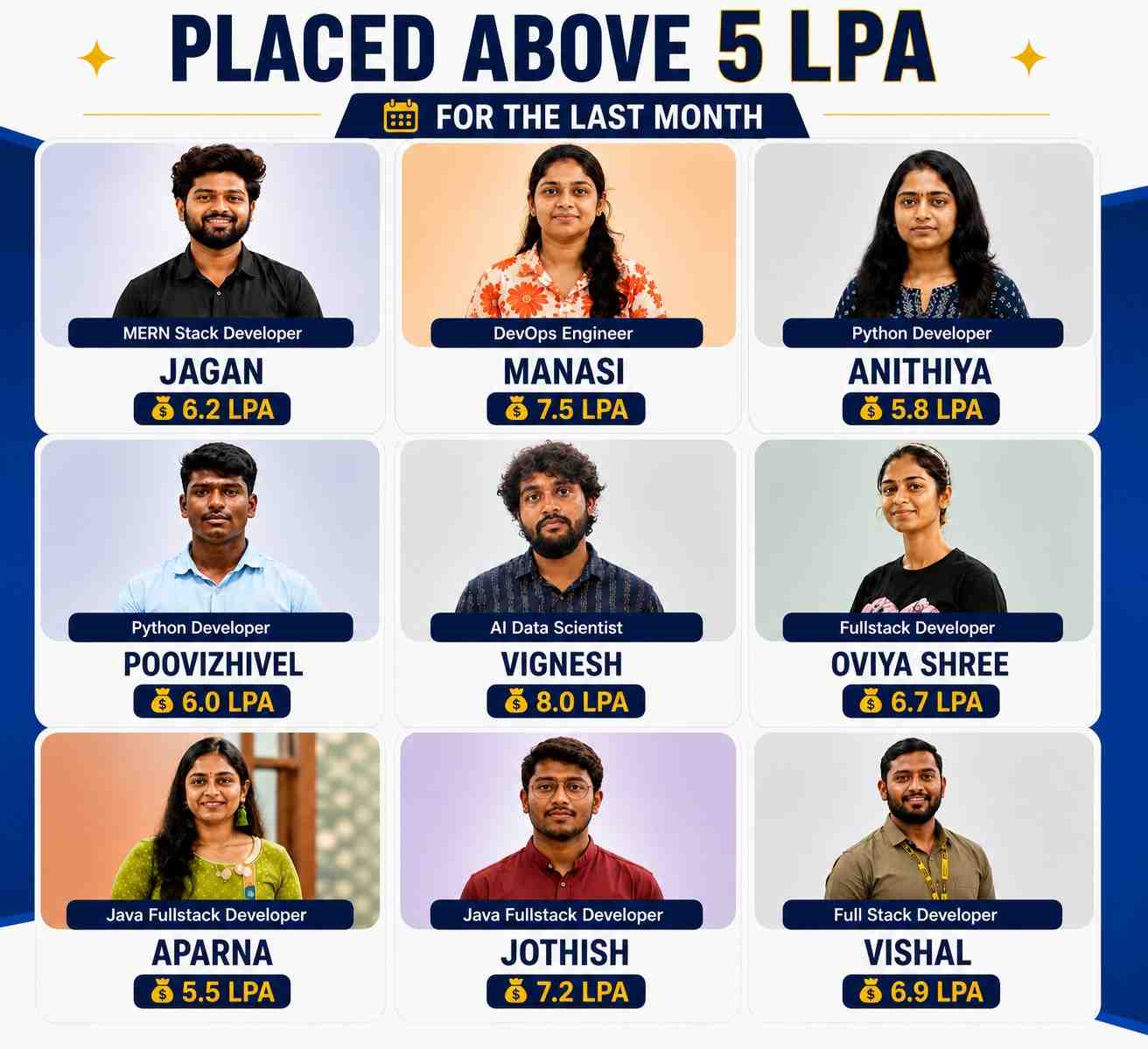
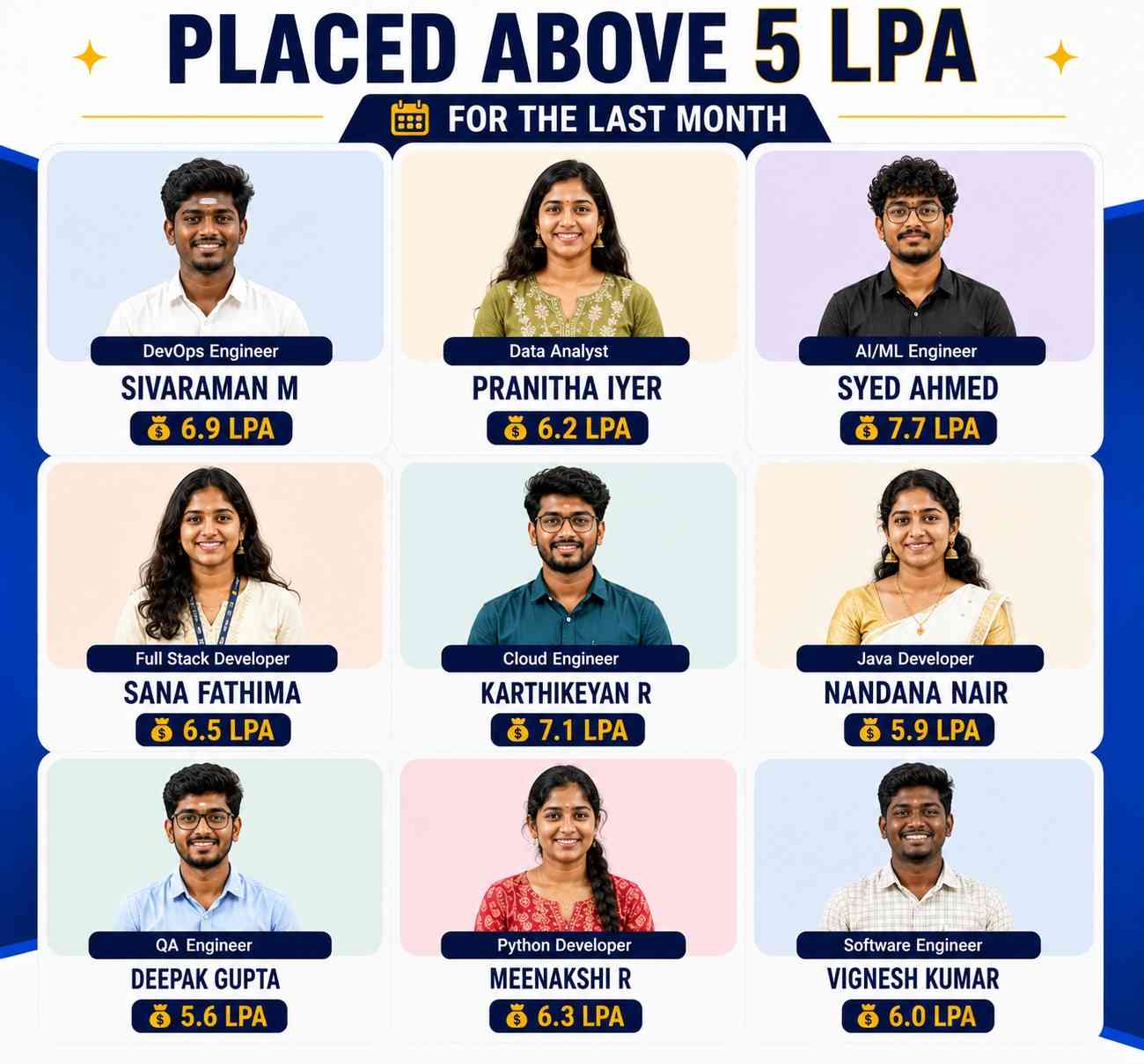
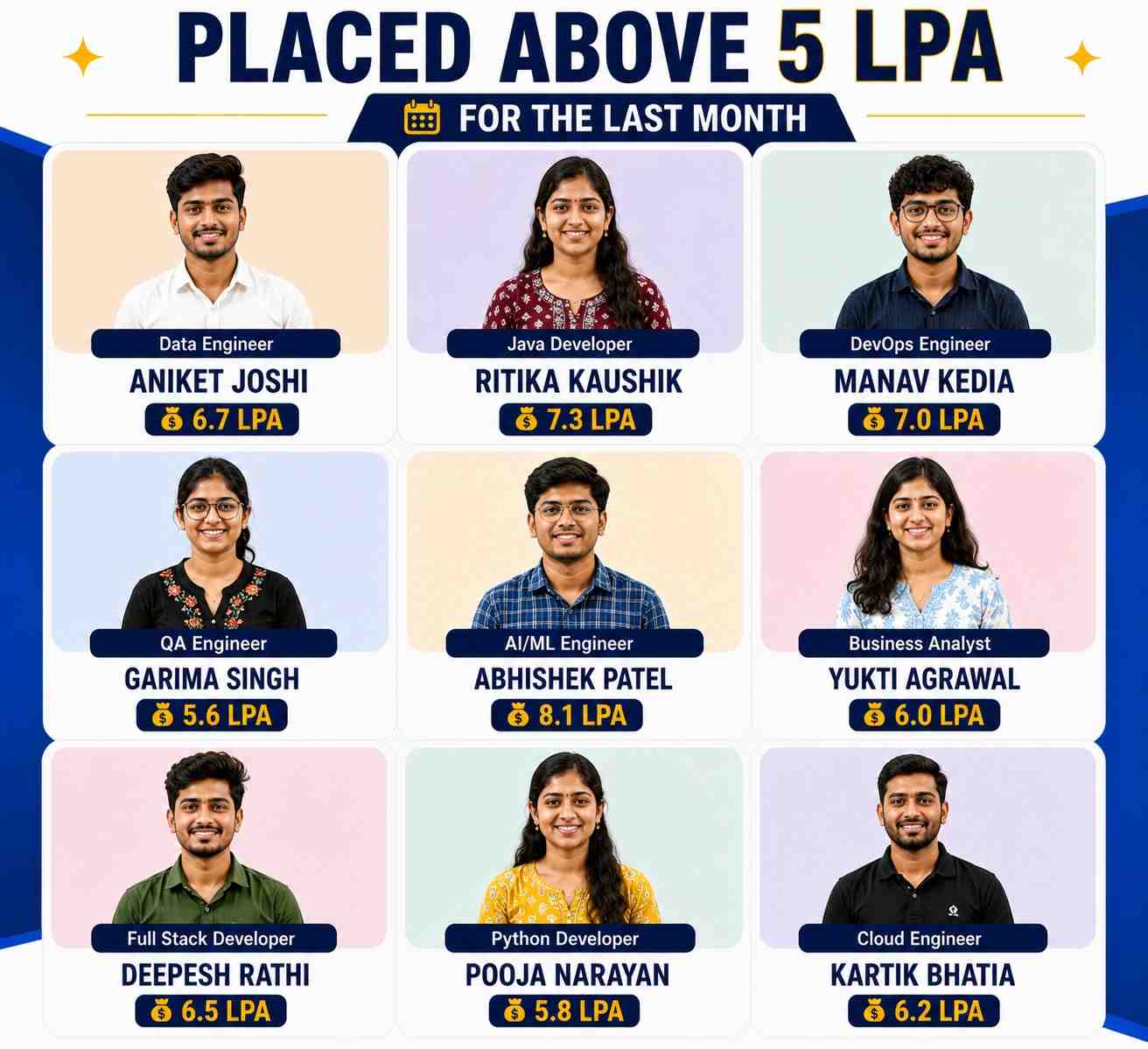
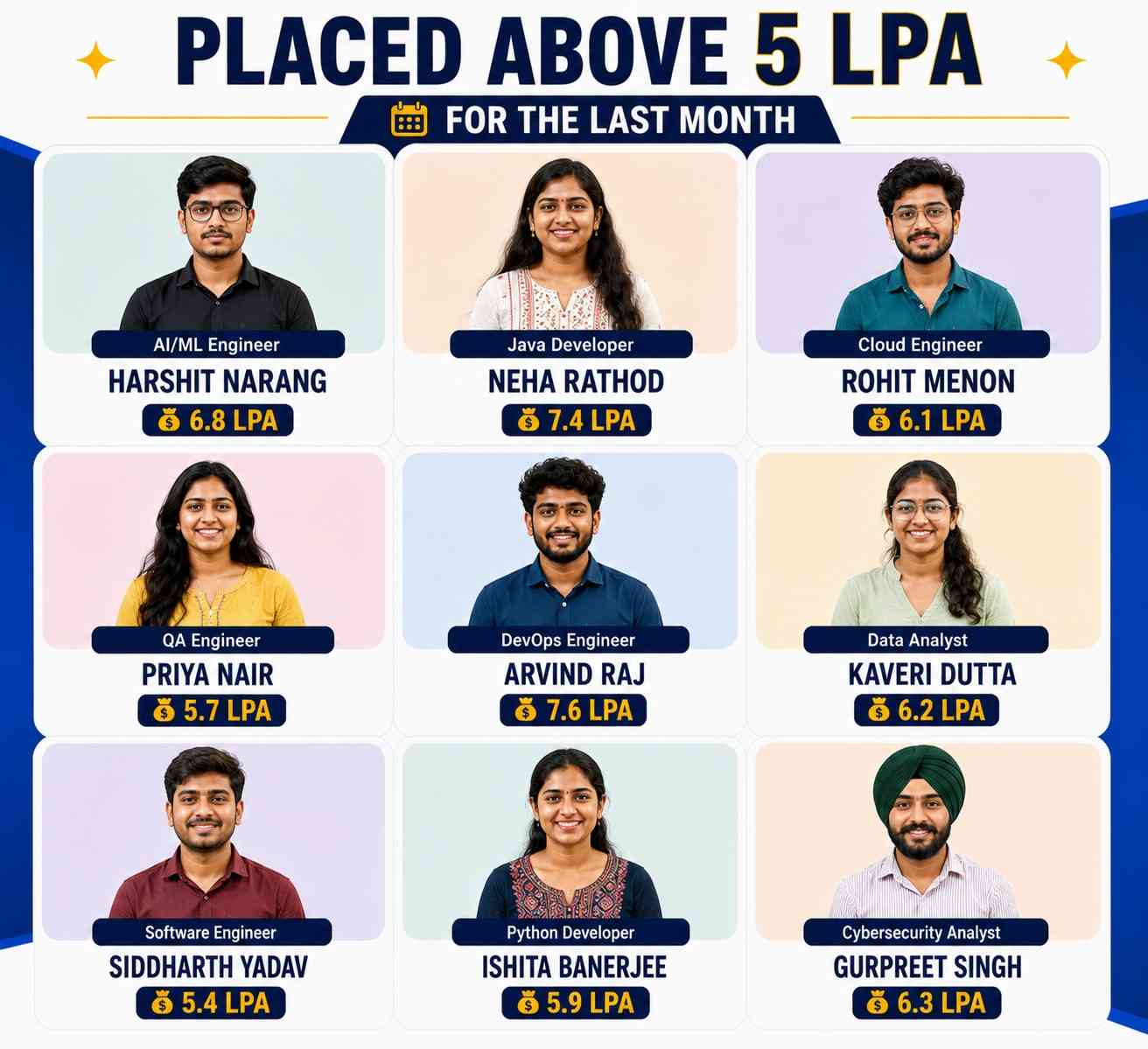
11872+

(Placed)
Freshers To IT

7824+

(Placed)
NON-IT To IT

8747+

(Placed)
Career Gap

4555+

(Placed)
Less Then 60%

Our Hiring Partners

Overview of Oracle Course

Our Oracle Course in Hyderabad is designed with a structured, step-by-step approach that starts with core database fundamentals and progresses to advanced Oracle concepts. Through practical, hands-on projects, you will develop strong expertise in Oracle SQL, PL/SQL, Database Administration, Performance Tuning, Backup & Recovery, and Data Security while learning to manage, maintain, and optimize databases in real-world business environments. By the end of the program, you will be fully prepared for roles such as Oracle Database Administrator, PL/SQL Developer, or Database Analyst, supported by an industry-recognized Oracle certification that strengthens your professional profile and accelerates your career growth.

What You'll Learn From Oracle Course

This Oracle training in Hyderabad is designed for fresh graduates and working professionals who want to build a strong foundation in database administration and enterprise-level solutions.

Throughout the program, you will gain hands-on experience in essential Oracle skills, including SQL, PL/SQL, Database Administration, and Data Modeling.

Work with tools such as Oracle Database, APEX, and Oracle Cloud while developing skills in query optimization, backup and recovery, and performance tuning.

The course features interactive workshops, real-time projects, and hands-on assignments guided by experienced mentors with strong industry expertise.

By the end of the program, you will be well-prepared to manage and optimize Oracle databases effectively while earning a recognized certification that validates your expertise.

This comprehensive training prepares you for career opportunities in Database Administration, Oracle Development, Data Analysis, and ERP Implementation.

Additional Info

Course Highlights

  • Start your Oracle career with training in Database, SQL, PL/SQL, Oracle Apps, Cloud, Performance Tuning, and Reporting Tools in Hyderabad.
  • Receive dedicated placement assistance with access to leading companies actively hiring skilled Oracle professionals.
  • Become part of a strong community of 11,000+ learners trained and placed through 350+ trusted hiring partners.
  • Learn from expert trainers with over 10 years of real-world experience in Oracle and enterprise development.
  • Benefit from beginner-friendly sessions, practical projects, and complete career guidance from start to finish.
  • Take advantage of affordable fees, flexible batch options, and 100% placement support designed for both freshers and working professionals.
  • Develop strong Oracle expertise, gain real industry exposure, and confidently build your career in IT and database management.

Exploring the Benefits of a Oracle Course in Offline

  • Hands-on Learning Experience: Offline Oracle courses offer direct interaction with trainers and dedicated lab sessions, enabling learners to practice SQL, PL/SQL, and database administration in real time. This practical exposure strengthens technical understanding and builds confidence in managing live Oracle environments.
  • Personalized Guidance: Classroom training allows instructors to provide immediate feedback, clear doubts on the spot, and offer tailored solutions for complex challenges. Learners benefit from focused mentoring that enhances problem-solving skills and improves knowledge retention.
  • Networking Opportunities: Offline programs bring together aspiring professionals and industry peers, creating opportunities to exchange ideas, collaborate on projects, and build valuable industry connections. These networks can play a key role in job referrals and long-term career growth within the Oracle ecosystem.
  • Structured Curriculum: Oracle classroom training follows a well-organized syllabus that covers fundamentals through advanced topics, including database management, PL/SQL, and Oracle applications. This structured approach ensures comprehensive and systematic learning without missing essential concepts.
  • Career-Focused Training: Offline courses often incorporate real-time projects, case studies, and exam-oriented preparation. This practical approach prepares learners for roles such as Oracle DBA, PL/SQL Developer, or Oracle Applications Consultant with strong job-ready skills.

Essential Tools for Oracle Training in Hyderabad

  • Oracle SQL Developer: SQL Developer is a powerful integrated development environment (IDE) used for managing Oracle databases. It enables learners to write, test, and debug SQL and PL/SQL code efficiently. With its user-friendly interface, it simplifies database management, development tasks, and query optimization.
  • Oracle APEX: Oracle APEX supports rapid web application development using Oracle databases. Learners can create forms, reports, and dashboards with minimal coding while gaining practical experience in building interactive and data-driven applications.
  • Oracle Database: Practical exposure to Oracle Database is essential for understanding data storage, retrieval, and management. Training in a real database environment allows learners to practice queries, triggers, transactions, and performance tuning effectively.
  • Oracle PL/SQL: PL/SQL is Oracle’s procedural programming language for developing secure and efficient database applications. Learners build expertise in writing stored procedures, functions, and triggers to automate business logic and improve database performance.
  • Oracle Cloud Services: Oracle Cloud delivers modern, cloud-based database solutions. Learners explore Autonomous Database, cloud infrastructure, storage services, and enterprise application hosting, preparing them for scalable and industry-relevant cloud deployments.

Top Frameworks Every Oracle Should Know

  • Oracle ADF: Oracle Application Development Framework (ADF) is a powerful platform for building enterprise applications using reusable components. It simplifies user interface development, integrates seamlessly with databases, and reduces coding effort, enabling developers to create robust applications more efficiently.
  • Oracle BPM Suite: Oracle Business Process Management (BPM) Suite allows organizations to design, automate, and optimize business workflows. Professionals can visually model processes, monitor performance, and enhance operational efficiency across departments.
  • Oracle SOA Suite: Oracle SOA Suite facilitates seamless integration of applications, services, and data across multiple platforms. Built on service-oriented architecture principles, it enables professionals to develop scalable, flexible, and maintainable enterprise systems.
  • Oracle Application Express (APEX): Oracle APEX is a low-code development framework used to build secure, data-driven web applications directly on Oracle databases. It helps developers create interactive and responsive applications quickly with minimal coding effort.
  • Oracle JDeveloper: Oracle JDeveloper is a comprehensive IDE that supports Java, PL/SQL, and ADF development. It streamlines coding, debugging, and deployment processes, making it essential for building enterprise-grade Oracle applications.

Must-Have Skills You will Gain in a Oracle Course in Hyderabad

  • Database Management Expertise: Learners build a strong foundation in managing Oracle databases, including creating, modifying, and maintaining tables, schemas, and data structures. This expertise ensures efficient storage, retrieval, and organization of critical business data.
  • Proficiency in SQL & PL/SQL: The course develops practical skills in writing SQL queries, joins, and subqueries, along with PL/SQL programming. Students learn to automate tasks, create stored procedures, and handle complex database operations with confidence.
  • Data Analysis and Reporting: Learners gain the ability to extract, analyze, and present data using Oracle tools. This supports informed decision-making, trend analysis, and the generation of meaningful business reports.
  • Oracle Application Knowledge: The training introduces enterprise platforms such as Oracle E-Business Suite and Oracle Fusion Applications, helping students understand ERP, HCM, and SCM modules and apply them to real-world business processes.
  • Problem-Solving and Optimization: Learners develop the skills to troubleshoot errors, optimize queries, and enhance database performance. These critical abilities improve efficiency and reliability when managing large-scale Oracle environments.

Key Roles and Responsibilities of Oracle Training

  • Database Administrator: A Database Administrator (DBA) manages and maintains Oracle databases to ensure smooth and secure operations. They handle installation, configuration, backup, and recovery processes while monitoring performance, optimizing queries, and implementing security measures to protect critical data.
  • PL/SQL Developer: A PL/SQL Developer designs, writes, and optimizes stored procedures, functions, and triggers within Oracle databases. They automate repetitive tasks, implement complex business logic, and collaborate with development teams to integrate databases seamlessly with enterprise applications.
  • Oracle Applications Consultant: Oracle Applications Consultants configure and customize ERP modules such as Finance, HR, and Supply Chain. They analyze organizational requirements, develop tailored solutions to streamline processes, and provide training and ongoing support to end users.
  • Data Analyst: Data Analysts working with Oracle databases extract, clean, and interpret data to generate meaningful insights. They create SQL queries, reports, and dashboards while identifying trends, detecting anomalies, and supporting data-driven business decisions.
  • Oracle Cloud Specialist: Oracle Cloud Specialists manage cloud-based Oracle environments and deploy applications on Oracle Cloud Infrastructure. They oversee database migration, backup, scaling, performance monitoring, and resource optimization to ensure efficiency and cost control.

Why Oracle is a Great Career Option for Freshers

  • High Demand in the IT Industry: Oracle skills are widely sought after by IT companies and enterprises that manage large-scale databases. Graduates with strong Oracle expertise can secure opportunities across organizations of all sizes, from startups to multinational corporations.
  • Lucrative Salary Packages: Professionals trained in Oracle often receive competitive salary packages, even at entry-level positions. Specialized knowledge in database administration, PL/SQL, or Oracle applications enables graduates to earn higher compensation compared to general IT roles.
  • Versatile Career Roles: Learning Oracle opens pathways to diverse career options, including Database Administrator, PL/SQL Developer, Oracle Applications Consultant, and ERP Specialist. This flexibility allows graduates to align their careers with their strengths and professional goals.
  • Hands-on Practical Experience: Oracle training emphasizes real-time projects, lab sessions, and practical simulations. This hands-on exposure prepares graduates to confidently manage databases, optimize queries, and support enterprise-level systems from day one.
  • Growth and Advancement Opportunities: Oracle expertise creates strong opportunities for career progression into senior roles such as Database Manager, Solution Architect, or Oracle Functional Consultant. Continuous certification and skill enhancement make Oracle a future-ready and sustainable career choice.

How Oracle Skills Help You Get Remote Jobs

  • Strong Database Management Expertise: Oracle skills enable professionals to design, maintain, and optimize databases efficiently. Remote organizations depend on skilled database experts to manage data securely and ensure uninterrupted operations.
  • Proficiency in PL/SQL and Automation: Knowledge of PL/SQL allows professionals to automate tasks, develop scripts, and streamline data workflows. Remote employers value candidates who can independently manage database responsibilities with minimal supervision.
  • Ability to Work with Cloud and Enterprise Systems: Modern Oracle training covers cloud databases, Fusion Applications, and enterprise platforms. Professionals skilled in these technologies can support remote IT infrastructures, deploy solutions, and maintain cloud-based environments effectively.
  • Handling Real-Time Projects and Reporting: Oracle professionals can create reports, dashboards, and data analytics to support business decisions. Remote teams require individuals who can independently analyze data, track KPIs, and deliver actionable insights.
  • Versatility Across Job Roles: Oracle expertise opens doors to diverse remote opportunities, including DBA, PL/SQL Developer, ERP Consultant, and Cloud Database Specialist roles. This versatility allows professionals to take on projects aligned with their strengths while providing companies with adaptable and reliable Oracle talent.

What to Expect in Your First Oracle Job

  • Understanding Database Management: In your first Oracle role, you will begin by familiarizing yourself with the organization’s database architecture, data storage systems, and management processes. You will handle tasks such as creating tables, managing user access, and monitoring data integrity under supervision.
  • Writing and Optimizing SQL Queries: You will work on retrieving, updating, and managing data using SQL and PL/SQL. Over time, you will learn to write efficient queries, optimize performance, and troubleshoot errors to effectively support business operations.
  • Working on Real-Time Projects: You may contribute to live projects such as HR systems, inventory management solutions, or reporting dashboards. Hands-on project involvement helps you understand practical business requirements and Oracle application workflows.
  • Collaborating with Teams: Your role will involve coordination with managers, developers, and QA teams. Strong collaboration ensures clear requirement gathering, effective database solutions, and smooth communication across departments.
  • Learning Monitoring and Maintenance: You will gain practical experience in database backup and recovery, performance tuning, and security monitoring. These responsibilities ensure data safety, accessibility, and efficiency while building your core skills as an Oracle professional.

Top Companies Hiring Oracle Professionals

  • Tata Consultancy Services (TCS): TCS regularly hires Oracle professionals for roles in database management, application development, and cloud solutions. Employees work on global projects, gaining exposure to advanced Oracle technologies and enterprise-level systems.
  • Infosys: Infosys recruits Oracle DBAs, PL/SQL Developers, and Oracle Applications Consultants to support large-scale IT initiatives. Professionals work with modern technologies and benefit from structured training programs that enhance technical expertise and career growth.
  • Wipro: Wipro engages Oracle experts for database administration, ERP implementation, and performance optimization projects. The company emphasizes innovation and offers hands-on experience with real-time client solutions, helping professionals strengthen their problem-solving and project management skills.
  • Tech Mahindra: Tech Mahindra hires Oracle professionals to manage complex databases, develop enterprise applications, and implement Oracle-based solutions. Employees contribute to projects across industries such as telecom, finance, and healthcare.
  • HCL Technologies: HCL recruits Oracle specialists for database solutions, migration projects, and application development. Professionals gain exposure to global clients and collaborative work environments that support continuous learning and long-term career advancement.
Show More

Overview of Oracle Training in Hyderabad:

Oracle is a globally recognized provider of database and enterprise software solutions used across industries such as IT, banking, healthcare, retail, and telecommunications. Oracle Training in Hyderabad delivers comprehensive learning in Oracle Database concepts, SQL, PL/SQL, database administration, and real-time project implementation. As Hyderabad continues to grow as a major IT and business hub, learners gain access to excellent career opportunities with MNCs, global service firms, and product-based companies.

Key Skills You Will Develop :

By joining Oracle Training in Hyderabad, learners will acquire:

  • In-depth understanding of Oracle database architecture and administration
  • Hands-on experience through practical labs and real-time industry projects
  • Advanced expertise in SQL, PL/SQL, and database object development
  • Skills in database backup strategies, recovery processes, and performance tuning
  • Exposure to real-world business scenarios and enterprise production environments
  • Certification guidance along with interview preparation and placement support

Oracle Training in Hyderabad

The Oracle Training program in Hyderabad is designed to strengthen core database fundamentals while enhancing SQL and PL/SQL programming skills. The course prepares learners to manage enterprise-scale Oracle environments through hands-on training, optimization techniques, and real-world project exposure.

Freshers who complete Oracle Training in Hyderabad can expect starting salaries between ₹3 LPA and ₹6 LPA, depending on their technical skills, certifications, hands-on experience, and the hiring organization. Candidates with strong project exposure often secure better compensation packages.

Oracle professionals in Hyderabad experience steady career growth as databases continue to play a critical role in enterprise operations. With experience, learners can advance into roles such as Senior DBA, Database Architect, Oracle Cloud Consultant, or Technical Lead, with significantly improved salary prospects.

The demand for Oracle-skilled professionals in Hyderabad remains consistently high due to the city’s expanding IT ecosystem. Oracle databases are widely used across banking, healthcare, telecom, e-commerce, and enterprise platforms, ensuring continuous job opportunities and long-term career stability.

Oracle database professionals are responsible for database installation, configuration, monitoring, backup, and recovery activities. They handle performance tuning, data security, user access management, and work closely with application teams to ensure smooth and reliable system operations.

Oracle-trained professionals are recruited across industries such as IT services, banking and finance, healthcare, e-commerce, telecommunications, manufacturing, and government sectors. Oracle databases are trusted for managing large-scale and mission-critical enterprise data systems.

After successfully completing Oracle Training in Hyderabad, learners receive a course completion certificate. This certification validates technical expertise, strengthens resumes, and improves job prospects during interviews and recruitment processes.

Oracle Training Program

Oracle

Oracle Solaris Training Program

28k Learners Weekend / Weekday Live Class
  • Unix-Based OS Administration
  • Hands-on Server Configuration
  • Certification & Interview Preparation

Module 1: Oracle Solaris Fundamentals
  • Introduction to Oracle Solaris OS
  • Installation & Boot Process
  • File System Hierarchy
  • User & Group Management
  • Basic Command Line Operations
  • Module 2: System Administration
  • Process Management
  • Service Management Facility (SMF)
  • Software Package Management
  • Disk & File System Management
  • ZFS File System Overview
  • Module 3: Networking & Security
  • Network Configuration
  • IP Addressing & Routing
  • Firewall & Security Policies
  • SSH Configuration
  • User Security & Permissions
  • Module 4: Storage & Virtualization
  • ZFS Storage Pools
  • Snapshots & Clones
  • Volume Management
  • Zones (Solaris Containers)
  • Resource Management
  • Module 5: Performance & Troubleshooting
  • System Monitoring Tools
  • Log File Analysis
  • Performance Tuning
  • Backup & Recovery
  • Real-Time Administration Project
  • Oracle

    Oracle Apps DBA Training Program

    44k Learners Weekend / Weekday Live Class
    • Oracle E-Business Suite Administration
    • Cloning & Patching
    • Live Project

    Module 1: Oracle Apps DBA Architecture
  • Oracle E-Business Suite Overview
  • Apps Architecture & Components
  • File System Structure
  • Tech Stack Components
  • Multi-Tier Architecture
  • Module 2: Installation & Configuration
  • Oracle Apps Installation
  • Rapid Install Concepts
  • Environment Configuration
  • User & Responsibility Management
  • Concurrent Manager Setup
  • Module 3: Cloning & Patching
  • Application & Database Cloning
  • AutoConfig Concepts
  • Patch Management (AD Utilities)
  • Online Patching (R12.2)
  • Environment Refresh
  • Module 4: Backup, Recovery & Performance
  • RMAN Backup Strategy
  • Apps-Specific Recovery
  • Performance Monitoring
  • Workflow Mailer Configuration
  • Troubleshooting Techniques
  • Module 5: Security & High Availability
  • Apps Security Best Practices
  • SSL Configuration
  • Load Balancing Concepts
  • Disaster Recovery Setup
  • Real-Time Administration Project
  • Oracle

    Oracle Fusion Financial Training

    42k Learners Weekend / Weekday Live Class
    • Financials Cloud Concepts
    • GL, AP & AR Modules
    • Real Case Study

    Module 1: Oracle Fusion Financial Overview
  • Introduction to Fusion Financials Cloud
  • Enterprise Structure & Ledger Setup
  • Chart of Accounts Configuration
  • Security & User Roles
  • Financial Functional Flow Overview
  • Module 2: General Ledger (GL)
  • Journal Entry Processing
  • Posting & Reversals
  • Allocations & Revaluations
  • Financial Reporting Tools
  • Period Close Process
  • Module 3: Accounts Payable (AP)
  • Supplier Setup & Management
  • Invoice Processing
  • Payment Processing
  • Expense Management
  • AP Accounting & Reports
  • Module 4: Accounts Receivable (AR)
  • Customer Setup
  • Transaction Processing
  • Receipts & Adjustments
  • Revenue Recognition
  • AR Reporting & Aging
  • Module 5: Cash Management & Assets
  • Bank Account Setup
  • Bank Reconciliation
  • Fixed Asset Management
  • Depreciation & Transfers
  • End-to-End Financial Implementation Project
  • Oracle

    Oracle Performance Tuning Training

    29k Learners Weekend / Weekday Live Class
    • SQL & Database Optimization
    • AWR & ASH Analysis
    • Real-Time Performance Case Study

    Module 1: Performance Tuning Fundamentals
  • Oracle Architecture Review
  • Wait Events & Bottleneck Analysis
  • Instance Tuning Basics
  • Memory Structures & Parameters
  • Performance Monitoring Overview
  • Module 2: SQL Tuning Techniques
  • Execution Plans Analysis
  • Cost-Based Optimizer
  • Indexing Strategies
  • SQL Trace & TKPROF
  • SQL Tuning Advisor
  • Module 3: Memory & Storage Tuning
  • SGA & PGA Tuning
  • Automatic Memory Management
  • Tablespace Optimization
  • I/O Performance Tuning
  • Redo & Undo Management
  • Module 4: Advanced Monitoring Tools
  • AWR & ASH Reports
  • ADDM Analysis
  • Enterprise Manager Monitoring
  • Statspack Reports
  • Real-Time SQL Monitoring
  • Module 5: Troubleshooting & Case Studies
  • Performance Issue Identification
  • Deadlocks & Lock Contention
  • Resource Management
  • High Availability Considerations
  • End-to-End Performance Tuning Project
  • Oracle

    Oracle APEX Training Program

    35k Learners Weekend / Weekday Live Class
    • Low-Code Application Development
    • Hands-on Real-Time Projects
    • Interview Preparation

    Module 1: Oracle APEX Fundamentals
  • Introduction to Oracle APEX Architecture
  • Workspace & Environment Setup
  • SQL Workshop Overview
  • Database Objects & Tables
  • Creating Your First Application
  • Module 2: Building Application Pages
  • Interactive Reports & Grids
  • Forms & Validations
  • Master-Detail Pages
  • Page Items & Dynamic Actions
  • Navigation & Page Processing
  • Module 3: Advanced Development
  • PL/SQL Integration
  • APEX Collections
  • RESTful Web Services Integration
  • Authentication & Authorization
  • Error Handling & Debugging
  • Module 4: UI Customization & Themes
  • Universal Theme Overview
  • Templates & Theme Styles
  • Custom CSS & JavaScript
  • Responsive Design Techniques
  • Charts & Data Visualization
  • Module 5: Deployment & Real-Time Project
  • Application Export & Import
  • Security Best Practices
  • Performance Optimization
  • Cloud Deployment Options
  • End-to-End Project Implementation
  • Oracle

    Oracle Fusion HCM Training Program

    36k Learners Weekend / Weekday Live Class
    • Core HR & Payroll Modules
    • Hands-on Implementation Projects
    • Certification & Interview Preparation
    Module 1: Fusion HCM Overview
  • Fusion HCM Architecture
  • Enterprise Structures
  • Security & Roles
  • Navigation & Setup
  • Implementation Lifecycle
  • Module 2: Core HR
  • Workforce Structures
  • Employee Lifecycle
  • Document Records
  • Global HR Configuration
  • Reports & Analytics
  • Module 3: Payroll Management
  • Payroll Configuration
  • Elements & Balances
  • Salary Processing
  • Payroll Reports
  • Year-End Processing
  • Module 4: Absence & Benefits
  • Absence Plans
  • Leave Accruals
  • Benefits Configuration
  • Compensation Plans
  • Approvals Workflow
  • Module 5: Implementation Project
  • Real-Time Case Study
  • Configuration Practice
  • Data Migration
  • Testing & Validation
  • Go-Live Strategy
  • Oracle

    Oracle SOA Training Program

    29k Learners Weekend / Weekday Live Class
    • SOA Suite Architecture
    • BPEL & Web Services Integration
    • Enterprise-Level Projects
    Module 1: SOA Architecture
  • SOA Concepts
  • Oracle SOA Suite Components
  • Composite Applications
  • Mediator & Adapters
  • Deployment Architecture
  • Module 2: BPEL & Web Services
  • BPEL Process Design
  • SOAP & REST Services
  • Fault Handling
  • Human Workflow
  • Service Testing
  • Module 3: Integration & Adapters
  • Database Adapter
  • File Adapter
  • JMS Adapter
  • Application Integration
  • Data Transformation
  • Module 4: Monitoring & Security
  • Enterprise Manager
  • SOA Monitoring
  • Security Policies
  • Authentication & Authorization
  • Error Handling
  • Module 5: Real-Time Project
  • End-to-End Integration Project
  • Deployment Strategy
  • Performance Optimization
  • Testing & Debugging
  • Case Study Implementation
  • Oracle

    Oracle Cloud Training Program

    41k Learners Weekend / Weekday Live Class
    • OCI Architecture & Services
    • Cloud Deployment & Security
    • Hands-on Cloud Projects
    Module 1: OCI Fundamentals
  • Cloud Concepts
  • OCI Global Infrastructure
  • Regions & Availability Domains
  • Compartments
  • IAM Policies
  • Module 2: Compute & Storage
  • Compute Instances
  • Block Storage
  • Object Storage
  • Autoscaling
  • Backup Strategies
  • Module 3: Networking
  • VCN Setup
  • Subnets & Gateways
  • Load Balancers
  • DNS & Routing
  • Security Lists
  • Module 4: Security & Monitoring
  • Identity & Access Management
  • Cloud Guard
  • Monitoring & Logging
  • Alarms & Notifications
  • Compliance Best Practices
  • Module 5: Real-Time Deployment Project
  • Application Deployment
  • High Availability Setup
  • Disaster Recovery
  • Cost Optimization
  • Final Project Review
  • Oracle

    Oracle Identity Manager Training Program

    27k Learners Weekend / Weekday Live Class
    • Identity & Access Management
    • User Provisioning & Governance
    • Security Implementation Projects
    Module 1: OIM Architecture
  • OIM Concepts
  • Architecture Overview
  • Installation & Configuration
  • System Components
  • Deployment Models
  • Module 2: User Management
  • User Lifecycle
  • Role Management
  • Access Policies
  • Password Policies
  • Self-Service Portal
  • Module 3: Provisioning & Connectors
  • Application Onboarding
  • Connector Framework
  • Provisioning Workflows
  • Reconciliation
  • Approval Processes
  • Module 4: Security & Governance
  • Access Certification
  • Audit & Compliance
  • Segregation of Duties
  • Risk Management
  • Reporting
  • Module 5: Real-Time Project
  • End-to-End Implementation
  • Integration with AD
  • Policy Configuration
  • Testing & Validation
  • Deployment Strategy
  • Oracle

    Oracle Apps HRM Training Program

    30k Learners Weekend / Weekday Live Class
    • Core HR & Payroll Processing
    • Recruitment & Employee Lifecycle
    • Functional Real-Time Projects
    Module 1: HRMS Overview
  • HRMS Architecture
  • Employee Setup
  • Organization Structure
  • Responsibility Setup
  • Navigation
  • Module 2: Core HR
  • Employee Lifecycle
  • Position Management
  • Absence Management
  • Approvals
  • HR Reports
  • Module 3: Payroll
  • Payroll Setup
  • Elements & Balances
  • Salary Processing
  • Statutory Compliance
  • Payroll Reports
  • Module 4: Self-Service HR
  • Employee Self-Service
  • Manager Self-Service
  • Approvals Workflow
  • Notifications
  • Customization
  • Module 5: Implementation Project
  • Real-Time HRMS Case Study
  • Configuration Practice
  • Data Migration
  • Testing
  • Go-Live Support
  • Oracle

    Oracle Apps SCM Training Program

    29k Learners Weekend / Weekday Live Class
    • Inventory & Purchasing
    • Order Management
    • Supply Chain Implementation
    Module 1: SCM Overview
  • SCM Architecture
  • Inventory Organization
  • Item Setup
  • Subinventories
  • Transaction Types
  • Module 2: Purchasing
  • Supplier Setup
  • Purchase Requisition
  • Purchase Orders
  • Receiving
  • Invoice Matching
  • Module 3: Order Management
  • Sales Order Setup
  • Shipping Execution
  • Pricing & Discounts
  • Order Workflow
  • Order Tracking
  • Module 4: Advanced Modules
  • BOM
  • WIP
  • MRP
  • Costing
  • Planning
  • Module 5: Real-Time Project
  • SCM Implementation Case Study
  • Integration with Finance
  • Testing & Validation
  • Data Migration
  • Go-Live Support
  • Oracle

    Oracle Apps Finance Training Program

    35k Learners Weekend / Weekday Live Class
    • GL, AP & AR Modules
    • Financial Reporting
    • Implementation Projects
    Module 1: General Ledger
  • Chart of Accounts
  • Journal Entries
  • Posting
  • Budgeting
  • Financial Statements
  • Module 2: Accounts Payable
  • Supplier Setup
  • Invoice Processing
  • Payments
  • Withholding Tax
  • Reports
  • Module 3: Accounts Receivable
  • Customer Setup
  • Transactions
  • Receipts
  • Credit Management
  • AR Reports
  • Module 4: Fixed Assets & Cash
  • Asset Setup
  • Depreciation
  • Cash Management
  • Bank Reconciliation
  • Financial Controls
  • Module 5: Implementation Project
  • Finance Case Study
  • Integration with SCM
  • Data Migration
  • Testing
  • Go-Live Support
  • Oracle

    Oracle Apps Technical Training Program

    33k Learners Weekend / Weekday Live Class
    • RICE Components
    • Reports & Interfaces
    • Real-Time Implementation
    Module 1: Oracle Apps Architecture
  • System Architecture
  • Application Object Library
  • Multi-Org Concept
  • Concurrent Programs
  • User Management
  • Module 2: Reports Development
  • Oracle Reports
  • XML Publisher
  • BI Publisher
  • Customization
  • Deployment
  • Module 3: Interfaces & Conversions
  • Inbound Interfaces
  • Outbound Interfaces
  • API Usage
  • Data Migration
  • Error Handling
  • Module 4: Extensions & Personalization
  • Forms Personalization
  • OAF Customization
  • Workflow Builder
  • Alerts
  • Security Setup
  • Module 5: Real-Time Project
  • RICE Implementation
  • End-to-End Integration
  • Testing & Debugging
  • Deployment Strategy
  • Production Support
  • Oracle

    Oracle SQL & PL/SQL Training Program

    40k Learners Weekend / Weekday Live Class
    • Advanced SQL Queries
    • PL/SQL Programming
    • Database Optimization
    Module 1: SQL Fundamentals
  • Data Retrieval
  • Joins & Subqueries
  • Functions
  • Constraints
  • Indexes
  • Module 2: Advanced SQL
  • Analytical Functions
  • Performance Tuning
  • Views
  • Sequences
  • Synonyms
  • Module 3: PL/SQL Basics
  • PL/SQL Blocks
  • Cursors
  • Exception Handling
  • Procedures
  • Functions
  • Module 4: Advanced PL/SQL
  • Triggers
  • Packages
  • Collections
  • Bulk Processing
  • Performance Optimization
  • Module 5: Real-Time Project
  • Database Design
  • Stored Program Units
  • Integration Case Study
  • Testing
  • Deployment
  • Oracle

    Oracle Primavera P6 Training Program

    31k Learners Weekend / Weekday Live Class
    • Project Planning & Scheduling
    • Resource & Cost Management
    • Real-Time Project Implementation
    Module 1: Primavera P6 Overview
  • Introduction to Primavera
  • Enterprise Project Structure (EPS)
  • Organizational Breakdown Structure (OBS)
  • User Preferences
  • Project Creation
  • Module 2: Project Planning & Scheduling
  • Work Breakdown Structure (WBS)
  • Activities & Relationships
  • Calendars
  • Scheduling Techniques
  • Critical Path Method (CPM)
  • Module 3: Resource & Cost Management
  • Resource Creation
  • Resource Assignment
  • Cost Accounts
  • Budgeting
  • Earned Value Analysis
  • Module 4: Tracking & Monitoring
  • Baseline Creation
  • Progress Updating
  • Variance Analysis
  • Performance Reports
  • Dashboards
  • Module 5: Real-Time Project Case Study
  • End-to-End Project Setup
  • Resource Optimization
  • Schedule Compression
  • Risk Analysis
  • Project Reporting & Closure
  • Oracle

    Oracle 12c Certification Training Program

    36k Learners Weekend / Weekday Live Class
    • Oracle 12c Administration
    • Hands-on Lab Sessions
    • Certification Exam Preparation
    Module 1: 12c Architecture
  • Multitenant Architecture
  • CDB & PDB
  • Memory Management
  • Background Processes
  • Initialization Parameters
  • Module 2: Installation & Configuration
  • Software Installation
  • Database Creation
  • Listener Configuration
  • Patch Management
  • Environment Setup
  • Module 3: Backup & Recovery
  • RMAN Basics
  • Backup Strategies
  • Recovery Scenarios
  • Flashback Technology
  • Data Pump
  • Module 4: Performance Tuning
  • AWR Reports
  • SQL Tuning
  • Index Optimization
  • Monitoring Tools
  • Resource Management
  • Module 5: Certification Preparation
  • Exam Objectives
  • Practice Questions
  • Mock Tests
  • Case Studies
  • Interview Preparation
  • 100% Placements | Get Hired in Top MNC

    Upcoming Batches For Classroom and Online

    Weekdays
    09 - Mar - 2026
    08:00 AM & 10:00 AM
    Weekdays
    11 - Mar - 2026
    08:00 AM & 10:00 AM
    Weekends
    14 - Mar - 2026
    (10:00 AM - 01:30 PM)
    Weekends
    15 - Mar - 2026
    (09:00 AM - 02:00 PM)
    Can't find a batch you were looking for?
    INR ₹16500
    INR ₹36000

    OFF Expires in

    Who Should Take a Oracle Certification Course

    IT Professionals

    Non-IT Career Switchers

    Fresh Graduates

    Working Professionals

    Diploma Holders

    Professionals from Other Fields

    Salary Hike

    Graduates with Less Than 60%

    Show More

    Job Roles For Oracle Certification Training

    Database Administrator

    PL&SQL Developer

    Application Consultant

    ERP Specialist

    Cloud Engineer

    Data Analyst

    System Architect

    Support Engineer

    Show More

    Tools Covered For Orcale Training

    Application Express BI Publisher Cloud Infrastructure Data Integrator Enterprise Manager Forms Reports GoldenGate Oracle SQL Developer

    What’s included ?

    Convenient learning format

    📊 Free Aptitude and Technical Skills Training

    • Learn basic maths and logical thinking to solve problems easily.
    • Understand simple coding and technical concepts step by step.
    • Get ready for exams and interviews with regular practice.
    Dedicated career services

    🛠️ Hands-On Projects

    • Work on real-time projects to apply what you learn.
    • Build mini apps and tools daily to enhance your coding skills.
    • Gain practical experience just like in real jobs.
    Learn from the best

    🧠 AI Powered Self Interview Practice Portal

    • Practice interview questions with instant AI feedback.
    • Improve your answers by speaking and reviewing them.
    • Build confidence with real-time mock interview sessions.
    Learn from the best

    🎯 Interview Preparation For Freshers

    • Practice company-based interview questions.
    • Take online assessment tests to crack interviews
    • Practice confidently with real-world interview and project-based questions.
    Learn from the best

    🧪 LMS Online Learning Platform

    • Explore expert trainer videos and documents to boost your learning.
    • Study anytime with on-demand videos and detailed documents.
    • Quickly find topics with organized learning materials.

    Oracle Course Curriculum

    • 🏫 Classroom Training
    • 💻 Online Training
    • 🚫 No Pre Request (Any Vertical)
    • 🏭 Industrial Expert

    Enrolling in an Oracle Training in Hyderabad helps you build essential skills that align with your career ambitions. It opens doors to in-demand job roles in leading IT organizations. With flexible training options, you can specialize in Database Management, PL/SQL, or Oracle Applications while developing strong expertise in building, managing, and improving enterprise systems, along with hands-on internship opportunities in Hyderabad.

    • Introduction to Oracle– Start with the fundamentals of Oracle, covering database concepts, SQL basics, relational data models, and core Oracle architecture.
    • Advanced Techniques and Tools– Enhance skills in PL/SQL programming, performance tuning, backup and recovery, and tools like SQL Developer and Oracle APEX.
    • Hands-On Project Experience– Apply your learning through real-world projects like database design, stored procedure development and reporting dashboards.
    • Implementation and Collaboration– Learn to deploy and manage Oracle databases with teams using version control, CI/CD pipelines, and Oracle solutions.
    Introduction to Oracle
    SQL and PL/SQL Basics
    Advanced PL/SQL Programming
    Oracle Database Administration
    Oracle Applications Overview
    Oracle Advanced Topics
    Oracle Projects & Hands-on Practice

    Forms the foundational knowledge to understand Oracle technologies:

    • Overview of Oracle – History, versions and architecture
    • Database Concepts – Relational databases, tables, schemas
    • Tools & Technologies – SQL Developer, Oracle APEX, Oracle Cloud
    • Career Paths – Roles such as Database Administrator, PL/SQL Developer, Oracle Apps Consultant

    Covers fundamental database programming and queries:

    • SQL Fundamentals – DDL, DML, DCL commands
    • Joins & Subqueries – Retrieving and manipulating data efficiently
    • PL/SQL Basics – Procedures, functions, triggers and cursors
    • Data Handling – Transactions, commits, rollbacks, exception handling

    Deep dive into complex Oracle programming concepts:

    • Procedures & Functions – Writing reusable code blocks
    • Packages – Organizing PL/SQL code for modularity
    • Triggers & Events – Automating database actions
    • Exception Management – Handling errors and debugging

    Learn to manage and optimize Oracle databases:

    • Database Installation & Configuration – Setting up Oracle DB
    • User & Role Management – Creating users, privileges and roles
    • Backup & Recovery – RMAN and data recovery strategies
    • Performance Tuning – Optimizing SQL queries and database performance

    Understand enterprise-level applications and integrations:

    • Oracle E-Business Suite – Modules and functionalities
    • Oracle Fusion Applications – Cloud-based ERP, HCM, SCM
    • Data Migration – Importing and exporting data using Oracle tools
    • Security & Compliance – Access control and audit management

    Focus on specialized and emerging Oracle skills:

    • Oracle RAC & Data Guard – High availability and disaster recovery
    • PL/SQL Optimization – Improving code efficiency and performance
    • Oracle Cloud Services – Database cloud service, Autonomous DB
    • Integration & Reporting – Using Oracle BI and APEX

    Apply all skills learned in practical scenarios:

    • Real-time Projects – Working on live database and application scenarios
    • Data Management – Performing complex queries, migrations and updates
    • Reporting & Dashboards – Building reports using Oracle tools
    • Documentation – Creating user manuals and project reports

    🎁 Free Addon Programs

    Aptitude, Spoken English.

    🎯 Our Placement Activities

    Daily Task, Soft Skills, Projects, Group Discussions, Resume Preparation, Mock Interview.

    Get Hands-on Experience with Real-Time Oracle Projects

    Placement Support Overview

    Today's Top Job Openings for Oracle Training

    Oracle Database Administrator

    Company Code : DCS170

    Hyderabad, Telangana

    ₹28,000 – ₹50,000 a month

    Any Degree

    Exp 0-3 yrs

  • We are hiring an Oracle DBA to manage database installation, configuration and maintenance. You must be skilled in backup/recovery, performance tuning, user management and SQL optimization.
  • Easy Apply

    Oracle PL/SQL Developer

    Company Code : THS762

    Hyderabad, Telangana

    ₹30,000 – ₹55,000 a month

    Any Degree

    Exp 0-3 yrs

  • Join us as an Oracle PL/SQL Developer to design, write and optimize stored procedures, functions and triggers. You’ll work on database integration, data manipulation and performance tuning for enterprise applications.
  • Easy Apply

    Oracle Apps Consultant

    Company Code : FLT594

    Hyderabad, Telangana

    ₹25,000 - ₹45,000 a month

    Any Degree

    Exp 0-2 yrs

  • We are hiring an Oracle Apps Consultant to implement and support Oracle E-Business Suite modules. You’ll customize workflows, manage configurations and assist users with functional issues.
  • Easy Apply

    Oracle Cloud Developer

    Company Code : CVI790

    Hyderabad, Telangana

    30,000 to ₹50,000 a month

    Any Degree

    Exp 0-2 yrs

  • Seeking an Oracle Cloud Developer to build and deploy cloud-based applications using Oracle Cloud Services. You’ll work on automation, integration and database-driven cloud solutions.
  • Easy Apply

    Oracle Functional Analyst

    Company Code : ASD118

    Hyderabad, Telangana

    ₹28,000 - ₹48,000 a month

    Any Degree

    Exp 0-3 yrs

  • Become an Oracle Functional Analyst to gather business requirements, design process flows and implement Oracle Applications. You’ll collaborate with technical teams to ensure accurate deployment and reporting.
  • Easy Apply

    Oracle BI Developer

    Company Code : RSS349

    Hyderabad, Telangana

    ₹32,000 - ₹50,000 a month

    Any Degree

    Exp 0-3 yrs

  • We’re looking for an Oracle BI Developer to create dashboards, reports and visualizations. You’ll analyze data, optimize queries and provide actionable insights for business decision-making.
  • Easy Apply

    Oracle Database Engineer

    Company Code : ATP431

    Hyderabad, Telangana

    ₹30,000 - ₹50,000 a month

    Any Degree

    Exp 0-2 yrs

  • Hiring an Oracle Database Engineer to monitor, troubleshoot and optimize database performance. You’ll perform routine maintenance, replication and work closely with application teams.
  • Easy Apply

    Oracle ERP Specialist

    Company Code : TES249

    Hyderabad, Telangana

    ₹35,000 - ₹55,000 a month

    Any Degree

    Exp 0-3 yrs

  • Join as an Oracle ERP Specialist to implement and support Oracle ERP solutions. You’ll configure modules, perform data migration and assist in workflow automation across business processes.
  • Easy Apply

    Highlights for Oracle Internships

    Real Time Projects

    • 1. Gain hands-on experience by working on live Oracle projects across web and mobile platforms.
    • 2.Apply design thinking to solve real-world user interface and user experience challenges.
    Book Session

    Skill Development Workshops

    • 1.Participate in interactive workshops on the latest UI/UX trends, tools, and techniques.
    • 2.Learn directly from industry experts through practical sessions on wireframing, prototyping, and usability testing.
    Book Session

    Employee Welfare

    • 1. Enjoy benefits such as health insurance, flexible work hours, and wellness initiatives.
    • 2. Organizations focus on mental health support and maintaining a healthy work-life balance.
    Book Session

    Mentorship & Peer Learning

    • 1. Learn under the guidance of experienced mentors who support your growth in design thinking and career planning.
    • 2. Collaborate with peers on design reviews, feedback sessions, and group projects for a richer learning experience.
    Book Session

    Soft Skills & Career Readiness

    • 1.Develop strong communication, collaboration, and presentation skills essential for design roles.
    • 2.Get interview-ready through mock sessions, portfolio reviews, and career coaching.
    Book Session

    Certification

    • 1. Earn recognized certifications to showcase your Oracle proficiency.
    • 2. Strengthen your resume with course completion and project-based credentials from reputed platforms.
    Book Session

    Sample Resume for Oracle (Fresher)

    • 1. Simple and Neat Resume Format

      Use a clean layout with clear sections like summary, skills, education, and projects.

    • 2. List of Technologies You Know

      Mention skills like SQL, PL/SQL, Oracle Database, Oracle Apps, Data Modeling, Reporting, Cloud Integration.

    • 3. Real-Time Projects and Achievements

      Add 1–2 real-time projects with a short description and the tools used.

    Top Oracle Interview Questions and Answers (2026 Guide)

    Ans:

    Oracle provides database management systems used to store, manage, and retrieve huge volumes of structured and unstructured data. It is widely known for reliability, security, performance, and enterprise-level scalability.

    Ans:

    Oracle Database is a relational database management system that helps businesses securely store and manage data. It offers high performance, strong security features, and supports large-scale enterprise applications.

    Ans:

    An Oracle instance is the memory and process environment that helps run and manage a database on a server. It contains memory structures and background processes that support database operations.

    Ans:

    The parameter file (init.ora or spfile.ora) contains configuration settings that control how an Oracle database instance operates.

    Ans:

    SPFILE is a binary server parameter file used to store Oracle database configuration parameters.

    Ans:

    System Global Area (SGA) is shared memory used by Oracle database to store data and control information for efficient processing.

    Ans:

    A user account allows individuals or applications to access database resources based on assigned privileges and roles.

    Ans:

    • SELECT
    • INSERT
    • UPDATE
    • DELETE
    • MERGE

    Ans:

    A transaction is a sequence of database operations treated as a single unit of work to ensure data integrity.

    Ans:

    • Function: Returns a value and can be used in SQL expressions.
    • Procedure: Performs actions but does not necessarily return values.

    Company-Specific Interview Questions from Top MNCs

    1. What is the difference between UNION and UNION ALL in SQL?

    Ans:

    The UNION operator merges results from multiple SELECT queries while removing duplicates, ensuring unique rows in the output. UNION ALL also combines results but keeps duplicates, making it faster since no sorting or comparison is required.

    2. What are triggers in Oracle and how are they different from stored procedures?

    Ans:

    Triggers in Oracle are PL/SQL blocks that execute automatically when specific events occur on a table or view, such as INSERT, UPDATE, or DELETE. They help enforce rules, audit data, and maintain integrity. Stored procedures, on the other hand, are named PL/SQL blocks that must be explicitly executed by users or applications to perform tasks.

    3. Explain the concept of context switching in PL/SQL.

    Ans:

    User research gathers insights about users’ behaviors, needs and motivations through methods like interviews, surveys, observation and usability testing. The findings help create accurate user personas and guide design decisions, ensuring products are relevant, practical and user-friendly.

    4. What kinds of joins are there in SQL?

    Ans:

    SQL supports several types of joins, each with a distinct function in merging information from several tables. The main types include INNER JOIN, which returns only the rows have matching values in LEFT JOINING both tables yields all rows from the left table along with RIGHT JOIN, which yields all rows from the right table, matching rows from the right table, along with the left table's matching rows and FULL OUTER JOIN, which gives rows there is a match in one of the tables. Understanding these join types is crucial for querying relational databases effectively.

    5. What is the difference between a function and a procedure in PL/SQL?

    Ans:

    In PL/SQL, both functions and procedures are named blocks of code that can be stored and executed, but they have distinct differences. A function is a PL/SQL block accomplishes a certain task and yields a single value and it can be used in SQL expressions.

    6. What is the purpose of the explain plan statement in Oracle?

    Ans:

    The EXPLAIN PLAN statement in Oracle is used to display the execution plan for a SQL query. An execution plan shows how Oracle intends to execute a SQL statement, encompassing the sequence of events, the data access techniques, and the approximate cost of every operation.

    7. What are analytical functions in Oracle? Provide an example.

    Ans:

    Analytical functions in Oracle are a category of functions use a collection of rows to calculate an aggregate value but return the result for each row in the group. These functions are used to carry out computations on a group of table rows associated with the current row.

    8. What is the difference between SQL and PL/SQL?

    Ans:

    A query language called SQL is used to communicate with databases allowing users to query and manipulate data. PL/SQL (Procedural Language/SQL) is an extension of SQL that adds procedural capabilities, such as loops and conditions, enabling developers to write complex scripts and programs.

    9. What is exception handling in PL/SQL?

    Ans:

    Exception handling in PL/SQL is a mechanism to handle errors or unexpected events in a program. It allows developers to define responses to different types of errors, ensuring that the program can continue executing or fail gracefully. Exceptions can be predefined, such as NO_DATA_FOUND or TOO_MANY_ROWS or user-defined and they are handled using the EXCEPTION block in PL/SQL.

    10. What are collections in PL/SQL?

    Ans:

    Collections in PL/SQL are data structures that Permit developers to store and work with a variety of values as a single unit. Three categories of collections exist arrays that are associative (index-by tables), nested tables and varrays (variable-size arrays). Associative arrays are unbounded and indexed by numbers or strings, nested tables can store an arbitrary number of elements and can be stored in database tables and varrays have a fixed upper bound but can store an arbitrary number of elements.


    1. What is the difference between DELETE, TRUNCATE and DROP in SQL?

    Ans:

    In SQL DELETE can be rolled back and eliminates rows from a table according to a criterion, whereas TRUNCATE removes all rows from a table and cannot be rolled back. DROP deletes the entire table structure, including its data and cannot be rolled back. The choice between these operations depends on the requirement for data removal and the need for rollback capabilities.

    2. What are SQL query optimization techniques you have used in your projects?

    Ans:

    SQL query optimization involves various techniques to improve query performance. Using appropriate indexes, avoiding unnecessary columns in SELECT statements and minimizing the use of subqueries can enhance performance. Additionally, analyzing execution plans and rewriting queries to reduce complexity are effective strategies.

    3. What kinds of indexes are there in SQL? When is it inappropriate to use an index?

    Ans:

    SQL supports several types of indexes, including unique, composite and full-text indexes. Indexes should not be used on columns with low cardinality, such as boolean values, as they do not improve performance and can degrade it. Additionally, indexes should be used judiciously, as they can slow down data modification operations.

    4. Explain the concept of joins in SQL.

    Ans:

    In SQL, joins are used to group rows from two or more tables together according to a common column. The primary types of joins are Each of the following joins: INNER, LEFT, RIGHT, and FULL OUTER serving different purposes in retrieving data. Understanding joins is crucial for querying relational databases effectively.

    5. What is a correlated subquery?

    Ans:

    A correlated subquery is a subquery refers to columns from the outer query. Unlike a regular subquery, which is independent, for every row that the outer query processes, a correlated subquery is examined once. This type of subquery is useful for comparing each row to a set of values.

    6. What are cursors in PL/SQL? Explain the different types.

    Ans:

    Cursors in PL/SQL are pointers to context areas that store the SQL statement and its processing information. There are two types: implicit cursors, which are automatically created by Oracle for SQL DML statements and explicit cursors, which are defined by the programmer for complex queries requiring multiple fetches.

    7. What is exception handling in PL/SQL?

    Ans:

    Exception handling in PL/SQL is a mechanism to handle runtime errors allowing the program to continue execution or fail gracefully It involves using predefined exceptions like no data found or too many rows and user defined exceptions to manage errors effectively.

    8. What is performance tuning in SQL?

    Ans:

    Performance tuning in SQL involves optimizing queries to improve execution speed and resource utilization. Techniques include analyzing and optimizing execution plans, using appropriate indexes and rewriting queries to reduce complexity. Regular monitoring and adjustments are essential for maintaining optimal performance.

    9. What is the difference between a procedure and a function in PL/SQL?

    Ans:

    In PL/SQL, a procedure is a named block of code performs a specific task but does not return a value, whereas A designated chunk of code that carries out a particular purpose is called a function returns a value. SQL expressions can employ functions, but procedures are invoked using the EXECUTE command.

    10. What are packages in PL/SQL?

    Ans:

    Packages in PL/SQL are groups of related procedures, functions, variables and other elements are stored together. They promote modularity, encapsulation and reusability of code. Packages consist of a specification which declares the elements and a body.

    1. What is the difference between DELETE, TRUNCATE and DROP in SQL?

    Ans:

    In SQL DELETE is a DML command that removes rows from a table based on a specified condition and can be rolled back. TRUNCATE is a DDL command that removes all rows from a table and cannot be rolled back. DROP is also a DDL command that deletes the entire table structure, including its data and cannot be rolled back. The choice between these operations depends on the requirement for data removal and the need for rollback capabilities.

    2. What distinguishes an outside join from an inner join?

    Ans:

    Only the rows from both tables have values that match are given back by an INNER JOIN. One table's rows are returned by an OUTER JOIN, and the matched rows from the second table if there is no match, the result is NULL on the side of the second table. Outer joins can be further classified into LEFT, RIGHT and FULL OUTER joins, depending on which table's rows are returned when there is no match.

    3. What is the use of the NVL function in Oracle?

    Ans:

    The NVL function in Oracle is used to replace NULL values with a specified value. This is particularly useful in SQL queries to ensure that NULL values do not cause issues in calculations or result in unexpected outputs. For example, NVL(salary, 0) would replace any NULL salary values with 0.

    4. What is a correlated subquery?

    Ans:

    A correlated subquery is a subquery references columns from the outer query. Unlike a regular subquery, which is independent, For every row that the outer query processes, a correlated subquery is examined once. This type of subquery is useful for comparing each row to a set of values.

    5. What is the difference between a view and a materialized view?

    Ans:

    A view is a virtual table that provides a way to represent data from one or more tables. It does not store data physically; instead, it dynamically retrieves data when queried. A materialized view, on the other hand, stores the query result physically and can be refreshed periodically. Materialized views are useful for improving performance in data warehousing scenarios where data does not change frequently.

    6. What is the difference between a primary key and a unique key?

    Ans:

    Both primary key and unique key constraints ensure that all values in a column are unique. However, a primary key does not allow NULL values and a single main key are both possible per table. A unique key allows NULL values and a table can have multiple unique keys. Additionally, a primary key automatically creates a clustered index, whereas a unique key creates a non-clustered index.

    7. What is normalization in databases?

    Ans:

    It involves organizing the attributes and tables of a database to ensure that dependencies are properly enforced. The process typically involves dividing large tables into smaller ones and defining relationships among them.

    8. What kinds of joins are there in SQL?

    Ans:

    A variety of join types are supported by SQL, each with a distinct function in merging data from different tables. These include the following LEFT JOIN, which returns each row in the left table and every row that matches in the right table RIGHT JOIN, which yields matching rows from the left table and every row from the right table FULL OUTER JOIN, which returns rows when there is a match in one of the tables; and INNER JOIN, which returns only the rows that have matching values in both tables.

    9. How do the commands DELETE and TRUNCATE vary from one another?

    Ans:

    The DELETE command is a DML statement delete table rows according to a criterion and can be rolled back. The TRUNCATE command is a DDL statement that removes all rows from a table and cannot be rolled back. Additionally, DELETE can be used with a WHERE clause to delete specific rows, whereas TRUNCATE removes all rows without any condition.

    10. What is a cursor in PL/SQL?

    Ans:

    A cursor in PL/SQL is a pointer to a context area that stores the SQL statement and its processing information. Implicit cursors, which are automatically created by Oracle for SQL DML statements and explicit cursors, which are specified for sophisticated queries by the programmer requiring multiple fetches. Cursors allow for row-by-row processing of query results.

    1. What is normalization in databases?

    Ans:

    The practice of arranging data in a database to improve data integrity and minimize redundancy is called normalization. It entails breaking up big tables into smaller ones and establishing connections between them. The objective is to eliminate undesirable characteristics like insertion, update and deletion anomalies.

    2. How do the commands DELETE and TRUNCATE vary from one another?

    Ans:

    The DELETE command is a DML statement eliminates table rows according to a criterion and can be rolled back. The TRUNCATE command is a DDL statement that removes all rows from a table and cannot be rolled back. Additionally, DELETE can be used with a WHERE clause to delete specific rows, whereas TRUNCATE removes all rows without any condition.

    3. What is a cursor in PL/SQL?

    Ans:

    A cursor in PL/SQL is a pointer to a context area that stores the SQL statement and its processing information. Implicit cursors which are automatically created by Oracle for SQL DML statements and explicit cursors, which are specified for sophisticated queries by the programmer requiring multiple fetches. Cursors allow for row-by-row processing of query results.

    4. What distinguishes a unique key from a primary key?

    Ans:

    Both primary key and unique key constraints ensure that all values in a column are unique. However, a primary key does not allow NULL values and a single main key are both possible. per table. A unique key allows NULL values and a table can have multiple unique keys. Additionally, a primary key automatically creates a clustered index, whereas a unique key creates a non-clustered index.

    5. What are indexes and why are they used?

    Ans:

    Although they speed up data modification processes and increase query performance by enabling the database to locate data more rapidly, they also necessitate greater storage.

    6. What is a trigger in PL/SQL?

    Ans:

    A trigger is a unique type of stored procedure that starts up automatically when the database server experiences an event. When a user attempts to alter data using a data manipulation language (DML) event, DML triggers start to run. INSERT, UPDATE, and DELETE statements on a table or view are examples of DML events.

    7. What is the difference between a view and a materialized view?

    Ans:

    A view is a virtual table created from a SQL query result set . It has rows and columns like a real table but doesn’t store the data itself. A materialized view, on the other hand, stores the query result physically and can be refreshed periodically. Materialized views are useful for improving performance in data warehousing scenarios where data does not change frequently.

    8. What does SQL GROUP BY clause accomplish?

    Ans:

    The GROUP BY clause is used to group rows the same values from designated columns into summary rows this is frequently done with aggregate functions such as AVG, SUM, COUNT, and so forth. It allows for performing operations on each group of rows such as calculating totals or averages. GROUP BY is commonly used in reporting and data analysis tasks.

    9. What is a deadlock in SQL?

    Ans:

    If two or more transactions are waiting on one another to release resource locks, a deadlock is created. This cycle of reliance stops any of the transactions from moving forward. A database may become paralyzed as a result of this circumstance, and activities may cease until the impasse is broken via intervention techniques such timeouts, resource preemption or transaction rollback.

    10. What distinguishes an outside join from an inner join?

    Ans:

    An INNER JOIN returns only the rows have matching values in both tables. All rows from a single table are returned via an OUTER JOIN, and the matched rows from the second table; if there is no match, the result is NULL on the side of the second table. Outer joins can be further classified into LEFT, RIGHT and FULL OUTER joins, depending on which table's rows are returned when there is no match.

    1. What is an index in a database and why is it important?

    Ans:

    A data structure called an index speeds up table data retrieval procedures. It speeds up the database ability to locate rows enhancing query performance. Indexes are particularly useful for large tables where searching for specific rows can be time-consuming without them. However, they also require additional storage space and can slow down data modification operations.

    2. How would you optimize a slow-running SQL query?

    Ans:

    • Using Indexes: Create indexes on columns are commonly utilized in ORDER BY, JOIN, and WHERE clauses to speed up data retrieval.
    • Rewriting the Query: Simplify complex joins, reduce the use of subqueries and avoid SELECT when only specific columns are needed.
    • Updating Statistics: Ensure the database statistics are up-to-date, as they help the query optimizer choose the most efficient execution plan.
    • Partitioning Tables: Divide large tables into smaller more manageable pieces called partitions which can be queried independently.

    Additionally, using the EXPLAIN statement provides insights into the query execution plan, helping identify bottlenecks and areas for optimization.

    3. What is a subquery in SQL and when would you use it?

    Ans:

    A query nestled inside another query is called a subquery. Data is retrieved using criteria that are obtained from another query. When you need to carry out operations depending on intermediate results, subqueries come in handy. The SELECT, INSERT, UPDATE, and DELETE statements can all use them. Whether a subquery references columns from the outer query determines whether it is correlated or uncorrelated.

    4. What is a self-join in SQL?

    Ans:

    A self-join is a specific type of join where a table is joined with itself. It is helpful for locating connections inside a single table, including hierarchical data or comparing rows. In a self join the same table appears twice in the from clause with different aliases to distinguish between the two instances. Self joins are commonly used to query hierarchical data structures like organizational charts.

    5. How do the commands DELETE and TRUNCATE vary from one another?

    Ans:

    The DELETE command is a DML statement eliminates table rows according to a condition and can be rolled back. The TRUNCATE command is a DDL statement that removes all rows from a table and cannot be rolled back. Additionally, DELETE can be used with a WHERE clause to delete specific rows, whereas TRUNCATE removes all rows without any condition. TRUNCATE is generally faster than DELETE because it does not generate individual row delete statements.

    6. What is a correlated subquery?

    Ans:

    A correlated subquery is a subquery references columns from the outer query. Unlike a regular subquery, which is independent, For every row that the outer query processes, a correlated subquery is examined once.This type of subquery is useful for comparing each row to a set of values. Correlated subqueries are often used in WHERE clauses to filter results based on related data.

    7. What is normalization in databases?

    Ans:

    A database design method called normalization removes unwanted features including insertion, update and deletion anomalies and lessens data redundancy. It involves organizing the attributes and tables of a database to ensure that dependencies are properly enforced. The process typically involves dividing large tables into smaller ones and defining relationships among them. Normalization helps in maintaining data integrity and consistency.

    8. What distinguishes an OUTER JOIN from an INNER JOIN?

    Ans:

    An INNER JOIN returns only the rows have matching values in both tables. All rows from a single table are returned via an OUTER JOIN, and the matched rows from the second table if there is no match, the result is NULL on the side of the second table. Outer joins can be further classified into LEFT, RIGHT and FULL OUTER joins, depending on which table's rows are returned when there is no match.

    9. What is a trigger in PL/SQL?

    Ans:

    A trigger is a unique type of stored procedure that starts up automatically when the database server experiences an event. When a user attempts to alter data using a data manipulation language (DML) event, DML triggers start to run. INSERT, UPDATE, and DELETE statements on a table or view are examples of DML events.

    10. What is a cursor in PL/SQL?

    Ans:

    A cursor in PL/SQL is a pointer to a context area that stores the SQL statement and its processing information. Implicit cursors, which are automatically created by Oracle for SQL DML statements and explicit cursors which are specified for sophisticated queries by the programmer requiring multiple fetches. Cursors allow for row-by-row processing of query results.

    Disclaimer Note:

    The details mentioned here are for supportive purposes only. There are no tie-ups or links with the corresponding PGs.

    Ladies PG Accommodation

      HITEC City
    • Sai Lakshmi Women's PG : 80748 13969
    • Queens Luxury PG for Women : 90599 05901
    • Madhapur
    • Qhub Living : 90444 28666
    • Signature Premier Luxury PG For Women : 77300 77033
    • Ameerpet
    • Princess Luxury Ladies Hostel : 88868 49995
    • BSR Ladies Delux PG Hostel : 81063 06864
    • Gachibowli
    • Siddhi Vinayaka Executive Women PG : 90637 39600
    • Vista Executive Ladies Hostel : 99591 71629
    • Kukatpally
    • Sri Sindhu Womens PG : 91774 71944
    • Mr Luxury Womens Hostel : 90008 42862

    Mens PG Accommodation

      HITEC City
    • Nandu Mens PG : 91331 99933
    • Zolo Quest : 88845 18010
    • Madhapur
    • Amigos Luxury Men's PG Hostel : 90309 00522
    • Prasanth Luxury Mens PG : 90000 39502
    • Ameerpet
    • KK Mens PG : 83677 77678
    • Manikanta Deluxe Men's Hostel : 95158 16581
    • Gachibowli
    • RJ Deluxe PG For Mens : 79892 49605
    • Luxury home mens PG&Hostel : 77604 45730
    • Kukatpally
    • AVR Mens PG Hoste : 97033 77712
    • DSR PG for Men : 99085 55486

    Top Oracle Job Opportunities for Freshers

    • 1. Oracle Jobs at Startups and IT Companies
    • 2. Campus Placements and IT Service Jobs
    • 3. Internship-to-Job Programs
    • 4. Apply Through Job Portals
    • 5. Skills That Help You Get Hired

    Getting Started With Oracle Course in Hyderabad

    Easy Coding
    8 Lakhs+ CTC
    No Work Pressure
    WFH Jobs (Remote)

    Why Oracle is the Ultimate Career Choice

    High Demand

    Companies prefer multi-skilled professionals who can handle entire project cycles.

    Global Opportunities

    Open doors to remote and international job markets.

    High Salary

    Enjoy competitive salaries and rapid career advancement.

    Flexible Career Path

    Explore roles such as developer, architect, freelancer, or entrepreneur.

    Future-Proof Career

    Stay relevant with skills that are consistently in demand in the evolving tech landscape.

    Versatility Across Industries

    Work in various domains like e-commerce, healthcare, finance, and more.

    Career Support

    Placement Assistance

    Exclusive access to ACTE Job portal

    Mock Interview Preparation

    1 on 1 Career Mentoring Sessions

    Career Oriented Sessions

    Resume & LinkedIn Profile Building

    Get Advanced Oracle Certification

    You'll receive a certificate proving your industry readiness.Just complete your projects and pass the pre-placement assessment.This certification validates your skills and prepares you for real-world roles.

    • Oracle Certified Associate (OCA)
    • Oracle Certified Professional (OCP)
    • Oracle Certified Expert (OCE)
    • Oracle Database Administrator (DBA) Certification
    • Oracle PL/SQL Developer Certification
    • Oracle Cloud Infrastructure (OCI) Certification
    • Oracle Applications (ERP/HCM) Certification

    Getting an Oracle certification enhances your technical skills and improves professional credibility. However, job opportunities depend on how effectively you apply those skills to solve real-world problems. This training focuses on practical learning with real projects and expert mentorship, helping you build a stronger profile and increasing your chances of securing interviews with placement support.

    The time required depends on the certification type and your prior experience. For beginners it may take 3–6 months of focused learning and practice. Professionals with prior database or programming experience can often prepare in 2–4 months depending on the complexity of the exam.

    • Validates technical expertise in Oracle technologies
    • Enhances credibility with employers and peers
    • Improves job prospects and career growth opportunities
    • Opens doors to global roles and high-paying positions
    • Provides structured learning and exam-oriented preparation
    • Follow the official Oracle study guides and documentation
    • Attend instructor-led training or online courses for hands-on practice
    • Solve practice tests and previous exam questions
    • Join Oracle communities or discussion forums for doubt clarification

    Complete Your Course

    A Downloadable Certificate in PDF Format, Immediately Available to You When You Complete Your Course.

    Get Certified

    A Physical Version of Your Officially Branded and Security-Marked Certificate.

    Get Certified

    Lowest Oracle Course Fees in Hyderabad

    Affordable, Quality Training for Freshers to Launch IT Careers & Land Top Placements.

    Call Course Advisor

    How Is ACTE's Oracle Course in Hyderabad Different?

    Feature

    ACTE Technologies

    Other Institutes

    Affordable Fees

    Competitive Pricing With Flexible Payment Options.

    Higher Oracle Fees With Limited Payment Options.

    Industry Experts

    Well Experienced Trainer From a Relevant Field With Practical Oracle Training

    Theoretical Class With Limited Practical

    Updated Syllabus

    Updated and Industry-relevant Oracle Course Curriculum With Hands-on Learning.

    Outdated Curriculum With Limited Practical Training.

    Hands-on projects

    Real-world Oracle Projects With Live Case Studies and Collaboration With Companies.

    Basic Projects With Limited Real-world Application.

    Certification

    Industry-recognized Oracle Certifications With Global Validity.

    Basic Oracle Certifications With Limited Recognition.

    Placement Support

    Strong Placement Support With Tie-ups With Top Companies and Mock Interviews.

    Basic Placement Support

    Industry Partnerships

    Strong Ties With Top Tech Companies for Internships and Placements

    No Partnerships, Limited Opportunities

    Batch Size

    Small Batch Sizes for Personalized Attention.

    Large Batch Sizes With Limited Individual Focus.

    LMS Features

    Lifetime Access Course video Materials in LMS, Online Interview Practice, upload resumes in Placement Portal.

    No LMS Features or Perks.

    Training Support

    Dedicated Mentors, 24/7 Doubt Resolution, and Personalized Guidance.

    Limited Mentor Support and No After-hours Assistance.

    Oracle Course FAQs

    1. What are the requirements for becoming an Oracle professional?

    Candidates should have a basic understanding of databases, SQL and programming concepts. A bachelor's degree in information technology, computer science or related fields is preferred. Curiosity, problem-solving skills and willingness to learn Oracle technologies are essential.
    The demand for Oracle professionals is steadily growing across IT, finance, healthcare and enterprise sectors. Skilled Oracle Analysts enjoy strong career prospects, competitive salaries and opportunities to work with cutting-edge database and cloud technologies.
    The training covers Oracle Database, SQL, PL/SQL, Oracle Apps (ERP/HCM), Oracle Cloud, data modeling, performance tuning, backup and recovery and reporting tools like Oracle BI and APEX.
    Yes, students work on real-time projects simulating enterprise scenarios. These projects involve database design, PL/SQL programming, Oracle application implementation and report/dashboard creation to provide hands-on practical experience.
    Yes, the training includes resume-building assistance. Experts help highlight your Oracle skills, projects and certifications to make your profile appealing to recruiters and increase job placement opportunities.
    Students want to pursue a profession in database management, development or Oracle applications can join. Freshers, IT professionals and students looking to enhance their technical skills are all eligible.
    While a degree in computer science, IT or related fields is helpful, it is not mandatory. Practical skills, willingness to learn and hands-on experience with Oracle technologies are more important.
    Basic knowledge of databases, SQL and programming concepts is recommended. Analytical thinking, problem-solving skills and familiarity with data structures can help you grasp Oracle concepts faster.
    No, prior frontend knowledge is not required. Oracle training primarily focuses on backend skills, database management, PL/SQL and enterprise applications. Frontend knowledge can be helpful but is optional.

    1. What kind of placement support is provided after Oracle Training?

    Students receive comprehensive placement assistance, including interview preparation, resume guidance, job alerts and mock interviews. Career experts help connect learners with IT recruiters and Oracle-related job opportunities.

    2. Will I get access to real-time projects for my resume?

    Yes, the course includes real-time projects simulating enterprise scenarios. Working on these projects strengthens your practical skills and enhances your resume, making it more appealing to potential employers.

    3. Can I apply for jobs in top IT companies after completing the course?

    Absolutely. The training equips you with in-demand Oracle skills, certifications and hands-on experience, making you eligible for roles in leading IT companies across India and globally.

    4. Is placement support available for freshers with no experience?

    Yes, placement assistance is extended to freshers. Career support includes skill-building, mock interviews, resume enhancement and guidance to help entry-level candidates secure their first job in Oracle technologies.
    Yes, upon successful completion of the Oracle course, you'll obtain an acknowledged certification that attests to your skills in Oracle technologies and database management.
    Absolutely. Oracle is frequently utilized in business settings because database management, cloud solutions and applications. Learning Oracle enhances your career prospects, opens opportunities in top IT companies and makes you job-ready.
    Basic knowledge of databases, SQL and programming concepts is helpful. A logical mindset, problem-solving ability and willingness to learn Oracle tools and applications will allow you to grasp concepts faster.
    The course equips you with hands-on skills, real-time project experience and certification. It prepares you for roles like Oracle DBA, PL/SQL Developer and Oracle Apps Consultant, increasing employability and growth potential.
    You will learn SQL, PL/SQL, database design, Oracle Apps, performance tuning, backup and recovery, reporting and cloud database management. These skills make you proficient in managing and developing Oracle solutions.

    1. Will I get support for job placement after the course?

    Yes, most Oracle training programs provide placement assistance, including resume guidance, interview preparation and connections with recruiters to help you secure roles in IT companies.
    Course fees can differ based on the trainer’s expertise, how long the program runs, the number of students in each batch, and the extra benefits offered such as placement support or study materials.
    Yes, Oracle courses are designed to be affordable for beginners while providing comprehensive training, hands-on projects and certification preparation to maximize learning value.
    Yes, the fee structure is standardized across locations, ensuring that learners in different cities pay the same amount for the same Oracle course content and training quality.
    Learn (SQL + PL/SQL + Oracle Database + Oracle Apps + Data Modeling + Reporting + Cloud Integration) Strating at 16,500/- Only.
    Acte Technologies WhatsApp