Best Cybersecurity Training in Marathahalli | Cybersecurity Course in Marathahalli | Updated 2025
Join Our 100% Job Guaranteed

Best Cybersecurity Training in Marathahalli

  • Enroll In Our Cybersecurity Training Institute in Marathahalli to Master Ethical Hacking.
  • Our Cybersecurity Course in Marathahalli Covers Penetration Testing.
  • Gain Practical Experience by Working on Real-time Projects Under Guidance From Experts.
  • Get Certified in Cybersecurity With Career Guidance and Placement Support.
  • Receive Expert Mentorship to Enhance Your Resume and Crack Job Interviews.
  • Learn at Your Own Pace With Weekday, Weekend, or Quick-track Training Options.

WANT IT JOB

Become a Cybersecurity Analyst in 3 Months

Freshers Salary

3 LPA

To

8 LPA

Quality Training With Affordable Fees in Marathahalli!

⭐ Fees Starts From

INR 36,000
INR 16,500

11689+

(Placed)
Freshers To IT

6198+

(Placed)
NON-IT To IT

8891+

(Placed)
Career Gap

4781+

(Placed)
Less Then 60%

Our Hiring Partners

Overview of the Cybersecurity Course

Our Cybersecurity Training in Marathahalli is designed for beginners who want to build a strong foundation in cybersecurity from scratch. The course covers ethical hacking, network security, threat analysis, and cybersecurity protocols through structured, easy-to-understand sessions, providing learners with hands-on experience via practical labs and real-time projects that mirror real-world security challenges. Expert trainers guide participants toward industry-recognized certifications, sharing insights from actual organizational environments, while live projects help strengthen enterprise-level security skills. The Cybersecurity Certification Training also includes complete placement support, including resume building, mock interviews, and soft-skills training, ensuring learners are fully equipped to kickstart a successful career in cybersecurity with confidence.

What You’ll Learn from the Cybersecurity Certification Course

Build a solid foundation in cybersecurity fundamentals, including network security, ethical hacking, threat analysis, and risk management.

Learn to manage security protocols and incident response with hands-on exercises in our Cybersecurity Training in Marathahalli.

Master advanced cybersecurity concepts such as penetration testing, vulnerability assessment, automation, threat intelligence, and security analytics to protect and optimize organizational systems.

Develop industry-ready skills for roles in cybersecurity analysis, ethical hacking, network security, and information security management.

Gain practical exposure by working on live security projects and simulations included in our Cybersecurity Course in Marathahalli.

Strengthen analytical thinking, problem-solving, and threat mitigation skills while preparing for cybersecurity certifications and long-term career advancement.

Additional Info

Course Highlights

  • Gain comprehensive knowledge of core cybersecurity domains, including ethical hacking, network security, threat analysis, and incident response.
  • Receive end-to-end placement assistance, connecting you with top organizations actively hiring skilled and certified cybersecurity professionals.
  • Work on live cybersecurity projects in an interactive learning environment to develop practical, industry-ready skills.
  • Learn from certified cybersecurity trainers with extensive real-world experience and professional expertise.
  • Benefit from beginner-friendly sessions, hands-on labs, and complete career guidance throughout your Cybersecurity Training in Marathahalli.
  • Choose from flexible batch schedules, affordable course fees, and internship opportunities designed for freshers and working professionals looking to upskill.
  • Advance your career with industry-recognized cybersecurity certifications that enhance credibility, technical expertise, and job prospects.

Key Advantages of Taking an Cybersecurity Training

  • Protects Data : Cybersecurity keeps personal and business information safe from hackers. It prevents sensitive data like passwords, bank details, and emails from being stolen. Without proper security, data can be misused or sold illegally. Strong security measures make it harder for attackers to access information. This helps maintain trust and privacy online.
  • Prevents Cyberattacks : Cybersecurity helps stop attacks like viruses, malware, and ransomware. These attacks can damage computers, steal files, or lock systems. By using security software and safe practices, risks are reduced. Regular updates and monitoring make systems stronger. This keeps businesses and individuals safe from disruptions.
  • Protects Financial Safety : Cybersecurity protects money from theft in online banking or shopping. Hackers often try to steal credit card details or bank passwords. Strong security stops fraud and financial losses. Businesses also avoid costly fines from data breaches. This ensures safe transactions and peace of mind.
  • Maintains Reputation : A company or individual can lose trust if hacked or breached. Cybersecurity helps protect reputation by preventing attacks and data leaks. Customers feel safer when their information is secure. Good security also shows professionalism and responsibility. This builds long-term trust and credibility.
  • Supports Safe Communication : Cybersecurity ensures emails, messages, and calls are secure. It prevents spying or eavesdropping by hackers. Encryption and security tools keep communication private. Safe communication is important for businesses and personal life. This makes online interactions more reliable and secure.

Important Tools Covered in Cybersecurity Training

  • Antivirus Software : Antivirus software protects computers from viruses, malware, and other harmful programs. It scans files and programs to find threats before they cause damage. Regular updates help it recognize new viruses. It also removes or blocks malware automatically. This tool is essential for keeping devices safe and running smoothly.
  • Firewall : A firewall acts like a security gate between your computer and the internet. It controls which data can come in or go out. This helps stop hackers and unauthorized access to your network. Firewalls can be hardware or software-based. They are important for both personal and business security.
  • Encryption Tools : Encryption tools turn data into a secret code that only authorized people can read. They protect sensitive information like passwords, emails, and financial data. Even if hackers get the data, they cannot understand it without the key. Encryption is used in messaging apps and online banking. It ensures privacy and safe communication.
  • Password Managers : Password managers store and organize all your passwords safely. They create strong passwords and fill them automatically when needed. This reduces the risk of using weak or repeated passwords. Only one master password is needed to access all saved passwords. They make managing online accounts much safer and easier.
  • Intrusion Detection Systems (IDS) : IDS monitors networks and systems for unusual activity or attacks. It alerts administrators when there is a possible threat. Some IDS can also block attacks automatically. They help detect hackers before serious damage happens. This tool is very useful for protecting business networks and sensitive data.

Top Frameworks Every Cybersecurity Should Know

  • NIST Cybersecurity Framework : The NIST Framework is created by the U.S. National Institute of Standards and Technology. It helps organizations manage and reduce cybersecurity risks. It is divided into five main functions: Identify, Protect, Detect, Respond, and Recover. Companies use it to build strong security practices and improve safety over time. It is widely trusted because it is clear and flexible for all types of organizations.
  • ISO/IEC 27001 : ISO/IEC 27001 is an international standard for managing information security. It provides rules for creating a secure information system and protecting data. Organizations must follow its guidelines to reduce risk and comply with regulations. It focuses on policies, procedures, and controls for safety. This framework is useful for building trust with customers and partners worldwide.
  • CIS Controls : The CIS Controls are a set of best practices created by the Center for Internet Security. They provide step-by-step actions to defend against the most common cyber threats. There are 18 controls, including managing hardware, software, and access securely. Organizations use them to quickly improve their security posture. They are practical and easy to apply for businesses of all sizes.
  • COBIT : COBIT stands for Control Objectives for Information and Related Technologies. It is a framework for managing and governing IT systems securely. COBIT helps align IT security with business goals and compliance requirements. It focuses on risk management, performance measurement, and governance. Companies use it to ensure their technology is safe, efficient, and reliable.
  • HIPAA Security Rule : HIPAA Security Rule is a framework mainly for healthcare organizations in the U.S. It sets rules for protecting patient health information electronically. It focuses on administrative, physical, and technical safeguards to prevent data breaches. Hospitals and clinics follow it to keep patient records safe. Compliance also helps avoid legal issues and ensures trust in healthcare services.

Essential Skills You’ll Learn in a Cybersecurity Certification Course

  • Network Security Skills: In cybersecurity, you learn how to protect computer networks from attacks and unauthorized access. This includes understanding firewalls, routers, and secure network design. You also learn how to detect and respond to threats in real-time. Network security skills help keep data safe while systems run smoothly. These skills are essential for both businesses and personal safety online.
  • Threat Analysis and Risk Management: Cybersecurity teaches you how to identify potential threats and weak points in systems. You learn how to assess risks and decide which ones are most dangerous. This skill helps prevent attacks before they happen. You also learn how to create plans to minimize damage if a breach occurs. Being able to manage risks is critical for protecting organizations effectively.
  • Incident Response Skills: Incident response skills involve reacting quickly when a cyberattack or breach happens. You learn how to investigate problems, contain threats, and recover lost data. These skills ensure systems can get back to normal without major damage. You also practice documenting incidents for future prevention. Quick and effective response is a key part of cybersecurity.
  • Ethical Hacking Skills: Ethical hacking teaches you how hackers think and operate. You learn to test systems legally to find vulnerabilities before criminals exploit them. This includes learning tools and techniques for penetration testing. Ethical hacking helps organizations fix weaknesses and strengthen security. It’s a proactive skill that makes you a valuable cybersecurity professional.
  • Compliance and Regulatory Knowledge : Cybersecurity teaches you the rules and laws that govern data protection, like GDPR, HIPAA, and ISO standards. You learn how to ensure systems meet legal requirements. This helps prevent fines and legal problems for organizations. Understanding compliance also improves trust with customers and partners. It’s an important skill for professionals who handle sensitive data.

Key Roles and Responsibilities of Cybersecurity Profession

  • Security Analyst : A Security Analyst monitors networks and systems for suspicious activity and potential threats. They investigate security breaches and take steps to stop attacks. Regularly analyzing logs and alerts helps prevent future problems. They also recommend improvements to strengthen security measures. This role ensures that an organization’s digital environment stays safe and reliable.
  • Penetration Tester (Ethical Hacker) : A Penetration Tester simulates cyberattacks on systems to find weaknesses before criminals do. They use tools and techniques to test applications, networks, and software. After testing, they report vulnerabilities and suggest fixes. Their work helps organizations strengthen defenses and reduce risk. This role is proactive, preventing breaches rather than just reacting to them.
  • Security Engineer : A Security Engineer designs, implements, and maintains security systems for networks and software. They build firewalls, encryption methods, and intrusion detection tools. Regular updates and improvements keep systems protected from evolving threats. They also troubleshoot problems to maintain smooth operations. This role ensures technical security infrastructure is strong and effective.
  • Incident Responder : An Incident Responder handles security breaches and attacks when they occur. They quickly identify the issue, contain it, and restore systems safely. Detailed investigation helps understand how the breach happened. They create reports and recommend steps to prevent future incidents. This role is critical for minimizing damage and recovering from cyber threats efficiently.
  • Security Consultant : A Security Consultant advises organizations on best practices for protecting data and systems. They assess risks, review policies, and suggest improvements. Consultants help implement security frameworks and compliance standards. They also train employees on safe practices and awareness. This role ensures that businesses maintain strong, up-to-date cybersecurity strategies.

Why Cybersecurity is the Smart Choice for Freshers

  • High Demand for Professionals: Cybersecurity professionals are in high demand because businesses face more online threats every day. Organizations need experts to protect their data, networks, and systems. This demand ensures more job opportunities for freshers entering the field. Strong demand often leads to job security and growth. The need for skilled professionals is expected to keep rising in the future.
  • Attractive Salary Packages: Cybersecurity roles often offer competitive salaries, even for freshers. Companies value the skills needed to protect sensitive information and systems. Entry-level positions can provide a good starting income with opportunities to increase over time. Specialized skills like ethical hacking or network security can further boost earnings. This makes it a financially rewarding career choice.
  • Diverse Career Paths: A cybersecurity course opens doors to many career options like security analyst, ethical hacker, penetration tester, and consultant. Freshers can choose paths based on their interests and strengths. Each role offers unique experiences and challenges. Exposure to different areas helps in long-term career growth. This variety keeps the work interesting and dynamic.
  • Opportunity to Work Globally: Cybersecurity skills are needed worldwide, so professionals can work with companies anywhere. Knowledge of international security standards and practices increases job mobility. Remote work options are also common in this field. This allows freshers to explore opportunities beyond their local area. It provides a chance for global exposure and learning.
  • Contribution to Safety and Security : A career in cybersecurity allows professionals to protect data, systems, and people from cyber threats. It helps prevent financial loss, data theft, and online fraud. Working in this field creates a positive impact on organizations and society. Freshers gain a sense of responsibility and achievement. Protecting digital spaces makes this career meaningful and respected.

Landing Remote Jobs with Cybersecurity Skills

  • High Demand for Cybersecurity Experts: Cybersecurity skills are needed by companies worldwide to protect their data and networks. This global demand allows professionals to work remotely for international organizations. Even small businesses and startups hire remote experts to secure systems. Skilled individuals can find opportunities without being limited by location. Remote work becomes easier because security is essential everywhere.
  • Ability to Work on Cloud Systems: Cybersecurity training teaches how to secure cloud-based applications and storage. Many companies use cloud services, and securing them is critical. Professionals can manage and protect cloud infrastructure from anywhere. Knowledge of cloud security is highly valued for remote roles. This makes it possible to work efficiently without being in an office.
  • Proficiency in Network Monitoring: Cybersecurity skills include monitoring networks for unusual activity or threats. Remote workers can perform these tasks from home using specialized tools. Early detection of issues helps prevent attacks, which companies value greatly. This ability allows professionals to maintain network security for multiple clients remotely. Skilled monitoring opens doors to remote IT security jobs.
  • Expertise in Risk Assessment: Cybersecurity knowledge enables professionals to identify weaknesses and assess risks in systems. Remote employees can conduct security audits and recommend improvements online. Risk assessment ensures companies stay protected even when teams are spread out. This expertise is in high demand for organizations seeking remote support. Companies trust remote workers who can manage risks effectively.
  • Ability to Implement Security Policies : Cybersecurity professionals can create and enforce policies to protect data and systems. Remote workers can guide teams and implement best practices from anywhere. Clear security policies reduce the chance of breaches for distributed teams. Knowledge in this area makes a candidate valuable for remote management roles. This skill allows companies to maintain strong security regardless of physical location.

What to Expect in Your First Cybersecurity Job

  • Learning on the Job : The first cybersecurity job involves a lot of learning new tools, technologies, and procedures. Many tasks may feel challenging at first, but guidance from seniors helps. Hands-on experience is key to understanding real-world security threats. Mistakes may happen, but they are part of the learning process. Continuous learning helps build confidence and skills over time.
  • Monitoring and Alerts : Entry-level roles often focus on monitoring systems and networks for suspicious activity. This includes checking logs, alerts, and unusual behaviors. Quick reporting of issues is essential to prevent damage. Monitoring helps in understanding how attacks occur in real situations. It develops attention to detail and analytical thinking.
  • Assisting in Incident Response : New cybersecurity professionals often help respond to minor security incidents. Tasks may include containing threats, analyzing breaches, or restoring affected systems. Participation in incident response provides practical problem-solving experience. Observing how experts handle critical situations is valuable for skill growth. This work builds confidence in managing real cyber threats.
  • Following Security Policies : The first job emphasizes understanding and following company security rules. Policies cover password management, access control, and safe data handling. Adhering to these guidelines reduces risks for the organization. It also teaches professional responsibility and discipline. Following policies prepares for more advanced security responsibilities in the future.
  • Collaboration with Teams : Cybersecurity work often involves collaborating with IT, developers, and management teams. Communication is important to explain risks and implement solutions effectively. Learning teamwork helps in handling large-scale security projects. Collaboration builds problem-solving skills and professional relationships. It shows how security fits into overall business operations.

Top Companies Actively Hiring Cybersecurity Professionals

  • Palo Alto Networks : Palo Alto Networks is a global leader in network and cloud security solutions. It builds advanced firewalls and tools that protect businesses from cyber threats. The company hires professionals in areas like security engineering and threat research. It supports continuous learning and training for its staff. Its work helps secure networks for companies around the world.
  • IBM Security : IBM Security is part of the larger IBM technology company and focuses on protecting systems and data. It uses artificial intelligence and threat analysis to detect and respond to attacks. Many roles at IBM involve threat intelligence, incident response, and security consulting. The company offers diverse opportunities in cybersecurity around the globe. It is known for strong training and career growth paths.
  • Cisco : Cisco is a major technology company famous for networking equipment, and it also has a strong cybersecurity division. Its Talos team works on threat intelligence and secure networking solutions. Cisco hires cybersecurity professionals for roles in secure architecture and protection strategies. Remote and flexible work options are available in security operations. The company encourages innovation and continuous skill improvement.
  • Amazon Web Services (AWS) : AWS is the cloud computing arm of Amazon and needs cybersecurity experts to protect cloud systems and data. The company offers jobs in cloud security, risk management, and compliance. AWS security teams help safeguard millions of customers’ digital assets. Professionals get exposure to cutting‑edge cloud technologies and global security challenges. Working here helps build strong cloud and cybersecurity expertise.
  • CrowdStrike : CrowdStrike is known for cloud‑delivered endpoint protection and advanced threat hunting tools. Its Falcon platform uses artificial intelligence to detect and stop cyberattacks in real time. The company recruits cybersecurity analysts, threat hunters, and response specialists. A remote‑first culture allows many roles to be done from anywhere. CrowdStrike is respected for innovation and quick response to modern cyber threats.
Show More

Upcoming Batches For Classroom and Online

Weekdays
16 - Feb - 2026
08:00 AM & 10:00 AM
Weekdays
18 - Feb - 2026
08:00 AM & 10:00 AM
Weekends
21 - Feb - 2026
(10:00 AM - 01:30 PM)
Weekends
22 - Feb - 2026
(09:00 AM - 02:00 PM)
Can't find a batch you were looking for?
INR ₹16500
INR ₹36000

OFF Expires in

Who Should Take a Cybersecurity Certification Course

IT Professionals

Non-IT Career Switchers

Fresh Graduates

Working Professionals

Diploma Holders

Professionals from Other Fields

Salary Hike

Graduates with Less Than 60%

Show More

Job Roles For Cybersecurity Certification Training

Security Analyst

Ethical Hacker

Cloud Security Specialist

Security Engineer

Security Consultant

Incident Response Specialist

SOC Manager

GRC Specialist

Show More

Tools Covered For Cybersecurity Course in Offline

IT-Operations-Management Wireshark Metasploit Nessus Burp-Suite Splunk Snort Kali-Linux

What’s included ?

Convenient learning format

📊 Free Aptitude and Technical Skills Training

  • Learn basic maths and logical thinking to solve problems easily.
  • Understand simple coding and technical concepts step by step.
  • Get ready for exams and interviews with regular practice.
Dedicated career services

🛠️ Hands-On Projects

  • Work on real-time projects to apply what you learn.
  • Build mini apps and tools daily to enhance your coding skills.
  • Gain practical experience just like in real jobs.
Learn from the best

🧠 AI Powered Self Interview Practice Portal

  • Practice interview questions with instant AI feedback.
  • Improve your answers by speaking and reviewing them.
  • Build confidence with real-time mock interview sessions.
Learn from the best

🎯 Interview Preparation For Freshers

  • Practice company-based interview questions.
  • Take online assessment tests to crack interviews
  • Practice confidently with real-world interview and project-based questions.
Learn from the best

🧪 LMS Online Learning Platform

  • Explore expert trainer videos and documents to boost your learning.
  • Study anytime with on-demand videos and detailed documents.
  • Quickly find topics with organized learning materials.

Cybersecurity Course Curriculum

  • 🏫 Classroom Training
  • 💻 Online Training
  • 🚫 No Pre Request (Any Vertical)
  • 🏭 Industrial Expert

Our Cybersecurity Training in Marathahalli offers a complete learning program for freshers and aspiring cybersecurity professionals. The course covers essential areas such as ethical hacking, network security, threat analysis, incident management, and key security tools through structured, hands-on training sessions. Learners gain practical experience by working on live projects and cybersecurity internships, building the confidence to manage security systems independently. The program also provides training on major cybersecurity frameworks, tools, and industry best practices to protect and optimize organizational systems effectively. With dedicated placement support, including resume building, mock interviews, and personalized career guidance, this Cybersecurity Course in Marathahalli equips learners with the skills needed to build a successful and rewarding career in the cybersecurity field.

  • Introduction to Cybersecurity Concepts - Build a strong foundation in key cybersecurity domains, including ethical hacking, network security, and threat analysis.
  • Advanced Techniques - Learn to implement advanced security measures, configure firewalls, manage system integrations, and automate threat detection.
  • Practical Experience - Gain hands-on experience through live projects, simulations, and real-world scenarios, developing the skills.
  • Cybersecurity Tools & Reporting - Become proficient in security monitoring tools, vulnerability assessments, and report generation with actionable analytics insights.
Cybersecurity Fundamentals
Control Structures and Functions
Team-Focused Practices in Cybersecurity
Issue Handling and Continuous Improvement
Frameworks and Cybersecurity Environments
Working with Cybersecurity Tools
Cybersecurity Operations for Projects and Teams

Fundamentals build a strong foundation in cybersecurity practices:

  • Security Tools – Use Wireshark, Splunk, Nessus & Metasploit to monitor, analyze, and secure networks effectively.
  • Cybersecurity Principles – Learn network security, threat intel, risk management, compliance frameworks & security policies for protection.
  • Threat Detection & Response – Learn to identify vulnerabilities, detect anomalies, conduct penetration tests, and respond to security incidents efficiently.
  • Collaboration & Communication – Work with IT teams, share threat intel, and report findings to stakeholders for proactive security.
  • Security Environment Setup – Configure firewalls, IDS, SIEM dashboards & endpoint tools to maintain secure IT infrastructure.

Learn to create effective and efficient cybersecurity workflows:

  • Security Operations – Manage threat detection, incident response, vulnerability assessments, and remediation processes for robust protection.
  • Workflow Mapping – Structure security monitoring, alert management, and investigation workflows to track and resolve threats efficiently.
  • Security Tools & Dashboards – Use Splunk, SIEM, Nessus & Wireshark to organize alerts, monitor networks & manage security ops.
  • Roles & Responsibilities – Coordinate Security Analysts, Ethical Hackers, and Incident Response teams to ensure collaboration and accountability.
  • Continuous Improvement – Implement threat intel loops, run post-incident reviews & refine security practices to strengthen defense.

Team-Focused Practices in Cybersecurity

  • Learn team- centered principles to structure effective and collaborative cybersecurity operations:
  • Roles and Responsibilities – Define the roles of Security Analysts, Ethical Hackers, Incident Response Teams, and Security Architects clearly.
  • Security Workflows – Map out step-by-step procedures for threat detection, vulnerability assessment, incident response, and remediation.
  • Threat Prioritization – Structure and prioritize vulnerabilities, alerts, and risks for clarity and efficient mitigation.
  • Transparency and Collaboration – Ensure all team members and stakeholders are informed and actively engaged in security processes.
  • Post-Incident Reviews – Validate outcomes, gather insights from incidents, and refine security practices for continuous improvement.

Tackle cyber threats & streamline team collaboration:

  • Team Feedback – Gather and analyze input from Security Analysts, Incident Response Teams, and stakeholders during post-incident reviews.
  • Process Issues – Identify and resolve common bottlenecks or gaps affecting threat detection, response, or remediation efforts.
  • Iteration and Adaptation – Refine security workflows, monitoring processes, and response strategies based on performance metrics and feedback.
  • Compliance Checks – Ensure the team adheres to cybersecurity standards, frameworks, and organizational policies effectively.
  • Risk & Threat Management – Provide clear guidance, mitigate vulnerabilities, and remove obstacles to maintain a secure IT environment.

Organize cyber workflows & manage ops efficiently:

  • Security Tools – Utilize platforms like Splunk, Wireshark, Nessus, and Metasploit to monitor, analyze, and manage security operations.
  • Cybersecurity Frameworks – Implement and maintain standards such as ISO/IEC 27001, NIST, and CIS Controls for effective risk management and compliance.
  • Tool Integrations – Configure SIEM integrations, alerting systems, and automation tools to enhance threat detection and reporting.
  • Security Practices – Establish consistent monitoring cycles, incident response procedures, and vulnerability management workflows for scalable protection.
  • Operational Structure – Maintain organized dashboards, alert logs, and documentation to ensure smooth collaboration and efficient security operations.

Use security tools to manage cyber ops:

  • SIEM & Monitoring Tools – Use platforms like Splunk, QRadar, or Wireshark to monitor, analyze, and manage security events.
  • Security Dashboards – Utilize alert logs, threat boards, and dashboards for complete visibility into security workflows.
  • Threat Flows – Visualize detection, investigation, and response activities across each security incident lifecycle.
  • Reports and Metrics – Generate vulnerability reports, incident summaries, and performance insights for informed decision-making.
  • Workflow Structures – Organize roles, responsibilities, and standard operating procedures for efficient cybersecurity operations.

Guide best practices for managing cyber ops:

  • Security Platforms – Use tools like Splunk, SIEM dashboards, and threat management systems to organize monitoring, workflows, and incident documentation.
  • Incident Response Procedures – Facilitate threat detection, investigation, containment, and post-incident analysis.
  • Operational Adaptability – Adjust response strategies and workflows to address evolving threats and organizational priorities.
  • Workflow Mapping – Define clear incident handling cycles, task ownership, and resolution paths for efficient operations.
  • Progress Validation – Use reports, metrics, and review sessions to track incident resolution, assess effectiveness, and improve security outcomes.

🎁 Free Addon Programs

Aptitude, Spoken English.

🎯 Our Placement Activities

Daily Task, Soft Skills, Projects, Group Discussions, Resume Preparation, Mock Interview.

Gain Real-time Experience in Cybersecurity Projects

Placement Support Overview

Today's Top Job Openings for Cybersecurity Professionals

Cyber Security Analyst

Company Code: WPO198

Bangalore, Karnataka

₹41,000 – ₹83,000 per month

B.E/B.Tech in CS, IT or related field

Exp 0–2 years

  • We’re looking for entry‑level Cyber Security Analysts to help monitor systems, identify threats, and support basic security operations. The role involves using tools like firewalls and SIEM for threat detection and reporting. Training and mentorship are provided to build core cybersecurity skills.
  • Easy Apply

    Penetration Tester (Ethical Hacker)

    Company Code: ACC285

    Bangalore, Karnataka

    ₹30,000 – ₹40,000 per month

    B.E/B.Tech in Computer Science or IT

    Exp 0–2 years

  • Now accepting applications for Associate Penetration Testers to perform ethical hacking tasks. Responsibilities include vulnerability testing, security assessments, and reporting weaknesses. Practical exposure to Kali Linux, Metasploit, and OWASP testing is part of the role.
  • Easy Apply

    Security Engineer (Entry Level)

    Company Code: CGZ318

    Bangalore, Karnataka

    ₹25,000 – ₹35,000 per month

    B.E/B.Tech in IT/CS or related

    Exp 0–2 yearS

  • We are hiring entry‑level Security Engineers to help design, configure, and maintain security systems. The role includes tasks like securing networks, firewalls, and access controls. Hands‑on experience with security tools and frameworks will be developed on the job.
  • Easy Apply

    SOC (Security Operations Center) Analyst

    Company Code: NVS357

    Bangalore, Karnataka

    ₹37,000 – ₹66,000 per month

    B.E/B.Tech in CS/IT

    Exp 0–2 years

  • We’re seeking SOC Analysts to assist with real‑time monitoring of security alerts and incident logging. This role emphasizes learning SIEM tools and alert analysis. Freshers will work with senior analysts to learn threat identification and response.
  • Easy Apply

    Cloud Security Specialist (Junior)

    Company Code: MNK465

    Bangalore, Karnataka

    ₹33,000 – ₹46,000 per month

    B.E/B.Tech in CS/IT or Cloud certifications

    Exp 0–2 yearS

  • We are hiring Junior Cloud Security Specialists to help secure cloud infrastructure like AWS and Azure. This role focuses on identity access management, data protection, and cloud threat mitigation. Training in cloud security best practices is provided.
  • Easy Apply

    Forensic Cyber Security Analyst

    Company Code: TCM669

    Bangalore, Karnataka

    ₹6L – ₹12LPA

    B.E/B.Tech in IT/Computer Science or related

    Exp 0–2 years

  • We’re looking for Forensic Analysts to help investigate digital breaches and collect evidence of cybercrime. The job includes analyzing logs, reconstructing events, and preparing reports. Exposure to forensic tools and methodologies is part of the training process.
  • Easy Apply

    Compliance & Risk Analyst (Cybersecurity)

    Company Code: DEL911

    Bangalore, Karnataka

    ₹30,000 – ₹40,000 per month

    B.E/B.Tech, BBA/BBM with cybersecurity interest

    Exp 0–2 years

  • We’re seeking Cybersecurity Compliance & Risk Analysts to help evaluate security policies and ensure regulatory compliance. The role focuses on risk assessments, audits, and reporting. Freshers gain exposure to frameworks like ISO 27001 and NIST.
  • Easy Apply

    Application Security Tester (Junior)

    Company Code: FPK118

    Bangalore, Karnataka

    ₹45,000 – ₹66,000 per month

    B.E/B.Tech in CS/IT or related field

    Exp 0–2 year

  • Now accepting applications for Junior App Security Testers to assess software for vulnerabilities. Responsibilities include running security scans and penetration tests on apps. Training includes secure coding practices and use of AppSec tools.
  • Easy Apply

    Highlights for Cybersecurity Internships

    Real Time Projects

    • 1. Gain hands-on experience by working on live Cybersecurity projects across diverse domains.
    • 2. Use security frameworks, threat analysis, and incident response to secure networks, manage vulnerabilities, and ensure safe system delivery.
    Book Session

    Skill Development Workshops

    • 1. Participate in interactive workshops on the latest Cybersecurity tools, frameworks, and best practices.
    • 2. Learn directly from industry experts through hands-on sessions on threat detection, vulnerability assessment, and incident response management.
    Book Session

    Employee Welfare

    • 1. Enjoy benefits such as a flexible work culture, continuous upskilling in cybersecurity, and specialized professional development programs.
    • 2. Organizations prioritize team collaboration, expert mentorship, and fostering a balanced work-life environment while advancing security expertise.
    Book Session

    Mentorship & Peer Learning

    • 1. Learn under the guidance of experienced cybersecurity mentors who support your growth in security practices and career development.
    • 2. Collaborate on threat analysis, vulnerability assessments, and incident response exercises for hands-on learning.
    Book Session

    Soft Skills & Career Readiness

    • 1. Develop strong leadership, problem-solving, and collaboration skills essential for cybersecurity roles.
    • 2. Get interview-ready through mock threat simulations, security scenario discussions, and career coaching.
    Book Session

    Certification

    • 1. Earn recognized cybersecurity certifications to showcase your expertise in protecting systems and networks.
    • 2. Enhance your resume with hands-on internship experience and project-based credentials from reputed organizations.
    Book Session

    Sample Resume for Cybersecurity (Fresher)

    • 1. Simple and Neat Resume Format –

      Use a clean layout with clear sections like career objective, skills, education, certifications, and projects.

    • 2. List of Skills and Tools You Know –

      Highlight skills such as Network Security, Threat Detection, Incident Response, Ethical Hacking, SIEM Tools, Firewalls, and vulnerability assessment.

    • 3. Real-Time Projects and Achievements –

      Include 1–2 cybersecurity projects with a brief description, emphasizing your role in securing systems, analyzing threats, and ensuring compliance.

    Top Cybersecurity Tricky Interview Questions and Answers (2026 Guide)

    Ans:

    Cybersecurity refers to the practice of safeguarding digital systems, networks, and sensitive information from unauthorized access, data breaches, or malicious attacks. It involves implementing various tools, technologies, and procedures to maintain the confidentiality, integrity, and availability of digital assets. By defending against threats like malware, phishing, ransomware, and hacking attempts, cybersecurity ensures that systems operate safely and information remains protected from compromise.

    Ans:

    An Intrusion Detection System (IDS) is designed to monitor network or system activity, identifying suspicious behavior or potential security breaches, and alerting administrators. In contrast, an Intrusion Prevention System (IPS) not only detects threats but also takes immediate action to block or reduce malicious activity. IPS can actively enforce security rules, such as filtering harmful traffic or modifying firewall policies, offering a more proactive layer of protection compared to IDS.

    Ans:

    A botnet is a group of internet-connected devices that have been infected with malware and are remotely controlled by a cybercriminal, often called a botmaster. These compromised devices, or “bots,” can be used for illegal purposes, including sending spam emails, executing large-scale denial-of-service attacks, or stealing sensitive data. Botnets are typically created through malware infections and are leveraged for coordinated cybercriminal operations across multiple systems.

    Ans:

    Cyber threats are various malicious activities aimed at disrupting, stealing, or damaging digital information and systems. Common threats include phishing, where attackers trick individuals into disclosing confidential data, and social engineering, which manipulates human behavior to gain unauthorized access. Other examples are ransomware, which locks files for ransom, and cryptojacking, where attackers secretly use devices to mine cryptocurrencies.

    Ans:

    DNS, or Domain Name System, is a service that translates easily remembered domain names into numerical IP addresses that computers use to communicate with each other. It simplifies browsing by allowing users to type web addresses instead of IP numbers. DNS serves as an essential component of internet infrastructure, ensuring that devices can locate and connect to websites efficiently and reliably, enabling smooth online navigation.

    Ans:

    Cybersecurity is composed of several critical areas. Application security focuses on protecting software from vulnerabilities, while information security safeguards sensitive data. Network security ensures safe communication and connectivity, and disaster recovery along with business continuity planning prepares organizations for unexpected incidents. Operational security, awareness programs, and employee training help reduce human-related risks.

    Ans:

    A firewall is a hardware or software solution that manages network traffic according to defined security rules. It monitors incoming and outgoing data packets, allowing safe traffic while blocking or discarding potentially harmful or unauthorized connections. Acting as the first barrier against cyber intrusions, firewalls protect networks by enforcing security policies and preventing unauthorized access or malicious activity.

    Ans:

    A social engineering attack is a cyber threat that exploits human behavior to access confidential information or secure systems. Attackers may use phone calls, fraudulent surveys, phishing emails, or online research to manipulate victims into revealing passwords, personal data, or security codes. Unlike traditional attacks that exploit software weaknesses, social engineering targets human psychology, making awareness and training vital defenses against such schemes.

    Ans:

    A Virtual Private Network (VPN) establishes a secure, encrypted connection over public networks, such as the internet. It allows users to connect to private networks remotely while protecting data from interception or eavesdropping. VPNs use tunneling and encryption protocols to maintain privacy, making them essential for safe remote access, protecting sensitive information, and safeguarding online activities from unauthorized monitoring.

    Ans:

    Malware is malicious software designed to harm, disrupt, or exploit computer systems. Worms can replicate and spread across networks independently, while spyware monitors user activity to collect sensitive data secretly. Ransomware encrypts files and demands payment for decryption, and viruses attach themselves to files or programs and execute when the host is activated.

    Company-Specific Interview Questions from Top MNCs

    1. How do stateful firewalls differ from stateless firewalls?

    Ans:

    Stateful firewalls analyze the context of ongoing network sessions by tracking active connections, allowing them to make intelligent decisions about incoming and outgoing traffic based on historical data. They remember previous packets and can dynamically allow or deny data depending on the connection state. Stateless firewalls, however, examine each packet in isolation without considering prior activity, following only preconfigured rules.

    2. What is Network Address Translation (NAT) and its function?

    Ans:

    Network Address Translation (NAT) is a process that changes the IP addresses in network packets as they pass through a router or gateway. It allows multiple devices within a private network to access the internet using a single public IP address. NAT enhances security by hiding internal addresses from outside networks, reducing the chances of direct attacks.

    3. Can you share an example of a complex security incident you managed?

    Ans:

    In one challenging case, unusual outgoing traffic suggested a potential data exfiltration attempt. Immediate steps included isolating the affected machines, performing a thorough investigation, and applying additional monitoring and preventive controls. The incident was contained successfully without any sensitive data being leaked. Post-incident, lessons learned were documented to refine future response procedures.

    4. What is the meaning of the CIA triad in information security?

    Ans:

    The CIA triad stands for Confidentiality, Integrity, and Availability, which are the three essential principles of cybersecurity. Confidentiality ensures that sensitive information is only accessible by authorized individuals. Integrity guarantees that data remains accurate and unaltered from its original state. Availability ensures that systems, networks, and data are reliably accessible when needed.

    5. How is vulnerability management carried out?

    Ans:

    Vulnerability management is a systematic approach to discovering, assessing, and mitigating security weaknesses in IT systems. Organizations typically employ scanning tools like Nessus or OpenVAS to identify potential vulnerabilities regularly. Once found, each issue is analyzed for its risk level, followed by applying patches or corrective actions. After remediation, systems are rescanned to confirm that the vulnerabilities are resolved.

    6. What is Multi-Factor Authentication (MFA) and why is it essential?

    Ans:

    Multi-Factor Authentication (MFA) is a security approach requiring users to provide two or more verification factors before gaining access to systems or accounts. Besides passwords, MFA can include one-time passcodes, biometric verification, or hardware security keys. By introducing multiple layers of authentication, MFA significantly reduces the risk of unauthorized access, even if a password is compromised.

    7. What is a DMZ (Demilitarized Zone) in network security?

    Ans:

    A DMZ is a designated network segment that isolates publicly accessible services, such as web or email servers, from an organization’s internal network. It functions as a protective buffer between external users and sensitive internal resources. By placing public-facing servers in the DMZ, organizations can allow external access while minimizing exposure of critical systems to attacks.

    8. What are the common types of malware and how can organizations prevent them?

    Ans:

    Malware can take many forms, including viruses that attach to files, worms that replicate across networks, Trojans disguised as legitimate programs, ransomware that encrypts data for ransom, and spyware that monitors activities covertly. Preventive measures include deploying reputable antivirus and anti-malware tools, keeping software and systems updated, monitoring networks for unusual behavior, and educating users.

    9. What is a Security Information and Event Management (SIEM) system?

    Ans:

    A SIEM system is a centralized platform that gathers, correlates, and analyzes logs from multiple devices, applications, and network components to detect potential security threats. It offers real-time alerts, facilitates incident investigation, and supports regulatory compliance reporting. By providing a unified view of an organization’s security posture, SIEM helps teams quickly identify, respond to, and manage security incidents.

    10. How do cybersecurity professionals keep up with evolving threats?

    Ans:

    Cybersecurity experts maintain awareness of emerging threats by regularly following reputable news sources, industry blogs, and professional forums. They participate in webinars, online training, certification programs, and industry conferences to update their knowledge and skills. Engaging with professional communities on platforms like LinkedIn, Reddit, or specialized discussion groups allows them to share experiences and best practices.


    1. What are the core components of the CIA framework in cybersecurity?

    Ans:

    The CIA framework in cybersecurity represents confidentiality, integrity, and availability, forming the backbone of information protection. Confidentiality ensures that sensitive data is only accessible to authorized users. Integrity guarantees that information remains accurate, complete, and unmodified by unauthorized parties. Availability ensures that networks, systems, and data remain operational and accessible whenever needed. Collectively, these principles create a strong foundation for securing digital resources and maintaining trust in IT systems.

    2. How do symmetric and asymmetric encryption differ?

    Ans:

    Symmetric encryption relies on a single key for both encoding and decoding data, providing fast performance but requiring secure key distribution. Asymmetric encryption uses a pair of keys: a public key for encryption and a private key for decryption offering higher security but generally slower processing. Both approaches are essential in modern security practices, complementing each other in protecting sensitive communications.

    3. What role does a firewall play in network security?

    Ans:

    A firewall is a security mechanism that controls network traffic based on defined rules, acting as a barrier between trusted internal networks and potentially unsafe external connections. It filters incoming and outgoing data to block unauthorized access, malware, and other threats. Firewalls are a key part of organizational cybersecurity strategies, helping prevent attacks and protecting critical information.

    4. Can you explain a Distributed Denial-of-Service (DDoS) attack and methods to protect against it?

    Ans:

    A Distributed Denial-of-Service (DDoS) attack occurs when multiple compromised systems flood a target server or network with excessive traffic, making it inaccessible to legitimate users. Protection strategies include implementing traffic throttling, using Content Delivery Networks (CDNs), deploying Web Application Firewalls (WAFs), and employing specialized DDoS mitigation services. These techniques help absorb, filter, or redirect malicious traffic, minimizing disruption.

    5. What is multi-factor authentication (MFA) and why is it essential?

    Ans:

    Multi-factor authentication (MFA) strengthens security by requiring users to verify their identity using two or more independent factors before accessing a system. These factors might include knowledge-based credentials (passwords), possession-based tokens, or biometric verification like fingerprints or facial recognition. Adding multiple verification layers significantly reduces the chances of unauthorized access. MFA is widely used to protect sensitive data and critical systems.

    6. What is a honeypot in cybersecurity, and what is its use?

    Ans:

    A honeypot is a deliberately vulnerable system or service designed to attract cyber attackers, acting as a decoy to monitor malicious activity. By analyzing attacker behavior in a controlled environment, security teams can gain insights into attack strategies and techniques. Honeypots help detect emerging threats and provide actionable intelligence. They allow organizations to improve defenses without risking real systems.

    7. What is SQL Injection, and how can it be mitigated?

    Ans:

    SQL Injection is a type of attack where malicious actors exploit flaws in database queries to access, modify, or steal data without authorization. Prevention techniques include using parameterized queries, prepared statements, rigorous input validation, and proper error handling. Applying these methods ensures that user input cannot manipulate database operations. Secure coding practices minimize vulnerabilities and protect sensitive data.

    8. Why is understanding the OSI model important for cybersecurity experts?

    Ans:

    The OSI (Open Systems Interconnection) model provides a framework that explains how data travels across networks in seven layers: Physical, Data Link, Network, Transport, Session, Presentation, and Application. Knowledge of these layers helps cybersecurity professionals identify weaknesses, implement effective security measures, and troubleshoot network issues. Understanding the OSI model enables a structured approach to protecting communication at all levels. It allows professionals to apply targeted security controls.

    9. What are the different types of access control mechanisms?

    Ans:

    Access control mechanisms determine who can access resources and what actions they are allowed to perform. Discretionary Access Control (DAC) allows resource owners to grant permissions at their discretion. Mandatory Access Control (MAC) enforces strict policy-based rules set by the organization. Role-Based Access Control (RBAC) assigns permissions according to user roles, ensuring only authorized actions are possible. Organizations select models based on security needs and compliance requirements.

    10. What is a zero-day vulnerability, and why is it dangerous?

    Ans:

    A zero-day vulnerability is a software flaw that is unknown to the developer and has no available patch. Such vulnerabilities are particularly risky because attackers can exploit them immediately, leaving systems defenseless. Organizations rely on real-time threat intelligence, proactive monitoring, and rapid incident response to detect and mitigate zero-day attacks. These vulnerabilities can cause severe damage if left unaddressed.

    1. Can you give an example of preventing a cybersecurity threat successfully?

    Ans:

    A sudden spike in login attempts from unfamiliar IP addresses was detected, indicating a potential attack. Immediate measures included blocking suspicious connections, updating security patches, enhancing firewall rules, and conducting user awareness sessions on phishing risks. These actions helped neutralize the threat quickly and safeguarded the system from potential compromise.

    2. What measures are effective for securing cloud infrastructure?

    Ans:

    Protecting cloud environments requires implementing strict Identity and Access Management (IAM) policies and enabling multi-factor authentication to prevent unauthorized access. Encrypting sensitive data both in transit and at rest, combined with continuous monitoring, regular audits, and compliance assessments, helps identify and mitigate vulnerabilities. These practices ensure cloud systems remain secure and compliant.

    3. What steps should be taken during a ransomware attack?

    Ans:

    In the case of a ransomware incident, it is vital to immediately isolate affected systems to contain the malware. Restoring data from verified backups and analyzing the attack vector helps determine the source of the breach. Strengthening defenses with updated tools, implementing monitoring solutions, and training employees are essential to prevent future ransomware attacks.

    4. How can organizations safeguard sensitive data under regulations like GDPR or HIPAA?

    Ans:

    Compliance with data privacy laws requires encrypting sensitive information, enforcing role-based access controls, and continuously monitoring for suspicious activity. Maintaining detailed audit records and educating staff about regulatory obligations ensures that personal and confidential data remains protected. These steps help organizations meet legal requirements while maintaining robust security standards.

    5. How can true security incidents be identified from false alarms?

    Ans:

    Distinguishing real threats from false positives involves analyzing multiple alerts alongside overall network behavior patterns. Utilizing Security Information and Event Management (SIEM) platforms or advanced analytics tools enables teams to verify and prioritize genuine incidents. This approach ensures cybersecurity professionals focus on critical risks without wasting time on non-threatening alerts.

    6. What is the right way to examine abnormal network behavior?

    Ans:

    Investigating unusual network activity involves capturing and analyzing traffic for anomalies, inspecting endpoints for signs of compromise, and reviewing system logs. Documenting findings and implementing corrective actions not only resolves the immediate problem but also strengthens network defenses against future incidents. A structured investigation process improves overall system security.

    7. What are the main security challenges with IoT devices?

    Ans:

    IoT devices often face risks due to weak default passwords, outdated firmware, and unsecured communication protocols. To enhance security, organizations should isolate IoT devices on separate network segments, regularly update firmware and software, and continuously monitor for abnormal activity. These measures collectively improve the resilience of IoT systems against cyber threats.

    8. How can secure coding practices be applied in software development?

    Ans:

    Ensuring secure coding requires following standards like OWASP guidelines, conducting thorough code reviews, and using static and dynamic analysis tools. Proper authentication, input validation, safe error handling, and logging practices reduce vulnerabilities. These measures make applications more robust and resistant to exploitation by cyber attackers.

    9. How can organizations proactively defend against zero-day vulnerabilities?

    Ans:

    To protect against zero-day exploits, organizations should monitor security advisories, threat intelligence feeds, and industry alerts. Applying patches quickly, using behavior-based detection tools, conducting regular vulnerability assessments, and educating staff on emerging threats help anticipate attacks. Proactive measures reduce the risk of exploitation and improve overall security readiness.

    10. How can organizations address reluctance in using multi-factor authentication (MFA)?

    Ans:

    Encouraging MFA adoption involves educating users about its importance, demonstrating its security benefits, and gradually implementing policies. Providing hands-on guidance, clear instructions, and ongoing support helps users adjust smoothly. This approach improves overall security while minimizing resistance and maintaining productivity for employees.

    1. What is cybersecurity and why is it vital for businesses?

    Ans:

    Cybersecurity is the practice of defending computer networks, systems, and digital data from unauthorized access, cyberattacks, or corruption. It is essential for protecting sensitive information, avoiding financial losses, and safeguarding a company’s reputation. Robust cybersecurity ensures uninterrupted operations and builds trust among clients, partners, and stakeholders. Organizations rely on it to maintain business continuity and prevent potential data breaches.

    2. How do Intrusion Detection Systems (IDS) differ from Intrusion Prevention Systems (IPS)?

    Ans:

    An Intrusion Detection System (IDS) observes network traffic and alerts security teams when suspicious activities are detected, without taking direct action. In contrast, an Intrusion Prevention System (IPS) actively blocks or mitigates malicious activity in real time while also detecting threats. Using both IDS and IPS together provides a layered security approach that enhances overall network protection. This combination helps organizations identify threats quickly while preventing potential damage.

    3. What are the typical cyber threats organizations face?

    Ans:

    Cyber threats appear in various forms such as malware, ransomware, phishing, SQL injection, Distributed Denial-of-Service (DDoS) attacks, and man-in-the-middle intrusions. Phishing attacks, for instance, trick users into revealing confidential login credentials. Understanding these threat types enables organizations to implement focused defense strategies and minimize exposure. Awareness of attack vectors helps maintain system integrity and reduces operational risks.

    4. How can companies strengthen network security?

    Ans:

    Network security can be improved by deploying firewalls, IDS/IPS solutions, VPNs, antivirus programs, and enforcing strict access control policies. Regularly updating software, continuous system monitoring, and maintaining logs are also crucial for detecting anomalies and preventing unauthorized access. Combining these measures creates a multi-layered defense system, enhancing the resilience of organizational networks. Proactive security ensures that systems remain protected against evolving threats.

    5. What is data encryption, and what are its key types?

    Ans:

    Encryption converts readable information into an encoded format that only authorized parties can access. Symmetric encryption uses a single shared key for both encryption and decryption, offering simplicity and speed, with AES being a common example. Asymmetric encryption, such as RSA, employs a public key for encrypting data and a private key for decryption, providing stronger security during transmission. Encryption safeguards sensitive information from unauthorized access and ensures secure communications.

    6. How are vulnerability assessments different from penetration testing?

    Ans:

    Vulnerability assessments focus on identifying potential weaknesses or flaws in systems, applications, or networks. Penetration testing goes further by simulating real cyberattacks to actively exploit these vulnerabilities and assess their impact. Both approaches are critical for understanding security gaps, prioritizing risks, and improving an organization’s cybersecurity posture. Together, they allow proactive threat management and strengthen defenses.

    7. How can cybersecurity professionals keep up with emerging threats?

    Ans:

    Cybersecurity experts stay current by following threat intelligence feeds, reading industry publications, participating in professional forums, and joining cybersecurity communities. Attending webinars, earning relevant certifications, and reviewing research reports also help them stay informed about new attack techniques and vulnerabilities. Continuous learning is essential to anticipate threats and maintain strong defensive strategies. Staying updated ensures preparedness against evolving cyber risks.

    8. What is multi-factor authentication and why is it necessary?

    Ans:

    Multi-factor authentication (MFA) requires users to provide two or more verification methods, such as a password plus a one-time code or biometric confirmation. MFA significantly enhances security by reducing the likelihood of unauthorized access, even if credentials are compromised. It is a critical safeguard for protecting sensitive systems and data. Implementing MFA strengthens overall organizational security and adds a vital layer of defense against cyberattacks.

    9. How should organizations respond to a ransomware attack?

    Ans:

    When ransomware affects systems, compromised devices should be isolated immediately to prevent further spread. Data restoration should be performed from verified backups, and the attack vector must be analyzed to identify vulnerabilities. Enhancing defenses, deploying monitoring solutions, and training staff are key steps to prevent similar attacks in the future. A structured response minimizes damage and restores operational continuity efficiently.

    10. Can you give an example of a significant cybersecurity breach?

    Ans:

    The SolarWinds incident is a major example where attackers exploited vulnerabilities in the software supply chain, compromising numerous organizations. This breach highlighted the need for monitoring software updates, enforcing strict access controls, and implementing continuous threat detection. Organizations learned the importance of proactive security measures to protect critical systems. Supply chain attacks emphasize the need for vigilance in both internal and external software security.

    1. How can an organization protect its cloud infrastructure effectively?

    Ans:

    Securing cloud environments involves implementing robust Identity and Access Management (IAM) policies, encrypting data both at rest and during transmission, and continuously monitoring user activity. Access permissions should follow the principle of least privilege, while periodic audits verify adherence to security standards. Layered threat detection and monitoring systems allow early identification of suspicious actions, ensuring cloud platforms remain safe and reliable.

    2. What is an effective approach to handling a cybersecurity incident?

    Ans:

    Managing a cybersecurity incident requires quickly recognizing unusual activity, isolating affected systems to prevent further compromise, and analyzing the breach to determine vulnerabilities. Once containment is achieved, security measures should be strengthened by applying updates, reconfiguring defenses, and conducting awareness training for staff. These actions help prevent similar incidents and reinforce the organization’s overall security posture.

    3. What is a zero-day flaw, and how should it be addressed?

    Ans:

    A zero-day flaw is a software vulnerability that is unknown to the vendor and lacks an official fix. Managing it involves monitoring threat intelligence sources, implementing temporary security controls, deploying anomaly detection systems, and applying vendor patches as soon as they are available. Proactive monitoring and mitigation reduce the potential impact of such previously unknown vulnerabilities.

    4. How do ethical, malicious, and semi-ethical hackers differ?

    Ans:

    Ethical or white-hat hackers identify vulnerabilities with permission to enhance security. Malicious or black-hat hackers exploit weaknesses for personal gain or to cause damage. Semi-ethical or gray-hat hackers may discover flaws without authorization but typically do not intend harm. Understanding these hacker profiles helps organizations assess potential risks and prepare appropriate defenses.

    5. What steps can protect sensitive data during transmission?

    Ans:

    Sensitive data can be safeguarded while being transmitted by using encryption protocols such as SSL/TLS, establishing Virtual Private Networks (VPNs), and securing application programming interfaces (APIs). Implementing strong authentication methods, including multi-factor authentication, adds an additional security layer. These measures prevent unauthorized interception, access, or modification of data during transit.

    6. How should malware infections be handled on affected systems?

    Ans:

    Upon detecting malware, the compromised device should be immediately disconnected to prevent spreading. Security teams must analyze the malware to understand its functionality and potential impact. Following this, removal tools, patches, and updates should be applied, and continuous monitoring ensures that systems are fully cleaned and secured against further infection.

    7. What security risks are commonly associated with IoT devices?

    Ans:

    IoT devices often face security challenges due to weak default credentials, outdated firmware, and insecure communication protocols. Addressing these risks requires proper network segmentation, regular updates, and ongoing monitoring of device activity. Correct configuration and maintenance of IoT devices are crucial to protecting sensitive information and ensuring network-wide security.

    8. How can developers implement secure coding practices?

    Ans:

    Software developers can integrate secure coding by following standards like OWASP, performing detailed code reviews, and utilizing static and dynamic code analysis tools to detect vulnerabilities. Incorporating secure authentication, validating user input, and maintaining proper logging practices during development reduces the likelihood of security breaches after deployment. Secure coding ensures applications remain resilient against attacks.

    9. How can organizations comply with cybersecurity regulations and standards?

    Ans:

    Compliance can be achieved by maintaining detailed logs, performing frequent security audits, and following regulatory frameworks such as ISO, GDPR, or HIPAA. Educating employees, enforcing security policies, and continuously monitoring systems support adherence to these standards. This approach reduces legal risks and strengthens stakeholder confidence in the organization’s security practices.

    10. How can IT professionals stay current with emerging cyber threats?

    Ans:

    IT specialists keep up with evolving threats by reviewing threat intelligence reports, reading cybersecurity research, and following industry blogs. Participating in webinars, forums, and professional communities also helps maintain awareness of new attack techniques. Continuous learning and proactive monitoring equip professionals to implement timely defenses and reinforce organizational cybersecurity.

    Disclaimer Note:

    The details mentioned here are for supportive purposes only. There are no tie-ups or links with the corresponding PGs.

    Ladies PG Accommodation

      Electronic City
    • 7 Hills PG for Ladies : 79752 78904
    • Sanjeeva PG for Ladies : 94937 94737
    • BTM Layout
    • GRACE Ladies Paying Guest : 99029 46624
    • The princess Luxury pg for ladies : 85534 06098
    • Marathahalli
    • Amaravate ladies pg : 81234 23355
    • Royal Luxury PG for Ladies : 97402 91555
    • Rajaji Nagar
    • Shree Kalika P.G For Ladies : 74061 02629
    • N M Ladies PG : 91084 46056
    • Jaya Nagar
    • Shreeniketana Luxurious Ladies P.G : 96202 49962
    • Aashirwad ladies pg : 77600 55115

    Mens PG Accommodation

      Electronic City
    • SRI SAI BALAJI PG : 77608 88889
    • VSL PG FOR GENTS : 93536 53275
    • BTM Layout
    • Atithi executive Pg for Gents : 97393 07626
    • Fine Stay PG for Gents : 74111 13997
    • Marathahalli
    • Sri Vasavi Kanyaka Pg : 90667 40874
    • GVS PG FOR GENTS : 88805 82244
    • Rajaji Nagar
    • Sri Guru P.G For Men : 70197 67606
    • Sri Siddaganga mens Pg : 99456 41316
    • Jaya Nagar
    • Sri Manjunatheshwara Men's Luxury PG : 93804 14376
    • Sri Lakshmi pg for men's : 91582 44933

    Top Cybersecurity Job Opportunities for Freshers

    • 1. CyberSecurity Jobs at Startups and IT Companies
    • 2. Campus Placements and IT Service Jobs
    • 3. Internship-to-Job Programs
    • 4. Apply Through Job Portals
    • 5. Skills That Help You Get Hired

    Getting Started With Cybersecurity Course in Marathahalli

    Easy Coding
    8 Lakhs+ CTC
    No Work Pressure
    WFH Jobs (Remote)

    Why Cybersecurity is the Ultimate Career Choice

    High Demand

    Companies prefer multi-skilled professionals who can handle entire project cycles.

    Global Opportunities

    Open doors to remote and international job markets.

    High Salary

    Enjoy competitive salaries and rapid career advancement.

    Flexible Career Path

    Explore roles such as developer, architect, freelancer, or entrepreneur.

    Future-Proof Career

    Stay relevant with skills that are consistently in demand in the evolving tech landscape.

    Versatility Across Industries

    Work in various domains like e-commerce, healthcare, finance, and more.

    Career Support

    Placement Assistance

    Exclusive access to ACTE Job portal

    Mock Interview Preparation

    1 on 1 Career Mentoring Sessions

    Career Oriented Sessions

    Resume & LinkedIn Profile Building

    Get Advanced Cybersecurity Certification

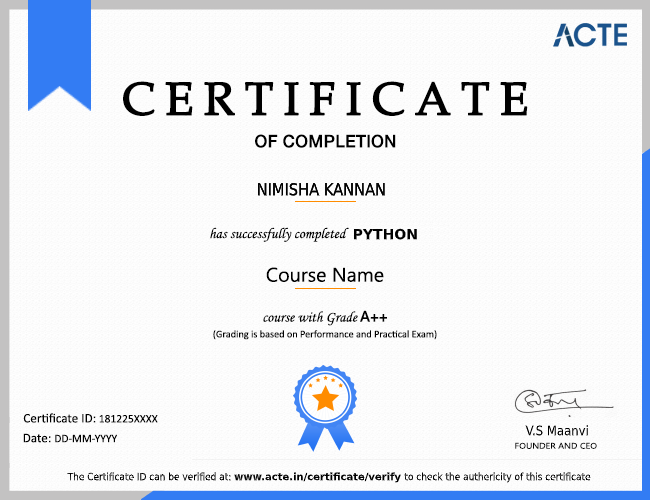
    You'll receive a certificate proving your industry readiness.Just complete your projects and pass the pre-placement assessment.This certification validates your skills and prepares you for real-world roles.

    • CISSP (Certified Information Systems Security Professional)
    • CEH (Certified Ethical Hacker)
    • CompTIA Security+
    • CISM (Certified Information Security Manager)
    • OSCP (Offensive Security Certified Professional)
    • CCSP (Certified Cloud Security Professional)

    We provide complete placement support, and our cybersecurity certification ensures a direct pathway to employment. The program not only validates technical skills and practical expertise but also includes resume building, mock interviews, and soft skills training. With this combination of certification and dedicated career assistance, candidates are fully prepared to step into roles such as security analyst, ethical hacker, or cybersecurity engineer with confidence.

    The time required varies based on the course level and learner’s dedication. Short beginner-friendly courses can be completed in 2–4 weeks, while intensive bootcamps may last 1–2 weeks. Detailed certifications involving extensive theory, practical labs, and case studies usually take 1–3 months. The total duration depends on the complexity of the material, depth of hands-on exercises, and the student’s learning pace.

    • Validates technical knowledge and practical expertise in cybersecurity.
    • Expands career paths to roles like penetration tester, network security professional, or IT security analyst.
    • Builds trust and credibility with colleagues, managers, and clients.
    • Strengthens resumes and improves visibility for recruiters and hiring managers.
    • Provides real-world experience through simulations, labs, and security exercises.
    • Attend structured courses to receive guided learning and organized training.
    • Gain practical skills through hands-on labs, simulated cyberattacks, and incident response exercises.
    • Study official materials and attempt practice questions to evaluate readiness.
    • Connect with experienced cybersecurity experts or mentors for insights and guidance.
    • Participate in online cybersecurity communities, discussion forums, and peer groups to stay informed and exchange knowledge.

    Complete Your Course

    A Downloadable Certificate in PDF Format, Immediately Available to You When You Complete Your Course.

    Get Certified

    A Physical Version of Your Officially Branded and Security-Marked Certificate.

    Get Certified

    Lowest Cybersecurity Course Fees

    Affordable, Quality Training for Freshers to Launch IT Careers & Land Top Placements.

    Call Course Advisor

    How is ACTE's Cybersecurity Training in Marathahalli Different?

    Feature

    ACTE Technologies

    Other Institutes

    Affordable Fees

    Competitive Pricing With Flexible Payment Options.

    Higher Cybersecurity Course Fees With Limited Payment Options.

    Industry Experts

    Well Experienced Trainer From a Relevant Field With Practical Cybersecurity Training

    Theoretical Class With Limited Practical

    Updated Syllabus

    Updated and Industry-relevant Cybersecurity Course Curriculum With Hands-on Learning.

    Outdated Curriculum With Limited Practical Training.

    Hands-on projects

    Real-world Cybersecurity Projects With Live Case Studies and Collaboration With Companies.

    Basic Projects With Limited Real-world Application.

    Certification

    Industry-recognized Cybersecurity Certifications With Global Validity.

    Basic Cybersecurity Certifications With Limited Recognition.

    Placement Support

    Strong Placement Support With Tie-ups With Top Companies and Mock Interviews.

    Basic Cybersecurity Placement Support

    Industry Partnerships

    Strong Ties With Top Tech Companies for Internships and Placements

    No Partnerships, Limited Opportunities

    Batch Size

    Small Batch Sizes for Personalized Attention.

    Large Batch Sizes With Limited Individual Focus.

    LMS Features

    Lifetime Access Course video Materials in LMS, Online Interview Practice, upload resumes in Placement Portal.

    No LMS Features or Perks.

    Training Support

    Dedicated Mentors, 24/7 Doubt Resolution, and Personalized Guidance.

    Limited Mentor Support and No After-hours Assistance.

    Cybersecurity Course FAQs

    1. Which academic backgrounds are best suited for a career in Cybersecurity?

    Cybersecurity is ideal for individuals with education in Information Technology, Computer Science, Software Engineering, or related areas. Familiarity with IT networks, enterprise applications, and cloud platforms provides a strong base for understanding cybersecurity concepts, workflow automation, and IT system management efficiently.
    A career in cybersecurity offers substantial professional growth due to its increasing importance in business operations and IT automation. Experts in areas like IT Service Management, HR Service Delivery, Customer Service Management, and IT Operations Management are highly sought after across sectors such as finance, healthcare, government, and technology.
    Cybersecurity programs typically cover areas such as incident handling, problem resolution, change management, asset and configuration control, and IT workflow automation. Participants gain hands-on experience with tools like Cybersecurity Studio, Flow Designer, IntegrationHub, dashboards, reporting modules, and access management configurations.
    Yes, practical projects form a core part of the training curriculum. Learners engage in real-world simulations, including module configuration, workflow automation, incident and change management, and generating reports or dashboards. These exercises reinforce applied knowledge, build confidence, and prepare students for professional responsibilities.
    Yes, dedicated support is offered for resume preparation. Instructors guide participants in highlighting certifications, technical skills, and project experience to create impactful resumes. This ensures learners are better positioned for IT service management and cybersecurity roles and increases their chances of securing interviews with top organizations.
    The programs are designed for IT professionals, fresh graduates in Computer Science or related fields, and system administrators seeking expertise in IT service management. Candidates interested in developing skills in incident management, change management, service portals, and IT operations will benefit most from the structured learning.
    While having a degree in IT, Computer Science, or Software Engineering is advantageous, it is not mandatory. Professionals with practical IT experience, helpdesk knowledge, or familiarity with enterprise applications can also successfully complete the course if they are motivated and committed to learning.
    A basic understanding of IT service processes, workflow automation, ticketing systems, and reporting tools is useful. Analytical thinking, problem-solving skills, and some exposure to cloud platforms or enterprise software can help participants quickly grasp cybersecurity concepts and apply them effectively during hands-on exercises.
    No, programming knowledge is generally not required. The training emphasizes module configuration, workflow automation, dashboard creation, report management, and system integration. Basic IT literacy and familiarity with enterprise software are sufficient for learners to succeed in the program.

    1. What kind of job assistance is available after training?

    The program offers end-to-end placement support, including resume guidance, interview coaching, career counseling, and referrals to organizations seeking cybersecurity talent. Participants also receive guidance for aptitude preparation and strategies to approach top IT companies.

    2. Do hands-on projects help with employment opportunities?

    Yes, practical projects give learners experience in incident management, workflow automation, module configuration, and reporting. Showcasing these skills on resumes and during interviews enhances employability and makes candidates more appealing to employers in IT service management and cybersecurity roles.

    3. Can learners apply to top IT companies after completing the course?

    Absolutely. Completion of the training, along with practical experience, equips participants to pursue positions in leading IT and multinational firms. Organizations value certified professionals who can handle IT configurations, automate workflows, and manage service operations efficiently.

    4. Is placement support offered to fresh graduates without prior experience?

    Yes, the program provides full placement assistance for freshers, including resume building, interview guidance, and entry-level career support. Even candidates without prior professional experience are guided to successfully start their careers in cybersecurity and IT service management.
    Yes, learners receive an officially recognized cybersecurity certification upon completion. This credential validates expertise in areas such as incident management, change control, IT service administration, and service portal management. It strengthens resumes and demonstrates practical project experience to potential employers.
    Investing in cybersecurity training is highly beneficial as certified professionals are in demand in IT service management. The program equips learners with skills in automation, module configuration, reporting, and system administration, increasing employability, career growth, and earning potential.
    Prior knowledge of IT service processes, helpdesk operations, or enterprise software is helpful. Analytical thinking, problem-solving skills, and some familiarity with cloud platforms enable learners to grasp cybersecurity concepts quickly and apply them effectively in practical exercises.
    Training prepares learners to configure ITSM modules, automate workflows, manage incidents and changes, and generate reports. These competencies open opportunities for certification and roles in organizations worldwide that rely on cybersecurity to maintain IT service operations.
    Participants acquire skills in ITSM modules, workflow automation, incident and change management, service portal configuration, reporting and analytics, system integrations, and access control. These capabilities help professionals manage enterprise IT services effectively and tackle real-world operational challenges.

    1. Is job placement included in the course fee?

    Yes, placement assistance is included as part of the program. Participants receive support in resume creation, mock interviews, career guidance, and job referrals, ensuring a clear path to employment in cybersecurity and IT service management roles.
    Fees vary based on factors like curriculum depth, hands-on labs, access to live projects, and personalized support services. Institutes offering practical exercises, real-world tools, and structured guidance may charge more compared to programs that focus primarily on theory.
    Yes, courses are designed to be cost-effective and beginner-friendly. Flexible payment plans, project-based exercises, and hands-on training make it accessible for learners to gain strong skills and prepare for certification without high costs.
    Yes, fees are consistent across all training centers to maintain fairness. Every participant receives the same quality of curriculum, hands-on labs, project exposure, and placement support, ensuring equal opportunities regardless of location.
    Learn (Network Security + Ethical Hacking + Threat Analysis + SIEM Tools + Penetration Testing + HTML & CSS) Starting at ₹16,500/- Only.
    Acte Technologies WhatsApp