Best AWS Course in Maraimalai Nagar with 100% Placement Support. | Updated 2025

AWS Training in Maraimalai Nagar for Graduates, Non-IT, Diploma Holders & Career Gap Aspirants — ₹22,000/- only.

Download Brochure
Join Our 100% Job Guaranteed

AWS Course in Maraimalai Nagar

  • Join the Best AWS Training Institute in Maraimalai Nagar to Start Your Cloud Career.
  • Our AWS Course in Maraimalai Nagar Covers Cloud Basics To Advanced Architecture.
  • Choose a Batch That Suits Your Schedule Weekday, Weekend, or Fast-Track Options Available.
  • Master AWS Skills With Real-Time Projects And Expert Guidance.
  • Earn a Globally Recognized AWS Certification With Assured Placement Support.
  • We help craft a standout resume prep and interview training for AWS career.

WANT IT JOB

Become an AWS Cloud Engineer in 3 Months

Freshers Salary

3 LPA

To

8 LPA

Quality Training With Affordable Fees in Maraimalai Nagar!
INR ₹23000
INR ₹22000

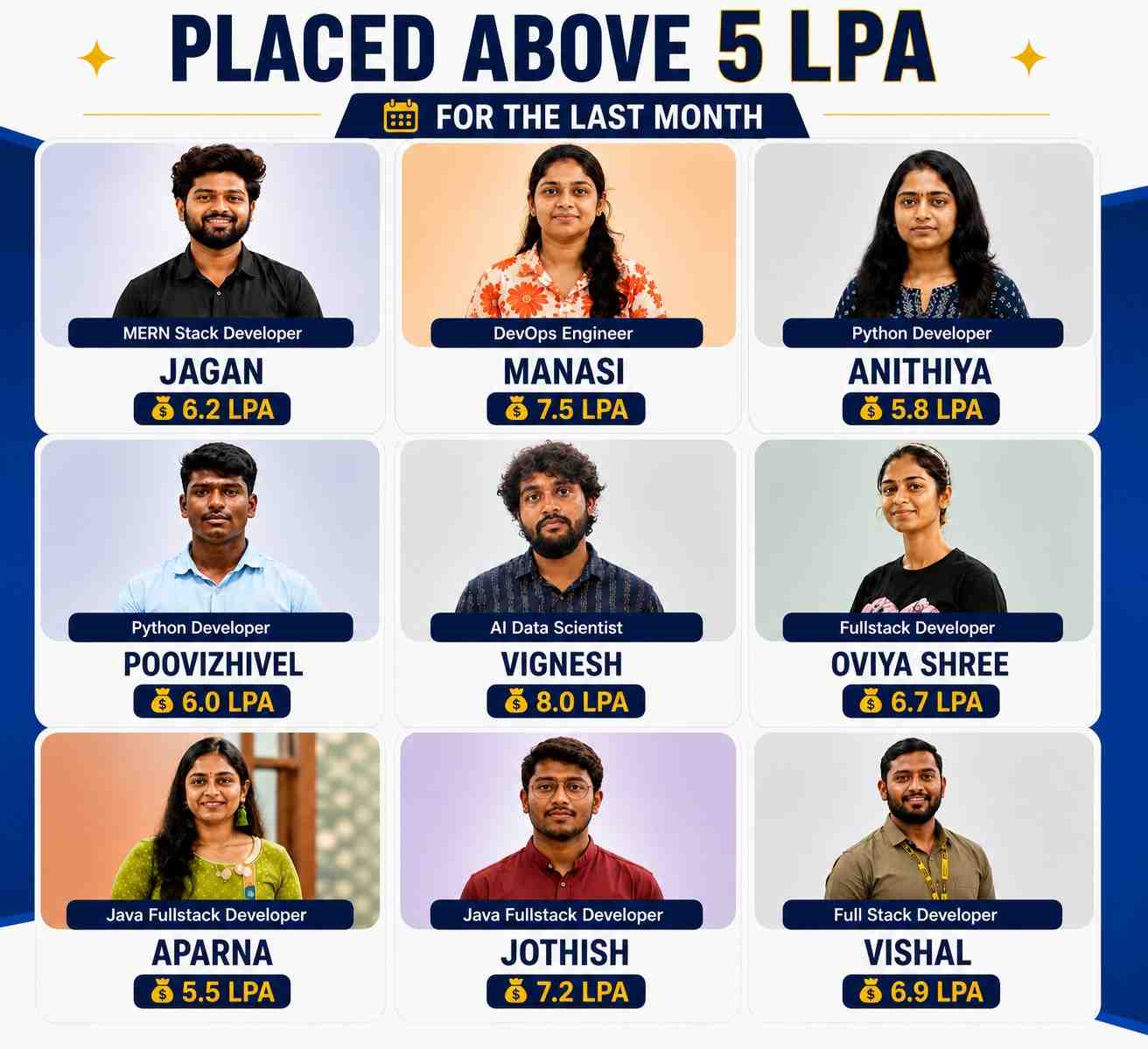
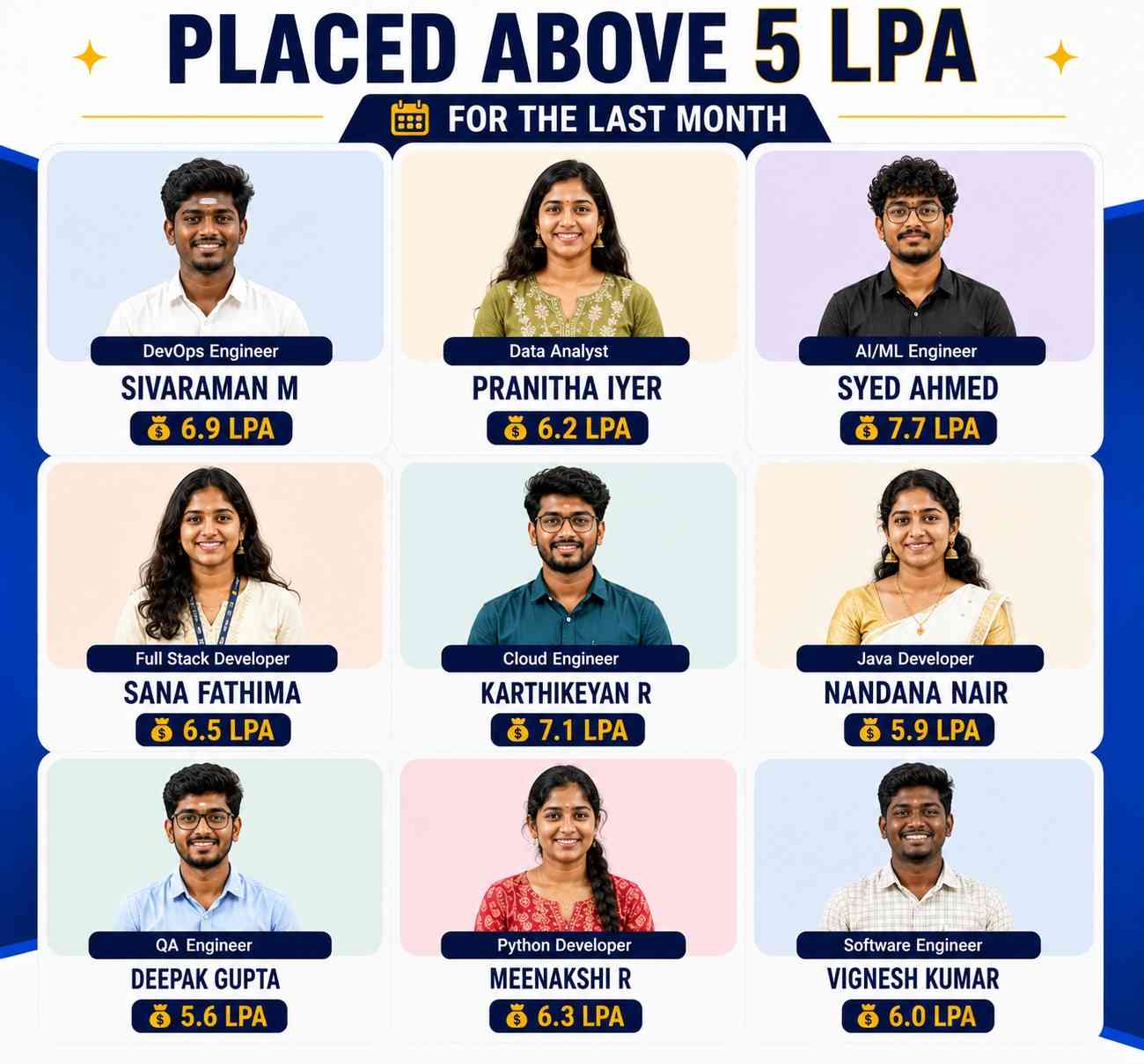
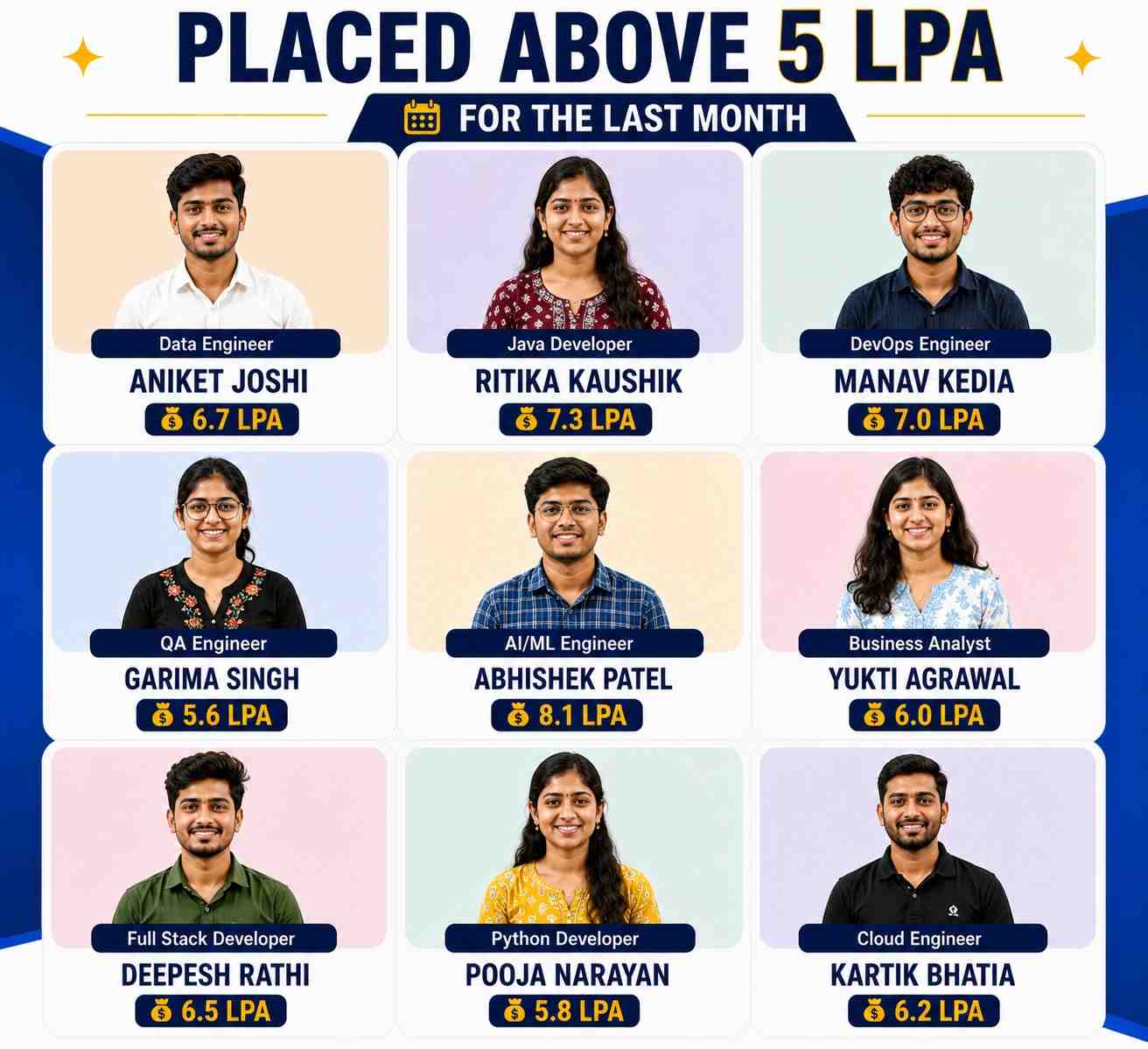
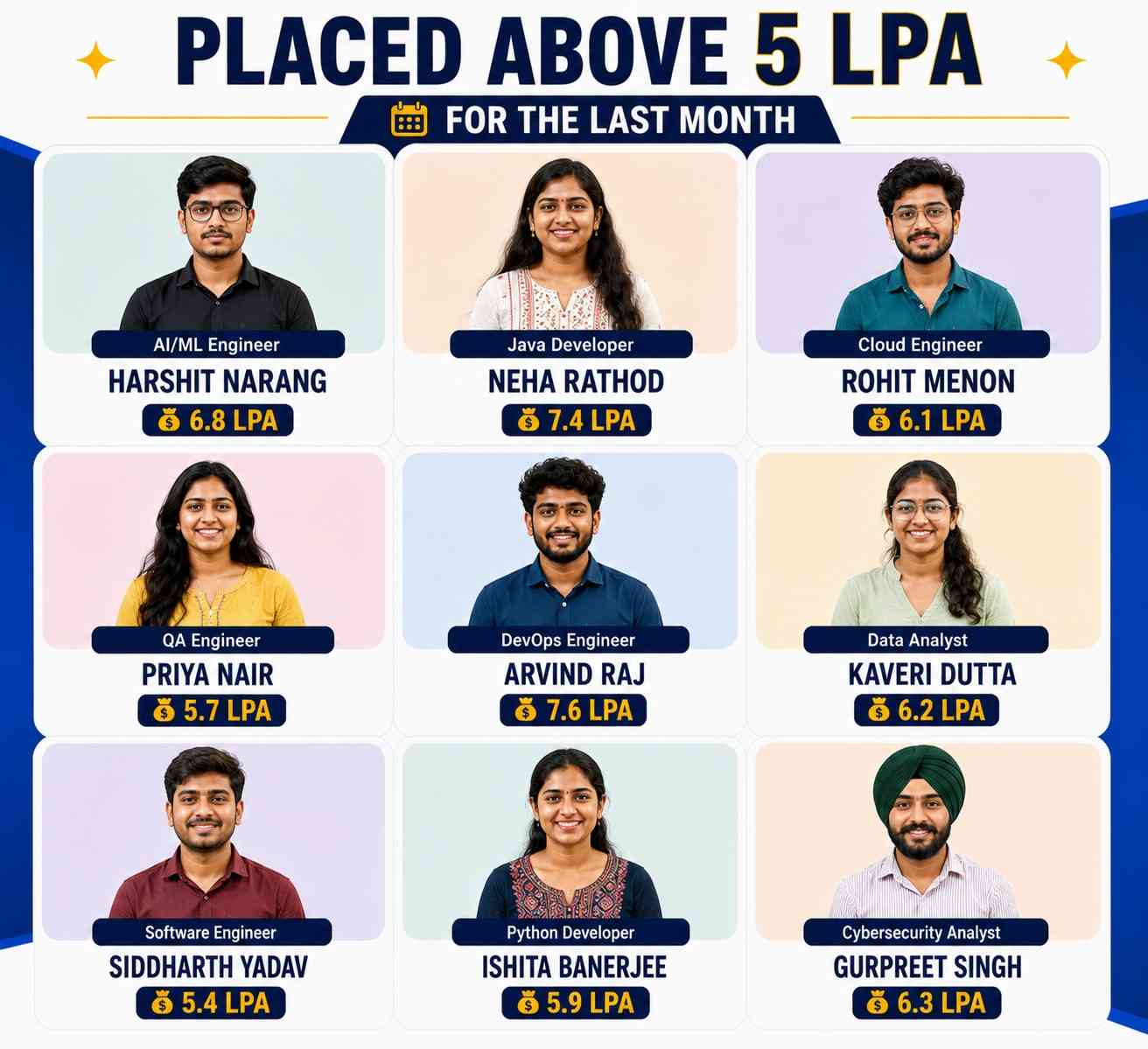
11529+

(Placed)
Freshers To IT

5552+

(Placed)
NON-IT to IT

7128+

(Placed)
Career Gap

4266+

(Placed)
Less Then 60%

Our Hiring Partners

Overview of AWS Course

Our AWS Course in Maraimalai Nagar offers a complete, structured learning path, guiding you from cloud computing fundamentals to advanced AWS architecture. Through hands-on, real-time projects, you’ll gain practical experience with core AWS services like EC2, S3, Lambda, RDS, VPC, and CloudFormation. This practical training empowers you to design, implement, and optimize scalable cloud solutions for enterprise-grade performance. By program completion, you’ll be ready for high-demand roles such as AWS Cloud Architect, Developer, or Consultant, supported by a globally recognized certification that enhances your resume and opens doors to rewarding career opportunities.

What You'll Learn From AWS Training

The AWS Training in Maraimalai Nagar is tailored for both beginners and professionals looking to build a strong foundation in cloud computing and enterprise-level solutions.

During this program, you’ll gain hands-on experience with essential AWS services spanning Compute, Storage, Networking, Database, Security, and Automation.

Explore Advanced AWS Topics Like Architecture, DevOps, Security, Serverless, Big Data, And Tools Like CloudFormation, IaC, And CI/CD.

The course features interactive workshops, live projects, and practical assignments, all guided by expert trainers with extensive industry experience.

By the End of Training, Design, Implement, And Manage AWS Solutions, Earning a Globally Recognized Certification With Confidence.

This comprehensive program prepares you for high-demand roles including AWS Cloud Administrator, Cloud Developer, Consultant, and DevOps Engineer.

Additional Info

Course Highlights

  • Jumpstart Your AWS Career With Training In Cloud, Architecture, Security, DevOps, And Big Data.
  • Receive dedicated job placement support and connect with top companies actively seeking skilled AWS professionals.
  • Join a vibrant community of over 11,000 learners who have trained successfully and landed roles through 350+ trusted hiring partners.
  • Learn from experienced trainers with 10+ years of real-world AWS and cloud solution expertise.
  • Benefit from beginner-friendly sessions, hands-on projects, and comprehensive career mentorship throughout your learning journey.
  • Take advantage of flexible batch schedules, affordable fees, and 100% placement assistance, ideal for students and working professionals alike.
  • Build strong AWS skills, gain practical industry experience, and confidently launch your career in cloud computing and enterprise solutions.

Exploring the Benefits of AWS Training

  • Beginner-Friendly Learning: AWS is specifically designed for simplicity, flexibility, and accessibility, making it extremely easy for newcomers to IT and cloud computing to understand enterprise-level solutions. Its highly intuitive console, coupled with a wide and diverse range of service offerings, helps significantly reduce the learning curve, making it ideal and highly beneficial for both students and working professionals looking to advance their careers in cloud technologies.
  • Industry-Wide Demand: AWS skills are highly valued and in great demand across a wide range of industries, including IT, finance, healthcare, retail, telecom, manufacturing, and logistics. This remarkable versatility not only enhances professional credibility but also opens numerous rewarding career paths, ranging from cloud architecture and DevOps to automation, cloud security, and advanced data solutions, allowing professionals to build a strong, future-ready career in the ever-evolving technology landscape.
  • Strong Community & Resources: With a vast and ever-expanding global AWS ecosystem, learners gain access to an extensive array of resources, including official documentation, community forums, hands-on tutorials, live webinars, in-depth case studies, and expert-led guides. Continuous enhancements and regular service updates ensure that learners and professionals stay fully up-to-date with the latest innovations, best practices, and emerging trends in cloud computing, empowering them to confidently implement and manage modern, scalable, and secure cloud solutions.
  • High Demand & Competitive Salaries: AWS expertise is currently in extremely high demand across global industries. Organizations increasingly prioritize professionals with strong cloud skills to drive operational efficiency, optimize resources, and implement innovative solutions. As a result, individuals with AWS knowledge enjoy significantly better job opportunities, faster career growth, higher responsibilities, and highly attractive salary packages, making cloud expertise one of the most valuable and future-proof skills in today’s competitive technology landscape.
  • Problem-Solving & Automation Skills: AWS training comprehensively equips professionals with the knowledge and hands-on experience needed to design highly scalable and resilient architectures, implement advanced automation, and efficiently manage complex cloud workloads. These essential skills are crucial for roles such as cloud architects, software developers, IT consultants, and cloud engineers, enabling them to build robust, secure, and cost-effective solutions while staying ahead in a rapidly evolving cloud-driven technology environment.

Essential Tools for AWS Training in Maraimalai Nagar

  • AWS Management Console: Learn to effectively navigate, monitor, and optimize cloud resources with precision and efficiency, ensuring seamless performance and reliability for real-time operations. Gain the ability to proactively manage workloads, troubleshoot issues, enhance system performance, and implement best practices, empowering you to maintain highly available, scalable, and cost-effective cloud environments that meet dynamic business demands.
  • AWS CLI & SDKs: Learn to automate complex tasks and manage a wide range of AWS services programmatically, enabling enhanced scalability, operational efficiency, and consistent performance. By leveraging scripting, APIs, and Infrastructure as Code (IaC) tools, professionals can streamline workflows, reduce manual effort, ensure repeatable deployments, and optimize resource utilization, empowering organizations to achieve faster innovation and maintain highly resilient, cost-effective cloud environments.
  • AWS CloudFormation: Master the automation of infrastructure deployment using reusable templates, maintain robust version control, and ensure consistent, reliable, and reproducible environments across development, testing, and production. By leveraging Infrastructure as Code (IaC) practices and best-in-class tools, professionals can streamline deployments, minimize human errors, enhance collaboration, and achieve faster, more efficient delivery of scalable and secure cloud solutions.
  • Core AWS Services: Gain extensive hands-on training with key AWS services including EC2, S3, RDS, Lambda, VPC, and IAM, applying practical skills to real-world cloud operations. This immersive experience enables professionals to confidently deploy, configure, and manage cloud resources, optimize performance, ensure robust security, and handle complex workloads, preparing them to tackle real business challenges and excel in cloud-focused roles across diverse industries.
  • Integration Tools & APIs: Learn to seamlessly connect AWS with a variety of other platforms and third-party services, deploy fully functional serverless workflows, and efficiently manage complex hybrid cloud environments. This advanced expertise empowers professionals to integrate diverse systems, optimize cross-platform operations, enhance scalability and flexibility, and ensure reliable, secure, and high-performance cloud solutions that meet the dynamic needs of modern enterprises.

Key Modules Every AWS Professional Should Master

  • AWS Cloud Fundamentals: Learn the fundamentals of cloud computing, including key concepts such as regions, availability zones, and core AWS services, while gaining a solid understanding of how cloud infrastructure operates at a global scale. This foundational knowledge equips learners to navigate cloud environments confidently, make informed architectural decisions, and build a strong base for advanced AWS skills and real-world cloud implementations.
  • AWS Solutions Architecture: Learn to design highly secure, scalable, and cost-effective cloud architectures that ensure optimal performance, reliability, and efficiency. Gain expertise in implementing high availability, fault tolerance, and disaster recovery best practices, enabling organizations to maintain continuous operations, minimize downtime, protect critical data, and build resilient cloud solutions that can adapt to evolving business needs and unexpected challenges.
  • AWS DevOps & Automation: Explore end-to-end CI/CD pipelines, advanced infrastructure as code (IaC) practices, and powerful automation tools to streamline cloud operations and accelerate software delivery. Gain hands-on experience in automating deployments, managing version-controlled infrastructure, monitoring performance, and optimizing workflows, empowering professionals to maintain reliable, scalable, and efficient cloud environments while driving faster innovation and operational excellence in dynamic enterprise settings.
  • AWS Security & Compliance: Learn to implement robust IAM policies, configure security groups, and apply comprehensive auditing and monitoring practices to ensure enterprise-grade security and compliance. Gain hands-on experience in managing user permissions, enforcing access controls, detecting potential vulnerabilities, and adhering to industry standards, enabling organizations to protect critical data, maintain regulatory compliance, and build secure, reliable, and resilient cloud environments.
  • AWS Analytics & Big Data: Learn to analyze and process large-scale datasets using powerful AWS services such as Redshift, Athena, and QuickSight, transforming raw data into actionable business insights. Gain hands-on experience in data extraction, transformation, and visualization, enabling professionals to make informed decisions, identify trends and patterns, optimize operations, and deliver strategic value through data-driven cloud solutions across diverse industries.

Essential AWS Skills You’ll Master for Career Success

  • Cloud Computing Fundamentals: Develop a deep understanding of virtual networks, cloud storage solutions, and fundamental cloud computing concepts essential for efficient enterprise IT operations. Gain practical knowledge of network architecture, data management, and resource allocation in cloud environments, enabling professionals to design, deploy, and manage scalable, secure, and high-performing IT infrastructures that meet the complex demands of modern businesses.
  • Infrastructure & Automation: Learn to deploy highly scalable and resilient cloud infrastructures while automating repetitive tasks to enhance operational efficiency and reliability. Gain hands-on experience in configuring resources, managing workloads, implementing fault-tolerant designs, and leveraging automation tools to streamline cloud operations, reduce manual effort, optimize performance, and ensure robust, cost-effective, and future-ready cloud solutions for dynamic enterprise environments.
  • Serverless & Application Development: Learn to design and build fully functional serverless applications using AWS Lambda, API Gateway, and DynamoDB, enabling rapid development and deployment without the need to manage underlying servers. Gain hands-on experience in event-driven architecture, API integration, and scalable database management, empowering professionals to create highly efficient, cost-effective, and resilient cloud-native solutions that can handle dynamic workloads and deliver exceptional performance in real-world enterprise environments.
  • Analytics & Monitoring: Learn to effectively use AWS CloudWatch, CloudTrail, and a variety of other monitoring and analytics tools to track, analyze, and optimize cloud performance. Gain hands-on experience in logging, metrics collection, alerting, and auditing, enabling professionals to proactively identify issues, enhance system reliability, improve operational efficiency, and ensure secure, scalable, and high-performing cloud environments for complex enterprise applications.
  • Collaboration & Deployment: Master multi-environment deployment strategies, implement advanced version control techniques, and efficiently manage complete DevOps workflows, ensuring seamless collaboration, continuous integration, and rapid, reliable delivery across diverse projects and teams.

Roles and Responsibilities After AWS Training

  • AWS Cloud Architect: Design, implement, and manage highly scalable, reliable, and secure cloud solutions that are fully aligned with strategic business goals, operational requirements, and long-term growth objectives for maximum efficiency and performance.
  • AWS Developer: Build robust applications, automate complex workflows, and deploy scalable serverless architectures efficiently, ensuring high performance, reliability, and seamless integration across multiple cloud environments and business processes.
  • AWS Consultant: Guide enterprises through seamless cloud adoption strategies, optimize costs effectively, implement industry best practices, and ensure scalable, secure, and efficient cloud solutions that drive business growth and operational excellence.
  • AWS DevOps Engineer: Implement robust CI/CD pipelines, automate infrastructure provisioning and management, and efficiently oversee end-to-end cloud operations, ensuring scalability, reliability, security, and seamless deployment across multiple environments and projects.
  • AWS Security Specialist: Ensure full regulatory compliance, continuously monitor and mitigate risks, and maintain highly secure, resilient, and well-governed cloud environments that protect data, support business continuity, and uphold industry standards.

The Benefits of AWS for Recent Graduates as a Career Option

  • Easy to Learn: AWS’s intuitive interface, comprehensive tools, and guided services help graduates quickly acquire in-demand cloud skills, gain hands-on experience, and effectively contribute to real-world projects while building a strong foundation for a successful cloud computing career.
  • High Demand Across Industries: Cloud expertise opens doors across IT, healthcare, finance, logistics, manufacturing, and many other industries, enabling faster career growth, higher competitive salaries, in-demand skill development, and opportunities to work on innovative and transformative projects.
  • Strong Learning Community: Access comprehensive global documentation, step-by-step tutorials, expert forums, interactive webinars, and other valuable learning resources for continuous skill development, practical knowledge, and staying up-to-date with the latest cloud technologies and best practices.
  • Aligned with Emerging Tech: Work with cutting-edge AI, machine learning, advanced analytics, and modern DevOps tools, continuously enhancing your expertise, staying market-ready, and gaining practical experience to tackle real-world challenges across diverse industries and technology landscapes.
  • Remote & Freelance Opportunities: AWS skills enable opportunities for global remote work, freelance projects, and collaboration with international clients, providing valuable exposure, enhancing professional experience, and opening doors to diverse, high-paying roles in the rapidly growing cloud computing industry.

How AWS Skills Help You Get Remote Jobs

  • Remote-Friendly Roles: AWS expertise empowers professionals to design, implement, and manage cloud solutions from anywhere, seamlessly collaborate with distributed teams worldwide, and contribute to global projects while enhancing their skills, career growth, and professional visibility.
  • Freelance Demand: AWS architects, developers, and cloud consultants are highly sought-after on freelance platforms like Upwork, Fiverr, and Toptal, offering lucrative opportunities, global exposure, and the chance to work on diverse, high-impact cloud projects for clients worldwide.
  • Virtual Collaboration: AWS provides intuitive dashboards, workflow management tools, and collaboration features that enable seamless global teamwork, efficient project tracking, real-time updates, and streamlined communication across distributed teams for enhanced productivity and performance.
  • Efficiency Through Automation: Automation, reusable components, and standardized processes significantly increase productivity, reduce errors, and ensure consistency, which is especially critical for managing remote roles, distributed teams, and large-scale cloud projects efficiently.
  • Global Networking: Connect with global communities, attend international webinars, participate in diverse projects, and engage with experienced mentors to expand your professional portfolio, enhance your skills, build valuable connections, and unlock new career and learning opportunities worldwide.

What to Expect in Your First AWS Job

  • Hands-On Practice: Work on real-world projects, manage a variety of AWS services, design and develop scalable cloud architectures, and gain hands-on experience in implementing best practices, ensuring security, efficiency, and reliability across diverse cloud environments and business scenarios.
  • Tool Exposure: Use CloudFormation, CLI, SDKs, CI/CD pipelines, and advanced monitoring tools to implement, automate, and manage end-to-end cloud environments efficiently, ensuring scalability, reliability, security, and seamless deployment across multiple AWS services and projects.
  • Continuous Feedback: Mentors provide personalized guidance and support to help learners refine their problem-solving abilities, enhance technical skills, tackle real-world challenges effectively, and build the confidence needed to excel in cloud computing and related professional roles.
  • Collaborative Work: Coordinate and collaborate closely with cloud architects, developers, analysts, and other stakeholders to plan, execute, and optimize cloud initiatives, ensuring seamless integration, efficient workflows, and successful delivery of scalable and secure cloud solutions.
  • Skill Growth: Progress systematically from foundational cloud services to advanced architecture design, DevOps practices, and specialized consulting roles, gaining hands-on experience, mastering best practices, and preparing for high-impact, leadership, and strategic positions in cloud computing.

Top Companies Hiring AWS Professionals

  • Amazon: Engage in global cloud projects while pursuing continuous professional development, advanced training, and industry-recognized certifications, enhancing expertise, building a strong portfolio, and opening doors to high-paying, in-demand roles in the cloud computing ecosystem.
  • Capgemini: Gain hands-on experience in cloud migration, automation, and enterprise solutions while unlocking significant career growth opportunities, developing in-demand technical skills, and contributing to impactful projects across diverse industries and global organizations.
  • Accenture: Gain extensive exposure to diverse industries, large-scale digital transformation initiatives, and cutting-edge cloud technologies, building versatile expertise, practical experience, and the ability to drive innovation and efficiency across complex organizational environments.
  • Cognizant: Explore roles for cloud architects, developers, and DevOps professionals, enhanced with hands-on workshops, industry-recognized certifications, and practical training, enabling skill development, career advancement, and the ability to lead and implement complex cloud solutions effectively.
  • Tech Mahindra: Engage in cloud consulting, enterprise IT solutions, and automation projects while gaining international exposure, hands-on experience, and practical skills, preparing you to tackle complex challenges, drive innovation, and excel in global cloud computing roles.
Show More

Upcoming Batches For Classroom and Online

Weekdays
01 - Dec - 2025
08:00 AM & 10:00 AM
Weekdays
03 - Dec - 2025
08:00 AM & 10:00 AM
Weekends
06 - Dec - 2025
(10:00 AM - 01:30 PM)
Weekends
07 - Dec - 2025
(09:00 AM - 02:00 PM)
Can't find a batch you were looking for?
INR ₹22000
INR ₹23000

OFF Expires in

Who Should Take a AWS Course

IT Professionals

Non-IT Career Switchers

Fresh Graduates

Working Professionals

Diploma Holders

Professionals from Other Fields

Salary Hike

Graduates with Less Than 60%

Show More

Job Roles For AWS Course

AWS Cloud Architect

AWS Developer

AWS Consultant

AWS DevOps Engineer

AWS Security Specialist

Cloud Solutions Architect

Cloud Infrastructure Manager

AWS Big Data Specialist

Show More

Tools Covered For AWS Course

Amazon EC2 Amazon S3 Amazon RDS AWS Lambda Amazon VPC AWS CloudFormation Amazon CloudWatch AWS IAM

What’s included ?

Convenient learning format

📊 Free Aptitude and Technical Skills Training

  • Learn basic maths and logical thinking to solve problems easily.
  • Understand simple coding and technical concepts step by step.
  • Get ready for exams and interviews with regular practice.
Dedicated career services

🛠️ Hands-On Projects

  • Work on real-time projects to apply what you learn.
  • Build mini apps and tools daily to enhance your coding skills.
  • Gain practical experience just like in real jobs.
Learn from the best

🧠 AI Powered Self Interview Practice Portal

  • Practice interview questions with instant AI feedback.
  • Improve your answers by speaking and reviewing them.
  • Build confidence with real-time mock interview sessions.
Learn from the best

🎯 Interview Preparation For Freshers

  • Practice company-based interview questions.
  • Take online assessment tests to crack interviews
  • Practice confidently with real-world interview and project-based questions.
Learn from the best

🧪 LMS Online Learning Platform

  • Explore expert trainer videos and documents to boost your learning.
  • Study anytime with on-demand videos and detailed documents.
  • Quickly find topics with organized learning materials.

AWS Course Syllabus

  • 🏫 Classroom Training
  • 💻 Online Training
  • 🚫 No Pre Request (Any Vertical)
  • 🏭 Industrial Expert

Enrolling in AWS Training in Maraimalai Nagar equips learners with the essential technical skills and hands-on experience required to excel in today’s cloud-driven industry. Designed to align with diverse career goals, this industry-focused program unlocks high-paying, future-ready roles across top MNCs and multiple sectors. With flexible learning options and expert mentorship, students can specialize in areas like Cloud Architecture, DevOps, or Security, mastering the ability to design, deploy, and manage scalable, enterprise-grade AWS cloud solutions.

  • AWS Key Concepts: Learn fundamentals, best practices, and cloud computing basics.
  • AWS Cloud Administration & Management: Configure AWS resources, manage accounts, and automate infrastructure.
  • AWS Development & Application Building: Build serverless applications, automate workflows, and deploy cloud solutions.
  • AWS Tools & Analytics: Use CloudWatch, CloudTrail, dashboards, and integration services for monitoring and insights.
Introduction to AWS
Core AWS Services
AWS Administration Training
AWS Development Training
Cloud Automation & DevOps
AWS Analytics & Monitoring
AWS Strategy & Real-Time Projects

This module provides foundational knowledge of AWS:

  • Importance of AWS: Benefits, industry adoption, and business impact.
  • Core Services: Compute, Storage, Database, Networking, Security, and Serverless services.
  • Key Platforms: Overview of AWS Management Console, CLI, SDKs, CloudFormation, and Lambda.
  • Career Paths: Roles such as Cloud Architect, AWS Developer, DevOps Engineer, and Security Specialist.

This module covers essential AWS services and functionalities:

  • Cloud Administration: Managing users, accounts, permissions, and resource policies.
  • Data Management: Configuring databases, S3 buckets, RDS instances, and ensuring data security.
  • Resource Configuration: Launching EC2 instances, networking with VPC, and automating deployments.
  • Monitoring & Analytics: CloudWatch dashboards, logs, and metrics for operational insights.

Learn to configure and manage AWS environments effectively:

  • Admin Interface: Navigation through AWS Console, services, accounts, and resource management.
  • Automation Tools: CloudFormation, Lambda, and infrastructure-as-code workflows.
  • Security & Access: IAM roles, policies, multi-factor authentication, and access management.
  • Performance Tracking: Monitoring system health, logs, and cloud resource utilization.

This module provides hands-on learning for AWS application development:

  • Serverless Development: Lambda functions, API Gateway, DynamoDB, and asynchronous processes.
  • UI & Application Components: Deploying serverless applications and cloud-enabled dashboards.
  • App Building: Designing scalable cloud applications, automation scripts, and workflows.
  • Testing & Deployment: Using staging environments, CI/CD pipelines, and version-controlled deployments.

Learn to integrate and automate cloud workflows using AWS :

  • DevOps Modules: CI/CD pipelines, infrastructure automation, and configuration management.
  • Serverless & Automation: Lambda workflows, Step Functions, and automated triggers.
  • Integration: Connecting AWS with third-party services, APIs, and hybrid environments.
  • Automation Tools Overview: CloudFormation, CodePipeline, CloudWatch Events, and SDK scripts.

Understand how to track performance and optimize cloud operations:

  • Dashboards & Monitoring: CloudWatch dashboards, logs, metrics, and alerting.
  • Performance Analytics: Resource utilization, trend analysis, and cost optimization.
  • KPIs & Metrics: Uptime, latency, cost efficiency, and application performance metrics.
  • Data Management Tools: S3 lifecycle rules, Glue ETL, Athena, and Redshift analytics.

Apply AWS skills to real-world cloud scenarios:

  • Project Planning: Define architecture, goals, and timelines for cloud deployments.
  • Live Projects: Work on real AWS implementations, serverless apps, and infrastructure tasks.
  • Performance Review: Analyze dashboards, logs, and system efficiency for improvements.
  • Capstone Project: Build end-to-end AWS solutions including cloud automation, serverless applications, and monitoring dashboards.

🎁 Free Addon Programs

Aptitude, Spoken English

🎯 Our Placement Activities

Daily Task, Soft Skills, Projects, Group Discussions, Resume Preparation, Mock Interview

Hands-on Real Time Amazon Web Services (AWS) Projects

Placement Support Overview

Today's Top Job Openings for AWS

AWS Cloud Administrator

Company Code : SFG968

Chennai, Tamilnadu

₹40,000 – ₹55,000 a month

Any Degree

Exp 0-2 yrs

  • We’re hiring an AWS Cloud Administrator to manage AWS accounts, configure IAM roles, automate cloud workflows, and maintain security. Candidates should be familiar with EC2, S3, VPC, and CloudWatch monitoring.
  • Easy Apply

    AWS Developer

    Company Code : LJD236

    Chennai, Tamilnadu

    ₹45,000 – ₹65,000 a month

    B.Tech / B.E

    Exp 1-3yr

  • Join us as an AWS Developer to design, code, test, and deploy cloud applications. Proficiency in Lambda, API Gateway, DynamoDB, CloudFormation, and serverless architecture is required.
  • Easy Apply

    AWS Solutions Consultant

    Company Code : QRF147

    Chennai, Tamilnadu

    ₹30,000 – ₹45,000 a month

    Any Degree

    Exp 2-4 yrs

  • Seeking an AWS Solutions Consultant to analyze client requirements, design cloud strategies, optimize workloads, and provide cost-effective solutions. Strong communication and problem-solving skills are essential.
  • Easy Apply

    AWS Cloud Architect

    Company Code : XCV089

    Chennai, Tamilnadu

    ₹30,000 – ₹35,000 a month

    B.E. / B.Tech in Computer Science

    Exp 2-4 yrs

  • We’re looking for an AWS Cloud Architect to design scalable and secure cloud solutions, manage integrations, and align cloud infrastructure with business goals. Expertise in VPC, IAM, and multi-account architecture is required.
  • Easy Apply

    AWS Business Analyst

    Company Code : DNJ784

    Chennai, Tamilnadu

    ₹45,000 – ₹65,000 a month

    Any Degree

    Exp 1-3 yrs

  • Become an AWS Business Analyst to gather requirements, document cloud workflows, and translate business needs into AWS solutions. Collaborate with stakeholders to ensure accurate implementation and optimized cloud operations.
  • Easy Apply

    AWS DevOps Specialist

    Company Code : ERJ956

    Chennai, Tamilnadu

    ₹50,000 – ₹70,000 a month

    Any Degree

    Exp 2–4 yrs

  • We’re hiring an AWS DevOps Specialist to implement CI/CD pipelines, manage infrastructure automation, and monitor cloud environments. Expertise in CodePipeline, CodeBuild, CloudFormation, and Lambda automation is preferred.
  • Easy Apply

    AWS Project Manager

    Company Code : NHT314

    Chennai, Tamilnadu

    ₹30,000 – ₹40,000 a month

    Any Degree

    Exp 1–4 yrs

  • Join us as an AWS Project Manager to plan, execute, and monitor cloud initiatives. Responsible for project timelines, budgets, stakeholder communication, and ensuring successful deployment of AWS solutions.
  • Easy Apply

    AWS Cloud Implementation Specialist

    Company Code : AWS008

    Chennai, Tamilnadu

    ₹45,000 – ₹50,000 a month

    Any Degree

    Exp 2–4 yrs

  • We are looking for an AWS Cloud Implementation Specialist to deploy cloud solutions, configure AWS modules, automate workflows, and provide end-user training. Strong knowledge of AWS best practices and integrations is required.
  • Easy Apply

    Highlights for AWS Internships in Maraimalai Nagar

    Real-Time Projects

    • 1. Gain hands-on experience by working on live AWS deployments and cloud application projects.
    • 2. Learn real-world problem-solving through compute, storage, serverless, and automation scenarios.
    Book Session

    Skill Development Workshops

    • 1. Participate in focused sessions on trending AWS tools and services.
    • 2. Learn directly from industry experts through guided practical exercises on Lambda, CloudFormation, CI/CD, and monitoring.
    Book Session

    Employee Welfare

    • 1. Enjoy benefits like health coverage, flexible hours, and wellness programs during internships or training.
    • 2. Companies prioritize mental well-being and work-life balance for all employees in AWS cloud teams.
    Book Session

    Mentorship & Peer Learning

    • 1. Learn under experienced AWS mentors to guide your technical and career development.
    • 2. Collaborate with peers to enhance learning through scenario-based exercises and team projects.
    Book Session

    Soft Skills & Career Readiness

    • 1. Improve communication, teamwork, and time management skills for professional AWS roles.
    • 2. Prepare for interviews and workplace dynamics with mock sessions, case studies, and expert guidance.
    Book Session

    Certification

    • 1. Earn recognized credentials to validate your AWS Cloud Computing skills.
    • 2. Boost your resume with course or project completion certificates from reputed AWS Training platforms.
    Book Session

    Sample Resume for AWS(Fresher)

    • 1. Simple and Neat Resume Format

      – Use a clean layout with clear sections such as summary, AWS cloud skills, certifications, education, and real-world projects.

    • 2. List of AWS Skills You Know

      – Highlight skills like AWS Administration, Serverless Applications, Lambda, CloudFormation, CI/CD, DevOps Automation, Security & IAM, and Monitoring & Analytics.

    • 3. Real-Time Projects and Achievements

      – Include 1–2 AWS projects with a brief description, services used, and key outcomes or measurable achievements.

    Top AWS Tricky Interview Questions and Answers (2025 Guide)

    Ans:

    AWS is a cloud computing platform that provides services for computing, storage, networking, databases, and analytics. It helps organizations build scalable applications, automate workflows, and optimize IT operations cost-effectively.

    Ans:

    I start by understanding business requirements and existing infrastructure. Then, I design cloud architecture, configure services like EC2, S3, and Lambda, automate workflows using CloudFormation, and collaborate with stakeholders throughout.

    Ans:

    Key tools include EC2, S3, RDS, Lambda, CloudFormation, CloudWatch, and IAM. Services like Step Functions, API Gateway, and CodePipeline help automate workflows, monitor performance, and integrate third-party applications.

    Ans:

    I gather requirements from stakeholders, implement best practices, and conduct testing. I focus on secure configurations, cost optimization, automated workflows, and performance monitoring to ensure reliable cloud solutions.

    Ans:

    An AWS resource is a cloud entity like an EC2 instance, S3 bucket, or Lambda function. Resources can be standard or custom-configured to meet business requirements, enabling scalable application deployment and data management.

    Ans:

    I analyze logs and metrics, review configurations, collaborate with team members, and apply best practices to troubleshoot issues. Clear documentation and proactive monitoring ensure minimal disruption to operations.

    Ans:

    AWS automation uses tools like CloudFormation, Lambda, and Step Functions to execute workflows, deploy infrastructure, and manage tasks without manual effort. It increases efficiency, reduces errors, and ensures consistent operations.

    Ans:

    I follow AWS documentation, release notes, webinars, training courses, and forums. Engaging with the AWS community helps me implement new features, maintain security, and optimize cloud solutions effectively.

    Ans:

    Dashboards in AWS, like CloudWatch dashboards, visualize metrics, KPIs, and logs. I use them to monitor system health, track performance, detect anomalies, and provide actionable insights for operational and business decisions.

    Ans:

    I design cloud solutions that align with business goals while following AWS governance, cost management, and security best practices. Planning, collaboration, and scalability ensure efficient, maintainable, and future-ready deployments.

    Company-Specific Interview Questions from Top MNCs

    1. What is AWS?

    Ans:

    AWS (Amazon Web Services) is a cloud computing platform offering on-demand services such as computing, storage, networking, databases, and analytics. It helps businesses deploy scalable applications, automate workflows, and optimize IT operations cost-effectively.

    2. What Are the Key Principles of Good AWS Implementation?

    Ans:

    • Design scalable, secure, and cost-efficient architectures
    • Automate repetitive cloud workflows wherever possible
    • Use monitoring dashboards for visibility and alerts
    • Ensure compliance with security and governance policies
    • Align configurations with business goals and cloud best practices

    3. How Do You Conduct Requirement Gathering for AWS Projects?

    Ans:

    Requirement gathering involves interacting with stakeholders, analyzing existing IT infrastructure, reviewing workloads, and identifying cloud migration needs. Insights help plan architectures, services, automation, and integrations to meet organizational goals.

    4. What Factors Do You Consider When Designing AWS for Performance and Security?

    Ans:

    • Efficient resource allocation for cost optimization
    • Proper IAM roles and access policies
    • Encryption for data at rest and in transit
    • High availability and fault-tolerant design
    • Logging, monitoring, and alerting for security and operational visibility

    5. What is an AWS Resource?

    Ans:

    An AWS resource is any cloud entity such as an EC2 instance, S3 bucket, Lambda function, or RDS database. Resources can be preconfigured or custom-deployed to support applications, workflows, and infrastructure management.

    6. How Do You Create Effective AWS Monitoring and Dashboards?

    Ans:

    • Identify key metrics like CPU, memory, latency, and cost
    • Use CloudWatch to build dashboards and alarms
    • Filter and visualize data with graphs and widgets
    • Integrate logs for insights and troubleshooting
    • Review dashboards regularly and refine based on operational needs

    7. What is AWS Automation?

    Ans:

    AWS Automation involves using tools like CloudFormation, Lambda, Step Functions, and CodePipeline to automate deployments, workflows, and infrastructure management. Automation ensures consistency, reduces manual errors, and improves operational efficiency.

    8. What Are the Stages of an AWS Project Implementation?

    Ans:

    • Requirement Analysis: Understand workloads and business needs
    • Design: Plan cloud architecture, automation, and integrations
    • Configuration & Deployment: Launch services, configure security, and automate workflows
    • Testing: Validate deployments, monitor performance, and ensure compliance
    • Go-Live & Training: Deploy to production and train teams for cloud operations

    9. How Do You Validate Your AWS Implementation?

    Ans:

    Validation involves testing cloud services for performance, security, and availability, monitoring dashboards and logs, verifying automated workflows, and collecting stakeholder feedback to ensure business objectives are met.

    10. How Do You Ensure Consistency Across AWS Services?

    Ans:

    • Use standardized naming conventions for resources and environments
    • Apply consistent IAM roles, policies, and security configurations
    • Maintain architecture documentation and templates
    • Reuse CloudFormation stacks and automation scripts where possible
    • Conduct regular audits to ensure compliance with best practices and governance

    1. What is AWS and how is it different from other cloud platforms?

    Ans:

    AWS (Amazon Web Services) is a cloud computing platform offering on-demand services like computing, storage, databases, networking, and analytics. Unlike traditional IT solutions, AWS provides extensive automation, scalability, serverless computing, and a vast ecosystem of integrations, enabling businesses to optimize IT operations efficiently.

    2. What are the essential skills an AWS professional should have?

    Ans:

    • Proficiency in AWS services like EC2, S3, Lambda, RDS, and VPC
    • Knowledge of automation tools like CloudFormation, Step Functions, and CodePipeline
    • Ability to monitor, analyze, and optimize performance using CloudWatch and CloudTrail
    • Basic understanding of scripting with Python, Bash, or AWS SDKs
    • Strong problem-solving, communication, and collaboration skills

    3. How do you approach a new AWS cloud project?

    Ans:

    I start by understanding business objectives and technical requirements through stakeholder meetings. Then, I design architecture, configure services, automate workflows, set up monitoring, conduct testing, collect user feedback, and refine solutions to ensure seamless cloud adoption.

    4. What is an AWS resource and why is it important?

    Ans:

    An AWS resource is a cloud entity such as an EC2 instance, S3 bucket, or Lambda function. Standard resources are preconfigured, while custom resources can be provisioned for specific workloads. They are fundamental for deploying, managing, and scaling cloud applications efficiently.

    5. How do you ensure your AWS solutions are user-friendly and efficient?

    Ans:

    I focus on clear naming conventions, intuitive dashboards, and structured architecture. Access permissions are well-defined, automated workflows are optimized, monitoring is visible, and solutions are tested with stakeholders to ensure usability and efficiency.

    6. What tools do you use for AWS development and why?

    Ans:

    • AWS Management Console: For resource provisioning and management
    • CloudFormation: To automate infrastructure deployment
    • Lambda & Step Functions: For serverless workflows and event-driven automation
    • CodePipeline & CodeBuild: For CI/CD pipelines
    • CloudWatch Dashboards: For analytics, KPIs, and monitoring

    7. Explain the importance of monitoring and dashboards in AWS.

    Ans:

    Monitoring and dashboards provide actionable insights into AWS resource usage and performance. Metrics track system health, detect anomalies, visualize trends, and help managers make informed, data-driven decisions while ensuring efficient cloud operations.

    8. How do you handle feedback or issues during AWS implementation?

    Ans:

    • Document all feedback carefully
    • Analyze alignment with business goals and technical feasibility
    • Adjust configurations, automation scripts, or workflows as needed
    • Communicate changes clearly to stakeholders
    • Ensure solutions remain scalable, maintainable, and secure

    9. What methods do you use for testing AWS implementations?

    Ans:

    • User Acceptance Testing (UAT): Real users validate cloud solutions
    • Sandbox Testing: Test infrastructure and workflows before production
    • Regression Testing: Ensure updates don’t break existing setups
    • Performance & Load Testing: Check scalability and responsiveness
    • Feedback Sessions: Gather input for iterative improvements

    10. How do you keep up with AWS trends and updates?

    Ans:

    I regularly follow AWS release notes, webinars, documentation, and online communities. Engaging with events, forums, and user groups helps me implement new features, maintain best practices, and deliver scalable, secure, and modern cloud solutions.

    1. What is the difference between AWS Cloud Administrator and AWS Developer?

    Ans:

    AWS Cloud Administrator manages the cloud environment without requiring a lot of coding by building VPCs, monitoring resources, allocating resources, managing IAM roles, and setting up services. On the other hand, an AWS developer builds automation workflows, Lambda functions, and custom apps. Developers concentrate on scripting, integrations, and sophisticated custom programming, while administrators handle platform management and governance.

    2. How do you gather business and technical requirements for AWS projects and why is it important?

    Ans:

    Requirement gathering involves stakeholder meetings, process analysis, and reviewing existing IT infrastructure. This ensures the cloud architecture aligns with business goals, avoids unnecessary complexity, and delivers scalable, efficient solutions.

    3. What are some best practices for AWS implementation?

    Ans:

    • Maintain organized and tagged resources
    • Use automation tools like CloudFormation and Step Functions
    • Follow naming conventions for instances, buckets, and roles
    • Set up scalable monitoring and dashboards
    • Test thoroughly in a sandbox or staging environment before production deployment

    4. What tools do you prefer for AWS development and administration?

    Ans:

    • AWS Management Console for resource management
    • CloudFormation for infrastructure as code
    • Lambda & Step Functions for serverless automation
    • CloudWatch Dashboards for analytics and KPIs
    • API Gateway for integrations
    • CodePipeline & CodeBuild for CI/CD deployments

    5. Explain the importance of data security in AWS.

    Ans:

    Data security ensures sensitive cloud resources and information are protected. AWS enforces security through IAM policies, roles, VPC security, encryption, and logging. Proper security prevents breaches, ensures compliance, and maintains trust with users and stakeholders.

    6. How do you create and manage AWS resources effectively?

    Ans:

    • Identify business entities (compute, storage, database, networking)
    • Use standard AWS services for common workloads
    • Create custom configurations for unique requirements
    • Define resource dependencies, tags, and policies
    • Use these resources in automated workflows, monitoring, and reporting

    7. Describe your AWS project implementation process from start to finish.

    Ans:

    • Requirement Analysis: Understand business and technical needs
    • Design: Plan architecture, resources, security, and workflows
    • Configuration & Development: Deploy services, automate workflows, and integrate apps
    • Testing: Validate in sandbox environments with UAT and performance checks
    • Deployment & Training: Move to production, train users, and provide ongoing support

    8. How do you handle feedback from multiple stakeholders in an AWS project?

    Ans:

    • Document all feedback carefully
    • Clarify and categorize feedback by impact
    • Prioritize changes based on feasibility and alignment with business goals
    • Communicate design and configuration decisions transparently
    • Iterate solutions and involve stakeholders in testing for validation

    9. What are some key AWS best practices you follow?

    Ans:

    • Use declarative features and automation before custom scripting
    • Maintain clear naming conventions and tagging standards
    • Avoid hardcoding values; use parameters and environment variables
    • Regularly monitor and validate resource usage
    • Conduct periodic security and compliance audits

    10. How do you stay updated with the latest AWS trends and technologies?

    Ans:

    • Follow AWS release notes and service announcements
    • Complete official AWS training and certifications
    • Attend webinars, workshops, and AWS community events
    • Engage with AWS forums and user groups
    • Experiment with new services, integrations, and emerging cloud technologies

    1. What is the difference between an AWS Cloud Administrator and an AWS Developer?

    Ans:

    Cloud Administrator focuses on configuring services, managing IAM roles, security, VPCs, monitoring, and dashboards without heavy coding. An AWS Developer builds Lambda functions, Step Functions, and automation scripts. While Admins manage resources and usability, Developers extend functionality with code and workflows.

    2. How do you approach requirement gathering in an AWS project?

    Ans:

    Requirement gathering involves stakeholder interviews, infrastructure analysis, and process review to understand business and technical goals. This helps design architectures, configure services, set up automation, and ensure the solution meets organizational needs efficiently.

    3. What are the common tools you use for AWS development and administration?

    Ans:

    • AWS Management Console
    • CloudFormation & CDK
    • Lambda & Step Functions
    • CodePipeline & CodeBuild
    • CloudWatch Dashboards
    • API Gateway & SDKs

    4. Can you explain what an AWS resource is and how you create one?

    Ans:

    An AWS resource is a cloud entity such as EC2, S3, Lambda, or RDS. Standard resources are preconfigured, while custom resources are provisioned for specific workloads. Creating a resource involves defining configurations, access permissions, and linking it with other services for workflows and automation.

    5. How do you ensure your AWS implementation is secure and accessible?

    Ans:

    I follow AWS security best practices by configuring IAM roles, policies, and encryption. For accessibility, I maintain clear dashboards, structured architecture, intuitive navigation, and proper tagging so users can access resources efficiently and safely.

    6. What is your process for creating reports and dashboards in AWS?

    Ans:

    I start by identifying key metrics and log sources. Then, I design visualizations using CloudWatch dashboards or QuickSight, apply filters, group data, and monitor KPIs. Feedback is gathered from stakeholders to refine dashboards for actionable insights.

    7. How do you validate your AWS solutions?

    Ans:

    Validation is done using sandbox or staging environments, load testing, UAT with stakeholders, regression testing, and monitoring. I simulate real workloads to ensure services, automation, and resource configurations perform as intended before production deployment.

    8. What are the key principles of a good AWS implementation?

    Ans:

    • Maintain organized and tagged resources
    • Design scalable and maintainable architectures
    • Minimize manual scripting; prefer automation tools
    • Follow naming conventions and documentation standards
    • Automate processes efficiently without introducing complexity

    9. How do you handle conflicting feedback from stakeholders?

    Ans:

    I document all feedback, map it against technical constraints and business priorities, and prioritize based on impact. Trade-offs are communicated clearly, and balanced solutions are proposed to address concerns while meeting project goals.

    10. How do you keep yourself updated with AWS trends and technologies?

    Ans:

    I complete official AWS training and certifications, follow release notes, attend webinars, and participate in community events. I engage in forums, join user groups, and explore new services and integrations to continuously enhance cloud expertise.


    1. How do you define the difference between an AWS Cloud Administrator and an AWS Developer?

    Ans:

    An AWS Cloud Administrator manages the platform by configuring services, IAM roles, access controls, VPCs, monitoring, and dashboards without coding. An AWS Developer builds custom Lambda functions, Step Functions, and automation workflows. Admins focus on resource management and usability, while Developers extend functionality with scripting and integrations.

    2. How do you prioritize features when implementing AWS for a diverse IT user base?

    Ans:

    I prioritize based on business objectives, technical requirements, and potential impact on productivity. Stakeholder input, usage analytics, and process analysis guide decisions, ensuring critical cloud services and high-value features are implemented first.

    3. What process do you follow to implement a new AWS solution or feature?

    Ans:

    • Understand IT and business requirements
    • Design architecture, resources, permissions, and workflows
    • Configure automation using Lambda, Step Functions, or CloudFormation
    • Develop scripts or custom logic if needed
    • Test in sandbox or staging with UAT and feedback
    • Deploy to production and train users for adoption

    4. How do you incorporate data security and accessibility in AWS?

    Ans:

    I configure IAM roles, policies, security groups, and encryption for secure access. For accessibility, I ensure clear dashboards, structured navigation, consistent resource naming, and proper tagging to make cloud resources usable for all teams.

    5. How do you measure the success of your AWS implementation?

    Ans:

    Success is measured using KPIs such as resource utilization, automation efficiency, application performance, incident response, and user adoption rates. Monitoring dashboards, CloudWatch metrics, and ongoing feedback ensure continuous optimization.

    6. Explain a challenging AWS problem you faced and how you solved it.

    Ans:

    I encountered a case where misconfigured IAM policies blocked automation workflows. I analyzed the policies, corrected permission scopes, tested workflows in a sandbox, and documented best practices. This improved system functionality and reduced operational errors.

    7. What tools do you use for AWS development and collaboration?

    Ans:

    • AWS Management Console for service configuration
    • CloudFormation & CDK for infrastructure automation
    • Lambda & Step Functions for serverless workflows
    • CodePipeline & CodeBuild for CI/CD
    • CloudWatch Dashboards for analytics
    • API Gateway & SDKs for integrations

    8. How do you handle conflicting feedback from stakeholders during an AWS project?

    Ans:

    I document all feedback, assess feasibility and impact, and communicate trade-offs clearly. Priorities are aligned with business goals, and iterative testing ensures solutions satisfy both technical requirements and stakeholder expectations.

    9. What role does data play in your AWS projects?

    Ans:

    Data drives decision-making in AWS implementations. Metrics, CloudWatch logs, and analytics monitor performance, detect bottlenecks, validate configurations, and measure adoption. Accurate data ensures workflows, automations, and integrations function reliably.

    10. How do you keep your AWS skills up to date in a fast-evolving tech environment?

    Ans:

    I complete official AWS training and certifications, review release notes, attend webinars, and participate in community events. I also practice new features in sandbox environments and explore emerging services and integrations to stay current.

    Disclaimer Note:

    The details mentioned here are for supportive purposes only. There are no tie-ups or links with the corresponding PGs.

    Ladies PG Accommodation

      Velachery
    • Sanz Live Women's PG : 72007 19990
    • Krishnaveni Castle : 90801 95007
    • Anna Nagar
    • Pentos Women's PG : 93427 57797
    • Women's Nest - Ladies PG : 94451 25894
    • OMR
    • MSR Luxury PG : 89399 91922
    • Porur
    • Sree Shakthi Ladies Hostel : 90031 98767
    • Friends Ladies Hostel : 73389 19836
    • Tambaram
    • CK HIVE Girls Ladies PG90948 58303
    • Layaa Women’s Hostel63797 00573

    Mens PG Accommodation

      Velachery
    • Stayflix PG for Men's : 96000 45088
    • DJ Men's PG Velachery : 90803 19242
    • Anna Nagar
    • Stay Inn Men's Hostel(PG) : 94454 87884
    • Brights Boys Hostel : 88387 88921
    • OMR
    • Sree Siddhi Vinayaka Mens PG : 95577 95579
    • Rudhra Men’s PG : 93636 45199
    • Porur
    • SIDDHANS Men's PG : 88259 71908
    • Jaswanth Raaj Mens PG : 89255 15888
    • Tambaram
    • Sri Sai Grn Men's PG : 81228 24076
    • Rolexx Men's PG : 80988 84848

    Top AWS Job Opportunities for Freshers

    • 1. AWS Jobs at Startups and IT Companies
    • 2. Campus Placements and IT Service Jobs
    • 3. Internship-to-Job Programs
    • 4. Apply Through Job Portals
    • 5. Skills That Help You Get Hired

    Getting Started With AWS Course in Maraimalai Nagar

    Easy Coding
    8 Lakhs+ CTC
    No Work Pressure
    WFH Jobs (Remote)

    Why AWS is the Ultimate Career Choice

    High Demand

    Companies prefer multi-skilled professionals can handle entire project cycles.

    Global Opportunities

    Open doors to remote and international job markets.

    High Salary

    Enjoy competitive salaries and rapid career advancement.

    Flexible Career Path

    Explore roles such as developer, architect, freelancer, or entrepreneur.

    Future-Proof Career

    Stay relevant with skills that are consistently in demand in the evolving tech landscape.

    Versatility Across Industries

    Work in various domains like e-commerce, healthcare, finance, and more.

    Career Support

    Placement Assistance

    Exclusive access to ACTE Job portal

    Mock Interview Preparation

    1 on 1 Career Mentoring Sessions

    Career Oriented Sessions

    Resume & LinkedIn Profile Building

    Get Advanced AWS Certification

    You'll receive a certificate proving your industry readiness.Just complete your projects and pass the pre-placement assessment.This certification validates your skills and prepares you for real-world roles.

    • AWS Certified Cloud Practitioner (CCP)
    • AWS Certified Solutions Architect – Associate
    • AWS Certified Developer – Associate
    • AWS Certified SysOps Administrator – Associate
    • AWS Certified DevOps Engineer – Professional

    Earning an AWS certification validates your cloud expertise and improves your career prospects, making you more appealing to employers. However, landing a job also depends on hands-on project experience, problem-solving ability, communication skills, and applying AWS solutions effectively in real-world IT scenarios.

    The duration depends on the certification level and your study plan. Entry-level certifications like AWS Cloud Practitioner can take 6–8 weeks of focused preparation, while advanced ones such as Solutions Architect or DevOps Engineer may require 3–6 months of study. Bootcamps typically run 8–12 weeks, while self-paced learning depends on consistency.

    • Globally recognized validation of your AWS cloud skills
    • Unlocks IT career opportunities with higher salary potential
    • Builds confidence and professional credibility
    • Enhances your resume and LinkedIn profile visibility
    • Provides practical exposure through real-world AWS projects and case studies
    • Enroll in a structured AWS training program
    • Practice regularly on AWS Free Tier and live projects
    • Study official AWS exam guides and attempt mock tests
    • Work on real or simulated AWS projects for practical learning
    • Join AWS community groups, forums, and events to share knowledge and stay motivated

    Complete Your Course

    A Downloadable Certificate in PDF Format, Immediately Available to You When You Complete Your Course

    Get Certified

    A Physical Version of Your Officially Branded and Security-Marked Certificate.

    Get Certified

    Lowest AWS Training Fees in Maraimalai Nagar

    Affordable, Quality Training for Freshers to Launch IT Careers & Land Top Placements.

    Call Course Advisor

    How is ACTE's AWS Training in Maraimalai Nagar Different?

    Feature

    ACTE Technologies

    Other Institutes

    Affordable Fees

    Competitive Pricing With Flexible Payment Options.

    Higher AWS Fees With Limited Payment Options.

    Industry Experts

    Well Experienced Trainer From a Relevant Field With Practical AWS Training

    Theoretical Class With Limited Practical

    Updated Syllabus

    Updated and Industry-relevant AWS Course Curriculum With Hands-on Learning.

    Outdated Curriculum With Limited Practical Training.

    Hands-on projects

    Real-world AWS Projects With Live Case Studies and Collaboration With Companies.

    Basic Projects With Limited Real-world Application.

    Certification

    Industry-recognized AWS Certifications With Global Validity.

    Basic AWS Certifications With Limited Recognition.

    Placement Support

    Strong Placement Support With Tie-ups With Top Companies and Mock Interviews.

    Basic Placement Support

    Industry Partnerships

    Strong Ties With Top Tech Companies for Internships and Placements

    No Partnerships, Limited Opportunities

    Batch Size

    Small Batch Sizes for Personalized Attention.

    Large Batch Sizes With Limited Individual Focus.

    LMS Features

    Lifetime Access Course video Materials in LMS, Online Interview Practice, upload resumes in Placement Portal.

    No LMS Features or Perks.

    Training Support

    Dedicated Mentors, 24/7 Doubt Resolution, and Personalized Guidance.

    Limited Mentor Support and No After-hours Assistance.

    AWS Course FAQs

    1. What Are the Requirements for Becoming an AWS Professional?

    You don’t need extensive technical knowledge to start your AWS journey. Basic computer skills, logical reasoning, and problem-solving abilities are sufficient. A passion for cloud technology, curiosity to learn AWS services, and analytical thinking are essential. While coding experience can help, it’s not mandatory, as most AWS training programs in Maraimalai Nagar are designed for beginners.
    AWS is one of the most widely used cloud platforms globally, adopted across sectors like IT, Finance, Healthcare, Retail, and Manufacturing. With businesses migrating workloads, automating processes, and embracing digital transformation, the demand for AWS Administrators, Developers, and Cloud Engineers continues to rise rapidly.
    • AWS Cloud Fundamentals
    • AWS Administration & Security
    • Compute, Storage, and Networking Services
    • Automation with CloudFormation & Lambda
    • Monitoring & Analytics with CloudWatch
    Yes! AWS training programs include practical projects covering cloud migration, application deployment, serverless automation, and security implementation. These projects help you build hands-on skills, improve problem-solving abilities, and develop a strong portfolio for your career.
    AWS training in Maraimalai Nagar provides resume-building guidance and portfolio support tailored for cloud roles. Institutes also conduct mock interviews, career counseling, and mentorship to prepare you for top IT opportunities.
    Anyone interested in cloud computing can enroll students, fresh graduates, IT professionals, or non-technical learners. Courses start with cloud basics, so no prior technical experience is required.
    No formal degree is needed. What matters most are AWS certifications, hands-on project experience, and a solid portfolio. Many professionals successfully enter AWS careers without a degree by gaining practical cloud skills.
    Basic computer skills and logical reasoning are sufficient. Programming knowledge is helpful for developer or DevOps tracks but not essential for admin roles. Curiosity about cloud infrastructure, automation, and IT solutions will help you excel.
    No, coding isn’t required to start AWS training. Administration and infrastructure roles focus on configuration and setup, while programming skills can be learned gradually, especially for developer and automation modules.

    1. What Kind of Placement Support Is Provided After AWS Training?

    Institutes provide end-to-end placement support, including resume preparation, interview practice, job referrals, and career mentoring. Many training centers collaborate with cloud hiring partners and IT consulting firms to connect learners with AWS roles.

    2. Will I Get Access to Real-Time Projects for My Resume?

    Yes, training includes projects such as deploying applications, automating workflows, building dashboards, and executing cloud migration strategies giving you practical experience to showcase to recruiters.

    3. Can I Apply for Jobs in Top IT Companies After Completing the Course?

    AWS-certified professionals can apply to leading IT firms, MNCs, and startups. Companies like TCS, Infosys, Wipro, Accenture, Capgemini, and Deloitte actively hire trained AWS professionals.

    4. Is Placement Support Available for Freshers with No Experience?

    Yes, even freshers with no experience receive specialized guidance through projects, resume building, mock interviews, and career counseling to help secure entry-level AWS roles.
    Yes, upon completing AWS training in Maraimalai Nagar, you’ll receive a course completion certificate. Institutes also guide you toward official AWS certifications such as Solutions Architect, SysOps Administrator, or Developer Associate.
    Absolutely! AWS is a leading global cloud platform. Certified professionals enjoy competitive salaries, global opportunities, and high demand across industries like IT, fintech, healthcare, and more.
    No strict prerequisites are required. Basic computer knowledge and logical thinking are sufficient. Courses are suitable for beginners as well as experienced professionals.
    AWS certification enhances your expertise and opens doors to roles such as AWS Administrator, Developer, Solutions Architect, and DevOps Engineer. It boosts employability, salary potential, and prepares you for advanced cloud roles.
    You will gain expertise in AWS Administration, Automation, Security, CloudFormation, Monitoring, and DevOps. Training includes hands-on projects for deploying applications, building serverless workflows, and mastering real-world cloud solutions.

    1. Will I Receive Job Placement Support After Completing the Course?

    Yes, most AWS institutes provide strong placement support, including resume reviews, portfolio development, interview practice, and job referrals. Industry tie-ups ensure learners gain access to real job opportunities in the cloud domain.
    AWS course fees differ based on trainer experience, course length, learning mode (online/offline), and extra services like certification guidance or placement support. Institutes offering real-time projects and one-on-one mentoring may charge higher fees.
    Yes, AWS training in Maraimalai Nagar is designed to be cost-effective. Many institutes provide flexible payment options, EMI plans, and discounts for students and freshers. Considering career growth, the course offers excellent value for investment.
    Yes, AWS training fees are generally consistent across cities. Institutes maintain standard pricing, ensuring learners receive quality training whether in Chennai, Bangalore, or Hyderabad. Students can expect the same structured curriculum and learning outcomes.
    Learn (AWS Cloud Computing, Solutions Architecture, DevOps, Security, Big Data, and Serverless Applications) at just 22,000/- Only.
    Acte Technologies WhatsApp

    AWS Training in Maraimalai Nagar for Graduates, Non-IT, Diploma Holders & Career Gap Aspirants — ₹22,000/- only.

    Download Brochure