Learn Java Training in Kannada | Java Course in Kannada | Updated 2025
Home » Java Courses India » Learn JAVA with Practical in Kannada | ಕನ್ನಡದಲ್ಲಿ ಪ್ರಾಕ್ಟಿಕಲ್‌ನೊಂದಿಗೆ ಜಾವಾ ಕಲಿಯಿರಿ

Learn JAVA with Practical in Kannada | ಕನ್ನಡದಲ್ಲಿ ಪ್ರಾಕ್ಟಿಕಲ್‌ನೊಂದಿಗೆ ಜಾವಾ ಕಲಿಯಿರಿ

Rated #1 Recognized as the No.1 Institute for Learn JAVA with Practical in Kannada | ಕನ್ನಡದಲ್ಲಿ ಪ್ರಾಕ್ಟಿಕಲ್‌ನೊಂದಿಗೆ ಜಾವಾ ಕಲಿಯಿರಿ

Boost your programming career by learning JAVA with Practical in Kannada, guided by expert instructors. Gain hands-on experience and unlock exciting career opportunities in software development.

Upon completing the JAVA course in Kannada, you will master key concepts like object-oriented programming (OOP), data types, control structures, functions, arrays, exception handling, and advanced Java features. You’ll gain practical skills to build real-world applications, working on hands-on projects.

  • Benefit from affordable, recognized JAVA training with placement support.
  • Connect with 400+ hiring companies and thousands of trained professionals.
  • Enroll in our Learn JAVA with Practical in Kannada course and advance your career!
  • Master Java tools and frameworks to create scalable and efficient software solutions.
  • Open doors to job opportunities with leading companies looking for skilled Java developers.
  • Get practical experience with industry-standard Java development practices and technologies.

  • Unlock JAVA with Practical in Kannada to Master Core and Advanced Levels.
  • Gain practical project experience in Java with professional mentoring.
  • Strengthen your resume, prepare for interviews, and boost your career.
  • Become Java certified with strong placement support and guidance.

Job Assistance

1,200+ Enrolled

In collaboration with

65+ Hrs.

Duration

Online/Offline

Format

LMS

Life Time Access

Quality Training With Affordable Fee

⭐ Fees Starts From

INR 38,000
INR 18,500
Get Training Quote for Free

      Our Hiring Partners

      ತಜ್ಞರಿಂದ ಕಲಿಯಿರಿ, ಯೋಜನೆಗಳಲ್ಲಿ ಅಭ್ಯಾಸ ಮಾಡಿ ಮತ್ತು ಐಟಿ ಕಂಪನಿಯಲ್ಲಿ ಸ್ಥಾನ ಪಡೆಯಿರಿ

      • ಕಾರ್ಪೊರೇಟ್ ಕಂಪನಿಗಳಲ್ಲಿ ಸಂದರ್ಶನ ಮತ್ತು ಆಫರ್ ಪ್ಲೇಸ್‌ಮೆಂಟ್‌ಗಳಿಗಾಗಿ ನಾವು ವಿದ್ಯಾರ್ಥಿಗಳಿಗೆ ತರಬೇತಿ ನೀಡುತ್ತೇವೆ.
      • ಬಿ.ಟೆಕ್, ಬಿ.ಇ ಮತ್ತು ಬಿ.ಎಸ್ಸಿ ಯಲ್ಲಿ 0 - 3 ವರ್ಷಗಳ ಅನುಭವ ಮತ್ತು ಪದವಿ ಹೊಂದಿರುವ ಪದವೀಧರರಿಗೆ ಸೂಕ್ತವಾಗಿದೆ. ಐಟಿ ಅಥವಾ ಯಾವುದೇ ಕಂಪ್ಯೂಟರ್ ಸಂಬಂಧಿತ.
      • ನೀವು ಜಾವಾ ಮತ್ತು ಅಡ್ವಾನ್ಸ್ ಪರಿಕರಗಳ ಜ್ಞಾನವನ್ನು ಪಡೆಯುವುದಲ್ಲದೆ, ಉದ್ಯಮದ ಅತ್ಯುತ್ತಮ ಅಭ್ಯಾಸಗಳು, ಆಪ್ಟಿಟ್ಯೂಡ್ ಮತ್ತು ಸಾಫ್ಟ್‌ಸ್ಕಿಲ್‌ಗಳಿಗೆ ಒಡ್ಡಿಕೊಳ್ಳುತ್ತೀರಿ.
      • ಅನುಭವಿ ತರಬೇತುದಾರರು ಮತ್ತು ಲ್ಯಾಬ್ ಸೌಲಭ್ಯ.
      • ಮರುಸಂಘಟಿತ ಜಾವಾ ಪ್ರಮಾಣಪತ್ರ
      • ಕಾರ್ಪೊರೇಟ್ಗಾಗಿ, ನಾವು ಒಂದು ಸ್ಟಾಪ್ ನೇಮಕಾತಿ ಪಾಲುದಾರರಾಗಿ ಕಾರ್ಯನಿರ್ವಹಿಸುತ್ತೇವೆ. ಮೊದಲ ದಿನದಿಂದಲೇ ಉತ್ಪಾದಕನಾಗಿರುವ ಸರಿಯಾದ ನುರಿತ ಅಭ್ಯರ್ಥಿಗಳನ್ನು ನಾವು ಒದಗಿಸುತ್ತೇವೆ.
      • ಪುನರಾರಂಭ ಮತ್ತು ಸಂದರ್ಶನಗಳ ತಯಾರಿ ಬೆಂಬಲ
      • Concepts: Features of Java, Java Development Kit, Variables, Arrays and Strings, Operators, Conditionals and Loops, Class, Object, Packages and Access Specifiers, Streams, Files, I/O Handling and Exception Handling, Collection Interfaces, Creating Packages, Interfaces, JAR Files and Annotations, Event Handling and Wrappers in Servlets 3.1, Java Server Pages 2.3 and Expression Language 3.0, Exploring SOA and Java Web Services.
      • ಕೇವಲ 60 ದಿನಗಳಲ್ಲಿ 5 ಲಕ್ಷಗಳಷ್ಟು ಉದ್ಯೋಗವನ್ನು ಪಡೆಯುವ ಜಾವಾ ಕೋರ್ಸ್‌ನೊಂದಿಗೆ ನಿಮ್ಮ ವೃತ್ತಿಜೀವನವನ್ನು ಪ್ರಾರಂಭಿಸಿ!

      What You'll Learn From Java Training

      Students will gain hands-on experience with core Java concepts and tools, including Object-Oriented Programming, Collections, JDBC and frameworks like Spring and Hibernate.

      You'll gain knowledge in designing, creating and implementing robust Java applications for real-world use cases, across desktop, web and enterprise environments.

      The course includes live coding sessions and practical projects under the guidance of expert trainers with deep industry experience.

      By the end of the course, you'll be skilled in Java programming and receive a recognized certification to validate your expertise.

      Your IT Career Starts Here

      550+ Students Placed Every Month!

      Get inspired by their progress in the Career Growth Report.

      Other Categories Placements
      • Non-IT to IT (Career Transition) 2371+
      • Diploma Candidates3001+
      • Non-Engineering Students (Arts & Science)3419+
      • Engineering Students3571+
      • CTC Greater than 5 LPA4542+
      • Academic Percentage Less than 60%5583+
      • Career Break / Gap Students2588+

      Tools Covered For Java Training

      Spring-Boot NetBeans Maven JUnit IntelliJ-IDEA Gradle Eclipse Apache-Tomcat

      Upcoming Batches For Classroom and Online

      Weekdays
      08 - Dec - 2025
      08:00 AM & 10:00 AM
      Weekdays
      10 - Dec - 2025
      08:00 AM & 10:00 AM
      Weekends
      13 - Dec - 2025
      (10:00 AM - 01:30 PM)
      Weekends
      14 - Dec - 2025
      (09:00 AM - 02:00 PM)
      Can't find a batch you were looking for?
      INR 18,500
      INR 38,000

      OFF Expires in

      Who Should Take a Java Training

      IT Professionals

      Non-IT Career Switchers

      Fresh Graduates

      Working Professionals

      Diploma Holders

      Professionals from Other Fields

      Salary Hike

      Graduates with Less Than 60%

      Show More

      Job Roles For Java Course

      Java Developer

      Full Stack Java Developer

      Java Backend Developer

      Java Software Engineer

      Java Architect

      Java Web Developer

      Java Spring Boot Developer

      Android Developer (Java-based)

      Show More

      What’s included ?

      Convenient learning format

      📊 Free Aptitude and Technical Skills Training

      • Learn basic maths and logical thinking to solve problems easily.
      • Understand simple coding and technical concepts step by step.
      • Get ready for exams and interviews with regular practice.
      Dedicated career services

      🛠️ Hands-On Projects

      • Work on real-time projects to apply what you learn.
      • Build mini apps and tools daily to enhance your coding skills.
      • Gain practical experience just like in real jobs.
      Learn from the best

      🧠 AI Powered Self Interview Practice Portal

      • Practice interview questions with instant AI feedback.
      • Improve your answers by speaking and reviewing them.
      • Build confidence with real-time mock interview sessions.
      Learn from the best

      🎯 Interview Preparation For Freshers

      • Practice company-based interview questions.
      • Take online assessment tests to crack interviews
      • Practice confidently with real-world interview and project-based questions.
      Learn from the best

      🧪 LMS Online Learning Platform

      • Explore expert trainer videos and documents to boost your learning.
      • Study anytime with on-demand videos and detailed documents.
      • Quickly find topics with organized learning materials.

      Curriculum

      Syllabus of Core Java Classroom and Online Traininh Course in Kannada
      Module 1: Introduction to Java
      • Features of Java
      • Simple
      • Secure
      • Portable
      • Robust
      • Multithreading
      • Platform-Independent
      • Distributed.
      • Dynamic
      • New Features of Java 8
      • Introducing Java Environment
      • Java Development Kit
      • Java Platforms
      • Java Virtual Machine
      • Java API
      • Java Programs
      • Installing Java
      • What about CLASSPATH?
      • Java’s Reserve Words
      • Starting a Java program
      • Line 1—public class App
      • Line 2—public static void main(String[] args)
      • Line 3—System.out.println(“Hello from Java!”);
      • Compiling Code 15
      • Compiling Code: Using Command-Line Options
      • Cross-Compilation Options
      • Compiling Code: Checking for Deprecated Methods
      • Running Code
      • Running Code: Using Command-Line Options
      • Commenting Your Code
      • Importing Java Packages and Classes
      • Finding Java Class with CLASSPATH
      • Summary
      Module 2: Variables, Arrays and Strings
      • Variables
      • Data Typing
      • Arrays
      • Strings
      • What Data Types are Available?
      • Creating Integer Literals
      • Creating Floating-Point Literals
      • Creating Boolean Literals
      • Creating Character Literals
      • Creating String Literals
      • Creating Binary Literals
      • Using Underscores in Numeric Literals
      • Declaring Integer Variables
      • Declaring Floating-Point Variables
      • Declaring Character Variables
      • Declaring Boolean Variables
      • Initializing Variables Dynamically
      • Conversion between Data Types
      • Automatic Conversions
      • Casting to New Data Types
      • Declaring One-Dimensional
      • Creating One-Dimensional Arrays
      • Initializing One-Dimensional Arrays
      • Declaring Multi-Dimensional Arrays
      • Creating Multi-Dimensional Arrays
      • Initializing Multi-Dimensional Arrays
      • Creating Irregular Multi-Dimensional Arrays
      • Getting an the Length of an Array
      • Understanding General Form of Static Import
      • Importing Static Members
      • The String Class
      • Getting String Length
      • Concatenating Strings
      • Getting Characters and Substrings
      • Searching For and Replacing Strings
      • Changing Case in Strings
      • Checking for Empty String
      • Formatting Numbers in Strings
      • The StringBuffer Class
      • Creating StringBuffers
      • Getting and Setting StringBuffer Lengths and Capacities
      • Setting Characters in String Buffers
      • Appending and Inserting Using StringBuffers
      • Deleting Text in StringBuffers
      • Replacing Text in String Buffer
      • Using the Wrapper Class
      • Autoboxing and Unboxing of Primitive Types
      • Learning the Fundamentals of Varargs Methods
      • Overloading Varargs Methods
      • Learning the Ambiguity in Varargs Methods
      • Using Non-Reifiable Formal Parameters
      Module 3: Operators, Conditionals and Loops
      • Operators
      • Conditionals
      • Loops
      • Operator Precedence
      • Incrementing and Decrementing (++ and --)
      • Unary NOT (~ And !)
      • Multiplication and Division (* and /)
      • Modulus (%)
      • Addition and Subtraction (+ and -)
      • Shift Operators (>>, >>>, and <<)
      • Relational Operators (>, >=, <, <=, ==, and !=)
      • Bitwise and Bitwise Logical AND, XOR, and OR (&, ^, and /)
      • Logical (&& and ||)
      • The if-then-else Operator
      • Assignment Operators (= and [operator]=)
      • Using the Math
      • Changes in the Math Class
      • Class StrictMath
      • Comparing Strings
      • The if Statement
      • The else Statement
      • Nested if
      • The if-else Ladders
      • The switch Statement
      • Using Strings in switch Statement
      • The while Loop
      • The do-while Loop
      • The for Loop
      • The for-each Loop
      • Supporting for-each in Your Own Class
      • A (Poor) Solution
      • Significance of for-
      • Nested Loops
      • Using the break Statement
      • Using the continue Statement
      • Using the return Statement
      • Summary
      Module 4: Class, Object, Packages and Access Specifiers
      • The Control Overview of a Class
      • Working with Objects
      • Working with Methods
      • Defining Default Methods
      • Working with Constructors
      • Using Default Constructor
      • Using Parameterized Constructors
      • Exploring Packages
      • Studying the Types of Packages
      • Importing Packages
      • Using Access Specifiers
      • Working with Streams API
      • Stream API Overview
      • Collection and Stream
      • Commonly Used Functional Interfaces in Stream
      • Java.util.Optional
      • Aggregate Operations
      • Working with Time API
      Module 5: Implementing Object-Oriented Programming in Java
      • Understanding Encapsulation
      • Understanding Abstraction
      • Understanding Inheritance
      • Understanding the final Keyword
      • Preventing Inheritance
      • Declaring Constant
      • Preventing Method Overriding
      • Implementing Interfaces
      • Working with Lambda Expressions
      • Method References
      • Using Lambda Expressions
      • Implementing Abstract Classes and Methods
      • Difference between Abstract Classes and Interfaces
      • Implementing Polymorphism
      • Understanding the Static Polymorphism
      • Understanding the Dynamic Polymorphism
      • Summary
      Module 6: Working with Streams, Files and I/O Handling
      • Streams, Readers and Writers
      • Essentials in NIO
      • Buffers
      • Channels
      • Charsets and Selectors
      • Enhancements in NIO with Java 8
      • The Path Interface
      • The Files Class
      • The Paths Class
      • The File Attribute Interfaces
      • The FileSystem Class
      • The FileSystems Class
      • The FileStore Class
      • Prospects of NIO
      • Working with Streams
      • The InputStream Class
      • The OutputStream Class
      • The ByteArrayInputStream Class
      • The ByteArrayOutputStream Class
      • The BufferedInputStream Class
      • The BufferedOutputStream Class
      • The FileInputStream Class
      • The FileOutputStream Class
      • Working with the Reader Class
      • Working with the Writer Class
      • Accepting Input from the Keyboard with the InputStreamReader Class
      • Working with the OutputStreamWriter Class
      • Working with Files
      • Using the File Class
      • Using the FileReader Class
      • Using the FileWriter Class
      • Working with the RandomAccessFile Class
      • Working with Character Arrays
      • Using the CharArrayReader Class
      • Using the CharArrayWriter Class
      • Working with Buffers
      • Using the BufferedReader Class
      • Using the BufferedWriter Class
      • Working with the PushbackReader Class
      • Working with the PrintWriter Class
      • Working with the StreamTokenizer Class
      • Implementing the Serializable Interface
      • Working with the Console Class
      • Working with the Clipboard
      • Working with the Printer
      • Printing with the Formatter Class
      • Using the System.out.printf() Method
      • Using the String.format() Method
      • Formatting Dates Using the String.format() Method
      • Using the Java.util.Formatter Class
      • Scanning Input with the Scanner class
      • Summary
      Module 7: Implementing Exception Handling
      • Overview of Exceptions
      • Exception Handling Techniques
      • Rethrowing Catched Exception with Improved Type Checking
      • Built-in Exceptions
      • User-Defined Exceptions
      • Summary
      Module 8: Working with Multiple Threads
      • Using Threads in Java
      • Life Cycle of a Thread
      • Synchronization of Threads
      • Multithreaded Custom Class Loader
      • Getting the Main Thread
      • Naming a Thread
      • Pausing a Thread
      • Creating a Thread with the Runnable Interface
      • Creating a Thread with the Thread Class
      • Creating Multiple Threads
      • Joining Threads
      • Checking if a Thread Is Alive
      • Setting Thread Priority and Stopping Threads
      • Synchronizing
      • Communicating between Threads
      • Suspending and Resuming Threads
      • Creating Graphics Animation with Threads
      • Eliminating Flicker in Graphics Animation Created Using Threads
      • Suspending and Resuming Graphics Animation
      • Using Double Buffering
      • Simplifying Producer-Consumer with the Queue Interface
      • Implementing Concurrent Programming
      • Simplifying Servers Using the Concurrency Utilities
      • Knowing Various Concurrency Utilities
      • Learning about the Java.util.concurrent Package
      • Learning about the Java.util.concurrent.locks Package
      • Learning about the Java.util.concurrent.atomic Package
      • Summary
      Module 9: Working with Collections Framework
      • The Collection Interfaces
      • The Collection Classes
      • The Map Interfaces
      • The Map Classes
      • Collections Framework Enhancements in Java SE 8
      • Using the Collection Interface
      • The Queue Interface
      • The List Interface
      • The Set Interface
      • The SortedSet Interface
      • Using the Collection Classes
      • Using the Comparator Interface
      • Using the Iterator Interface
      • Using the ListIterator Interface
      • Using the AbstractMap Class
      • Using the HashMap Class
      • Using the TreeMap Class
      • Using the Arrays Class
      • Learning the Fundamentals of Enumerations
      • The Legacy Classes and Interfaces
      • Using the Aggregate Operations
      • Using the Java.util.function Package
      • Summary
      Module 10: Creating Packages, Interfaces, JAR Files and Annotations
      • Packages and Interfaces
      • JAR Files
      • The Java API Package
      • The Java.lang Package
      • Basics of Annotation
      • Other Built-In Annotations
      • Creating a Package
      • Creating Packages that have Subpackages
      • Creating an Interface
      • Implementing an Interface
      • Extending an Interface
      • Using Interfaces for Callbacks
      • Performing Operations on a JAR File
      • Marker Annotations
      • Single Member Annotations
      • Summary
      Module 11: Working with Java Beans
      • What is Java Bean?
      • Advantages of Java Bean
      • Introspection
      • Persistence
      • Customizers
      • Understanding Java Beans
      • Designing Programs Using Java Beans
      • Creating Applets that Use Java Beans
      • Creating a Java Bean
      • Creating a Bean Manifest File
      • Creating a Bean JAR File
      • Creating a New Bean
      • Adding Controls to Beans
      • Giving a Bean Properties
      • Design Patterns for Properties
      • Using Simple Properties
      • Designing Patterns for Events
      • Learning Methods and Design Patterns
      • Creating Bound Properties
      • Giving a Bean Methods
      • Giving a Bean an Icon
      • Creating a BeanInfo Class
      • Setting Bound and Constrained Properties
      • Implementing Persistence
      • Using the Java Beans API
      • Learning the Basics of an Event
      • Using the Java Beans Conventions
      • Using the Remote Notification and Distributed Notification
      • Using Beans with JSP
      • Summary
      Module 12: Networking and Security with Java
      • Basics of Networking
      • Sockets in Java
      • Client-Server Networking
      • Proxy Servers
      • Internet Addressing
      • Domain Name Service
      • Inet4Addresses and Inet6Addresses
      • The URL Class
      • The URI Class
      • URI Syntax and Components
      • TCP/IP and Datagram
      • Blackboard Assignment Retrieval Transaction
      • Understanding Networking Interfaces and Classes in the Java.net Package
      • Understanding the InetAddresses
      • Caching InetAddress
      • Creating and Using Sockets
      • Creating TCP Clients and Servers
      • Understanding the Whois Example
      • Submitting an HTML Form from a Java Program
      • Handling URL
      • Using the URLConnection Objects
      • Working with Datagrams
      • Datagrams Server and Client
      • Working with BART
      • Learning about the Java.security Package
      • Summary
      Module 13: Implementing Event Handling and Wrappers in Servlets 3.1
      • Introducing Events
      • Introducing Event Handling
      • Working with the Types of Servlet Events
      • Developing the onlineshop Web Application
      • Introducing Wrappers
      • Working with Wrappers
      • Summary
      Module 14: Java Server Pages 2.3 and Expression Language 3.0
      • Introducing JSP Technology
      • Listing Advantages of JSP over Java Servlet
      • Exploring the Architecture of a JSP Page
      • Describing the Life Cycle of a JSP Page
      • Working with JSP Basic Tags and Implicit Objects
      • Working with Action Tags in JSP
      • Exploring EL
      • Using Custom Tag Library with EL Functions
      Module 15: Implementing Filters
      • Exploring the Need of Filters
      • Exploring the Working of Filters
      • Exploring Filter API
      • Configuring a Filter
      • Creating a Web Application Using Filters
      • Using Initializing Parameter in Filters
      • Manipulating Responses
      • Discussing Issues in Using Threads with Filters
      • Summary
      Module 16: Java EE Design Patterns
      • Describing the Java EE Application Architecture
      • Introducing a Design Pattern
      • Discussing the Role of Design Patterns
      • Exploring Types of Patterns
      • Summary
      Module 17: Implementing SOA using Java Web Services
      • Section A: Exploring SOA and Java Web Services
      • Overview of SOA
      • Describing the SOA Environment
      • Overview of JWS
      • Role of WSDL, SOAP and Java/XML Mapping in SOA
      • Section B: Understanding Web Service Specifications to Implement SOA
      • Exploring the JAX-WS 2.2 Specification
      • Exploring the JAXB 2.2 Specification
      • Exploring the WSEE 1.3 Specification
      • Exploring the WS-Metadata 2.2 Specification
      • Describing the SAAJ 1.3 Specification
      • Working with SAAJ and DOM APIs
      • Describing the JAXR Specification
      • JAXR Architecture
      • Exploring the StAX 1.0 Specification
      • Exploring the WebSocket 1.0 Specification
      • Describing the JAX-RS 2.0 Specification
      • Exploring the JASON-P 1.0 Specification
      • Section C: Using the Web Service Specifications
      • Using the JAX-WS 2.2 Specification
      • Using the JAXB 2.2 Specification
      • Using the WSEE and WS-Metadata Specifications
      • Implementing the SAAJ Specification
      • Implementing the JAXR Specification
      • Implementing the StAX Specification
      Show More
      Show Less

      About Java Classroom and Online Training Course in Kannada

      ACTE provide Java online training course introduces you to OO Programming with Java language. We show you that while it is reletively easy to learn the basic syntax, effective use of Java requires understanding of the many features of the language.

      Benefits

      Java is the most capable programming dialect carter for standalone application, Networked Application and the web application. As it is a stage autonomous dialect which implies it will keep running in any Operating System the length of Java Framework is available. In the present market the greater part of the little associations and also the huge association like banks use Java as their web stage.

      Best Java Tools Covered
      • Core Java

        J2EE, Struts

        Spring

      • Hibernate, JDBC

        Web Services

        Advanced Java

      • EJB, JDO, JSF

        Android Development

        Servlets

      Is Java a good career choice?

      Yes Java is good programming language for IT career. ... So still there is big demand for Java Programmers in all over the world. Look this image: To become good Java Developer one must improve knowledge in the following areas to work on Java Web/Enterprise Application projects.
      One should have the competent skills to get an employment with IT companies as many companies are looking for the professionals, who can manage multiple projects in J2EE and augments the industrial efficiency. The average pay for a Java Programmer is Rs. 391,797 per year.
      Though there are times when Java development slows down, Java has responded well. ... You can get tons of Jobs opportunity by learning Java programming language; you can develop core Java-based server-side applications, J2EE web and enterprise applications, and can even go for Android-based mobile application development.
      We are happy and proud to say that we have strong relationship with over 700+ small, mid-sized and MNCs. Many of these companies have openings for Java analyst. Moreover, we have a very active placement cell that provides 100% placement assistance to our students. The cell also contributes by training students in mock interviews and discussions even after the course completion.
      The programs that we are writing are very similar to their counterparts in several other languages, so our choice of language is not crucial. We use Java because it is widely available, widely used, embraces a full set of modern abstractions, and has a variety of automatic checks for mistakes in programs, so it works well for students learning to program. There is no perfect language and you certainly will find yourself programming in other languages in the future.
      You must know at least the basics of how to use a computer, and should be able to start a command line shell. If you are new to programming then Introduction to Programming is strongly recommended. If you already know C++ or any other Object-Oriented language, Java should be easy to pick up.
      Yes, Although Java has evolved from C and C++, but these languages are not a pre-requisite to learn Java. ... Then again, if you are able to understand Object Oriented Programming and master the usage of Java, then the book Introduction to Algorithms by CLRS is more than enough to keep up your interest in coding!
      Our courseware is designed to give a hands-on approach to the students in Java. The course is made up of theoretical classes that teach the basics of each module followed by high-intensity practical sessions reflecting the current challenges and needs of the industry that will demand the students’ time and commitment.
      Java Is Very Fast By learning the Java programming language in 2020, you will enter the world of JVM. This world is very fast. Don't listen to those who still claim that Java is slow compared to compiled languages like C and C++. The so-called slowness of Java is a myth that has lived on.
      If you have some familiarity with C/C++ programming, then it is easy to learn to code in Java. You can probably start writing programs in a few weeks. If you are not at all familiar with object-oriented programming languages, it will be anywhere between 2 and 6 months before you write bigger programs using Java.

      Top reasons to consider a career in Java?

      Opportunities for career for a Java programmer / developer are excellent. At this juncture, it is important to remember that the role of a Java developer is much more than just Java coding. In most organizations, the development of the software is an integral part of the engineering/business process. However, your qualifications, experience, and interest also matter. With the right talent and combination, there is a good chance that an experienced Java developer can advance into senior technical or management roles in the future.

      Java For Beginners

      Java is a high-level programming language originally developed by Sun Microsystems and released in 1995. Java runs on a variety of platforms, such as Windows, Mac OS, and the various versions of UNIX. This tutorial gives a complete understanding of Java. This reference will take you through simple and practical approaches while learning Java Programming language.

      Why to Learn java Programming?

      Java is a MUST for students and working professionals to become a great Software Engineer specially when they are working in Software Development Domain. I will list down some of the key advantages of learning Java Programming:

      • Object Oriented − In Java, everything is an Object. Java can be easily extended since it is based on the Object model.

      • Platform Independent − Unlike many other programming languages including C and C++, when Java is compiled, it is not compiled into platform specific machine, rather into platform independent byte code. This byte code is distributed over the web and interpreted by the Virtual Machine (JVM) on whichever platform it is being run on.

      • Simple − Java is designed to be easy to learn. If you understand the basic concept of OOP Java, it would be easy to master.

      • Secure − With Java's secure feature it enables to develop virus-free, tamper-free systems. Authentication techniques are based on public-key encryption.

      • Architecture-neutral − Java compiler generates an architecture-neutral object file format, which makes the compiled code executable on many processors, with the presence of Java runtime system.

      • Portable − Being architecture-neutral and having no implementation dependent aspects of the specification makes Java portable. Compiler in Java is written in ANSI C with a clean portability boundary, which is a POSIX subset.

      • Robust − Java makes an effort to eliminate error prone situations by emphasizing mainly on compile time error checking and runtime checking.

      Applications of Java Programming

      The latest release of the Java Standard Edition is Java SE 8. With the advancement of Java and its widespread popularity, multiple configurations were built to suit various types of platforms. For example: J2EE for Enterprise Applications, J2ME for Mobile Applications.

      The new J2 versions were renamed as Java SE, Java EE, and Java ME respectively. Java is guaranteed to be Write Once, Run Anywhere.

      • Multithreaded − With Java's multithreaded feature it is possible to write programs that can perform many tasks simultaneously. This design feature allows the developers to construct interactive applications that can run smoothly.

      • Interpreted − Java byte code is translated on the fly to native machine instructions and is not stored anywhere. The development process is more rapid and analytical since the linking is an incremental and light-weight process.

      • High Performance − With the use of Just-In-Time compilers, Java enables high performance.

      • Distributed − Java is designed for the distributed environment of the internet.

      • Dynamic − Java is considered to be more dynamic than C or C++ since it is designed to adapt to an evolving environment. Java programs can carry extensive amount of run-time information that can be used to verify and resolve accesses to objects on run-time.

      Features of Java

      Open Source

      Java since its birth, till today, is an open-source product and it has all the public access. programmers are free to post entire source code for anyone to download, copy, redistribute them, which is usually part of the GPL  (General Public License,) the license that usually comes with open-source software.

      High Performance

      Java is an interpreted language, so it will never be as fast as a compiled language like C or C++. But, Java enables high performance with the use of the just-in-time compiler.

      Multi-Threading

      Java multithreading feature makes it possible to write a program that can do many tasks simultaneously. The benefit of multithreading is that it utilizes the same memory and other resources to execute multiple threads at the same time, like While typing, grammatical errors are checked along.

      Secure

      When it comes to security, Java is always the first choice. With java secure features it enables us to develop virus-free, temper free system. Java program always runs in Java runtime environment with almost null interaction with system OS, hence it is more secure.

      Platform independent

      Unlike other programming languages such as C, C++ etc which are compiled into platform-specific machines. Java is guaranteed to be write-once, run-anywhere language. On compilation, Java program is compiled into bytecode. This bytecode is platform-independent and can be run on any machine, plus this bytecode format also provides security. Any machine with Java Runtime Environment can run Java Programs.

      Portability

      The cross-platform feature enables the Java code to be highly portable. Programmers can write code in windows and execute the same code in Linux Operating System.

      Object-Oriented

      In java, everything is an object which has some data and behaviour. Java can be easily extended as it is based on Object Model.

      Robust

      Java makes an effort to eliminate error-prone codes by emphasizing mainly on compile-time error checking and runtime checking. But the main areas which Java improved were Memory Management and mishandled Exceptions by introducing automatic Garbage Collector and Exception Handling.


      Show More
      Need customized curriculum?

      Hands-on Real Time Java Projects

      Our Top Hiring Partner for Placements

      ACTE Kannada offers placement opportunities as add-on to every student / professional who completed our classroom or online training. Some of our students are working in these companies listed below.
      • We are associated with top organizations like HCL, Wipro, Dell, Accenture, Google, CTS, TCS, IBM etc. It make us capable to place our students in top MNCs across the globe
      • We have separate student’s portals for placement, here you will get all the interview schedules and we notify you through Emails.
      • After completion of 70% Java training course content, we will arrange the interview calls to students & prepare them to F2F interaction
      • Java Trainers assist students in developing their resume matching the current industry needs
      • We have a dedicated Placement support team wing that assist students in securing placement according to their requirements
      • We will schedule Mock Exams and Mock Interviews to find out the GAP in Candidate Knowledge

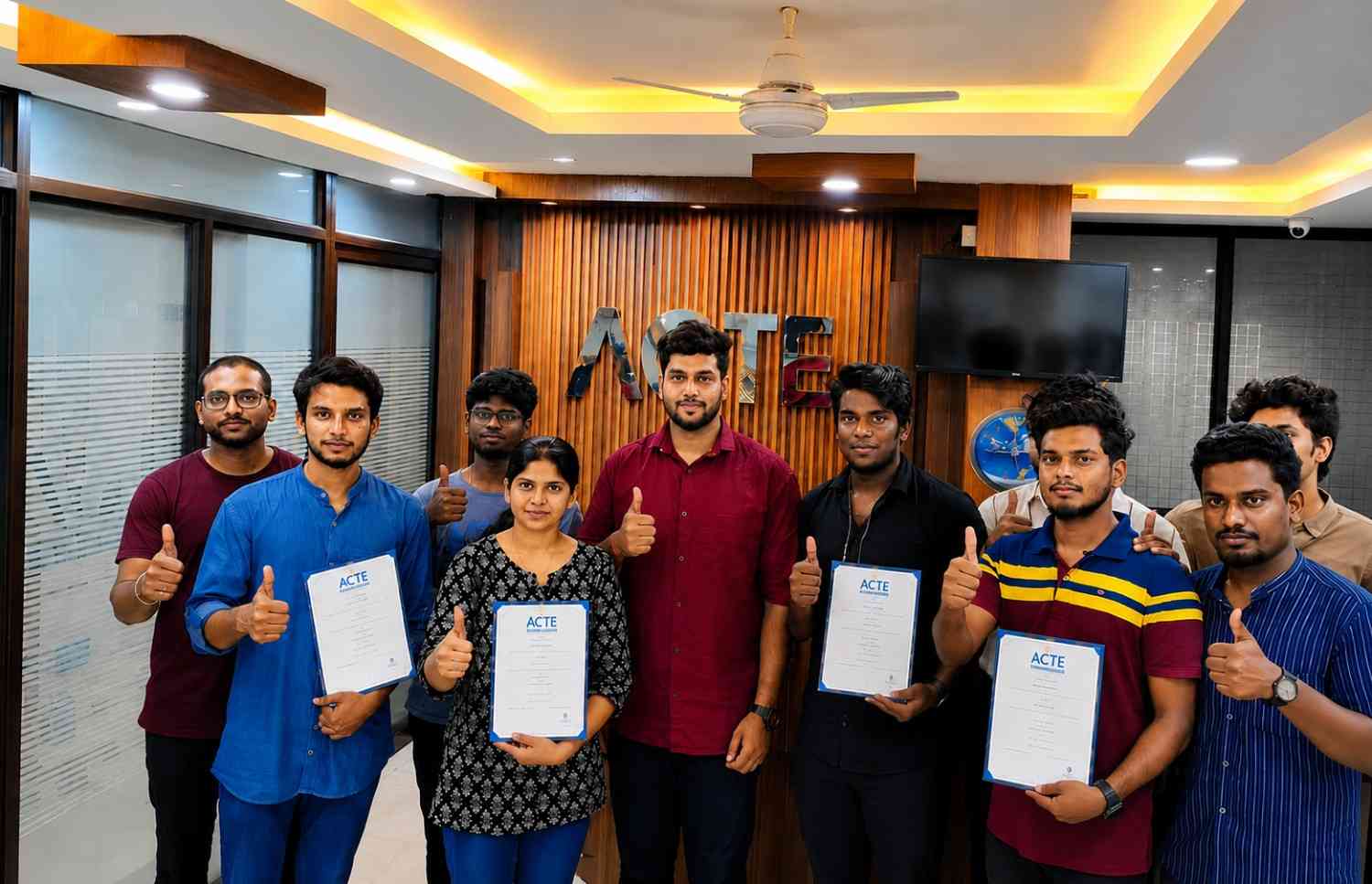
      Get Certified By Kannada Language & Industry Recognized ACTE Certificate

      Acte Certification is Accredited by all major Global Companies around the world. We provide after completion of the theoretical and practical sessions to fresher's as well as corporate trainees. Our certification at Acte is accredited worldwide. It increases the value of your resume and you can attain leading job posts with the help of this certification in leading MNC's of the world. The certification is only provided after successful completion of our training and practical based projects.

      Complete Your Course

      a downloadable Certificate in PDF format, immediately available to you when you complete your Course

      Get Certified

      a physical version of your officially branded and security-marked Certificate.

      Get Certified

      About Experienced Java Trainer

      • Our Java Training in Kannada. Trainers are certified professionals with 7+ years of experience in their respective domain as well as they are currently working with Top MNCs.
      • As all Trainers are Java domain working professionals so they are having many live projects, trainers will use these projects during training sessions.
      • All our Trainers are working with companies such as Cognizant, Dell, Infosys, IBM, L&T InfoTech, TCS, HCL Technologies, etc.
      • Trainers are also help candidates to get placed in their respective company by Employee Referral / Internal Hiring process.
      • Our trainers are industry-experts and subject specialists who have mastered on running applications providing Best Java training to the students.
      • We have received various prestigious awards for Java Training in Kannada from recognized IT organizations.

      Authorized Partners

      ACTE TRAINING INSTITUTE PVT LTD is the unique Authorised Oracle Partner, Authorised Microsoft Partner, Authorised Pearson Vue Exam Center, Authorised PSI Exam Center, Authorised Partner Of AWS .
      Get Training Quote for Free

            Career Support

            Placement Assistance

            Exclusive access to ACTE Job portal

            Mock Interview Preparation

            1 on 1 Career Mentoring Sessions

            Career Oriented Sessions

            Resume & LinkedIn Profile Building

            We Offer High-Quality Training at The Lowest Prices.

            Affordable, Quality Training for Freshers to Launch IT Careers & Land Top Placements.

            What Makes ACTE Training Different?

            Feature

            ACTE Technologies

            Other Institutes

            Affordable Fees

            Competitive Pricing With Flexible Payment Options.

            Higher Fees With Limited Payment Options.

            Industry Experts

            Well Experienced Trainer From a Relevant Field With Practical Training

            Theoretical Class With Limited Practical

            Updated Syllabus

            Updated and Industry-relevant Course Curriculum With Hands-on Learning.

            Outdated Curriculum With Limited Practical Training.

            Hands-on projects

            Real-world Projects With Live Case Studies and Collaboration With Companies.

            Basic Projects With Limited Real-world Application.

            Certification

            Industry-recognized Certifications With Global Validity.

            Basic Certifications With Limited Recognition.

            Placement Support

            Strong Placement Support With Tie-ups With Top Companies and Mock Interviews.

            Basic Placement Support

            Industry Partnerships

            Strong Ties With Top Tech Companies for Internships and Placements

            No Partnerships, Limited Opportunities

            Batch Size

            Small Batch Sizes for Personalized Attention.

            Large Batch Sizes With Limited Individual Focus.

            LMS Features
            Lifetime Access Course video Materials in LMS, Online Interview Practice, upload resumes in Placement Portal.

            No LMS Features or Perks.

            Training Support

            Dedicated Mentors, 24/7 Doubt Resolution, and Personalized Guidance.

            Limited Mentor Support and No After-hours Assistance.

            Java Course FAQs

            Looking for better Discount Price?

            Call now: +91-7669 100 251 and know the exciting offers available for you!
            • ACTE is the Legend in offering placement to the students. Please visit our Placed Students List on our website
            • We have strong relationship with over 700+ Top MNCs like SAP, Oracle, Amazon, HCL, Wipro, Dell, Accenture, Google, CTS, TCS, IBM etc.
            • More than 3500+ students placed in last year in India & Globally
            • ACTE conducts development sessions including mock interviews, presentation skills to prepare students to face a challenging interview situation with ease.
            • 85% percent placement record
            • Our Placement Cell support you till you get placed in better MNC
            • Please Visit Your Student Portal | Here FREE Lifetime Online Student Portal help you to access the Job Openings, Study Materials, Videos, Recorded Section & Top MNC interview Questions
              ACTE Gives Certificate For Completing A Course
            • Certification is Accredited by all major Global Companies
            • ACTE is the unique Authorized Oracle Partner, Authorized Microsoft Partner, Authorized Pearson Vue Exam Center, Authorized PSI Exam Center, Authorized Partner Of AWS

            • The entire java training has been built around Real Time Implementation
            • You Get Hands-on Experience with Industry Projects, Hackathons & lab sessions which will help you to Build your Project Portfolio
            • GitHub repository and Showcase to Recruiters in Interviews & Get Placed
            All the instructors at ACTE are practitioners from the Industry with minimum 9-12 yrs of relevant IT experience. They are subject matter experts and are trained by ACTE for providing an awesome learning experience.
            No worries. ACTE assure that no one misses single lectures topics. We will reschedule the classes as per your convenience within the stipulated course duration with all such possibilities. If required you can even attend that topic with any other batches.
            We offer this course in “Class Room, One to One Training, Fast Track, Customized Training & Online Training” mode. Through this way you won’t mess anything in your real-life schedule.

            Why Should I Learn Java Course At ACTE?

            • Java Course in ACTE is designed & conducted by Java experts with 10+ years of experience in the Java domain
            • Only institution in India with the right blend of theory & practical sessions
            • In-depth Course coverage for 60+ Hours
            • More than 50,000+ students trust ACTE
            • Affordable fees keeping students and IT working professionals in mind
            • Course timings designed to suit working professionals and students
            • Interview tips and training
            • Resume building support
            • Real-time projects and case studies
            Yes We Provide Lifetime Access for Student’s Portal Study Materials, Videos & Top MNC Interview Question.
            You will receive ACTE globally recognized course completion certification Along with project experience, job support, and lifetime resources.
            We have been in the training field for close to a decade now. We set up our operations in the year 2009 by a group of IT veterans to offer world class IT training & we have trained over 50,000+ aspirants to well-employed IT professionals in various IT companies.
            We at ACTE believe in giving individual attention to students so that they will be in a position to clarify all the doubts that arise in complex and difficult topics. Therefore, we restrict the size of each Java batch to 5 or 6 members
            Our courseware is designed to give a hands-on approach to the students in Java. The course is made up of theoretical classes that teach the basics of each module followed by high-intensity practical sessions reflecting the current challenges and needs of the industry that will demand the students’ time and commitment.
            You can contact our support number at +91 76691 00251 / Directly can do by ACTE.in's E-commerce payment system Login or directly walk-in to one of the ACTE branches in India
            Show More

            Job Opportunities in Java

            More Than 35% of Developers Prefer Java. Java Is The Most Popular And In-Demand Programming Language In The Tech World.