Oracle 12c Training in Pune | Best Oracle 12 Certification Course | Updated 2025
Home » Oracle Courses Pune » Oracle 12 Certification Training in Pune

Oracle 12 Certification Training in Pune

Rated #1 Recoginized as the No.1 Institute for Oracle 12 Certification Training in Pune

Our Oracle 12 Certification Training in Pune offers a comprehensive, hands-on learning experience for professionals eager to earn their Oracle 12 certification and master Oracle database management.

This course covers essential topics such as Oracle 12c architecture, database installation, configuration, security, backup, recovery, and performance tuning. Gain the skills and knowledge needed to manage and optimize Oracle 12 databases effectively and prepare for the certification exam.

  • Join 350+ companies and 13,898+ graduates mastering Oracle 12!
  • Learn Oracle 12 with an affordable, industry-recognized curriculum.
  • Unlock global career opportunities in the dynamic Oracle 12 sector.
  • Enroll now to boost your Oracle 12 certification expertise in Pune!
  • Become Oracle 12 certified and fast-track your career in database admin!
  • Stay ahead in database management with expert-led mentorship and training.

Job Assistance

1,200+ Enrolled

In collaboration with

65+ Hrs.

Duration

Online/Offline

Format

LMS

Life Time Access

Quality Training With Affordable Fee

⭐ Fees Starts From

INR 38,000
INR 18,500
Get Training Quote for Free

      Our Hiring Partners

      Learn From Experts, Practice On Projects & Get Placed in IT Company

      • 100% Guaranteed Placement Support for Freshers & Working Professionals
      • You will not only gain knowledge of Oracle 12 Certification and advanced concepts, but also gain exposure to Industry best practices
      • Experienced Trainers and Lab Facility
      • Oracle 12 Professional Certification Guidance Support with Exam Dumps
      • Practical oriented / Job oriented Training. Practice on Real Time project scenarios.
      • We have designed an in-depth course so meet job requirements and criteria
      • Resume & Interviews Preparation Support
      • Concepts: Basic SQL SELECT, Restricting and Sorting Data, Single-Row Functions, Displaying Data from Multiple, Aggregating Data, Manipulating Data, Controlling User Access, SET Operators, Hierarchical Queries, DML and DDL Statements.
      • START YOUR CAREER WITH ORACLE 12 CERTIFICATION COURSE THAT GETS YOU A JOB OF UPTO 5 TO 12 LACS IN JUST 60 DAYS!

      Your IT Career Starts Here

      550+ Students Placed Every Month!

      Get inspired by their progress in the Career Growth Report.

      Other Categories Placements
      • Non-IT to IT (Career Transition) 2371+
      • Diploma Candidates3001+
      • Non-Engineering Students (Arts & Science)3419+
      • Engineering Students3571+
      • CTC Greater than 5 LPA4542+
      • Academic Percentage Less than 60%5583+
      • Career Break / Gap Students2588+

      Upcoming Batches For Classroom and Online

      Weekdays
      15 - Dec - 2025
      08:00 AM & 10:00 AM
      Weekdays
      17 - Dec - 2025
      08:00 AM & 10:00 AM
      Weekends
      20 - Dec - 2025
      (10:00 AM - 01:30 PM)
      Weekends
      21 - Dec - 2025
      (09:00 AM - 02:00 PM)
      Can't find a batch you were looking for?
      INR 18,500
      INR 38,000

      OFF Expires in

      What’s included ?

      Convenient learning format

      📊 Free Aptitude and Technical Skills Training

      • Learn basic maths and logical thinking to solve problems easily.
      • Understand simple coding and technical concepts step by step.
      • Get ready for exams and interviews with regular practice.
      Dedicated career services

      🛠️ Hands-On Projects

      • Work on real-time projects to apply what you learn.
      • Build mini apps and tools daily to enhance your coding skills.
      • Gain practical experience just like in real jobs.
      Learn from the best

      🧠 AI Powered Self Interview Practice Portal

      • Practice interview questions with instant AI feedback.
      • Improve your answers by speaking and reviewing them.
      • Build confidence with real-time mock interview sessions.
      Learn from the best

      🎯 Interview Preparation For Freshers

      • Practice company-based interview questions.
      • Take online assessment tests to crack interviews
      • Practice confidently with real-world interview and project-based questions.
      Learn from the best

      🧪 LMS Online Learning Platform

      • Explore expert trainer videos and documents to boost your learning.
      • Study anytime with on-demand videos and detailed documents.
      • Quickly find topics with organized learning materials.
       

      Curriculum

      Syllabus of Oracle Developer Certification Course in Pune
      Module 1: Writing Basic SQL SELECT Statements
      • Basic SELECT Statement
      • Selecting All Columns
      • Selecting Specific Columns
      • Writing SQL Statements
      • Column Heading Defaults
      • Arithmetic Expressions
      • Using Arithmetic Operators
      • Operator Precedence
      • Using Parentheses
      • Defining a Null Value
      • Null Values in Arithmetic Expressions
      • Defining a Column Alias
      • Using Column Aliases
      • Concatenation Operator
      • Using the Concatenation Operator
      • Literal Character Strings
      • Using Literal Character Strings
      • Duplicate Rows
      • Eliminating Duplicate Rows
      Module 2: Restricting and Sorting Data
      • Limiting Rows Using a Selection
      • Limiting the Rows Selected
      • Using the WHERE Clause
      • Character Strings and Dates
      • Comparison Conditions
      • Using Comparison Conditions
      • Other Comparison Conditions
      • Using the BETWEEN Condition
      • Using the IN Condition
      • Using the LIKE Condition
      • Using the NULL Conditions
      • Logical Conditions
      • Using the AND Operator
      • Using the OR Operator
      • Using the NOT Operator
      • Rules of Precedence
      • ORDER BY Clause
      • Sorting in Descending Order
      • Sorting by Column Alias
      • Sorting by Multiple Columns
      Module 3:  Single-Row Functions
      • SQL Function
      • Two Types of SQL Functions
      • Single-Row Functions
      • Single-Row Functions
      • Character Functions
      • Character Functions
      • Case Manipulation Functions
      • Using Case Manipulation Functions
      • Character-Manipulation Functions
      • Using the Character-Manipulation Functions
      • Number Functions
      • Using the ROUND Function
      • Using the TRUNC Function
      • Using the MOD Function
      • Working with Dates
      • Arithmetic with Dates
      • Using Arithmetic Operators with Dates
      • Date Functions
      • Using Date Functions
      • Practice 3, Part One:
      • Conversion Functions
      • Implicit Data Type Conversion
      • Explicit Data Type Conversion
      • Using the TO_CHAR Function with Dates
      • Elements of the Date Format Model
      • Using the TO_CHAR Function with Dates
      • Using the TO_CHAR Function with Numbers
      • Using the TO_NUMBER and TO_DATE Functions
      • RR Date Format
      • Example of RR Date Format
      • Nesting Functions
      • General Functions
      • NVL Function
      • Using the NVL Function
      • Using the NVL2 Function
      • Using the NULLIF Function
      • Using the COALESCE Function
      • Conditional Expressions
      • The CASE Expression
      • Using the CASE Expression
      • The DECODE Function
      • Using the DECODE Function
      Module 4: Displaying Data from Multiple Tables
      • Obtaining Data from Multiple Tables
      • Cartesian Products
      • Generating a Cartesian Product
      • Types of Joins
      • Joining Tables Using Oracle Syntax
      • What is an Equijoin?
      • Retrieving Records with Equijoins
      • Additional Search Conditions Using the AND Operator
      • Qualifying Ambiguous Column Names
      • Using Table Aliases
      • Joining More than Two Tables
      • Non-Equijoins
      • Retrieving Records with Non-Equijoins
      • Outer Joins Outer Joins Syntax
      • Using Outer Joins
      • Self Joins
      • Joining a Table to Itself
      • Joining Tables Using SQL: 1999 Syntax
      • Creating Cross Joins
      • Creating Natural Joins
      • Retrieving Records with Natural Joins
      • Creating Joins with the USING Clause
      • Retrieving Records with the USING Clause
      • Creating Joins with the ON Clause
      • Retrieving Records with the ON Clause
      • Creating Three-Way Joins with the ON Clause
      • INNER Versus OUTER Joins
      • LEFT OUTER JOIN
      • RIGHT OUTER JOIN
      • FULL OUTER JOIN
      • Additional Conditions
      Module 5: Aggregating Data Using Group Functions
      • What Are Group Functions?
      • Types of Group Functions
      • Group Functions Syntax
      • Using the AVG and SUM Functions
      • Using the MIN and MAX Functions
      • Using the COUNT Function
      • Using the DISTINCT Keyword
      • Group Functions and Null Values
      • Using the NVL Function with Group Functions
      • Creating Groups of Data
      • Creating Groups of Data: The GROUP BY Clause Syntax
      • Using the GROUP BY Clause
      • Grouping by More Than One Column
      • Using the GROUP BY Clause on Multiple Columns
      • Illegal Queries Using Group Functions
      • Excluding Group Results
      • Excluding Group Results: The HAVING Clause
      • Using the HAVING Clause
      • Nesting Group Functions
      Module 6: Subqueries
      • Objectives
      • Using a Subquery to Solve a Problem
      • Subquery Syntax
      • Using a Subquery
      • Guidelines for Using Subqueries
      • Types of Subqueries
      • Single-Row Subqueries
      • Executing Single-Row Subqueries
      • Using Group Functions in a Subquery
      • The HAVING Clause with Subqueries
      • What is Wrong with this Statement?
      • Will this Statement Return Rows?
      • Multiple-Row Subqueries
      • Using the ANY Operator in Multiple-Row Subqueries
      • Using the ALL Operator in Multiple-Row Subqueries
      • Null Values in a Subquery
      Module 7: . Manipulating Data
      • Data Manipulation Language
      • Adding a New Row to a Table
      • The INSERT Statement Syntax 8-5
      • Inserting New Rows
      • Inserting Rows with Null Values
      • Inserting Special Values
      • Inserting Specific Date Values
      • Creating a Script
      • Copying Rows from Another Table
      • Changing Data in a Table
      • The UPDATE Statement Syntax
      • Updating Rows in a Table
      • Updating Two Columns with a Subquery
      • Updating Rows Based on Another Table
      • Updating Rows: Integrity Constraint Error
      • Removing a Row from a Table
      • The DELETE Statement
      • Deleting Rows from a Table
      • Deleting Rows Based on Another Table
      • Deleting Rows: Integrity Constraint Error
      • Using a Subquery in an INSERT Statement
      • Using the WITH CHECK OPTION Keyword on DML Statements
      • Overview of the Explicit Default Feature
      • Using Explicit Default Values
      • The MERGE Statement
      • The MERGE Statement Syntax
      • Merging Rows
      • Database Transactions
      • Advantages of COMMIT and ROLLBACK Statements
      • Controlling Transactions
      • Rolling Back Changes to a Marker
      • Implicit Transaction Processing
      • State of the Data Before COMMIT or ROLLBACK
      • State of the Data after COMMIT
      • Committing Data
      • State of the Data After ROLLBACK
      • Statement-Level Rollback
      • Read Consistency
      • Implementation of Read Consistency
      • Locking
      • Implicit Locking
      • Read Consistency Example
      Module 8: Creating and Managing Tables
      • Database Objects
      • Naming Rules
      • The CREATE TABLE Statement
      • Referencing Another User?s Tables
      • The DEFAULT Option
      • Creating Tables
      • Tables in the Oracle Database
      • Querying the Data Dictionary 9-10
      • Data Types
      • DateTime Data Types
      • TIMESTAMP WITH TIME ZONE Data Type
      • TIMESTAMP WITH LOCAL TIME Data Type
      • INTERVAL YEAR TO MONTH Data Type
      • INTERVAL DAY TO SECOND Data Type
      • Creating a Table by Using a Subquery Syntax
      • Creating a Table by Using a Subquery
      • The ALTER TABLE Statement
      • Adding a Column
      • Modifying a Column
      • Dropping a Column
      • The SET UNUSED Option
      • Dropping a Table
      • Changing the Name of an Object
      • Truncating a Table
      • Adding Comments to a Table
      Module 9: Including Constraints
      • What are Constraints?
      • Constraint Guidelines
      • Defining Constraints
      • The NOT NULL Constraint
      • The UNIQUE Constraint
      • The PRIMARY KEY Constraint
      • The FOREIGN KEY Constraint
      • FOREIGN KEY Constraint Keywords
      • The CHECK Constraint
      • Adding a Constraint Syntax
      • Adding a Constraint
      • Dropping a Constraint
      • Disabling Constraints
      • Enabling Constraints
      • Cascading Constraints
      • Viewing Constraints
      • Viewing the Columns Associated with Constraints
      Module 10: Creating Views
      • Database Objects
      • What is a View?
      • Why use Views?
      • Simple Views and Complex Views
      • Creating a View
      • Retrieving Data from a View
      • Querying a View
      • Modifying a View
      • Creating a Complex View
      • Rules for Performing DML Operations on a View
      • Using the WITH CHECK OPTION Clause
      • Denying DML Operations
      Module 11: Other Database Objects
      • Database Objects
      • What is a Sequence?
      • The CREATE SEQUENCE Statement Syntax
      • Creating a Sequence
      • Confirming Sequences
      • NEXTVAL and CURRVAL Pseudocolumns
      • Using a Sequence
      • Modifying a Sequence
      • Guidelines for Modifying a Sequence
      • Removing a Sequence
      • What is an Index?
      • How Are Indexes Created?
      • Creating an Index
      • When to Create an Index
      • When Not to Create an Index
      • Confirming Indexes
      • Function-Based Indexes
      • Removing an Index
      • Creating and Removing Synonyms
      Module 12: Controlling User Access
      • Objectives
      • Controlling User Access
      • Privileges
      • System Privileges
      • Creating Users
      • User System Privileges
      • Granting System Privileges
      • What is a Role?
      • Creating and Granting Privileges to a Role
      • Changing Your Password
      • Object Privileges
      • Granting Object Privileges
      • Using the WITH GRANT OPTION and PUBLIC Keywords
      • Confirming Privileges Granted
      • How to Revoke Object Privileges
      • Revoking Object Privileges
      • Database Links
      Module 13: SQL Workshop
      • Workshop Overview
      Module 14: . Using SET Operators
      • The SET Operators
      • Tables Used in This Lesson
      • The UNION Operator
      • Using the UNION Operator
      • The UNION ALL Operator
      • Using the UNION ALL Operator
      • The INTERSECT Operator
      • Using the INTERSECT Operator
      • The MINUS Operator
      • SET Operator Guidelines
      • The Oracle Server and SET Operators
      • Matching the SELECT Statements
      • Controlling the Order of Rows
      Module 15: Enhancements to the GROUP BY Clause
      • Review of Group Functions
      • Review of the GROUP BY Clause
      • Review of the HAVING Clause
      • GROUP BY with ROLLUP and CUBE Operators
      • ROLLUP Operator
      • ROLLUP Operator Example
      • CUBE Operator
      • CUBE Operator: Example
      • GROUPING Function
      • GROUPING Function: Example
      • GROUPING SETS
      • GROUPING SETS: Example
      • Composite Columns
      • Composite Columns: Example
      • Concatenated Groupings
      • Concatenated Groupings Example
      Module 16: Advanced Subqueries
      • What Is a Subquery?
      • Subqueries
      • Using a Subquery
      • Multiple-Column Subqueries
      • Column Comparisons
      • Pairwise Comparison Subquery
      • Nonpairwise Comparison Subquery
      • Using a Subquery in the FROM Clause
      • Scalar Subquery Expressions
      • Scalar Subqueries: Examples
      • Correlated Subqueries
      • Using Correlated Subqueries
      • Using the EXISTS Operator
      • Using the NOT EXISTS Operator
      • Correlated UPDATE
      • Correlated DELETE
      • The WITH Clause
      • WITH Clause: Example
      • Hierarchical Retrieval
      • Sample Data from the EMPLOYEES Table
      • Natural Tree Structure
      Module 17: Hierarchical Queries
      • Walking the Tree
      • Walking the Tree: From the Bottom Up
      • Walking the Tree: From the Top Down
      • Ranking Rows with the LEVEL Pseudocolumn
      • Formatting Hierarchical Reports Using LEVEL and LPAD
      • Pruning Branches
      Module 18: Extensions to DML and DDL Statements
      • Review of the INSERT Statement
      • Review of the UPDATE Statement
      • Overview of Multitable INSERT Statements
      • Overview of Multitable INSERT Statements
      • Types of Multitable INSERT Statements
      • Multitable INSERT Statements
      • Unconditional INSERT ALL
      • Conditional INSERT ALL
      • Conditional FIRST INSERT
      • Pivoting INSERT
      • External Tables
      • Creating an External Table
      • Example of Creating an External Table
      • Querying External Tables
      • CREATE INDEX with CREATE TABLE Statement
      Module 19: Creating and Running PL/SQL Code
      • SQL*Plus
      • Performing Essential PL/SQL Tasks
      • Calling PL/SQL from Other Languages
      • Language Fundamentals
      • PL/SQL Block Structure
      • The PL/SQL Character Set
      • Identifiers
      • Literals
      • The Semicolon Delimiter
      • Comments
      • The PRAGMA Keyword
      • Labels
      Module 20: Loop Basics
      • The Simple Loop
      • The WHILE Loop
      • The Numeric FOR Loop
      • The Cursor FOR Loop
      • Loop Labels
      • Tips for Iterative Processing
      Module 21: Exception Handlers
      • Exception-Handling Concepts and Terminology
      • Defining Exceptions
      • Raising Exceptions
      • Handling Exceptions
      • Building an Effective Error Management Architecture
      • Making the Most of PL/SQL Error Management
      Module 22 : Strings
      • String Datatypes
      • Working with Strings
      • String Function Quick Reference
      Module 23: Numbers
      • Numeric Datatypes
      • Number Conversions
      • Numeric Functions
      Module 24: Records
      • Records in PL/SQL
      Module 25: Collections
      • Collections Overview
      • Collection Methods (Built-Ins)
      • Working with Collections
      • Nested Table Multiset Operations
      Module 26: Miscellaneous Datatypes
      • The BOOLEAN Datatype
      • The RAW Datatype
      • The UROWID and ROWID Datatypes
      • The LOB Datatypes
      • Working with LOBs
      • Predefined Object Types
      Module 27: Data Retrieval
      • Cursor Basics
      • Working with Implicit Cursors
      • Working with Explicit Cursors
      • BULK COLLECT
      • SELECT ... FOR UPDATE
      • Cursor Variables and REF CURSORs
      • Cursor Expressions
      Module 28: Procedures, Functions, and Parameters
      • Procedures
      • Functions
      • Parameters
      • Local Modules
      • Module Overloading
      • Forward Declarations
      • Advanced Topics
      Module 29: Packages
      • Why Packages?
      • Rules for Building Packages
      • Rules for Calling Packaged Elements
      • Working with Package Data
      • When to Use Packages
      • Packages and Object Types
      Module 30: Triggers
      • DML Triggers
      • DDL Triggers
      • Database Event Triggers
      • INSTEAD OF Triggers
      • AFTER SUSPEND Triggers
      • Maintaining Triggers
      Module 31: Managing PL/SQL Code
      • Managing Code in the Database
      • Using Native Compilation
      • Using the Optimizing Compiler and Compile-Time Warnings
      • Conditional Compilation
      • Testing PL/SQL Programs
      • Debugging PL/SQL Programs
      • Tuning PL/SQL Programs
      • Protecting Stored Code
      Module 32: I/O and PL/SQL
      • Displaying Information
      • Reading and Writing Files
      • Sending Email
      • Working with Web-Based Data (HTTP)
      • Other Types of I/O Available in PL/SQL
      Show More
      Show Less

      About Oracle 12 Certification Training Course in Pune

      Learning Oracle 12c Database management and achieving the OCA and OCP certification is a goal to everyone who is pursuing their career in the Oracle DBA track. ACTE is an Oracle Authorized Training Center and we deliver a classroom-based tutor led hands-on training in a very professional environment by Oracle Certified Trainers. Our Oracle 12c certification training will certainly enable you to achieve your set goals at the completion of the Oracle 12c OCP certification training.Start Learning with us ACTE Oracle 12 Certification Classroom and Online Training Course.

      Most Job Oriented Oracle 12c Administration Modules Covered
      • Backup and Restoration

        Basic Optimizations

        Working with Developers

      • Read a Query Plan

        Normalization, SQL

        Storage systems

      • Scripting

        Operating Systems

        Stored Procedures & Triggering

        <

      Yes, you heard it right! Here's why… Dumps for Oracle database certification may help you in clearing your Oracle certified professional exam yet will leave you highly unprepared for your interview. Hence even if you are an Oracle certified professional yet you won't get hired.

      If you are a technical consultant or want to start your career as such I would then suggest you get certified in the areas that would position you best for the job, the more languages you excel into the more chances you get landing excellent job opportunities.

      For example SQL, PL/SQL, Java, ADF, OA Framework, etc or database administration and management if you would want to work and grow as a DBA.

      As a functional consultant, you need to know the subject area you are delivering properly (HCM, Financials, Supply chain, Asset Management, etc.). In addition, you may want to focus more on your interpersonal skills, your ability to convey ideas effectively in a language that your audience would understand and influence.

      Even as a fresher, you can get a job in Oracle 12 Certification domain.Yes, you heard it right! Here's why… Dumps for Oracle database certification may help you in clearing your Oracle certified professional exam yet will leave you highly unprepared for your interview. Hence even if you are an Oracle certified professional yet you won't get hired.

      We are happy and proud to say that we have strong relationship with over 700+ small, mid-sized and MNCs. Many of these companies have openings for Oracle 12 Certification. Moreover, we have a very active placement cell that provides 100% placement assistance to our students. The cell also contributes by training students in mock interviews and discussions even after the course completion.

      The Oracle Certified Master (OCM) is the only certification that requires a hand-on exam. That in itself makes it very interesting as it is the only exam that provides proof you have ever sat in front of a working Oracle system. For this reason I think the OCM is a very worthwhile certification.

      There are two issues I have with the OCM exam:

      It is very expensive to complete this certification. The exam itself is very expensive and it requires the completion of two Oracle courses, which add to the price significantly. I just can't justify the price of that piece of paper. If your company is willing to pay for you to take the exam, great. If not, then I'm not sure it is worth the money.

      You should also remember that you don't have access to the internet during this exam. You will only have the manuals, which you will have to navigate using the master index, not the search facility. I am great at remembering the approach needed to perform a task or fix an issue, but I am terrible at remembering syntax, which is one of the reasons I find my own website useful. I think it is pretty safe to say I would fail the OCM exam without a serious amount of syntax revision, as I would not have time to look through the manuals for syntax examples. I am not prepared to dedicate the amount of time necessary to have all of the possible variations of the syntax committed to memory. In my humble opinion, being a great DBA is not the same as being a syntax regurgitating machine.

      • Prerequisite would be just :SQL + PL/SQL + Reports + Forms (which is nothing but Oracle Developer track). ...
      • Apart from this you need to be a technical graduate like a BCA or BE or MCA or BSC-CS etc.
      • You also need to a good communication skills.

      Absolutely. Moreover, you can learn pretty much any other programming language as well without any prior programming knowledge. This can just be the first programming language you learn.

      Actually, I have heard from my fellow programmer a story about a sales manager who often asked him to develop new reports. He wrote new SQL statements to extract the data needed over and over again until they negotiated that the guy who was developing that piece of software added a dialog to the program which allowed to enter arbitrary SQL DML statements and format the results in the way needed before printing them. He said the manager got the point pretty quickly and enjoyed preparing the reports himself and never asked the programmer to do that again )So, of course it is possible.

      Our course ware is designed to give a hands-on approach to the students in Oracle 12 Certification. The course is made up of theoretical classes that teach the basics of each module followed by high-intensity practical sessions reflecting the current challenges and needs of the industry that will demand the students’ time and commitment.

      It's definitely worth The worth of having the certification itself is arguable. Some companies might require developers to have at least an OCA certificate whereas some might not care and would regard experience as a good enough indicator.

      Originally Answered: In how much time can we learn Oracle from scratch? Hi, it depends what you are targeting to learn. If it's SQL and PL/Sql, then it will take 3 hours of study for 2–3 months and you will be good to go.

      Top reasons to consider a career in Oracle 12 Certification?

      If you are not considering Oracle Certification, you should. You found this blog because you have an interest in Oracle Certification. You may have heard that Oracle Certification can help you get a better job, better pay, more recognition, increased credibility. Those are all very good reasons to pursue certification, but the most important reason to get certified has nothing to do with external factors.

      The time and effort you spend preparing for your certification exams gives you the most important benefit of earning an Oracle Certification - knowledge.

      The knowledge and skills you learn during the process of preparing for your exam(s) give you confidence and personal satisfaction. You broaden your knowledge. You expand your skills beyond your daily responsibilities. You give yourself the power to troubleshoot, think creatively and push your skills to their limits.

      Oracle 12 :New Features

       FacebookTwitterEmailCopy LinkMore

      Oracle database 12c is the latest release of Oracle database. As per Oracle ,this is first database designed for Cloud enablement. It also comes with lot of new features to enable consolidation, Security. Here we are presenting the top 10 oracle 12c new features

       Pluggable Databases Through Database Consolidation:

      • Oracle is doing every thing to jump into the cloud bandwagon. With 12C, Oracle is trying to address the problem of Multitenancy through this feature.
      • There is a radical change and a major change in the core database architecture through the introduction of Container Databases also called CBD and Pluggable Databases (PDB). The memory and process is owned by the Container Database.
      • The container holds the metadata where the PDBs hold the user data. You can create upto 253 PDBs including the seed PDB

       Redaction Policy

      This is one of the top features in Oracle 12C. Data Redaction in simple terms means, masking of data. You can setup a Data Redaction policy, for example salary field in a Employee table can be masked. This is called redaction.

      When you do a select * from employee, it will show that the Salary is masked. The new data masking will use a package called DBMS_REDACT. It is the extension to the FGAC and VPD present in earlier versions.

      Online rename and relocation of an active data file A data file migration or renaming in Oracle database 12c R1 no longer requires a number of steps i.e. putting the tablespace in READ ONLY mode, followed by data file offline action. In 12c R1, a data file can be renamed or moved online simply using the ALTER DATABASE MOVE DATAFILE SQL statement. While the data file is being transferred, the end user can perform queries, DML and DDL tasks. Additionally, data files can be migrated between storages e.g. from non-ASM to ASM and vice versa.

      • Table or partition recovery in RMAN Oracle database backups are mainly categorized into two types: logical and physical. Each backup type has its own pros and cons.
      • In previous editions, it was not feasible to restore a table or partition using existing physical backups. In order to restore a particular object, you must have logical backup.
      • With 12c R1, you can recover a particular table or partition to a point-in-time or SCN from RMAN backups in the event of a table drop or truncate.

      Multiple indexes on the same column Pre Oracle 12c, you can’t create multiple indexes either on the same column or set of columns in any form. For example, if you have an index on column {a} or columns {a,b}, you can’t create another index on the same column or set of columns in the same order. In 12c, you can have multiple indexes on the same column or set of columns as long as the index type is different. However, only one type of index is usable/visible at a given time. In order to test the invisible indexes, you need to set the optimizer_use_use_invisible_indexes=true.

       Top N Query and Fetch and offset Replacement to Rownum

      With the release of Oracle Database 12c, Oracle has introduced this new SQL syntax to simplify fetching the first few rows. The new sql syntax “Fetch First X Rows only” can be used.

      Online migration of table partition or sub-partition

      • Migration of a table partition or sub-partition to a different tablespace no longer requires a complex procedure in Oracle 12c R1.
      • In a similar way to how a heap (non-partition) table online migration was achieved in the previous releases, a table partition or sub-partition can be moved to a different tablespace online or offline.
      • When an ONLINE clause is specified, all DML operations can be performed without any interruption on the partition|sub-partition which is involved in the procedure. In contrast, no DML operations are allowed if the partition|sub-partition is moved offline.

      Database Archiving:

      This feature enables archiving rows within a table by marking them as inactive. These inactive rows are in the database and can be optimized using compression but are not visible to the application. These records are skipped during FTS (Full Table Scan

      DDL logging

      There was no direction option available to log the DDL action in the previous releases. In 12cR1, you can now log the DDL action into xml and log files. This will be very useful to know when the drop or create command was executed and by who. The ENABLE_DDL_LOGGING initiation parameter must be configured in order to turn on this feature. The parameter can be set at the database or session levels. When this parameter is enabled, all DDL commands are logged in an xml and a log file under the $ORACLE_BASE/diag/rdbms/DBNAME/log|ddl location.

      Driving Modernization

      Higher Management and in general the business owners are concerned with managing risk, controlling costs and focused on growth.  Hence the ability to deal with:

      • Increased Customer Expectation
      • Accelerated information growth
      • Business complexity

      Database Consolidation and DBaaS are modernization solutions and allow IT to move away from being labeled as another Cost Center to becoming an important Business Enabler.

      Let's review what Oracle Database 12c is offering assisting us to move forward to new offerings and more capabilities. 

      One ODB: Oracle Pluggable Databases (PDB) that can be plugged in and out of Container Databases.

      Separation of Duty

      For Audit Administration and Database Administration

      New Audit Framework

      New unified auditing architecture in a New Audit Schema for better management and security.

      Network Encryption

      Communication between the database server and the clients (moved from ASO to be a core function).

      Strong Auth

      Kerberos strong authentication and Secure Sockets Layer (SSL) strong authentication are provided with the default Oracle Database installation and moved from ASO.

      Pattern Matching

      Enables native SQL queries to match specified patterns in sequences of rows

      Native FETCH FIRST

      The FETCH FIRST and OFFSET clauses provides native SQL language support to limit the number of rows returned and to specify a starting row for the return set.

      SQL Statement Translation Framework

      A new mechanism is provided to allow the text of a SQL statement, submitted from a client program using an open application programming interface (API) such as ODBC or JDBC, to be translated by user-supplied code before it is submitted to the Oracle Database SQL compiler.

      Identity Column

      Table columns have been enhanced to support the American National Standards Institute (ANSI) SQL keyword IDENTITY.

      This provides a standards based approach to the declaration of automatically incrementing columns simplifying application development and making the migration of DDL to Oracle simpler.

      Temporal

      Applications often indicate the validity of a fact recorded in the database with dates or time stamps. Examples of such dates include the hire date and termination date of an employee in a Human Resources application, the effective date range of coverage for an insurance policy . Temporal Validity reduces the complexity of application code by providing a simple declarative interface to allow applications to manage the validity of rows.

      In Database Archiving

      Allows users and applications to set the archive state for individual rows.

      And many PL/SQL improvements for better performance.

      All of these features are available in SE/SE1.

      Show More
      Need customized curriculum?

      Hands-on Real Time Oracle 12 Certification Projects

      Our Top Hiring Partner for Placements

      ACTE Pune offers placement opportunities as add-on to every student / professional who completed our classroom or online training. Some of our students are working in these companies listed below.

      • We are associated with top organizations like HCL, Wipro, Dell, Accenture, Google, CTS, TCS, IBM etc. It make us capable to place our students in top MNCs across the globe
      • We have separate student’s portals for placement, here you will get all the interview schedules and we notify you through Emails.
      • After completion of 70% Oracle 12 Certification training course content, we will arrange the interview calls to students & prepare them to F2F interaction
      • Oracle 12 Certification Trainers assist students in developing their resume matching the current industry needs
      • We have a dedicated Placement support team wing that assist students in securing placement according to their requirements
      • We will schedule Mock Exams and Mock Interviews to find out the GAP in Candidate Knowledge

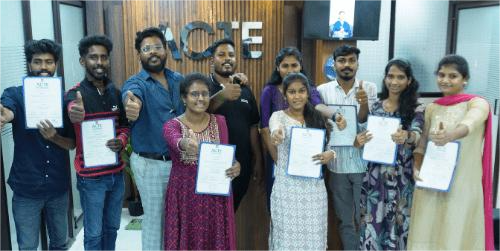
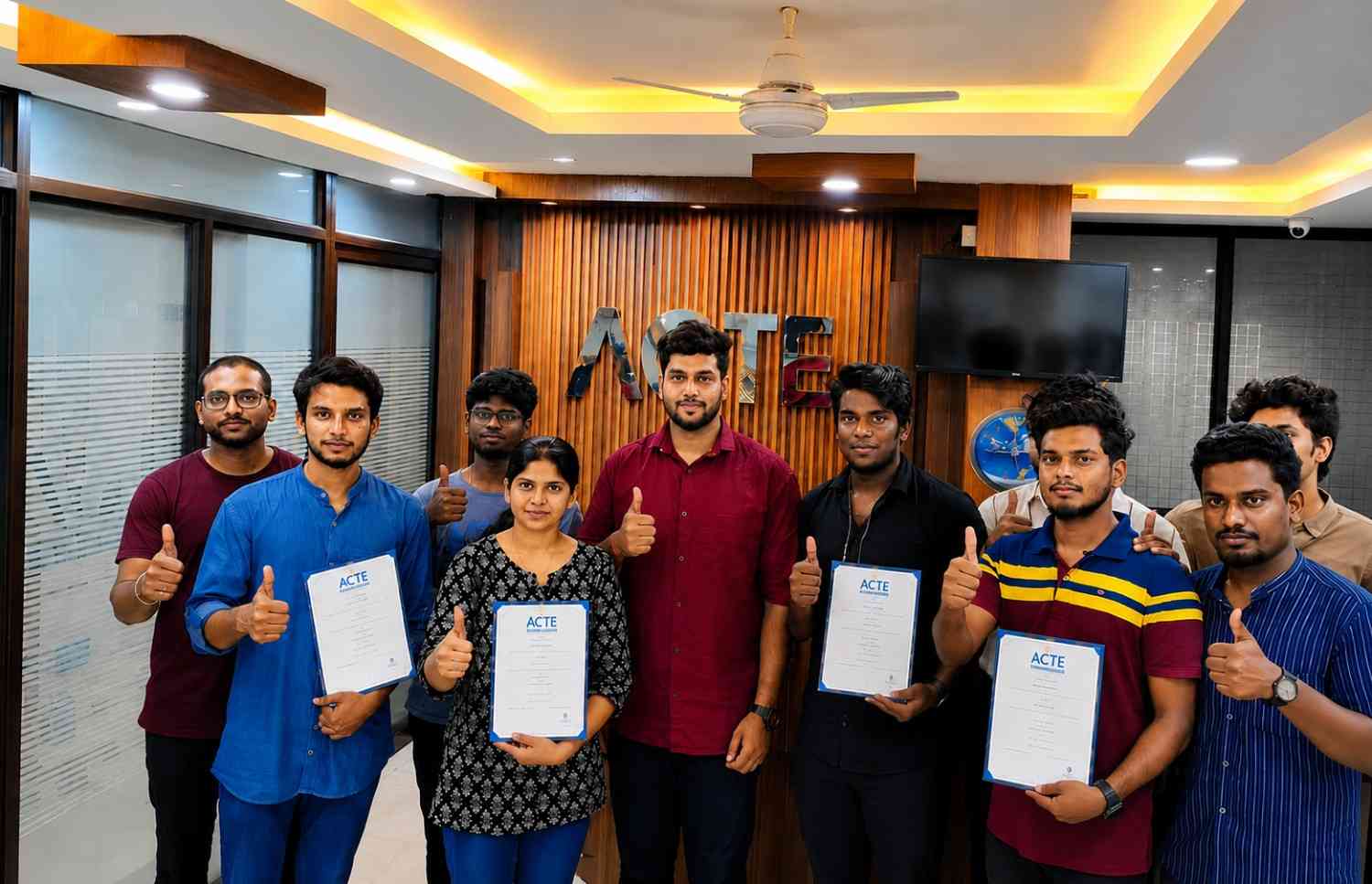
      Get Certified By Oracle & Industry Recognized ACTE Certificate

      Acte Certification is Accredited by all major Global Companies around the world. We provide after completion of the theoretical and practical sessions to fresher's as well as corporate trainees.

      Our certification at Acte is accredited worldwide. It increases the value of your resume and you can attain leading job posts with the help of this certification in leading MNC's of the world. The certification is only provided after successful completion of our training and practical based projects.

      Complete Your Course

      a downloadable Certificate in PDF format, immediately available to you when you complete your Course

      Get Certified

      a physical version of your officially branded and security-marked Certificate.

      Get Certified

      About Experienced Oracle 12 Certification Trainer

      • Our Oracle 12 Certification Training in Pune. Trainers are certified professionals with 7+ years of experience in their respective domain as well as they are currently working with Top MNCs.
      • As all Trainers are Oracle 12 Certification domain working professionals so they are having many live projects, trainers will use these projects during training sessions.
      • All our Trainers are working with companies such as Cognizant, Dell, Infosys, IBM, L&T InfoTech, TCS, HCL Technologies, etc.
      • Trainers are also help candidates to get placed in their respective company by Employee Referral / Internal Hiring process.
      • Our trainers are industry-experts and subject specialists who have mastered on running applications providing Best Oracle 12 Certification training to the students.
      • We have received various prestigious awards for Oracle 12 Certification Training in Pune from recognized IT organizations.

      Authorized Partners

      ACTE TRAINING INSTITUTE PVT LTD is the unique Authorised Oracle Partner, Authorised Microsoft Partner, Authorised Pearson Vue Exam Center, Authorised PSI Exam Center, Authorised Partner Of AWS .

      Get Training Quote for Free

            Career Support

            Placement Assistance

            Exclusive access to ACTE Job portal

            Mock Interview Preparation

            1 on 1 Career Mentoring Sessions

            Career Oriented Sessions

            Resume & LinkedIn Profile Building

            We Offer High-Quality Training at The Lowest Prices.

            Affordable, Quality Training for Freshers to Launch IT Careers & Land Top Placements.

            What Makes ACTE Training Different?

            Feature

            ACTE Technologies

            Other Institutes

            Affordable Fees

            Competitive Pricing With Flexible Payment Options.

            Higher Fees With Limited Payment Options.

            Industry Experts

            Well Experienced Trainer From a Relevant Field With Practical Training

            Theoretical Class With Limited Practical

            Updated Syllabus

            Updated and Industry-relevant Course Curriculum With Hands-on Learning.

            Outdated Curriculum With Limited Practical Training.

            Hands-on projects

            Real-world Projects With Live Case Studies and Collaboration With Companies.

            Basic Projects With Limited Real-world Application.

            Certification

            Industry-recognized Certifications With Global Validity.

            Basic Certifications With Limited Recognition.

            Placement Support

            Strong Placement Support With Tie-ups With Top Companies and Mock Interviews.

            Basic Placement Support

            Industry Partnerships

            Strong Ties With Top Tech Companies for Internships and Placements

            No Partnerships, Limited Opportunities

            Batch Size

            Small Batch Sizes for Personalized Attention.

            Large Batch Sizes With Limited Individual Focus.

            LMS Features

            Lifetime Access Course video Materials in LMS, Online Interview Practice, upload resumes in Placement Portal.

            No LMS Features or Perks.

            Training Support

            Dedicated Mentors, 24/7 Doubt Resolution, and Personalized Guidance.

            Limited Mentor Support and No After-hours Assistance.

            Oracle 12 Certification Course FAQs

            Looking for better Discount Price?

            Call now: +91-7669 100 251 and know the exciting offers available for you!
            • ACTE is the Legend in offering placement to the students. Please visit our Placed Students List on our website
            • We have strong relationship with over 700+ Top MNCs like SAP, Oracle, Amazon, HCL, Wipro, Dell, Accenture, Google, CTS, TCS, IBM etc.
            • More than 3500+ students placed in last year in India & Globally
            • ACTE conducts development sessions including mock interviews, presentation skills to prepare students to face a challenging interview situation with ease.
            • 85% percent placement record
            • Our Placement Cell support you till you get placed in better MNC
            • Please Visit Your Student Portal | Here FREE Lifetime Online Student Portal help you to access the Job Openings, Study Materials, Videos, Recorded Section & Top MNC interview Questions
              ACTE Gives Certificate For Completing A Course
            • Certification is Accredited by all major Global Companies
            • ACTE is the unique Authorized Oracle Partner, Authorized Microsoft Partner, Authorized Pearson Vue Exam Center, Authorized PSI Exam Center, Authorized Partner Of AWS
            • The entire Oracle 12 Certification training has been built around Real Time Implementation
            • You Get Hands-on Experience with Industry Projects, Hackathons & lab sessions which will help you to Build your Project Portfolio
            • GitHub repository and Showcase to Recruiters in Interviews & Get Placed
            All the instructors at ACTE are practitioners from the Industry with minimum 9-12 yrs of relevant IT experience. They are subject matter experts and are trained by ACTE for providing an awesome learning experience.
            No worries. ACTE assure that no one misses single lectures topics. We will reschedule the classes as per your convenience within the stipulated course duration with all such possibilities. If required you can even attend that topic with any other batches.
            We offer this course in “Class Room, One to One Training, Fast Track, Customized Training & Online Training” mode. Through this way you won’t mess anything in your real-life schedule.

            Why Should I Learn Oracle 12 Certification Course At ACTE?

            • Oracle 12 Certification Course in ACTE is designed & conducted by Oracle 12 Certification experts with 10+ years of experience in the Oracle 12 Certification domain
            • Only institution in India with the right blend of theory & practical sessions
            • In-depth Course coverage for 60+ Hours
            • More than 50,000+ students trust ACTE
            • Affordable fees keeping students and IT working professionals in mind
            • Course timings designed to suit working professionals and students
            • Interview tips and training
            • Resume building support
            • Real-time projects and case studies
            Yes We Provide Lifetime Access for Student’s Portal Study Materials, Videos & Top MNC Interview Question.
            You will receive ACTE globally recognized course completion certification Along with project experience, job support, and lifetime resources.
            We have been in the training field for close to a decade now. We set up our operations in the year 2009 by a group of IT veterans to offer world class IT training & we have trained over 50,000+ aspirants to well-employed IT professionals in various IT companies.
            We at ACTE believe in giving individual attention to students so that they will be in a position to clarify all the doubts that arise in complex and difficult topics. Therefore, we restrict the size of each Oracle 12 Certification batch to 5 or 6 members
            Our courseware is designed to give a hands-on approach to the students in Oracle 12 Certification. The course is made up of theoretical classes that teach the basics of each module followed by high-intensity practical sessions reflecting the current challenges and needs of the industry that will demand the students’ time and commitment.
            You can contact our support number at +91 76691 00251 / Directly can do by ACTE.in's E-commerce payment system Login or directly walk-in to one of the ACTE branches in India
            Show More

            Job Opportunities in Oracle

            More than 35% of Developers Favor Oracle. Oracle Stands as the Most Sought-after and Widely Used Programming Language in the Tech Industry.