Java Training in Spring | Best Java Course | Top Placement | ACTE | Updated 2025
Home » Java Courses India » Best Java Training with Placement Support in Spring

Best Java Training with Placement Support in Spring

Live Instructor LED Online Training

Learn from Certified Experts

  • Classes for Trainees and Advanced Students.
  • Java Provides Opportunities for Hands-on Learning.
  • Expertly Designed Program at an Affordable Price.
  • Java Certified Expert with over 12 years of Experience.
  • 13492+ Students Trained, 370+ Clients Recruited.
  • Java Provides the Best Training for Interview Preparation Methods.
  • Access to the Student Portal, Study Materials, Videos, and Top MNC Interview Questions are available.
  • Next Java Batch to Begin this week – Enroll Your Name Now!

Job Assistance

1,200+ Enrolled

In collaboration with

80 Hrs.

Duration

Online/Offline

Format

LMS

Life Time Access

Quality Training With Affordable Fee

⭐ Fees Starts From

INR 38,000
INR 18,500
Get Training Quote for Free

      Our Hiring Partners

      Gain Our Intelligent Best Java Training with Placement Support in Spring

      • Our Java direction objectives are to offer greater education that promotes critical information of center subjects and a hands-on approach.
      • At Java Training Institute, we offer first-rate Java education publications from smooth to advanced standards, and all our publications are designed to steady with the enterprise employer standards.
      • Considering the scholars' consolation we break up batches and facilitate flexible timings to all our students.
      • We break up students into batches of small-sized such that the teacher can attentively take care of every scholar and effectively mentor them.
      • We have excelled incorrectly in education greater than 1500 Training college students from our institution.
      • Moreover, notable education aids in gaining an understanding of this massive sector, permitting you to finish your regular sports activities sports with ease.
      • You can have complete help and real-time assignment help from expert specialists sooner or later in the training period.
      • ACTE Training gives green people the proper certificates. In addition, for each education we offer, we provide a certificate of completion.
      • RISE YOUR CAREER WITH JAVA COURSE THAT GETS YOU A JOB OF UPTO 5 LACS IN JUST 60 DAYS!

      Your IT Career Starts Here

      550+ Students Placed Every Month!

      Get inspired by their progress in the Career Growth Report.

      Other Categories Placements
      • Non-IT to IT (Career Transition) 2371+
      • Diploma Candidates3001+
      • Non-Engineering Students (Arts & Science)3419+
      • Engineering Students3571+
      • CTC Greater than 5 LPA4542+
      • Academic Percentage Less than 60%5583+
      • Career Break / Gap Students2588+

      Upcoming Batches For Classroom and Online

      Weekdays
      03 - Nov - 2025
      08:00 AM & 10:00 AM
      Weekdays
      05 - Nov - 2025
      08:00 AM & 10:00 AM
      Weekends
      08 - Nov - 2025
      (10:00 AM - 01:30 PM)
      Weekends
      09 - Nov - 2025
      (09:00 AM - 02:00 PM)
      Can't find a batch you were looking for?
      INR ₹12000
      INR ₹18000

      OFF Expires in

      What’s included ?

      Convenient learning format

      📊 Free Aptitude and Technical Skills Training

      • Learn basic maths and logical thinking to solve problems easily.
      • Understand simple coding and technical concepts step by step.
      • Get ready for exams and interviews with regular practice.
      Dedicated career services

      🛠️ Hands-On Projects

      • Work on real-time projects to apply what you learn.
      • Build mini apps and tools daily to enhance your coding skills.
      • Gain practical experience just like in real jobs.
      Learn from the best

      🧠 AI Powered Self Interview Practice Portal

      • Practice interview questions with instant AI feedback.
      • Improve your answers by speaking and reviewing them.
      • Build confidence with real-time mock interview sessions.
      Learn from the best

      🎯 Interview Preparation For Freshers

      • Practice company-based interview questions.
      • Take online assessment tests to crack interviews
      • Practice confidently with real-world interview and project-based questions.
      Learn from the best

      🧪 LMS Online Learning Platform

      • Explore expert trainer videos and documents to boost your learning.
      • Study anytime with on-demand videos and detailed documents.
      • Quickly find topics with organized learning materials.

      Course Content

      Syllabus of Core Java Certification Course in Spring
      Module 1: Introduction to Java
      • Features of Java
      • Simple
      • Secure
      • Portable
      • Robust
      • Multithreading
      • Platform-Independent
      • Distributed.
      • Dynamic
      • New Features of Java 8
      • Introducing Java Environment
      • Java Development Kit
      • Java Platforms
      • Java Virtual Machine
      • Java API
      • Java Programs
      • Installing Java
      • What about CLASSPATH?
      • Java’s Reserve Words
      • Starting a Java program
      • Line 1—public class App
      • Line 2—public static void main(String[] args)
      • Line 3—System.out.println(“Hello from Java!”);
      • Compiling Code 15
      • Compiling Code: Using Command-Line Options
      • Cross-Compilation Options
      • Compiling Code: Checking for Deprecated Methods
      • Running Code
      • Running Code: Using Command-Line Options
      • Commenting Your Code
      • Importing Java Packages and Classes
      • Finding Java Class with CLASSPATH
      • Summary
      Module 2: Variables, Arrays and Strings
      • Variables
      • Data Typing
      • Arrays
      • Strings
      • What Data Types are Available?
      • Creating Integer Literals
      • Creating Floating-Point Literals
      • Creating Boolean Literals
      • Creating Character Literals
      • Creating String Literals
      • Creating Binary Literals
      • Using Underscores in Numeric Literals
      • Declaring Integer Variables
      • Declaring Floating-Point Variables
      • Declaring Character Variables
      • Declaring Boolean Variables
      • Initializing Variables Dynamically
      • Conversion between Data Types
      • Automatic Conversions
      • Casting to New Data Types
      • Declaring One-Dimensional
      • Creating One-Dimensional Arrays
      • Initializing One-Dimensional Arrays
      • Declaring Multi-Dimensional Arrays
      • Creating Multi-Dimensional Arrays
      • Initializing Multi-Dimensional Arrays
      • Creating Irregular Multi-Dimensional Arrays
      • Getting an the Length of an Array
      • Understanding General Form of Static Import
      • Importing Static Members
      • The String Class
      • Getting String Length
      • Concatenating Strings
      • Getting Characters and Substrings
      • Searching For and Replacing Strings
      • Changing Case in Strings
      • Checking for Empty String
      • Formatting Numbers in Strings
      • The StringBuffer Class
      • Creating StringBuffers
      • Getting and Setting StringBuffer Lengths and Capacities
      • Setting Characters in String Buffers
      • Appending and Inserting Using StringBuffers
      • Deleting Text in StringBuffers
      • Replacing Text in String Buffer
      • Using the Wrapper Class
      • Autoboxing and Unboxing of Primitive Types
      • Learning the Fundamentals of Varargs Methods
      • Overloading Varargs Methods
      • Learning the Ambiguity in Varargs Methods
      • Using Non-Reifiable Formal Parameters
      Module 3: Operators, Conditionals and Loops
      • Operators
      • Conditionals
      • Loops
      • Operator Precedence
      • Incrementing and Decrementing (++ and --)
      • Unary NOT (~ And !)
      • Multiplication and Division (* and /)
      • Modulus (%)
      • Addition and Subtraction (+ and -)
      • Shift Operators (>>, >>>, and <<)
      • Relational Operators (>, >=, <, <=, ==, and !=)
      • Bitwise and Bitwise Logical AND, XOR, and OR (&, ^, and /)
      • Logical (&& and ||)
      • The if-then-else Operator
      • Assignment Operators (= and [operator]=)
      • Using the Math
      • Changes in the Math Class
      • Class StrictMath
      • Comparing Strings
      • The if Statement
      • The else Statement
      • Nested if
      • The if-else Ladders
      • The switch Statement
      • Using Strings in switch Statement
      • The while Loop
      • The do-while Loop
      • The for Loop
      • The for-each Loop
      • Supporting for-each in Your Own Class
      • A (Poor) Solution
      • Significance of for-
      • Nested Loops
      • Using the break Statement
      • Using the continue Statement
      • Using the return Statement
      • Summary
      Module 4: Class, Object, Packages and Access Specifiers
      • The Control Overview of a Class
      • Working with Objects
      • Working with Methods
      • Defining Default Methods
      • Working with Constructors
      • Using Default Constructor
      • Using Parameterized Constructors
      • Exploring Packages
      • Studying the Types of Packages
      • Importing Packages
      • Using Access Specifiers
      • Working with Streams API
      • Stream API Overview
      • Collection and Stream
      • Commonly Used Functional Interfaces in Stream
      • Java.util.Optional
      • Aggregate Operations
      • Working with Time API
      Module 5: Implementing Object-Oriented Programming in Java
      • Understanding Encapsulation
      • Understanding Abstraction
      • Understanding Inheritance
      • Understanding the final Keyword
      • Preventing Inheritance
      • Declaring Constant
      • Preventing Method Overriding
      • Implementing Interfaces
      • Working with Lambda Expressions
      • Method References
      • Using Lambda Expressions
      • Implementing Abstract Classes and Methods
      • Difference between Abstract Classes and Interfaces
      • Implementing Polymorphism
      • Understanding the Static Polymorphism
      • Understanding the Dynamic Polymorphism
      • Summary
      Module 6: Working with Streams, Files and I/O Handling
      • Streams, Readers and Writers
      • Essentials in NIO
      • Buffers
      • Channels
      • Charsets and Selectors
      • Enhancements in NIO with Java 8
      • The Path Interface
      • The Files Class
      • The Paths Class
      • The File Attribute Interfaces
      • The FileSystem Class
      • The FileSystems Class
      • The FileStore Class
      • Prospects of NIO
      • Working with Streams
      • The InputStream Class
      • The OutputStream Class
      • The ByteArrayInputStream Class
      • The ByteArrayOutputStream Class
      • The BufferedInputStream Class
      • The BufferedOutputStream Class
      • The FileInputStream Class
      • The FileOutputStream Class
      • Working with the Reader Class
      • Working with the Writer Class
      • Accepting Input from the Keyboard with the InputStreamReader Class
      • Working with the OutputStreamWriter Class
      • Working with Files
      • Using the File Class
      • Using the FileReader Class
      • Using the FileWriter Class
      • Working with the RandomAccessFile Class
      • Working with Character Arrays
      • Using the CharArrayReader Class
      • Using the CharArrayWriter Class
      • Working with Buffers
      • Using the BufferedReader Class
      • Using the BufferedWriter Class
      • Working with the PushbackReader Class
      • Working with the PrintWriter Class
      • Working with the StreamTokenizer Class
      • Implementing the Serializable Interface
      • Working with the Console Class
      • Working with the Clipboard
      • Working with the Printer
      • Printing with the Formatter Class
      • Using the System.out.printf() Method
      • Using the String.format() Method
      • Formatting Dates Using the String.format() Method
      • Using the Java.util.Formatter Class
      • Scanning Input with the Scanner class
      • Summary
      Module 7: Implementing Exception Handling
      • Overview of Exceptions
      • Exception Handling Techniques
      • Rethrowing Catched Exception with Improved Type Checking
      • Built-in Exceptions
      • User-Defined Exceptions
      • Summary
      Module 8: Working with Multiple Threads
      • Using Threads in Java
      • Life Cycle of a Thread
      • Synchronization of Threads
      • Multithreaded Custom Class Loader
      • Getting the Main Thread
      • Naming a Thread
      • Pausing a Thread
      • Creating a Thread with the Runnable Interface
      • Creating a Thread with the Thread Class
      • Creating Multiple Threads
      • Joining Threads
      • Checking if a Thread Is Alive
      • Setting Thread Priority and Stopping Threads
      • Synchronizing
      • Communicating between Threads
      • Suspending and Resuming Threads
      • Creating Graphics Animation with Threads
      • Eliminating Flicker in Graphics Animation Created Using Threads
      • Suspending and Resuming Graphics Animation
      • Using Double Buffering
      • Simplifying Producer-Consumer with the Queue Interface
      • Implementing Concurrent Programming
      • Simplifying Servers Using the Concurrency Utilities
      • Knowing Various Concurrency Utilities
      • Learning about the Java.util.concurrent Package
      • Learning about the Java.util.concurrent.locks Package
      • Learning about the Java.util.concurrent.atomic Package
      • Summary
      Module 9: Working with Collections Framework
      • The Collection Interfaces
      • The Collection Classes
      • The Map Interfaces
      • The Map Classes
      • Collections Framework Enhancements in Java SE 8
      • Using the Collection Interface
      • The Queue Interface
      • The List Interface
      • The Set Interface
      • The SortedSet Interface
      • Using the Collection Classes
      • Using the Comparator Interface
      • Using the Iterator Interface
      • Using the ListIterator Interface
      • Using the AbstractMap Class
      • Using the HashMap Class
      • Using the TreeMap Class
      • Using the Arrays Class
      • Learning the Fundamentals of Enumerations
      • The Legacy Classes and Interfaces
      • Using the Aggregate Operations
      • Using the Java.util.function Package
      • Summary
      Module 10: Creating Packages, Interfaces, JAR Files and Annotations
      • Packages and Interfaces
      • JAR Files
      • The Java API Package
      • The Java.lang Package
      • Basics of Annotation
      • Other Built-In Annotations
      • Creating a Package
      • Creating Packages that have Subpackages
      • Creating an Interface
      • Implementing an Interface
      • Extending an Interface
      • Using Interfaces for Callbacks
      • Performing Operations on a JAR File
      • Marker Annotations
      • Single Member Annotations
      • Summary
      Module 11: Working with Java Beans
      • What is Java Bean?
      • Advantages of Java Bean
      • Introspection
      • Persistence
      • Customizers
      • Understanding Java Beans
      • Designing Programs Using Java Beans
      • Creating Applets that Use Java Beans
      • Creating a Java Bean
      • Creating a Bean Manifest File
      • Creating a Bean JAR File
      • Creating a New Bean
      • Adding Controls to Beans
      • Giving a Bean Properties
      • Design Patterns for Properties
      • Using Simple Properties
      • Designing Patterns for Events
      • Learning Methods and Design Patterns
      • Creating Bound Properties
      • Giving a Bean Methods
      • Giving a Bean an Icon
      • Creating a BeanInfo Class
      • Setting Bound and Constrained Properties
      • Implementing Persistence
      • Using the Java Beans API
      • Learning the Basics of an Event
      • Using the Java Beans Conventions
      • Using the Remote Notification and Distributed Notification
      • Using Beans with JSP
      • Summary
      Module 12: Networking and Security with Java
      • Basics of Networking
      • Sockets in Java
      • Client-Server Networking
      • Proxy Servers
      • Internet Addressing
      • Domain Name Service
      • Inet4Addresses and Inet6Addresses
      • The URL Class
      • The URI Class
      • URI Syntax and Components
      • TCP/IP and Datagram
      • Blackboard Assignment Retrieval Transaction
      • Understanding Networking Interfaces and Classes in the Java.net Package
      • Understanding the InetAddresses
      • Caching InetAddress
      • Creating and Using Sockets
      • Creating TCP Clients and Servers
      • Understanding the Whois Example
      • Submitting an HTML Form from a Java Program
      • Handling URL
      • Using the URLConnection Objects
      • Working with Datagrams
      • Datagrams Server and Client
      • Working with BART
      • Learning about the Java.security Package
      • Summary
      Module 13: Implementing Event Handling and Wrappers in Servlets 3.1
      • Introducing Events
      • Introducing Event Handling
      • Working with the Types of Servlet Events
      • Developing the onlineshop Web Application
      • Introducing Wrappers
      • Working with Wrappers
      • Summary
      Module 14: Java Server Pages 2.3 and Expression Language 3.0
      • Introducing JSP Technology
      • Listing Advantages of JSP over Java Servlet
      • Exploring the Architecture of a JSP Page
      • Describing the Life Cycle of a JSP Page
      • Working with JSP Basic Tags and Implicit Objects
      • Working with Action Tags in JSP
      • Exploring EL
      • Using Custom Tag Library with EL Functions
      Module 15: Implementing Filters
      • Exploring the Need of Filters
      • Exploring the Working of Filters
      • Exploring Filter API
      • Configuring a Filter
      • Creating a Web Application Using Filters
      • Using Initializing Parameter in Filters
      • Manipulating Responses
      • Discussing Issues in Using Threads with Filters
      • Summary
      Module 16: Java EE Design Patterns
      • Describing the Java EE Application Architecture
      • Introducing a Design Pattern
      • Discussing the Role of Design Patterns
      • Exploring Types of Patterns
      • Summary
      Module 17: Implementing SOA using Java Web Services
      • Section A: Exploring SOA and Java Web Services
      • Overview of SOA
      • Describing the SOA Environment
      • Overview of JWS
      • Role of WSDL, SOAP and Java/XML Mapping in SOA
      • Section B: Understanding Web Service Specifications to Implement SOA
      • Exploring the JAX-WS 2.2 Specification
      • Exploring the JAXB 2.2 Specification
      • Exploring the WSEE 1.3 Specification
      • Exploring the WS-Metadata 2.2 Specification
      • Describing the SAAJ 1.3 Specification
      • Working with SAAJ and DOM APIs
      • Describing the JAXR Specification
      • JAXR Architecture
      • Exploring the StAX 1.0 Specification
      • Exploring the WebSocket 1.0 Specification
      • Describing the JAX-RS 2.0 Specification
      • Exploring the JASON-P 1.0 Specification
      • Section C: Using the Web Service Specifications
      • Using the JAX-WS 2.2 Specification
      • Using the JAXB 2.2 Specification
      • Using the WSEE and WS-Metadata Specifications
      • Implementing the SAAJ Specification
      • Implementing the JAXR Specification
      • Implementing the StAX Specification
      Show More
      Show Less

      Course Objectives

      • Sun Microsystems created Java programming as a programming language.
      • Knowledge of the object-oriented paradigm of the Java programming language is required. Java is used in a variety of technologies and on a variety of platforms.
      • Understanding of the structure and model of the Java programming language (knowledge).
      • Java is a programming language that can be used to develop a wide range of programming technologies (understanding).
      • Java is a programming language that can be used to create a software (application)
      Because Java is such a popular programming language in the industry, you will have numerous opportunities:
      • Java is a programming language that can be used to create almost any kind of software.
      • An Enterprise Application, a Website, a Desktop application, a Search Engine, or a Gadget are all viable options.
      • Java is a secure platform due to its Virtual Machine.
      • This is one of the primary reasons why companies all over the world use this language.
      • As a result, it'll be around for a while.
      • Android App Development is gaining traction and popularity, and if you're already familiar with Java, learning Android will be much easier.
      This Java training can help software developers, web designers, programming enthusiasts, engineering graduates, and students or professionals who want to become Java developers.
      To participate in this Java Training in Bangalore, you must have a prior understanding of Core Java. This Java Training course includes a free self-paced online Core Java course that will teach you the fundamentals of Java programming.
      There are four different types of certification levels available through the Java certification route. These are the four tiers:
      • Associate in Oracle Certification (OCA)
      • Oracle Certified Specialist (OCP)
      • Oracle Certified Professional (OCE)
      • Oracle Master Certified (OCM)
      • This Java training would be beneficial to students and professionals who want to become Java developers.
      • Software developers
      • Website designers
      • Those who like to program
      • Engineering graduates
      Java Professionals can apply for the following positions:
      • Software Engineer
      • Senior Software Engineer
      • Web Developer Team Leader
      • IT Associate Software Engineer

      The advantages of Java Online Certification for Newcomers?

      • Prepare to enter the job market as a software expert.
      • Prepare for a career in the information technology/software industry.
      • Increase your chances of being hired right away after finishing the course.
      • Take advantage of the fact that Java is the most in-demand skill in the industry.

      Some of the well-known Java tools covered in this Java Training in Spring?

      • Gradle
      • Eclipse
      • IntelliJ
      • Yourkit
      • Clover
      • Jetty
      • Mockito
      • Hibernate
      • Jenkins
      • JUnit

      Will the Java Course Teach You?

      • Working on real-world Java applications will allow you to learn.
      • Top executives in the industry offer practical advice.
      • More opportunities to work at some of the country's best IT organizations with interactive training.
      • Acquire the ability to scale Java interview skills.
      • Batches can be created at any point in time.

      What is the average salary for a Java Professional?

      Java Professionals in Bangalore earn an average annual salary of Rs. 434304/-, according to the most recent statistics from leading research organizations in pay surveys such as PayScale and Glassdoor.It varies by city, industry, total years of experience, and other factors. With our Java training, you can earn significantly more than the above-mentioned average salary.

      What exactly does a Java Developer do?

      Java programmers are always in high demand.A wide range of industries requires Java developers to design and build online apps, web designs, games, mobile applications, and much more.Based on current demand, being a Java developer has a high potential for career advancement.
      Show More

      Overview of Professional Best Java Training with Placement Support in Spring

      Our Java Online Training is well-equipped with labs and excellent infrastructure to provide you with real-time Online Course experience. We also provide a Java curriculum. After completing the Java Online Course, we have successfully Trained and placed many of our students in major multinational corporations. Our students receive 100% placement assistance. We provide Classroom and Weekend Training, as well as a Fast Track to the Java. Students can pick the route times that are most convenient for them.

      The material for the Java Online Course is meant to reflect current events and can help students understand the Java Training concepts in greater depth. We cover everything from the foundations to advanced topics. Every topic covered by the Java may be described in real-world scenarios using examples. Our Java Experts are licensed professionals and qualified experts that have hands-on experience with Java projects.

      Show More
      Need customized curriculum?

      Our Top Hiring Partner for Placements

        ACTE Offers placement opportunities as add-on to every student / professional who completed our classroom or Online Best Java Training with Placement Support in Spring. Some of our Students are working in these companies listed below.
      • This Java Online Course will provide you with a thorough understanding of Core Java & J2EE fundamentals and advanced topics, as well as popular frameworks such as Hibernate, Spring, and SOA.
      • Our Placement trainers invite a group discussion regarding the topic after the Training part.
      • This is a live, instructor-led class to help you grasp additional Java topics such as Java Arrays, Java Functions, and Java Loops, to mention a few, using real-world examples.
      • With our Placement Training, you can remain on top of the newest changes and revisions while also increasing your confidence in your abilities.
      • ACTE Placement Instruction provides comprehensive hands-on Training from real-time experienced educators, as well as sophisticated frameworks like Hibernate, Spring, and Spring Boot.

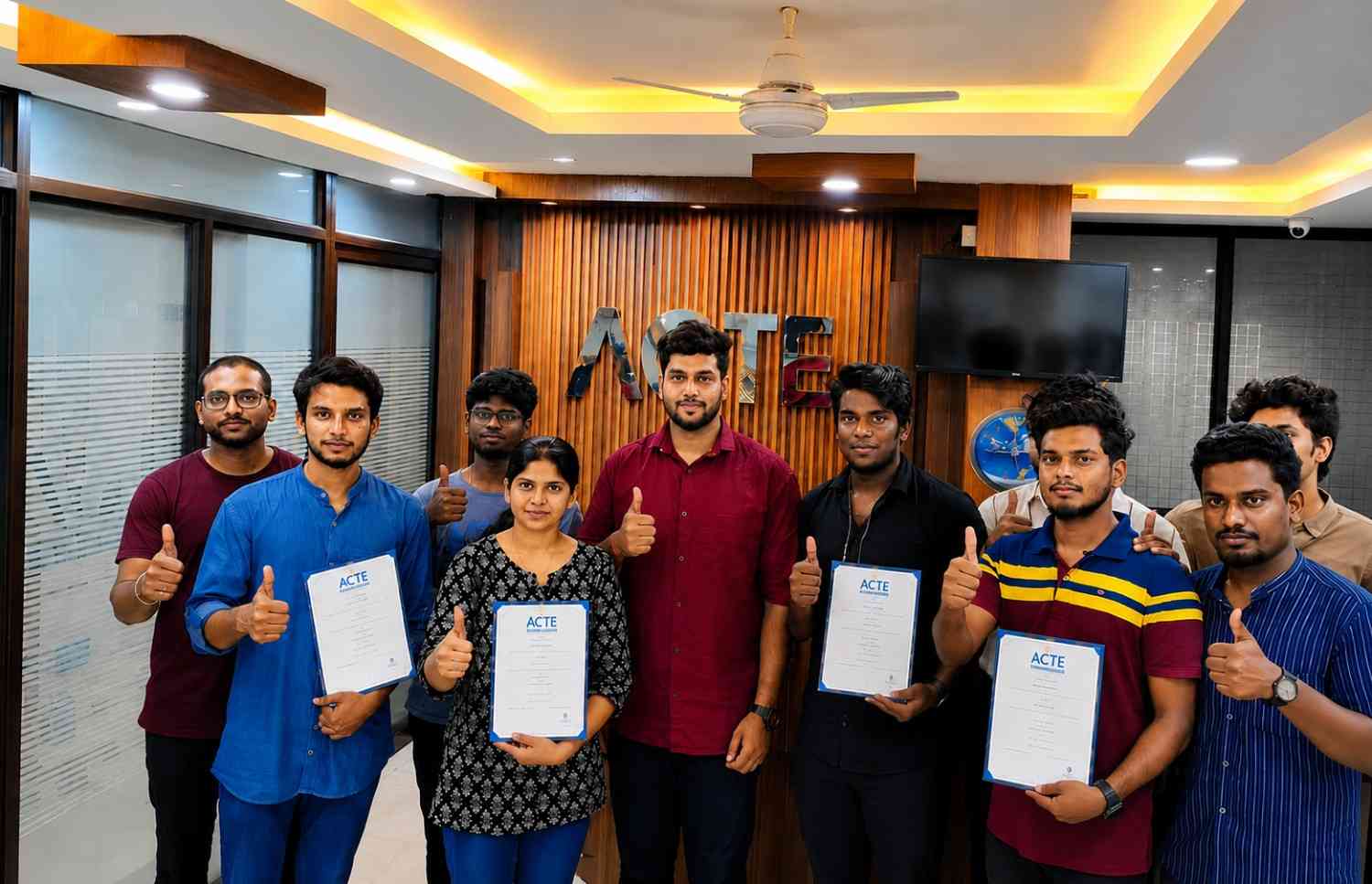
      Get Certified By Oracle & Industry Recognized ACTE Certificate

      Acte Certification is Accredited by all major Global Companies around the world. We provide after completion of the theoretical and practical sessions to fresher's as well as corporate trainees. Our certification at Acte is accredited worldwide. It increases the value of your resume and you can attain leading job posts with the help of this certification in leading MNC's of the world. The certification is only provided after successful completion of our training and practical based projects.

      Complete Your Course

      a downloadable Certificate in PDF format, immediately available to you when you complete your Course

      Get Certified

      a physical version of your officially branded and security-marked Certificate.

      Get Certified

      About Experienced Java Trainer

      • ACTE's Java certification Training is based on industry standards and vetted by top industry professionals.
      • Best Online Training (National/Regional), Best Corporate Training Program (National/Regional), and Best Training Classes for Competitive Exams Entrance were all given to the organization.
      • The major responsibility of our Trainer is to educate students on how to efficiently manage a classroom. This necessitates the creation of a classroom curriculum as well as the provision of Online Training choices for instructors.
      • ACTE Trainers has delivered customized Training to some of the world's most well-known companies, and we'd be delighted to do so for you.
      • The next step is to meet with the trainers once a week for live Online sessions to go through the curriculum, discuss any questions or concerns, and learn via exciting tasks.
      • Students can also schedule one-on-one mentoring sessions with teachers to gain more detailed answers to their issues.
      • Our Tutors have had positions of institutional leadership in the past and are expected to continue to learn and grow as students.

      Authorized Partners

      ACTE TRAINING INSTITUTE PVT LTD is the unique Authorised Oracle Partner, Authorised Microsoft Partner, Authorised Pearson Vue Exam Center, Authorised PSI Exam Center, Authorised Partner Of AWS .
      Get Training Quote for Free

            Career Support

            Placement Assistance

            Exclusive access to ACTE Job portal

            Mock Interview Preparation

            1 on 1 Career Mentoring Sessions

            Career Oriented Sessions

            Resume & LinkedIn Profile Building

            We Offer High-Quality Training at The Lowest Prices.

            Affordable, Quality Training for Freshers to Launch IT Careers & Land Top Placements.

            What Makes ACTE Training Different?

            Feature

            ACTE Technologies

            Other Institutes

            Affordable Fees

            Competitive Pricing With Flexible Payment Options.

            Higher Fees With Limited Payment Options.

            Industry Experts

            Well Experienced Trainer From a Relevant Field With Practical Training

            Theoretical Class With Limited Practical

            Updated Syllabus

            Updated and Industry-relevant Course Curriculum With Hands-on Learning.

            Outdated Curriculum With Limited Practical Training.

            Hands-on projects

            Real-world Projects With Live Case Studies and Collaboration With Companies.

            Basic Projects With Limited Real-world Application.

            Certification

            Industry-recognized Certifications With Global Validity.

            Basic Certifications With Limited Recognition.

            Placement Support

            Strong Placement Support With Tie-ups With Top Companies and Mock Interviews.

            Basic Placement Support

            Industry Partnerships

            Strong Ties With Top Tech Companies for Internships and Placements

            No Partnerships, Limited Opportunities

            Batch Size

            Small Batch Sizes for Personalized Attention.

            Large Batch Sizes With Limited Individual Focus.

            LMS Features

            Lifetime Access Course video Materials in LMS, Online Interview Practice, upload resumes in Placement Portal.

            No LMS Features or Perks.

            Training Support

            Dedicated Mentors, 24/7 Doubt Resolution, and Personalized Guidance.

            Limited Mentor Support and No After-hours Assistance.

            Java Course FAQs

            Looking for better Discount Price?

            Call now: +91-7669 100 251 and know the exciting offers available for you!
            • ACTE is the Legend in offering placement to the students. Please visit our Placed Students List on our website
            • We have strong relationship with over 700+ Top MNCs like SAP, Oracle, Amazon, HCL, Wipro, Dell, Accenture, Google, CTS, TCS, IBM etc.
            • More than 3500+ students placed in last year in India & Globally
            • ACTE conducts development sessions including mock interviews, presentation skills to prepare students to face a challenging interview situation with ease.
            • 85% percent placement record
            • Our Placement Cell support you till you get placed in better MNC
            • Please Visit Your Student Portal | Here FREE Lifetime Online Student Portal help you to access the Job Openings, Study Materials, Videos, Recorded Section & Top MNC interview Questions
            ACTE
              • Gives
            Certificate
              • For Completing A Course
            • Certification is Accredited by all major Global Companies
            • ACTE is the unique Authorized Oracle Partner, Authorized Microsoft Partner, Authorized Pearson Vue Exam Center, Authorized PSI Exam Center, Authorized Partner Of AWS .
            • The entire java training has been built around Real Time Implementation
            • You Get Hands-on Experience with Industry Projects, Hackathons & lab sessions which will help you to Build your Project Portfolio
            • GitHub repository and Showcase to Recruiters in Interviews & Get Placed
            All the instructors at ACTE are practitioners from the Industry with minimum 9-12 yrs of relevant IT experience. They are subject matter experts and are trained by ACTE for providing an awesome learning experience.
            No worries. ACTE assure that no one misses single lectures topics. We will reschedule the classes as per your convenience within the stipulated course duration with all such possibilities. If required you can even attend that topic with any other batches.
            We offer this course in “Class Room, One to One Training, Fast Track, Customized Training & Online Training” mode. Through this way you won’t mess anything in your real-life schedule.

            Why Should I Learn Java Course At ACTE?

            • Java Course in ACTE is designed & conducted by Java experts with 10+ years of experience in the Java domain
            • Only institution in India with the right blend of theory & practical sessions
            • In-depth Course coverage for 60+ Hours
            • More than 50,000+ students trust ACTE
            • Affordable fees keeping students and IT working professionals in mind
            • Course timings designed to suit working professionals and students
            • Interview tips and training
            • Resume building support
            • Real-time projects and case studies
            Yes We Provide Lifetime Access for Student’s Portal Study Materials, Videos & Top MNC Interview Question.
            You will receive ACTE globally recognized course completion certification Along with project experience, job support, and lifetime resources.
            We have been in the training field for close to a decade now. We set up our operations in the year 2009 by a group of IT veterans to offer world class IT training & we have trained over 50,000+ aspirants to well-employed IT professionals in various IT companies.
            We at ACTE believe in giving individual attention to students so that they will be in a position to clarify all the doubts that arise in complex and difficult topics. Therefore, we restrict the size of each Java batch to 5 or 6 members
            Our courseware is designed to give a hands-on approach to the students in Java. The course is made up of theoretical classes that teach the basics of each module followed by high-intensity practical sessions reflecting the current challenges and needs of the industry that will demand the students’ time and commitment.
            You can contact our support number at +91-7669 100 251 / Directly can do by ACTE.in's E-commerce payment system Login or directly walk-in to one of the ACTE branches in India
            Show More