Top Microsoft Azure Training in Anna Nagar With Placement ⭐ | Updated 2025

Microsoft Azure Course for All Graduates, NON-IT, Diploma & Career Gaps — ₹30,680/- only.

Download Brouchure
Join Our 100% Job Guaranteed

Microsoft Azure Training in Anna Nagar

  • Join the Best Microsoft Azure Training Institute in Anna Nagar to Master Cloud Computing and Deployment Skills.
  • Our Microsoft Azure Course in Anna NagarCovers Azure Virtual Machines, Storage, Networking, Security and DevOps Integration.
  • Learn with Flexible Learning Options Weekday, Weekend or Fast-track Batches.
  • Get Hands-on Experience by Working on Live Projects Guided by Experts.
  • Earn a Globally Recognized Microsoft Azure Certification with 100% Job Placement Support.
  • Receive Expert Guidance in Crafting a Professional Resume and Succeeding in Interviews.

WANT IT JOB

Become a Microsoft Azure Administrator in 3 Months

Freshers Salary

3 LPA

To

8 LPA

Quality Training With Affordable Fees in Anna Nagar!
INR ₹32000
INR ₹30680

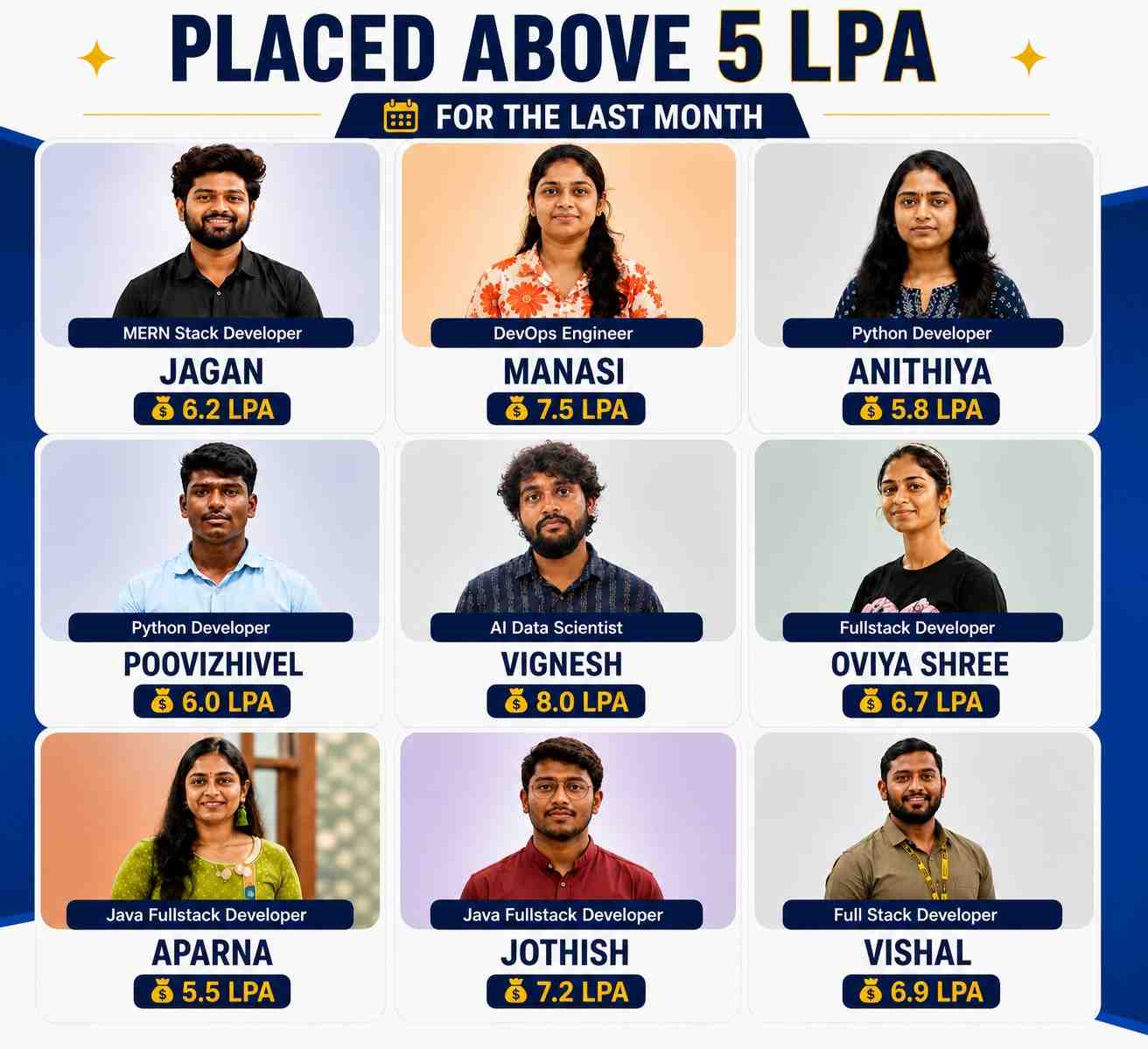
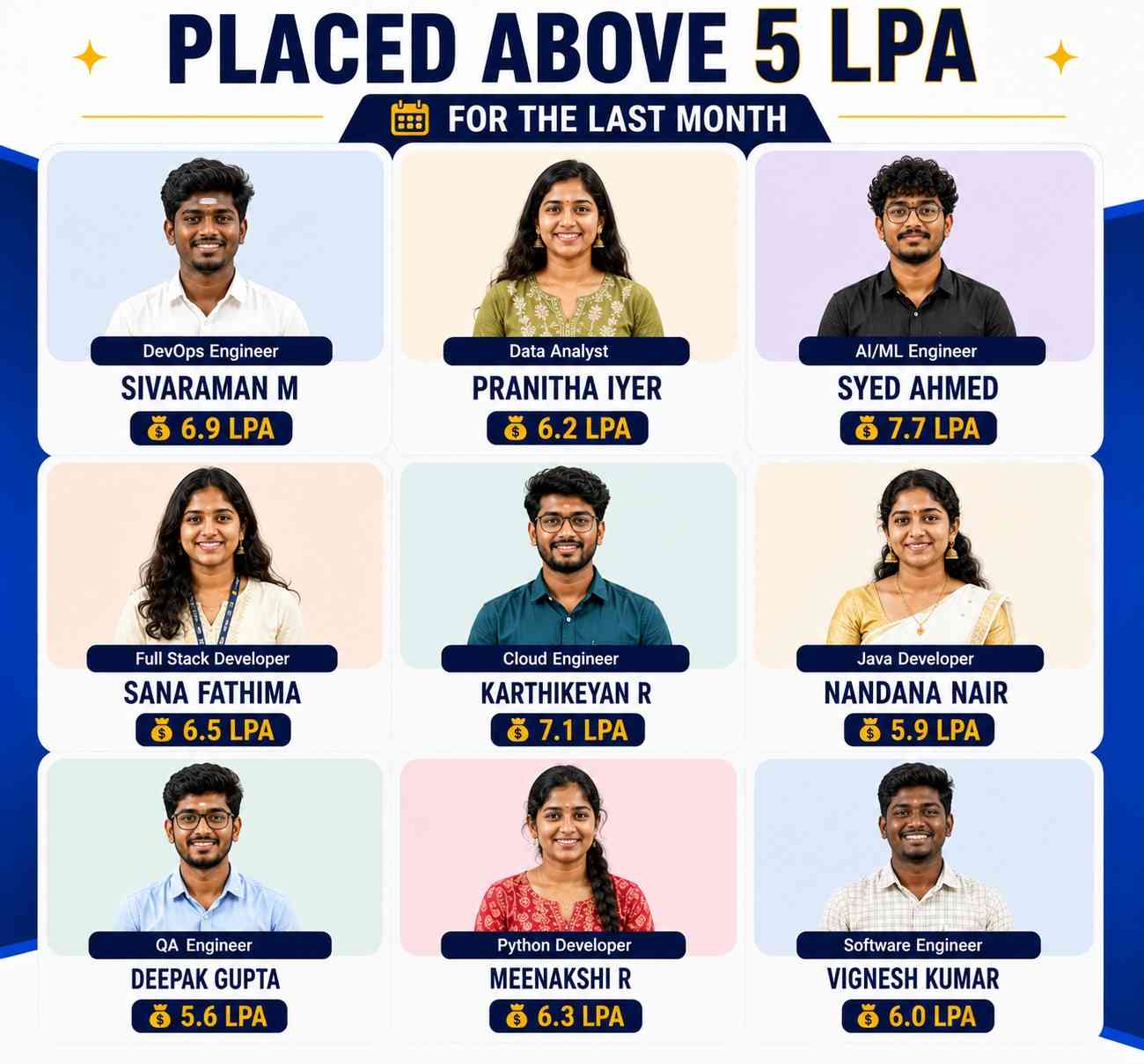
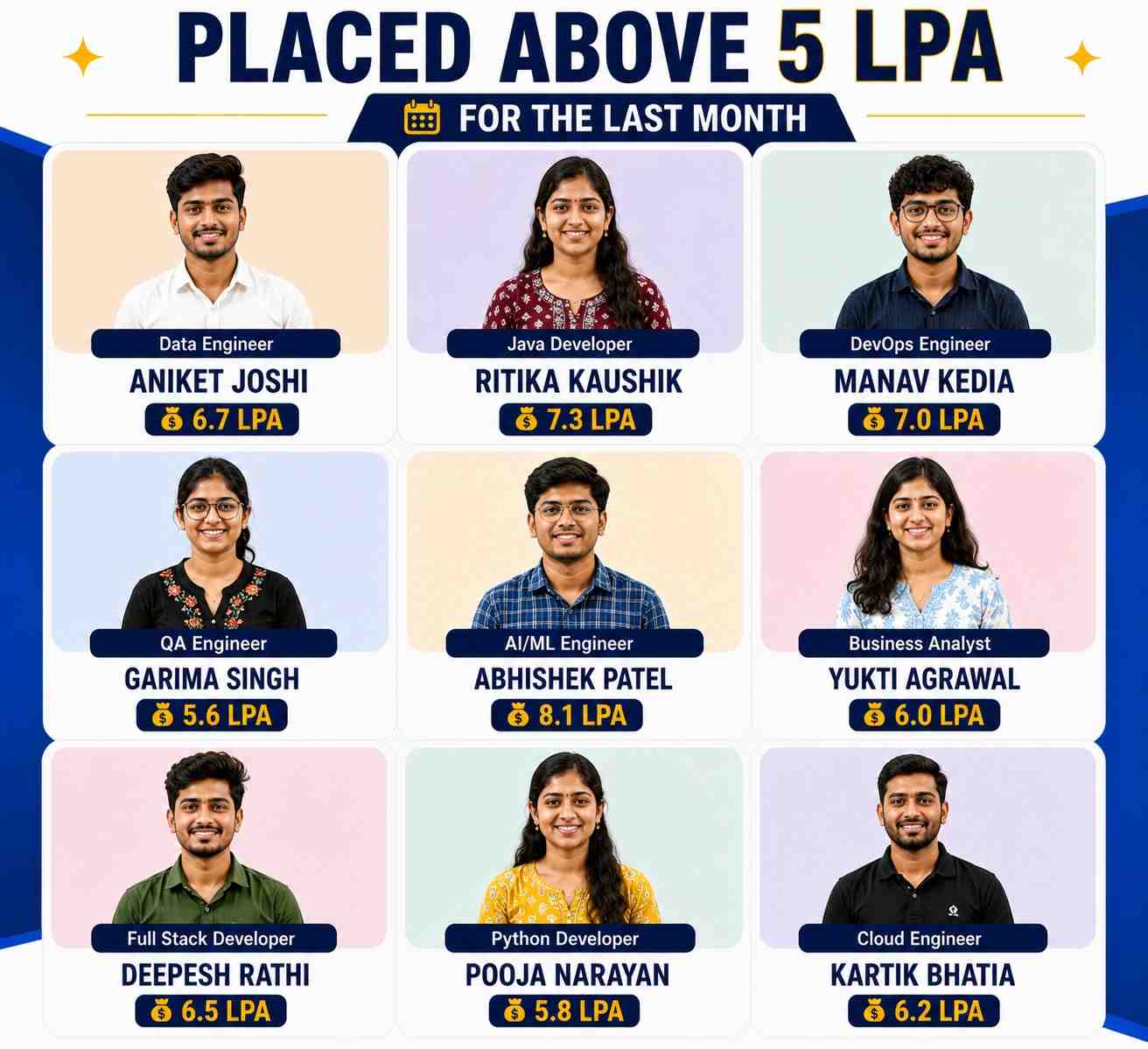
10526+

(Placed)
Freshers To IT

8152+

(Placed)
NON-IT To IT

7241+

(Placed)
Career Gap

4628+

(Placed)
Less Then 60%

Our Hiring Partners

Overview of the Microsoft Azure Course

The Microsoft Azure Training in Anna Nagar is designed for freshers want to start a career in cloud computing. This Microsoft Azure Course in Anna Nagar helps students learn the basics of cloud services, storage, virtual machines and networking in Azure. You will get step-by-step guidance from expert trainers and work on real-time projects to build practical skills. The course also includes hands-on labs and live sessions for better learning. Students can take part in Microsoft Azure Internships in Anna Nagar to gain industry experience. With 100% Microsoft Azure Placement support, you can easily land your first IT job. The training helps you prepare for global Azure certification exams. You will be prepared to begin a prosperous career in Microsoft Azure after completing this course.

What You'll Learn From Microsoft Azure Certification Course in Anna Nagar

Gain strong knowledge of cloud computing concepts and Microsoft Azure services through our Microsoft Azure Training in Anna Nagar, designed especially for beginners.

Learn how to manage and deploy virtual machines, databases and applications efficiently within the Azure environment.

Learn Azure is utilized in practical business solutions by gaining practical experience with real-time projects and case studies.

Master key topics like Azure storage, networking, identity management and automation for practical implementation.

Advance from basic cloud concepts to advanced Azure tools, improving your technical skills and job readiness.

Earn a globally recognized Microsoft Azure certification and open doors to top placement opportunities in leading companies.

Additional Info

Course Highlights

  • Kickstart Your Microsoft Azure Journey in Anna Nagar: Learn cloud computing, virtual machines, Azure storage, networking and deployment.
  • Get dedicated job support with placement opportunities from top companies hiring skilled Microsoft Azure professionals.
  • Join thousands of students trained and placed through our strong network of 350+ hiring partners across India.
  • Learn from certified Azure experts with over 10 years of real-time experience in cloud solutions and infrastructure management.
  • Enjoy beginner-friendly lessons, live projects and complete career guidance to build confidence at every step of your learning.
  • Benefit from affordable course fees, flexible weekday and weekend batches and 100% placement assistance ideal for freshers and career switchers.

Benefits You Gain from an Microsoft Azure Course in Anna Nagar

  • Better Career Growth – Learning Microsoft Azure helps you build a strong career in cloud computing. Many companies are moving to Azure, creating high demand for skilled professionals. You can work as a Cloud Engineer, Azure Administrator or Developer. It offers great job opportunities and career advancement for freshers and IT professionals.
  • Flexible and Scalable – Azure enables companies to adjust their resource levels in accordance with their requirements. This flexibility helps companies manage workloads easily without wasting money. Learners understand how cloud scaling works through real-time projects. It teaches how to manage applications smoothly even during heavy usage.
  • Affordable Cloud Platform – Microsoft Azure offers cost-effective plans suitable for all sizes of businesses. You only pay for the services you use, which reduces setup and maintenance costs. Students can use free Azure credits to practice and build projects. This makes Azure a smart choice for learning and professional growth.
  • Secure and Reliable – Azure follows advanced security standards to protect data and applications. It provides built-in tools for monitoring, encryption and threat detection. Learning Azure helps you understand how secure cloud environments work. You gain confidence in managing safe and reliable cloud systems.
  • Real-World Learning Experience – Microsoft Azure gives practical knowledge through live projects and case studies. Learn to design, deploy and manage real cloud-based applications. The course includes hands-on labs to improve your technical skills. This experience helps you handle real-world IT challenges effectively.

Important Tools Covered in Microsoft Azure Training

  • Azure Virtual Machines (VMs) – With Azure Virtual Machines, you can build and operate cloud-based computers just like a traditional PC. You can install software, host applications and test projects without buying physical hardware. VMs are flexible and can be scaled up or down based on your needs. This tool helps learners understand cloud computing in a practical way.
  • Azure Blob Storage – Large volumes of unstructured data, including as photos, movies and documents are stored in Azure Blob Storage. It is secure, cost-effective and easy to access from anywhere. This tool helps students learn how to manage and organize data in the cloud. Blob Storage is important for handling real-world business data efficiently.
  • Azure SQL Database – A cloud-based database solution called Azure SQL Database lets you safely store and handle data. It supports advanced features like automated backups, scaling and performance monitoring. Learners can practice queries, data analysis and database management in a real environment. This tool is essential for understanding cloud-based data solutions.
  • Azure DevOps – Azure DevOps is a tool that helps teams plan, build, test and deploy software projects efficiently. For quicker project completion, it offers pipelines for continuous integration and continuous delivery (CI/CD). Students can use this tool to understand real-world software development workflows. Azure DevOps improves teamwork and project management skills in cloud projects.
  • Azure Active Directory (AD) – One cloud-based solution for managing identity and access is Azure Active Directory. It helps manage user accounts, control access to applications and enhance security. Learners can practice managing roles and permissions for organizations safely. This tool is important for understanding how businesses secure cloud resources.

Must-Know Frameworks for Aspiring Microsoft Azure

  • NET Framework – Azure-based online, desktop and mobile apps are frequently developed using the.NET Framework. It enables programmers to write code in several languages including VB.NET and C#. Learning this framework helps you deploy applications smoothly on Azure services. It is essential for creating scalable and secure cloud applications.
  • ASP.NET Core – ASP.NET Core is a modern framework for building web applications and APIs on the cloud. It is lightweight, fast and works across different platforms like Windows and Linux. Using this framework on Azure helps developers create high-performance cloud apps. It is perfect for hosting enterprise-level applications and web services.
  • Node.js – Node.js is a JavaScript-based framework used for building fast and scalable server-side applications. It is widely supported on Azure for cloud deployment and microservices. Learning Node.js allows you to develop real-time apps, APIs and serverless functions on Azure. It is essential for modern cloud development and efficient resource management.
  • Python Django – Django is a Python-based web framework used to build secure and maintainable applications. It integrates well with Azure services for deploying web apps, databases and APIs. Learning Django helps beginners and developers manage backend logic and cloud deployment efficiently. It is ideal for building data-driven and scalable cloud applications.
  • Spring Boot – Spring Boot is a Java-based framework used to create enterprise-level applications quickly. It simplifies the deployment of Java applications on Azure by providing ready-to-use templates and services. Learning Spring Boot helps in building microservices and cloud-native apps efficiently. It is useful for Java developers working on large-scale Azure projects.

Essential Skills You’ll Learn in a Microsoft Azure Course

  • Cloud Computing Basics – In Microsoft Azure training, you will learn the fundamentals of cloud computing and how Azure works. This includes understanding cloud services, storage, virtual machines and networking. Gaining this skill helps you manage resources efficiently in the cloud. It is the foundation for all other advanced Azure skills.
  • Azure Deployment and Management – You will learn how to deploy applications, configure virtual machines and manage cloud resources effectively. This skill helps you set up real-world projects on Azure with ease. It teaches practical methods to monitor and maintain cloud environments. Learning deployment and management ensures smooth operation of cloud solutions.
  • Security and Compliance – Microsoft Azure training teaches you how to protect data and applications using built-in security tools. You learn about identity management, encryption and access control. This skill ensures that cloud resources are safe from threats and vulnerabilities. It is crucial for handling real business applications securely.
  • Automation and DevOps – You will gain knowledge of automating tasks and using DevOps tools for continuous integration and delivery on Azure. This skill helps in building efficient workflows and faster deployment of projects. It teaches how to save time and reduce errors in cloud operations. Automation and DevOps are essential for modern cloud computing jobs.
  • Real-Time Project Experience – Through Microsoft Azure training, you get hands-on experience working on live projects and case studies. This skill helps you apply theoretical knowledge to practical scenarios. It builds confidence in handling real business problems using Azure services. Real-time project experience is key to landing your first job in cloud computing.

Key Roles and Responsibilities of an Microsoft Azure Profession

  • Azure Cloud Administrator – An Azure Cloud Administrator manages and monitors cloud resources and services on the Azure platform. They configure virtual machines, storage accounts and networking components. Administrators ensure smooth performance, scalability and security of cloud systems. They also handle troubleshooting and maintenance to keep applications running efficiently.
  • Azure Developer – An Azure Developer designs and builds cloud-based applications using Azure services. They integrate APIs, develop web and mobile applications and deploy solutions on Azure infrastructure. Developers optimize performance and ensure applications meet business requirements. They also work closely with other teams to deliver secure and scalable cloud solutions.
  • Azure Solutions Architect – An Azure Solutions Architect plans and designs cloud infrastructure and architecture for organizations. They analyze business needs and create efficient, secure and cost-effective cloud solutions. Architects ensure seamless integration of applications, databases and networks. They guide development and operational teams to implement best practices in Azure deployment.
  • Azure DevOps Engineer – An Azure DevOps Engineer manages CI/CD pipelines and automates cloud workflows for faster deployment. They monitor application performance, implement security protocols and optimize cloud resources. DevOps Engineers collaborate with developers and administrators to streamline development cycles.
  • Azure Security Engineer – An Azure Security Engineer protects cloud systems, data and applications from threats and vulnerabilities. They implement identity management, encryption, firewalls and compliance standards. Security Engineers continuously monitor and respond to security incidents. Their responsibility is critical for maintaining secure and reliable cloud environments.

Why Microsoft Azure is a Great Career Option for Freshers

  • High Demand in IT Industry – One of the top most cloud systems utilized by businesses globally is Microsoft Azure. There is a tremendous need for qualified Azure specialists due to the increasing use of cloud services. Azure-trained new hires are more likely to find employment soon. Gaining knowledge of Azure gives doors to a variety of IT jobs and sectors.
  • Excellent Salary Packages – Azure professionals are offered attractive salary packages due to the specialized skills required. Companies value certified Azure experts for managing and deploying cloud solutions. Freshers can start their careers with competitive pay compared to other entry-level IT jobs. Strong Azure skills can lead to faster salary growth over time.
  • Hands-On Project Experience – Azure training provides real-time project exposure, helping freshers gain practical experience. Working on live projects builds confidence in cloud deployment and management. It teaches how to solve real-world business problems using Azure tools. This experience is highly valued by employers during recruitment.
  • Global Recognition – Microsoft Azure certifications are recognized worldwide, making it easier to find jobs in different countries. Employers trust certified professionals for their verified cloud skills and expertise. Freshers with Azure knowledge can explore international career opportunities. This global recognition increases career mobility and growth potential.
  • Versatile Career Opportunities – Azure skills allow freshers to work in various roles like Cloud Administrator, Developer, Solutions Architect or DevOps Engineer. The training covers multiple domains including security, networking and database management. This versatility ensures freshers can choose a career path that suits their interest. Learning Azure provides long-term career stability and growth.

Landing Remote Jobs with Microsoft Azure Skills

  • Cloud-Based Work Environment – Microsoft Azure is a cloud platform, so most tasks can be performed online from anywhere. This allows professionals to work remotely without being tied to a physical office. Knowledge of Azure enables managing virtual machines, databases and applications from home. It makes cloud roles highly suitable for remote work opportunities.
  • High Demand for Azure Experts – Many companies around the world are moving their operations to Azure. Remote management and upkeep of these cloud systems requires qualified experts. Azure expertise increases chances of landing remote jobs with reputed IT organizations. Employers prefer certified Azure professionals for efficient online collaboration and project handling.
  • Familiarity with Remote Collaboration Tools – Microsoft Azure training often includes tools like Azure DevOps, Teams and Git integration. These tools allow effective communication and project management in a remote environment. Professionals can collaborate with global teams and monitor cloud projects online. This makes Azure skills valuable for remote team-based work.
  • Flexibility in Cloud Projects – Azure skills allow handling multiple cloud services like virtual machines, storage and networking online. Professionals can deploy, monitor and troubleshoot cloud applications without visiting a company site. This flexibility makes remote job assignments easier to manage. It also supports freelance and contract-based cloud roles.
  • Competitive Edge in Remote Hiring – Having Microsoft Azure skills increases employability for remote IT roles. Many startups and global firms prefer cloud-certified professionals for remote projects. It provides an advantage over other candidates without cloud expertise. Azure knowledge opens doors to flexible, high-paying remote opportunities worldwide.

What to Expect in Your First Microsoft Azure Job

  • Hands-On Cloud Projects – The first Azure job involves working on real cloud projects, including deploying virtual machines, databases and applications. This helps in gaining practical experience with Azure tools and services. It allows learning by doing and understanding real-world cloud workflows. Early exposure to live projects builds confidence and technical skills.
  • Learning Company-Specific Processes – Every organization has unique cloud management processes and workflows. New Azure professionals need to understand these methods and adapt accordingly. This includes following guidelines for security, deployment and monitoring. Learning company-specific practices is crucial for smooth project execution and teamwork.
  • Collaboration with Teams – Working in an Azure role involves close coordination with developers, administrators and project managers. Team collaboration ensures cloud projects are deployed efficiently and securely. Communication tools and Azure DevOps are often used for managing tasks and progress. Strong teamwork skills are important for successful project delivery.
  • Continuous Learning – Azure technology evolves rapidly, so ongoing learning is part of every job. Professionals often explore new services, updates and best practices. This helps in staying relevant and improving cloud management skills. Growth and assuming more responsibility require a learning mindset.
  • Exposure to Security and Compliance – Ensuring data security and regulatory compliance is key responsibility in an Azure role. Professionals handle identity management, access control and data protection tasks. This provides practical knowledge of keeping cloud systems safe. Understanding security practices is critical for building trust and reliability in cloud solutions.

Top Companies are Hiring for Microsoft Azure Professionals

  • Microsoft – Microsoft, the company that created Azure, hires qualified experts to work on cloud services and solutions. Employees get to work on cutting-edge projects, including virtual machines, storage, AI and networking. Microsoft offers global exposure and excellent career growth for Azure experts. Working here provides hands-on experience with the latest cloud technologies.
  • Accenture – Accenture is a global IT consulting and services company that actively hires Azure professionals for cloud implementation and management. Employees work on client projects to design, deploy and maintain Azure-based solutions. Accenture provides training and certification support to improve technical skills. It is a great place for freshers to gain real-world cloud experience.
  • Infosys – Infosys, a leading IT services company, hires Azure-certified professionals for cloud development, migration and maintenance projects. Teams work on building scalable and secure cloud solutions for global clients. The company emphasizes continuous learning and certification growth. Freshers get exposure to diverse industries and cloud technologies.
  • Wipro – Wipro recruits Azure professionals to manage cloud infrastructure, implement applications and optimize services for clients. Employees gain experience in various Azure services like storage, virtual machines and DevOps tools. Wipro focuses on career development through training and mentorship programs. It provides hands-on project experience to strengthen cloud skills.
  • IBM – IBM hires Azure specialists to work on cloud integration, hybrid cloud solutions and enterprise-level deployments. Professionals contribute to building efficient and secure cloud architectures for businesses. IBM offers global exposure and advanced learning opportunities in Azure services. Freshers can gain valuable experience working on innovative cloud projects.
Show More

Upcoming Batches For Classroom and Online

Weekdays
01 - Dec - 2025
08:00 AM & 10:00 AM
Weekdays
03 - Dec - 2025
08:00 AM & 10:00 AM
Weekends
06 - Dec - 2025
(10:00 AM - 01:30 PM)
Weekends
07 - Dec - 2025
(09:00 AM - 02:00 PM)
Can't find a batch you were looking for?
INR ₹30680
INR ₹32000

OFF Expires in

Who Should Take a Microsoft Azure Course

IT Professionals

Non-IT Career Switchers

Fresh Graduates

Working Professionals

Diploma Holders

Professionals from Other Fields

Salary Hike

Graduates with Less Than 60%

Show More

Job Roles For Microsoft Azure Training

Azure Cloud Administrator

Azure Solutions Architect

Azure DevOps Engineer

Azure Data Engineer

Azure AI Engineer

Azure Security Engineer

Azure Cloud Consultant

Azure Integration Specialist

Show More

Tools Covered For Microsoft Azure Course in Offline

Azure Virtual Machines Azure Blob Storage Azure SQL Database Azure Active Directory Azure Kubernetes Service Azure DevOps Azure Functions Azure Logic Apps

What’s included ?

Convenient learning format

📊 Free Aptitude and Technical Skills Training

  • Learn basic maths and logical thinking to solve problems easily.
  • Understand simple coding and technical concepts step by step.
  • Get ready for exams and interviews with regular practice.
Dedicated career services

🛠️ Hands-On Projects

  • Work on real-time projects to apply what you learn.
  • Build mini apps and tools daily to enhance your coding skills.
  • Gain practical experience just like in real jobs.
Learn from the best

🧠 AI Powered Self Interview Practice Portal

  • Practice interview questions with instant AI feedback.
  • Improve your answers by speaking and reviewing them.
  • Build confidence with real-time mock interview sessions.
Learn from the best

🎯 Interview Preparation For Freshers

  • Practice company-based interview questions.
  • Take online assessment tests to crack interviews
  • Practice confidently with real-world interview and project-based questions.
Learn from the best

🧪 LMS Online Learning Platform

  • Explore expert trainer videos and documents to boost your learning.
  • Study anytime with on-demand videos and detailed documents.
  • Quickly find topics with organized learning materials.

Microsoft Azure Course Syllabus

  • 🏫 Classroom Training
  • 💻 Online Training
  • 🚫 No Pre Request (Any Vertical)
  • 🏭 Industrial Expert

Our Microsoft Azure Training in Anna Nagar offers a complete syllabus for beginners and aspiring cloud professionals. The Microsoft Azure Course in Anna Nagar covers core Azure concepts, virtual machines, storage, networking and cloud deployment. Gain practical experience through Microsoft Azure Internships and real-time projects. The course also includes Azure security, automation and database integration. Plus, dedicated placement support helps with resume building and interview preparation.

  • Introduction to Microsoft Azure – Learn the basics of cloud computing, including virtual machines, storage, networking and core Azure services.
  • Advanced Azure Services – Explore automation, DevOps, security, Azure Functions, App Services and SQL Database for scalable solutions.
  • Hands-On Projects – Work on real-time projects like cloud deployments, web apps and data storage to gain practical experience.
  • Azure Tools and Deployment – Deploy and manage applications using Azure Portal, CLI, PowerShell and DevOps pipelines efficiently.
Introduction to Microsoft Azure
Azure Environment Setup & Configuration
Core Azure Services
Azure Security & Compliance
Azure Integrations & Automation
Advanced Azure Topics
Azure Projects & Hands-on Practice

Forms the foundational knowledge to understand Microsoft Azure cloud technologies:

  • Overview of Microsoft Azure – History, evolution, cloud architecture and key services.
  • Cloud Computing Concepts – IaaS, PaaS, SaaS, public, private and hybrid cloud models.
  • Tools & Technologies – Azure Virtual Machines, Storage, Networking, Security and Monitoring.
  • Career Paths – Roles such as Azure Cloud Engineer, Solutions Architect, DevOps Engineer, Cloud Administrator.

Covers initial setup and core configuration:

  • Azure Tenant & Subscription Setup – Creating and managing Azure accounts, subscriptions and resource groups.
  • Virtual Networks & Subnets – Designing secure network architecture and connectivity.
  • User & Role Management – Configuring Azure Active Directory, roles and permissions.
  • Resource Configuration – Deploying VMs, storage accounts and basic services.

Deep dive into essential cloud services:

  • Compute Services – Managing Virtual Machines, App Services and Containers.
  • Storage Solutions – Azure Blob, File, Queue and Disk storage management.
  • Networking – Virtual Networks, VPN Gateway, Load Balancer and NSG configurations.
  • Security & Identity – Configuring Azure AD, MFA and role-based access control.

Learn to secure and maintain Azure cloud environments:

  • Security Policies & RBAC – Implementing identity and access management.
  • Compliance & Governance – Ensuring ISO, GDPR and internal compliance standards.
  • Monitoring & Reporting – Using Azure Monitor, Log Analytics and Security Center.
  • Resource Optimization – Cost management, alerts and best practices.

Understand enterprise integration and workflow automation:

  • Azure Logic Apps & Functions – Automating tasks and business workflows.
  • APIs & SDKs – Using Azure REST APIs and SDKs for integration.
  • Third-party Integrations – Connecting Azure with on-premises systems, SaaS apps and DevOps tools.
  • Monitoring & Analytics Tools – Dashboards, alerts and custom reporting.

Focus on emerging and specialized skills:

  • Advanced Networking & Security – Virtual WAN, Application Gateway, advanced firewall setup.
  • Cloud Analytics – Using Azure Synapse, Power BI and Log Analytics for insights.
  • Hybrid & Multi-cloud Solutions – Managing Azure Stack and cross-cloud deployments.
  • Advanced Automation – Implementing Infrastructure as Code (IaC) with ARM templates and Terraform.

Apply all skills learned in real-world scenarios:

  • Real-time Projects – Deploying VMs, storage, networks and cloud applications.
  • Security & Compliance Audits – Validating policies, access controls and resource compliance.
  • Monitoring & Dashboards – Creating Azure Monitor dashboards and analytics reports.
  • Scenario-based Exercises – Simulating enterprise cloud challenges and resolving them using Azure tools.

🎁 Free Addon Programs

Aptitude, Spoken English.

🎯 Our Placement Activities

Daily Task, Soft Skills, Projects, Group Discussions, Resume Preparation, Mock Interview.

Get Practical Experience in Microsoft Azure Projects

Placement Support Overview

Today's Top Job Openings for Microsoft Azure Training in Anna Nagar

Azure Cloud Engineer

Company Code : CTS540

Chennai, Tamil Nadu

₹30,000 – ₹55,000 a month

Any Degree

Exp 0-3 yrs

  • We’re hiring an Azure Cloud Engineer to deploy and manage cloud infrastructure including VMs, Storage and Networking. Strong skills in Azure Portal, security and resource management are required.
  • Easy Apply

    Azure Solutions Architect

    Company Code : FSG409

    Chennai, Tamil Nadu

    ₹32,000 – ₹55,000 a month

    Any Degree

    Exp 0-2 yrs

  • Join us as an Azure Solutions Architect to design scalable cloud solutions, ensure security compliance and optimize workloads. You’ll collaborate with clients to implement enterprise cloud strategies.
  • Easy Apply

    Azure DevOps Engineer

    Company Code : CHT433

    Chennai, Tamil Nadu

    ₹28,000 - ₹50,000 a month

    Any Degree

    Exp 0-3 yrs

  • We are hiring an Azure DevOps Engineer to manage CI/CD pipelines, automate deployments and monitor cloud infrastructure. Expertise in Azure DevOps, pipelines and scripting is essential.
  • Easy Apply

    Azure Integration Specialist

    Company Code : TSN106

    Chennai, Tamil Nadu

    30,000 to ₹52,000 a month

    Any Degree

    Exp 0-2 yrs

  • Seeking an Azure Integration Specialist to design and maintain integrations between Azure services and third-party systems using Logic Apps, Functions and APIs.
  • Easy Apply

    Azure Implementation Engineer

    Company Code : NCS507

    Chennai, Tamil Nadu

    ₹32,000 - ₹55,000 a month

    Any Degree

    Exp 0-3 yrs

  • Become an Azure Implementation Engineer to gather client requirements, deploy cloud solutions and configure services. To guarantee a smooth implementation, cooperate with technical teams.
  • Easy Apply

    Azure Analytics & Monitoring Specialist

    Company Code : DCI710

    Chennai, Tamil Nadu

    ₹33,000 - ₹50,000 a month

    Any Degree

    Exp 0-3 yrs

  • We’re looking for an Azure Analytics & Monitoring Specialist to create dashboards, track performance and provide actionable insights using Azure Monitor, Log Analytics and Power BI.
  • Easy Apply

    Azure Operations Engineer

    Company Code : CPL114

    Chennai, Tamil Nadu

    ₹30,000 - ₹50,000 a month

    Any Degree

    Exp 0-2 yrs

  • Hiring an Azure Operations Engineer to monitor cloud performance, troubleshoot issues and optimize resource usage. You’ll ensure uptime, cost efficiency and maintain security standards.
  • Easy Apply

    Azure Security & Compliance Specialist

    Company Code : PFS440

    Chennai, Tamil Nadu

    ₹35,000 - ₹55,000 a month

    Any Degree

    Exp 0-3 yrs

  • Join as an Azure Security & Compliance Specialist to implement security policies, manage identity access and monitor compliance across cloud resources. Strong knowledge of Azure Security Center is required.
  • Easy Apply

    Internship Highlights for Microsoft Azure

    Real-Time Projects

    • 1. Gain hands-on experience by working on live industry-based applications.
    • 2. Understand real-world problem-solving through Microsoft Azure scenarios.
    Book Session

    Skill Development Workshops

    • 1. Participate in focused sessions on trending technologies and tools.
    • 2. Learn directly from industry experts through guided practical exercises.
    Book Session

    Employee Welfare

    • 1. Enjoy benefits like health coverage, flexible hours, and wellness programs.
    • 2. Companies prioritize mental well-being and work-life balance for all employees.
    Book Session

    Mentorship & Peer Learning

    • 1. Learn under experienced mentor guide your technical and career growth.
    • 2. Collaborate with peers to enhance learning through code reviews and group projects.
    Book Session

    Soft Skills & Career Readiness

    • 1. Improve communication, teamwork, and time management skills.
    • 2. Prepare for interviews and workplace dynamics with mock sessions and guidance.
    Book Session

    Certification

    • 1. Earn recognized credentials to validate your Microsoft Azure skills.
    • 2. Boost your resume with course or project completion certificates from reputed platforms.
    Book Session

    Sample Resume for Microsoft Azure (Fresher)

    • 1. Simple and Neat Resume Format

      Use a clean layout with clear sections like summary, skills, education, and projects.

    • 2. List of Technologies You Know

      Mention skills like Azure Virtual Machines, Azure Storage, Azure Networking, Azure Active Directory, Azure DevOps.

    • 3. Real-Time Projects and Achievements

      Add 1–2 real-time projects with a short description and the tools used.

    Top Microsoft Azure Interview Questions and Answers (2025 Guide)

    Ans:

    Computing, storage and networking are just a few of the many cloud services that Microsoft Azure provides. Unlike traditional infrastructure, it works on a demand-based model without requiring large hardware investments. Resources scale automatically, providing flexibility and cost efficiency. Its global deployment reduces latency and eliminates the need for managing physical servers.

    Ans:

    An Azure Resource Group is logical container that organizes related resources such as virtual machines, databases and storage accounts. Grouping resources simplifies management, monitoring and access control. It also helps in controlling costs by managing resources collectively. Resource Groups are a key part of Azure’s structured approach to resource management.

    Ans:

    Azure manages governance using Role-Based Access Control (RBAC), Azure Policy and Management Groups. RBAC make sure users have access only to the resources appropriate for their role. Azure Policy enforces organizational standards automatically, while Management Groups allow policies to be applied consistently across multiple subscriptions. These tools improve security, compliance and resource management efficiency.

    Ans:

    High availability in Azure is achieved using Availability Zones, Availability Sets and Load Balancers. Availability Zones distribute resources across multiple physical locations to avoid single points of failure. Load Balancers ensure traffic is directed only to healthy instances. Combined with global infrastructure and automated replication, these features maintain uptime even during maintenance or unexpected failures.

    Ans:

      Azure Virtual Machines provide scalable, on-demand computing resources to run applications and operating systems in the cloud. Depending on the needs, virtual machines (VMs) can be configured with different CPU, memory and storage options. They support multiple operating systems, including Windows, Linux and custom images. VMs are suitable for workloads ranging from development environments to full-scale production applications.

    Ans:

    An Azure Subscription acts as a container for all resources and services tied to an account. Billing is determined based on the usage of these resources, which can vary depending on service type and environment. Subscriptions allow separate setups for development, testing and production. Different pricing models can be applied, enabling accurate cost management at organizational levels.

    Ans:

    An Azure VM Scale Set provides high availability and automatically adjusts resources based on workload demands. It distributes traffic across multiple VMs and ensures optimal resource utilization, reducing costs. Scale Sets are ideal for applications with variable traffic patterns. They simplify management through automated updates and maintenance, keeping all instances secure and up-to-date.

    Ans:

    Automation in Azure uses tools like Azure Automation, Desired State Configuration (DSC) and Azure DevOps pipelines. Tasks such as scaling, patching and monitoring VMs can be scripted for efficiency. Azure Logic Apps and Functions enable workflow automation. Automation reduces errors, improves consistency and ensures reliable resource management without manual intervention.

    Ans:

    Azure Kubernetes provides a fully managed container orchestration solution for containerized application deployment and management. It automates cluster creation, scaling, monitoring and updates. AKS integrates with Azure DevOps and other tools simplifying the management of complex container workloads. This facilitates the development, deployment and upkeep of applications in hybrid cloud environments.

    Ans:

    Azure Virtual Machine Additions are tiny programs that improve virtual machine (VM) capabilities by automating post-deployment configuration and management. They can install security patches, monitoring agents or backup services without redeploying the VM. Common examples include diagnostics tools, security software and custom scripts. Extensions simplify maintenance and reduce administrative effort for VMs.

    Company-Specific Interview Questions from Top MNCs

    1. How do Azure IaaS and PaaS differ?

    Ans:

    Azure Infrastructure as a Service (IaaS) delivers important computing resources like virtual machines, networking and storage, allowing complete control to configure and manage them. Platform as a Service (PaaS) provides fully managed environment for building, deploying and integrating applications without worrying about the underlying infrastructure. While IaaS offers flexibility for customized configurations, PaaS streamlines management and speeds up development process.

    2. What are Azure CLI and PowerShell and how are they different?

    Ans:

    Azure CLI is a lightweight, cross-platform command-line tool that allows managing Azure resources using simple commands. Azure PowerShell is designed for Windows and uses cmdlets for advanced automation and scripting. CLI is quick and user-friendly for basic tasks, whereas PowerShell provides deeper control for complex automation scenarios.

    3. How does monitoring and analytics work in Azure?

    Ans:

    Azure Monitor and Log Analytics track metrics, collect logs and visualize resource performance. These tools detect issues, generate dashboards and provide insights in real-time. Monitoring and analytics help optimize costs, improve reliability and maintain compliance across cloud applications and infrastructure.

    4. What types of data can Azure handle?

    Ans:

    Azure supports structured data with SQL Database, unstructured data with Blob Storage, semi-structured data with Cosmos DB and large-scale analytics using Data Lake. It also provides secure backups and archives for enterprise workloads. This variety enables handling diverse datasets for analytics, storage and business applications.

    5. What is the difference between Azure Resource Groups and Subscriptions?

    Ans:

    A Resource Group is a logical container that organizes related resources such as virtual machines and storage accounts. A Subscription defines billing, quotas and overall governance for the resources. While Resource Groups help manage and monitor resources efficiently, Subscriptions control costs and usage limits for an organization.

    6. Why are activation functions critical in building neural networks?

    Ans:

    Activation functions introduce non-linear capabilities into neural networks, enabling them to capture and learn complex relationships within data. Functions like ReLU, Sigmoid and Tanh help networks make sophisticated decisions beyond simple linear predictions. These functions are vital in tasks such as visual recognition, language interpretation and voice pattern analysis, where intricate data processing is essential.

    7. What are Azure Virtual Networks and why are they important?

    Ans:

    Azure Virtual Networks (VNets) connect cloud resources securely, enabling communication between virtual machines, databases and on-premises systems. They support isolation, segmentation and secure access controls. VNets are crucial for maintaining reliable and secure connectivity within cloud environments.

    8. What is the difference between Azure Backup and Site Recovery?

    Ans:

    Azure Backup creates secure copies of data for restoration in case of deletion or corruption. Azure Site Recovery ensures business continuity by replicating workloads to a secondary region. Backup focuses on data recovery, while Site Recovery maintains operational continuity during outages.

    9. How does Azure handle alerts and notifications?

    Ans:

    Azure Monitor generates alerts for performance degradation, security risks or budget limits. Email, SMS or integrated systems can all be used to send notifications. This enables administrators to take timely actions to resolve issues and maintain smooth operations in the cloud.

    10. What are Azure Policies and Role-Based Access Control (RBAC)?

    Ans:

    Azure Policies enforce compliance rules, such as allowed regions or VM sizes, across resources. Role-Based Access Control (RBAC) defines user permissions for accessing and managing resources. Policies maintain organizational standards, while RBAC ensures only authorized users can perform specific actions.

    1. How do Azure IaaS, PaaS and SaaS differ from each other?

    Ans:

    Azure IaaS provides infrastructure services such as virtual machines, storage and networking, offering full control over resources. PaaS delivers a managed platform for building and deploying applications without worrying about underlying servers. SaaS provides ready-to-use applications accessible via the cloud. Each model addresses distinct business requirements and use cases.

    2. What methods are used to secure resources in Azure?

    Ans:

    Cloud resources in Azure are secured through identity and access management, multi-factor authentication and encryption of data at rest and in transit. Network Security Groups control traffic and Azure Security Center continuously monitors compliance and vulnerabilities. These practices ensure data protection and strengthen overall cloud security.

    3. What types of Azure accounts exist and when should access be limited?

    Ans:

    Azure accounts include subscription owners, contributors and readers, each with different permissions. Access should be restricted for inactive users, temporary contractors or accounts with excessive privileges. Stronger security and a lower chance of unwanted access are ensured by using the least privilege principle.

    4. How does auditing and activity tracking work in Azure?

    Ans:

    Auditing in Azure is managed through Activity Logs, Azure Monitor and Azure Security Center. These tools track changes to resources, policy updates and access attempts. Reviewing logs helps detect anomalies, maintain compliance and improve accountability within cloud operations.

    5. What is an Azure Resource Group and why is it important?

    Ans:

    A Resource Group is a logical container that organizes related resources such as virtual machines, databases and storage accounts. It simplifies deployment, monitoring and management of resources. Resource Groups ensure consistent organization, lifecycle control and efficient handling of cloud assets.

    6. What are Role-Based Access Control (RBAC) and Azure Policies?

    Ans:

    RBAC defines precise access permissions for users, groups or applications,while Azure Policies enforce organizational rules such as allowed regions or resource types. Together, these tools secure cloud resources, ensure compliance and maintain consistent governance across subscriptions.

    7. How does Azure handle exceptions during deployments?

    Ans:

    Exception handling in Azure uses automation scripts, custom policies and rollback strategies to manage failed deployments. Controlled exceptions allow systems to maintain stability while accommodating special business requirements. This ensures deployments remain reliable and resilient.

    8. What is performance monitoring in Azure?

    Ans:

    Performance monitoring is conducted using Azure Monitor and Application Insights, which track resource health, latency and performance bottlenecks. These insights help optimize workloads, detect issues proactively and maintain uninterrupted services. Monitoring ensures efficient operation of cloud applications.

    9. How does an Azure Administrator account differ from a regular user account?

    Ans:

    Regular user accounts have limited access to assigned resources, whereas Azure Administrator accounts possess elevated rights to manage subscriptions, resources and security settings. Admin accounts require strict security controls to prevent unauthorized actions and maintain cloud governance.

    10. What are the main components of Microsoft Azure and why are they important?

    Ans:

    Key Azure components include Virtual Machines, Networking, Storage, Databases and Azure DevOps. These services offer the framework for developing, implementing and expanding cloud applications. They enable businesses to operate securely and efficiently while supporting modern cloud workloads.

    1. How do Azure Virtual Machines, App Service and Functions differ?

    Ans:

    Azure Virtual Machines provide complete control over the operating system and underlying infrastructure, allowing custom configurations. Azure App Service offers a managed environment to host web applications without managing servers. Azure Functions run serverless, event-driven code for lightweight, on-demand tasks. Each service caters to different workloads and development needs.

    2. What is the difference between Azure Monitor and Azure Automation?

    Ans:

    Azure Monitor collects metrics, logs and performance data to provide insights into application and resource health. Azure Automation handles repetitive tasks such as patching, scaling and workflow execution. While Monitor informs decision-making Automation executes actions to improve efficiency and operational consistency.

    3. What is the role of Azure Active Directory (Azure AD)?

    Ans:

    Azure Active Directory manages user identities, authentication and single sign-on for both Microsoft and third-party applications. It enforces role-based access controls and secures application access. Azure AD serves as the core identity management system for secure operations in the cloud.

    4. What is an Azure Resource Group?

    Ans:

    Virtual machines, storage accounts and networking components are examples of connected resources that are arranged logically in Resource Groups. It simplifies deployment, monitoring and management within an Azure subscription. Resource Groups ensure efficient lifecycle control and structured resource organization.

    5. How does an Azure Policy differ from an RBAC role?

    Ans:

    Azure Policy enforces organizational rules, such as restricting specific resource types or regions. Role-Based Access Control (RBAC) determines what actions a user, group or application can perform on resources. Policies maintain compliance standards while RBAC ensures proper access permissions.

    6. What is the difference between an Azure Tenant and a Subscription?

    Ans:

    An Azure Tenant represents an Azure Active Directory instance containing users, groups and identities. A Subscription manages billing, resources and usage limits associated with that tenant. Tenants focus on identity and authentication whereas subscriptions handle resource allocation and cost management.

    7. What is auditing in Azure?

    Ans:

    Auditing tracks all activities related to Azure resources, including creation, modifications and access attempts. Activity Logs and Azure Monitor provide visibility into changes, ensuring accountability, compliance and security monitoring across the environment.

    8. What types of integrations does Azure support?

    Ans:

    Azure integrates seamlessly with on-premises systems, DevOps pipelines, databases, ERP solutions and third-party applications. These integrations enable hybrid cloud setups, automated workflows and smooth data exchange between various platforms.

    9. How do Azure Automation and reporting differ?

    Ans:

    Azure Automation executes scripts and workflows to manage resources, scale infrastructure and maintain consistent operations. Reporting, using Azure Monitor and Power BI, provides visualization of performance, usage patterns and compliance. Automation takes action while reporting delivers insights for informed decisions.

    10. What is an Azure Role?

    Ans:

    An Azure Role is a set of permissions defined under RBAC that determines the actions a user, group or application can perform. Roles secure cloud resources, manage access control and ensure organizational compliance in managing Azure environments.

    1. What is Microsoft Azure?

    Ans:

    Microsoft Azure is the cloud computing platform offering services such as networking, storage, artificial intelligence and computing. It provides businesses with scalable, secure and flexible solutions for building, deploying and managing applications. Azure operates on the global network of data centers, enabling reliable and efficient cloud operations.

    2. How do Azure Virtual Machines differ from App Service?

    Ans:

    Azure Virtual Machines provide full control over the operating system and underlying infrastructure, making them suitable for custom workloads. Azure App Service delivers a managed platform to host web applications without managing servers. While VMs allow complete customization, App Service simplifies deployment and management of applications.

    3. What is an Azure Subscription?

    Ans:

    An Azure Subscription acts as a logical container for resources such as virtual machines, storage and databases. It links resources to billing and defines access control. Multiple subscriptions can be used to separate environments for development, testing and production, ensuring better organization and cost management.

    4. How does a User Account differ from an Admin Account in Azure?

    Ans:

    User Accounts provide standard access to assigned resources and applications, allowing basic operations. Admin Accounts have elevated permissions to manage resources, configure services and enforce policies. Admin roles require stricter security measures to protect sensitive operations and maintain cloud governance.

    5. What are Azure Roles and Role-Based Access Control (RBAC)?

    Ans:

    Azure Roles define permissions for users, including roles like Reader, Contributor or Owner. RBAC applies these roles to control who can view, edit or manage resources. Proper assignment of roles ensures secure access while following the principle of least privilege across the Azure environment.

    6. What is an Azure Resource Group?

    Ans:

    A Resource Group is a logical container used to organize related Azure resources such as virtual machines, storage accounts and databases. It simplifies management, access control and billing for grouped resources. Resource Groups improve visibility, consistency and efficient lifecycle management of cloud assets.

    7. How does an Azure Tenant differ from a Subscription?

    Ans:

    An Azure Tenant represents an organization’s instance of Microsoft Entra ID (formerly Azure AD), managing users and identities. A Subscription is linked to a Tenant and provides access to Azure services while controlling billing and resource usage. Tenants focus on identity management, while Subscriptions manage and allocate resources.

    8. What is the purpose of an Azure Policy?

    Ans:

    Azure Policies enforce organizational standards, security rules and resource governance. They control what resources can be deployed, maintain compliance and ensure consistent configurations across environments. Policies automate compliance management, helping organizations meet regulatory and internal standards efficiently.

    9. What is Azure Monitor?

    Ans:

    Azure Monitor collects metrics, logs and telemetry to provide insights into application performance, infrastructure health and resource utilization. It helps detect issues, optimize resource usage and ensure reliable operations. Monitoring strengthens observability and allows proactive management of cloud workloads.

    10. How does on-premises IT differ from cloud management in Azure?

    Ans:

    On-premises IT relies on physical servers, manual scaling and in-house security management. Azure offers on-demand scalability, automated updates, global availability and built-in compliance. Cloud management reduces costs, increases operational flexibility and accelerates innovation compared to traditional IT environments.


    1. What is Microsoft Azure and why is it significant?

    Ans:

    Microsoft Azure is cloud computing platform offering infrastructure, applications, storage, networking and AI services. It allows organizations to scale operations efficiently, reduce IT expenses and accelerate innovation. Azure provides a secure, reliable and flexible environment essential for modern cloud-based solutions.

    2. How can workloads be optimized in Microsoft Azure?

    Ans:

    Workloads can be optimized by implementing auto-scaling to meet demand, configuring Azure Monitor for performance tracking and using Azure Advisor for recommendations. Storage tiers can be adjusted and security best practices applied to ensure cost efficiency and high performance. Optimization improves reliability while managing resources effectively.

    3. What is an Azure Virtual Machine (VM) and when should it be used?

    Ans:

    An Azure Virtual Machine is a cloud-based server offering on-demand computing resources. VMs are suitable when full control over the operating system, custom applications or legacy software is needed. They are ideal for development, testing environments or lift-and-shift migrations to the cloud.

    4. What is the purpose of an Azure Resource Group?

    Ans:

    A Resource Group is the logical container that organizes Azure resources such as virtual machines, databases and networks. It simplifies deployment, management and monitoring of resources collectively. Resource Groups also help track costs and maintain consistent lifecycle management across the cloud environment.

    5. How do Azure Storage and Azure SQL Database differ?

    Ans:

    Azure Storage provides scalable object, file and disk storage for unstructured and semi-structured data. A fully managed relational database solution for transactional workloads and structured data is Azure SQL Database. Together they enable efficient storage and management of enterprise data in the cloud.

    6. What is Azure Active Directory (Azure AD)?

    Ans:

    Azure AD is cloud-based service for managing identity and access. It handles user authentication, role management and secures applications with single sign-on and multi-factor authentication. Azure AD ensures safe access to both on-premises and cloud-based resources while maintaining strong security controls.

    7. How is monitoring implemented in Microsoft Azure?

    Ans:

    Monitoring in Azure uses tools like Azure Monitor and Log Analytics to track resource health, performance and security. It detects issues, provides insights and helps optimize workloads. Continuous monitoring ensures reliability, reduces downtime and supports efficient cloud operations.

    8. What is the difference between a Virtual Network (VNet) and a Subnet in Azure?

    Ans:

    A Virtual Network defines the private network space within Azure, enabling secure communication between resources. A Subnet is a segmented portion of that network, used to organize and isolate workloads. VNets manage overall connectivity, while Subnets ensure structured and secure resource segmentation.

    9. What is an Azure Alert or Notification?

    Ans:

    Azure Alerts notify administrators about performance issues, security risks or resource utilization. Email, SMS or integrated systems can all be used to send notifications. Alerts enable timely responses to incidents, ensuring workloads remain secure, healthy and efficient.

    10. What is an Audit Log in Microsoft Azure?

    Ans:

    An Audit Log records user activities, administrative actions and system changes within Azure. It supports compliance, governance and security investigations by providing visibility into operations. Audit Logs allow tracking of who performed what actions and when, ensuring accountability across resources.

    Disclaimer Note:

    The details mentioned here are for supportive purposes only. There are no tie-ups or links with the corresponding PGs.

    Ladies PG Accommodation

      Velachery
    • Sanz Live Women's PG : 72007 19990
    • Krishnaveni Castle : 90801 95007
    • Anna Nagar
    • Pentos Women's PG : 93427 57797
    • Women's Nest - Ladies PG : 94451 25894
    • OMR
    • MSR Luxury PG : 89399 91922
    • Porur
    • Sree Shakthi Ladies Hostel : 90031 98767
    • Friends Ladies Hostel : 73389 19836
    • Tambaram
    • CK HIVE Girls Ladies PG90948 58303
    • Layaa Women’s Hostel63797 00573

    Mens PG Accommodation

      Velachery
    • Stayflix PG for Men's : 96000 45088
    • DJ Men's PG Velachery : 90803 19242
    • Anna Nagar
    • Stay Inn Men's Hostel(PG) : 94454 87884
    • Brights Boys Hostel : 88387 88921
    • OMR
    • Sree Siddhi Vinayaka Mens PG : 95577 95579
    • Rudhra Men’s PG : 93636 45199
    • Porur
    • SIDDHANS Men's PG : 88259 71908
    • Jaswanth Raaj Mens PG : 89255 15888
    • Tambaram
    • Sri Sai Grn Men's PG : 81228 24076
    • Rolexx Men's PG : 80988 84848

    Top MicroSoft Azure Job Opportunities for Freshers

    • 1. Workday HCM Jobs at Startups and IT Companies
    • 2. Campus Placements and IT Service Jobs
    • 3. Internship-to-Job Programs
    • 4. Apply Through Job Portals
    • 5. Skills That Help You Get Hired

    Getting Started With MicroSoft Azure in Anna Nagar

    No Coding
    8 Lakhs+ CTC
    No Work Pressure
    WFH Jobs (Remote)

    Why Microsoft Azure is the Ultimate Career Choice

    High Demand

    Companies prefer multi-skilled professionals who can handle entire project cycles.

    Global Opportunities

    Open doors to remote and international job markets.

    High Salary

    Enjoy competitive salaries and rapid career advancement.

    Flexible Career Path

    Explore roles such as developer, architect, freelancer, or entrepreneur.

    Future-Proof Career

    Stay relevant with skills that are consistently in demand in the evolving tech landscape.

    Versatility Across Industries

    Work in various domains like e-commerce, healthcare, finance, and more.

    Career Support

    Placement Assistance

    Exclusive access to ACTE Job portal

    Mock Interview Preparation

    1 on 1 Career Mentoring Sessions

    Career Oriented Sessions

    Resume & LinkedIn Profile Building

    Get Advanced Microsoft Azure Certification

    You'll receive a certificate proving your industry readiness.Just complete your projects and pass the pre-placement assessment.This certification validates your skills and prepares you for real-world roles.

    • Azure Solutions Architect Expert
    • Azure Security Engineer Associate
    • Azure AI Engineer Associate
    • Azure Data Engineer Associate
    • Azure DevOps Engineer Expert

    Earning a Microsoft Azure certification guarantees better job opportunities in cloud computing and IT roles. It validates essential cloud skills, increases professional credibility and positions candidates as highly employable in the industry. Employers actively seek certified professionals for immediate roles.

    The duration depends on the individual’s prior knowledge and the level of certification. Beginners pursuing the Azure Fundamentals may require 4 to 6 weeks of consistent study, while advanced certifications such as Solutions Architect or DevOps Engineer can take 3 to 6 months. Hands-on practice, prior experience and lab exercises all influence preparation time.

    Obtaining an AI certification offers numerous career and professional growth benefits, such as:

    • Validates cloud computing skills and Azure knowledge
    • Enhances employment prospects in IT and cloud roles
    • Increases salary potential and career advancement opportunities
    • Builds trust and credibility with employers and clients
    • Provides access to the Microsoft Certified professional network and learning resources
    • Review the official Microsoft Azure exam guide thoroughly
    • Enroll in structured training courses and follow online tutorials
    • Practice with the Azure free tier and hands-on labs for real-world experience
    • Study Microsoft Learn materials and official documentation
    • Take practice tests to evaluate readiness and identify areas for improvement

    Complete Your Course

    A Downloadable Certificate in PDF Format, Immediately Available to You When You Complete Your Course.

    Get Certified

    A Physical Version of Your Officially Branded and Security-Marked Certificate.

    Get Certified

    Lowest Microsoft Azure Course Fees in Anna Nagar

    Affordable, Quality Training for Freshers to Launch IT Careers & Land Top Placements.

    Call Course Advisor

    How Is ACTE's Microsoft Azure Course in Anna Nagar Different?

    Feature

    ACTE Technologies

    Other Institutes

    Affordable Fees

    Competitive Pricing With Flexible Payment Options.

    Higher Microsoft Azure Fees With Limited Payment Options.

    Industry Experts

    Well Experienced Trainer From a Relevant Field With Practical Microsoft Azure Training

    Theoretical Class With Limited Practical

    Updated Syllabus

    Updated and Industry-relevant Microsoft Azure Course Curriculum With Hands-on Learning.

    Outdated Curriculum With Limited Practical Training.

    Hands-on projects

    Real-world Microsoft Azure Projects With Live Case Studies and Collaboration With Companies.

    Basic Projects With Limited Real-world Application.

    Certification

    Industry-recognized Microsoft Azure Certifications With Global Validity.

    Basic Microsoft Azure Certifications With Limited Recognition.

    Placement Support

    Strong Placement Support With Tie-ups With Top Companies and Mock Interviews.

    Basic Placement Support

    Industry Partnerships

    Strong Ties With Top Tech Companies for Internships and Placements

    No Partnerships, Limited Opportunities

    Batch Size

    Small Batch Sizes for Personalized Attention.

    Large Batch Sizes With Limited Individual Focus.

    LMS Features

    Lifetime Access Course video Materials in LMS, Online Interview Practice, upload resumes in Placement Portal.

    No LMS Features or Perks.

    Training Support

    Dedicated Mentors, 24/7 Doubt Resolution, and Personalized Guidance.

    Limited Mentor Support and No After-hours Assistance.

    Microsoft Azure Course FAQs

    1. What are the prerequisites for joining Microsoft Azure training?

    Basic knowledge of cloud computing, networking, databases and programming is helpful but not mandatory. Professionals with previous IT or development expertise can directly pursue role-based certificates, while beginners can begin with the Azure Fundamentals certification. A willingness to learn and practice is sufficient to get started.
    As cloud computing are becoming more and more wide among enterprises globally Microsoft Azure offers a very bright employment future. With its strong market presence integration with AI, DevOps and security tools, Azure offers long-term opportunities across industries. Certified professionals are in high demand for cloud roles globally.

    The training covers cloud infrastructure, networking, storage solutions, databases, AI, DevOps, security, Kubernetes, data analytics and application development. Both foundational concepts and advanced skills are included to prepare learners for real-world enterprise cloud solutions. Practical sessions and hands-on labs reinforce theoretical knowledge.

    Deploy and configure virtual machines for enterprise workloads, Create secure networks and manage databases efficiently. Build AI-powered applications for practical business scenarios. Automate DevOps pipelines to streamline operations.
    Dedicated guidance is provided to highlight Azure skills and certifications, Experts help structure projects and practical experience effectively. Resumes are optimized to appeal to recruiters and hiring managers. Career support ensures maximum visibility in the cloud job market.
    Anyone interested in cloud computing can join the training, including recent graduates, IT specialists, software developers and system administrators. The course is suitable for anyone looking to build a career in cloud technologies and enhance their professional profile in the IT sector.
    A formal degree is not required to learn or get certified in Microsoft Azure. However, having a background in computer science, IT or related fields can enhance a candidate’s profile. Practical skills hands-on project experience and certifications matter more than academic qualifications in securing cloud roles.
    Basic understanding of networking, operating systems, virtualization and databases is helpful. Familiarity with programming or scripting languages can be an added advantage. However, many courses begin with beginner-friendly modules, allowing learners to build knowledge step by step.
    No, prior knowledge of both frontend and backend development is not required. Microsoft Azure training primarily focuses on cloud infrastructure, services and deployment. Basic coding familiarity may help in advanced modules but is not necessary for beginners.

    1. What placement support is offered after Microsoft Azure training?

    Comprehensive placement assistance is provided, including resume building, mock interviews, career counseling and referrals to hiring partners. The support helps learners prepare confidently for real job interviews and enter the cloud computing job market successfully.

    2. Will real-time projects be included for resumes?

    Yes, learners work on real-time Azure projects, such as cloud migrations, application deployments and security configurations. These projects demonstrate practical skills and strengthen resumes, increasing employability for entry-level and advanced cloud roles.

    3. Can learners apply for jobs in top IT companies after training?

    Absolutely. Candidates can apply for jobs at top IT firms, cloud service providers and businesses that use Azure for their infrastructure after completing Microsoft Azure training and certification. Certified professionals are actively recruited by top organizations.

    4. Is placement support available for freshers with no prior experience?

    Yes, freshers also receive placement assistance. Even without prior IT experience, the combination of hands-on projects, certifications and career guidance helps secure entry-level roles in cloud computing. The training equips beginners with practical skills to start their careers confidently.
    Yes, a course completion certificate is provided after finishing the training. Learners can also prepare for globally recognized Microsoft certifications, such as AZ-900, AZ-104 or AZ-305 to strengthen their professional profile and enhance employability.
    Microsoft Azure is one of the fastest-growing cloud platforms worldwide, with increasing demand for certified professionals. Learning Azure opens doors to high-paying roles in cloud computing, DevOps, security and data engineering, offering long-term career growth.
    Basic familiarity with operating systems, networking and databases is helpful. However, beginner-level Azure courses start from fundamentals, allowing freshers with no prior cloud experience to learn effectively and build skills progressively.
    Azure courses help learners gain practical cloud skills, earn certifications and work on real-world projects. These experiences make professionals job-ready for roles such as Cloud Engineer, Azure Administrator or Solutions Architect in top IT companies.
    Learners gain expertise in cloud fundamentals, virtual machines, storage, networking, security, DevOps integration, identity management and monitoring. Advanced modules include automation, AI services and hybrid cloud solutions, preparing professionals for diverse cloud roles.

    1. Is job placement support included after completing the course?

    Yes, most training institutes provide placement assistance, including resume building, interview preparation and connections with hiring partners. Access to job openings in companies seeking Azure-certified professionals is also included.
    Course fees may differ across institutes depending on factors such as the comprehensiveness of the curriculum, teaching approach, availability of learning resources and extra support services. Institutes providing extensive hands-on training, modern tools and well-structured learning programs may have higher fees than basic courses.
    Yes, the training is designed to be affordable while delivering industry-standard learning. Many institutes provide flexible payment options, making it easier for beginners to start a cloud career without financial strain.
    Yes, the fees are standardized across locations, ensuring learners receive consistent value and benefits regardless of the city. All participants gain access to the same quality of training and resources.
    Learn (Cloud Infrastructure + Virtual Machines + Azure DevOps + Security & Compliance) at 30,680/- Only.
    Acte Technologies WhatsApp

    Microsoft Azure Course for All Graduates, NON-IT, Diploma & Career Gaps — ₹30,680/- only.

    Download Brouchure