Best SalesForce Training in Hebbal | SalesForce Course in Hebbal With Placement Support | Updated 2025
Join Our 100% Job Guaranteed

SalesForce Training in Hebbal

  • Join the Salesforce Training Institute in Hebbal to build CRM expertise and job-ready skills.
  • Our Salesforce Course in Hebbal Admin, Apex, LWC, Lightning modules included.
  • Gain hands-on experience through real-world projects led by certified Salesforce experts.
  • Earn Salesforce certification and advance your career with placement assistance.
  • Receive Support in Crafting a Professional Resume and Preparing to Excel in Interviews.
  • Flexible weekday, weekend, and fast-track learning batches available for all learners.

WANT IT JOB

Become a Salesforce Developer in 3 Months

Freshers Salary

3 LPA

To

8 LPA

Quality Training With Affordable Fees in Hebbal!

⭐ Fees Starts From

INR 36,000
INR 16,500

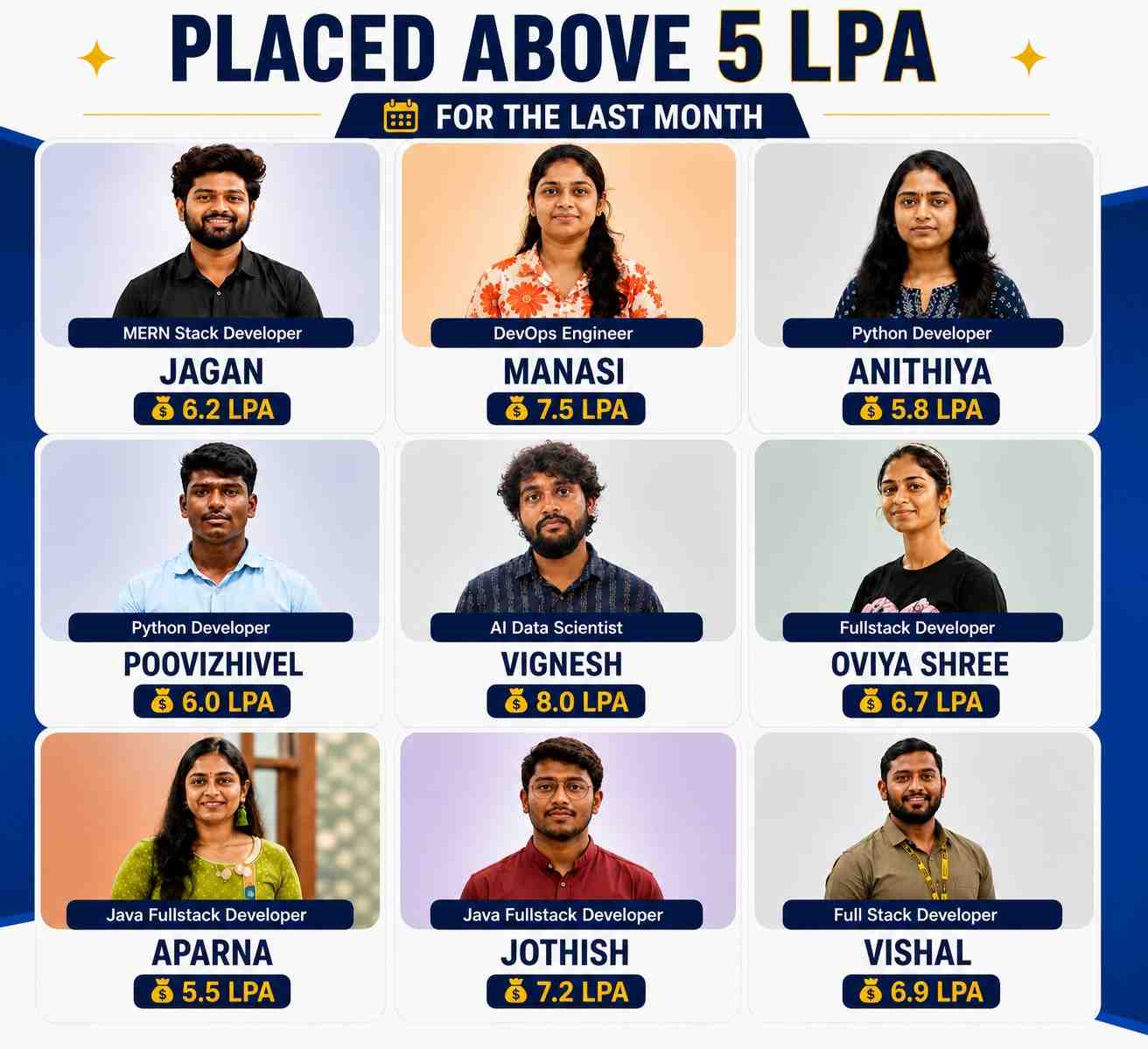
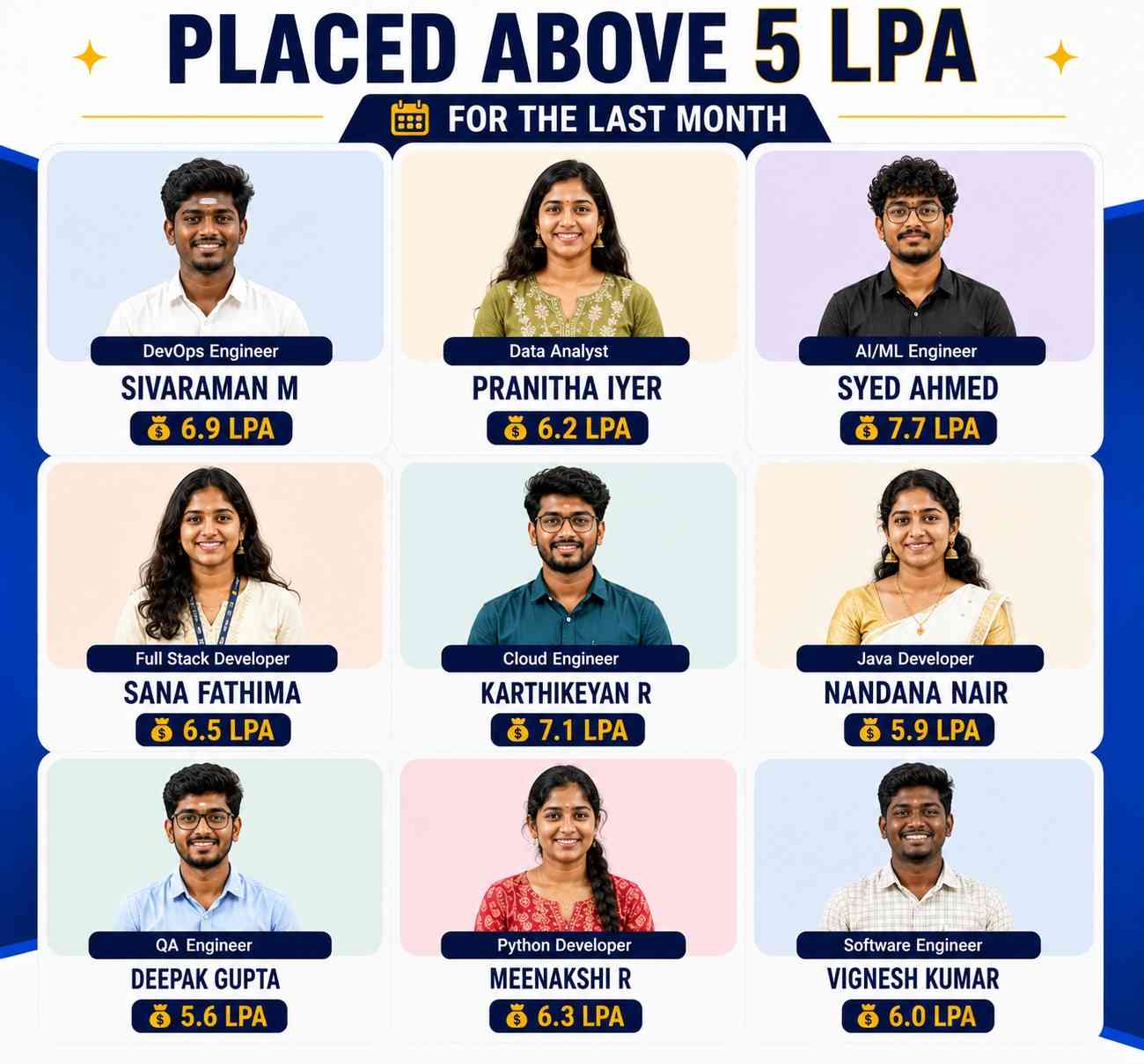
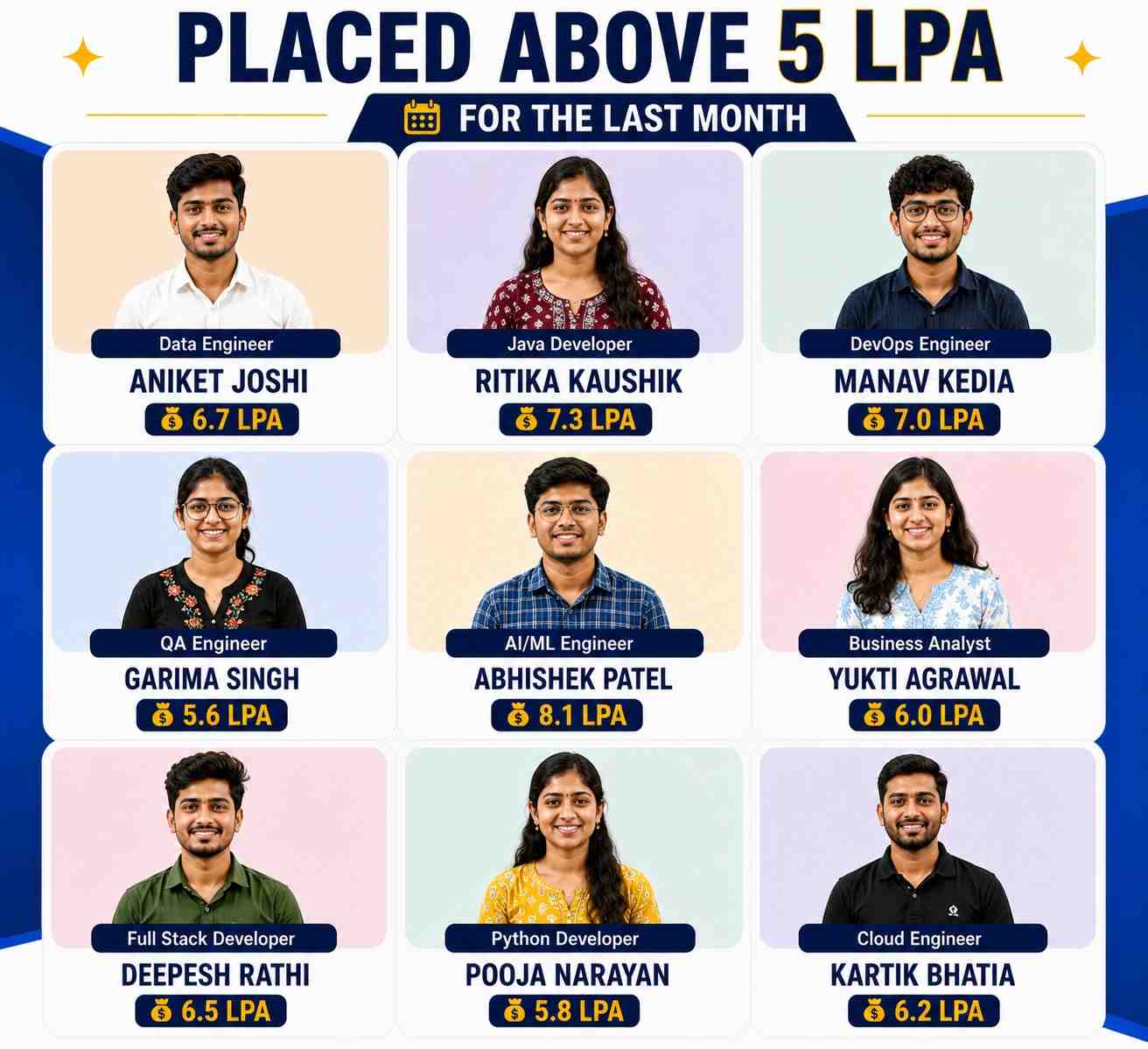
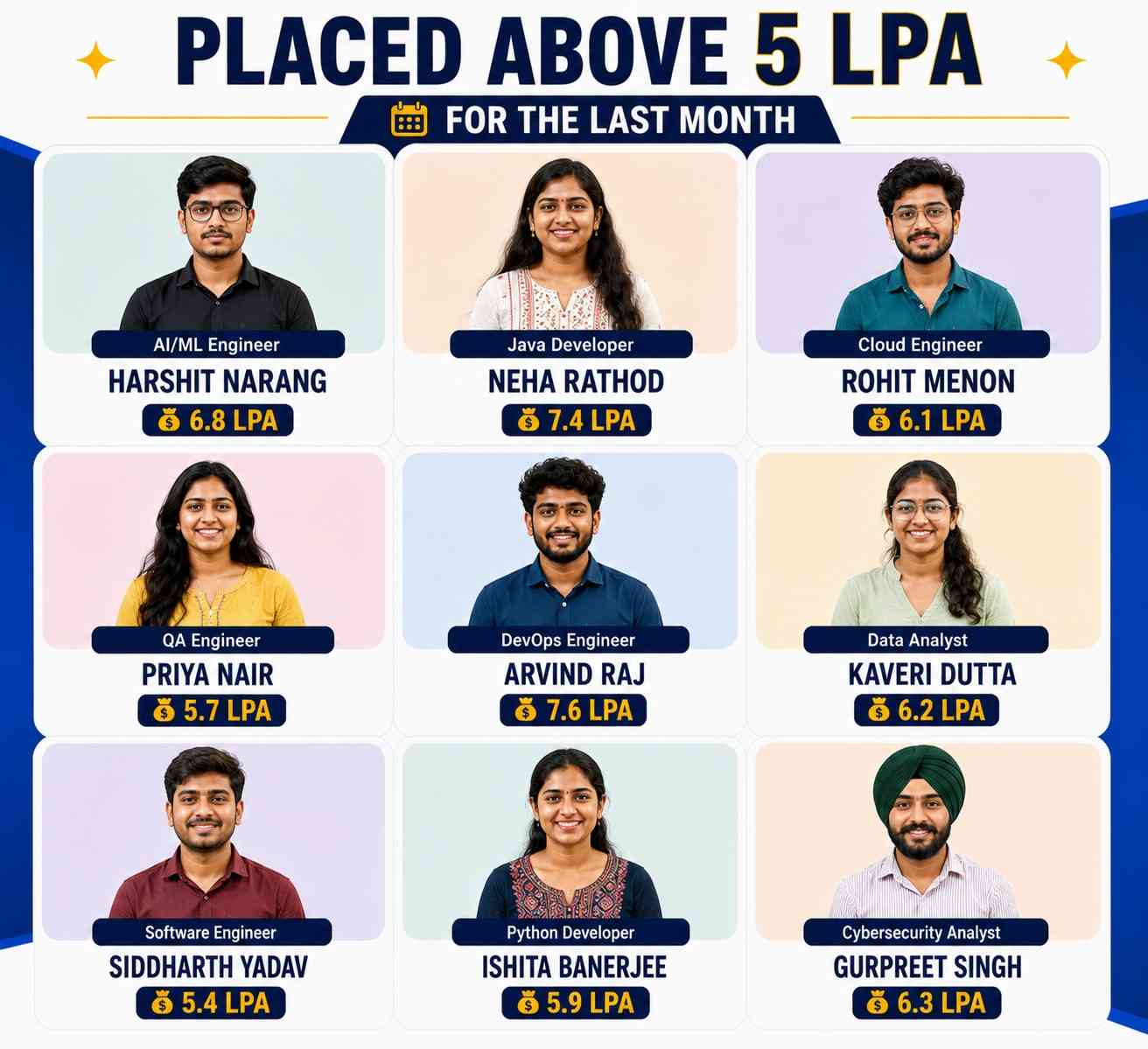
10057+

(Placed)
Freshers To IT

4781+

(Placed)
NON-IT to IT

7192+

(Placed)
Career Gap

4162+

(Placed)
Less Then 60%

Our Hiring Partners

Overview of the Salesforce Course

Our Salesforce Training in Hebbal is designed for freshers to learn Salesforce from scratch. You will gain practical knowledge of Admin, Apex, Lightning, LWC, Workflow, Reports, and Dashboards. The course includes internships to get hands-on experience on real projects. After completing the training, you can apply for Salesforce Placement opportunities with guidance from our experts. You will also earn a globally recognized Salesforce Certification Course to boost your career. The program is beginner-friendly, with simple explanations and real-world examples to make learning easy and effective.

What You'll Learn From Salesforce Certification Training

Gain a strong foundation in Salesforce concepts, including Admin, Apex, Lightning, LWC, Workflow, Reports, and Dashboards.

Learn to manage data effectively, create custom objects, and automate business processes using practical Salesforce tools.

Get hands-on experience with real-time projects and industry-based case studies to apply your skills confidently.

Explore advanced Salesforce features like integration, process automation, and security to handle complex business scenarios.

Join our Salesforce Training in Hebbal to prepare for certifications, internships, and placement opportunities with expert guidance.

Enhance problem-solving, analytical thinking, and decision-making skills while building a globally recognized Salesforce profile.

Additional Info

Course Highlights

  • Master Salesforce Skills Learn Salesforce fundamentals, Admin, Apex, Lightning, LWC, Workflow, Reports, Dashboards, and real-time applications.
  • Get dedicated career support with Salesforce Placement opportunities at top companies hiring Salesforce professionals.
  • Join over 11,000 students trained and placed through our strong network of 350+ hiring partners across industries.
  • Learn from expert instructors with more than 10 years of hands-on experience in Salesforce and CRM solutions.
  • Enjoy beginner-friendly lessons, real-time projects, and personalized guidance to build confidence and practical skills.
  • Take advantage of flexible batches, affordable fees, and Salesforce Internships in Hebbal, along with a globally recognized Salesforce Certification.

Benefits You Gain from an Salesforce Course in Hebbal

  • Customer Management : Salesforce helps you keep all customer information in one place, like contacts, emails, and purchase history. You can track interactions and follow-ups easily. It helps understand customer preferences and needs. This leads to better service and happier customers. Managing relationships becomes simple and organized.
  • Task Automation : Salesforce automates repetitive tasks like sending emails, updating records, and scheduling reminders. This saves time for employees and reduces mistakes. Staff can focus on more important work instead of manual tasks. Automation ensures processes are consistent and efficient. Work becomes faster and smoother.
  • Real-Time Reports : Salesforce provides dashboards and reports that update in real-time. You can track sales, leads, and team performance instantly. This makes it easier to make informed business decisions. Problems and opportunities are identified quickly. Managers can act faster to improve results.
  • Anywhere Access : Salesforce is cloud-based, so you can access it anytime from a computer, tablet, or mobile device. Teams can work remotely without losing important information. Data is secure and always up-to-date. This improves collaboration and flexibility. Employees can work efficiently from anywhere.
  • Career Growth : Learning Salesforce opens up opportunities in Admin, Developer, Consultant, and Analyst roles. Companies value Salesforce skills highly in the job market. Certified professionals often get better salaries and job options. It helps freshers start a strong career in CRM and cloud technology. Skills gained are useful for long-term growth.

Important Tools Covered in Salesforce Training in Hebbal

  • Salesforce Sales Cloud : Sales Cloud helps businesses manage their sales process from start to finish. It tracks leads, opportunities, and customer interactions in one place. Sales teams can plan, monitor, and close deals faster. It also helps forecast sales and measure team performance. Overall, it improves sales efficiency and customer relationships.
  • Salesforce Service Cloud : Service Cloud is used to provide excellent customer support and service. It helps track customer cases, manage issues, and respond quickly. Agents can access customer history to solve problems effectively. It also allows automating support tasks to save time. This tool increases customer satisfaction and loyalty.
  • Salesforce Marketing Cloud : Marketing Cloud helps businesses manage marketing campaigns in one place. You can send emails, SMS, social media messages, and personalized offers. It tracks customer engagement and campaign performance easily. Marketers can make data-driven decisions to improve results. It increases leads, sales, and customer connections.
  • Salesforce Commerce Cloud : Commerce Cloud is designed for managing online stores and e-commerce operations. It helps track orders, inventory, and customer preferences efficiently. Businesses can offer a smooth and personalized shopping experience. It also supports integration with payment and shipping systems. This tool improves sales and customer satisfaction online.
  • Salesforce Analytics Cloud (Tableau CRM) : Analytics Cloud lets businesses turn data into meaningful insights with dashboards and reports. You can track sales, marketing, and service performance in real-time. It helps identify trends and make smarter business decisions. Managers can monitor KPIs and plan strategies effectively. This tool makes understanding data easy for everyone.

Must-Know Frameworks for Aspiring Salesforce

  • Lightning Component Framework : The Lightning Component Framework is used to build dynamic web apps for Salesforce. It allows developers to create reusable components that work on desktops and mobile devices. This framework supports faster development and modern user interfaces. It also helps in customizing Salesforce pages to fit business needs. Learning it makes creating interactive apps much easier.
  • Apex Framework : Apex is Salesforce’s programming language and framework for building backend logic. It helps automate business processes and manage data efficiently. Developers can write triggers, classes, and workflows using Apex. It ensures that processes run smoothly without manual effort. Knowing Apex is essential for any Salesforce developer.
  • Visualforce Framework : Visualforce is a framework for creating custom user interfaces in Salesforce. It uses HTML, CSS, and Apex to build pages that integrate with Salesforce data. Developers can design unique layouts and forms for users. It is great for creating detailed, custom screens for business applications. Learning Visualforce helps in tailoring Salesforce to specific business needs.
  • Lightning Web Components (LWC) Framework : Lightning Web Components is a modern framework for building fast and scalable web apps in Salesforce. It uses standard web technologies like JavaScript and HTML. LWC improves app performance and makes development easier. Developers can create responsive, reusable components for desktop and mobile users. It is the preferred framework for building modern Salesforce apps.
  • Salesforce Mobile SDK Framework : Salesforce Mobile SDK is used to build mobile applications connected to Salesforce. It supports iOS and Android devices and allows offline access to Salesforce data. Developers can create custom mobile apps with secure login and integration. It improves productivity for users on the go. Knowing this framework is helpful for extending Salesforce beyond desktops.

Essential Skills You’ll Learn in a Salesforce Training in Hebbal

  • Salesforce Administration Skills : You will learn how to manage Salesforce accounts, users, and data effectively. This includes setting up profiles, roles, and permissions to control access. You’ll also understand how to customize Salesforce objects and fields to fit business needs. These skills help keep Salesforce organized and secure. Being good at administration is essential for maintaining smooth operations in any company.
  • Apex Programming Skills : Apex is Salesforce’s programming language, and you’ll learn how to write triggers and classes. This helps automate business processes and manage complex workflows efficiently. Learning Apex allows you to extend Salesforce functionality beyond standard features. It also improves problem-solving and logical thinking. These skills make you valuable as a Salesforce developer.
  • Lightning Experience Skills : You’ll gain expertise in Salesforce Lightning, including Lightning pages, apps, and components. This helps in creating modern, interactive, and user-friendly interfaces. You’ll also learn to customize dashboards and layouts for better user experience. Lightning skills make navigation faster and work more productive. They are crucial for both admins and developers.
  • Data Management and Analytics Skills : You will learn how to handle data effectively, including importing, exporting, and cleaning records. You’ll also work with reports, dashboards, and analytics to track business performance. These skills help in making data-driven decisions. Understanding data management ensures accurate and reliable insights. Employers highly value this skill for any Salesforce role.
  • Process Automation Skills : Salesforce teaches you to automate repetitive tasks using workflows, process builder, and flows. This saves time, reduces errors, and improves efficiency. You’ll also learn to streamline approval processes and notifications. Automation skills help businesses run smoothly without manual effort. They make you capable of designing smarter and faster business processes.

Key Roles and Responsibilities of Salesforce Profession

  • Salesforce Administrator : A Salesforce Administrator manages users, data, and security settings within Salesforce. They customize objects, fields, and page layouts to meet business requirements. Administrators create reports and dashboards to monitor performance. They also automate workflows and approval processes for efficiency. Their role ensures Salesforce runs smoothly for all users.
  • Salesforce Developer : A Salesforce Developer builds custom applications and features using Apex, Visualforce, and Lightning components. They write code to automate processes and extend Salesforce functionality. Developers integrate Salesforce with other systems and external apps. They test and debug code to ensure reliability. Their work enables businesses to meet complex technical needs effectively.
  • Salesforce Consultant : A Salesforce Consultant works with clients to analyze business needs and implement Salesforce solutions. They provide advice on best practices, customization, and process optimization. Consultants configure Salesforce and train end-users for smooth adoption. They also troubleshoot issues and recommend improvements. Their role bridges business requirements with technical solutions.
  • Salesforce Business Analyst : A Salesforce Business Analyst gathers requirements from stakeholders and translates them into Salesforce solutions. They document processes, workflows, and user stories for developers and admins. Analysts monitor system performance and suggest enhancements. They ensure Salesforce aligns with business goals. Their role helps improve productivity and decision-making across teams.
  • Salesforce Architect : A Salesforce Architect designs high-level solutions and system architecture for complex Salesforce implementations. They decide how Salesforce modules, integrations, and third-party tools work together. Architects ensure security, scalability, and efficiency in the system. They guide developers and administrators in technical decisions. Their expertise ensures the platform meets both current and future business needs.

Why Salesforce is the Smart Choice for Freshers

  • High Demand for Salesforce Professionals : Salesforce is widely used by companies worldwide to manage sales, marketing, and customer service. Businesses are constantly looking for skilled professionals to handle their Salesforce platforms. This creates a strong demand for trained Salesforce experts. Freshers have the opportunity to enter a growing job market. Learning Salesforce opens doors to many career opportunities.
  • Attractive Salary Packages : Salesforce professionals often receive competitive salaries, even for entry-level roles. Companies value the specialized skills needed to manage and customize Salesforce. Certified Salesforce candidates can expect higher pay compared to other IT roles. This makes it a financially rewarding career option. Starting early can lead to faster career growth and better income.
  • Versatile Career Roles : Salesforce training allows freshers to explore different roles like Administrator, Developer, Consultant, Analyst, and Architect. Each role focuses on specific skills and responsibilities within Salesforce. This versatility gives freedom to choose a career path based on interest. It also allows growth in multiple directions. The skills learned are applicable across industries and companies.
  • Global Recognition and Certification : Salesforce certifications are recognized worldwide and validate professional expertise. Completing a Salesforce Certification Course adds credibility to a fresher’s profile. Certified professionals gain more trust from employers. It helps in securing internships, jobs, and freelance opportunities. Global recognition enhances career prospects significantly.
  • Opportunities for Learning and Growth : Salesforce is constantly updating with new features, tools, and frameworks. Professionals can continuously learn and upgrade their skills. This ensures career growth and long-term job security. Freshers can start with basic skills and gradually advance to expert-level roles. A Salesforce career encourages continuous learning and professional development.

Landing Remote Jobs with Salesforce Skills

  • Cloud-Based Platform : Salesforce is completely cloud-based, which means all work can be done online. This allows professionals to access Salesforce from anywhere. Companies can hire remote employees without worrying about physical location. It makes collaboration and project management easier. Cloud-based skills are highly valuable for remote job opportunities.
  • High Demand for Salesforce Experts : Many businesses worldwide use Salesforce for sales, marketing, and customer management. The demand for skilled Salesforce professionals is growing constantly. Companies often hire remote workers to fill these roles. Skilled Salesforce users can find flexible work options. This opens up opportunities beyond local job markets.
  • Versatile Job Roles : Salesforce training provides knowledge for multiple roles like Admin, Developer, Consultant, and Analyst. Each role can often be performed remotely with proper access. Employers prefer candidates who can handle various responsibilities online. This flexibility makes Salesforce skills ideal for remote work. Different roles offer multiple options for career growth.
  • Certification Boosts Credibility : Salesforce Certifications validate expertise and make candidates more trustworthy to employers. Certified professionals are often preferred for remote positions. Certifications show that the person can work independently and handle Salesforce tasks efficiently. This builds confidence in hiring remote talent. Credentials make finding remote jobs easier.
  • Tools and Automation Skills : Salesforce skills include automation, workflow management, and report generation. These tools allow tasks to be completed efficiently without constant supervision. Remote employers value candidates who can handle responsibilities independently. Automation and reporting skills make remote work productive. Mastering these tools increases chances of securing online jobs.

What to Expect in Your First Salesforce Job

  • Learning and Onboarding : The first days usually focus on understanding the company’s Salesforce setup and business processes. Training sessions help new employees get familiar with tools, modules, and workflows. Mentors or senior colleagues guide through real-time projects. Hands-on practice is emphasized to build confidence. This stage sets the foundation for long-term success.
  • Working on Real Projects : Freshers often get assigned small tasks or modules within larger Salesforce projects. These tasks allow learning how to apply skills practically. Guidance from team members ensures work aligns with business requirements. It helps in understanding industry standards and workflows. Real project experience is crucial for skill development.
  • Collaboration with Teams : Salesforce jobs require working closely with admins, developers, and consultants. Team collaboration ensures smooth execution of tasks and project goals. Regular meetings help track progress and solve issues together. Learning from peers is an important part of growth. Communication skills improve while gaining practical knowledge.
  • Managing Data and Reports : Handling customer data, generating reports, and maintaining dashboards are key responsibilities. Accuracy and attention to detail are essential to ensure data integrity. Reporting helps track performance and business trends. Freshers learn how data drives decisions in real-world scenarios. These tasks build analytical and organizational skills.
  • Continuous Learning and Certification : Even after starting the job, learning continues with advanced Salesforce features and tools. Many companies encourage earning certifications for skill validation. Exploring new modules and automation enhances career growth. Continuous learning helps stay updated with Salesforce updates. Growth mindset and adaptability are key to long-term success.

Leading Companies are Hiring for Salesforce Professionals

  • Salesforce : Salesforce, the company that builds the platform, hires professionals in many roles like Admin, Developer, Consultant, and Architect. It offers opportunities to work on leading cloud products and innovative technologies. Employees get exposure to the latest CRM tools and enterprise solutions. Working here helps build world‑class skills and experience. It is a strong choice for a long‑term career in CRM and cloud technology.
  • Tata Consultancy Services (TCS) : TCS is a major global IT and consulting firm that works with many clients to implement Salesforce solutions. It hires Salesforce professionals for roles in development, administration, and consulting. Employees get to work on large real‑world projects across industries. TCS also supports career growth through ongoing training and internal development. This makes it attractive to freshers and experienced hires alike.
  • Accenture : Accenture is a leading professional services company known for large digital transformation projects. It has a strong Salesforce division working with global clients. Salesforce experts here work on customization, integration, and end‑to‑end solutions. The company focuses on building new skills and offering career progression. It also provides exposure to diverse business challenges and industries.
  • Deloitte : Deloitte is a multinational consulting and advisory firm with a deep focus on Salesforce implementations. Teams here work on designing strategies, solving business problems, and improving customer experiences using Salesforce. Professionals get to work with international clients and advanced tools. Deloitte emphasizes learning, mentorship, and professional growth. It is a respected employer for Salesforce talent.
  • Infosys : Infosys is a well‑known global IT services and consulting company that hires Salesforce professionals to support clients worldwide. It offers roles in development, support, architecture, and functional consulting. Working at Infosys provides exposure to various industry projects and technologies. The company also invests in employee training and certification programs. This helps professionals grow their expertise and career.
Show More

Upcoming Batches For Classroom and Online

Weekdays
16 - Feb - 2026
08:00 AM & 10:00 AM
Weekdays
18 - Feb - 2026
08:00 AM & 10:00 AM
Weekends
21 - Feb - 2026
(10:00 AM - 01:30 PM)
Weekends
22 - Feb - 2026
(09:00 AM - 02:00 PM)
Can't find a batch you were looking for?
INR ₹16500
INR ₹36000

OFF Expires in

Who Should Take a Salesforce Training in Hebbal

IT Professionals

Non-IT Career Switchers

Fresh Graduates

Working Professionals

Diploma Holders

Professionals from Other Fields

Salary Hike

Graduates with Less Than 60%

Show More

Job Roles For Salesforce Course in Hebbal

Salesforce Administrator

Salesforce Developer

Salesforce Consultant

Salesforce Business Analyst

Salesforce Integration Specialist

Salesforce Solution Architect

CRM Manager

SFMC Specialist

Show More

Tools Covered For Salesforce Course in Offline

Salesforce Lightning Apex Visualforce Salesforce Flow Data Loader Trailhead Salesforce Reports & Dashboards AppExchange

What’s included ?

Convenient learning format

📊 Free Aptitude and Technical Skills Training

  • Learn basic maths and logical thinking to solve problems easily.
  • Understand simple coding and technical concepts step by step.
  • Get ready for exams and interviews with regular practice.
Dedicated career services

🛠️ Hands-On Projects

  • Work on real-time projects to apply what you learn.
  • Build mini apps and tools daily to enhance your coding skills.
  • Gain practical experience just like in real jobs.
Learn from the best

🧠 AI Powered Self Interview Practice Portal

  • Practice interview questions with instant AI feedback.
  • Improve your answers by speaking and reviewing them.
  • Build confidence with real-time mock interview sessions.
Learn from the best

🎯 Interview Preparation For Freshers

  • Practice company-based interview questions.
  • Take online assessment tests to crack interviews
  • Practice confidently with real-world interview and project-based questions.
Learn from the best

🧪 LMS Online Learning Platform

  • Explore expert trainer videos and documents to boost your learning.
  • Study anytime with on-demand videos and detailed documents.
  • Quickly find topics with organized learning materials.

Salesforce Course Syllabus

  • 🏫 Classroom Training
  • 💻 Online Training
  • 🚫 No Prerequisites (Any Background)
  • 🏭 Training by Industry Experts

Our Salesforce Training in Hebbal is a comprehensive program designed for beginners and aspiring CRM professionals. You’ll learn essential Salesforce concepts such as data modeling, automation, report generation, and interactive dashboard creation. Gain real-time exposure through Salesforce internships in Hebbal and hands-on projects that strengthen practical skills. The course also includes data management, visualization best practices, and system integrations. With dedicated placement support, resume building, and interview preparation, learners are equipped to launch a successful Salesforce career. Expert-led sessions and flexible batch options ensure confident, industry-ready learning.

  • Salesforce Fundamentals – Understand core CRM concepts including objects, fields, data types, workflows, and platform basics.
  • Advanced Salesforce Skills – Master Apex programming, Lightning components, triggers, and automation tools.
  • Real-Time Project Exposure – Work on live use cases such as dashboards, automation flows, and custom Salesforce applications.
  • Development & Deployment – Learn cloud deployment strategies, version control basics, and release management.
Introduction to Salesforce
Core Salesforce Services
Salesforce Administration
Salesforce Development
Marketing Automation & CRM
Salesforce Analytics
Strategy & Real-Time Projects

Build a strong foundation in Salesforce:

  • Why Salesforce Matters: Business benefits, market demand, and industry adoption.
  • Core Clouds: Sales Cloud, Service Cloud, Marketing Cloud, and CRM capabilities.
  • Salesforce Ecosystem: Lightning Experience, Classic, AppExchange, and Mobile App.
  • Career Opportunities: Administrator, Developer, Consultant, and Architect roles.

Explore essential Salesforce services and features:

  • User & Access Management: Profiles, roles, permission sets, and security basics.
  • Data Handling: Import, export, validation, and maintaining data quality.
  • Customization: Objects, fields, page layouts, and workflow rules.
  • Reports & Dashboards: Create insightful reports and visual analytics.

Configure and manage Salesforce environments:

  • Admin Setup: Objects, fields, layouts, and setup navigation.
  • Automation Tools: Workflow Rules, Process Builder, and Flow Builder.
  • Security Controls: Roles, sharing rules, and field-level access.
  • System Monitoring: Reports, dashboards, and audit logs.

Hands-on Salesforce development training:

  • Apex Programming: Triggers, classes, batch jobs, and async processing.
  • Lightning & Visualforce: Build modern UI components and custom pages.
  • App Development: Create and deploy Salesforce apps and custom solutions.
  • Testing & Deployment: Sandboxes, unit testing, and change sets.

Automate marketing and CRM workflows:

  • Marketing Cloud: Email campaigns, customer journeys, and automation.
  • Lead Management: Lead scoring, nurturing, and conversion tracking.
  • Integrations: Connect Salesforce with third-party tools and platforms.
  • Automation Tools: Pardot, workflows, and process automation.

Measure performance and drive insights:

  • Advanced Reports: Custom reports, charts, and dashboards.
  • Einstein Analytics: AI-driven insights and predictive analysis.
  • KPIs & Metrics: Sales pipeline, revenue, and conversion tracking.
  • Data Tools: Data Loader, validation rules, and imports.

Apply skills through real-world projects:

  • Project Planning: Define scope, goals, and implementation strategy.
  • Live Assignments: Real-time Salesforce customization and deployment.
  • Performance Analysis: Evaluate dashboards, workflows, and efficiency.
  • Capstone Project: End-to-end Salesforce solution with automation and analytics.

🎁 Free Add-On Programs

Aptitude Training, Spoken English

🎯 Placement Preparation Activities

Daily Assignments, Soft Skills Training, Live Projects, Group Discussions, Resume Building, Mock Interviews

Hands-on Real Time SalesForce Projects

Placement Support Overview

Today's Top Job Openings for Salesforce Professionals

Junior Developer

Company Code : WRO613

Bangalore, Karnataka

₹35,000 – ₹55,000 per month

B.E / B.Tech / B.Sc (CS / IT) or BCA

Exp 0-2 yrs

  • We are hiring freshers to work on customizing Salesforce instances, writing Apex code, handling Lightning Components, and assisting in deployments. This role gives hands‑on exposure to CRM customizations and basic configuration tasks under senior guidance.
  • Easy Apply

    Salesforce Developer (Entry‑level)

    Company Code : SLL151

    Bangalore, Karnataka

    ₹3 LPA – ₹5 LPA

    B.E / B.Tech / BCA / B.Sc (IT / CS)

    Exp 0-2 yr

  • Now accepting applications for candidates to begin with basic Salesforce development tasks workflow setup, simple customizations, and assisting on projects. Good for graduates wanting to build Salesforce coding and configuration skills from scratch.
  • Easy Apply

    Salesforce Administrator (Junior Admin)

    Company Code : SYA125

    Bangalore, Karnataka

    ₹33,000 – ₹50,000 per month

    Any Degree

    Exp 0-2 yrs

  • We are seeking freshers to handle user setup, data management, basic reports/dashboards, permissions and configuration in Salesforce. This role helps build foundation in CRM admin tasks and internal business processes.
  • Easy Apply

    Technical Support Associate

    Company Code : YRC981

    Bangalore, Karnataka

    ₹5 LPA – ₹8 LPA

    B.Sc / BCA / B.Tech / Any relevant bachelor’s

    Exp 0-1 yrs

  • We are looking for support associates to manage Salesforce-related queries, troubleshoot CRM issues, support end‑users, and assist in system maintenance. This is a good start for freshers using Salesforce skills and support mindset.
  • Easy Apply

    Salesforce Junior Consultant (Entry-level)

    Company Code : CIT691

    Bangalore, Karnataka

    ₹30,000 – ₹55,000 per month

    Any Degree

    Exp 0–2 yrs

  • We are hiring beginners to help gather client requirements, assist in configuring Salesforce modules, create simple reports/dashboards, and support consultants in CRM implementations. This role offers insight into business‑tech alignment using Salesforce.
  • Easy Apply

    Salesforce QA / Testing Associate (Junior)

    Company Code : MCF606

    Bangalore, Karnataka

    ₹33,000 – ₹40,000 per month

    B.E / B.Tech / BCA / B.Sc (CS / IT) or related

    Exp 0–2 yrs

  • We are hiring testers to check Salesforce customizations, validate workflows, perform user‑acceptance testing and bug tracking. Useful for freshers looking to understand Salesforce from a quality and reliability perspective.
  • Easy Apply

    Salesforce Data / Integration Associate (Junior)

    Company Code : JAY674

    Bangalore, Karnataka

    ₹25, 000 – ₹35, 000 per month

    B.E / B.Tech / BCA / B.Sc (CS / IT / Data)

    Exp 0-2 yrs

  • We are seeking freshers to assist with data migration, API integration, data cleansing, and syncing external systems with Salesforce. This role helps build skills in data handling and system integrations using Salesforce APIs or tools like Data Loader.
  • Easy Apply

    Salesforce Project Coordinator / Support Analyst

    Company Code : SHA119

    Bangalore, Karnataka

    ₹4 LPA – ₹6 LPA

    Any Degree

    Exp 0-2 yrs

  • We are looking for candidates to coordinate between teams, assist in CRM data updates, manage user support tickets, and handle basic Salesforce admin tasks. Ideal for freshers wanting to start as Salesforce support or coordination staff.
  • Easy Apply

    Internship Highlights for Salesforce

    Real-Time Projects

    • 1. Gain hands-on experience by working on live Salesforce implementations and applications.
    • 2. Learn real-world problem-solving through CRM scenarios and business process automation.
    Book Session

    Skill Development Workshops

    • 1. Participate in focused sessions on trending Salesforce tools and features.
    • 2. Learn directly from industry experts through guided practical exercises on workflows, automation, and analytics.
    Book Session

    Employee Welfare

    • 1. Enjoy benefits like health coverage, flexible hours, and wellness programs during internships or training.
    • 2. Companies prioritize mental well-being and work-life balance for all employees in Salesforce teams.
    Book Session

    Mentorship & Peer Learning

    • 1. Learn under experienced Salesforce mentors to guide your technical and career growth.
    • 2. Collaborate with peers to enhance learning through scenario-based exercises and group projects.
    Book Session

    Soft Skills & Career Readiness

    • 1. Improve communication, teamwork, and time management skills for professional Salesforce roles.
    • 2. Prepare for interviews and workplace dynamics with mock sessions, case studies, and expert guidance.
    Book Session

    Certification

    • 1. Earn recognized credentials to validate your Salesforce skills.
    • 2. Boost your resume with course or project completion certificates from reputed Salesforce training platforms.
    Book Session

    Sample Resume for Salesforce (Fresher)

    • 1. Simple and Neat Resume Format

      – Use a clean layout with clear sections such as summary, Salesforce skills, certifications, education, and projects.

    • 2. List of Salesforce Skills You Know

      – Highlight skills like Salesforce Administration, Apex, Visualforce, Lightning Components, Workflow Automation, Reports & Dashboards, and CRM Management.

    • 3. Real-Time Projects and Achievements

      – Include 1–2 Salesforce projects with a brief description, tools used, and key outcomes or achievements.

    Top Salesforce Tricky Interview Questions and Answers (2026 Guide)

    Ans:

    Salesforce is a cloud-based Customer Relationship Management (CRM) platform designed to manage sales, marketing, customer support, and other business operations. It helps organizations automate processes, enhance customer interactions, and make data-driven decisions. The platform also provides tools for workflow automation, analytics, and reporting to boost operational efficiency.

    Ans:

    Implementing Salesforce starts with understanding the company’s objectives and reviewing current workflows. Key steps include configuring Salesforce modules, creating custom objects, designing automation, and setting up processes. Conducting thorough testing and collaborating with stakeholders ensures smooth adoption and effective deployment of the solution.

    Ans:

    Salesforce includes several core tools like Sales Cloud, Service Cloud, and Marketing Cloud. Flow Builder allows workflow automation, while Reports and Dashboards provide analytics. AppExchange offers third-party integrations, and developers use Apex, Visualforce, and Lightning Components to create customized solutions tailored to business needs.

    Ans:

    Meeting user expectations requires gathering requirements directly from users, conducting User Acceptance Testing (UAT), and collecting continuous feedback. Designing intuitive interfaces, automating repetitive tasks, and maintaining accurate and consistent data ensures a seamless user experience and improved productivity.

    Ans:

    A Salesforce Object is like a database table that stores specific types of information such as accounts, contacts, or opportunities. Standard objects come prebuilt, while custom objects can be created to fit unique business needs. Objects organize and structure data, making it easier to manage and leverage for business operations.

    Ans:

    Problems in Salesforce projects are solved by analyzing the issue, reviewing configurations, consulting stakeholders, and applying best practices. Proper documentation and communication ensure that fixes are implemented efficiently without disrupting business processes, reducing downtime and errors.

    Ans:

    Salesforce Flow is a no-code automation tool that simplifies processes like data collection, record updates, and workflow execution. It saves time, reduces manual tasks, and ensures business processes run reliably and consistently. Flow enhances overall operational efficiency and productivity.

    Ans:

    Keeping up-to-date with Salesforce involves reading release notes, completing Trailhead learning modules, attending webinars, and participating in community forums. Staying engaged with the Salesforce ecosystem helps professionals apply new features, adopt best practices, and remain competitive in the industry.

    Ans:

    Reports are detailed lists of data based on specific criteria, while dashboards visualize key performance metrics in a single view. They help organizations monitor trends, track progress, and make informed strategic decisions. Reports and dashboards support data-driven management and operational efficiency.

    Ans:

    Balancing business needs with best practices involves designing solutions that meet organizational goals while adhering to system limits, governance, and scalability. Collaboration with stakeholders and careful planning ensures Salesforce implementations are efficient, maintainable, and sustainable for long-term success.

    Company-Specific Interview Questions from Top MNCs

    1. What is Salesforce?

    Ans:

    Salesforce is a cloud-based Customer Relationship Management (CRM) system that helps companies manage sales, marketing, customer service, and other business operations. It enables organizations to automate workflows, keep customer data organized, and make decisions using real-time insights. The platform also offers reporting, analytics, and customization options to enhance operational efficiency.

    2. What are the key principles for a successful Salesforce implementation?

    Ans:

    A successful Salesforce implementation ensures accurate and well-organized data, automates repetitive processes, and provides user-friendly interfaces. Dashboards and reports should deliver actionable insights, and all configurations must align with business goals and compliance standards. Following these principles ensures a scalable and effective CRM system.

    3. How is requirement gathering handled for Salesforce projects?

    Ans:

    Gathering requirements involves collecting input from stakeholders through interviews, workshops, surveys, and observation of current processes. This information defines system specifications, workflows, and necessary customizations. Proper requirement gathering ensures Salesforce solutions are tailored to business objectives and user expectations.

    4. What factors are important for designing accessible Salesforce systems?

    Ans:

    Accessible Salesforce design includes clear layouts, descriptive field labels for screen readers, and keyboard-friendly navigation. Standardized components, help texts, and tooltips improve usability. These practices make Salesforce inclusive and easy to use for all employees, enhancing overall productivity.

    5. What is a Salesforce Object and how is it utilized?

    Ans:

    A Salesforce Object is like a structured database table used to store data such as Accounts, Contacts, or Opportunities. Standard objects come built-in, while custom objects can be created for specific business needs. Objects help organize, manage, and retrieve data efficiently for day-to-day operations.

    6. How are effective Salesforce Reports and Dashboards designed?

    Ans:

    Creating effective reports and dashboards starts with identifying important metrics and KPIs. Selecting the right report type, applying filters, grouping data, and visualizing insights with charts improves clarity. Testing and refining based on user feedback ensures dashboards provide actionable, easy-to-understand information.

    7. What is Salesforce Automation and why is it valuable?

    Ans:

    Salesforce Automation uses tools like Workflow Rules, Process Builder, and Flows to streamline repetitive tasks. Automation reduces manual errors, saves time, and ensures consistent execution of processes in sales, service, and marketing. It boosts efficiency and enhances overall productivity.

    8. What are the stages of a Salesforce project implementation?

    Ans:

    A Salesforce project begins with requirement analysis to understand workflows and business needs. Next, design planning defines customizations, automation, and data structure. Configuration and development follow, including objects, workflows, and coding. Testing, including UAT and data validation, ensures accuracy, followed by deployment and user training for smooth adoption.

    9. How is a Salesforce implementation validated?

    Ans:

    Validation involves user acceptance testing, reviewing reports and dashboards, testing automated workflows, and verifying data accuracy. Collecting feedback from stakeholders ensures that the system fulfills business requirements. This process confirms the implementation is reliable, accurate, and aligned with organizational goals.

    10. How is consistency ensured across Salesforce modules?

    Ans:

    Consistency is maintained by setting naming conventions for objects, fields, and workflows, using standardized page layouts, and documenting configurations. Reusing automation templates and performing regular audits helps maintain alignment with business practices. These measures create a cohesive, organized, and manageable Salesforce environment.

    1. What is Salesforce and how does it differ from other CRM platforms?

    Ans:

    Salesforce is a cloud-based Customer Relationship Management (CRM) platform that handles sales, marketing, customer support, and other business processes. Unlike traditional CRMs, it offers extensive customization, workflow automation, advanced analytics, and access to a large marketplace of apps via AppExchange, allowing businesses to tailor the system to their unique requirements.

    2. What essential skills should a Salesforce professional have?

    Ans:

    A skilled Salesforce professional should be proficient in core modules like Sales Cloud, Service Cloud, and Marketing Cloud. Expertise in configuration, automation tools such as Flows, Process Builder, and Workflow Rules, as well as creating reports and dashboards, is important. Knowledge of Apex, Visualforce, and Lightning Components, along with strong problem-solving and communication skills, improves effectiveness in projects.

    3. How is a new Salesforce project typically executed?

    Ans:

    A Salesforce project starts by understanding business goals and gathering user requirements through discussions with stakeholders and process analysis. Key steps include designing the data model, configuring objects, workflows, and automation, and building reports and dashboards. Testing, collecting feedback, and refining the system ensures it meets organizational needs, while user training promotes smooth adoption.

    4. What is a Salesforce Object and why is it important?

    Ans:

    A Salesforce Object acts like a database table to store records such as Accounts, Contacts, or Opportunities. Standard objects are built-in, while custom objects can be created to meet specific business needs. Objects play a critical role in organizing and managing data efficiently, supporting structured workflows and business processes.

    5. How is user-friendliness and accessibility maintained in Salesforce solutions?

    Ans:

    Ensuring Salesforce is easy to use involves creating clear layouts, intuitive navigation, and consistent naming conventions. Page layouts are designed for readability, fields are labeled properly, and keyboard-friendly navigation is provided. Adding tooltips, help texts, and following accessibility best practices makes the system usable for all users.

    6. Which tools are commonly used for Salesforce development and why?

    Ans:

    Salesforce development uses tools like Lightning App Builder for drag-and-drop UI design, Flow Builder to automate processes without coding, and Apex and Visualforce for advanced customizations. Reports and Dashboards are used to analyze performance, while AppExchange provides third-party apps and integrations to extend functionality.

    7. What role do Reports and Dashboards play in Salesforce?

    Ans:

    Reports and Dashboards turn Salesforce data into actionable insights. Reports allow detailed analysis of records, while dashboards provide visual summaries of key metrics and trends. These tools help managers track performance, identify issues, and make informed decisions that optimize operations.

    8. How are feedback and issues managed during Salesforce implementation?

    Ans:

    Feedback and issues are addressed by carefully reviewing concerns and assessing alignment with business requirements. Automations and configurations are updated as needed, and stakeholders are kept informed of changes. Ensuring scalability, maintainability, and proper documentation is crucial for long-term project success.

    9. What methods are used to test Salesforce implementations?

    Ans:

    Salesforce testing includes User Acceptance Testing (UAT) with real users, sandbox testing for configuration and automation, regression testing to prevent disruption of existing features, and data validation to ensure accuracy. Iterative feedback sessions allow continuous improvements for optimal performance.

    10. How do professionals stay updated with Salesforce trends and updates?

    Ans:

    Staying current involves reviewing Salesforce release notes, completing Trailhead modules, attending webinars, and engaging in community forums. Exploring new apps on AppExchange and participating in events ensures professionals apply the latest features, follow best practices, and remain aware of industry trends.

    1. What are the key differences between the Salesforce Administrator and Developer roles?

    Ans:

    A Salesforce Administrator manages the platform by configuring objects, workflows, reports, and user access without coding. In contrast, a Salesforce Developer writes Apex, Visualforce, and Lightning Web Components to create custom applications and advanced functionality. Administrators ensure smooth operation and usability, while developers handle programming and technical enhancements.

    2. What is the process of gathering business requirements and why is it critical?

    Ans:

    Requirement gathering involves engaging stakeholders through interviews, workshops, surveys, and reviewing existing workflows to understand business objectives and user needs. Properly collected requirements ensure Salesforce configurations align with organizational goals, reduce unnecessary customization, and provide efficient workflows for end-users.

    3. What best practices should be followed during Salesforce implementation?

    Ans:

    Key best practices include maintaining clean, validated data, leveraging declarative tools like Flows and Process Builder before coding, following standardized naming conventions for objects, fields, and workflows, and designing scalable dashboards and reports. Comprehensive sandbox testing before production deployment ensures a smooth, error-free implementation.

    4. Which tools are commonly used for Salesforce development and administration?

    Ans:

    Commonly used tools include Lightning App Builder for drag-and-drop UI design, Flow Builder for automation without coding, Apex and Visualforce for advanced customization, and Reports & Dashboards for analytics. Data Loader is used for bulk import/export, while Salesforce CLI and VS Code support development and deployment tasks efficiently.

    5. Why is data security essential in Salesforce?

    Ans:

    Data security protects sensitive information and controls user access. Salesforce uses roles, profiles, permission sets, field-level security, and sharing rules to enforce access control. Proper security ensures compliance with regulations, prevents unauthorized access, and builds trust with stakeholders and users.

    6. How are Salesforce Objects created and used?

    Ans:

    Salesforce Objects represent business entities like Leads, Orders, or Products. Standard objects cover common data such as Accounts or Opportunities, while custom objects are built to meet specific business requirements. Fields, relationships, and validation rules are defined, and these objects are leveraged in workflows, reports, and dashboards to streamline operations.

    7. Can you describe a Salesforce project implementation process from start to finish?

    Ans:

    A Salesforce project starts with requirement analysis to understand business and user needs. The design phase plans the data model, objects, workflows, and security settings. Configuration and development build the objects, automation, and custom features, followed by testing including UAT and regression tests. Deployment and user training complete the implementation for smooth adoption.

    8. How is feedback from multiple stakeholders managed during Salesforce projects?

    Ans:

    Feedback is collected carefully, documented, and prioritized based on business impact. Feasible changes are aligned with organizational objectives, and decisions regarding design or configuration are communicated transparently. Stakeholders are involved in UAT to validate solutions and ensure expectations are met.

    9. What key Salesforce best practices are recommended for projects?

    Ans:

    Best practices include using declarative features like Flows and Process Builder before coding, maintaining consistent naming standards for objects and fields, avoiding hardcoding by using custom settings or metadata, regularly cleaning and validating data, and conducting periodic audits of user permissions and security settings.

    10. How do professionals stay updated with Salesforce trends and technology?

    Ans:

    Staying current involves reviewing Salesforce release notes, completing Trailhead modules and certifications, attending webinars and events like Dreamforce, engaging in community forums and user groups, and exploring new AppExchange apps. This ensures professionals apply the latest features, tools, and industry best practices in projects.

    1. How do Salesforce Administrator and Developer roles differ?

    Ans:

    A Salesforce Administrator focuses on setting up the platform, managing users, workflows, dashboards, reports, and security configurations without writing code. In contrast, a Salesforce Developer programs using Apex, Visualforce, and Lightning Web Components to build custom apps and advanced features. Administrators ensure smooth operations and efficient processes, while developers expand functionality through coding and technical enhancements.

    2. How is requirement gathering done in a Salesforce project?

    Ans:

    Requirement gathering involves interacting with stakeholders through interviews, surveys, and analyzing existing business processes to understand organizational objectives and user expectations. This information guides the configuration of objects, fields, workflows, and automation rules, ensuring that the Salesforce solution aligns with business goals and delivers measurable results.

    3. Which tools are widely used for Salesforce development and administration?

    Ans:

    Common tools include Lightning App Builder for drag-and-drop UI design, Flow Builder to automate processes without coding, and Apex and Visualforce for complex customizations. Additional tools such as Salesforce CLI and VS Code assist in development, Data Loader supports data import/export, and Reports & Dashboards help analyze performance and provide actionable insights.

    4. What is a Salesforce Object and how is it created?

    Ans:

    A Salesforce Object is a structured data table used to store information like Accounts, Contacts, or Opportunities. Objects may be standard, pre-configured by Salesforce, or custom-built for specific business needs. Custom objects are defined with fields, relationships, and security settings, and they are used in automation, workflows, dashboards, and reports to streamline business operations.

    5. How is security and accessibility maintained in Salesforce?

    Ans:

    Security is enforced using roles, profiles, permission sets, field-level access, sharing rules, and multi-factor authentication to protect sensitive data. Accessibility is ensured by creating intuitive layouts, proper field labeling, and user-friendly navigation across devices. These measures allow all users to interact efficiently with the system while maintaining compliance and data protection.

    6. How are Salesforce reports and dashboards developed effectively?

    Ans:

    Reports are built by identifying key metrics, selecting relevant data sources, applying filters and groupings, and using visualizations for clarity. Dashboards display these metrics with charts, graphs, and interactive components to provide actionable insights. Gathering user feedback and iterative testing ensures reports and dashboards meet business needs and support informed decision-making.

    7. How is validation of Salesforce solutions performed?

    Ans:

    Validation includes sandbox testing, user acceptance testing (UAT), regression testing, and reviewing workflows and automation against real-world scenarios. Feedback from stakeholders is incorporated to ensure objects, processes, and reports function as intended before deployment, guaranteeing reliability and system accuracy.

    8. What are the best practices for successful Salesforce implementation?

    Ans:

    Effective implementations rely on maintaining clean and validated data, scalable configurations, and using declarative tools before custom code. Consistent naming conventions, thorough documentation, and automation that simplifies workflows are essential. These practices ensure smooth adoption, maintainability, and long-term success of Salesforce solutions.

    9. How is conflicting feedback from stakeholders handled in Salesforce projects?

    Ans:

    Conflicting feedback is managed by analyzing all inputs against business priorities and system limitations. Decisions are prioritized based on impact, and trade-offs are communicated transparently. Balanced solutions are designed to satisfy stakeholders while maintaining usability and alignment with organizational objectives.

    10. How do professionals stay updated with Salesforce trends and technologies?

    Ans:

    Salesforce knowledge is maintained by completing Trailhead courses, reviewing release notes, attending webinars, and participating in events like Dreamforce. Engaging in community forums, joining local user groups, and exploring AppExchange apps ensures continuous skill enhancement and awareness of emerging features and best practices.


    1. What is the difference between a Salesforce Administrator and a Developer?

    Ans:

    A Salesforce Administrator manages the platform by setting up users, security rules, workflows, reports, and dashboards without coding. On the other hand, a Salesforce Developer builds custom solutions using Apex, Visualforce, and Lightning Web Components. Administrators focus on improving usability and business processes, while developers enhance system capabilities with coding, integrations, and advanced custom features.

    2. How are Salesforce features prioritized for different users?

    Ans:

    Prioritization depends on business goals, user requirements, and potential impact on efficiency. Stakeholder feedback, workflow analysis, and system usage patterns help determine which features or automations should be delivered first, ensuring that high-value functionalities are implemented for maximum benefit.

    3. What are the steps to implement a new Salesforce solution or feature?

    Ans:

    Implementation starts with gathering business requirements and understanding user needs. Next, the data model is designed, and objects, security settings, and automation via Flows or Process Builder are configured. Custom coding with Apex or Lightning is applied if required, followed by sandbox testing, UAT, feedback collection, and final deployment with user training.

    4. How is data security and accessibility maintained in Salesforce?

    Ans:

    Security is managed through profiles, roles, permission sets, field-level security, sharing rules, and multi-factor authentication. Accessibility is ensured with clear layouts, proper field labeling, and smooth navigation on multiple devices. These measures allow users to efficiently access and interact with Salesforce while keeping sensitive information safe and compliant.

    5. How is the success of a Salesforce implementation measured?

    Ans:

    Success is evaluated using key performance indicators like user adoption, workflow efficiency, data accuracy, resolution times, and improvements in sales or service metrics. Dashboards and reports provide live insights, and continuous feedback from users helps refine processes, ensuring the system delivers real value to the organization.

    6. Can you give an example of a challenging Salesforce issue and how it was solved?

    Ans:

    A problem with duplicate customer records was causing inaccurate reporting. The solution involved implementing duplicate rules with defined matching criteria, automating record merges, and training users on best data-entry practices. This approach significantly improved data quality and reporting reliability.

    7. What tools are commonly used for Salesforce development and collaboration?

    Ans:

    Frequently used tools include Lightning App Builder for drag-and-drop customization, Flow Builder for no-code automation, and Apex/Visualforce for advanced programming. Salesforce CLI and VS Code help with deployment, Reports & Dashboards provide insights, and Data Loader enables efficient bulk data handling.

    8. How is conflicting feedback from stakeholders managed in Salesforce projects?

    Ans:

    Conflicting input is assessed against business priorities and technical feasibility. Trade-offs are explained clearly, and features are prioritized based on impact and ROI. Data analysis, testing, and stakeholder discussions help reach a consensus while maintaining usability and system efficiency.

    9. What is the role of data in Salesforce projects?

    Ans:

    Data is the foundation of Salesforce solutions, providing insights into business operations and user behavior. Reports, dashboards, and analytics identify inefficiencies, validate processes, and measure adoption. Maintaining accurate and clean data ensures informed decision-making and continuous optimization of workflows.

    10. How do Salesforce professionals keep their skills up to date?

    Ans:

    Skills are maintained by completing Trailhead courses, obtaining certifications, reviewing release notes, and attending webinars or events like Dreamforce. Engaging in community forums, exploring new AppExchange apps, and practicing in sandbox environments ensures professionals stay current with the latest Salesforce features and best practices.

    Disclaimer Note:

    The details mentioned here are for supportive purposes only. There are no tie-ups or links with the corresponding PGs.

    Ladies PG Accommodation

      Electronic City
    • 7 Hills PG for Ladies : 79752 78904
    • Sanjeeva PG for Ladies : 94937 94737
    • BTM Layout
    • GRACE Ladies Paying Guest : 99029 46624
    • The princess Luxury pg for ladies : 85534 06098
    • Marathahalli
    • Amaravate ladies pg : 81234 23355
    • Royal Luxury PG for Ladies : 97402 91555
    • Rajaji Nagar
    • Shree Kalika P.G For Ladies : 74061 02629
    • N M Ladies PG : 91084 46056
    • Jaya Nagar
    • Shreeniketana Luxurious Ladies P.G : 96202 49962
    • Aashirwad ladies pg : 77600 55115

    Mens PG Accommodation

      Electronic City
    • SRI SAI BALAJI PG : 77608 88889
    • VSL PG FOR GENTS : 93536 53275
    • BTM Layout
    • Atithi executive Pg for Gents : 97393 07626
    • Fine Stay PG for Gents : 74111 13997
    • Marathahalli
    • Sri Vasavi Kanyaka Pg : 90667 40874
    • GVS PG FOR GENTS : 88805 82244
    • Rajaji Nagar
    • Sri Guru P.G For Men : 70197 67606
    • Sri Siddaganga mens Pg : 99456 41316
    • Jaya Nagar
    • Sri Manjunatheshwara Men's Luxury PG : 93804 14376
    • Sri Lakshmi pg for men's : 91582 44933

    Top Salesforce Job Opportunities for Freshers

    • 1. Salesforce Jobs at Startups and IT Companies
    • 2. Campus Placements and IT Service Jobs
    • 3. Internship-to-Job Programs
    • 4. Apply Through Job Portals
    • 5. Skills That Help You Get Hired

    Getting Started With Salesforce Course in Hebbal

    Easy Coding
    8 Lakhs+ CTC
    No Work Pressure
    WFH Jobs (Remote)

    Why Salesforce is the Ultimate Career Choice

    High Demand

    Companies prefer multi-skilled professionals can handle entire project cycles.

    Global Opportunities

    Open doors to remote and international job markets.

    High Salary

    Enjoy competitive salaries and rapid career advancement.

    Flexible Career Path

    Explore roles such as developer, architect, freelancer, or entrepreneur.

    Future-Proof Career

    Stay relevant with skills that are consistently in demand in the evolving tech landscape.

    Versatility Across Industries

    Work in various domains like e-commerce, healthcare, finance, and more.

    Career Support

    Placement Assistance

    Exclusive access to ACTE Job portal

    Mock Interview Preparation

    1 on 1 Career Mentoring Sessions

    Career Oriented Sessions

    Resume & LinkedIn Profile Building

    Get Advanced Salesforce Certification

    You'll receive a certificate proving your industry readiness.Just complete your projects and pass the pre-placement assessment.This certification validates your skills and prepares you for real-world roles.

    • Salesforce Certified Administrator (ADM 201)
    • Salesforce Certified Advanced Administrator
    • Salesforce Platform App Builder Certification
    • Salesforce Platform Developer I & II
    • Salesforce Sales Cloud Consultant Certification
    • Salesforce Service Cloud Consultant Certification
    • Salesforce Marketing Cloud Certification

    Salesforce certification validates your technical expertise, but real career success comes from hands-on experience, sharp problem-solving, strong communication, and the ability to implement Salesforce solutions in real business scenarios. When certification is combined with practical training and real-world project exposure, it delivers a 100% job guarantee helping you not just qualify for roles, but confidently secure and perform in them.

    The duration depends on the certification level and learning pace. Entry-level credentials like Salesforce Administrator generally take 6–8 weeks of dedicated study. Advanced tracks, such as Salesforce Developer or Consultant, may require 3–6 months. Bootcamps usually last 8–12 weeks, while self-paced learning depends on consistency and practice hours.

    • Provides official recognition of Salesforce knowledge and skills
    • Expands access to global job opportunities and higher-paying roles
    • Enhances professional credibility and boosts confidence
    • Improves resume strength and LinkedIn profile visibility
    • Offers practical learning through real-world projects and case studies
    • Enroll in a structured Salesforce training program for guided learning
    • Practice regularly using Salesforce Trailhead modules and hands-on exercises
    • Study official Salesforce exam guides and attempt mock tests
    • Gain practical experience through real or simulated projects
    • Participate in Salesforce communities, forums, and user groups to share knowledge and stay motivated

    Complete Your Course

    A Downloadable Certificate in PDF Format, Immediately Available to You When You Complete Your Course.

    Get Certified

    A Physical Version of Your Officially Branded and Security-Marked Certificate.

    Get Certified

    Lowest Salesforce Course Fees in Hebbal

    Affordable, Quality Training for Freshers to Launch IT Careers & Land Top Placements.

    Call Course Advisor

    How is ACTE's Salesforce Course in Hebbal Different?

    Feature

    ACTE Technologies

    Other Institutes

    Affordable Fees

    Competitive Pricing With Flexible Payment Options.

    Higher Salesforce Fees With Limited Payment Options.

    Industry Experts

    Well Experienced Trainer From a Relevant Field With Practical Salesforce Training

    Theoretical Class With Limited Practical

    Updated Syllabus

    Updated and Industry-relevant Salesforce Course Curriculum With Hands-on Learning.

    Outdated Curriculum With Limited Practical Training.

    Hands-on projects

    Real-world Salesforce Projects With Live Case Studies and Collaboration With Companies.

    Basic Projects With Limited Real-world Application.

    Certification

    Industry-recognized Salesforce Certifications With Global Validity.

    Basic Salesforce Certifications With Limited Recognition.

    Placement Support

    Strong Placement Support With Tie-ups With Top Companies and Mock Interviews.

    Basic Placement Support

    Industry Partnerships

    Strong Ties With Top Tech Companies for Internships and Placements

    No Partnerships, Limited Opportunities

    Batch Size

    Small Batch Sizes for Personalized Attention.

    Large Batch Sizes With Limited Individual Focus.

    LMS Features

    Lifetime Access Course video Materials in LMS, Online Interview Practice, upload resumes in Placement Portal.

    No LMS Features or Perks.

    Training Support

    Dedicated Mentors, 24/7 Doubt Resolution, and Personalized Guidance.

    Limited Mentor Support and No After-hours Assistance.

    Salesforce Course FAQs

    1. What qualifications are required to begin a career as a Salesforce Developer?

    Basic computer literacy, logical thinking, and problem-solving skills are sufficient to get started. A genuine interest in technology, curiosity about CRM systems, and analytical abilities are highly advantageous. Previous programming experience is optional, as most Salesforce training programs start with beginner-friendly concepts.
    Salesforce remains one of the most widely adopted CRM platforms worldwide, with applications across sectors like IT, banking, healthcare, retail, and manufacturing. Organizations need administrators, developers, and consultants to handle automation, analytics, reporting, and customer engagement, creating steady demand for skilled Salesforce professionals.
    Salesforce programs cover administration, development, and the Lightning Experience interface. Learners also explore integration basics, Sales Cloud, Service Cloud, Marketing Cloud, app customization, reporting, dashboards, and workflow automation. This ensures participants gain hands-on exposure to essential Salesforce functions.
    Yes, real-world projects are a core part of training. Students work on scenarios such as customer management, sales process automation, service case handling, and custom app development. These projects strengthen problem-solving skills, provide practical experience, and create a portfolio for career readiness.
    Yes. Salesforce courses typically include assistance with resume building, highlighting certifications, projects, and technical skills. Career mentoring, mock interviews, and portfolio guidance prepare learners for job applications and interviews in the Salesforce ecosystem.
    Salesforce courses are open to students, freshers, IT professionals, and even individuals from non-technical backgrounds. Since the training begins with foundational concepts, prior technical knowledge is not mandatory, making it accessible to anyone interested in cloud computing or CRM careers.
    No formal degree is necessary. Certifications, hands-on experience, and project portfolios are more valuable. Many professionals transition into Salesforce roles successfully through structured training and official certification programs.
    Basic computer knowledge and logical reasoning skills are sufficient. While coding experience is useful for development roles, it is not required for administrative or functional tracks. A curiosity for cloud technology and CRM systems will help learners excel.
    No, coding is not mandatory for beginners. Salesforce Administration focuses primarily on configuration rather than coding. Development tracks introduce programming languages like Apex and Lightning Web Components progressively during training.

    1. What placement assistance is offered after Salesforce training?

    Training institutes provide extensive placement support, including resume preparation, mock interviews, job referrals, and career mentoring. Institutes often collaborate with consulting firms and industry partners to connect learners with employment opportunities.

    2. Will students gain real-time project experience for their resumes?

    Yes. Students work on live projects involving workflow automation, dashboards, Lightning apps, and third-party system integrations. This practical exposure enhances resumes and improves readiness for interviews.

    3. Can graduates apply to top IT companies after completing Salesforce training?

    Yes. Salesforce-certified professionals with hands-on experience can apply to leading IT firms, multinational corporations, and consulting companies. Employers such as TCS, Infosys, Wipro, Accenture, Capgemini, and Deloitte actively recruit trained Salesforce talent.

    4. Is placement assistance available for freshers with no prior work experience?

    Absolutely. Placement support is tailored for beginners, helping them build strong resumes, prepare for entry-level roles, and connect with recruiters. Practical training ensures even individuals without IT backgrounds are job-ready.
    Yes. Students receive a course completion certificate that validates their learning and strengthens their resumes. Guidance is also provided for official Salesforce certifications such as Administrator, Developer, or Consultant.
    Yes. Salesforce is a rapidly growing CRM platform, offering excellent career prospects. Certified professionals earn competitive salaries, enjoy global job opportunities, and remain in consistent demand across industries.
    No strict prerequisites exist. Basic logical thinking and computer literacy are sufficient. Courses are designed for beginners as well as experienced professionals seeking to upskill.
    Certification validates professional expertise and opens doors to roles like Administrator, Developer, Consultant, and Architect. It boosts employability, increases earning potential, and helps learners specialize within the Salesforce ecosystem.
    Participants gain proficiency in administration, app customization, Apex programming, and Lightning Web Components. Training also covers workflow automation, reporting, dashboards, integration, and core functionalities of Sales Cloud, Service Cloud, and Marketing Cloud, complemented by real-world project experience.

    1. Is job placement support included after completing Salesforce training?

    Yes. Most institutes provide dedicated placement assistance, including resume guidance, mock interviews, portfolio development, and job referrals. Collaboration with IT companies and consulting firms ensures access to genuine opportunities.
    Fees differ based on curriculum depth, teaching methodology, availability of resources, and additional support services. Courses with extensive hands-on training, up-to-date tools, and structured learning paths often have higher fees than basic programs.
    Yes. Training programs are designed to be budget-friendly. Flexible payment options, EMIs, and discounts for students and freshers make it accessible, offering strong career returns on investment.
    Generally, yes. Institutes maintain uniform pricing and course quality across locations such as Chennai, Bangalore, and Hyderabad, ensuring accessibility for learners everywhere.
    Learn (Salesforce Development + Salesforce Lightning + Apex Programming + Visualforce + Salesforce Integration + CRM Management) at 31,860/- Only.
    Acte Technologies WhatsApp