LMS
LMS
Last updated on 10th Apr 2026| 7284

The recruitment process for a Software Engineer role at Wipro Limited in Chennai is designed to evaluate a candidate’s technical knowledge, problem-solving ability, and communication skills. As one of the leading global IT services companies, Wipro conducts a structured hiring process that typically includes an online assessment, technical interview, and HR interview.Candidates are usually tested on core subjects such as programming languages, data structures, databases (especially SQL), and object-oriented concepts, along with questions based on their academic projects and practical experience
1. What is Object-Oriented Programming (OOP)?
Ans:
Object-Oriented Programming is a programming paradigm based on objects and classes. It helps in structuring software into reusable and modular components. The main concepts include encapsulation, inheritance, polymorphism, and abstraction. It improves code maintainability and scalability. Languages like Java, Python, and C++ support OOP.It promotes code reusability through inheritance and modular design.It makes complex systems easier to design and manage.
2. What is the difference between C and C++?
Ans:
C is a procedural programming language, while C++ supports both procedural and object-oriented programming. C does not support classes and objects, whereas C++ does. C++ includes features like inheritance and polymorphism. Memory management is more flexible in C++. C is mainly used for system programming, while C++ is used in application development. C++ also supports function overloading and operator overloading. C is simpler and faster for low-level programming tasks.
3. Define data structure?
Ans:
A data structure is a way of organizing and storing data efficiently. It helps in performing operations like insertion, deletion, and searching quickly. Examples include arrays, linked lists, stacks, and queues. Choosing the right data structure improves performance. It is a fundamental concept in programming. Data structures can be linear or non-linear. They are essential for efficient algorithm design.
4. What is a linked list?
Ans:
A linked list is a linear data structure where elements are stored as nodes. Each node contains data and a reference to the next node. Unlike arrays, it does not require contiguous memory allocation. It allows efficient insertion and deletion. However, accessing elements takes more time compared to arrays. Types include singly, doubly, and circular linked lists. It is widely used in dynamic memory allocation.
5. . Explain stack?
Ans:
A stack is a linear data structure that follows the LIFO (Last In First Out) principle. Elements are added using push and removed using pop operations. It is used in function calls, undo operations, and expression evaluation. It can be implemented using arrays or linked lists. Stack overflow occurs when it exceeds its limit. Stack underflow occurs when trying to pop from an empty stack. It is used in recursion and backtracking algorithms.
6. What is a queue?
Ans:
A queue is a linear data structure that follows FIFO (First In First Out). Elements are inserted at the rear and removed from the front. It is used in scheduling and buffering processes. Types include simple queue, circular queue, and priority queue. It ensures orderly processing of data. Deque is a type of queue allowing insertion and deletion at both ends. Queues are used in CPU scheduling and printer management.
7. Explain database?
Ans:
A database is a structured collection of data stored electronically. It allows efficient retrieval, insertion, and management of data. Databases are managed using DBMS like MySQL or Oracle. They ensure data integrity and security. SQL is used to interact with databases. Databases support concurrent access by multiple users. They are widely used in applications like banking and e-commerce.
8. What is SQL?
Ans:
SQL stands for Structured Query Language. It is used to communicate with databases. It helps in performing operations like SELECT, INSERT, UPDATE, and DELETE. SQL ensures efficient data manipulation and retrieval. It is widely used in backend development. It also supports commands like JOIN, GROUP BY, and ORDER BY. SQL is standardized and supported by most relational databases.
9. What is normalization?
Ans:
Normalization is the process of organizing data in a database. It reduces redundancy and improves data integrity. It divides large tables into smaller related tables. Different normal forms include 1NF, 2NF, and 3NF. It enhances database efficiency. It eliminates data anomalies during insert, update, and delete operations. Higher normal forms like BCNF provide more refined structure.
10. Define primary key?
Ans:
A primary key is a unique identifier for each record in a table. It ensures that no duplicate values exist. It cannot contain NULL values. It helps in maintaining data integrity. It is essential for database relationships. It also improves efficient data retrieval and indexing. A table can have only one primary key. It can be a single column or a combination of columns (composite key).
11. What is a foreign key?
Ans:
A foreign key is used to link two tables together. It refers to the primary key of another table. It ensures referential integrity. It helps maintain relationships between tables. It prevents invalid data entry. It also supports cascading operations like update and delete. It allows consistency between related data in different tables. Foreign keys can accept duplicate values but must match referenced keys.
12. How does operating system act?
Ans:
An operating system is system software that manages hardware and software resources. It acts as an interface between user and computer. Examples include Windows, Linux, and macOS. It handles memory, processes, and file systems. It ensures smooth execution of programs. It manages input and output devices efficiently. It also provides security and access control for users.
13. What is a thread?
Ans:
A thread is the smallest unit of execution within a process. Multiple threads can run within a single process. Threads share memory but execute independently. They improve performance and responsiveness. Used in parallel programming. Threads are lightweight compared to processes and require less overhead. Processes are isolated from each other for safety.Context switching allows the CPU to switch between processes.
14. What is a process?
Ans:
A process is a program in execution. It includes code, data, and system resources. Each process has its own memory space. The OS manages multiple processes simultaneously. It enables multitasking. It also maintains its own process control block for management. Multithreading allows better CPU utilization. Threads communicate easily due to shared memory space.
15. What is deadlock?
Ans:
Deadlock occurs when two or more processes wait indefinitely for resources. Each process holds a resource and waits for another. It results in system halt. Conditions include mutual exclusion and circular wait. It can be prevented using resource allocation strategies. Deadlock detection and recovery techniques can resolve it. Proper scheduling helps avoid deadlock situations.
16. Explain compiler?
Ans:
A compiler converts high-level code into machine code. It checks for syntax errors before execution. It improves program performance. Examples include GCC and Java compiler. It is essential for program execution. It generates an executable file after compilation. Compilation happens once before program .It reports all errors together after compilation.
17. . What is an interpreter?
Ans:
An interpreter executes code line by line. It does not generate machine code. It is slower than a compiler. It helps in debugging easily. Python uses an interpreter. It executes instructions directly without creating a separate executable file. Errors are reported immediately when encountered. It is useful for scripting and rapid development.
18. What is software testing?
Ans:
Software testing is the process of evaluating software for bugs. It ensures quality and reliability. Types include manual and automated testing. It improves user experience. It is an important phase in development. It helps in identifying defects before deployment. Testing ensures the software meets requirements.It reduces maintenance costs after release.
19. Define SDLC?
Ans:
SDLC stands for Software Development Life Cycle. It defines stages of software development. Phases include planning, design, coding, testing, and deployment. It ensures systematic development. It improves project success rate. It provides a structured approach to building software efficiently. It also includes maintenance after deployment. Different models include Waterfall, Agile, and Spiral.
20. What is Agile methodology?
Ans:
Agile is a flexible software development approach. It focuses on iterative development and collaboration. Work is divided into sprints. It allows quick adaptation to changes. It improves product quality and delivery speed. It encourages continuous feedback and improvement. Teams work closely with customers for better results. Popular Agile frameworks include Scrum and Kanban.
21. What is polymorphism?
Ans:
Polymorphism is an OOP concept that allows one function to behave differently in different situations. It can be achieved through method overloading and method overriding. It improves flexibility and reusability of code. It allows the same interface to be used for different data types. It is widely used in object-oriented programming. It supports dynamic and static binding of methods. It helps in writing generic and scalable code.
22. What is inheritance?
Ans:
Inheritance is an OOP concept where one class derives properties from another class. It promotes code reuse and reduces redundancy. The parent class is called the base class, and the child is the derived class. It supports hierarchical classification. It improves maintainability of code. Types include single, multiple, multilevel, and hierarchical inheritance. It allows extending existing functionality without modifying code.
23. What is encapsulation?
Ans:
Encapsulation is the process of wrapping data and methods into a single unit. It restricts direct access to data using access modifiers. It enhances data security and integrity. It allows controlled access through getters and setters. It is a key principle of OOP. It helps in hiding internal object details from users.It improves code modularity and maintainability.
24. Explain abstraction?
Ans:
Abstraction hides implementation details and shows only functionality to the user. It reduces complexity in large systems. It can be achieved using abstract classes and interfaces. It helps developers focus on important features. It improves code readability and maintainability. It separates what an object does from how it does it. It simplifies system design and development.
25. What is an interface?
Ans:
An interface is a blueprint of a class containing abstract methods. It is used to achieve abstraction and multiple inheritance. Classes implementing interfaces must define all methods. It ensures consistency across implementations. It is widely used in Java and similar languages. Interfaces promote loose coupling between components. They support implementation of multiple behaviors.
26. How does exception handling working?
Ans:
Exception handling is used to handle runtime errors in a program. It prevents program crashes and ensures smooth execution. It uses try, catch, and finally blocks. It helps in debugging and error management. It improves software reliability. Custom exceptions can also be defined by developers. It ensures proper flow of program even during errors.
27. What is a constructor?
Ans:
A constructor is a special method used to initialize objects. It is called automatically when an object is created. It has the same name as the class. It can be parameterized or default. It helps in setting initial values. It does not have a return type. Constructors can be overloaded in a class. It ensures objects are created in a valid state.
28. What is a destructor?
Ans:
A destructor is used to release resources when an object is destroyed. It is automatically invoked at the end of an object’s lifecycle. It helps in memory management. It prevents memory leaks. It is commonly used in C++. It has the same name as the class with a tilde (~) symbol. Only one destructor is allowed per class. It cannot be overloaded or take parameters.
29. Explain recursion?
Ans:
Recursion is a technique where a function calls itself. It is used to solve complex problems by breaking them into smaller ones. It requires a base condition to stop execution. It is commonly used in tree and graph algorithms. It simplifies code but may increase memory usage. Each recursive call uses stack memory. It can be less efficient compared to iteration in some cases.
30. What is an array?
Ans:
An array is a collection of elements stored in contiguous memory. It allows storing multiple values of the same type. Elements are accessed using an index. It provides fast access but fixed size. It is widely used in programming. It supports efficient traversal of elements. Arrays can be one-dimensional or multi-dimensional. They are useful for storing and processing large data sets.
31. What is a pointer?
Ans:
A pointer is a variable that stores the address of another variable. It is mainly used in languages like C and C++. It helps in dynamic memory allocation. It allows efficient data manipulation. Improper use may lead to errors. It enables direct memory access . Pointers can be null, void, or dangling based on usage.They are widely used in implementing data structures like linked lists.
32. How does dynamic memory allocation?
Ans:
Dynamic memory allocation allows memory to be allocated during runtime. It is done using functions like malloc and free. It provides flexibility in memory usage. It prevents wastage of memory. It is essential in large applications. It allows resizing of memory as needed. In C++, new and delete operators are used for allocation. It requires proper deallocation to avoid memory leaks.
33. What is a class?
Ans:
A class is a blueprint for creating objects. It contains data members and member functions. It defines the structure and behavior of objects. It supports OOP concepts. It is fundamental in object-oriented programming. It helps in achieving data abstraction. Classes can have access specifiers like public, private, and protected. They support inheritance and polymorphism features.
34. What is an object?
Ans:
An object is an instance of a class. It represents real-world entities. It contains data and methods. Objects interact with each other in a program. It is the core concept of OOP. It occupies memory when created. It helps in implementing real-world scenarios in software applications. Objects are created using constructors. They can communicate using method calls.
35. What is a function?
Ans:
A function is a block of code that performs a specific task. It helps in code reusability and modularity. It can take inputs and return outputs. It reduces code duplication. It improves readability. It simplifies complex programs into smaller parts. Functions can be predefined or user-defined. They support recursion and parameter passing.
36. Describe multithreading?
Ans:
Multithreading allows multiple threads to run simultaneously. It improves application performance. Threads share memory within a process. It is used in real-time applications. It enhances responsiveness. It allows concurrent execution of tasks. It reduces CPU idle time and increases efficiency.It is widely used in gaming and web servers.

Enroll in Java Certification Course and UPGRADE Your Skills
Weekday / Weekend BatchesSee Batch Details37. What is synchronization?
Ans:
Synchronization controls access to shared resources in multithreading. It prevents data inconsistency. It ensures only one thread accesses a resource at a time. It avoids race conditions. It is important for thread safety. It maintains proper execution order. Techniques include mutex, semaphore, and locks.It ensures coordinated execution among threads.
38. What is a race condition?
Ans:
A race condition occurs when multiple threads access shared data simultaneously. It leads to unpredictable results. It happens without proper synchronization. It can cause data corruption. It is resolved using locks and synchronization. It may result in inconsistent program behavior. It is common in concurrent programming environments. Proper thread control helps in avoiding such issues
39. How does deadlock prevention technique?
Ans:
Deadlock prevention avoids situations where processes wait indefinitely. It eliminates one of the necessary conditions of deadlock. Techniques include resource ordering and avoiding circular wait. It ensures smooth system execution. It improves system stability. It may reduce system resource utilization in some cases. Proper design of resource allocation helps prevent deadlocks.
40. What is a file?
Ans:
A file is a collection of data stored on a storage device. It is used for permanent data storage. Files can be text or binary. They allow reading and writing operations. They are essential for data persistence. They are identified by a unique name and path. File operations include open, read, write, and close. File systems manage how data is stored and retrieved
41. What is file handling?
Ans:
File handling refers to operations performed on files. It includes creating, reading, writing, and deleting files. It helps in data storage and retrieval. It is supported by most programming languages. It ensures persistent data management. It allows efficient management of external data.It enables programs to work with large amounts of data. File handling improves data organization and accessibility.
42.What is a loop?
Ans:
A loop is used to execute a block of code repeatedly. Types include for, while, and do-while loops. It reduces code repetition. It improves efficiency. It is widely used in programming. It helps automate repetitive tasks.Loops can be controlled using break and continue statements.They help in iterating through data structures like arrays.
43. Explain conditional statement?
Ans:
A conditional statement executes code based on conditions. Examples include if, else, and switch statements. It controls program flow. It helps in decision-making. It is a basic programming concept. It allows execution of different code paths. Nested conditions can handle complex decision-making. It improves program logic and flexibility.
44.What is a variable?
Ans:
A variable is a container used to store data. It has a name and a data type. Its value can change during execution. It is fundamental in programming. It helps in storing and manipulating data. It allows dynamic handling of information. Variables must be declared before use in most languages. They occupy memory space based on their data type.
45. What is a constant?
Ans:
A constant is a value that cannot be changed during execution. It improves code safety and readability. It is declared using specific keywords. It prevents accidental modification. It is useful in fixed values. It ensures consistency throughout the program. Constants are often written in uppercase by convention. They help avoid hardcoding values multiple times.
46. What is a data type?
Ans:
A data type defines the type of data a variable can hold. Examples include int, float, and char. It ensures proper memory allocation. It helps in type checking. It is essential for programming. It prevents invalid operations on data.Data types can be primitive or non-primitive. They improve program efficiency and accuracy.They also help programmers write organized and error-free code.
47. What is type casting?
Ans:
Type casting converts one data type into another. It can be implicit or explicit. It ensures compatibility between data types. It helps in data manipulation. It is commonly used in programming. It prevents data type mismatch errors. Explicit casting requires manual conversion by the programmer. It may lead to data loss if not handled properly.Type casting is useful when performing calculations with different data types.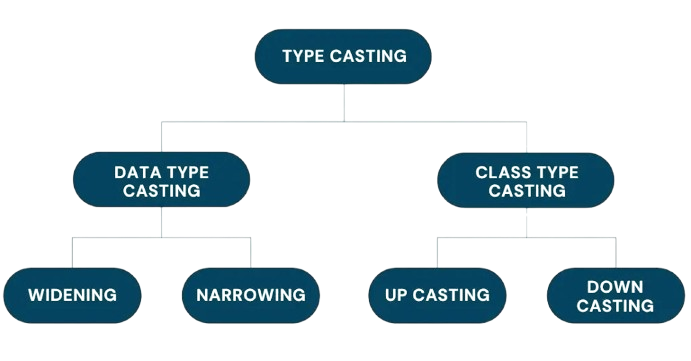
48.. Explain debugging?
Ans:
Debugging is the process of finding and fixing errors in code. It improves program correctness. Tools like debuggers help identify issues. It is an essential development step. It ensures smooth execution. It enhances overall software quality. It involves analyzing code step by step. Logging is also used to trace and fix issues.Effective debugging helps developers save time and improve performance.
49. What is a software bug?
Ans:
A software bug is an error or flaw in a program. It causes incorrect or unexpected results. Bugs occur due to logical or syntax errors. They affect software performance. Testing helps in identifying bugs. Fixing bugs improves reliability. Bugs can be minor or critical in nature. Regular updates help in fixing known issues.Proper testing reduces the chances of bugs in software applications
50. What is version control?
Ans:
Version control is a system to manage code changes. It tracks modifications over time. Tools like Git are widely used. It supports collaboration among developers. It helps in maintaining code history. It allows reverting to previous versions when needed. It supports branching and merging of code.It helps teams work efficiently on large projects.Version control also improves backup and recovery of source c
51.Define Git??
Ans:
- Git is a distributed version control system used to track code changes.It works without needing a central server. It helps developers manage and maintain different versions of code.
- It allows multiple developers to collaborate on projects.Teams can work from different locations easily. Team members can work simultaneously without conflicts.
- It maintains a complete history of code changes.Every commit is recorded with details. This helps in tracking and reverting to previous versions.
- It supports branching and merging efficiently. Developers can work on features independently and combine them later.
52. What is a repository?
Ans:
- A repository is a storage location for project files and code.It acts as a central place for project data. It keeps all related files organized in one place.
- It keeps track of all versions and changes.Maintains version history. Every modification is recorded for future reference.
- It can be local or hosted on platforms like GitHub.Remote repositories support online access. Remote repositories allow easy sharing and backup.
53.What does branch in Git?
Ans:
- A branch is a separate line of development in a repository. It allows independent work without affecting main code.Reduces risk of breaking the project.
- It allows working on features without affecting the main code. Developers can experiment safely.Errors won’t impact stable code.
- It can be merged back into the main branch later. Completed work is integrated into the main project.
54. What is merging?
Ans:
- Merging combines changes from different branches. It integrates work done separately.It brings separate work together.
- It integrates new features into the main codebase.Keeps the project current. This keeps the project updated.
- Conflicts may occur if changes overlap.Happens when same code is edited. Same lines modified in different branches cause issues.
55. What is a merge conflict?
Ans:
- A merge conflict happens when two changes clash.Occurs during merging branches. Git cannot decide which version to keep.Automatic merging fails.
- Git cannot automatically resolve the differences. Manual intervention is required.Developer must resolve it.
- Developers must manually fix the conflict. They choose the correct code version.Final decision depends on logic.
56. Explain pull request?
Ans:
- A pull request is used to propose code changes.It is created before merging code. It is submitted before merging into main branch.
- It allows team members to review code before merging.Ensures code quality. Review ensures quality and correctness.
- It improves collaboration and code quality.Team feedback is encouraged. Feedback helps improve the code.
- Instructor-led Sessions
- Real-life Case Studies
- Assignments
- DevOps is a combination of development and operations practices.It integrates both teams. It bridges the gap between coding and deployment.
- It focuses on automation and continuous delivery.Reduces manual processes Reduces manual effort and speeds up release cycles.
- It improves collaboration between teams.Encourages shared responsibility. Developers and operations work together
- CI/CD stands for Continuous Integration and Continuous Deployment.It automates development workflows. It automates software build and release processes.Ensures consistent results.
- It automates testing and deployment processes. Reduces human errors and delays.
- It ensures faster and reliable software delivery.Frequent updates are possible. Updates are released quickly.
- Cloud computing provides computing services over the internet.Users access services remotely. No need for physical infrastructure.
- It includes storage, servers, and databases.All resources are centralized. Resources are available on demand.
- Examples include AWS, Azure, and Google Cloud.Popular cloud platforms. Popular cloud service providers.
- Virtualization creates virtual versions of physical resources.Hardware is simulated using software. It simulates hardware using software.
- It allows multiple systems to run on a single machine.Saves physical resources. Improves resource sharing.
- It improves resource utilization and efficiency.Reduces wastage. Reduces idle hardware usage.Reduces idle hardware usage.
- A web server handles client requests and responses. It communicates between browser and server.It manages incoming and outgoing web traffic
- It delivers web pages over HTTP/HTTPS.Ensures users receive requested content. Sends requested data to users.
- Examples include Apache and Nginx. Widely used web servers.
- HTTP stands for HyperText Transfer Protocol. It is the foundation of web communication.It defines rules for data communication.
- It is used for communication between client and server.Transfers requests and responses. Transfers data over the web.
- It is stateless in nature.Does not store previous request data Each request is independent.
- HTTPS is a secure version of HTTP.Adds security layer to communication. It protects communication.
- It uses SSL/TLS encryption. Data is encrypted during transfer.
- It ensures secure data transmission.Encrypts transmitted data. Prevents data interception.
- REST API is a web service architecture.It follows REST principles. It enables communication between client and server systems.Allows data exchange easily.
- It uses HTTP methods like GET, POST, PUT, DELETE.These define operations on resources. These methods perform CRUD operations.Create, Read, Update, Delete data.
- It is lightweight and scalable.Suitable for large applications. Suitable for web and mobile applications.
- JSON stands for JavaScript Object Notation.It uses key-value pairs. It is used for structured data representation.Organizes data clearly.
- It is used for data exchange between systems.Common in APIs and web apps Commonly used in APIs and web services.Lightweight data format.
- It is lightweight and easy to read.Simple syntax structure. Humans and machines can understand it easily.
- XML stands for eXtensible Markup Language.Uses tags to define data. It is used to define structured data.
- It is used to store and transport data.Organizes information hierarchically. Common in older web services.
- It is more verbose than JSON.Still used in some enterprise systems. Requires more tags and space.
- API stands for Application Programming Interface.Defines how systems interact. It connects different software systems.Enables integration between apps.
- It allows communication between applications. Data can be exchanged easily.Data flows between systems.
- It defines rules for interaction.Improves functionality. Ensures proper communication format.Standardizes communication.
- Frontend deals with the user interface of applications.What users see and interact with.Manages core functionality. It focuses on visual elements.Executes business logic.
- It uses HTML, CSS, and JavaScript.Core frontend technologies. These technologies build web pages.
- It focuses on user experience. Ensures easy and smooth interaction.Ensures user satisfaction.
-
69.How does backend development?
Ans:
- Backend handles server-side logic and databases.Manages core functionality. It processes application functionality.
- It processes requests and responses.Handles client-server interaction. Communicates with frontend systems.
- Languages include Java, Python, and Node.js. Used to build server applications.
70. What is full stack development?
Ans:
- Full stack development includes frontend and backend.Covers entire application. Covers complete application development.From UI to server.
- Developers handle entire system development.Manage all layers. From UI to database.End-to-end development.
- It requires knowledge of multiple technologies. Includes frameworks and databases.
71.What is a framework?
Ans:
- A framework provides a structure for development.It acts as a foundation for building applications. It guides application design.Defines best practices for development.
- It includes predefined functions and tools.Reduces the need to write code from scratch Reduces coding effort.Improves developer productivity.
- It speeds up development process. Saves time and effort.
72. Explain library?
Ans:
- A library is a collection of reusable code.Contains prewritten functions and modules. Developers can reuse functions.
- It provides specific functionality.Focuses on a particular task. Focuses on solving particular problems.Improves efficiency in development.
- Developers can include it in projects.Easily integrated into applications. Saves development time.
73.What is a debugging tool?
Ans:
A debugging tool is software used to identify and fix errors in code efficiently.Helps detect bugs quickly. It helps developers detect bugs quickly and allows step-by-step execution of programs to analyze behavior. Enables better understanding of code flow. By tracking program flow and inspecting variables, it improves code quality and resolves logical issues. Overall, debugging tools simplify troubleshooting and make the development process more effective.
74. Explain code optimization?
Ans:
Code optimization is the process of improving the performance and efficiency of a program. It helps make programs faster by reducing execution time and minimizing memory usage. Improves speed of operations.Optimization enhances overall system efficiency, Improves performance output.improves user experience, and ensures better scalability. It also enables applications to handle larger workloads effectively.Focuses on better resource usage.
75. What is an algorithm?
Ans:
An algorithm is a step-by-step procedure used to solve a problem logically. Provides a clear solution path. It defines a sequence of operations and guides program execution. Ensures structured approach. Algorithms help in efficient problem-solving by reducing complexity and improving performance.Saves time and resources. They ensure faster and more accurate execution of tasks
76.. What is time complexity?
Ans:
Time complexity measures the amount of time an algorithm takes to execute based on the size of the input. Indicates performance efficiency.It is usually expressed using Big-O notation to represent performance. Time complexity helps compare different algorithms Aids in selecting best solution and choose the most efficient one. It also predicts how an algorithm will perform with large inputs.Improves performance decisions.
77. Define space complexity?
Ans:
Space complexity refers to the amount of memory required by an algorithm during execution Measures efficiency. Includes all memory usage. It depends on the size of the input Larger input needs more memory Shows scalability and the variables used in the program. Understanding space complexity helps optimize memory usage and reduce wastage. Efficient memory utilization improves overall program performance.
78.What is Big-O notation?
Ans:
Big-O notation is used to describe the worst-case performance of an algorithm. It measures how the execution time or space requirements grow as input size increases. Common examples include O(n), O(log n), and O(1).Represents different complexities. It helps developers compare algorithms and select the most efficient solution.Select best approach.
79. What is binary search?
Ans:
Binary search is an efficient algorithm used to find elements in a sorted array. It works by repeatedly dividing the search space in half,Reduces search area quickly reducing the number of comparisons needed. This approach results in a time complexity of O(log n), Very efficient for large data making it faster than linear search. However, it requires the data to be sorted beforehand Cannot work on unsorted data.
80. What is linear search?
Ans:
Linear search is a simple method that checks each element in a list one by one until the target is found.Sequential searching method. It works on both sorted and unsorted data, making it flexible Stops when match is found. However, it has a time complexity of O(n), which makes it slower for large datasets. It is easy to implement and suitable for small data collections.It does not require sorting. Works directly on raw data.
81. Describe sorting?
Ans:
Sorting is the process of arranging data in a specific order, such as ascending or descending. Various algorithms like bubble sort, merge sort, and quicksort are used for sorting. It improves data organization and makes searching faster and more efficient. Sorting is widely used in data processing and analysis.It helps in organizing large datasets systematically.Efficient sorting algorithms improve overall system performance.
82. What is a hash table?
Ans:
A hash table is a data structure that stores data in key-value pairs. It uses a hash function to convert keys into indices for storage. This allows fast data access, typically in constant time. Hash tables improve performance and support efficient searching, insertion, and deletion operations.They are widely used in databases and caching systems.Performance depends on the quality of the hash function.
83. What is collision in hashing?
Ans:
A collision in hashing occurs when two different keys map to the same index in a hash table. This can affect performance by slowing down operations. Collisions are common and are handled using techniques such as chaining or open addressing. Proper collision handling ensures efficient functioning of hash tables.Load factor affects the frequency of collisions.Efficient handling methods maintain performance stability.
84. How does a tree data structure work?
Ans:
A tree is a hierarchical data structure consisting of nodes connected by edges. Each node has a parent-child relationship, with a single root node at the top. Trees are used to organize data efficiently and are commonly applied in databases and file systems. They support recursive operations and traversal methods for processing data.Trees allow efficient searching and sorting operations.They are useful for representing hierarchical relationships.
85. What is a binary tree?
Ans:
A binary tree is a type of tree data structure in which each node has at most two children, referred to as the left and right child. It is widely used for efficient searching and sorting operations. Binary trees can be classified into types such as full, complete, and balanced trees. They support traversal methods like inorder, preorder, and postorder.Balanced binary trees provide better performance.They are used in search algorithms like binary search trees.
86. Define graph?
Ans:
A graph is a data structure made up of nodes (vertices) and edges that connect them. It is used to represent relationships between different entities. Graphs are commonly used in networks, social media, and mapping systems. They support complex structures and are useful in solving real-world problems.Graphs can be directed or undirected.They are essential in solving connectivity problems.
87.What is BFS?
Ans:
Breadth First Search (BFS) is a graph traversal algorithm that explores nodes level by level. It uses a queue data structure to systematically visit all nodes. BFS is useful for finding the shortest path in unweighted graphs. It is widely used in networking and pathfinding applications.It guarantees the shortest path in terms of edges.It is easy to implement using queues.
88.What is DFS?
Ans:
Depth First Search (DFS) is a graph traversal algorithm that explores nodes as deeply as possible before backtracking. It uses recursion or a stack data structure for implementation. DFS is useful for pathfinding and solving problems involving trees and graphs. It helps in exploring all possible paths in a structure.It is memory efficient compared to BFS in some cases.It is used in cycle detection and topological sorting.
89. What is machine learning?
Ans:
Machine learning is a branch of artificial intelligence that enables systems to learn from data and improve performance automatically without explicit programming. It identifies patterns and makes decisions based on data. Machine learning is widely used in applications like recommendation systems, image recognition, and predictive analysis.It includes supervised, unsupervised, and reinforcement learning.It improves accuracy with more data and training
90. Explain artificial intelligence?
Ans:
Artificial Intelligence (AI) refers to the simulation of human intelligence in machines. It enables systems to perform tasks such as learning, reasoning, and decision-making. AI is used in automation, robotics, and various industries to improve efficiency and problem-solving capabilities.AI includes technologies like machine learning and deep learning.It is widely used in chatbots and virtual assistants
91. What is cybersecurity?
Ans:
Cybersecurity involves protecting computer systems, networks, and data from cyber threats and attacks. It ensures data privacy, integrity, and security. Techniques such as encryption, firewalls, and authentication are used to prevent unauthorized access. Cybersecurity is essential for safe digital operations.It protects against malware, phishing, and hacking attacks.Regular updates and monitoring improve security measures.
92. What is encryption?
Ans:
Encryption is the process of converting data into a secure format to prevent unauthorized access. It makes information unreadable without a proper key. Encryption is widely used in secure communications such as banking and email systems. It ensures data confidentiality and security.It uses algorithms like AES and RSA.It protects sensitive data during transmission and storage
93. What is decryption?
Ans:
Decryption is the process of converting encrypted data back into its original readable form. It requires a key to reverse the encryption process. Decryption ensures that authorized users can access and understand secured data. It is an essential part of secure communication systems.It works in combination with encryption techniques. Proper key management is required for secure decryption.
94. What is a firewall?
Ans:
A firewall is a security system that monitors and controls incoming and outgoing network traffic. It acts as a barrier between trusted and untrusted networks. Firewalls block unauthorized access and protect systems from cyber threats. They are essential for maintaining network security.Firewalls can be hardware-based or software-based.They use rules to filter and control traffic.
95. How does authentication work?
Ans:
Authentication is the process of verifying a user’s identity before granting access to a system. It confirms who the user is using methods such as passwords, biometrics, or OTPs. Authentication is the first step in security and prevents unauthorized access to systems.Multi-factor authentication increases security.It ensures only valid users can access systems.
96. What is authorization?
Ans:
Authorization determines the level of access granted to a user after authentication. It defines what resources a user can access and what actions they can perform. Authorization ensures proper access control and protects sensitive data from misuse.It works after successful authentication.Role-based access control is commonly used.
97.What is a session?
Ans:
A session is a way to store user data temporarily on the server to maintain state across multiple requests. It is commonly used in web applications to track user activity and keep users logged in. Sessions expire after a period of inactivity, ensuring security and efficiency.Session IDs are used to identify users.It improves user experience by maintaining continuity.
98. Define cookie?
Ans:
A cookie is a small piece of data stored in the user’s browser. It is used to store user information and track session data. Cookies help maintain login states and personalize user experiences. They are stored on the client side and accessed by web browsers.Cookies can be session-based or persistent.They improve website performance and usability.
99. What is load balancing?
Ans:
Load balancing is the process of distributing incoming network traffic across multiple servers. It prevents any single server from becoming overloaded and ensures better performance and reliability. Load balancing improves availability and reduces system downtime.It enhances fault tolerance in systems.It ensures optimal resource utilization.
100. What is scalability?
Ans:
Scalability refers to the ability of a system to handle increasing workloads or user demands. It ensures that the system can grow and adapt without compromising performance. Scalable systems support future expansion and maintain efficiency under heavy loads.It can be vertical or horizontal scaling.It is essential for modern cloud-based applications.

Learn Java Training with Advanced Concepts By Industry Experts
57.What is DevOps?
Ans:
58. How does CI/CD work?
Ans:
59. What is cloud computing?
Ans:
60. What is virtualization?
Ans:
61.Define web server?
Ans:
62. What is HTTP?
Ans:
63.What is HTTPS?
Ans:
64.What is REST API?
Ans:
65. What is JSON?
Ans:
66. What is XML?
Ans:
67. What does API?
Ans:
68. How does frontend development?
Ans: