LMS
LMS
Last updated on 24th Aug 2026| 11513

- Introduction to Salesforce Careers at IBM
- Salesforce Career Opportunities and Roles at IBM
- Eligibility Criteria for Salesforce Jobs at IBM
- Skills Required for Salesforce Careers at IBM
- Technical Skills for Salesforce Professionals at IBM
- Salesforce Certifications for IBM Career Opportunities
- Experience and Qualifications Preferred by IBM
- IBM Salesforce Hiring and Selection Process
- Salesforce Salary and Career Growth at IBM
- Conclusion: Building a Successful Salesforce Career at IBM
Introduction to Salesforce Careers at IBM
Salesforce careers at IBM offer opportunities for professionals interested in cloud computing, customer relationship management, enterprise applications, and digital transformation. IBM professionals working with Salesforce may be involved in developing, customizing, integrating, and maintaining Salesforce solutions to support different business requirements. These roles can include Salesforce Developers, Consultants, Administrators, Architects, and other specialized professionals who work with enterprise clients and technology teams. Candidates interested in Salesforce opportunities at IBM should have a strong understanding of Salesforce concepts along with relevant technical and problem-solving skills. Knowledge of technologies such as Apex, Lightning Web Components, SOQL, Salesforce APIs, automation, data management, and integration can be valuable for technical positions. Educational qualifications, practical experience, Salesforce certifications, and communication abilities may also influence eligibility for different roles. As Salesforce continues to support digital transformation initiatives, professionals can explore diverse career paths and develop their expertise through hands-on projects and continuous learning. Candidates looking to strengthen their Salesforce foundation can also consider Salesforce Training to develop relevant technical skills. Understanding IBM’s eligibility requirements and developing the right technical and professional skills can help candidates prepare effectively for Salesforce career opportunities and build a long-term career in the Salesforce ecosystem.
Salesforce Career Opportunities and Roles at IBM
- Salesforce Developer: Salesforce Developers design, develop, customize, and maintain Salesforce applications based on business and client requirements. They commonly work with Apex, SOQL, APIs, and Salesforce automation. For a deeper understanding of the position, explore Salesforce Roles & Responsibilities..
- Salesforce Consultant: Salesforce Consultants work with clients and business teams to understand requirements and recommend suitable Salesforce solutions. They may contribute to implementation, customization, process improvement, and platform optimization.
- Salesforce Administrator: Salesforce Administrators manage users, security settings, data, reports, dashboards, workflows, and platform configurations to ensure Salesforce operates effectively within an organization.
- Salesforce Architect: Salesforce Architects design scalable and secure Salesforce solutions for complex business environments. They evaluate system architecture, integrations, data models, and technical requirements to support enterprise-level implementations.
- Salesforce Integration Specialist: Integration professionals connect Salesforce with external applications and enterprise systems using APIs, middleware, and other integration technologies. Their work helps ensure reliable data exchange across business platforms.
- Salesforce Technical Lead: Technical Leads guide development teams, review technical solutions, resolve complex issues, and help ensure Salesforce projects meet technical and business requirements. This role is generally suited to professionals with strong experience and leadership skills.
Get Your Salesforce Certification by Learning from Industry-Leading Experts and Advancing Your Career with ACTE’s Salesforce Course.
Eligibility Criteria for Salesforce Jobs at IBM
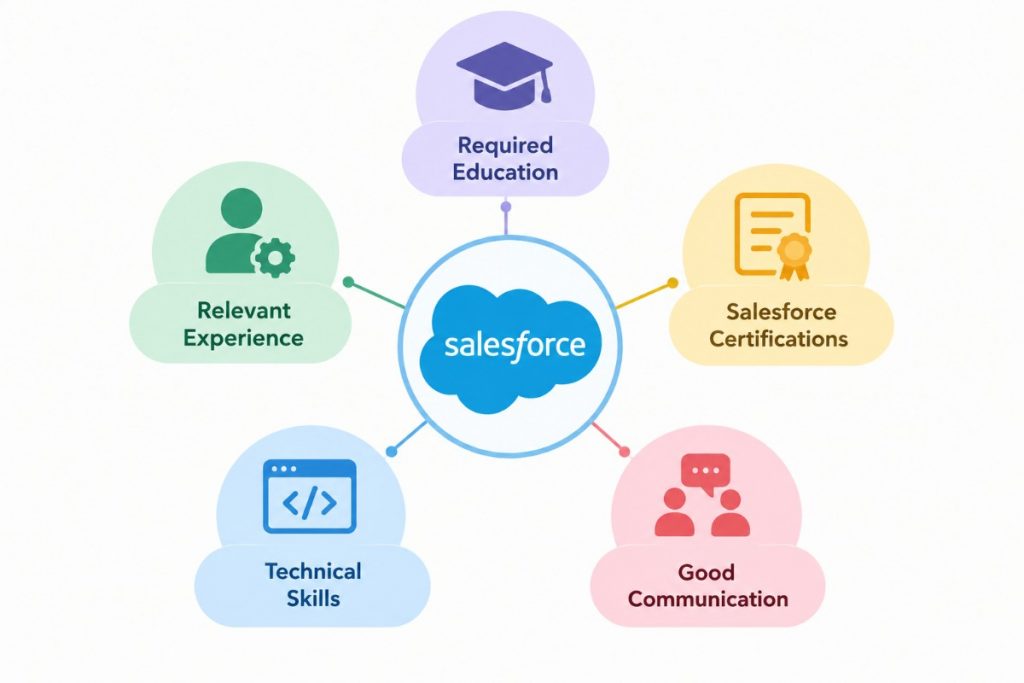
Eligibility for Salesforce jobs at IBM can vary depending on the specific role, level of experience, and technical requirements of the position. Candidates applying for Salesforce Developer, Consultant, Administrator, Architect, or other Salesforce-related roles should generally have an educational background in computer science, information technology, software engineering, or a related field. For technical positions, a strong understanding of Salesforce development, cloud technologies, programming concepts, databases, and application integration can be beneficial. Candidates should also have practical knowledge of Salesforce tools and technologies relevant to the role, such as Apex, Lightning Web Components, SOQL, Salesforce APIs, automation, and data management. Freshers may qualify for entry-level opportunities by developing foundational Salesforce knowledge, completing relevant training, and gaining hands-on project experience. Experienced professionals may be expected to demonstrate previous Salesforce implementation, development, consulting, or administration experience.

Skills Required for Salesforce Careers at IBM
- Salesforce Platform Knowledge: A strong understanding of Salesforce CRM, objects, data models, security, automation, workflows, reports, dashboards, and platform configuration is essential for many Salesforce roles.
- Programming Skills: Salesforce Developers should have knowledge of Apex, Lightning Web Components, JavaScript, SOQL, SOSL, and Salesforce development practices to build and customize applications.
- Integration Skills: Understanding REST APIs, SOAP APIs, web services, middleware, and data integration concepts can help professionals connect Salesforce with external business applications.
- Adaptability and Continuous Learning: Salesforce technologies continue to evolve, so professionals should stay updated with new platform features, tools, certifications, and industry practices. Candidates can also consider Salesforce Training to strengthen their practical knowledge and support long-term career growth.
- Problem-Solving Skills: Strong analytical and troubleshooting abilities are important for identifying technical issues, improving Salesforce solutions, and resolving complex business requirements.
- Communication and Teamwork: Salesforce professionals should communicate effectively with clients, technical teams, business users, and stakeholders while working collaboratively on projects.

Get JOB Oriented Salesforce Training for Beginners By MNC Experts
- Instructor-led Sessions
- Real-life Case Studies
- Assignments
Technical Skills for Salesforce Professionals at IBM
Strong technical skills are important for Salesforce professionals seeking career opportunities at IBM, particularly for development, consulting, administration, and architecture roles. Candidates should understand Salesforce architecture, data management, security, customization, automation, and application development. For developer positions, knowledge of Apex, Lightning Web Components, JavaScript, SOQL, SOSL, and Salesforce APIs is valuable for building and integrating customized applications. Professionals working on enterprise projects should also understand database concepts, REST and SOAP APIs, system integration, deployment processes, testing, debugging, and version control. Familiarity with Salesforce automation tools can help professionals create efficient business processes and improve application functionality. Knowledge of cloud computing and enterprise application concepts can also support professionals working on large-scale Salesforce implementations. Candidates can further strengthen their technical profile by following a structured Salesforce Certification Journey that aligns with their career goals. In addition to platform-specific expertise, strong problem-solving, analytical thinking, and troubleshooting skills are essential for handling complex technical challenges. Continuously improving these technical capabilities can help Salesforce professionals meet the requirements of IBM projects and prepare for advanced career opportunities within the Salesforce ecosystem.
Salesforce Certifications for IBM Career Opportunities
- Salesforce Administrator Certification: The Salesforce Administrator certification demonstrates knowledge of Salesforce configuration, user management, security, data management, reports, dashboards, and platform customization. It can be useful for professionals pursuing Salesforce administration and related roles.
- Salesforce Platform Developer Certification: Developer certifications validate knowledge of Salesforce programming, Apex, Lightning Web Components, data handling, testing, and application development. These credentials can strengthen the profile of candidates targeting Salesforce Developer positions.
- Salesforce Platform App Builder Certification: This certification demonstrates skills in designing and developing customized Salesforce applications using declarative platform capabilities. Candidates can learn more through this Salesforce Certification Guide, which can help them understand the certification pathway and preparation requirements.
- Salesforce Advanced Certifications: Professionals with experience can pursue advanced certifications related to architecture, development, administration, consulting, and specialized Salesforce technologies. These credentials can support progression toward senior and specialized positions.
- Certification and Practical Experience: While certifications demonstrate Salesforce platform knowledge, practical project experience is equally valuable. Working on real-world development, customization, integration, and implementation projects can help professionals apply their certification knowledge effectively.
- Continuous Certification Development: Salesforce professionals can continue expanding their credentials as they gain experience and explore new platform capabilities. Combining relevant certifications with technical expertise, communication skills, and hands-on experience can improve career opportunities within IBM and the wider Salesforce ecosystem.
Want to Master Salesforce? Explore the Salesforce Master Program Offered at ACTE Today!
Experience and Qualifications Preferred by IBM
Experience and relevant qualifications can play an important role when applying for Salesforce career opportunities at IBM. Candidates with practical experience in Salesforce development, administration, consulting, implementation, or integration can demonstrate their ability to work with real-world business requirements. For technical positions, experience with Apex, Lightning Web Components, SOQL, Salesforce APIs, automation, data management, testing, and deployment can be valuable. Freshers and entry-level candidates can strengthen their profiles through Salesforce training, hands-on projects, internships, and relevant certifications. Salesforce Training can also help learners develop practical knowledge and gain familiarity with essential Salesforce concepts. Experienced professionals may be expected to have a proven track record of working on Salesforce implementations, customizations, integrations, or enterprise applications. Salesforce certifications can further validate technical knowledge and platform expertise. IBM may also value candidates who demonstrate strong analytical thinking, problem-solving, communication, teamwork, adaptability, and client-handling abilities. Experience with cloud technologies, enterprise systems, and software development practices can provide an additional advantage for certain positions. By combining appropriate educational qualifications, practical Salesforce experience, relevant certifications, and strong professional skills, candidates can improve their readiness for Salesforce career opportunities at IBM.
Want to Learn About Salesforce? Explore Our Salesforce Interview Questions and Answers Featuring the Most Frequently Asked Questions in Job Interviews.
IBM Salesforce Hiring and Selection Process
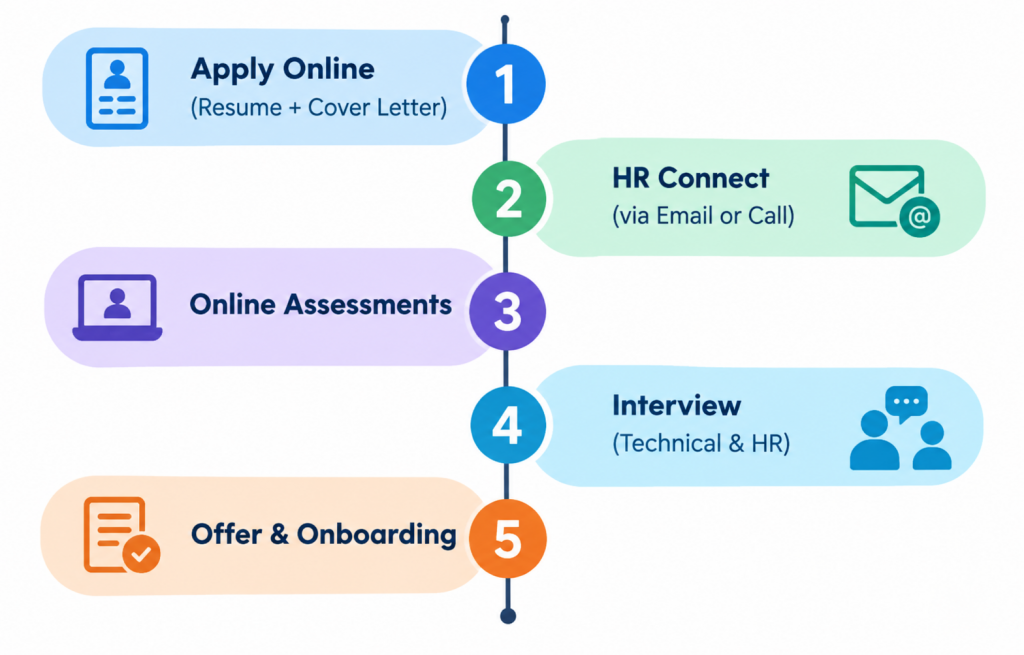
The IBM Salesforce hiring and selection process typically evaluates candidates based on their technical knowledge, relevant experience, problem-solving abilities, and professional skills. Candidates may begin by submitting an application and completing an initial screening based on their educational qualifications, Salesforce expertise, certifications, and previous experience. Shortlisted candidates may participate in technical assessments or interviews that evaluate their understanding of Salesforce development, administration, customization, integration, Apex, Lightning Web Components, SOQL, APIs, and related technologies. Depending on the position, candidates may also be asked to discuss previous Salesforce projects and explain how they handled specific technical or business challenges.
Salesforce Salary and Career Growth at IBM
Salesforce salary and career growth at IBM can vary depending on factors such as job role, experience, technical expertise, certifications, location, and project responsibilities. Entry-level Salesforce professionals may begin their careers in junior developer, administrator, or consulting roles while gaining practical experience with Salesforce technologies and enterprise projects. As professionals develop stronger expertise in areas such as Apex, Lightning Web Components, Salesforce integration, automation, data management, and cloud technologies, they can become eligible for more advanced positions with greater responsibilities. Salesforce certifications can also strengthen professional profiles and support career progression by demonstrating specialized platform knowledge. Experienced professionals may progress into roles such as Senior Salesforce Developer, Salesforce Consultant, Technical Lead, Solution Architect, or Salesforce Architect. Candidates interested in exploring different career paths can also refer to this guide on Salesforce Careers and Finding Your Dream Job to understand potential opportunities across the Salesforce ecosystem. Career advancement can also involve managing teams, leading client projects, designing enterprise solutions, and contributing to digital transformation initiatives. Professionals who continuously update their Salesforce knowledge, gain hands-on project experience, develop leadership skills, and pursue relevant certifications can improve their long-term career prospects. Overall, building a combination of technical expertise, practical experience, and professional skills can help Salesforce professionals achieve steady career and salary growth at IBM.
Conclusion: Building a Successful Salesforce Career at IBM
Building a successful Salesforce career at IBM requires a combination of strong technical knowledge, practical experience, relevant certifications, and professional skills. Candidates should develop a solid understanding of Salesforce development, administration, customization, automation, integration, and cloud technologies based on their desired career path. Freshers can improve their opportunities by completing Salesforce training, working on practical projects, earning relevant certifications, and developing strong problem-solving and communication skills. Experienced professionals can focus on advanced Salesforce technologies, enterprise implementations, leadership, and client management to progress into senior positions. Continuous learning is particularly important as the Salesforce ecosystem continues to evolve with new features, tools, and technologies. By combining hands-on experience with continuous skill development and industry-recognized certifications, professionals can prepare for a wide range of Salesforce opportunities at IBM. A focused learning approach, such as Salesforce Training, can help professionals strengthen their practical knowledge and stay prepared for evolving career requirements. A focused learning approach, strong technical foundation, and commitment to professional growth can help candidates build a rewarding and long-term Salesforce career.
![Read [BEST] SalesForce ADMIN Interview Questions and Answers Interview Question](https://www.acte.in/wp-content/uploads/2020/06/19-img-acte.jpeg.webp)