LMS
Last updated on 06th Oct 2026| 4796

Most-Asked AI Solutions Architect Interview Questions At Microsoft Provides A Comprehensive Preparation Guide For Freshers And Experienced Candidates Aspiring To Build Careers In Artificial Intelligence And Cloud Architecture. The Guide Covers Essential Topics Such As Azure AI Services, Azure Machine Learning, Generative AI, Large Language Models (LLMs), Retrieval-Augmented Generation (RAG), And Prompt Engineering. It Also Explores Cloud Architecture, AI Model Deployment, Data Engineering, Security, Scalability, Responsible AI, And Enterprise AI Solution Design. Candidates Can Strengthen Their Technical Knowledge By Practicing Scenario-Based Questions, Understanding Microsoft Azure Services, And Exploring Real-World AI Implementation Strategies. Knowledge Of System Design, Model Evaluation, Cost Optimization, Data Governance, And AI application integration Can Help Prepare Candidates For Technical And Architectural Discussions.
1. What Is An AI Solutions Architect?
Ans:
An AI Solutions Architect Designs And Implements Artificial Intelligence Solutions To Address Business Requirements. The Role Involves Selecting Suitable AI Models, Cloud Services, Data Platforms, And Application Architectures. AI Solutions Architects Ensure That Solutions Meet Requirements For Performance, Scalability, Security, And Reliability. At Microsoft, This Work May Involve Azure AI Services, Azure Machine Learning, And Microsoft Foundry..
2. What Are The Main Responsibilities Of An AI Solutions Architect?
Ans:
An AI Solutions Architect Translates Business Requirements Into Practical AI Solution Designs. Responsibilities Include Evaluating AI Technologies, Designing System Architectures, And Integrating Models With Enterprise Applications. The Role Also Covers Data Governance, Security, Cost Optimization, And Production Deployment. Collaboration With Developers, Data Scientists, Cloud Engineers, And Business Stakeholders Is Important
3. What Is Microsoft Azure?
Ans:
Microsoft Azure Is A Cloud Computing Platform That Provides Infrastructure, Data Services, AI Capabilities, And Application Hosting. It Supports Virtual Machines, Containers, Databases, Storage, Networking, And Machine Learning Workloads. Organizations Use Azure To Build, Deploy, And Manage Applications Without Maintaining All Their Own Infrastructure. Its Security, Identity, Monitoring, And Governance Services Support Enterprise Requirements.
4. What Is Azure AI?
Ans:
Azure AI Refers To Microsoft’s Cloud-Based AI Capabilities For Building Intelligent Applications And Workflows. These Capabilities Include Generative AI, Speech Processing, Language Understanding, Vision, And Machine Learning. Developers Can Integrate AI Features Through APIs, SDKs, Models, And Managed Services. The Appropriate Service Depends On Data Types, Business Requirements, Performance, And Compliance Needs
5. What Is Microsoft Foundry?
Ans:
Microsoft Foundry Is A Platform For Building, Evaluating, Deploying, And Managing Generative AI Applications And Agents. It Provides Capabilities For Working With Models, Connecting Data Sources, Testing Applications, And Monitoring AI Workloads. Teams Can Use It To Develop Solutions That Integrate AI Models With Business Systems And Tools. Governance, Evaluation, And Operational Controls Help Support Enterprise AI Development
6. What Is The Difference Between AI, Machine Learning, And Deep Learning?
Ans:
Artificial Intelligence Is The Broad Field Of Creating Systems That Perform Tasks Requiring Human-Like Intelligence. Machine Learning Is A Subfield Of AI That Enables Models To Learn Patterns From Data. Deep Learning Uses Neural Networks With Multiple Layers To Learn Complex Representations. Machine Learning Can Use Statistical Models, Decision Trees, And Neural Networks, While Deep Learning Focuses On Multilayer Networks.
7. What Is Generative AI?
Ans:
- Generative AI Creates New Content Such As Text, Images, Audio, Video, And Code Based On Patterns Learned During Training.
- It Uses Models Such As Large Language Models And Image Generation Systems To Produce Contextually Relevant Outputs.
- Enterprise Applications Include Document Summarization, Customer Support, Knowledge Retrieval, And Developer Assistance.
8. What Is A Large Language Model?
Ans:
A Large Language Model Is An AI Model Trained On Large Amounts Of Text And Other Data To Understand And Generate Language. Many LLMs Use Transformer Architectures And Predict Tokens Based On Context. They Can Support Summarization, Question Answering, Classification, Translation, And Code Generation. Their Outputs May Still Contain Incorrect Information, Bias, Or Unsupported Claims
9. What Is The Transformer Architecture?
Ans:
The Transformer Is A Neural Network Architecture That Uses Attention Mechanisms To Process Relationships Between Tokens. Self-Attention Helps A Model Determine Which Parts Of An Input Are Relevant To Other Parts. Transformers Support Parallel Processing During Training And Can Capture Long-Range Context More Effectively Than Many Earlier Architectures. They Form The Foundation Of Many Modern Language Models..
10. What Is Prompt Engineering?
Ans:
Prompt Engineering Is The Process Of Designing Instructions And Context To Guide An AI Model Toward Useful Outputs. Effective Prompts Clearly Define The Task, Provide Relevant Information, And Specify Constraints Or Output Formats. Examples And Structured Instructions Can Improve Consistency For Complex Tasks. Prompt Testing Should Cover Normal Cases, Ambiguous Requests, And Potentially Unsafe Inputs
11. What Is Retrieval-Augmented Generation (RAG)?
Ans:
Retrieval-Augmented Generation Combines Information Retrieval With A Generative AI Model. A User Query Retrieves Relevant Content From Sources Such As Documents, Knowledge Bases, Or Vector Databases. The Retrieved Context Is Included In The Model Prompt To Help Produce A Grounded Response. RAG Can Improve Access To Private Or Frequently Updated Information Without Retraining The Base Model
12. What Is The Difference Between RAG And Fine-Tuning?
Ans:
RAG Provides Relevant External Information To A Model At Inference Time, While Fine-Tuning Updates Model Parameters Using Additional Training Examples. RAG Is Often Suitable For Knowledge That Changes Frequently Or Requires Source References. Fine-Tuning Can Help Adapt Model Behavior, Output Style, Or Task-Specific Performance. Fine-Tuning Does Not Automatically Guarantee Accurate Access To Current Business Information
13. What Is Azure OpenAI?
Ans:
Azure OpenAI Provides Access To Supported OpenAI Models Through Microsoft’s Azure Cloud Environment. It Enables Organizations To Build Applications For Text Generation, Embeddings, Multimodal Tasks, And Other Supported AI Workloads. Azure Integrations Can Support Enterprise Identity, Networking, Governance, And Monitoring Requirements. Model Availability, Regional Support, Quotas, And Pricing Depend On The Specific Service And Deployment.
14. What Is The Difference Between Azure AI Services And Azure Machine Learning?
Ans:
| Aspect | Azure AI Services | Azure Machine Learning |
|---|---|---|
| Definition | Provides Prebuilt AI Capabilities Such As Text Analysis, Speech Recognition, And Image Processing. | Provides Tools To Build, Train, Evaluate, And Deploy Custom Machine Learning Models. |
| Usage | Used To Integrate Ready-Made AI Features Into Applications Through APIs And SDKs. | Used To Develop Predictive Models From Data For Classification, Regression, And Other Tasks. |
| Development | Requires Less Machine Learning Expertise Because Many AI Models Are Prebuilt. | Requires Knowledge Of Data Preparation, Model Training, Evaluation, And Deployment. |
| Examples | Includes Azure AI Language, Azure AI Speech, And Azure AI Vision. | Includes Automated Machine Learning, Model Training, Experiment Tracking, And Model Deployment. |
15. What Is Microsoft Copilot?
Ans:
Microsoft Copilot Is A Family Of AI-Powered Experiences Across Microsoft’s Products And Services. Depending On The Product, Copilot Can Help With Tasks Such As Drafting Content, Summarizing Information, Analyzing Data, And Assisting With Software Development. Enterprise Copilot Solutions May Connect AI Capabilities With Organizational Data Under Applicable Permissions And Controls. Architects Need To Understand The Product’s Integration Model, Licensing, Data Boundaries, And Administration Features.
16. What Is An AI Agent?.
Ans:
An AI Agent Is A System That Uses An AI Model To Interpret Goals, Choose Actions, And Interact With Tools Or External Systems. Agents May Retrieve Information, Call APIs, Execute Approved Operations, And Use Results To Determine Their Next Steps. Unlike A Simple Prompt-and-Response Application, An Agent Can Follow A Multi-Step Workflow. Reliable Agents Need Clear Permissions, Input Validation, Observability, And Limits On Tool Usage.
17. What Is The Difference Between An AI Agent And A Traditional Chatbot?
Ans:
A Traditional Chatbot Often Uses Fixed Rules, Intent Recognition, Or Predefined Conversation Flows To Respond To Users. An AI Agent Can Use A Language Model To Plan Steps And Invoke Tools To Complete More Complex Tasks. Agents May Retrieve Enterprise Data Or Interact With Business Applications Within Defined Permissions. Their Flexibility Also Introduces Additional Risks, Including Incorrect Tool Calls And Unintended Actions.
18. What Is Function Calling In Generative AI
Ans:
Function Calling Allows A Model To Request A Structured Tool Or Function Invocation Based On The User’s Request. The Application Validates The Requested Function And Arguments Before Executing The Operation. The Result Can Then Be Returned To The Model To Generate A Final Response. Function Calling Helps Connect AI Applications With Databases, APIs, And Business Workflows. Strong Validation, Access Controls, And Execution Limits Are Essential.
19. What Are Embeddings?
Ans:
- Embeddings Are Numerical Representations Of Text, Images, Or Other Data In A Vector Space.
- Similar Items Often Have Vectors That Are Close Together According To A Suitable Similarity Measure.
- Text Embeddings Support Semantic Search, Document Retrieval, Clustering, And Recommendation Systems.
20. What Is A Vector Database?
Ans:
A Vector Database Stores And Searches Numerical Embeddings To Find Semantically Similar Content. It Can Support Retrieval-Augmented Generation, Recommendation Systems, And Similarity-Based Search. Vector Search May Use Approximate Nearest Neighbor Algorithms To Improve Performance At Scale. Production Designs Should Consider Filtering, Metadata, Index Updates, Access Controls, And Retrieval Quality
21. What Is Semantic Search?
Ans:
Semantic Search Retrieves Information Based On Meaning Rather Than Relying Only On Exact Keyword Matches. It Commonly Uses Embeddings To Compare The Meaning Of A Query With Indexed Content. This Approach Can Find Relevant Results Even When The Query Uses Different Words From The Source Material. Hybrid Search Can Combine Semantic Retrieval With Keyword Search To Improve Coverage
22. What Is Hybrid Search?
Ans:
- Hybrid Search Combines Keyword-Based Retrieval With Semantic Vector Search. Keyword Search Is Useful For Exact Terms, Product Codes, Names, And Identifiers, While Vector Search Helps Capture Conceptual Similarity.
- A Ranking Or Fusion Method Combines Results From Both Retrieval Approaches.
- Hybrid Search Can Improve Retrieval Quality In Enterprise Knowledge Systems. Its Parameters Should Be Evaluated Against Representative Queries, Latency Targets, And The Quality Of Grounded Answers.
23. What Is Chunking In RAG?
Ans:
Chunking Divides Large Documents Into Smaller Sections That Can Be Indexed And Retrieved Independently. Suitable Chunk Sizes Help Preserve Meaning While Keeping Retrieved Context Within The Model’s Context Window. Overlapping Chunks May Reduce The Risk Of Losing Important Information At Boundaries. Chunking Strategies Should Reflect Document Structure, Query Types, And Content Length.
24. What Is A Context Window?
Ans:
A Context Window Is The Amount Of Tokenized Information A Model Can Consider During A Single Processing Request. It May Include System Instructions, User Messages, Retrieved Documents, Tool Results, And Generated Output, Depending On The Model And API. A Larger Context Window Can Support Longer Inputs But Does Not Guarantee Better Reasoning. Excessive Context Can Increase Cost And Latency Or Distract The Model From Relevant Details. Architects Manage Context Through Retrieval, Summarization, And Token Budgeting.
25. What Is Tokenization?
Ans:
Tokenization Converts Text Into Smaller Units Called Tokens That A Model Can Process. A Token May Represent A Word, Part Of A Word, Punctuation, Or Another Text Segment. Token Counts Affect Context Limits, Request Size, And Many AI Pricing Models. Different Models May Use Different Tokenization Methods
26. What Is Hallucination In Generative AI?
Ans:
Hallucination Occurs When A Generative AI Model Produces Information That Is Incorrect, Unsupported, Or Invented. It Can Happen When Context Is Missing, Instructions Are Ambiguous, Or The Model Generates Plausible But Unverified Content. Retrieval Grounding, Clear Prompts, Output Validation, And Appropriate Abstention Policies Can Reduce The Risk. Evaluation Should Include Questions With Missing Answers And Conflicting Sources.
27. How Can AI Hallucinations Be Reduced?
Ans:
- Hallucinations Can Be Reduced By Supplying Relevant, Trusted Context And Instructing The Model To Distinguish Evidence From Uncertainty.
- RAG Systems Should Retrieve High-Quality Sources And Provide Clear Citation Requirements Where Supported.
- Structured Output Validation And Business Rules Can Catch Some Incorrect Responses.
28. What Is Responsible AI?
Ans:
- Responsible AI Is The Practice Of Developing And Using AI Systems In Ways That Promote Fairness, Reliability, Safety, Privacy, Transparency, And Accountability.
- It Includes Evaluating Potential Harm And Identifying Groups Or Situations That May Be Disproportionately Affected.
- Governance Processes Define Responsibilities, Approval Requirements, And Monitoring Procedures.
29. What Is AI Bias?
Ans:
AI Bias Occurs When A Model Or AI Workflow Produces Systematically Unfair Outcomes For Certain People Or Groups. It Can Arise From Unrepresentative Training Data, Historical Inequalities, Labeling Practices, Or Design Decisions. Evaluation Should Examine Relevant Groups, Use Cases, And Error Rates Rather Than Relying Only On Overall Accuracy. Mitigation May Involve Data Improvements, Model Changes, Threshold Adjustments, And Human Review.
30. How Is Data Privacy Maintained In AI Applications?
Ans:
Data Privacy Is Maintained Through Data Minimization, Access Controls, Encryption, Retention Policies, And Appropriate Data Handling Practices. Sensitive Information Should Be Identified Before It Is Sent To Models Or External Services. Applications Should Follow Applicable Privacy Laws And Organizational Rules For Consent, Purpose, And Retention. Logging And Monitoring Must Avoid Exposing Confidential Prompts, Personal Data, Or Secrets.
31. What Is Azure Role-Based Access Control (RBAC)?
Ans:
Azure Role-Based Access Control Assigns Permissions To Users, Groups, Applications, And Managed Identities Through Roles. It Helps Ensure That Each Identity Receives Only The Access Required For Its Responsibilities. Roles Can Be Assigned At Different Scopes, Such As Subscriptions, Resource Groups, Or Individual Resources. Least-Privilege Design Reduces The Risk Of Unauthorized Changes Or Data Exposure
32. What Is Microsoft Entra ID?
Ans:
Microsoft Entra ID Is Microsoft’s Cloud Identity And Access Management Service. It Supports Authentication, Single Sign-On, Application Identity, And Access Policies For Users And Workloads. AI Applications Can Use It To Control Access To Services And Enterprise Resources. Features Such As Conditional Access And Multifactor Authentication Can Strengthen Identity Security Where Applicable.
33. What Is A Managed Identity In Azure?
Ans:
A Managed Identity Provides An Azure Resource With An Identity That Can Authenticate To Supported Services Without Storing Application Credentials In Code. Azure Manages The Identity’s Lifecycle, Reducing The Need To Handle Secrets Manually. Access Is Granted Through Appropriate Roles Or Permissions On The Target Resource
34. What Is Azure Key Vault?
Ans:
Azure Key Vault Is A Service For Securely Storing And Managing Secrets, Keys, And Certificates. Applications Can Retrieve Authorized secrets Without embedding credentials directly in source code or configuration files. Access can be controlled through identity-based permissions and monitored through supported logging capabilities. Key Vault Helps Support Secret Rotation And Centralized Credential Management
35. What Is Network Isolation In Azure AI Solutions?
Ans:
Network Isolation Limits How AI Services And Supporting Resources Communicate With Public Networks And Other Systems. Depending On Service Support, Designs May Use Private Endpoints, Virtual Networks, Firewalls, And Restricted Egress Rules. Private Connectivity Can Reduce Exposure Of Sensitive Traffic To Public Network Paths
36. What Is Azure Virtual Network?
Ans:
Azure Virtual Network Provides A Private Network Environment For Azure Resources. It Supports Subnets, Routing, Network Security Groups, And Connectivity To Other Networks. AI Applications Can Use Virtual Networks To Isolate Components And Control Traffic Between Services. Private Endpoints May Allow Supported Azure Services To Be Accessed Through Private IP Addresses.
37. What Is Azure Kubernetes Service (AKS)?
Ans:
- Azure Kubernetes Service Is A Managed Kubernetes Platform For Deploying And Operating Containerized Applications.
- It Supports Workload Scheduling, Service Discovery, Scaling, And Integration With Azure Networking And Identity Capabilities.
- AI Applications May Use AKS When They Need Flexible Orchestration For APIs, Model Serving, Or Agent Workflows.
38. What Is Azure Functions?
Ans:
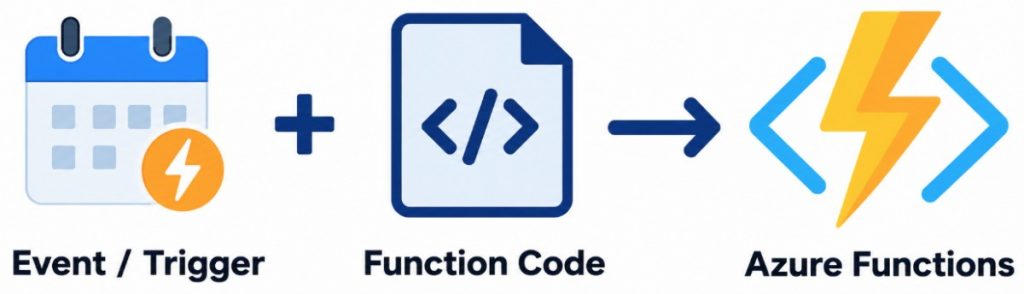
Azure Functions Is A Serverless Compute Service That Runs Code In Response To Events Or Requests. It Can Support Lightweight AI Application Components, Such As Document Processing, Event Handling, API Integration, And Workflow Steps. Scaling And Hosting Behavior Depend On The Selected Plan And Configuration
39. What Is Azure App Service?
Ans:
Azure App Service Is A Managed Platform For Hosting Web Applications And APIs. It Reduces The Need To Manage Underlying Server Infrastructure And Supports Deployment, Scaling, Authentication Integration, And Monitoring Features. An AI Application Can Use App Service To Host A User Interface Or Backend That Calls AI Services. Architects Should Evaluate Runtime Requirements, Network Connectivity, Scaling, And Availability Targets.
40. What Is Azure API Management?
Ans:
Azure API Management Helps Publish, Secure, Govern, And Monitor APIs. It Can Apply Authentication Policies, Rate Limits, Request Transformations, And Other Controls Before Requests Reach Backend Services. AI Architects May Use It To Expose Model Endpoints Or AI Application APIs To Multiple Consumers.
41. What Is Azure Machine Learning?
Ans:
Azure Machine Learning Is A Cloud Platform For Developing, Training, Tracking, Deploying, And Managing Machine Learning Models. It Supports Experiment Tracking, Data And Model Workflows, Managed Compute, And Model Deployment Options. Teams Can Use It To Build Custom Predictive Models And Operationalize Their Lifecycle. Integration With Data, Identity, And Monitoring Services Helps Support Enterprise Workflows

42. What Is MLOps?
Ans:
MLOps Applies Software Engineering And Operational Practices To The Machine Learning Lifecycle. It Includes Versioning Data And Models, Automating Training And Deployment, Testing Changes, And Monitoring Production Performance. CI/CD Pipelines Help Make Model Releases Repeatable And Auditable. Monitoring Should Detect Data Drift, Model Degradation, And Infrastructure Problems
43. What Is LLMOps?
Ans:
- LLMOps Covers The Development, Deployment, Evaluation, Monitoring, And Maintenance Of Applications Based On Large Language Models.
- It Includes Prompt Versioning, Model Configuration, Retrieval Quality, Safety Testing, And Cost Monitoring.
- Teams May Track Latency, Token Consumption, Groundedness, And User Feedback.
44. What Is CI/CD In AI Projects?
Ans:
Continuous Integration And Continuous Delivery Or Deployment Automate The Process Of Testing And Releasing Software Changes. In AI Projects, Pipelines May Validate Application Code, Prompts, Data Transformations, Model Artifacts, And Infrastructure Configuration. Automated Tests Help Identify Regressions Before Changes Reach Production
45. What Is Model Drift?
Ans:
Model Drift Refers To Changes That Cause A Deployed Model’s Performance Or Behavior To Degrade Over Time. Data Drift Occurs When Input Data Distributions Change, While Concept Drift Occurs When Relationships Between Inputs And Outcomes Change. Monitoring Can Compare Production Signals Against Baselines And Validated Evaluation Data. Retraining May Be Necessary When Evidence Shows That Model Performance Has Degraded.
46. What Is Data Drift In Machine Learning?
Ans:
Data Drift Occurs When The Distribution Of Incoming Data Changes Compared With The Data Used During Model Development Or Validation. For Example, Customer Behavior Or Transaction Patterns May Shift After A Business Change. Drift Does Not Always Mean That Model Accuracy Has Declined, But It Can Signal A Need For Investigation. Monitoring Tools Can Track Feature Distributions, Missing Values, And Other Data Quality Indicators
47. What Is The Difference Between Supervised And Unsupervised Learning?
Ans:
Supervised Learning Uses Labeled Examples To Learn A Relationship Between Inputs And Known Targets. It Is Commonly Used For Classification And Regression Problems. Unsupervised Learning Finds Structure In Unlabeled Data Through Techniques Such As Clustering And Dimensionality Reduction. Supervised Models Are Evaluated Against Target Labels, While Unsupervised Methods Need Metrics Appropriate To Their Objective.
48. What Is Reinforcement Learning?
Ans:
- Reinforcement Learning Trains An Agent To Choose Actions By Receiving Rewards Or Penalties From An Environment.
- The Agent Learns A Policy That Aims To Maximize Cumulative Reward Over Time. Applications May Include Resource Optimization, Robotics, And Certain Decision-Making Problems.
- Reinforcement Learning Can Require Careful Simulation, Exploration Controls, And Evaluation Before Real-World Use.
49. What Is Model Evaluation?
Ans:
- Model Evaluation Measures How Well A Model Performs On Data Or Scenarios Relevant To Its Intended Use.
- Metrics Depend On The Task, Such As Precision And Recall For Classification Or Mean Absolute Error For Regression.
- Evaluation Data Should Represent Expected Production Conditions Without Leaking Training Information.
50. What Is The Difference Between Precision And Recall?
Ans:
| Aspect | Precision | Recall |
|---|---|---|
| Definition | Measures The Proportion Of Predicted Positive Results That Are Actually Positive. | Measures The Proportion Of Actual Positive Cases Correctly Identified By The Model. |
| Formula | True Positives / (True Positives + False Positives). | True Positives / (True Positives + False Negatives). |
| Focus | Focuses On Reducing False Positive Predictions. | Focuses On Reducing False Negative Predictions. |
| Best Use | Useful When False Positives Are Costly, Such As Preventing Legitimate Emails From Being Marked As Spam. | Useful When Missing Positive Cases Is Costly, Such As Identifying Potential Medical Conditions. |
51. What Is An AI Evaluation Dataset?
Ans:
An AI Evaluation Dataset Contains Representative Examples Used To Measure An AI System’s Quality Against Defined Criteria. It May Include User Questions, Expected Answers, Relevant Source Documents, And Safety Test Cases. A Well-Designed Dataset Covers Common Requests, Edge Cases, Ambiguous Inputs, And Unsupported Questions. Evaluation Data Should Be Kept Separate From Training Data When Appropriate To Reduce Leakage
52. What Is Groundedness In Generative AI?
Ans:
Groundedness Measures Whether A Generated Response Is Supported By The Information Provided To The Model Or Retrieved From Trusted Sources. A Grounded Answer Avoids Introducing Unsupported Claims Beyond Its Evidence. This Is Particularly Important For RAG Applications That Answer Questions About Enterprise Documents. Evaluation Can Compare Claims In The Response With The Retrieved Context And Source Material
53. What Is The Difference Between Accuracy And F1 Score?
Ans:
- Accuracy Measures The Proportion Of All Predictions That Are Correct. The F1 Score Is The Harmonic Mean Of Precision And Recall.
- Accuracy Can Be Misleading When One Class Is Much More Common Than Another. F1 Score Provides A Balance Between Precision And Recall But Does Not Reflect Every Business Cost.
- Architects Select Evaluation Metrics According To Class Distribution, Error Consequences, And Operational Objectives.
54. What Is A Confusion Matrix?
Ans:
A Confusion Matrix Summarizes Classification Results By Comparing Predicted Labels With Actual Labels. In Binary Classification, It Contains True Positives, True Negatives, False Positives, And False Negatives. These Values Help Calculate Metrics Such As Precision, Recall, Specificity, And Accuracy. The Matrix Makes It Easier To Understand Which Types Of Errors A Model Produces.
55. What Is Overfitting?
Ans:
Overfitting Happens When A Model Learns Training Data Patterns Too Specifically, Including Noise That Does Not Generalize. An Overfit Model May Perform Well On Training Data But Poorly On Unseen Examples. Techniques Such As Regularization, Cross-Validation, Data Augmentation, And Simpler Models Can Help Reduce Overfitting. Separate Training, Validation, And Test Data Support More Reliable Evaluation
56. What Is Cross-Validation?
Ans:
Cross-Validation Evaluates A Model Across Multiple Data Splits To Estimate How Well It Generalizes. In K-Fold Cross-Validation, Data Is Divided Into K Folds, And Each Fold Is Used For Validation In Turn. The Scores Are Combined To Understand Performance Stability Across Splits. Time-Series And Grouped Data Require Specialized Splitting Strategies To Avoid Leakage. Cross-Validation Helps Compare Models, Especially When Labeled Data Is Limited.
57. What Is Feature Engineering?
Ans:
Feature Engineering Creates Or Transforms Input Variables To Help A Machine Learning Model Learn Useful Patterns. Examples Include Extracting Dates, Encoding Categories, Scaling Numeric Values, And Combining Existing Variables. Good Features Can Improve Performance, Interpretability, And Training Efficiency. Feature Creation Must Avoid Using Information That Would Not Be Available At Prediction Time.
58. What Is Data Leakage?
Ans:
Data Leakage Occurs When Information Unavailable At Prediction Time improperly Influences Model Training Or Evaluation. It Can Happen Through Future Data, Target-Derived Features, Or Preprocessing Performed Before Proper Data Splitting. Leakage Often Produces Unrealistically High Evaluation Scores. Prevention Requires Careful Feature Design, Time-Aware Splitting, And Training Pipelines That Fit Transformations Only On Appropriate Data
59. What Is Azure Data Lake Storage?
Ans:
Azure Data Lake Storage Is A Cloud Storage Service Designed For Large-Scale Data Analytics Workloads. It Supports Hierarchical Namespace Capabilities And Can Store Structured, Semi-Structured, And Unstructured Data. AI Pipelines May Use It To Store Raw Documents, Curated Datasets, Training Data, And Evaluation Artifacts. Access Controls And Data Organization Help Support Governance And Efficient Processing.
60. What Is Azure Data Factory?
Ans:
Azure Data Factory Is A Managed Data Integration Service For Building And Orchestrating Data Pipelines. It Can Move Data Between supported sources and destinations and coordinate transformation activities. AI Solutions May Use It To Prepare Data For Analytics, Model Training, Or Knowledge Retrieval. Pipeline Monitoring, Retry Policies, And Dependency Management Help Improve Reliability
61. What Is Azure Databricks?
Ans:
Azure Databricks Provides A Data And AI Platform Built Around Apache Spark And Related Data Engineering And Machine Learning Capabilities. It Supports Distributed Processing, Data Transformation, Analytics, And Machine Learning Workflows. Organizations Can Use It To Prepare Large Datasets And Build Data Pipelines For AI Applications

Get JOB Oriented AI Course By MNC Experts
- Instructor-led Sessions
- Real-life Case Studies
- Assignments
62. What Is The Difference Between Data Warehousing And A Data Lake?
Ans:
A Data Warehouse Typically Stores Curated, Structured Data Optimized For Reporting And Analytics. A Data Lake Can Store Large Amounts Of Structured, Semi-Structured, And Unstructured Data In Their Original Or Processed Forms. Warehouses often support consistent business definitions and analytical queries, while lakes offer flexible storage for varied workloads. Modern Architectures May Combine Lake And Warehouse Capabilities.
63. What Is Azure Cosmos DB?
Ans:
Azure Cosmos DB Is A Distributed Database Service Designed For Globally Distributed Applications And Low-Latency Data Access. It Supports Multiple Data Models And APIs, With Capabilities That Depend On The Selected Configuration. AI Applications May Use It To Store Conversation State, Application Metadata, Or Other Operational Data. Architects Need To Consider Partition Keys, Consistency, Throughput, Availability, And Cost.
64. What Is Azure SQL Database?
Ans:
- Azure SQL Database Is A Managed Relational Database Service Based On Microsoft SQL Server Technology.
- It Supports Structured Data, SQL Queries, Transactions, And Enterprise Database Features. AI Applications Can Use It For Business Records, Application Metadata, And Structured Retrieval Sources.
- Security Features, Backup Capabilities, And Managed Operations Reduce Some Administrative Burden.
.
65. What Is The Difference Between SQL And NoSQL Databases?
Ans:
SQL Databases Commonly Use Relational Tables, Defined Schemas, And SQL For Querying Structured Data. NoSQL Databases Support Models Such As Documents, Key-Value Records, Graphs, Or Wide-Column Data. SQL Systems Are Often Well Suited To Relational Queries And Transactional Consistency, While NoSQL Systems Can Offer Flexible Models For Particular Access Patterns. Neither Category Is Automatically Better For Every Workload.
66. What Is Data Governance In AI?
Ans:
Data Governance Defines How Data Is Collected, Classified, Accessed, Protected, Retained, And Used Across AI Workflows. It Helps Ensure That Data Use Aligns With Business Rules, Privacy Requirements, And Regulatory Obligations. Governance Includes Ownership, Lineage, Quality Standards, And Access Reviews. AI Systems Need Controls For Both Training Data And Information Retrieved During Inference
67. What Is Data Lineage?
Ans:
Data Lineage Tracks Where Data Comes From And How It Changes As It Moves Through Systems. It Can Record Source Systems, Transformations, Dependencies, And The Datasets Used In Reports Or Models. Lineage Helps Teams Investigate Data Quality Problems And Understand The Impact Of Upstream Changes
68. What Is The Difference Between Batch Processing And Real-Time Processing?
Ans:
- Batch Processing Handles Data In Groups At Scheduled Times Or When A Sufficient Amount Has Accumulated.
- Real-Time Processing Processes Events As They Arrive, Often With Lower End-To-End Latency. Batch Workloads Are Suitable For Periodic Reports, Large-Scale Training, And Scheduled Indexing.
- Real-Time Processing Is Useful For Interactive Applications, Immediate Alerts, And Event-Driven Decisions
69. How Does Design A Scalable AI Application On Azure?
Ans:
The Design Begins By Defining User Requirements, Expected Traffic, Latency Targets, Security Needs, And Availability Objectives. A Typical Architecture May Include A Web Front End, Authenticated API Layer, AI Model Endpoint, Data Storage, And Monitoring. Managed Services, Caching, Queues, And Horizontal Scaling Can Help Handle Variable Workloads
70. How Does Design An Enterprise RAG Solution?
Ans:
The Solution Starts By Identifying Trusted Knowledge Sources, User Permissions, Content Types, And Expected Questions. Documents Are Ingested, Cleaned, Split Into Chunks, Enriched With Metadata, And Indexed For Retrieval. At Query Time, The System Retrieves Relevant Content And Passes It To A Model With Clear Instructions. Authorization Filters, Source Attribution, Evaluation, And Monitoring Help Improve Safety And Reliability
71. How Does Secure An Enterprise Generative AI Application?
Ans:
- Security Begins With Strong Identity, Least-Privilege Access, And Clear Boundaries Between Users, Tools, Models, And Data Sources.
- Secrets Should Be Managed Securely, And Sensitive Services Should Use Private Connectivity Where Supported And Required.
- Input Validation, Output Checks, Content Safety Controls, And Rate Limits Reduce Application Risks.
72. What Is Prompt Injection?
Ans:
Prompt Injection Is An Attack In Which Malicious Instructions Are Placed In User Inputs Or Retrieved Content To Influence An AI Application. Such Instructions May Attempt To Override System Guidance, Expose Sensitive Information, Or Trigger Unauthorized Actions. RAG Applications Are Particularly Challenged Because Retrieved Documents May Contain untrusted text. Defenses Include Clear Instruction Hierarchies, Content Isolation, Tool Permissions, Output Validation, And Adversarial Testing
73. What Is The Difference Between Prompt Injection And Jailbreaking?
Ans:
Prompt Injection Attempts To Manipulate An AI System Through Instructions In User Inputs, Documents, Or Other Context. Jailbreaking Usually Refers To Attempts To Bypass A Model’s Intended Safety Or Usage Restrictions Through Crafted Prompts. The Terms Can Overlap, Especially In Applications That Combine External Data With Generative Models.
74. What Is Content Filtering In AI Applications?
Ans:
Content Filtering Evaluates Inputs Or Outputs Against Defined Safety And Usage Policies. It Can Help Identify Harmful Requests, Unsafe Generated Content, Or Other Prohibited Material. Filters May Be Provided By AI Platforms Or Implemented As Additional Application Logic. Configuration Should Reflect The Use Case, User Population, And Potential Impact Of Incorrect Blocking Or Allowing Content
75. What Is The Difference Between Authentication And Authorization?
Ans:
Authentication Verifies The Identity Of A User, Application, Or Service. Authorization Determines Which Resources Or Operations That Identity Is Allowed To Access. An AI Application May Authenticate A User Through An Identity Provider And Then Check Permissions Before Retrieving Documents Or Calling Tools. Both Controls Are Necessary To Prevent Unauthorized Access..
76. How Can AI Application Costs Be Optimized?
Ans:
Cost Optimization Starts With Measuring Token Usage, Model Requests, Compute, Storage, Retrieval, And Network Costs. Smaller Or Less Expensive Models May Handle Straightforward Tasks, While More Capable Models Can Be Reserved For Complex Requests. Caching, Batching, Context Reduction, And Request Limits Can Reduce Repeated Work.
77. How Can AI Application Latency Be Reduced?
Ans:
- Latency Can Be Reduced By Selecting Appropriate Models, Shortening Prompts, And Avoiding Unnecessary Retrieval Or Tool Calls.
- Caching Repeated Results And Using Efficient Indexes Can Improve Response Time. Parallel Execution May Help When Independent Tasks Can Run Safely At The Same Time.
- Streaming Can Make Partial Responses Available Earlier For Interactive Applications.
78. What Is Caching In AI Applications?
Ans:
Caching Stores Reusable Results So That Repeated Requests Can Be Served Without Repeating All Computation. AI Applications May Cache Embeddings, Retrieval Results, Or Responses For Suitable Requests. Cache Keys Must Account For Relevant Context, Permissions, Model Versions, And Data Freshness.
79. What Is Autoscaling?
Ans:
Autoscaling Automatically Adjusts Compute Capacity Based On Workload Demand Or Configured Metrics. It Can Help AI Applications Handle Traffic Spikes While Avoiding Unnecessary Capacity During Quiet Periods. Scaling Policies May Consider Request Counts, Queue Length, CPU Usage, Or Service-Specific Signals. AI Model Endpoints May Also Have Quotas And Provisioning Constraints That Limit How Quickly Capacity Can Increase.
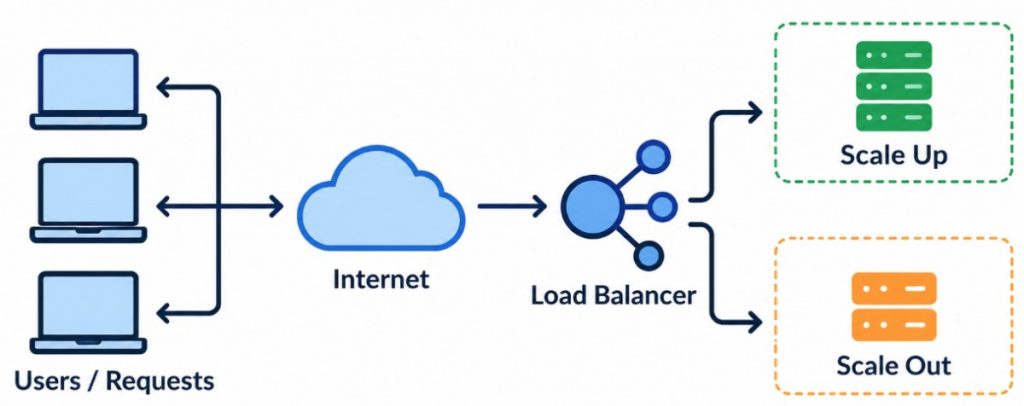
80. What Is High Availability In Azure?
Ans:
High Availability Means Designing Systems To Continue Providing Service Despite Certain Component Failures. Azure Architectures May Use Availability Zones, Redundant Components, Health Checks, And Traffic Routing To Reduce Single Points Of Failure. Data Replication And Backup Strategies Help Protect Against Different Types Of Outages And Data Loss..
81. What Is Disaster Recovery?
Ans:
Disaster Recovery Is The Process Of Restoring Systems And Data After A Major Disruption. It Includes Backup Policies, Replication, Recovery Procedures, And Regular Recovery Testing. Two Important Measures Are Recovery Time Objective, Which Defines The Target Time To Restore Service, And Recovery Point Objective, Which Defines Acceptable Data Loss In Time Terms..
82. What Is Observability In AI Systems?
Ans:
Observability Uses Logs, Metrics, And Traces To Help Teams Understand System Behavior And Investigate Problems. AI Observability May Also Include Token Usage, Model Latency, Retrieval Results, Tool Calls, Safety Events, And Evaluation Scores. Sensitive Content Should Be Redacted Or Excluded From Telemetry According To Privacy Requirements. Correlated Telemetry Helps Identify Whether Problems Originate In The Application, Data Layer, Network, Or Model Service.
83. What Is Azure Monitor?
Ans:
- Azure Monitor Collects And Analyzes Metrics, Logs, And Other Telemetry From Azure Resources And Applications.
- It Supports Dashboards, Alerts, Diagnostic Analysis, And Integration With Related Monitoring Tools.
- AI Architects Can Use It To Track Availability, Latency, Resource Consumption, And Operational Errors.
84. What Is Application Insights?
Ans:
Application Insights Is An Application Performance Monitoring Capability Within Azure Monitor. It Helps Developers Investigate Requests, Dependencies, Exceptions, And Application Performance. An AI Application Can Use It To Diagnose Delays Between The User Interface, Backend API, Data Services, And AI Endpoint. Distributed Tracing Can Help Locate Bottlenecks Across Multiple Components.
85. What Is The Difference Between PaaS And SaaS?
Ans:
Platform As A Service Provides A Managed Environment For Building And Running Applications, While Software As A Service Provides A Complete Application To End Users. PaaS Users Typically Control Application Code And Some Configuration, While The Provider Manages Much Of The Underlying Platform. SaaS Users Primarily Configure And Use The Delivered Software.
86. How Does Integrate AI With An Existing Enterprise Application?
Ans:
- Integration Begins By Understanding The Application’s APIs, Data Model, Authentication, Workflows, And Performance Constraints.
- An AI Service Can Be Added Through A Backend API Or Event-Driven Component Rather Than Exposing Credentials In The Client.
- Data Access Should Follow Existing Permissions And Governance Policies. Timeouts, Retries, Rate Limits, And Fallback Behavior Help Protect The Existing Application From AI Service Failures
87. How Does Choose The Right AI Model For A Business Problem?
Ans:
Model Selection Starts With Defining The Task, Quality Expectations, Data Sensitivity, Context Requirements, And Expected Traffic. Candidate Models Should Be Compared Using Representative Evaluation Data Rather Than Marketing Claims Alone. Factors Include Accuracy, Latency, Tool Support, Multimodal Capabilities, Deployment Options, And Total Cost..
88. How Does Handle A Failed AI Service In Production?
Ans:
The First Step Is To Detect The Failure Through Health Checks, Logs, Alerts, And User-Facing Error Metrics. The Application Should Apply Bounded Retries, Timeouts, And Appropriate Fallback Responses Without Creating Retry Storms. Depending On The Design, It May Queue Requests, Switch To An Approved Alternative, Or Temporarily Offer A Reduced Service
89. Explain An AI Architecture To Non-Technical Stakeholders?
Ans:
The Explanation Should Begin With The Business Problem, Expected Benefits, And Measurable Success Criteria. A Simple Architecture Diagram Can Show How Data Enters The System, How The AI Processes It, And How Results Reach Users. Technical Choices Should Be Explained Through Their Effects On Cost, Speed, Security, Reliability, And Maintenance.
90. Why Does Want To Become An AI Solutions Architect At Microsoft?
Ans:
The Role Offers An Opportunity To Combine Cloud Architecture, Artificial Intelligence, And Business Problem-Solving. Microsoft Provides A Broad Technology Ecosystem For Building AI Applications, Enterprise Integrations, And Scalable Cloud Solutions. A Strong Candidate Can Demonstrate Knowledge Of Azure Services, Generative AI, Security, Data Platforms, And Production Operations