LMS
Last updated on 03rd Sep 2026| 4167

- Introduction to Generative Engine Optimization (GEO)
- Understanding the Basics of Generative Engine Optimization
- Why Generative Engine Optimization Is Important for Digital Marketing
- How to Implement GEO: Step-by-Step Optimization Strategies
- How to Create Content for Generative Engine Optimization
- Keyword Research and Search Intent for GEO
- Technical SEO Practices That Support Generative Engine Optimization
- Best GEO Tools and Platforms for Generative Engine Optimization
- GEO Best Practices and Common Mistakes to Avoid
- Conclusion and Next Steps for Improving Generative Engine Optimization
Introduction to Generative Engine Optimization (GEO)
Generative Engine Optimization (GEO) is a modern digital marketing approach focused on improving the visibility and relevance of content across AI-powered search engines and generative search platforms. Unlike traditional SEO, which primarily targets rankings in search engine results pages, GEO focuses on helping generative AI systems understand, process, and reference useful information when producing answers for users. It involves creating accurate, well-structured, authoritative, and context-rich content that aligns with user intent and conversational search behavior. As users increasingly rely on AI platforms to discover information, products, services, and solutions, businesses can use GEO strategies to strengthen their online presence within AI-generated responses. Professionals developing these skills can also explore Digital Marketing Training to build a broader understanding of digital marketing practices. Effective GEO involves content quality, semantic relevance, clear information structure, trustworthy sources, technical optimization, and continuous content improvement.
Understanding the Basics of Generative Engine Optimization
Generative Engine Optimization focuses on making online content easier for AI-powered search and generative systems to understand, interpret, and use when creating responses for users. The foundation of GEO involves producing clear, accurate, relevant, and well-structured information that matches the context and intent behind user queries. Content should cover topics comprehensively while using natural language, meaningful headings, concise explanations, relevant entities, and supporting information that helps establish context. Unlike traditional SEO, GEO places greater emphasis on how generative systems interpret and summarize information across multiple sources. Businesses can strengthen their GEO efforts by demonstrating expertise, maintaining trustworthy content, improving website structure, and regularly updating information. Combining GEO with established SEO practices can help create content that serves users effectively across both traditional search results and AI-generated search experiences.
Get Your Digital Marketing Certification by Learning from Industry-Leading Experts and Advancing Your Career with ACTE’s Digital Marketing Course.
Why Generative Engine Optimization Is Important for Digital Marketing
Generative Engine Optimization is becoming increasingly important in digital marketing as users rely more on AI-powered platforms to discover information, compare options, and find solutions. GEO helps businesses improve the chances of their content being understood, referenced, and represented in AI-generated responses. By creating authoritative, relevant, and well-structured content, marketers can strengthen brand visibility across emerging generative search experiences. For professionals looking to understand the broader digital marketing landscape, exploring the Digital Marketing for Beginners can provide a useful foundation. GEO also encourages businesses to focus on user intent, natural language, contextual relevance, and trustworthy information rather than relying only on traditional keyword-based optimization. As search behavior continues to evolve, combining GEO with SEO, content marketing, and other digital strategies can help businesses reach audiences through both conventional search results and AI-driven discovery channels.
How to Implement GEO: Step-by-Step Optimization Strategies
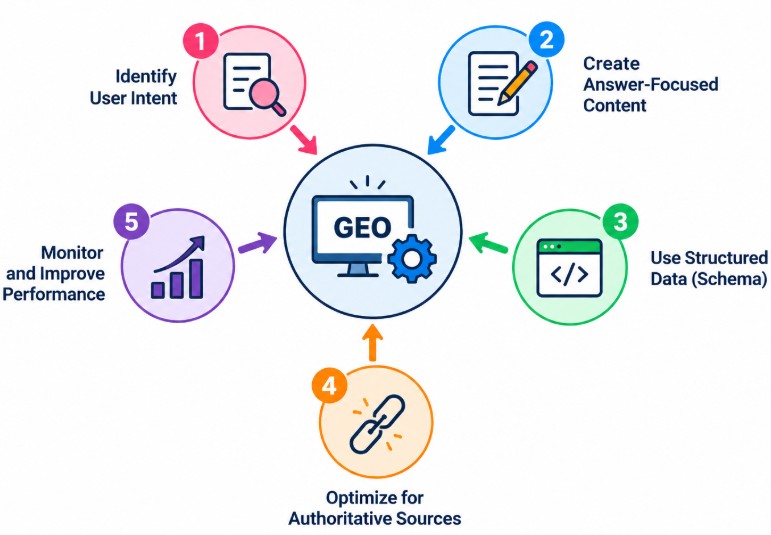
- Understand Search Intent: Analyze user questions, search patterns, topics, and conversational queries to understand audience needs and create GEO content that provides relevant answers.
- Create Helpful Content: Develop accurate, useful, and well-structured content with clear headings, direct answers, examples, natural language, and supporting details for better understanding.
- Build Content Authority: Improve credibility by using reliable sources, expert insights, original research, accurate information, and updated facts that strengthen trust and topical authority.
- Optimize for AI Answers: Write concise answers, definitions, summaries, and structured explanations that help generative AI platforms easily understand, extract, and reference your content.
- Optimize Technical SEO: Improve site structure, page speed, mobile usability, structured data, internal linking, crawling, indexing, and accessibility to support efficient content discovery. Professionals can strengthen these digital marketing fundamentals through Digital Marketing Training while applying GEO strategies.
- Use Structured Content: Organize information with descriptive headings, bullet points, FAQs, tables, and concise sections to make important details easier for users and AI systems to interpret.
- Strengthen Entity Relevance: Clearly describe important people, brands, products, services, and topics while maintaining consistent context to help AI systems understand content relationships.
- Monitor and Improve: Track search visibility, AI mentions, content performance, user behavior, and emerging search trends to identify gaps and continuously improve your GEO strategy.

Learn Digital Marketing Training Course to Build Your Skills
Weekday / Weekend BatchesSee Batch DetailsHow to Create Content for Generative Engine Optimization
Creating content for Generative Engine Optimization requires a strong focus on relevance, accuracy, context, and user intent. Content should provide comprehensive information that clearly addresses the questions and topics users are searching for while using natural and conversational language. Well-defined headings, concise paragraphs, lists, examples, definitions, and relevant supporting details can make information easier for generative systems to understand and interpret. Marketers should include original insights, reliable information, relevant entities, and contextual relationships to demonstrate topical expertise and strengthen content credibility. Content should also be regularly reviewed and updated to maintain accuracy as information and search behavior change. Instead of focusing only on keyword repetition, GEO content should cover related concepts naturally and provide meaningful value to readers. Combining high-quality content with strong SEO practices can help businesses build a more useful and trustworthy online presence across traditional and AI-powered search experiences.

Get JOB Oriented Digital Marketing Training for Beginners By MNC Experts
- Instructor-led Sessions
- Real-life Case Studies
- Assignments
Keyword Research and Search Intent for GEO
Keyword research and search intent play an important role in Generative Engine Optimization by helping marketers understand the topics, questions, and information users expect from AI-powered search experiences. GEO keyword research should go beyond short keywords and include long-tail phrases, conversational queries, question-based searches, and semantically related terms. Marketers can analyze queries using words such as “what,” “how,” “why,” “when,” and “which” to identify the different ways users seek information. Understanding whether a query has informational, commercial, navigational, or transactional intent helps content creators develop responses that match the user’s actual needs. Related topics, entities, search suggestions, and commonly asked questions can also be analyzed to build broader topical coverage. For professionals looking to strengthen their overall digital marketing knowledge, Digital Marketing Training can provide additional learning across important marketing concepts. By naturally incorporating relevant keywords and concepts while maintaining clear, useful, and context-rich content, businesses can improve the relevance of their webpages for both traditional search engines and generative AI systems.
Technical SEO Practices That Support Generative Engine Optimization
Technical SEO provides an important foundation for Generative Engine Optimization by helping search engines and AI-powered systems access, understand, and interpret website content effectively. Websites should maintain a clear structure with descriptive URLs, logical navigation, relevant internal links, and properly organized content. Ensuring that important pages can be crawled and indexed through appropriate XML sitemaps, robots.txt settings, and canonical tags can improve content discoverability. Structured data can also provide additional context about webpages, organizations, products, services, and other entities when implemented correctly. Website performance should be optimized by improving page speed, Core Web Vitals, mobile responsiveness, and overall accessibility. Secure HTTPS connections and clean technical architecture can further support a reliable user experience. Regularly checking broken links, indexing issues, duplicate content, and other technical problems helps maintain website quality. By combining these technical SEO practices with high-quality, authoritative content, businesses can create a stronger foundation for GEO and AI-driven search visibility.
Want to Master Digital Marketing? Explore the Digital Marketing Master Program Offered at ACTE Today!
Best GEO Tools and Platforms for Generative Engine Optimization
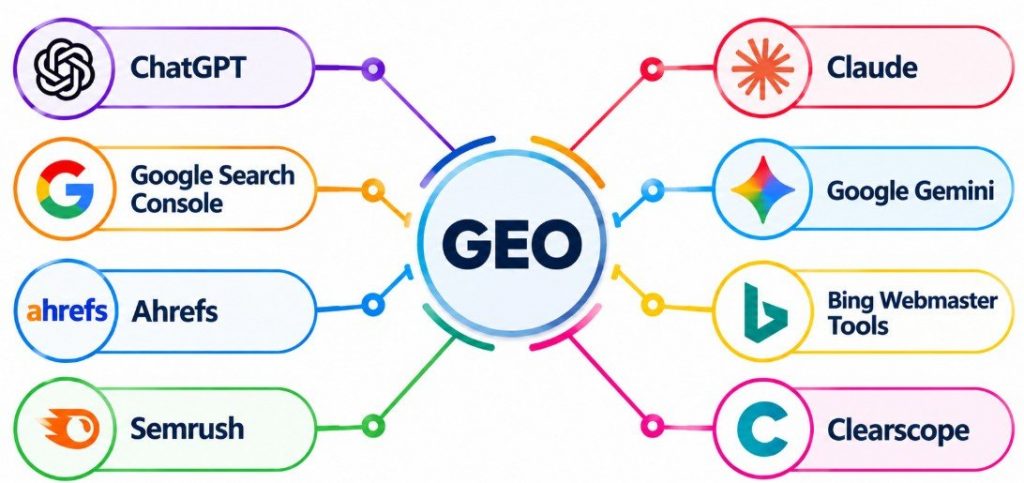
- Google Search Console: Monitor queries, clicks, impressions, indexing status, page performance, and search visibility to identify valuable GEO opportunities and improve content reach.
- Google Analytics: Analyze website traffic, engagement, conversions, audience behavior, and content performance to understand user needs and improve data-driven GEO strategies.
- Google Trends: Explore trending topics, seasonal patterns and changing search behavior to create timely GEO content that closely matches current audience demand. Learning through an AEO Tutorial can also help marketers understand how content optimization is evolving for AI-driven search and answer platforms.
- Semrush: Research keywords, competitors, content gaps, backlinks, rankings, and trending topics to develop authoritative GEO content and strengthen overall search visibility.
- Ahrefs: Analyze keywords, backlinks, competitor pages, rankings, and content gaps to discover valuable opportunities for improving authority, relevance, and website visibility.
- AnswerThePublic: Discover popular questions, comparisons, phrases, and conversational queries around specific topics to plan helpful GEO content that directly addresses user needs.
- AlsoAsked: Find related questions, search patterns, and connected topics to understand user intent and create comprehensive GEO content covering multiple relevant audience queries.
- Schema Markup Tools: Generate, test, and validate structured data to clearly describe webpage content, entities, FAQs, articles, and relationships for improved search understanding.
- PageSpeed Insights: Measure loading speed, Core Web Vitals, mobile usability, and technical performance to identify improvements that strengthen user experience and GEO readiness.
- GEO Analysis Platforms: Track AI search visibility, brand mentions, citations, content references, and generative search performance to identify gaps and continuously improve GEO strategies.
Want to Learn About Digital Marketing? Explore Our Digital Marketing Interview Questions and Answers Featuring the Most Frequently Asked Questions in Job Interviews.
GEO Best Practices and Common Mistakes to Avoid
Effective Generative Engine Optimization requires a consistent focus on content quality, relevance, accuracy, and user intent. Marketers should create clear and comprehensive content that directly addresses audience questions while providing useful context and supporting information. Using natural language, descriptive headings, concise explanations, relevant examples, and semantically related concepts can help make content easier for generative systems to understand. Businesses should demonstrate expertise and credibility by using reliable information, maintaining factual accuracy, and updating content regularly. Keyword stuffing, repetitive writing, misleading claims, and low-value content should be avoided because they can reduce content quality and user trust. It is also important not to rely solely on traditional ranking techniques, as GEO focuses on how information is interpreted and represented in generative search experiences. Technical SEO, structured data, internal linking, website performance, and mobile accessibility should be maintained alongside content optimization. For professionals aiming to apply these strategies in their careers, exploring a Digital Marketing Career at an MNC can provide broader insight into industry-focused digital marketing practices. Finally, marketers should monitor changes in AI-powered search, user behavior, content performance, and industry trends to continuously improve their GEO strategy.
Conclusion and Next Steps for Improving Generative Engine Optimization
Generative Engine Optimization is becoming an important part of modern digital marketing as AI-powered search continues to influence how users discover and consume information. A successful GEO strategy focuses on creating accurate, relevant, authoritative, and well-structured content that clearly addresses user intent and provides meaningful context. Businesses can strengthen their GEO efforts by combining high-quality content with keyword research, technical SEO, structured data, internal linking, website performance, and regular content updates. For marketers who want to develop these skills further, Digital Marketing Training can help build a broader foundation in digital marketing practices. Using suitable SEO and content analysis tools can also help marketers identify opportunities and monitor performance. Since generative search technologies and user behavior continue to evolve, GEO strategies should be reviewed and refined regularly. By focusing on user value, topical relevance, credibility, and continuous optimization, businesses can build a stronger online presence across traditional search engines and AI-driven search experiences.