LMS
Last updated on 03rd Sep 2026| 4162

- Introduction to Answer Engine Optimization (AEO)
- Understanding the Basics of Answer Engine Optimization
- Why Answer Engine Optimization Is Important for Digital Marketing
- How to Implement AEO: Step-by-Step Optimization Strategies
- How to Create Content for Answer Engine Optimization
- Keyword Research and Search Intent for AEO
- Technical SEO Practices That Support Answer Engine Optimization
- Best AEO Tools and Platforms for Answer Engine Optimization
- AEO Best Practices and Common Mistakes to Avoid
- Conclusion and Next Steps for Improving Answer Engine Optimization
Introduction to Answer Engine Optimization (AEO)
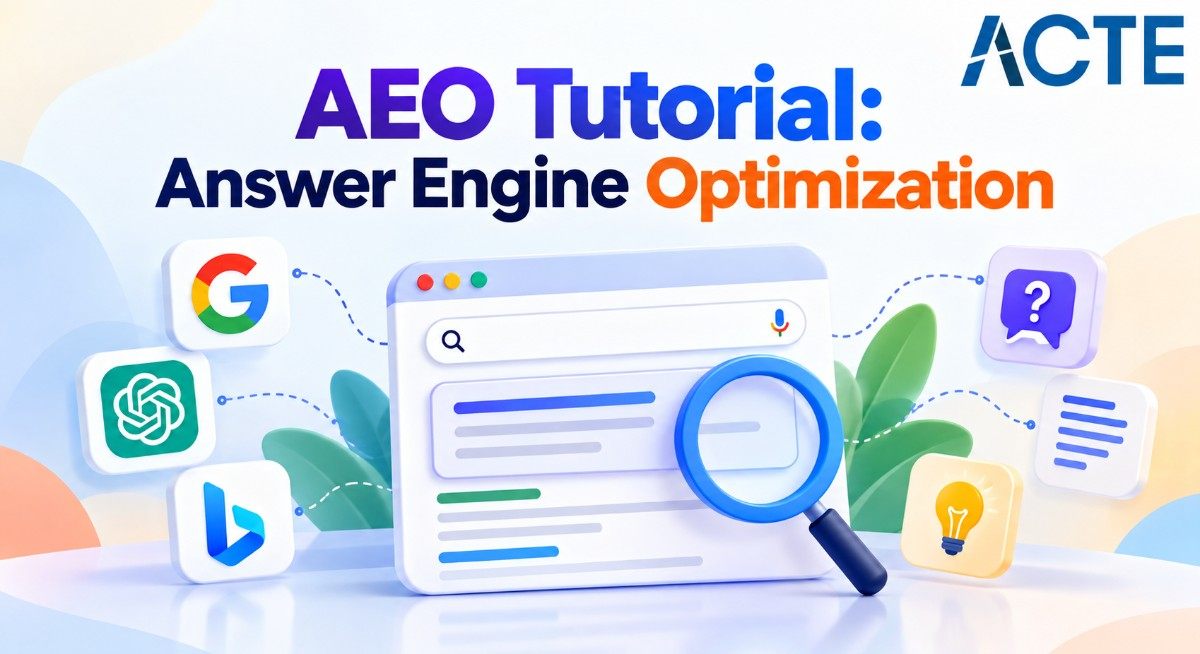
Answer Engine Optimization (AEO) is a digital marketing approach focused on optimizing online content so that it can provide clear, relevant, and direct answers to user queries across search engines and AI-powered answer platforms. Unlike traditional SEO, which primarily focuses on improving website rankings, AEO aims to make content easier for search engines, voice assistants, and AI systems to understand and use when generating answers. Professionals building these skills can combine AEO knowledge with foundational Digital Marketing Training to develop effective content strategies and adapt to modern search and answer-driven platforms. A successful AEO strategy involves understanding search intent, creating concise and informative content, using structured content formats, and providing trustworthy information. Businesses and content creators can use AEO to improve their visibility across evolving search experiences where users increasingly expect immediate answers.
Understanding the Basics of Answer Engine Optimization
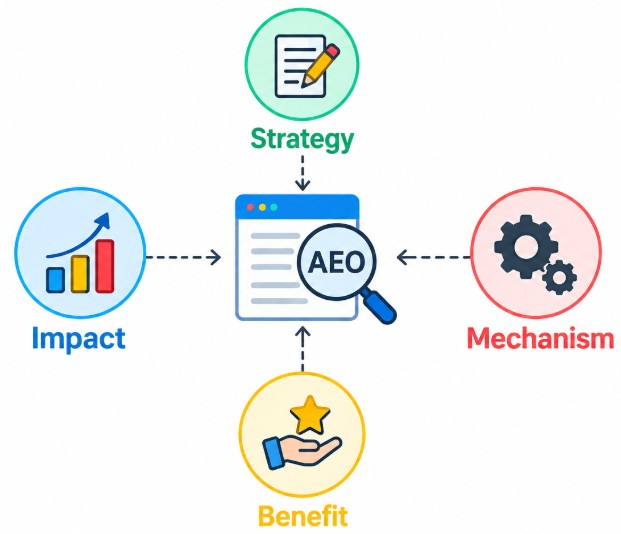
Answer Engine Optimization focuses on helping search engines and AI-powered answer systems understand, extract, and present useful information from online content. The basic principles of AEO include understanding user search intent, identifying question-based queries, providing direct and accurate answers, and organizing information in a clear structure. Content should address common questions using natural language while offering enough context to establish relevance and credibility. Proper headings, concise paragraphs, lists, FAQs, structured data, and well-organized information can make content easier for search systems to interpret. AEO also considers conversational searches, voice queries, and AI-generated responses, where users often expect quick and specific answers. By combining helpful content with traditional SEO practices, businesses can improve their chances of appearing in answer-focused search experiences.
Get Your Digital Marketing Certification by Learning from Industry-Leading Experts and Advancing Your Career with ACTE’s Digital Marketing Course.
Why Answer Engine Optimization Is Important for Digital Marketing
Answer Engine Optimization has become increasingly important as users rely on search engines, voice assistants, and AI-powered platforms to find quick and direct answers. AEO helps businesses adapt their content to these changing search behaviors by focusing on user questions, search intent, and helpful information. Optimized content can improve the chances of being selected for featured answers, voice search results, AI-generated responses, and other answer-focused search experiences. AEO can also support brand visibility by positioning a business as a useful and reliable source of information for relevant queries. By combining AEO with traditional SEO, marketers can create content that serves both conventional search rankings and newer answer-driven discovery methods. For beginners building their digital marketing knowledge, Digital Marketing for Beginners can provide a useful foundation for understanding these evolving optimization practices. This approach can help businesses reach users at different stages of their search journey and build stronger online visibility.

Learn Digital Marketing Training Course to Build Your Skills
Weekday / Weekend BatchesSee Batch DetailsHow to Implement AEO: Step-by-Step Optimization Strategies
Implementing Answer Engine Optimization involves creating content that clearly responds to user questions while making information easy for search engines and AI-driven answer systems to understand. The process begins with understanding search intent and identifying question-based and conversational queries related to the target topic. Content should provide direct, accurate answers before presenting supporting details, while headings, short paragraphs, lists and FAQs can improve content organization. Using natural language helps content align with the way users communicate through search engines and AI platforms. Existing pages should also be reviewed regularly and updated with relevant questions, current information, and clearer answers. Appropriate structured data can help search engines understand webpage context, while reliable sources and accurate information strengthen content quality and authority. Professionals can strengthen these skills through Digital Marketing Training, which can provide a broader foundation for developing and optimizing digital content strategies. Monitoring search performance, user behavior, and visibility can help identify areas for improvement. Since search behavior and answer-focused technologies continue to evolve, businesses should regularly update their AEO strategies to maintain relevant and useful content.
How to Create Content for Answer Engine Optimization
- Answer User Questions Directly: Provide clear, accurate, and useful answers to common user questions while addressing search intent and helping search engines easily understand your content.
- Use Question-Based Headings: Add relevant user questions as headings to organize your content clearly and help search engines identify the specific answers provided within each section.
- Write Concise Answers: Give a clear and direct answer at the beginning of each section, followed by useful explanations, examples, supporting details, and practical information.
- Use Conversational Language: Write content naturally using simple and conversational language that reflects how people ask questions through search engines, AI tools, and voice assistants.
- Structure Information Clearly: Organize content with headings, bullet points, numbered lists, tables, and FAQs to help users and search engines quickly understand important information.
- Include Supporting Details: Strengthen direct answers with useful examples, explanations, statistics, facts, and practical information that improve credibility and provide additional value.
- Include Relevant FAQs: Add frequently asked questions with concise and accurate answers to address related search queries, improve topic coverage, and provide additional value to users. Building strong content and optimization skills can also support professionals planning a Digital Marketing Career at an MNC.
- Optimize for Long-Tail Queries: Target specific, conversational, and intent-focused search phrases that closely reflect the questions, problems, and information your audience searches for.
- Maintain Accuracy and Freshness: Regularly review facts, examples, statistics, links, and recommendations to ensure your content remains accurate, relevant, trustworthy, and useful.
- Demonstrate Expertise: Provide accurate information, practical knowledge, credible examples, and reliable sources where needed to establish authority, expertise, and user trust.

Get JOB Oriented Digital Marketing Training for Beginners By MNC Experts
- Instructor-led Sessions
- Real-life Case Studies
- Assignments
Keyword Research and Search Intent for AEO
Keyword research and search intent play an important role in Answer Engine Optimization because they help marketers understand the questions, phrases, and information users are looking for. AEO-focused keyword research should go beyond traditional short keywords and include long-tail, conversational, and question-based queries. Marketers can identify phrases such as “what,” “how,” “why,” “when,” and “which” to understand the specific information users expect from search results. It is also important to determine the intent behind each query and create content that directly satisfies that intent. Related questions, semantic keywords, autocomplete suggestions, and commonly searched topics can provide additional content opportunities. Organizing keywords according to user intent and addressing them with clear, accurate answers can help make content more relevant for answer engines and modern search experiences.
Technical SEO Practices That Support Answer Engine Optimization
- Use Structured Data: Implement relevant Schema.org markup to clearly define content, entities, FAQs, products, articles, and other information, helping search engines understand each webpage.
- Improve Page Speed: Improve website performance by compressing images, reducing unnecessary scripts, enabling caching, and optimizing resources to provide faster loading across all devices.
- Ensure Mobile Optimization: Create responsive webpages with readable text, simple navigation, optimized images, and accessible layouts to provide users with a consistent mobile experience.
- Maintain Clear Site Structure: Organize webpages with logical categories, descriptive URLs, clear headings, internal links, and simple navigation to improve content discovery and understanding.
- Optimize Crawling and Indexing: Review robots.txt, XML sitemaps, canonical tags and indexing settings to help search engines efficiently access and process important webpages.
- Monitor Technical Performance: Regularly review crawl errors, Core Web Vitals, broken links, redirects, and performance issues that could negatively affect search visibility. Marketers can also explore GEO Tutorial to understand how optimization practices are evolving for AI-driven search experiences.
- Use Descriptive Metadata: Create accurate title tags and compelling meta descriptions that clearly summarize webpage content, include relevant terms, and closely match user search intent.
- Improve Content Accessibility: Use semantic HTML, descriptive alt text, readable layouts, accessible navigation, and properly labeled elements to make website information easier to understand.
- Build Internal Links: Connect relevant webpages using descriptive anchor text to guide users toward useful information while helping search engines discover and understand related content.
- Secure the Website: Use HTTPS, maintain updated security certificates, fix vulnerabilities, and follow secure website practices to protect visitor data and provide a trustworthy browsing experience.
Want to Master Digital Marketing? Explore the Digital Marketing Master Program Offered at ACTE Today!
Best AEO Tools and Platforms for Answer Engine Optimization
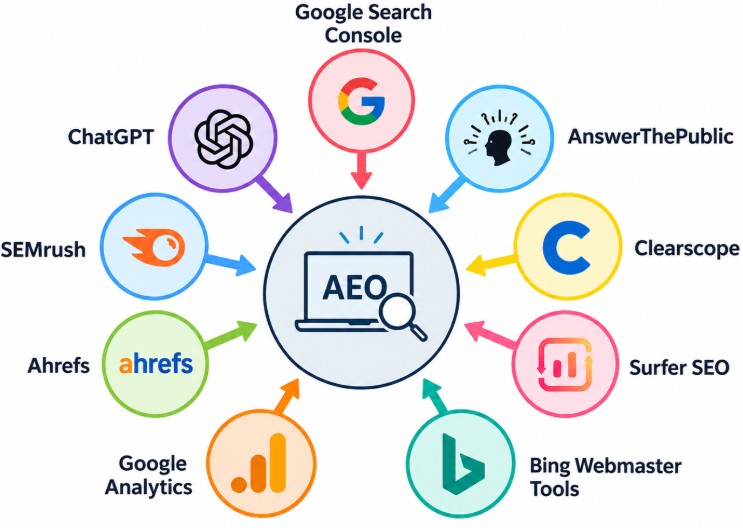
- Google Search Console: Monitor search performance, indexing, queries, clicks, impressions, and page visibility to identify content opportunities and improve your overall AEO strategy.
- Google Analytics: Analyze website traffic, user behavior, engagement, conversions, and content performance to understand audience needs and make informed decisions for AEO improvements.
- Google Keyword Planner: Discover relevant keywords, search terms, query variations, and audience interests to create useful content that closely matches user intent and search behavior.
- Semrush: Perform keyword research, competitor analysis, content optimization, backlink analysis, and visibility tracking to strengthen AEO strategies and improve organic search performance.
- Ahrefs: Analyze keywords, backlinks, competing webpages, rankings, and content gaps to discover valuable opportunities for improving website authority and organic search visibility.
- AnswerThePublic: Discover popular questions, phrases, comparisons, and conversational queries related to specific topics to create helpful content that directly addresses user search needs.
- PageSpeed Insights: Evaluate loading speed, Core Web Vitals, mobile performance, and technical issues to identify improvements that enhance user experience and overall search performance. Professionals can also strengthen their broader digital marketing knowledge through Digital Marketing Training while learning how these tools support modern content optimization.
- AlsoAsked: Explore related questions and connected search patterns to understand audience intent, discover useful subtopics, and develop comprehensive content that answers multiple queries.
- Google Trends: Analyze trending topics, changing search interests, seasonal patterns, and regional demand to create timely AEO content that remains relevant to current audience interests.
- Schema Markup Tools: Generate, test, and validate structured data to help search engines understand webpage information, entities, FAQs, articles, products, and other important content.
Want to Learn About Digital Marketing? Explore Our Digital Marketing Interview Questions and Answers Featuring the Most Frequently Asked Questions in Job Interviews.
AEO Best Practices and Common Mistakes to Avoid
- Focus on Search Intent: Create content that directly addresses what users are looking for instead of targeting keywords without understanding their purpose.
- Provide Direct Answers: Give clear and concise answers near the beginning of relevant sections so search engines and users can quickly understand the main information.
- Use Question-Based Headings: Include natural questions as headings when they match common user queries and provide relevant answers below them.
- Organize Content Clearly: Use headings, subheadings, lists, tables, and short paragraphs to make important information easier to understand and extract.
- Keep Information Accurate: Regularly review and update content to ensure that facts, statistics, examples, and recommendations remain relevant.
- Use Natural Language: Write in a conversational and reader-friendly style instead of forcing keywords into sentences unnaturally.
- Avoid Keyword Stuffing: Repeating the same keywords excessively can reduce readability and may weaken the overall quality of the content.
- Do Not Create Misleading Answers: Avoid providing exaggerated, incomplete, or unsupported information simply to gain greater search visibility.
- Strengthen Content Authority: Support important claims with reliable information and demonstrate relevant knowledge, experience, and expertise.
- Monitor and Improve Performance: Review search data, user engagement, and content performance regularly to identify areas where the AEO strategy can be improved.
Conclusion and Next Steps for Improving Answer Engine Optimization
Answer Engine Optimization is becoming an important part of modern digital marketing as users increasingly search for quick, accurate, and conversational answers. A successful AEO strategy involves understanding search intent, creating direct and useful content, targeting question-based queries, maintaining strong technical SEO, and organizing information in a way that search engines can easily interpret. Businesses can also use tools such as keyword research platforms, analytics solutions, and structured data tools to identify opportunities and measure content performance. Developing broader digital marketing expertise through Digital Marketing Training can further support professionals in applying these optimization techniques effectively. By regularly updating content, improving website accessibility, monitoring search behavior, and following user-focused optimization practices, marketers can strengthen their visibility across search engines, answer-focused results, voice search, and AI-driven search experiences. Consistent testing and optimization can help businesses build stronger digital authority and provide more valuable answers to their target audiences.