LMS

Last updated on 01st Oct 2026| 4192

- Introduction to SEO Audits
- Preparing for an SEO Audit
- How to Perform a Technical SEO Audit
- How to Audit On-Page SEO Factors
- How to Analyze Website Content and Keywords
- How to Check Off-Page SEO and Backlinks
- How to Audit Website Performance and User Experience
- How to Identify and Fix Common SEO Issues
- Conclusion and Next Steps After an SEO Audit
Introduction to SEO Audits
An SEO audit is a detailed evaluation of a website to identify factors that may affect its visibility, search rankings, organic traffic, and overall performance in search engines. It helps website owners and digital marketers understand whether important SEO elements are properly optimized and where improvements are required. A complete SEO audit typically examines technical SEO, website structure, page speed, mobile usability, on-page elements, content quality, keywords, internal links, backlinks, indexing, crawlability, and user experience. For professionals working in online promotion, understanding these areas is also an important part of Digital Marketing Training, as SEO directly supports website visibility and organic growth. The process usually begins with checking whether search engines can access and index important pages, followed by reviewing page titles, meta descriptions, headings, URLs, images, and content relevance. Technical issues such as broken links, duplicate content, missing redirects, crawl errors, and slow-loading pages can also be identified during the audit. Off-page factors, including backlink quality and referring domains, should be reviewed to understand the website’s authority and link profile. By following a systematic SEO audit process, businesses can identify weaknesses, prioritize technical and content improvements, and develop a practical optimization plan. Regular audits also help maintain website health as search engine requirements, content, and website structures change over time.

Preparing for an SEO Audit
- Define Audit Goals: Identify whether the audit focuses on technical SEO, rankings, organic traffic, content performance, backlinks, or overall website health.
- Set Up SEO Tools: Prepare tools such as Google Search Console, Google Analytics, Screaming Frog, Ahrefs, Semrush, or other suitable SEO platforms for collecting website data.
- Check Website Access: Ensure you have access to the website, CMS, analytics platforms, Search Console, and other systems required to investigate and resolve SEO issues.
- Create an Audit Checklist: Prepare a checklist covering technical SEO, on-page optimization, content, internal linking, backlinks, indexing, and other important SEO factors. Understanding how SEO fits into broader online promotion can also be helpful, especially for beginners exploring Digital Marketing for Beginners.
- Review Existing Performance: Examine organic traffic, impressions, clicks, rankings, conversions, and other available performance metrics to understand the website’s current SEO condition.
- Prepare a Page List: Collect important website URLs and identify key pages such as the homepage, service pages, product pages, category pages, and important blog content.
Get Your Digital Marketing Certification by Learning from Industry-Leading Experts and Advancing Your Career with ACTE’s Digital Marketing Course.
How to Perform a Technical SEO Audit
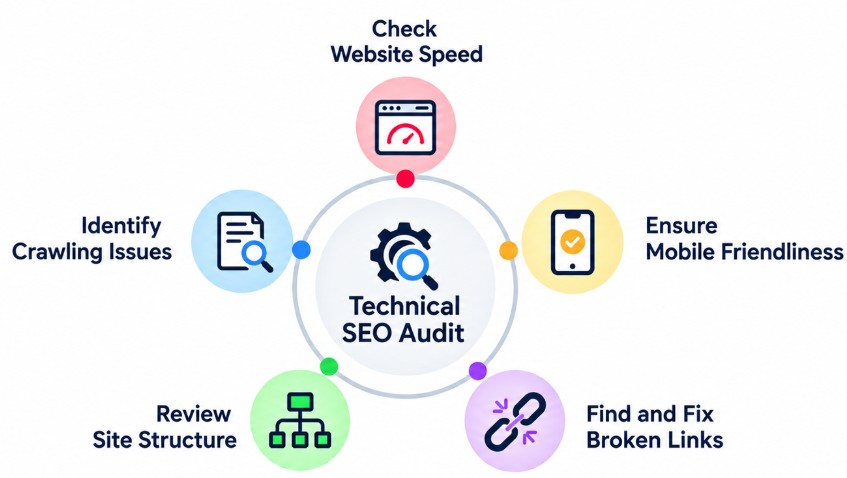
A technical SEO audit examines the website’s technical foundation to identify issues that can affect crawling, indexing, rankings, and user experience. Start by checking whether important pages can be accessed and indexed by search engines. Review the robots.txt file to ensure that essential pages or resources are not accidentally blocked. Check the XML sitemap for accuracy and confirm that important URLs are included and submitted to search engines. Examine the website for broken links, duplicate URLs, incorrect canonical tags, and unnecessary redirects. Page speed and Core Web Vitals should also be reviewed because slow-loading pages can affect user experience. Check whether the website is mobile-friendly and provides consistent functionality across different screen sizes. HTTPS implementation, URL structure, structured data, and status codes should also be examined for potential technical problems.
How to Audit On-Page SEO Factors
Auditing on-page SEO factors helps determine whether individual website pages are properly optimized for search engines and users. Start by reviewing page titles to ensure they are descriptive, relevant to the page topic, and written naturally around the primary keyword. Check meta descriptions to confirm they accurately summarize the page and encourage users to visit from search results. Examine headings such as H1, H2, and H3 to ensure they provide a clear content structure and support the main topic. Review URLs for readability, relevance, and unnecessary parameters or complex structures. Analyze the content to determine whether it satisfies search intent, provides useful information, and naturally incorporates relevant keywords without keyword stuffing. Images should also be checked for descriptive file names, appropriate alt text, suitable formats, and optimized file sizes. Internal links should connect related pages and help users and search engines navigate the website effectively. For marketers looking to strengthen their broader online promotion skills, Digital Marketing Training can provide a foundation for understanding SEO and other digital marketing practices. It is also important to check for duplicate or thin content that may provide limited value to visitors. By reviewing these on-page elements systematically, marketers can identify optimization gaps and make improvements that strengthen content relevance, usability, and overall SEO performance.

Learn Digital Marketing Training Course to Build Your Skills
Weekday / Weekend BatchesSee Batch DetailsHow to Analyze Website Content and Keywords
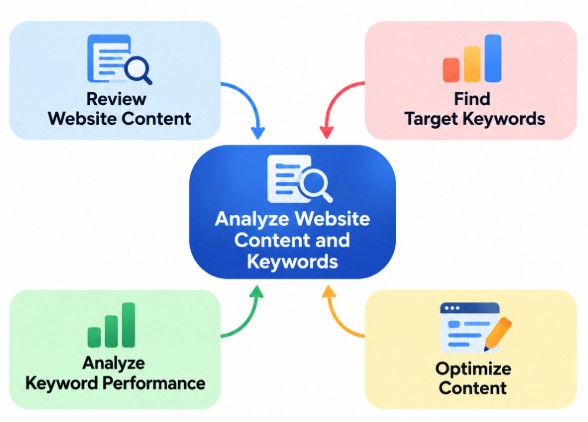
Analyzing website content and keywords is an important part of an SEO audit because it helps determine whether pages are relevant, useful, and aligned with what users search for. Start by identifying the primary and secondary keywords associated with important pages and check whether they accurately represent the page topic. Review keyword rankings and traffic data to understand how existing content performs in search results. Examine each page to determine whether it satisfies search intent and provides clear, original, and valuable information for visitors. Check for keyword stuffing, outdated information, duplicate content, thin pages, and pages that target similar search queries unnecessarily.

Get JOB Oriented Digital Marketing Training for Beginners By MNC Experts
- Instructor-led Sessions
- Real-life Case Studies
- Assignments
How to Check Off-Page SEO and Backlinks
Checking off-page SEO and backlinks helps evaluate how a website is represented across external websites and how its link profile may influence search visibility. Begin by reviewing the total number of backlinks and referring domains pointing to the website using reliable SEO tools. Examine whether backlinks come from relevant and trustworthy websites and identify links that appear unnatural or potentially harmful. Analyze the anchor text used in backlinks to determine whether it appears varied and relevant rather than excessively optimized. Review the authority and topical relevance of important referring domains, while also checking whether valuable pages receive links from external sources. Competitor backlink analysis can provide additional insights by showing websites and content that link to competing pages. For marketers developing broader SEO expertise, Digital Marketing Training can also help build an understanding of off-page optimization and online visibility strategies. Look for opportunities to earn relevant links through useful content, digital PR, industry resources, partnerships, and other legitimate outreach methods. It is also useful to identify broken backlinks that point to unavailable pages and determine whether they can be recovered through appropriate redirects or updated links. Regularly monitoring the backlink profile helps identify changes, potential risks, and opportunities for strengthening the website’s external presence. A structured off-page SEO review provides useful information for developing a sustainable link-building and authority-building strategy.
Want to Master Digital Marketing? Explore the Digital Marketing Master Program Offered at ACTE Today!
How to Analyze Website Content and Keywords
Analyzing website content and keywords is an important part of an SEO audit because it helps determine whether pages are relevant, useful, and aligned with what users search for. Start by identifying the primary and secondary keywords associated with important pages and check whether they accurately represent the page topic. Review keyword rankings, impressions, clicks, and traffic data to understand how existing content performs in search results. Examine each page to determine whether it satisfies search intent and provides clear, original, and valuable information for visitors. Check for keyword stuffing, outdated information, duplicate content, thin pages, and pages that target similar search queries unnecessarily. Analyze title tags, headings, meta descriptions, and body content to ensure keywords are incorporated naturally without affecting readability. Content should also cover relevant subtopics and related terms where appropriate to provide comprehensive information. A strong understanding of content optimization can help digital marketers build broader SEO expertise and support long-term professional growth, particularly when exploring a Digital Marketing Career at an MNC. Compare important pages with competing search results to identify missing topics, content gaps, or opportunities to improve depth and usefulness. Finally, identify pages that need updating, expanding, consolidating, or removing based on their relevance and performance. A structured content and keyword analysis helps create a stronger content strategy, improve topical relevance, and support better organic search visibility.
Want to Learn About Digital Marketing? Explore Our Digital Marketing Interview Questions and Answers Featuring the Most Frequently Asked Questions in Job Interviews.
How to Identify and Fix Common SEO Issues
Identifying and fixing common SEO issues is an important final stage of an SEO audit because unresolved problems can affect crawling, indexing, rankings, traffic, and user experience. Start by reviewing the audit findings and categorize issues according to their type and potential impact. Common technical problems include broken links, crawl errors, incorrect redirects, duplicate URLs, missing canonical tags, blocked pages, and XML sitemap errors. On-page issues may include missing or duplicate title tags, poorly structured headings, missing meta descriptions, thin content, keyword overuse, and irrelevant page content. Check for slow-loading pages, mobile usability problems, and Core Web Vitals issues that may affect the browsing experience. Review internal links to identify important pages with limited connections and fix links that lead to unavailable URLs. As search engines increasingly incorporate generative AI into search experiences, reviewing how content can remain visible and relevant across these platforms is also important, and a GEO Tutorial can provide useful guidance on optimizing content for generative search experiences. Backlink analysis can also reveal irrelevant or suspicious links that require further investigation. After identifying these issues, prioritize them based on their impact and the importance of affected pages. Fix critical technical problems first, followed by content, on-page, performance, and internal linking improvements. After making changes, re-crawl the website and monitor search performance to confirm whether the issues have been resolved. Maintaining an SEO audit checklist and conducting regular reviews can help prevent recurring problems and support long-term website health.
Conclusion and Next Steps After an SEO Audit
An SEO audit provides a clear overview of a website’s technical health, content quality, on-page optimization, backlinks, performance, and user experience. After completing the audit, the next step is to organize the identified issues and prioritize them based on their impact, urgency, and importance to key website pages. Critical technical problems such as indexing errors, incorrect redirects, or blocked resources should be addressed before moving to lower-priority improvements. Content-related issues can then be reviewed to update outdated information, strengthen keyword targeting, and remove or consolidate duplicate or low-value pages where appropriate. On-page elements such as titles, headings, URLs, internal links, and meta descriptions should also be optimized naturally. Website speed, mobile usability, Core Web Vitals, and other user experience factors should be monitored after improvements are implemented. Backlink profiles should be reviewed regularly to understand external link activity and identify legitimate opportunities for earning relevant links. For professionals looking to strengthen their overall SEO and online marketing knowledge, Digital Marketing Training can provide a broader understanding of digital marketing strategies and optimization practices. Once the recommended changes are completed, re-crawl the website and compare key SEO metrics before and after the audit. SEO auditing should be treated as an ongoing process rather than a one-time activity because websites, competitors, search behavior, and search engine systems continue to change. Regular audits help maintain website quality, identify new opportunities, and support continuous SEO improvement.