LMS
LMS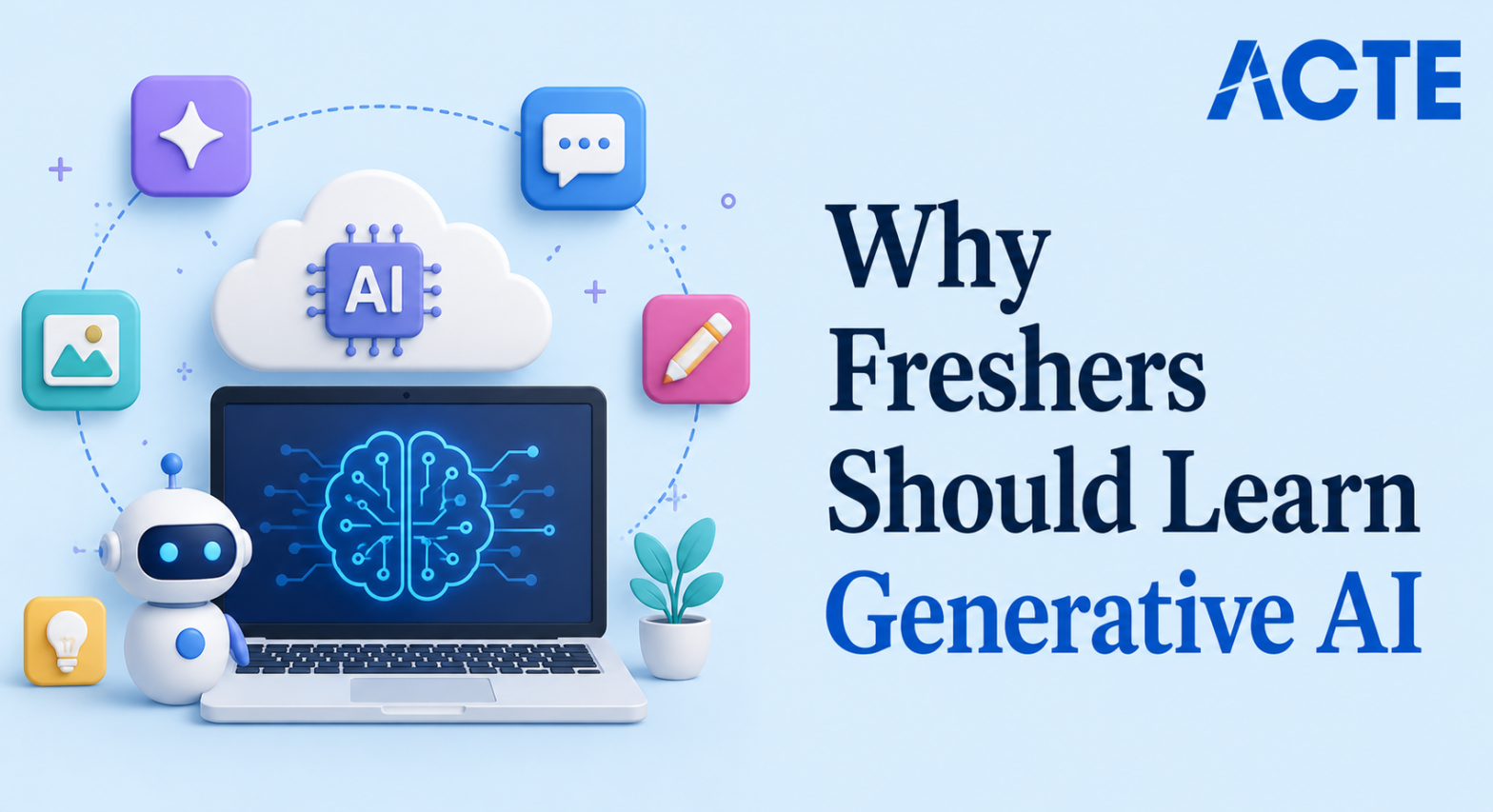
Last updated on 06th May 2026| 4610

- Introduction Why Learn Generative AI
- ChatGPT Fine-Tuning
- Stable Diffusion Image Synthesis
- LLM Fine-Tuning for Custom Chatbots
- Ethical AI Guardrails Implementation
- Voice Cloning with Tortoise TTS
- Code Generation using CodeLlama
- Text-to-Video Generation
- Prompt Engineering Mastery
- Conclusion
Introduction Why Learn Generative AI
In today’s fast-changing digital world, freshers need to build skills that match industry demand, and one of the most valuable skills is to learn Generative AI. This technology is transforming how content, software, and digital experiences are created across industries. From automating repetitive tasks to generating high-quality text, images, and code, generative AI is becoming a core part of modern workflows. Freshers who start early gain a strong competitive advantage in the job market. Gen AI Course helps them think creatively while also improving technical efficiency. Companies are actively looking for candidates who understand AI-driven tools and can apply them in real-world scenarios. By choosing to Learn Generative AI, beginners can explore areas like chatbots, design automation, and intelligent systems without needing deep expertise at the start. This makes it highly accessible for students and entry-level professionals. It also encourages innovation and problem-solving, which are critical skills in any career. As industries continue to adopt AI solutions, the demand for such skills will only increase. Freshers who invest time in this field today are preparing themselves for future-ready roles. It is not just a trend but a foundational technology shaping the next generation of careers. Starting early allows better adaptability and long-term growth. That is why understanding and applying generative AI is becoming essential for every fresher entering the workforce.
ChatGPT Fine-Tuning
ChatGPT fine-tuning is a powerful technique used to customize AI models for specific use cases and industries. It helps improve the accuracy, relevance, and performance of generated responses. By using high-quality training data, developers can guide the model to produce better outputs. This process allows businesses to align the AI with their brand voice and communication style. Fine-tuning is widely used in customer support systems and automated chatbots. It enables the AI to understand domain-specific language more effectively, especially when comparing advancements such as GPT-3 vs GPT-4. This reduces incorrect answers and improves user satisfaction. The training process involves preparing datasets, selecting parameters, and testing results. Proper dataset cleaning is essential for achieving good performance. Fine-tuning also helps in handling complex queries with better context understanding. It allows the model to generate consistent and meaningful content. Many companies use this approach for content writing and automation tasks. It is also helpful in building personalized user experiences. Developers can continuously improve the model by updating training data. This makes the AI more adaptive to changing requirements. Fine-tuning reduces dependency on generic responses. It enhances the overall intelligence of the system. Businesses can scale their operations using fine-tuned AI models. It is a key step in building advanced AI applications. Overall, ChatGPT fine-tuning plays an important role in modern AI development.
Ready to Pursue Your Gen AI Certificate? View The Gen AI Training Offered By ACTE Right Now!
Stable Diffusion Image Synthesis
Stable diffusion image synthesis is an advanced AI method used to generate images from text descriptions. It works by converting random noise into detailed visuals step by step. This technology is widely used in digital art and creative industries. Users can create unique images by simply writing descriptive prompts. Stable diffusion models are efficient and can run on standard hardware. This makes them accessible to a wide range of users and developers. The system is trained on large image datasets to learn patterns and structures. It can generate images in various styles such as realistic, cartoon, and abstract. Designers use it for creating marketing visuals and concept art. Gen AI Course It also helps in game development and animation design. The quality of output depends on the clarity of the input prompt. Users can control details like lighting, colors, and composition. This flexibility makes it a powerful creative tool. Stable diffusion also supports image editing and enhancement tasks. It is continuously improving with new updates and models. Many platforms integrate this technology into their workflows. It saves time and reduces manual effort in design processes. It also opens new possibilities for artistic expression. Stable diffusion is changing how visual content is created. Overall, it is a revolutionary tool in AI-powered image generation.
LLM Fine-Tuning for Custom Chatbots
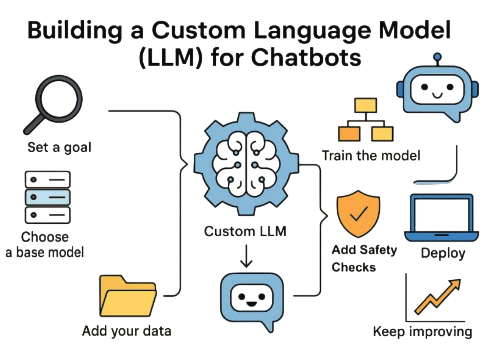
- Introduction to Fine-Tuning: Fine-tuning is the process of customizing a large language model using domain-specific data. It helps transform a general AI into a specialized chatbot for business or personal use. This improves response accuracy and makes conversations more relevant to user needs.
- Training Data Preparation: Training data preparation involves collecting clean and structured datasets for model training. This data may include FAQs, chat logs, and domain-specific knowledge. Learn Generative AI For High-quality data ensures better chatbot performance and reduces errors in responses. Beginners should focus on data cleaning and formatting techniques.
- Model Training Process: The model training process updates the AI model using the prepared dataset. It adjusts internal parameters to match the required tone and behavior. Proper tuning avoids issues like overfitting or irrelevant responses. Freshers should learn basic tools and workflows used in training models.
- Evaluation and Testing: Evaluation and testing ensure the chatbot performs well after training. Metrics like accuracy, relevance, and user satisfaction are used for validation. Testing with real-world queries helps to Artificial Intelligence Applications and identify improvement areas. Beginners should understand the importance of continuous testing cycles.
- Real-World Applications: Fine-tuned chatbots are widely used in customer support, education, and business automation. They handle queries efficiently and provide accurate responses. This improves user experience and reduces manual workload. Freshers should explore how this skill is applied in real industries.

Ethical AI Guardrails Implementation
- Understanding Ethical AI: Ethical AI focuses on building systems that are fair, safe, and transparent. It ensures AI decisions do not harm users or create bias. Guardrails are rules that control AI behavior and outputs. Freshers should understand the importance of responsible AI development.
- Types of Guardrails: Guardrails include content filters, moderation systems, and rule-based controls. These mechanisms prevent harmful or inappropriate responses. They help maintain safe interactions between users and AI systems. Beginners should learn different guardrail techniques used in practice.
- Bias Detection and Mitigation: Bias detection identifies unfair patterns in AI outputs. Models trained on biased data can produce incorrect or harmful results. Artificial Intelligence For Beginners Mitigation techniques help reduce these biases and improve fairness. Freshers should recognize bias as a major challenge in AI.
- Compliance and Safety Standards: AI systems must follow legal and ethical guidelines to ensure user safety. This includes data privacy, transparency, and accountability measures. Organizations must comply with global AI regulations. Beginners should learn about these standards for responsible development.
- Importance in Real-World Applications: Ethical guardrails are essential in industries like healthcare and finance. AI systems must provide safe and reliable outputs in sensitive areas. Lack of guardrails can lead to serious risks and loss of trust. Freshers should prioritize ethics in every AI project.
- Text-to-Video Generation: Text-to-video technology converts written descriptions into video content. It allows users to create visuals without manual editing skills. This trend is growing in marketing and digital media industries. Freshers should understand its impact on content creation.
- Working Process of Generation: The system analyzes text input and identifies scenes, actions, and context. It then generates image frames and combines them into a video sequence. AI models use deep learning techniques to ensure smooth transitions. Beginners should learn how input text affects output quality.
- Key Features and Capabilities: Text-to-video tools offer features like animation, transitions, and audio integration. They allow fast video creation with minimal effort. Users can generate professional content Using AI Imge Tools without advanced skills. These features make it useful for creators and businesses.
- Industry Applications: Businesses use text-to-video for ads, tutorials, and social media content. It reduces production cost and saves time. Companies can quickly create engaging visual content. Freshers should explore how industries adopt this technology.
- Future Scope and Learning Path: This technology is evolving with better realism and quality. AI-generated videos are becoming more advanced and accessible. Beginners should learn storytelling and script writing for better results. This skill will be valuable in future AI careers.
- Prompt Engineering: Prompt engineering is the practice of writing effective inputs for AI models. It directly influences the quality of AI responses. Clear prompts produce accurate and meaningful outputs. Freshers should treat it as a core skill in AI usage.
- Types of Prompts: There are different prompt styles like direct, role-based, and step-by-step prompts. Each type helps guide the AI in a specific way. Choosing the right prompt type improves response quality. Beginners should experiment with various prompt formats.
- Best Practices for Writing Prompts: Good prompts are clear, specific, and include necessary context. Adding examples Using Generative AI Tools and structured instructions improves output accuracy. Avoiding vague language helps achieve better results. Freshers should practice refining prompts regularly.
- Common Mistakes and Improvements: Common mistakes include unclear instructions and missing context. These lead to incorrect or irrelevant responses. Iterative improvement helps fix these issues over time. Beginners should learn to analyze and optimize prompts.
- Importance in AI Development: Prompt engineering improves efficiency when working with AI tools. It enhances productivity and output quality across applications. Many modern AI systems depend on good prompts. Freshers should master this skill for better career opportunities.
Excited to Obtaining Your Data Analytics Certificate? View The Gen AI Training Offered By ACTE Right Now!
Voice Cloning with Tortoise TTS
Voice cloning with Tortoise TTS is a modern AI technology that can replicate human voices accurately. It uses deep learning to analyze voice samples and generate natural speech. This Genreative AI Project can capture tone, emotion, and speaking style effectively. It is widely used in audiobooks and voice assistants. With a small audio sample, it can produce realistic voice outputs. This makes it useful for content creators and developers. Tortoise TTS provides high-quality and expressive speech synthesis. It can handle different accents and speaking patterns. This technology improves user experience in voice-based applications. It is also used in storytelling and narration projects. Developers can integrate it into apps for better interaction. However, ethical use is important to prevent misuse.
Voice cloning requires proper permissions and responsible handling. The system combines text processing and audio generation techniques. It produces speech that sounds human-like and engaging. Many industries are adopting this technology rapidly. It reduces the need for manual voice recording. It also saves time and production costs. Tortoise TTS is constantly evolving with new improvements. It represents a major advancement in AI speech synthesis. Overall, it is a powerful tool for realistic voice generation.
Are You Considering Pursuing a Gen AI Master’s Degree? Enroll For Gen AI Expert Masters Program Training Course Today!
Code Generation using CodeLlama
Code generation using CodeLlama is an innovative approach to simplify programming tasks. It allows developers to generate code using natural language instructions. This reduces the complexity of writing code manually. CodeLlama is trained on large datasets of programming languages. It supports multiple languages like Python, JavaScript, and C++. Developers can use it to create functions, fix bugs, and optimize code. It improves productivity and speeds up development processes. Beginners can also use it to learn coding concepts easily. The model can explain code logic in simple terms. Gen AI Course helps in understanding complex programming structures. It is useful for building applications and automation tools. CodeLlama can suggest improvements and detect errors. It reduces development time and effort significantly. Many companies use it in software development workflows.
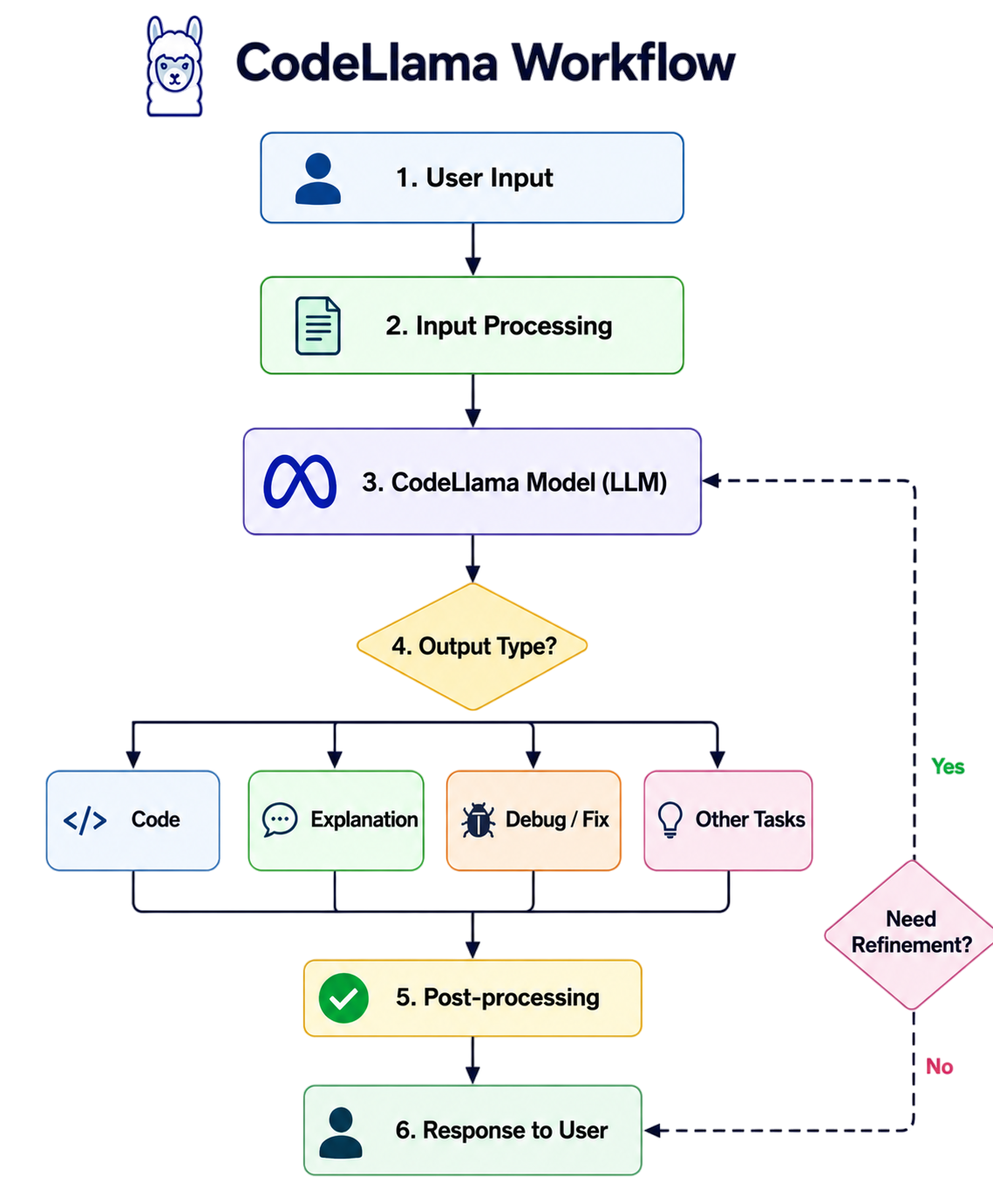
It also helps in maintaining and updating existing codebases. Developers can rely on it for quick solutions and ideas. It enhances collaboration between team members. Code generation tools are becoming essential in modern development. CodeLlama is a leading example of this technology. Overall, it is transforming how software is created and managed.
Set to Ace Your AWS Job Interview? Check Out Our Blog on Gen AI Interview Questions & Answer
Text-to-Video Generation
Prompt Engineering Mastery
Conclusion
The decision to Learn Generative AI can significantly influence a fresher’s career growth and opportunities. It is no longer limited to tech experts, as tools are becoming more user-friendly and widely available. Freshers who understand how to use AI effectively can improve productivity, creativity, and problem-solving in their work. This skill also opens doors to multiple career paths such as development, content creation, data analysis, and automation. As businesses continue integrating AI into their operations, having this knowledge becomes a strong differentiator in job applications. Choosing to Learn Gen AI Course not only builds technical confidence but also helps individuals stay relevant in a competitive market. It encourages continuous learning and adaptability, which are crucial in today’s evolving industries. Moreover, it allows freshers to contribute innovative ideas and solutions in their roles. The earlier one starts, the easier it becomes to master and grow in this domain.