LMS
LMS
Last updated on 11th Apr 2026| 10103

- Introduction to Data Science Tools and Technologies
- Programming Languages for Data Science
- Machine Learning Frameworks
- Data Manipulation and Analysis Tools
- Data Visualization Tools
- Big Data Technologies
- Data Science Platforms and Development Environments
- Conclusion
Introduction to Data Science Tools and Technologies
Data Science tools and technologies form the foundation of modern data-driven decision-making. They include a wide range of programming languages, libraries, frameworks, and platforms that help in collecting, processing, analyzing, and visualizing data. Tools like Python, R, and SQL are commonly used for data manipulation and querying, while libraries such as Pandas, NumPy, and Scikit-learn support analysis and machine learning tasks. Visualization tools like Matplotlib, Seaborn, and Tableau help present insights in an easy-to-understand format. In addition, big data technologies like Hadoop and Spark enable processing of large-scale datasets efficiently With Our Data Science training. Data Science platforms such as Jupyter Notebook, Google Colab, and Anaconda provide interactive environments for coding and experimentation. Together, these tools and technologies empower data scientists to transform raw data into meaningful insights and actionable solutions across various industries.
Would You Like to Know More About Data Science? Sign Up For Our Data Science Course Training Now!
Programming Languages for Data Science
- Python for Data Science: Python is the most popular language in data science due to its simplicity and versatility. It offers powerful libraries like Pandas, NumPy, and Scikit-learn for data analysis, visualization, and machine learning, making it ideal for beginners.
- R for Statistical Analysis: R is widely used for statistical computing and data visualization. It provides numerous packages like ggplot2 and dplyr, which help in data manipulation and creating high-quality visualizations, making it useful for research and analytics.
- SQL for Data Management: SQL is essential for managing and querying structured data stored in databases. It allows data scientists to extract, filter, and manipulate large datasets efficiently, making it a fundamental skill for handling real-world data.
- Java for Scalable Systems: Java is Programming Language used in large-scale data science applications due to its performance and scalability. It is commonly used in big data technologies like Hadoop and Spark, helping in building robust and efficient data processing systems.
- Julia for High Performance: Julia is gaining popularity for its high-performance capabilities in numerical and scientific computing. It combines the ease of Python with the speed of C, making it suitable for complex mathematical computations and large-scale data analysis.
Programming languages are a core part of data science, enabling professionals to collect, process, analyze, and visualize data efficiently. Each language has its own strengths, making them suitable for different types of data science tasks, from statistical analysis to large-scale system development.
Machine Learning Frameworks
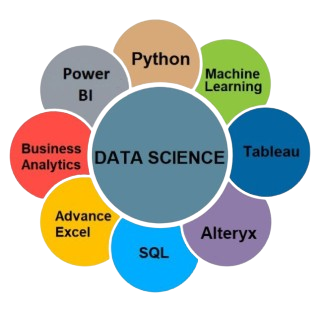
Machine Learning frameworks are essential tools in Data Science that help developers and analysts build, train, and deploy machine learning models efficiently. These frameworks provide pre-built libraries, algorithms, and functions for tasks such as classification, regression, clustering, and deep learning, reducing the need to write complex code from scratch. Popular frameworks like Scikit-learn, TensorFlow, and PyTorch allow users to process large datasets, perform advanced computations, and experiment with different models easily. In data science applications, Machine Learning frameworks play a crucial role in transforming raw data into meaningful predictions and actionable insights throughout the Data Science Life Cycle and Process. They help organizations improve decision-making, automate processes, and solve real-world problems across industries such as healthcare, finance, marketing, and technology, making Data Science more powerful and efficient.
Want to Pursue a Data Science Master’s Degree? Enroll For Data Science Masters Course Today!
Data Manipulation and Analysis Tools
- Pandas for Data Handling: Pandas is a powerful Python library used for data manipulation and analysis. It provides data structures like DataFrames that make it easy to clean, transform, and analyze structured data efficiently in real-world projects.
- NumPy for Numerical Computing: NumPy is essential for numerical operations in data science. It supports large multi-dimensional arrays and mathematical functions, enabling fast computations and efficient data processing for scientific and analytical tasks.
- Microsoft Excel for Basic Analysis: Microsoft Excel is widely used for basic data analysis and visualization. It offers features like formulas, pivot tables, and charts, making it a beginner-friendly tool for organizing and analyzing small datasets.
- Apache Spark for Big Data Processing: Apache Spark is a powerful tool for handling large-scale data processing. It provides fast, in-memory computation and supports multiple languages, making it ideal for big data analytics and real-time data processing tasks.
- OpenRefine for Data Cleaning: OpenRefine is a tool used for cleaning messy data. It helps in transforming, filtering, and correcting inconsistencies in datasets, making it easier to prepare data for analysis and improve overall data quality.
Data manipulation and analysis tools are essential in Data Science for cleaning, transforming, and exploring data efficiently. These tools help data scientists prepare raw data for analysis, perform calculations, and extract meaningful insights from structured and unstructured datasets.

Data Visualization Tools
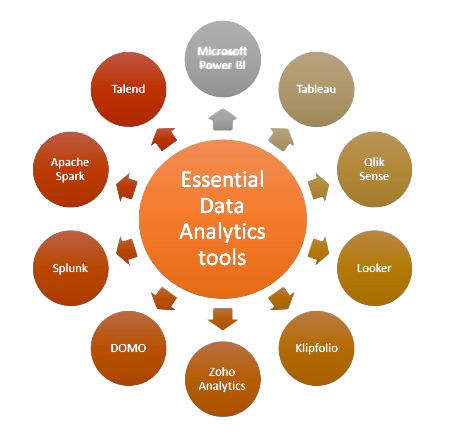
Data visualization tools are an important part of Data Science, helping professionals convert complex data into clear, visual formats such as charts, graphs, and dashboards. These tools make it easier to understand patterns, trends, and insights for better decision-making.
- Matplotlib for Basic Visualization: Matplotlib is a widely used Python library for creating static charts and graphs. It allows users to generate line plots, bar charts, and histograms, making it a fundamental tool for beginners to understand data visualization concepts.
- Seaborn for Statistical Graphics: Seaborn is built on top of Matplotlib and provides advanced statistical visualizations. It offers attractive and informative charts like heatmaps and pair plots, helping users explore and understand complex data patterns easily.
- Tableau for Interactive Dashboards: Tableau is a powerful data visualization tool used to create interactive and shareable dashboards. It enables users to connect to various data sources and build visually appealing reports without extensive programming knowledge.
- Power BI for Business Analytics: Power BI is a business intelligence tool by Microsoft that helps create interactive reports and dashboards. It allows users to visualize data, share insights, and make data-driven decisions with ease.
Big Data Technologies
Big Data Technologies are a crucial part of Data Science that focus on handling, processing, and analyzing extremely large and complex datasets that traditional data processing tools cannot manage efficiently. These technologies are designed to work with massive volumes of data generated from sources like social media, sensors, online transactions, and mobile applications. Popular tools such as Hadoop and Apache Spark enable distributed computing, where data is processed across multiple machines to improve speed and efficiency. Big Data systems also support real-time data processing, data storage, and advanced analytics, making it easier to extract valuable insights. In Data Science training, Big Data Technologies are an essential topic as they help learners understand how to work with large-scale datasets and build scalable data solutions. In Data Science, these technologies help organizations identify hidden patterns, improve decision-making, and predict future trends. They are widely used in industries like healthcare for patient analysis, finance for fraud detection, e-commerce for recommendation systems, and technology for user behavior analysis. By combining scalability, speed, and accuracy, Big Data Technologies play a vital role in modern Data Science applications, innovation, and professional Program.
Data Science Platforms and Development Environments
- Jupyter Notebook for Interactive Coding: Jupyter Notebook is a popular platform in Data Science that allows users to write and execute code interactively. It supports Python library and other languages, making it easy to combine code, visualizations, and notes in one place for analysis and learning.
- Google Colab for Cloud-Based Development: Google Colab is a free cloud-based Data Science environment that runs Jupyter Notebooks in the browser. It provides access to GPUs and libraries, making it ideal for machine learning, deep learning, and collaborative data projects.
- Anaconda for Data Science Distribution: Anaconda is a widely used platform that simplifies package management and environment setup for Data Science. It comes with pre-installed libraries like NumPy, Pandas, and Scikit-learn, helping beginners start projects quickly and efficiently.
- VS Code for Flexible Development: Visual Studio Code is a lightweight yet powerful code editor used in Data Science. It supports Python, extensions, debugging, and Git integration, making it suitable for building, testing, and managing data science projects effectively.
- RStudio for R Programming Environment: RStudio is a dedicated development environment for R programming used in Data Science Projects. It provides tools for data analysis, visualization, and statistical computing, making it popular among researchers and data analysts for in-depth analysis.
Leran Data Science platforms and development environments provide the tools and infrastructure needed to build, test, and deploy data science projects efficiently. These environments support coding, data analysis, visualization, and collaboration, making the workflow smoother for data scientists.
Go Through These Data Science Interview Questions & Answer to Excel in Your Upcoming Interview.
Conclusion
Data Science Tools and Technologies is a powerful and fast-growing field that combines programming, statistics, and domain expertise to extract meaningful insights from data. It involves collecting, cleaning, analyzing, and interpreting large amounts of structured and unstructured data to support better decision-making. With the help of Data Science training With tools, technologies, and platforms such as Python, R, SQL, machine learning frameworks, and big data technologies, Data Science enables organizations to solve complex real-world problems efficiently. It is widely used in industries like healthcare, finance, e-commerce, education, and technology to improve performance, predict future trends, and enhance customer experiences. Visualization tools and analytical methods help present data in a clear and understandable way, making insights more actionable. For beginners, structured
Upcoming Batches
| Name | Date | Details |
|---|---|---|
| Data Science Course Training | 05 - Oct - 2026(Weekdays) Weekdays Regular |
View Details |
| Data Science Course Training | 07 - Oct - 2026(Weekdays) Weekdays Regular |
View Details |
| Data Science Course Training | 10 - Oct- 2026(Weekends) Weekend Regular |
View Details |
| Data Science Course Training | 11 - Oct- 2026(Weekends) Weekend Fasttrack |
View Details |