LMS
LMS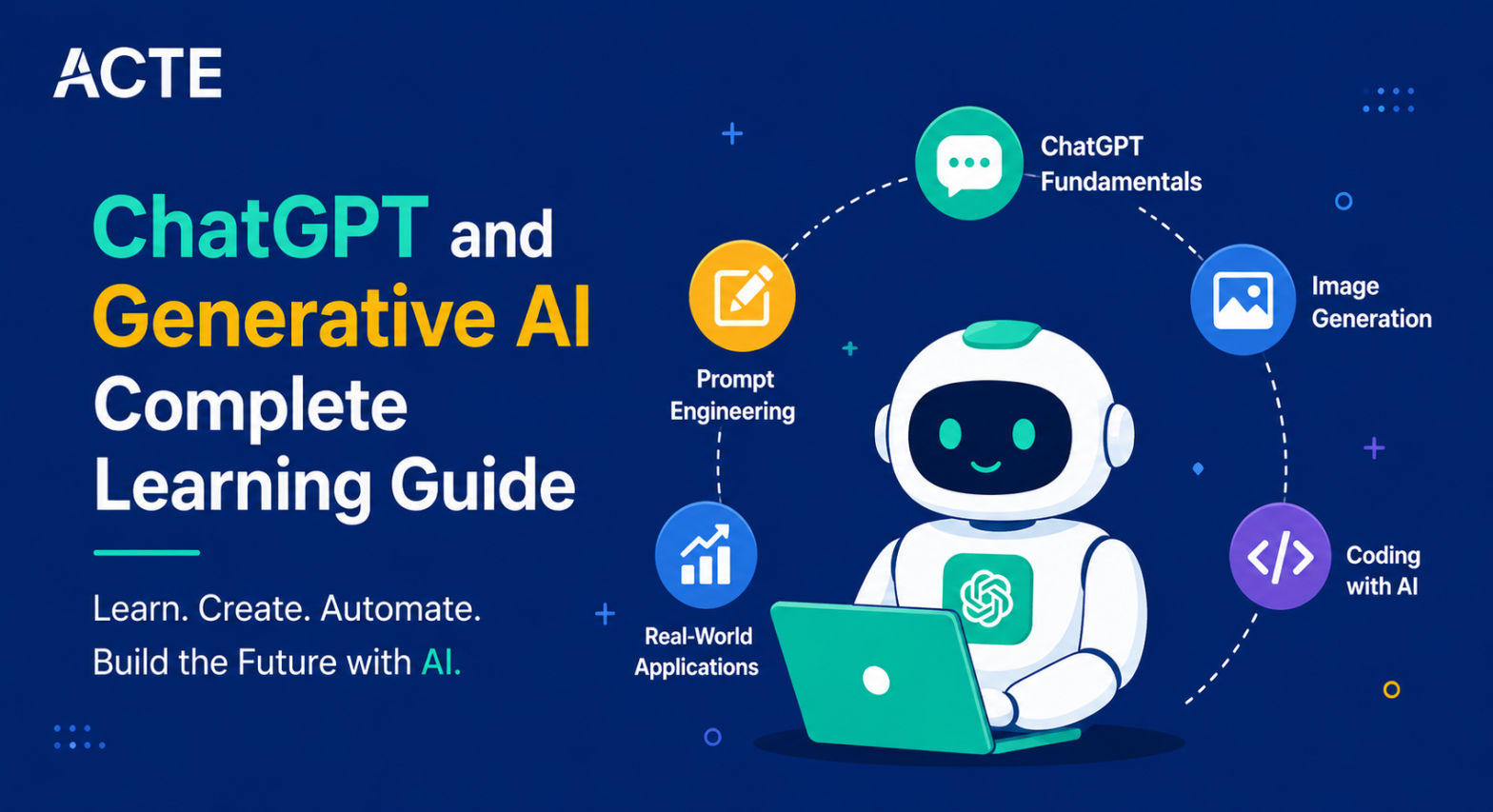
Last updated on 09th May 2026| 4647

- Introduction ChatGPT and Generative AI Guide
- Understanding ChatGPT and Generative AI Models
- Mastering Prompt Engineering
- How To Text Generation Work
- AI for Coding and Development
- Image Generation with AI
- Building Custom GPTs and Agents
- Ethics, Privacy, and Limitations
- Conclusion
Introduction ChatGPT and Generative AI Guide
Diving into the world of ChatGPT and Generative AI can feel completely overwhelming with the constant flood of new tools and buzzwords. However, if you strip away the hype, generative AI is essentially just technology that can create new content like text, images, or code based on the patterns it has learned. Gen AI Training Teach ChatGPT happens to be the most famous gateway into this space, making it the perfect starting point for a complete learning guide. Going from a casual user to someone who actually understands how these systems work requires a structured approach. You cannot just play with the chat box; you need to learn the underlying mechanics, figure out how to communicate with the AI effectively, and explore the different types of content it can generate. Below is a step-by-step breakdown of the core areas you need to focus on to master generative AI, moving from basic theory all the way to building your own custom tools.
Understanding ChatGPT and Generative AI Models
Understanding ChatGPT and Generative AI Models models, or LLMs, is the first real step in any generative AI learning guide because ChatGPT is entirely powered by this architecture. An LLM is essentially a massive neural network that has read billions of pages of text from the internet and learned how words statistically relate to each other. When you type a sentence into ChatGPT, it does not think like a human; instead, it uses advanced mathematical models to predict the most likely next word in a sequence until a complete response is generated. The “large” in large language model refers to the billions of parameters that help the AI understand context, grammar, patterns, and factual relationships more accurately. Many learners explore these concepts through Gen AI Training programs that provide practical knowledge of how modern AI systems like ChatGPT and GPT models work in real-world applications.Grasping this foundational concept changes how you use the tool. You stop treating it like a search engine and start ChatGPT and Generative AI Models it like a highly advanced autocomplete system, which makes it much easier to understand why it sometimes sounds smart and other times makes things up.
Ready to Pursue Your Gen AI Certificate? View The Gen AI Course Offered By ACTE Right Now!
Mastering Prompt Engineering
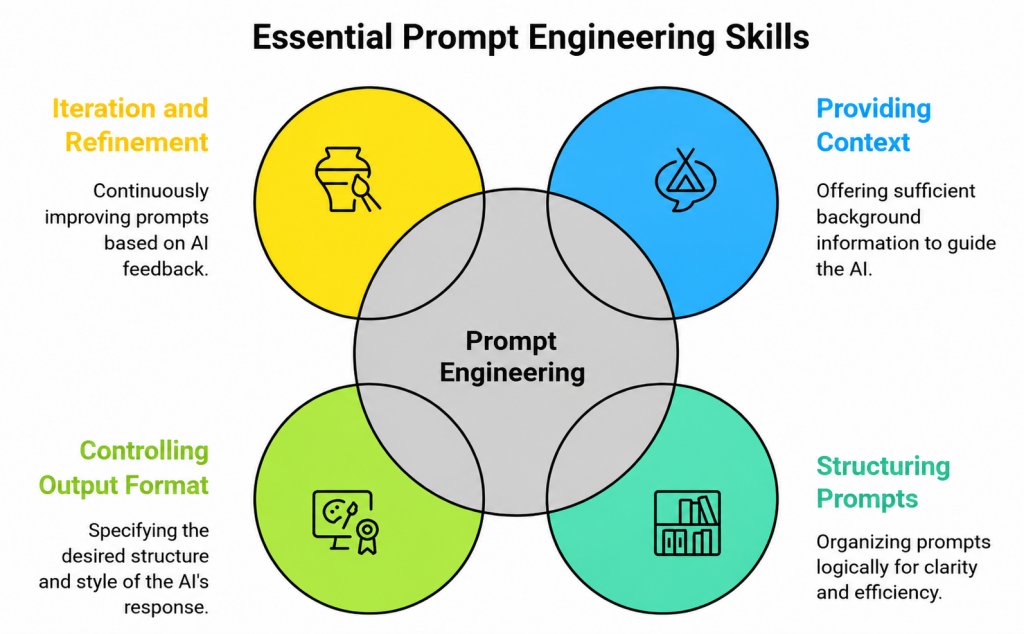
- The Anatomy of a Good Prompt: Learning to write prompts is similar to learning a new programming language. A strong prompt usually includes four parts: a role, a task, context, and clear constraints. Beginners exploring Getting Strated With Gen AI can use this structure to create more accurate, useful, and personalized AI responses while improving their prompt engineering skills.
- Providing Clear Context: AI models do not know your business or your personal situation unless you tell them. You have to feed them background information before asking for a result. The more specific context you provide, the less the AI has to guess, which leads to much more accurate outputs.
- Using Iterative Refinement: You will rarely get the perfect answer on the first try. Mastering ChatGPT means learning how to critique its first output and ask for tweaks. You might say “make that funnier” or “change the tone to be more formal.” This back-and-forth process is key to getting exactly what you want.
- Controlling Output Formats: You can force ChatGPT to give you information in exactly the layout you need. You can ask for a response in a markdown table, a bulleted list, a JSON format for developers, or a specific poem structure. This saves hours of manual formatting later on.
- Handling Edge Cases and Constraints: Sometimes you need to clearly tell the AI what not to include in its response. Using instructions like “avoid technical jargon” or “exclude pricing details” helps keep the output focused and relevant. Understanding these limitations is also important when exploring Chalanges in Generative AI and building more accurate AI-driven solutions.
How To Text Generation Work
Text generation is the most obvious and widely used feature of ChatGPT, making it a core pillar of this complete learning guide. Once you understand how to prompt effectively, you can use AI to draft blog posts, write professional emails, create marketing copy, or even develop fictional stories. The real power of text generation comes from treating AI as a first-draft assistant rather than a final editor. It helps users quickly organize ideas, generate multiple headline variations, and improve creativity within seconds. Creators working with AI Image Tools can also combine AI-generated visuals with written content to build more engaging digital campaigns, social media posts, and creative projects efficiently. By learning how to adjust the tone, style, and reading level of the generated text, you turn ChatGPT into an incredibly fast writing assistant that multiplies your productivity.
Excited to Obtaining Your Gen AI Certificate? View The Gen AI Course Offered By ACTE Right Now!
AI for Coding and Development
- Writing Boilerplate Code: Developers waste countless hours writing repetitive setup code for websites, databases, or APIs. You can ask ChatGPT to generate this foundational code instantly. This allows you to skip the boring setup phase and jump straight into writing the unique logic for your application.
- Explaining Unfamiliar Code: If you are learning a new programming language or working with an older codebase, reading complex functions can be a nightmare. You can paste a block of code into ChatGPT and ask it to break down what it does line by line in plain English. It acts like a 24/7 tutor.
- Debugging and Error Fixing: When your program crashes and displays confusing error messages, you can paste the issue and related code into ChatGPT for quick analysis. Developers using Gen AI Tools for Coding can identify syntax mistakes, logic errors, and missing code elements faster, making debugging and software development more efficient.
- Translating Between Languages: If you know Python but need to write something in JavaScript, or vice versa, ChatGPT can act as a translator. You just feed it the code in one language and ask for the equivalent in another. This makes transitioning between tech stacks much easier.
- Generating Test Cases: Writing tests to make sure your code works properly is necessary but tedious. You can prompt ChatGPT to write unit tests based on your functions. It helps you ensure your software is stable without spending hours writing out every single testing scenario manually.
Image Generation with AI
While ChatGPT is widely known for text generation, understanding AI image creation has become an essential part of modern generative AI learning. Tools like DALL·E, integrated directly into ChatGPT, allow users to generate detailed visuals simply by describing them with words. Effective image prompting requires more than basic instructions, as users need to specify artistic styles, lighting effects, camera angles, colors, and emotional tones to achieve high-quality results. Platforms such as Jasper AI also demonstrate how AI-powered creative tools are transforming content creation, marketing, and visual storytelling workflows.
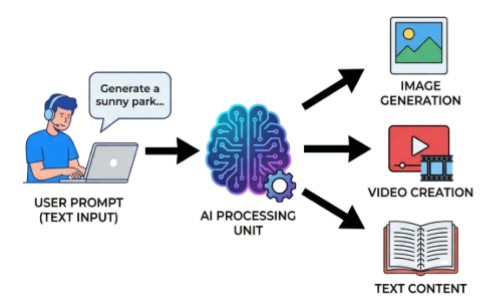
By mastering image prompts, creators can rapidly produce unique designs, concept art, promotional graphics, and social media visuals without advanced design expertis For example, instead of asking for “a picture of a dog,” users can create cinematic visuals by specifying elements like futuristic environments, dramatic lighting, or realistic photography styles. Creators exploring topics such as AI Movie List often use these AI image-generation techniques to design movie concepts, posters, and visual storytelling ideas more efficiently. This technology helps designers, marketers, and content creators quickly prototype creative ideas without requiring advanced drawing or graphic design skills.
Are You Considering Pursuing a Gen AI Master’s Degree? Enroll For Gen AI Expert Masters Program Training Course Today!
Building Custom GPTs and Agents
Building custom GPTs and agents is where you transition from a regular user of AI to an AI builder. OpenAI allows users to create customized versions of ChatGPT designed for specific tasks and industries. By adding custom instructions, uploading documents such as company manuals or study materials, and enabling tools like web browsing or data analysis, users can build AI assistants tailored to their exact needs. These specialized AI agents can act as legal advisors, educational tutors, customer support assistants, or technical consultants for niche workflows. Professionals working with Image Processing projects can also create custom GPTs that help analyze visual data, explain imaging concepts, or assist with AI-powered design and computer vision tasks more efficiently. Learning how to build these custom tools teaches you the fundamentals of AI product design and shows you how businesses will actually deploy this technology in the real world.
Set to Ace Your Gen AI Job Interview? Check Out Our Blog on Gen AI Interview Questions & Answer
Ethics, Privacy, and Limitations
Understanding ethics, privacy, and limitations is the most critical safety checkpoint in this learning guide. Generative AI models learn from massive amounts of online data, which means they can sometimes absorb biases, stereotypes, and inaccurate information present in that content. As a result, AI systems may occasionally generate misleading or inappropriate responses if not used carefully. This is why responsible AI usage and human oversight are extremely important. Many learners explore these concepts through Gen AI Training programs that focus on ethical AI practices, privacy awareness, and real-world implementation. Users should also avoid entering sensitive personal details, confidential company information, or private client data into public AI platforms, as such information may be stored or processed externally. In addition, AI tools can sometimes produce “hallucinations,” where they confidently generate fake facts, incorrect URLs, or inaccurate historical information, making verification an essential step when using AI-generated content. A responsible AI user is one who verifies the output, uses the tool ethically, and never relies on it for high-stakes decisions without human oversight.
Conclusion
Completing this ChatGPT and Generative AI learning guide equips you with a realistic, practical understanding of one of the most powerful technologies of our time. By moving from understanding the basic mechanics of large language models to mastering advanced skills like prompt engineering and custom AI agents, users can completely transform the way they interact with technology. AI is not a magical answer machine, but a powerful assistant that works best with clear instructions, logical thinking, and human oversight. Many professionals are developing these practical skills through Gen AI Training programs that focus on real-world AI applications, automation, and intelligent problem-solving techniques. Whether you are using it to write faster, code smarter, or design visuals, the core skills remain the same. As AI continues to evolve at breakneck speed, the knowledge you have built here will not just help you use today’s tools, but will give you the exact foundation needed to adapt to whatever AI features get released tomorrow.