LMS
Last updated on 05th Sep 2026| 11244

- Exploring Workday Consultant Career Opportunities at Accenture
- Workday HCM Consultant Roles and Key Responsibilities
- Workday Financials and Payroll Consultant Career Paths
- Core HCM, Recruiting, Compensation, and Talent Opportunities
- Workday Integration and Technical Consultant Roles
- Essential Workday Skills and Technologies to Learn
- Accenture Workday Consultant Salary and Compensation Factors
- Workday Certifications and Implementation Experience Required
- Career Progression from Workday Consultant to Solution Architect
- Future Career Growth and Opportunities for Workday Professionals at Accenture
Exploring Workday Consultant Career Opportunities at Accenture
Workday Consultant careers at Accenture can provide opportunities to work on cloud-based human capital management, financial management, payroll, integrations, reporting, and enterprise transformation projects. Professionals looking to build expertise in this field can explore Workday Training to develop practical knowledge of Workday concepts and implementation processes. Consultants may help organizations implement, configure, optimize, and support Workday solutions according to business requirements. Depending on their specialization, professionals can work with Core HCM, Recruiting, Compensation, Talent Management, Benefits, Payroll, Financials, Security, Reporting, or Workday integrations. Responsibilities can include gathering requirements, configuring business processes, testing solutions, resolving issues, supporting deployments, and collaborating with client stakeholders. Workday knowledge combined with implementation experience, analytical thinking, communication, and consulting skills can support progression toward Senior Consultant, Lead Consultant, Workday Architect, and other advanced roles.
Workday HCM Consultant Roles and Key Responsibilities
Workday HCM Consultants focus on implementing and optimizing human resource processes using the Workday platform. Their responsibilities can include understanding client HR requirements, configuring organizational structures, business processes, staffing models, security, and other Core HCM functionality. Consultants may participate in requirement workshops, solution design, configuration, testing, data validation, deployment, and post-production support. For professionals starting their journey, understanding Workday HCM Basics can provide a useful foundation for learning these responsibilities. They can also work with related areas such as Recruiting, Compensation, Benefits, Talent Management, Absence, and Time Tracking depending on project requirements. Strong knowledge of HR processes helps consultants translate organizational requirements into practical Workday configurations. They may collaborate with integration specialists, reporting teams, security consultants, project managers, and client HR teams throughout an implementation. Experience with troubleshooting, documentation, testing, stakeholder communication, and Workday business processes can help professionals handle increasingly complex implementations and progress toward senior consulting or solution-design responsibilities.
Get Your Workday Certification by Learning from Industry-Leading Experts and Advancing Your Career with ACTE’s Workday Course.
Workday Financials and Payroll Consultant Career Paths
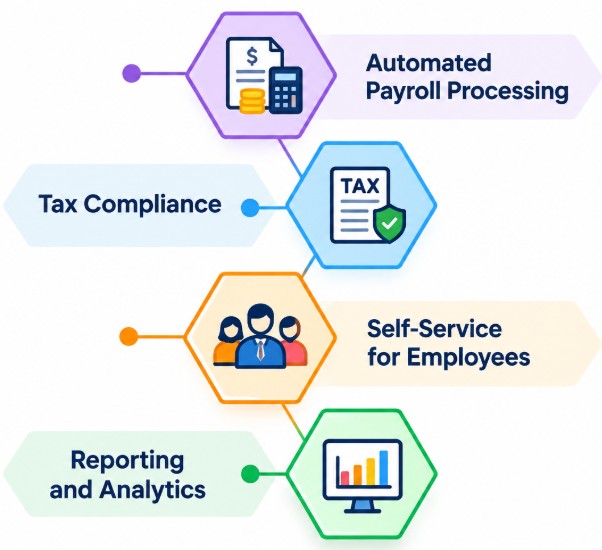
Workday Financials and Payroll consulting offers specialized career paths for professionals interested in finance, accounting, payroll operations, and cloud-based enterprise systems. Workday Financials Consultants can work with areas such as accounting, financial reporting, business assets, expenses, procurement, revenue-related processes, and financial business processes depending on the implementation. Payroll Consultants focus on payroll configuration, earnings and deductions, calculations, taxation-related requirements, integrations, testing, and payroll processing workflows applicable to the project’s country and scope. Both roles require professionals to understand business requirements and translate them into appropriate Workday configurations.

Core HCM, Recruiting, Compensation, and Talent Opportunities
Core HCM, Recruiting, Compensation, and Talent Management provide several specialization opportunities for Workday professionals at Accenture. Professionals looking to strengthen their understanding of these modules can explore Workday Training to gain practical knowledge of Workday configuration and implementation concepts. Core HCM consultants work with worker information, organizational structures, staffing models, job profiles, business processes, and foundational HR configurations. Recruiting specialists can configure processes supporting job requisitions, candidate management, interviews, offers, and hiring activities. Compensation consultants focus on salary structures, compensation plans, eligibility rules, merit processes, bonuses, and related reward programs. Talent specialists can support performance management, goals, skills, career development, succession, and other talent processes depending on the Workday solution being implemented. Professionals may specialize deeply in one functional area or build cross-functional knowledge across several modules. Experience with configuration, business-process design, reporting, security, testing, data migration, and client requirements can strengthen career prospects and prepare consultants for functional lead, solution lead, and architecture-oriented responsibilities.
Workday Integration and Technical Consultant Roles
- Workday Integration Consultant: Integration Consultants connect Workday with payroll, finance, benefits, HR, and other enterprise applications. They develop and maintain integrations while ensuring accurate and secure data exchange between business systems.
- Workday Studio Developer: Workday Studio Developers handle more complex integration requirements involving data transformation, orchestration, and external applications. Strong knowledge of XML, XSLT, web services, and integration concepts is valuable.
- Workday EIB Specialist: EIB specialists use Enterprise Interface Builder to manage inbound and outbound data integrations. They can support employee data loads, business data transfers, scheduled processes, and other integration requirements.
- Workday Reporting Consultant: Reporting Consultants develop operational and analytical reports to support HR, finance, and management requirements. They work with custom reports, calculated fields, dashboards, and Workday data sources. Professionals can strengthen their foundation by learning Start to Learn Workday as a Fresher and gradually build the technical skills required for reporting and integration roles.
- Workday Technical Consultant: Technical Consultants combine knowledge of integrations, reporting, security, data conversion, and troubleshooting to support Workday implementations and ongoing platform enhancements.

Get JOB Oriented Workday Training for Beginners By MNC Experts
- Instructor-led Sessions
- Real-life Case Studies
- Assignments
Essential Workday Skills and Technologies to Learn
- Workday Business Process Configuration: Understanding Workday business processes helps consultants configure approvals, conditions, notifications, routing, and workflow steps according to organizational requirements. Practical Workday Training can help professionals develop these configuration skills.
- Core HCM and Functional Knowledge: Professionals should understand worker data, organizations, staffing, jobs, positions, compensation, recruiting, talent, and other HR processes relevant to their specialization.
- Workday Integrations: Knowledge of EIB, Workday Studio, connectors, web services, APIs, XML, and XSLT can help technical professionals build and maintain integrations between Workday and external systems.
- Reporting and Calculated Fields: Consultants should understand custom reports, calculated fields, data sources, dashboards, and reporting concepts to deliver useful business information and support decision-making.
- Workday Security and Data Management: Knowledge of security groups, domains, business-process security, data conversion, validation, and access controls helps consultants maintain secure and reliable Workday environments.
Want to Master Workday? Explore the Workday Program Offered at ACTE Today!
Accenture Workday Consultant Salary and Compensation Factors
- Experience and Job Level: Compensation can vary according to years of Workday experience, consulting responsibilities, job level, project complexity, and the professional’s overall enterprise implementation background.
- Workday Module Specialization: Expertise in Core HCM, Recruiting, Compensation, Talent, Payroll, Financials, Integrations, or other specialized areas can influence available roles and compensation.
- Functional and Technical Expertise: Professionals with strong functional knowledge combined with integration, reporting, security, data conversion, or technical capabilities may qualify for broader project responsibilities. Building the right Essential Skills to Learn in Workday can help professionals prepare for different Workday consulting opportunities.
- Implementation Experience: Experience across requirements gathering, configuration, testing, deployment, integrations, data migration, and production support can strengthen a consultant’s career profile.
- Location and Project Responsibilities: Salary and total compensation can differ based on geographic location, Accenture job level, project requirements, market conditions, leadership responsibilities, and individual experience.
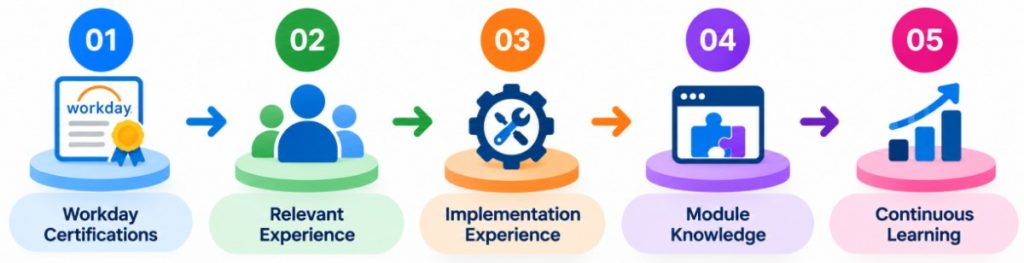
Workday Certifications and Implementation Experience Required
- Workday Certification Knowledge: Relevant Workday certifications can demonstrate specialized knowledge in functional or technical areas and can complement practical experience gained through enterprise implementations.
- End-to-End Implementation Experience: Experience across requirement analysis, solution design, configuration, testing, deployment, and post-production support can prepare consultants for more advanced project responsibilities. Professionals can also explore a Becoming a Workday Consultant to understand the skills and experience involved in building a Workday consulting career.
- Module-Specific Experience: Practical knowledge of Core HCM, Payroll, Financials, Recruiting, Compensation, Talent, Integrations, or other Workday areas helps professionals develop specialized consulting expertise.
- Testing and Data Migration Experience: Consultants should understand data conversion, validation, functional testing, integration testing, defect resolution, and deployment activities involved in Workday implementations.
- Client and Stakeholder Management: Strong communication, documentation, requirement-gathering, presentation, and problem-solving abilities help consultants work effectively with business teams and project stakeholders.
Want to Learn About Workday? Explore Our Workday Interview Questions and Answers Featuring the Most Frequently Asked Questions in Job Interviews.
Career Progression from Workday Consultant to Solution Architect
- Workday Consultant: Professionals can begin by developing expertise in configuration, business processes, reporting, integrations, testing, and specific Workday functional areas.
- Senior Workday Consultant: Senior Consultants handle more complex requirements, support solution design, troubleshoot implementation challenges, and provide guidance to junior team members.
- Workday Lead Consultant: Lead Consultants coordinate functional or technical workstreams, review configurations, manage project deliverables, and collaborate closely with clients and implementation teams. Professionals can also explore Start Career in Workday as a Fresher to understand how foundational skills can support long-term career development.
- Workday Technical or Functional Architect: Architects design scalable solutions across multiple Workday areas while considering integrations, security, data architecture, business processes, and enterprise requirements.
- Workday Solution Architect: Solution Architects provide broader architectural direction across Workday implementations. They align functional and technical solutions with business requirements while supporting governance, integration strategy, scalability, and long-term platform development.
Future Career Growth and Opportunities for Workday Professionals at Accenture
Future career growth for Workday professionals at Accenture can extend across functional consulting, technical development, integrations, reporting, security, payroll and enterprise solution architecture. Professionals can specialize in areas such as Core HCM, Recruiting, Compensation, Talent Management, Payroll, Financials, Workday Studio, EIB, reporting, and integrations based on their interests and project experience. As consultants gain expertise, they can progress from Workday Consultant to Senior Consultant, Lead Consultant, Functional Lead, Technical Lead, Workday Architect, or Solution Architect roles. Professionals pursuing Workday Training can build relevant knowledge while developing experience across different Workday modules. Professionals with experience across multiple Workday modules can also take responsibility for complex implementations, global deployments, system optimization, and transformation initiatives. Developing strong configuration, integration, data migration, testing, security, and business-process knowledge can support long-term career development. Continuous learning, relevant Workday certifications, client-facing experience, communication skills, and leadership capabilities can further prepare professionals for advanced consulting and architecture opportunities within Accenture’s Workday practice.