LMS
LMS
Last updated on 10th Aug 2026| 4802

- Introduction to Google AI Engineer Careers for Freshers
- Understanding the Role of a Google AI Engineer
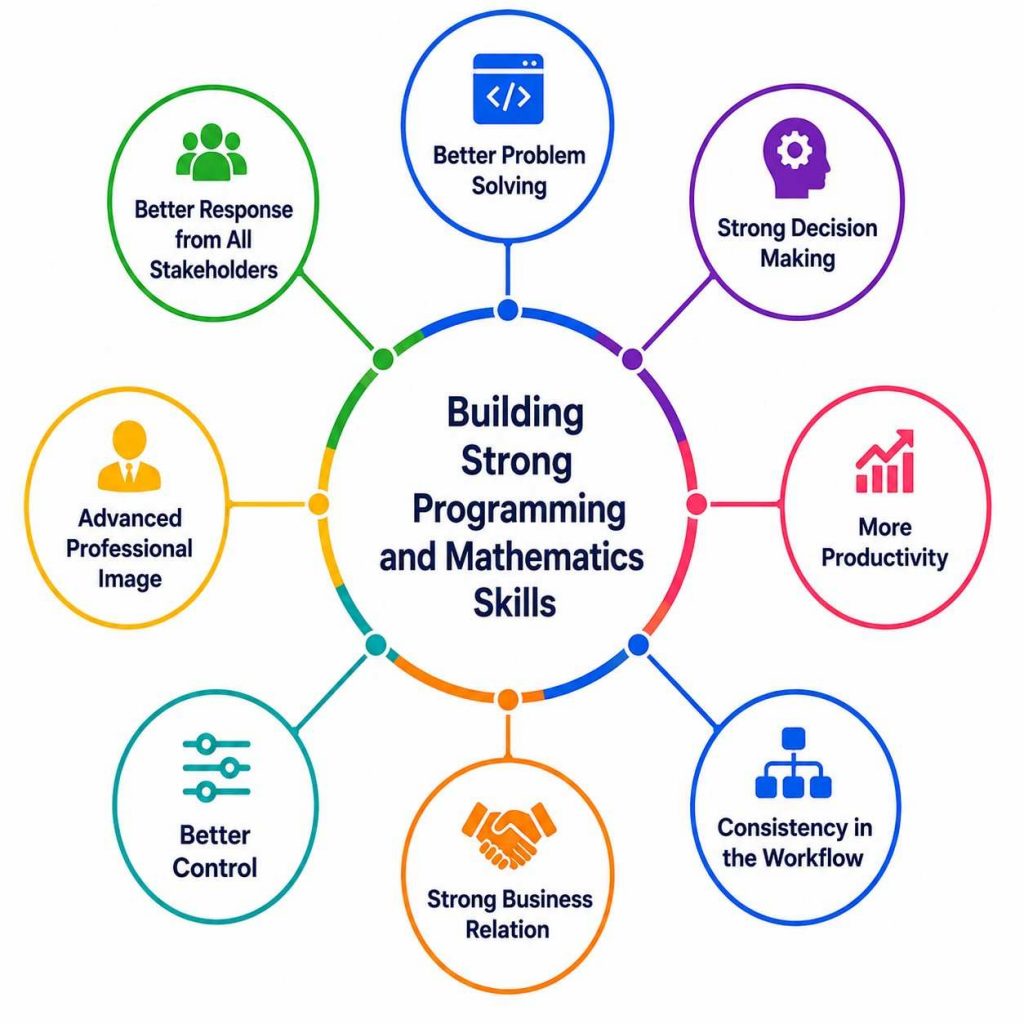
- Building Strong Programming and Mathematics Skills
- Mastering Machine Learning and Deep Learning Fundamentals
- Learning Generative AI, LLMs, and Natural Language Processing
- Developing AI Projects and a Strong Technical Portfolio
- Learning Google Cloud and AI Development Tools
- Creating a Resume That Attracts Google AI Recruiters
- Preparing for Google AI Engineer Interviews
- Conclusion: Building a Successful AI Engineering Career at Google
Introduction to Google AI Engineer Careers for Freshers
Starting a career as an AI Engineer at Google is an exciting opportunity for fresh graduates interested in artificial intelligence, machine learning, and advanced computing technologies. Google develops and applies AI across products and services involving search, language processing, computer vision, recommendations, automation, and intelligent systems. Freshers entering this field need a strong combination of programming knowledge, mathematical understanding, machine learning concepts, and problem-solving abilities. A successful AI engineering career also requires curiosity and a willingness to continuously learn because artificial intelligence technologies evolve rapidly. Students from computer science, information technology, artificial intelligence, data science, and related disciplines can prepare by developing practical skills through academic projects, internships, competitions, and independent learning. Building knowledge of Python, statistics, algorithms, machine learning, deep learning, and data processing can create a strong technical foundation. Exploring structured learning opportunities such as Gen AI Training can also help freshers strengthen their understanding of modern AI technologies and practical applications. Developing real-world AI projects and maintaining a professional portfolio can further demonstrate practical capabilities. Although opportunities at Google are highly competitive, structured preparation and consistent skill development can help freshers build the expertise required to pursue AI engineering roles and establish a rewarding career in artificial intelligence.
Understanding the Role of a Google AI Engineer
A Google AI Engineer works on designing, developing, testing, and improving artificial intelligence systems that can solve complex problems and deliver intelligent experiences. The role may involve developing machine learning models, processing large datasets, improving prediction systems, building natural language applications, or contributing to AI-powered products. AI engineers collaborate with software engineers, data scientists, researchers, product teams, and other specialists to transform ideas into reliable and scalable solutions. Their responsibilities can include preparing data, selecting appropriate algorithms, training models, evaluating performance, optimizing systems, and deploying AI solutions into production environments. Strong programming skills, particularly in languages such as Python, C++, or Java, are important, along with knowledge of machine learning frameworks and data processing techniques. AI engineers must also understand model evaluation, optimization, experimentation, and responsible development practices. For freshers, building practical projects that demonstrate machine learning, deep learning, natural language processing, computer vision, or generative AI knowledge can provide valuable preparation. Aspiring candidates can also explore How to Get a Generative AI Internship at Google to understand how relevant skills and practical experience can help prepare for opportunities in Google’s AI ecosystem. The role combines software engineering, mathematical reasoning, experimentation, and problem-solving, making it a challenging yet highly rewarding career path for aspiring AI professionals.
Ready to Pursue Your Gen AI Certificate? View The Gen AI Course Offered By ACTE Right Now!
Building Strong Programming and Mathematics Skills
- Mastering Python for AI Development: Python is widely used in AI engineering for data processing, model development, automation, and experimentation. Freshers should practice Python fundamentals, object-oriented programming, libraries, debugging, and writing efficient, maintainable code. Exploring practical learning opportunities such as Gen AI Training can also help learners understand how programming skills are applied in modern artificial intelligence projects.
- Strengthening Data Structures and Algorithms: Understanding arrays, trees, graphs, hash tables, recursion, sorting, and searching helps candidates develop efficient solutions and prepares them for technical AI engineering interviews.
- Learning Linear Algebra Fundamentals: Concepts such as vectors, matrices, eigenvalues, and matrix operations are important for understanding how machine learning and deep learning models process numerical data.
- Understanding Probability and Statistics: Probability, distributions, correlation, hypothesis testing, and statistical reasoning help AI engineers analyze datasets, evaluate models, and interpret uncertainty in predictions.
- Developing Mathematical Problem-Solving Skills: Strong mathematical reasoning enables freshers to understand algorithms, optimize models, interpret results, and approach complex AI problems systematically.
Mastering Machine Learning and Deep Learning Fundamentals
- Understanding Machine Learning Concepts: Freshers should learn supervised, unsupervised, and reinforcement learning along with concepts such as training, validation, testing, overfitting, underfitting, and model evaluation.
- Learning Essential ML Algorithms: Understanding regression, classification, clustering, decision trees, random forests, support vector machines, and other algorithms helps candidates select suitable approaches for different problems.
- Exploring Neural Networks: Learning how neurons, activation functions, loss functions, backpropagation, and optimizers work provides the foundation required to develop and train deep learning models.
- Practicing Model Evaluation and Optimization: Candidates should learn metrics such as accuracy, precision, recall, F1-score, ROC-AUC, and mean squared error while understanding techniques for improving model performance.
- Working with Deep Learning Frameworks: Hands-on experience with frameworks such as TensorFlow and PyTorch helps freshers develop, train, test, and deploy neural network models for practical AI applications. Building projects is an effective way to apply these concepts, and exploring Top Generative AI Projects for Beginners can provide ideas for gaining practical experience with AI technologies.
Learning Generative AI, LLMs, and Natural Language Processing
- Understanding Generative AI Fundamentals: Freshers should understand how generative AI models create text, images, audio, and other content while learning basic concepts such as transformers, embeddings, and model inference.
- Exploring Large Language Models: Learning how LLMs process and generate language provides a foundation for developing intelligent applications such as chatbots, virtual assistants, summarization tools, and question-answering systems.
- Learning Natural Language Processing: NLP concepts including tokenization, text classification, sentiment analysis, named entity recognition, embeddings, and language generation help candidates work with text-based AI applications.
- Practicing Prompt Engineering: Understanding how to design clear and structured prompts helps freshers interact effectively with generative AI models and build applications that produce more relevant and reliable outputs. Learning about Generative AI Tools for Coding & Software Development can also help candidates understand how these technologies are being applied in modern software development.
- Building Generative AI Projects: Creating projects using LLM APIs, retrieval-augmented generation, chatbots, document analysis, or text summarization demonstrates practical knowledge and strengthens an AI engineering portfolio.
Developing AI Projects and a Strong Technical Portfolio
- Building Practical AI Applications: Create projects that solve real-world problems using machine learning, deep learning, NLP, computer vision, or generative AI. Practical applications demonstrate the ability to transform technical knowledge into useful solutions.
- Working with Real-World Datasets: Use relevant datasets to practice data cleaning, preprocessing, feature engineering, model development, and evaluation. Working with imperfect data helps develop skills needed for professional AI engineering environments.
- Developing Generative AI Projects: Build applications such as AI chatbots, document summarizers, recommendation systems, question-answering tools, or RAG-based applications to demonstrate familiarity with modern AI technologies.
- Publishing Projects on GitHub: Maintain organized GitHub repositories with source code, documentation, setup instructions, project objectives, and results. A professional repository allows recruiters to evaluate coding and engineering practices.
- Demonstrating Project Impact: Clearly explain the problem, technology used, development process, challenges, and outcomes of each project. Highlighting measurable improvements makes a technical portfolio more impressive. For freshers, gaining practical experience through an internship can further strengthen these skills and improve career readiness. Learn more about Generative AI Internship.
- Understanding Google Cloud Fundamentals: Learn Google Cloud concepts such as computing, storage, databases, networking, security, and resource management to understand how AI applications operate in cloud environments.
- Exploring Vertex AI: Gain practical knowledge of Vertex AI for building, training, evaluating, deploying, and managing machine learning models and AI applications within Google Cloud.
- Learning BigQuery for Data Analysis: BigQuery helps professionals work with large datasets using SQL. Learning data querying, analysis, and integration with machine learning workflows strengthens cloud-based analytics capabilities.
- Practicing Cloud AI Services: Explore Google Cloud AI services for natural language processing, computer vision, speech recognition, and Gen AI Training concepts to understand how prebuilt AI capabilities support applications.
- Understanding AI Deployment and MLOps: Learn model deployment, monitoring, versioning, pipelines, and basic MLOps practices to understand how machine learning solutions move from development into reliable production environments.
- Highlighting AI and Programming Skills: Clearly showcase Python, machine learning, deep learning, NLP, generative AI, SQL, TensorFlow, PyTorch, and relevant cloud technologies based on your actual experience.
- Showcasing AI Projects: Include meaningful AI projects with concise descriptions of the problem, technologies used, methodology, and measurable outcomes to demonstrate practical engineering capabilities.
- Adding Internships and Certifications: Relevant internships, AI certifications, hackathons, research experience, and technical achievements can strengthen a fresher’s resume and demonstrate commitment to continuous learning.
- Using Measurable Achievements: Where possible, mention measurable results such as improved model accuracy, reduced processing time, increased automation, or successful deployment to demonstrate the impact of your work.
- Maintaining an ATS-Friendly Format: Use clear headings, relevant technical keywords, concise descriptions, and a simple professional structure so recruiters and applicant tracking systems can quickly identify your qualifications. Freshers can also explore How Freshers Can Start Career in Generative AI to understand the skills and preparation needed to build a strong foundation for AI career opportunities.
Excited to Obtaining Your Gen AI Certificate? View The Gen AI Course Offered By ACTE Right Now!
Learning Google Cloud and AI Development Tools
Are You Considering Pursuing a Gen AI Master’s Degree? Enroll For Gen AI Expert Masters Program Training Course Today!
Creating a Resume That Attracts Google AI Recruiters
Set to Ace Your Gen AI Job Interview? Check Out Our Blog on Gen AI Interview Questions & Answer
Preparing for Google AI Engineer Interviews
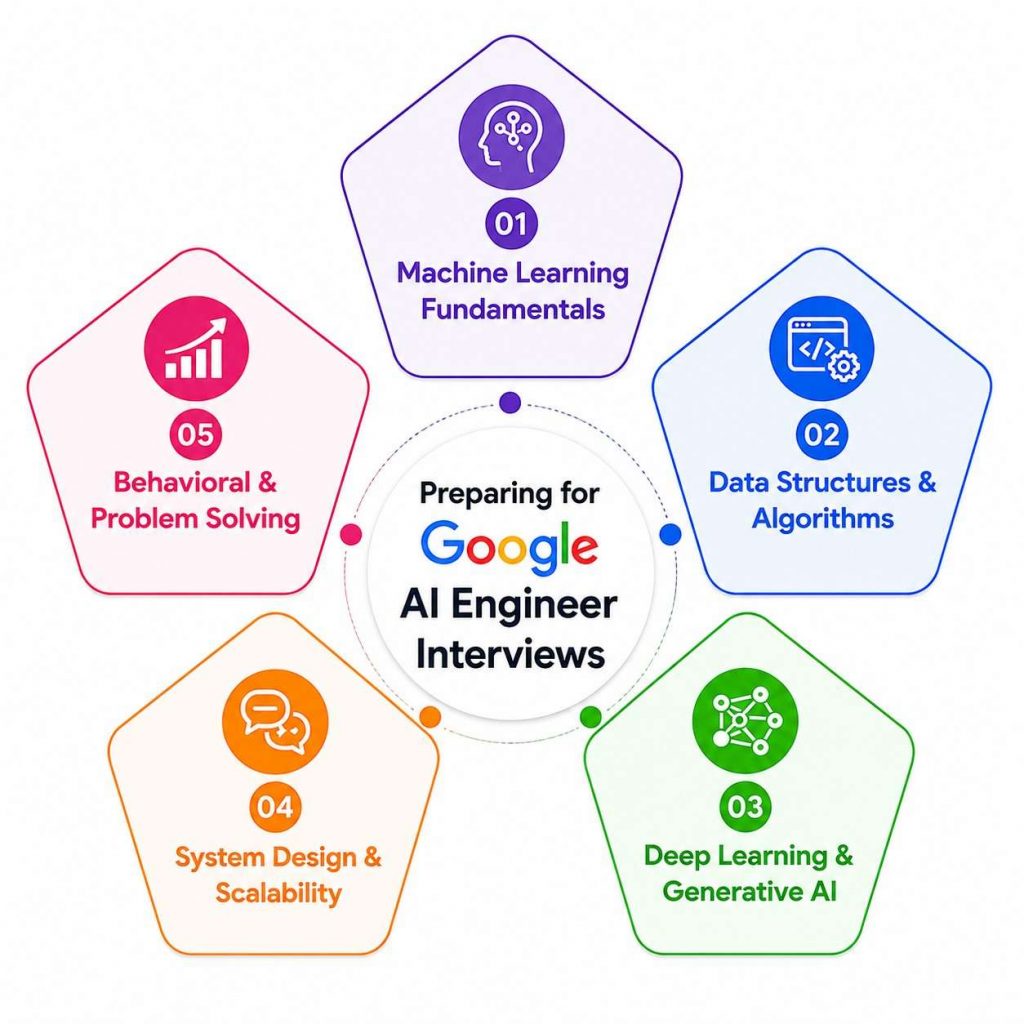
Preparing for a Google AI Engineer interview requires a strong combination of programming, machine learning knowledge, problem-solving ability, and effective communication. Freshers should begin by strengthening Python, data structures, algorithms, mathematics, statistics, and core machine learning concepts. Technical preparation should also cover supervised and unsupervised learning, model evaluation, deep learning, neural networks, natural language processing, and generative AI fundamentals, depending on the role. Candidates should practice coding problems regularly and learn to explain their approach, complexity, assumptions, and trade-offs clearly. Practical AI projects are equally important because interviewers may ask detailed questions about datasets, model selection, preprocessing, experimentation, performance improvements, and deployment decisions.
Conclusion: Building a Successful AI Engineering Career at Google
Building a successful AI engineering career at Google requires continuous learning, practical experience, and a strong foundation in both artificial intelligence and software engineering. Freshers should focus on developing programming, mathematics, machine learning, deep learning, NLP, and generative AI skills while gaining practical experience through meaningful projects. Developing practical knowledge in generative AI through a structured Gen AI Training can further help candidates understand modern AI tools, techniques, and applications. Learning cloud technologies and AI development platforms can further prepare candidates for modern production environments and large-scale applications. A strong technical portfolio, professional resume, and well-maintained GitHub profile help demonstrate capabilities to potential recruiters. Interview preparation should combine coding practice, AI fundamentals, project discussions, problem-solving exercises, and behavioral preparation. Beyond technical knowledge, qualities such as curiosity, collaboration, creativity, adaptability, and responsible AI thinking are important for long-term success in the field. Although securing an AI engineering opportunity at Google is highly competitive, disciplined preparation and continuous skill development can significantly improve a fresher’s readiness. By staying updated with emerging AI technologies, building real-world solutions, and consistently improving their technical and professional abilities, aspiring AI engineers can create a strong foundation for a rewarding career at Google and contribute to innovative AI solutions with global impact.