LMS
LMS
Last updated on 10th Aug 2026| 11561

- Introduction to Python Development Careers at Google
- Understanding How Google Uses Python in Software Engineering
- Building Strong Python Programming Fundamentals
- Mastering Data Structures, Algorithms, and Problem-Solving
- Learning Python Frameworks, APIs, and Backend Development
- Developing Skills in Testing, Debugging, and Code Quality
- Building Real-World Python Projects and a GitHub Portfolio
- Learning Cloud, AI, Automation, and Data Technologies with Python
- Preparing for Google Software Engineering Interviews as a Python Developer
- Conclusion: Starting a Successful Python Development Career at Google
Introduction to Python Development Careers at Google
Python development offers freshers a strong pathway into software engineering and technology careers at Google. Python is widely used across areas such as automation, backend development, cloud technologies, data processing, artificial intelligence, testing, and internal engineering tools. For fresh graduates, building a career in Python is not simply about learning the language syntax; it requires developing strong programming fundamentals, problem-solving abilities, software engineering practices, and practical development experience. Candidates from computer science, information technology, artificial intelligence, data science, and related backgrounds can begin by learning Python Course thoroughly and applying it through real-world projects. Building applications, contributing to open-source projects, participating in coding competitions, and maintaining a GitHub portfolio can help demonstrate practical skills. Freshers should also understand databases, APIs, version control, testing, debugging, and basic cloud concepts to become well-rounded developers. Since Google hiring is highly competitive, candidates should combine Python expertise with data structures, algorithms, system design fundamentals, and effective communication skills. Consistent practice and continuous learning can help aspiring developers build the technical foundation needed to pursue software engineering opportunities at Google.
Understanding How Google Uses Python in Software Engineering
Python plays an important role in many areas of software engineering and technology development at Google. Engineers can use Python for backend services, automation, testing, data processing, artificial intelligence, machine learning, cloud applications, and developer productivity tools. Its simple syntax and extensive ecosystem allow developers to build and test solutions efficiently while maintaining readable and reusable code. For freshers, understanding how Python fits into professional engineering workflows is more valuable than learning isolated programming concepts. Candidates should become familiar with Python libraries, modules, object-oriented programming, exception handling, file processing, APIs, database connectivity, and automated testing. Python can also be used alongside technologies such as SQL, cloud platforms, containers, machine learning frameworks, and version control systems. Learning how these technologies work together helps freshers understand modern software development environments. Aspiring candidates can also explore A Guide to Building a Career as a Python Developer to understand the skills and preparation required for professional Python development. Candidates should also practice writing clean, efficient, well-tested code and learn how to troubleshoot errors systematically. By developing practical Python applications and understanding real engineering use cases, freshers can build a stronger technical profile and prepare for software development roles where Python knowledge is relevant.
Get Your Python Certification by Learning from Industry-Leading Experts and Advancing Your Career with ACTE’s Python Training.
Building Strong Python Programming Fundamentals
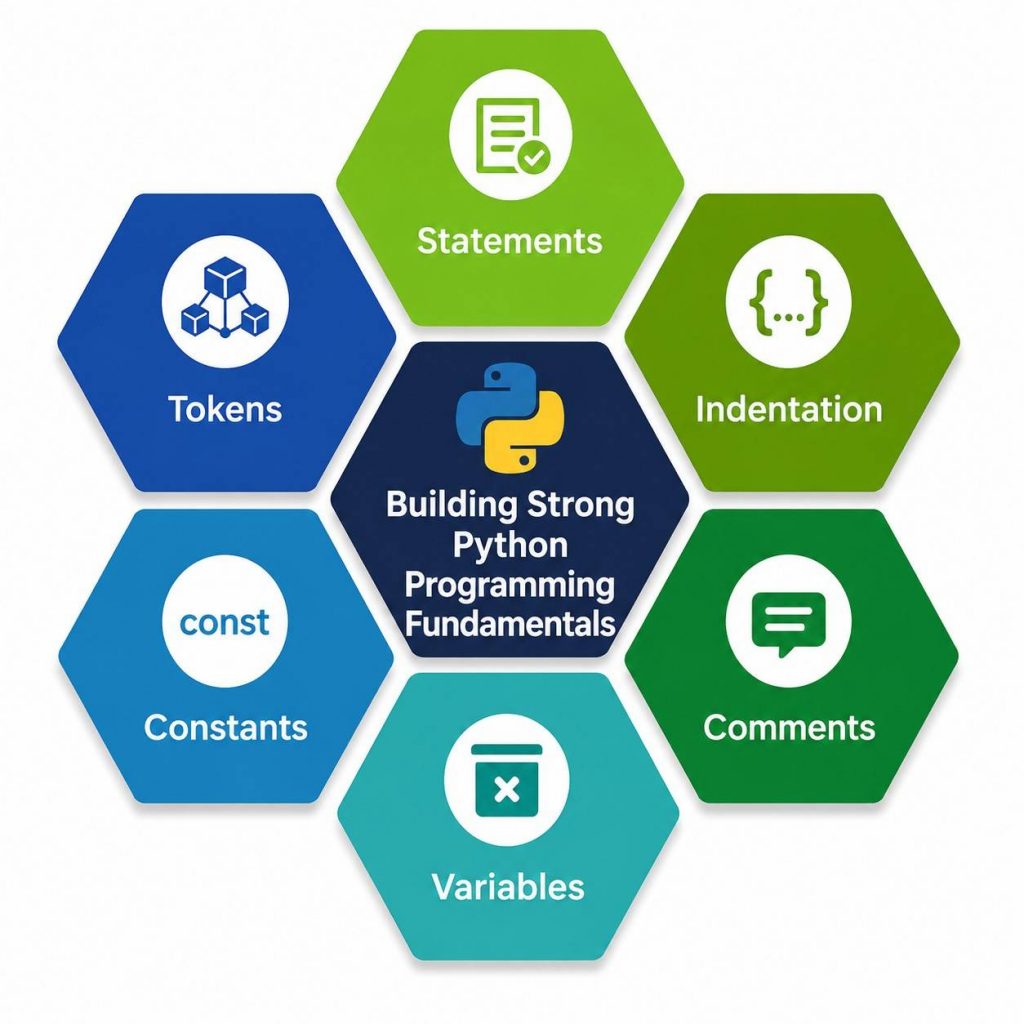
Strong Python fundamentals are essential for freshers who want to pursue software engineering opportunities at Google. Candidates should begin with variables, data types, operators, conditional statements, loops, functions, lists, tuples, dictionaries, sets, and string manipulation before progressing to advanced concepts. Enrolling in a comprehensive Python Course can help learners develop these core skills through structured practice. Understanding object-oriented programming, modules, packages, iterators, generators, decorators, exception handling, file operations, and memory management can help developers write more reliable applications.
Mastering Data Structures, Algorithms, and Problem-Solving
Data structures, algorithms, and problem-solving skills are essential areas for freshers preparing for competitive software engineering opportunities. Python developers should understand arrays, strings, linked lists, stacks, queues, hash tables, trees, heaps, graphs, and other fundamental data structures. They should also practice algorithms involving sorting, searching, recursion, backtracking, greedy techniques, dynamic programming, graph traversal, and optimization. The goal is not simply to memorize solutions but to understand how to analyze a problem, select an appropriate data structure, develop an efficient algorithm, and explain the reasoning clearly. Candidates should pay close attention to time and space complexity and learn how different approaches affect application performance. Regular practice with coding problems can improve pattern recognition, logical reasoning, debugging ability, and coding speed. Freshers who want to strengthen their technical profile can also pursue a Python Certification Course Learn & Get Certified to validate their programming and problem-solving skills. Freshers should also practice solving unfamiliar problems under time limits and participate in mock interviews to become comfortable explaining their solutions aloud. Combining Python programming with strong algorithmic thinking prepares candidates to handle technical assessments and demonstrates the problem-solving abilities expected in professional software engineering environments.

Get JOB Oriented Python Training for Beginners By MNC Experts
- Instructor-led Sessions
- Real-life Case Studies
- Assignments
Learning Python Frameworks, APIs, and Backend Development
- Exploring Django and Flask: Learn popular Python frameworks such as Django and Flask to understand how web applications, backend services, routing, authentication, and database-driven applications are developed. These frameworks also help learners apply Python concepts to practical web development projects.
- Understanding FastAPI for Modern Applications: Explore FastAPI to build fast and scalable APIs while learning request handling, validation, authentication, asynchronous programming, and API documentation.
- Building RESTful APIs: Practice creating REST APIs that allow applications to communicate through standard HTTP methods such as GET, POST, PUT, and DELETE.
- Connecting Python with Databases: Learn how Python applications interact with SQL and NoSQL databases while practicing queries, data modeling, transactions, and database optimization. Understanding the SQL and Python Comparison: Key Differences and Tips can also help learners understand how these technologies complement each other in application development.
- Understanding Backend Architecture: Study concepts such as client-server architecture, authentication, middleware, caching, logging, scalability, and service integration to develop reliable backend applications.
Developing Skills in Testing, Debugging, and Code Quality
- Writing Unit and Integration Tests: Learn how to create automated tests for individual functions, modules, APIs, and complete application workflows to improve software reliability.
- Practicing Debugging Techniques: Develop systematic debugging skills by identifying errors, analyzing logs, using debugging tools, and tracing problems through different parts of an application.
- Following Clean Code Practices: Write readable and maintainable Python code by using meaningful names, modular functions, consistent formatting, proper documentation, and appropriate design principles. Building these skills through a structured Python Course can help learners apply professional coding practices effectively.
- Using Code Quality and Linting Tools: Practice tools such as linters, formatters, and static analysis utilities to identify coding issues and maintain consistent development standards.
- Learning Version Control and Code Reviews: Use Git and GitHub to manage source code, track changes, collaborate with developers, create branches, and participate in professional-style code reviews.
Want to Pursue a Python Master’s Degree? Enroll For Python Master Program Training Course Today!
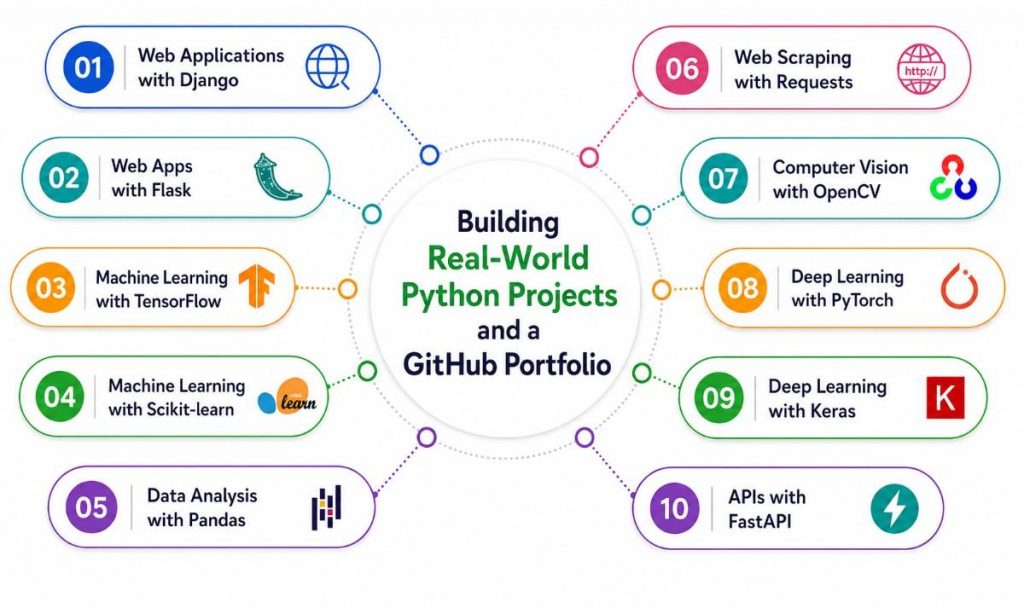
Building Real-World Python Projects and a GitHub Portfolio
- Creating Practical Python Applications: Build projects such as web applications, automation tools, REST APIs, data-processing systems, or productivity applications to demonstrate practical development skills.
- Developing Projects with Real-World Use Cases: Choose projects that solve genuine problems, such as expense tracking, inventory management, task automation, customer analysis, or appointment scheduling.
- Integrating APIs and Databases: Develop complete applications by connecting Python backends with external APIs and databases, demonstrating your ability to work with multiple technologies.
- Maintaining a Professional GitHub Portfolio: Organize repositories with clean code, README files, screenshots, setup instructions, technologies used, and project outcomes so recruiters can easily evaluate your work. Candidates can also strengthen their understanding of practical Python programming by exploring Learn How to Sort a String in Python and applying similar programming concepts in their projects.
- Deploying Projects to the Cloud: Deploy applications using suitable cloud platforms or hosting services to demonstrate knowledge of application deployment, configuration, monitoring, and production environments.
Learning Cloud, AI, Automation, and Data Technologies with Python
| Technology Area | What Freshers Should Learn | Python Applications | Career Benefit |
|---|---|---|---|
| Cloud Computing | Cloud fundamentals, storage, compute, APIs, deployment, and cloud services | Deploy Python applications and build cloud-based solutions | Builds skills for Cloud and Software Engineer roles |
| Artificial Intelligence | Machine learning, neural networks, model training, and evaluation | Develop AI models using Python libraries and frameworks | Prepares for AI and ML engineering opportunities |
| Generative AI | LLMs, embeddings, prompt engineering, RAG, and AI APIs | Build chatbots, summarizers, and intelligent applications | Develops modern AI application skills |
| Data Analytics | Data cleaning, statistics, visualization, and exploratory analysis | Use Pandas, NumPy, and visualization libraries | Supports Data Analytics careers such as Data Analyst and Data Engineer |
| Automation | Scripting, task automation, web automation, and file processing | Automate repetitive workflows and processes | Improves productivity and engineering efficiency |
| Data Engineering | ETL, data pipelines, databases, and data processing | Create Python-based data pipelines and transformations | Prepares for Data Engineering roles |
| DevOps | CI/CD, containers, monitoring, and deployment concepts | Automate builds, testing, and deployment workflows | Strengthens software engineering capabilities |
| APIs and Microservices | REST APIs, authentication, service communication, and architecture | Develop backend services using Python frameworks | Builds scalable backend development skills |
Preparing for a Python Job? Have a Look at Our Blog on Python Interview Questions and Answers To Ace Your Interview!
Preparing for Google Software Engineering Interviews as a Python Developer
Preparing for Google Software Engineering interviews as a Python developer requires more than knowing Python syntax. Freshers should develop strong problem-solving skills and become comfortable using Python to solve data structures and algorithm problems efficiently. Important topics include arrays, strings, linked lists, stacks, queues, hash tables, trees, graphs, recursion, sorting, searching, dynamic programming, and algorithm complexity. Candidates should practice explaining their approach before writing code and clearly discuss time and space complexity, alternative solutions, and possible edge cases. Along with coding preparation, freshers should understand object-oriented programming, databases, APIs, software testing, debugging, networking basics, and system design fundamentals. Practical project experience is also valuable because interviewers may ask candidates to explain their design decisions, technical challenges, testing methods, and contributions. Behavioral preparation should focus on communication, teamwork, leadership, adaptability, and problem-solving experiences from projects, internships, academics, or other activities. Regular mock interviews can help candidates improve coding speed, communication, and confidence under pressure. Candidates can also review Python vs JavaScript: Comparison & Key Differences Explained to broaden their understanding of Python and its position among popular programming languages. By combining Python expertise with strong computer science fundamentals and consistent interview practice, freshers can prepare effectively for competitive software engineering opportunities.
Conclusion: Starting a Successful Python Development Career at Google
Building a successful Python development career at Google requires a combination of programming expertise, computer science fundamentals, practical experience, and continuous learning. Freshers should begin by mastering Python through a structured Python Course and gradually expand their knowledge of data structures, algorithms, backend development, APIs, databases, testing, debugging, cloud technologies, automation, AI, and data engineering. Real-world projects provide an excellent way to apply these skills while building a professional GitHub portfolio that demonstrates practical development capabilities. Internships, open-source contributions, coding competitions, and technical certifications can further strengthen a candidate’s profile. Preparing specifically for software engineering interviews is equally important, with regular practice in coding, problem-solving, system design fundamentals, and behavioral discussions. Candidates should also develop communication, teamwork, and adaptability because successful software development involves collaborating with different technical and business teams. Although opportunities at Google are highly competitive, consistent preparation and a strong growth mindset can help freshers improve their technical abilities and career readiness. By continuously building projects, learning modern technologies, practicing coding problems, and staying updated with software engineering trends, aspiring Python developers can create a strong foundation for a rewarding career at Google and across the wider technology industry.