LMS
LMS
Last updated on 17th Jul 2026| 11417

- Introduction to QA Careers at Capgemini
- Why Choose Capgemini for a QA Career
- Eligibility Criteria for QA Roles at Capgemini
- Educational Qualifications Required
- Technical Skills Needed for QA Roles
- Soft Skills Valued by Capgemini
- Capgemini QA Recruitment Process Overview
- Online Assessment and Aptitude Test
- Technical and HR Interview Rounds
- Common Interview Questions for QA Roles
- Conclusion: Building a QA Career at Capgemini
Introduction to QA Careers at Capgemini
Capgemini is one of the world’s leading global technology consulting and services companies, with a strong presence in software quality assurance and testing across banking, insurance, retail, healthcare, and telecom domains. For engineering graduates and IT professionals in India, a QA career at Capgemini offers a structured entry point into the software testing industry, combining hands-on project exposure with access to large-scale enterprise applications used by clients worldwide. Candidates who are familiar with the Understanding the Different Types of Software Testing can better understand the diverse responsibilities involved in these roles. The company recruits testers through campus placement drives, off-campus hiring portals, and lateral hiring for experienced professionals, making it accessible to freshers as well as candidates with a few years of testing experience. Quality assurance roles at Capgemini span manual testing, automation testing, performance testing, and specialized domains such as API testing and mobile application testing, giving new hires the flexibility to build a career path suited to their interests. Because Capgemini follows global delivery models, testers based in India often collaborate with international teams, gaining exposure to different testing standards, tools, and client expectations. This guide walks through the eligibility requirements, technical and soft skills expected, and the complete selection process so that aspiring QA professionals can prepare effectively for a role at Capgemini. Capgemini also focuses on continuous learning and career growth for QA professionals. Freshers receive training in testing tools, Agile practices, and enterprise projects, while experienced testers can advance into automation, performance, and test leadership roles. Understanding the company’s expectations and hiring process can help candidates prepare effectively and improve their chances of securing a software testing role.
Why Choose Capgemini for a QA Career
- Global Project Exposure: Capgemini works with Fortune 500 clients across multiple industries, giving QA engineers the opportunity to test large, complex applications and gain experience with enterprise-grade systems rather than small, isolated projects. This exposure helps testers understand diverse business domains such as banking, healthcare, retail, and manufacturing. Working on international projects also enhances technical expertise and collaboration with global development teams.
- Structured Career Growth: The company follows a defined career ladder from Test Engineer to Senior Test Engineer, Test Lead, and Test Manager, with clear timelines and internal certification programs that help testers progress steadily. Regular performance reviews and skill development initiatives support continuous career advancement. Employees also have opportunities to move into automation, quality engineering, and leadership roles based on their experience.
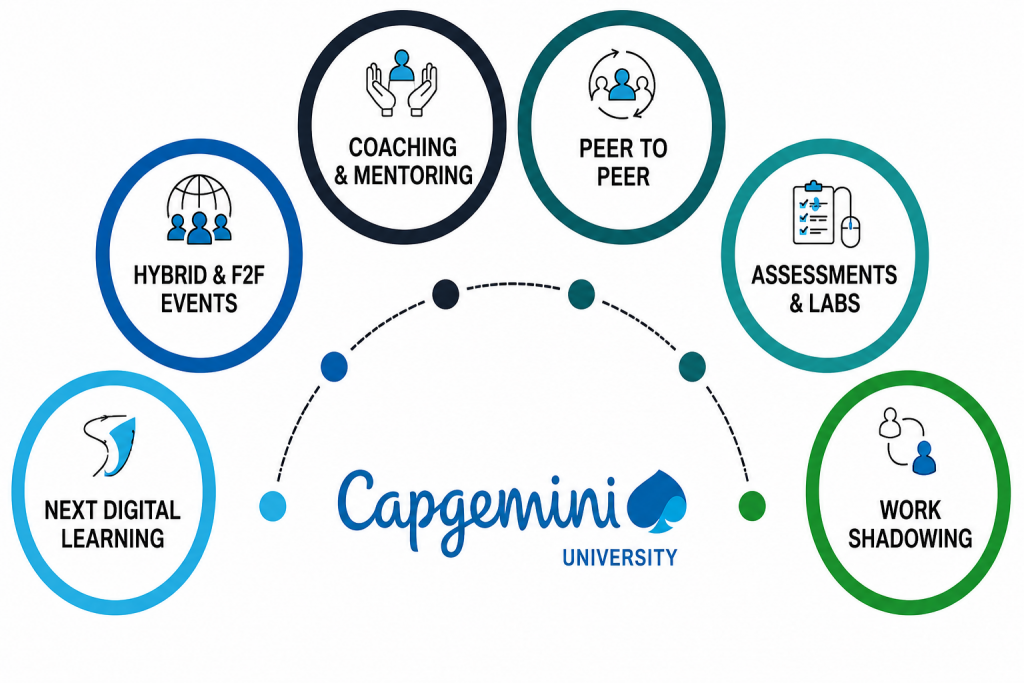
- Strong Training Ecosystem: New hires go through Capgemini’s internal training academy, which covers manual testing fundamentals, automation frameworks, and domain-specific knowledge before they are deployed onto live client projects. Candidates who strengthen their fundamentals through Skills Required to Become a QA Engineer for Freshers often adapt more quickly to enterprise testing environments. Hands-on training and mentorship help freshers build confidence before working on real-world assignments.
- Diverse Testing Opportunities: Employees can specialize in manual testing, automation using Selenium or similar tools, performance testing, API testing, or security testing depending on their interests and project availability. Exposure to multiple testing domains enables professionals to develop versatile technical skills. This flexibility allows QA engineers to choose career paths that align with their long-term goals.
- Competitive Compensation and Benefits: Capgemini offers salary packages aligned with industry standards, along with health insurance, provident fund contributions, and performance-based bonuses for QA roles at every level. Employees may also receive learning benefits, paid leave, and rewards for outstanding performance. A comprehensive benefits package contributes to long-term job satisfaction and financial security.
- Work-Life Balance Initiatives: The company promotes hybrid working models and wellness programs, which many testers find valuable when balancing demanding project deadlines with personal commitments. Flexible work arrangements help employees maintain productivity while supporting their personal well-being. Wellness initiatives and employee assistance programs further contribute to a healthy and positive work environment.
Eligibility Criteria for QA Roles at Capgemini
- Educational Qualification: Candidates typically need a Bachelor’s degree in Engineering, Computer Science, Information Technology, or a related field, though BSc and BCA graduates are also considered for certain QA openings. Completing Software Testing Training along with relevant certifications and practical project experience can provide an added advantage during the selection process. A strong academic foundation combined with technical skills improves overall employability for QA roles.
- Minimum Academic Percentage: Most campus and off-campus drives require a minimum of 60 percent or an equivalent CGPA throughout secondary school, higher secondary, and undergraduate studies, with limited exceptions for specific hiring campaigns. Maintaining consistent academic performance demonstrates discipline and commitment to learning. Candidates should always review the latest recruitment notification for any updates to eligibility requirements.
- No Active Backlogs: Applicants are generally expected to have no active backlogs at the time of the interview process, as this is a standard screening criterion across most Capgemini recruitment drives. Clearing all academic subjects before the final selection process is usually mandatory. A backlog-free record reflects academic consistency and readiness for professional responsibilities.
- Career Gap Allowance: Capgemini typically permits a career gap of up to one or two years, provided candidates can explain the gap clearly, such as further studies, family responsibilities, or skill development. Supporting documents and a genuine explanation help avoid issues during verification. Productive use of the gap period through certifications or learning programs can strengthen a candidate’s profile.
- Batch Eligibility for Freshers: Campus hiring drives are usually restricted to specific graduation years, so candidates should confirm whether their passing-out batch matches the current recruitment cycle before applying. Applying within the eligible batch ensures compliance with recruitment guidelines. Candidates from earlier batches can explore off-campus opportunities if they meet the required qualifications and experience.
- Experience Requirements for Lateral Hires: Experienced QA professionals applying for lateral roles need relevant testing experience matching the job description, along with references or documentation from previous employers. Hands-on expertise in manual testing, automation, API testing, or performance testing is often preferred. Demonstrating successful project contributions and technical achievements improves the chances of selection.
Get Your Software Testing Certification by Learning from Industry-Leading Experts and Advancing Your Career with ACTE’s Software Testing Course.
Educational Qualifications Required
While Capgemini accepts candidates from a wide range of academic backgrounds, certain educational qualifications improve the likelihood of selection for QA roles. Degrees in Computer Science, Information Technology, Electronics, and allied engineering disciplines are the most commonly preferred, since coursework in these programs typically covers programming fundamentals, database concepts, and software development life cycles that are directly relevant to testing work. Candidates from non-technical backgrounds, such as BSc Mathematics or BCA graduates, are also considered, particularly if they can demonstrate self-learned technical skills through certifications, personal projects, or Software Testing Training. Postgraduate degrees are not mandatory for entry-level QA positions, though an MCA or MTech can be advantageous for candidates targeting specialized automation or performance testing roles. Academic performance is evaluated alongside practical knowledge during interviews, so candidates with average scores but strong hands-on testing skills, such as familiarity with test case design or basic SQL queries, often perform well. Overall, Capgemini places emphasis on a combination of formal education and demonstrable testing aptitude rather than academic credentials alone. Additionally, candidates who have completed internships, participated in software testing workshops, or earned industry-recognized certifications can strengthen their profiles. Hands-on experience with bug tracking tools, version control systems, or automation frameworks demonstrates practical readiness for real-world projects. Final-year engineering students who meet the company’s eligibility criteria are also frequently recruited through campus placement drives, making early preparation highly beneficial.
Technical Skills Needed for QA Roles
- Software Testing Life Cycle Knowledge: Candidates should understand STLC phases including test planning, test case design, execution, defect reporting, and closure, as this forms the foundation of most QA interview discussions. A clear understanding of each phase helps testers contribute effectively throughout the software development process. Demonstrating practical knowledge of STLC creates a strong impression during technical interviews.
- Manual Testing Fundamentals: A clear grasp of test case writing, boundary value analysis, equivalence partitioning, and exploratory testing techniques is essential for demonstrating readiness for entry-level QA responsibilities. Candidates should also understand different testing types such as functional, regression, smoke, and sanity testing. Strong manual testing skills help identify software defects accurately before product releases.
- Automation Testing Basics: Familiarity with tools such as Selenium WebDriver, along with a working knowledge of Java or Python for scripting, gives candidates a strong advantage during technical interviews. Those interested in modern testing practices can also explore AI-Powered Software Testing to understand how AI is transforming automation and quality assurance. Hands-on experience through personal or academic projects further strengthens a candidate’s profile.
- Defect Tracking Tools: Practical exposure to bug tracking platforms like Jira, Bugzilla, or Azure DevOps helps candidates explain how they document, prioritize, and track defects through resolution. Understanding defect workflows improves collaboration between testers, developers, and project managers. Familiarity with these tools reflects real-world software testing experience.
- Basic SQL and Database Testing: The ability to write simple SQL queries for data validation and backend testing is frequently assessed, since many Capgemini projects involve database-driven applications. Candidates should know how to retrieve, filter, and validate records stored in relational databases. Database testing skills help ensure data integrity and application reliability.
- API Testing Awareness: Understanding how to test REST APIs using tools like Postman, including verifying status codes, response bodies, and headers, is increasingly expected even from freshers. API testing knowledge enables testers to validate backend functionality independently of the user interface. Familiarity with authentication methods and request types further enhances technical competence.
- Instructor-led Sessions
- Real-life Case Studies
- Assignments
- Quantitative Aptitude Section: This portion tests numerical ability through topics like percentages, ratios, time and work, and data interpretation, usually within a strict time limit of 20 to 30 minutes. Regular practice of aptitude questions improves calculation speed and problem-solving accuracy. Candidates should focus on shortcuts and time-saving techniques to maximize their overall score.
- Logical Reasoning Section: Candidates are assessed on pattern recognition, coding-decoding, seating arrangements, and logical puzzles designed to evaluate structured problem-solving under pressure. Developing analytical thinking skills helps candidates solve reasoning questions more efficiently. Practicing different puzzle types increases confidence and accuracy during the assessment.
- Verbal Ability Section: This section checks English comprehension, grammar, and vocabulary through reading passages, sentence correction, and fill-in-the-blank style questions. Reading newspapers, articles, and technical content regularly can improve vocabulary and comprehension skills. Strong communication abilities also contribute to better performance during interviews.
- Basic Programming Questions: A short technical section may include simple coding problems in languages like C, Java, or Python, focused on fundamental logic rather than advanced algorithms. Candidates should practice basic programming concepts such as loops, arrays, strings, and functions. Consistent coding practice improves logical thinking and technical confidence.
- Testing Concepts Quiz: Some assessments include multiple-choice questions on software testing fundamentals, such as test case design techniques, defect life cycle stages, and testing types. Reviewing core QA concepts becomes easier by referring to Black Box Testing vs White Box Testing Freshers Must Know, which explains one of the most frequently asked interview and assessment topics. Understanding real-world testing scenarios can further improve overall performance.
- Time Management Strategy: Since the overall assessment is time-bound, candidates benefit from practicing mock tests beforehand to build speed and accuracy across all sections within the allotted duration. Learning when to skip difficult questions and return to them later helps maximize the final score. Effective time management reduces stress and improves performance during the actual examination.
- Explain the Software Testing Life Cycle: Interviewers commonly ask candidates to walk through each phase of STLC, from requirement analysis to test closure, along with the key deliverables at each stage. Candidates should explain the objectives of every phase and how each contributes to software quality. Providing practical examples from academic or project work strengthens the overall response.
- Difference Between Verification and Validation: This classic question checks whether candidates understand the distinction between building the product right and building the right product in a testing context. Interviewers expect clear definitions along with real-world examples to demonstrate conceptual understanding. Explaining when each process occurs during the software development life cycle makes the answer more effective.
- How Do You Write a Test Case: Candidates are often asked to design test cases for a given scenario, such as a login page, covering positive, negative, and boundary conditions. A good answer should include test case ID, preconditions, test steps, expected results, and actual results. Mentioning boundary value analysis and equivalence partitioning further demonstrates testing expertise.
- What Is the Defect Life Cycle: This question evaluates understanding of how a bug moves from being reported to being fixed, retested, and closed within a project workflow. Candidates should describe defect statuses such as New, Assigned, Fixed, Retested, Reopened, and Closed. Explaining the responsibilities of testers and developers during each stage creates a comprehensive answer.
- Explain Regression Testing Versus Retesting: Interviewers frequently probe whether candidates can clearly distinguish between confirming a fix works and ensuring unrelated functionality remains unaffected. Candidates should explain that retesting verifies a specific defect fix, while regression testing checks the impact of changes on existing features. Practical examples help interviewers assess real-world understanding of both testing approaches.
- Describe a Challenging Bug You Found: This behavioral question assesses real project exposure and problem-solving ability by asking candidates to narrate a specific testing experience in detail. Candidates should describe the issue, the investigation process, the solution, and the overall impact on the project. Candidates preparing for interviews can also improve their profile by following the Software Testing Resume Guide, which complements technical interview preparation. Using a structured approach such as the STAR method makes the response more organized and convincing.

Learn Software Testing Training Course to Build Your Skills
Weekday / Weekend BatchesSee Batch DetailsSoft Skills Valued by Capgemini
Technical knowledge alone is not sufficient to succeed in a QA role at Capgemini, since testers work closely with developers, business analysts, and client stakeholders throughout the software development life cycle. Strong communication skills are essential for writing clear defect reports and explaining testing outcomes to non-technical audiences. Analytical thinking helps testers identify edge cases and potential failure points that automated checks might miss, while attention to detail ensures that even minor inconsistencies in application behavior are caught before release. Collaboration and teamwork are equally important, as QA engineers frequently coordinate with cross-functional teams across different time zones. Adaptability is another valued trait, given that testing priorities can shift quickly based on project timelines or client feedback. Candidates preparing for QA interviews can strengthen both their technical and professional profile by referring to the Manual Tester Resume Guide, which explains how to effectively present these qualities to recruiters. Candidates who can demonstrate these soft skills through specific examples during interviews, rather than simply listing them, tend to leave a stronger impression on recruiters. Problem-solving and time management skills also play a crucial role, as QA professionals often work under tight deadlines while maintaining high testing quality. A willingness to learn new tools, technologies, and testing methodologies is highly valued in Capgemini’s dynamic project environment. Taking ownership of assigned tasks and maintaining a proactive attitude further helps candidates stand out during both the hiring process and on client projects.
Capgemini QA Recruitment Process Overview
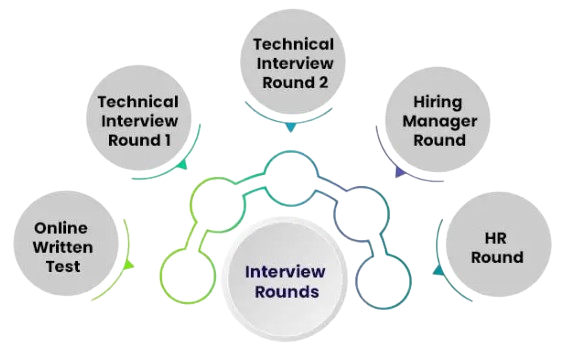
Capgemini’s QA recruitment process typically begins with an online application through the company’s careers portal or a campus placement drive, followed by a series of structured evaluation stages designed to assess both technical competence and cultural fit. Candidates who complete Software Testing Training often gain practical knowledge of testing concepts, automation tools, and interview preparation that can be valuable during the selection process. The exact number of rounds can vary depending on whether the candidate is applying as a fresher or through lateral hiring, but most drives follow a similar pattern, moving from an initial aptitude and technical assessment through one or two technical interviews and a final HR discussion. The table below summarizes what each round typically evaluates. Some recruitment cycles also include a group discussion round, particularly for campus hires, to evaluate communication and teamwork abilities in a group setting. Candidates who clear each stage typically receive an offer letter within a few weeks, though timelines can extend during high-volume hiring seasons. Understanding this overall structure in advance allows candidates to prepare systematically for each stage rather than being caught off guard by unfamiliar interview formats.
| Interview Round | Primary Focus Area |
|---|---|
| Online Assessment | Aptitude, reasoning, verbal ability, and basic programming logic |
| Technical Interview | Manual testing concepts, test case design, SQL, and automation basics |
| Group Discussion (campus hires) | Communication skills and teamwork in a group setting |
| HR Interview | Career motivation, relocation flexibility, and salary discussion |

Get JOB Oriented Software TestingI Training for Beginners By MNC Experts
Online Assessment and Aptitude Test
Want to Master Software Testing? Explore the Software Testing Master Program Offered at ACTE Today!
Technical and HR Interview Rounds
The technical interview round for QA positions at Capgemini generally focuses on core testing concepts, practical scenarios, and basic programming or SQL knowledge, depending on the specific role. Interviewers often present candidates with a sample application feature and ask them to design test cases covering functional, boundary, and negative scenarios, which helps assess practical thinking rather than memorized definitions. Questions about the software testing life cycle, defect life cycle, and differences between testing types such as smoke, sanity, and regression testing are common. Candidates applying for automation-focused roles may be asked to write or explain simple Selenium scripts or discuss their understanding of automation frameworks. Those preparing for such discussions can also benefit from reading Manual vs Automation Testing to better understand the expectations of different QA roles. Following the technical round, the HR interview evaluates communication skills, career motivation, and alignment with Capgemini’s work culture, including questions about relocation flexibility, willingness to work in rotational shifts, and long-term career goals.
Want to Learn About Software Testing? Explore Our Software Testing Interview Questions and Answers Featuring the Most Frequently Asked Questions in Job Interviews.
Common Interview Questions for QA Roles
Conclusion: Building a QA Career at Capgemini
A QA career at Capgemini offers a well-structured path for both freshers and experienced professionals looking to build expertise in software testing within a global enterprise environment. Success in the recruitment process depends on a combination of solid academic performance, practical testing skills, and the ability to communicate clearly during interviews. Enrolling in Software Testing Training can help candidates strengthen their knowledge of manual and automation testing concepts while improving their interview readiness. Candidates who invest time in strengthening their understanding of manual testing fundamentals, gaining basic exposure to automation tools, and practicing aptitude tests are generally better positioned to clear each stage of the selection process. Beyond technical preparation, demonstrating genuine interest in quality assurance as a discipline, along with adaptability and teamwork, helps candidates stand out during HR discussions. With its extensive training programs, diverse project opportunities, and clear career progression paths, Capgemini remains a strong choice for anyone starting or advancing their journey in software testing. Thorough preparation across aptitude, technical concepts, and interview communication will significantly improve a candidate’s chances of securing a QA role at the company. As the software industry continues to evolve, Capgemini increasingly values professionals who are committed to continuous learning and keeping pace with emerging testing technologies. Building practical experience through internships, personal projects, and relevant certifications can further strengthen a candidate’s profile. With consistent preparation and a proactive learning mindset, aspiring QA professionals can establish a successful and long-term career at Capgemini.