LMS
LMS
Last updated on 21st Jul 2026| 11468

- Introduction to the Microsoft Data Analytics Interview Process
- Why Choose a Data Analytics Career at Microsoft?
- Eligibility Criteria for Microsoft Data Analytics Roles
- Skills Required to Crack the Microsoft Data Analytics Interview
- Microsoft Data Analytics Recruitment Process for Freshers
- Resume Preparation Tips for Microsoft Data Analytics Jobs
- Aptitude and Online Assessment Round at Microsoft
- Technical Interview Questions for Data Analytics Roles at Microsoft
- HR Interview Tips and Common Questions at Microsoft
- Tips to Successfully Crack the Microsoft Data Analytics Interview
- Conclusion: Preparing for a Successful Data Analytics Career at Microsoft
Introduction to the Microsoft Data Analytics Interview Process
Microsoft is one of the world’s leading technology companies, known for developing innovative software, cloud computing solutions, artificial intelligence technologies, and business intelligence platforms that are used by millions of organizations worldwide. As businesses increasingly rely on data to improve decision-making and drive innovation, Microsoft actively recruits skilled Data Analytics professionals who can transform raw data into meaningful business insights. Building the required technical expertise through a professional Data Analytics Course can help candidates strengthen their knowledge before appearing for Microsoft’s recruitment process. The Microsoft Data Analytics interview process is designed to evaluate a candidate’s technical knowledge, analytical thinking, problem-solving ability, communication skills, and overall suitability for working in a fast-paced, technology-driven environment. Freshers applying for Data Analytics roles can expect multiple stages of assessment, including resume screening, online aptitude tests, technical evaluations, coding or SQL assessments, and behavioral interviews. Throughout the recruitment process, interviewers assess a candidate’s understanding of programming languages such as Python and SQL, data visualization tools like Power BI, statistical concepts, database management, analytical reasoning, and business problem-solving skills. In addition to technical expertise, Microsoft also values curiosity, innovation, teamwork, adaptability, leadership potential, and a willingness to learn new technologies. Understanding each stage of the interview process, preparing systematically, and gaining practical experience through projects and internships significantly improve a candidate’s chances of securing a Data Analytics role at Microsoft. With proper preparation and continuous learning, fresh graduates can confidently navigate the recruitment process and begin a rewarding career with one of the most respected technology companies in the world.
Why Choose a Data Analytics Career at Microsoft?
A career in Data Analytics at Microsoft offers fresh graduates an exceptional opportunity to work with cutting-edge technologies, solve complex business challenges, and contribute to products and services used by millions of people across the globe. Microsoft provides employees with exposure to advanced fields such as artificial intelligence, machine learning, cloud computing, business intelligence, big data analytics, and enterprise software development, making it one of the most desirable workplaces for technology professionals. Data Analytics professionals at Microsoft work on large-scale datasets to generate valuable insights that improve products, optimize business operations, enhance customer experiences, and support strategic decision-making. To strengthen their practical expertise before applying, aspiring professionals can also explore Data Analytics Projects for Freshers, which helps build hands-on experience and industry-ready skills. The company encourages innovation, continuous learning, collaboration, and professional development by offering access to world-class training programs, certifications, mentorship opportunities, and challenging projects.
Eligibility Criteria for Microsoft Data Analytics Roles
Candidates should possess a bachelor’s or master’s degree in Computer Science, Information Technology, Data Science, Statistics, Mathematics, Engineering, or a related discipline. A strong academic foundation helps in understanding analytical concepts and technical problem-solving. Applicants should have good knowledge of programming languages such as Python, SQL, and preferably R for data analysis tasks. Strong programming skills are essential for working with datasets and developing analytical solutions. Candidates should be familiar with data cleaning, exploratory data analysis, statistics, data visualization, and business intelligence concepts. Experience with Microsoft Power BI, Excel, Tableau, or similar reporting tools is highly beneficial during the recruitment process. Enrolling in a comprehensive Data Analytics Course can help candidates build these essential technical skills through hands-on projects and practical training. Understanding machine learning fundamentals, predictive analytics, and model evaluation techniques provides an added advantage. Microsoft also looks for candidates with strong problem-solving ability, analytical thinking, communication skills, teamwork, and practical experience through Data Analytics projects, internships, hackathons, or certifications, as these significantly strengthen a candidate’s profile during the recruitment process.
Get Your Data Analytics Certification by Learning from Industry-Leading Experts and Advancing Your Career with ACTE’s Data Analytics Course.
Skills Required to Crack the Microsoft Data Analytics Interview
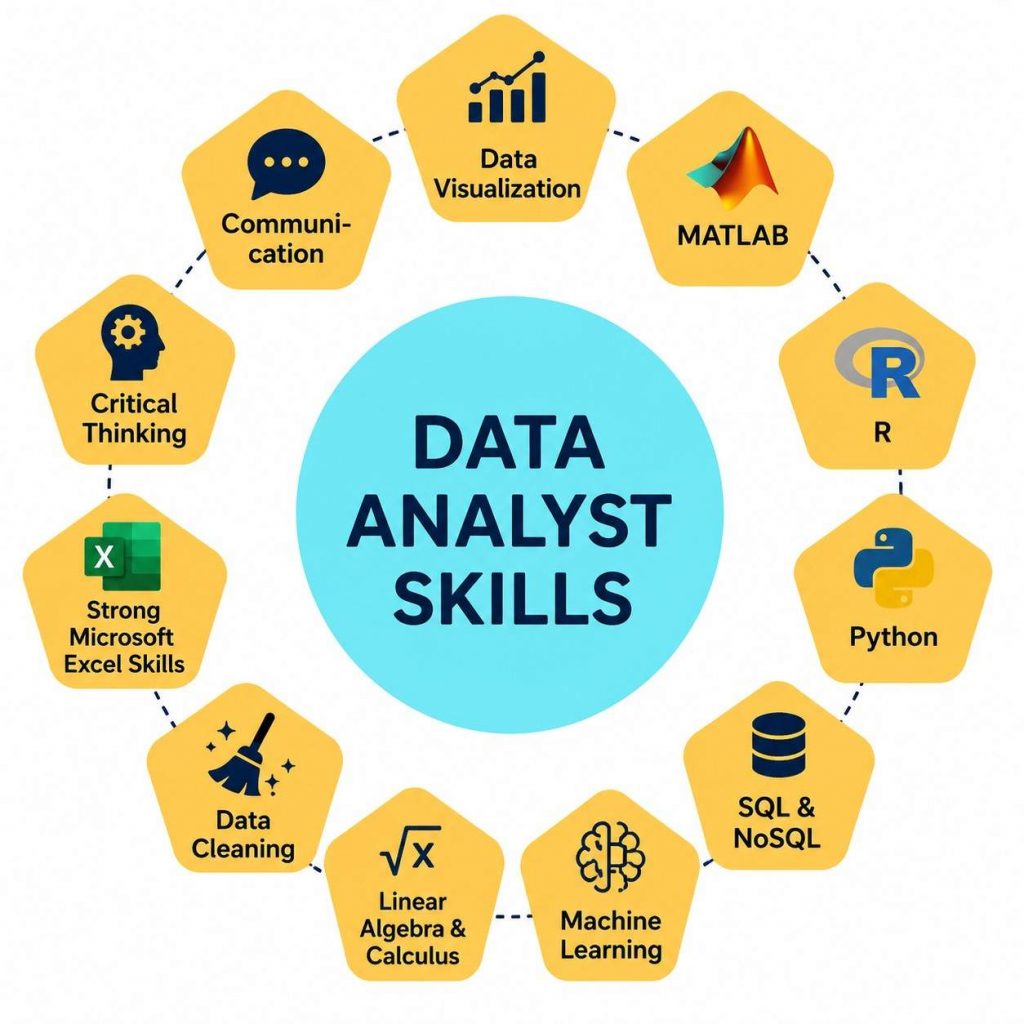
- Python Programming Skills: Candidates should have a strong understanding of Python for data manipulation, automation, and analytical problem-solving. Knowledge of libraries such as Pandas, NumPy, and Matplotlib is highly beneficial during technical interviews.
- SQL and Database Management: Strong SQL skills are essential for writing queries, retrieving data, performing joins, using aggregate functions, and managing relational databases. Microsoft frequently evaluates database concepts during technical assessments.
- Data Analysis and Visualization: Applicants should know how to clean, analyze, and visualize datasets using Excel, Power BI, or Tableau. The ability to create meaningful dashboards and reports demonstrates practical analytical skills.
- Statistics and Probability: A solid understanding of statistics, probability, hypothesis testing, and data interpretation is important for analyzing datasets accurately. These concepts help candidates answer analytical and business-related interview questions.
- Problem-Solving and Logical Thinking: Microsoft values candidates who can approach business challenges logically and develop efficient, data-driven solutions. Strong analytical thinking helps in solving technical and case-based interview questions.
- Machine Learning Fundamentals: Basic knowledge of supervised learning, unsupervised learning, model evaluation, and predictive analytics provides an added advantage. To understand where these evolving technologies are heading, candidates can also explore Future Trends in Data Analytics.
- Communication and Presentation Skills: Candidates should confidently explain technical concepts, project implementations, and analytical findings in a clear and structured manner. Effective communication is important during both technical and HR interviews.
- Project Implementation Experience: Hands-on experience through academic projects, internships, or personal Data Analytics projects demonstrates practical knowledge. Recruiters often ask detailed questions about the technologies, datasets, and solutions used.

Learn Advanced Data Analytics Certification Training Course to Build Your Skills
Weekday / Weekend BatchesSee Batch DetailsMicrosoft Data Analytics Recruitment Process for Freshers
The Microsoft Data Analytics recruitment process for freshers is designed to assess a candidate’s technical expertise, analytical thinking, problem-solving ability, and overall suitability for working in a highly innovative and collaborative environment. The process typically begins with an online application submitted through the Microsoft Careers portal, where candidates provide their resume, educational qualifications, technical skills, certifications, and project details. After resume screening, shortlisted candidates may be invited to complete an online assessment that evaluates aptitude, logical reasoning, quantitative ability, coding fundamentals, SQL knowledge, and analytical thinking. Candidates who perform well in the assessment proceed to one or more technical interview rounds, during which interviewers evaluate their understanding of Python, SQL, data structures, statistics, Power BI, Excel, data visualization, machine learning basics, and database concepts. Interviewers also discuss academic projects, internships, and practical experiences to understand how candidates apply analytical techniques to solve real-world business problems. For additional preparation strategies, candidates can refer to Top 10 Proven Ways to Secure a Data Analytics Internship, which provides practical tips for improving technical and interview readiness. Depending on the role, applicants may also receive case-study questions or scenario-based problems that assess their ability to analyze data and make business recommendations. Candidates who successfully clear the technical rounds are invited for an HR or behavioral interview, where communication skills, teamwork, adaptability, leadership potential, career goals, and cultural fit are evaluated. Throughout the recruitment process, Microsoft looks for candidates who demonstrate curiosity, innovation, continuous learning, and the ability to collaborate effectively in diverse teams. Freshers who prepare consistently, strengthen their technical knowledge, practice coding and SQL regularly, and confidently explain their projects have a much higher chance of successfully securing a Data Analytics role at Microsoft.

Get JOB Oriented Data Analytics Training for Beginners By MNC Experts
- Instructor-led Sessions
- Real-life Case Studies
- Assignments
Resume Preparation Tips for Microsoft Data Analytics Jobs
- Create a Professional Resume Format: Use a clean, well-organized resume with clearly defined sections for education, technical skills, projects, certifications, internships, and achievements. A professional format improves readability and creates a positive first impression.
- Highlight Relevant Technical Skills: Include important skills such as Python, SQL, Excel, Power BI, Tableau, statistics, and data visualization that match the job description. Recruiters often look for these skills during the initial resume screening.
- Showcase Data Analytics Projects: Mention academic, personal, or internship projects with clear descriptions of the problem, tools used, methodology, and outcomes. Projects demonstrate your practical ability to apply Data Analytics concepts. Building experience through Data Analytics Portfolio as a Fresher can further strengthen your resume.
- Include Industry-Recognized Certifications: Add certifications from Microsoft, Google, IBM, AWS, Coursera, or other recognized platforms related to Data Analytics and Business Intelligence. Certifications validate your knowledge and commitment to continuous learning.
- Quantify Your Achievements: Whenever possible, include measurable results such as improved efficiency, reduced processing time, or dashboard performance improvements. Quantifiable achievements make your resume more impactful.
- Customize the Resume for Each Job: Modify your resume according to the skills, responsibilities, and keywords mentioned in the Microsoft job description. Tailored resumes have a better chance of passing applicant tracking systems.
- Provide GitHub and LinkedIn Links: Include links to your GitHub repository, portfolio, and LinkedIn profile to showcase projects and professional accomplishments. These platforms allow recruiters to evaluate your practical work.
- Proofread Before Submission: Carefully review your resume to eliminate spelling, grammatical, formatting, or factual errors before applying. A polished and error-free resume reflects professionalism and attention to detail.
Want to Master Data Analytics? Explore the Data Analytics Master Program Offered at ACTE Today!
Aptitude and Online Assessment Round at Microsoft
- Quantitative Aptitude: Candidates should practice arithmetic, percentages, profit and loss, probability, time and work, and data interpretation questions. Strong numerical ability helps improve performance in the aptitude assessment.
- Logical Reasoning: Microsoft evaluates logical thinking through puzzles, seating arrangements, coding patterns, series completion, and analytical reasoning questions. Regular practice improves speed, accuracy, and problem-solving ability.
- Verbal Ability: The assessment may include reading comprehension, grammar, vocabulary, sentence correction, and verbal reasoning questions. Good communication and language skills contribute to better overall performance.
- Python Programming Assessment: Candidates should revise Python fundamentals, data structures, loops, functions, file handling, and commonly used analytical libraries. Practical coding skills are often evaluated during technical assessments.
- SQL and Database Questions: Practice SQL queries involving SELECT, JOIN, GROUP BY, HAVING, aggregate functions, and subqueries before the assessment. Strong SQL knowledge is essential for Data Analytics roles.
- Data Analysis and Interpretation: Applicants should understand how to analyze datasets, identify trends, and interpret business information accurately. Reading Common Mistakes Freshers Make in Data Analytics can help candidates avoid common errors during assessments and interviews.
- Time Management During the Test: Allocate time wisely for each section and avoid spending too much time on difficult questions. Effective time management improves overall test performance and completion rate.
- Practice Mock Assessments: Attempt online mock tests regularly to become familiar with the assessment pattern and improve confidence. Continuous practice helps identify weaknesses and strengthen problem-solving skills.
Technical Interview Questions for Data Analytics Roles at Microsoft
The technical interview for Data Analytics roles at Microsoft is designed to evaluate a candidate’s ability to apply analytical knowledge, programming skills, and logical reasoning to solve real-world business problems using data. Interviewers commonly ask questions related to Python programming, SQL queries, database management, statistics, probability, data cleaning, exploratory data analysis, Excel, Power BI, Tableau, and machine learning fundamentals. Strengthening these concepts through a structured Data Analytics Course can significantly improve your confidence and technical readiness for the interview process. Candidates may be required to write SQL queries involving joins, aggregate functions, subqueries, window functions, and database normalization concepts, while Python questions often focus on data structures, functions, loops, object-oriented programming, file handling, and analytical libraries such as Pandas and NumPy. Interviewers also assess a candidate’s understanding of statistical concepts including mean, median, variance, standard deviation, probability distributions, hypothesis testing, and correlation, as these are essential for interpreting business data accurately. Practical project discussions form an important part of the interview, where applicants explain the business problem, dataset, methodology, tools used, challenges faced, model implementation, and final outcomes of their projects.
Want to Learn About Data Analytics? Explore Our Data Analytics Interview Questions and Answers Featuring the Most Frequently Asked Questions in Job Interviews.
HR Interview Tips and Common Questions at Microsoft
- Prepare Your Self-Introduction: Introduce yourself confidently by highlighting your education, technical skills, projects, internships, certifications, and career goals. A well-structured introduction creates a positive first impression.
- Explain Why You Want to Join Microsoft: Be prepared to discuss Microsoft’s culture, innovation, products, and your interest in building a career with the company. Demonstrating genuine motivation reflects strong career commitment.
- Discuss Your Projects Clearly: Explain your Data Analytics projects by describing the problem, technologies used, challenges faced, and results achieved. Interviewers assess both technical knowledge and communication skills.
- Answer Behavioral Questions Honestly: Questions about teamwork, leadership, conflict resolution, adaptability, and problem-solving are commonly asked during HR interviews. Use real examples from academic or internship experiences to support your answers.
- Demonstrate Strong Communication Skills: Speak clearly, listen carefully to each question, and organize your responses logically before answering. Effective communication leaves a positive impression on interviewers.
- Show a Positive Learning Attitude: Microsoft values candidates who are curious, adaptable, and committed to continuous learning and professional growth. Learning from Data Analytics Internships Help Freshers Build Career can help you understand how practical experience strengthens both technical and professional skills.
- Ask Meaningful Questions: At the end of the interview, ask thoughtful questions about the role, learning opportunities, mentorship, or team culture. This demonstrates genuine interest in the organization and the position.
- Maintain Professionalism Throughout: Dress appropriately, be punctual, maintain eye contact, and display confidence and respect during the interview. Professional behavior contributes significantly to overall interview performance.
Tips to Successfully Crack the Microsoft Data Analytics Interview
Successfully clearing the Microsoft Data Analytics interview requires a combination of strong technical knowledge, consistent practice, effective communication, and thorough preparation across every stage of the recruitment process. Candidates should begin by mastering core technical skills such as Python, SQL, Excel, Power BI, Tableau, statistics, probability, database management, and data visualization, as these topics are frequently assessed during online assessments and technical interviews. Practical experience is equally important, so applicants should build real-world Data Analytics projects, participate in hackathons, solve business case studies, and maintain an active GitHub portfolio that demonstrates their ability to apply analytical concepts to real problems. Revising academic projects, understanding the business objectives behind each project, and preparing to explain the methodologies, tools, challenges, and outcomes confidently can significantly improve interview performance. Candidates can also gain valuable insights by reading My Data Analytics Internship Experience, which highlights practical learning and workplace expectations. Regularly practicing SQL queries, coding exercises, aptitude questions, and mock interviews helps improve problem-solving speed, logical thinking, and confidence under interview conditions. Candidates should also strengthen their communication skills because Microsoft values professionals who can explain complex technical concepts clearly to both technical and non-technical stakeholders. During interviews, answering questions in a structured manner, thinking logically before responding, and demonstrating curiosity, adaptability, and a willingness to learn create a positive impression on interviewers. Researching Microsoft’s products, technologies, work culture, and values before the interview also helps candidates answer company-specific questions more effectively. Maintaining professionalism, staying calm under pressure, and treating every interview as a learning opportunity further increases the chances of success. By combining technical expertise, practical experience, continuous learning, and confident communication, freshers can successfully crack the Microsoft Data Analytics interview and begin a rewarding career with one of the world’s leading technology companies.
Conclusion: Preparing for a Successful Data Analytics Career at Microsoft
A career in Data Analytics at Microsoft offers fresh graduates an outstanding opportunity to work on innovative technologies, solve complex business challenges, and contribute to products and services that have a global impact. The recruitment process is designed to identify candidates who possess strong analytical thinking, technical expertise, problem-solving abilities, communication skills, and the willingness to continuously learn and adapt in a rapidly evolving technology environment. Preparing for this journey requires more than academic excellence; candidates must build practical experience through projects, internships, certifications, coding practice, and real-world data analysis while mastering essential tools such as Python, SQL, Excel, Power BI, Tableau, and database management systems. Enrolling in a professional Data Analytics Course can help strengthen these technical skills through structured learning and hands-on projects. Developing a professional resume, maintaining an active GitHub portfolio, participating in mock interviews, and practicing aptitude, technical, and behavioral questions significantly improve the chances of success during the selection process. Candidates should also focus on strengthening soft skills such as teamwork, leadership, communication, and adaptability, as these qualities are highly valued in Microsoft’s collaborative work culture. Continuous learning through online courses, industry certifications, research, and practical implementation helps candidates stay updated with emerging technologies including artificial intelligence, machine learning, cloud computing, and advanced analytics. Although the interview process may be competitive, consistent preparation, confidence, persistence, and a genuine passion for solving business problems using data can help freshers stand out among other applicants. With dedication, continuous skill development, and a proactive learning mindset, aspiring Data Analytics professionals can successfully secure opportunities at Microsoft and build a long-term career filled with innovation, professional growth, global exposure, and meaningful contributions to the future of technology.