LMS
LMS
Last updated on 25th Jul 2026| 8223

- Introduction to Project Descriptions in Resume
- Why Project Descriptions Matter for Freshers
- What Recruiters Look For in a Project Description
- Essential Elements of a Strong Project Description
- Difference Between Academic Projects and Real-World Projects
- Strategies to Write Impactful Project Descriptions
- Using the STAR/CAR Method for Project Descriptions
- Common Mistakes to Avoid
- Sample Project Description Templates
- Conclusion: Making Your Projects Resume-Ready
Introduction to Project Descriptions in Resume
For most freshers and interns entering the job market, the project section of a resume carries as much, and sometimes more, weight than the education section itself, because it is the clearest evidence a recruiter has of how a candidate applies theoretical knowledge to solve real or simulated problems. A project description is not simply a title followed by a list of tools used; it is a short, structured narrative that explains what problem was addressed, what approach was taken, what technologies were involved, and what outcome was achieved, all within a few concise lines that a recruiter can scan quickly. Many candidates undervalue this section, treating it as an afterthought and writing vague one-line summaries such as “built a web application using React,” which fails to communicate the complexity, effort, or impact of the work. A well-written project description, on the other hand, can single-handedly convince a recruiter that a candidate possesses both the technical capability and the problem-solving mindset required for a given role, even in the complete absence of formal work experience. This is particularly true for students in technical fields such as engineering, computer science, and electronics, where academic and personal projects often serve as the primary demonstration of applied skill. Candidates working on marketing-focused projects can also strengthen their practical knowledge through Digital Marketing Training, which can help them develop relevant skills and present their project experience more effectively. This article explains why project descriptions matter so much for freshers, what recruiters specifically look for, the essential elements every strong description should contain, and practical strategies, templates, and common mistakes to help transform a simple project entry into a compelling, resume-ready highlight.
Why Project Descriptions Matter for Freshers
Project descriptions matter enormously for freshers because they often serve as a substitute for the professional work experience that most entry-level candidates simply do not yet have. While an experienced professional can point to previous job responsibilities and measurable business outcomes, a fresher’s most tangible proof of capability usually comes from academic projects, personal initiatives, hackathons, or internship assignments, making the way these projects are described absolutely critical to the overall strength of the resume. A strong project description demonstrates far more than technical execution; it reveals how a candidate approaches an unfamiliar problem, how they break down a large task into manageable components, how they select and justify the tools or technologies used, and how they measure or communicate the final outcome of their effort. Freshers can also benefit from reviewing Build a Strong Resume for SAP Freshers for additional guidance on presenting relevant skills and project experience effectively. This is especially valuable to recruiters hiring for technical roles, where the ability to independently research, plan, and execute a project closely mirrors the actual expectations of an entry-level job. Additionally, project descriptions often become one of the most detailed and engaging parts of a technical interview, since interviewers frequently ask candidates to walk through a listed project in depth, discussing the specific challenges faced and the reasoning behind key decisions. A resume that describes projects clearly and confidently therefore not only helps a candidate get shortlisted but also sets them up for a stronger, more prepared interview conversation. In competitive hiring processes where many freshers share similar coursework and similar degree titles, a well-articulated project section frequently becomes the single strongest differentiator between candidates who get an interview call and those who are overlooked.
Get Your Digital Marketing Certification by Learning from Industry-Leading Experts and Advancing Your Career with ACTE’s Digital Marketing Course.
What Recruiters Look For in a Project Description
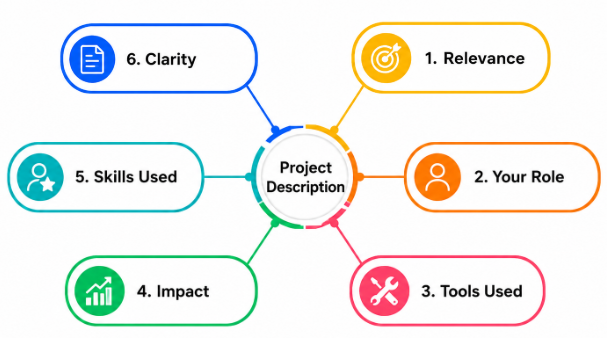
Recruiters reviewing a resume’s project section are not simply checking whether a candidate has completed some coursework; they are actively evaluating several specific signals that indicate genuine capability and initiative. The first thing many recruiters look for is clarity of purpose, meaning they want to immediately understand what real-world problem the project was intended to solve, rather than being left to guess the practical relevance of the work from a vague title alone. Recruiters also look closely at the technologies and tools mentioned, checking whether they align with the skills required for the specific role being applied for, since a mismatch between listed project tools and the job’s technical requirements can raise questions about genuine fit. Another important factor is the candidate’s specific contribution, particularly in group or team-based projects, because recruiters want to know exactly what role the candidate played rather than assuming they contributed equally to every aspect of the work. Measurable outcomes are also highly valued, such as improved accuracy, reduced processing time, or successful deployment, since these details add credibility and help recruiters visualize the tangible impact of the project.

Learn Digital Marketing Training Course to Build Your Skills
Weekday / Weekend BatchesSee Batch DetailsEssential Elements of a Strong Project Description
- Project Title and Duration: A clear, descriptive title along with the timeframe or academic semester in which the project was completed helps recruiters immediately understand its scope and recency. A well-chosen title also makes the project easier to reference during interview discussions.
- Problem Statement: A brief explanation of the real-world problem or academic requirement the project was designed to address gives context and purpose to the work. Without this, even technically impressive projects can appear disconnected from any practical use case.
- Tools and Technologies Used: Explicitly listing the programming languages, frameworks, hardware, or platforms used allows recruiters to quickly match the project against the technical requirements of the role. This section should be kept accurate and specific rather than overly broad.
- Outcome or Result: Describing the final result, ideally with a measurable detail such as improved efficiency, accuracy, or successful deployment, transforms the project from a simple description into a demonstrated achievement with real impact. Candidates developing marketing-related projects can also build relevant practical skills through Digital Marketing Training, helping them strengthen their project knowledge and present their contributions more effectively.
- Individual Role and Contribution: Clarifying the candidate’s specific responsibilities, especially in team projects, demonstrates ownership and helps recruiters evaluate individual capability rather than assuming shared credit. This is one of the most frequently overlooked but highly valued elements.
- Approach or Methodology: A short mention of how the problem was approached, including any research, design decisions, or testing methods used, shows structured thinking and technical maturity beyond simply producing a working output.

Get JOB Oriented Digital Marketing Training for Beginners By MNC Experts
- Instructor-led Sessions
- Real-life Case Studies
- Assignments
Difference Between Academic Projects and Real-World Projects
| Aspect | Academic Projects | Real-World / Industry-Style Projects |
|---|---|---|
| Origin | Assigned by faculty or curriculum requirements | Self-initiated, internship-based, or hackathon-driven |
| Problem Source | Often theoretical or simulated scenarios | Based on genuine business or user needs |
| Constraints | Fixed academic deadlines and defined scope | Real deadlines, resource limits, and evolving requirements |
| Evaluation Criteria | Graded against a rubric or syllabus | Judged by usability, functionality, or business value |
| Resume Emphasis | Highlight technical concepts learned and applied | Highlight initiative, impact, and independent execution |
| Recruiter Perception | Shows foundational knowledge and academic discipline | Shows initiative, adaptability, and real-world readiness |
Strategies to Write Impactful Project Descriptions
Writing an impactful project description is a skill that improves significantly once a candidate adopts a few deliberate strategies rather than simply describing the project as it comes to mind. The first strategy is to lead with impact rather than process, meaning the description should begin by hinting at the outcome or purpose of the project before diving into the technical details, since this immediately signals relevance to a recruiter scanning quickly. The second strategy is to use strong, active verbs such as designed, developed, implemented, automated, or optimized instead of passive phrases like “was involved in” or “helped with,” since active language conveys ownership and confidence far more effectively. A third strategy is to quantify wherever genuinely possible, even with approximate figures such as processing time reduced by a noticeable margin or accuracy improved after testing across a sample dataset, because numbers consistently draw a recruiter’s attention and add a layer of credibility that plain description cannot achieve alone. For additional guidance on creating effective resume content, explore Resume Writing Tips. Candidates should also tailor the technical depth of each description to the target role, emphasizing programming and architecture details for a development role while emphasizing data handling and analysis details for an analytics-focused role, using the same underlying project but adjusting the emphasis based on the specific job description. Another effective strategy is to keep each project description concise, typically within three to five lines, ensuring that only the most relevant and impressive details are included rather than an exhaustive technical walkthrough that belongs in an interview rather than a resume. Finally, candidates should ensure that every project mentioned on the resume is one they can discuss confidently and in detail if asked, since an impressive-sounding description that falls apart under a simple follow-up question can do more harm than an honest, well-understood project description.
Want to Master Digital Marketing? Explore the Digital Marketing Master Program Offered at ACTE Today!
Using the STAR/CAR Method for Project Descriptions
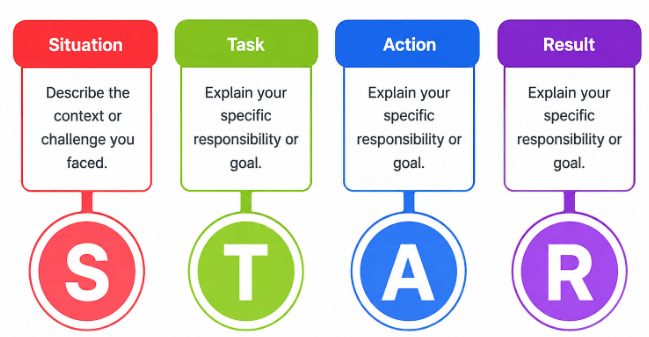
The STAR method, which stands for Situation, Task, Action, and Result, and its closely related variant CAR, standing for Challenge, Action, and Result, offer a simple and reliable framework for structuring project descriptions in a way that consistently communicates both effort and impact. Applying this method begins with briefly establishing the situation or challenge, meaning the specific problem or requirement that prompted the project, followed by the task, which clarifies what exactly needed to be accomplished within that situation. The action component describes the specific steps, tools, and technical decisions the candidate personally took to address the task, and this is often the most detailed part of the description since it demonstrates technical capability and structured thinking. Finally, the result component summarizes the outcome of the project, ideally with a measurable or observable detail that shows the tangible value created, whether that is a functioning prototype, an improved metric, or successful deployment of a working system.
Want to Learn About Digital Marketing? Explore Our Digital Marketing Interview Questions and Answers Featuring the Most Frequently Asked Questions in Job Interviews.
Common Mistakes to Avoid
- Writing Only a Project Title: Listing just a project name without any explanation of the problem, approach, or outcome leaves recruiters with almost no useful information to evaluate. Even a brief two-line explanation dramatically improves the value of the entry.
- Overloading with Technical Jargon: Using excessive technical terminology without context can make a description difficult to follow, especially for recruiters or HR personnel conducting the first round of resume screening. Balancing technical accuracy with clear, accessible language improves overall readability.
- Ignoring Individual Contribution in Team Projects: Describing a group project without clarifying the candidate’s specific role makes it difficult for recruiters to assess individual capability. Clearly stating personal responsibilities avoids this ambiguity entirely.
- Listing Too Many Projects Without Depth: Including six or seven projects with only a single vague line each is far less effective than presenting three or four projects with complete, well-structured descriptions. Depth and clarity consistently outperform sheer quantity on a resume. Candidates interested in building practical marketing-related project skills can also explore Digital Marketing Training to develop relevant knowledge and strengthen their project experience.
- Exaggerating Scope or Impact: Overstating the complexity or business impact of a simple academic project can backfire seriously if the candidate cannot substantiate the claims during a technical interview. Honest, well-framed descriptions build far more lasting credibility.
Sample Project Description Templates
- Software/Web Development Template: Designed and developed a [type of application] using [technologies/frameworks] to address [specific problem], independently handling [specific contribution], resulting in [measurable outcome such as reduced load time or successful deployment].
- Testing/QA Project Template: Executed [manual/automation] testing for a [type of application] using [tools such as Selenium or Postman], designing [number] test cases to validate [specific functionality], resulting in [defects identified or improved test coverage]. Candidates preparing resumes for internships can also refer to Internship Resume Examples for additional examples of presenting relevant experience and skills effectively.
- Data Analytics Template: Analyzed [dataset or domain] using [tools such as Python, SQL, or Excel] to identify [specific insight or pattern], applying [specific technique or model], which led to [measurable result such as improved accuracy or actionable business insight].
- Embedded Systems/IoT Template: Built a [system name] integrating [hardware components and communication protocols] to solve [specific real-world problem], handling [specific contribution such as firmware development or sensor calibration], achieving [measurable or functional outcome].
Conclusion: Making Your Projects Resume-Ready
A project description is far more than a technical footnote on a resume; for most freshers, it is the single most persuasive piece of evidence available to demonstrate applied capability, independent thinking, and readiness for a professional role. Recruiters consistently look beyond project titles, searching instead for a clear problem statement, relevant tools, individual contribution, and a measurable outcome that together tell a complete and credible story. By understanding the difference between academic and real-world projects, applying structured frameworks such as STAR or CAR, and avoiding common pitfalls like vague descriptions or unclear individual contribution, candidates can transform even simple academic assignments into compelling resume highlights. Since project descriptions frequently become the foundation for detailed technical interview discussions, investing time in writing them clearly and honestly also means investing in stronger, more confident interview performance. Candidates looking to build practical skills that can support marketing-focused projects can also explore Digital Marketing Training to strengthen their knowledge and project experience. Freshers who consistently apply these strategies across every project listed on their resume, choosing depth and clarity over sheer quantity, will find that their project section becomes one of the most powerful tools in securing interview calls and, ultimately, job offers in a competitive market.