LMS
LMS
Last updated on 06th Aug 2026| 12861

- Introduction to Google Software Engineer Careers for Freshers
- Understanding the Google Software Engineer Hiring Process
- Building Strong Programming and Problem-Solving Skills
- Mastering Data Structures and Algorithms for Interviews
- Learning System Design and Software Engineering Fundamentals
- Building Real-World Projects and an Impressive Portfolio
- Creating a Resume That Stands Out to Google Recruiters
- Preparing for Google Coding Interviews and Behavioral Rounds
- Common Mistakes Freshers Should Avoid During Preparation
- Conclusion: Starting Your Journey Toward a Google Software Engineer Career
Introduction to Google Software Engineer Careers for Freshers
Google is one of the world’s leading technology companies and is recognized for building innovative products that serve billions of users globally. For fresh graduates, securing a Software Engineer position at Google represents an opportunity to work on cutting-edge technologies, collaborate with highly skilled professionals, and contribute to products that have a global impact. The company hires talented individuals who possess strong programming knowledge, analytical thinking, problem-solving abilities, and a passion for continuous learning. Freshers from computer science, information technology, software engineering, electronics, and related disciplines can apply for entry-level software engineering roles by building a solid technical foundation and demonstrating practical coding skills. To strengthen these essential skills, enrolling in Python Training helps candidates build expertise in programming, automation, data structures, and software development using one of the most widely used languages in the technology industry. Apart from academic performance, Google values real-world project experience, open-source contributions, internships, coding competition achievements, and innovative problem-solving approaches. Candidates are encouraged to strengthen their knowledge of programming languages such as Java, Python, C++, Go, or JavaScript while also developing expertise in software engineering principles and modern development tools. Building a professional GitHub portfolio, maintaining an optimized LinkedIn profile, and participating in hackathons can significantly improve visibility among recruiters. Although Google’s hiring process is highly competitive, consistent preparation, practical experience, and dedication enable freshers to compete successfully. A career at Google offers excellent compensation, continuous learning opportunities, international exposure, and outstanding career growth, making it one of the most desirable destinations for aspiring software engineers.
Understanding the Google Software Engineer Hiring Process
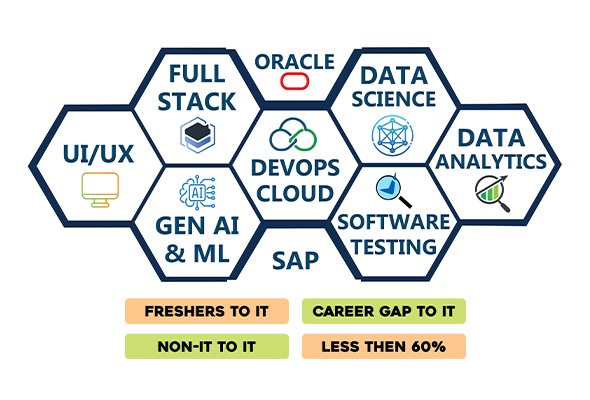
Google follows a structured and rigorous hiring process designed to identify candidates with exceptional technical abilities, problem-solving skills, and collaborative mindsets. The process usually begins with an online application where candidates submit their resumes through Google’s careers portal or university recruitment programs. Recruiters review applications by evaluating technical skills, academic qualifications, internships, software development projects, coding achievements, and overall professional experience. Shortlisted candidates are often invited to complete online coding assessments that evaluate programming knowledge, logical reasoning, algorithmic thinking, and coding efficiency.
Interested in Obtaining Your Python Certificate? View The Python Developer Course Offered By ACTE Right Now!
Building Strong Programming and Problem-Solving Skills
Strong programming and problem-solving skills form the foundation of every successful Google Software Engineer candidate. Freshers should first master at least one programming language such as Java, Python, C++, Go, or JavaScript before expanding their knowledge to additional technologies. Beyond syntax, candidates should understand object-oriented programming principles, memory management, exception handling, recursion, multithreading basics, and efficient coding practices. Google values engineers who can analyze problems logically, identify optimal solutions, and write clean, maintainable, and scalable code. Regular coding practice on competitive programming platforms helps strengthen analytical thinking and improves coding speed and accuracy. Building these skills becomes easier with Java Training, which provides practical experience in object-oriented programming, software development, debugging, and real-world application development. Candidates should solve a wide variety of problems covering arrays, strings, recursion, dynamic programming, graphs, trees, searching, sorting, and mathematical algorithms while focusing on optimizing time and space complexity. Building real-world software projects also enhances programming ability by exposing students to software development lifecycles, debugging techniques, APIs, version control systems, databases, and cloud deployment. Reading technical documentation, contributing to open-source projects, participating in hackathons, and collaborating with peers further improve software engineering skills. Consistent practice not only strengthens technical competence but also builds confidence during coding interviews, enabling candidates to approach challenging engineering problems with structured thinking and efficient solutions.
Gain Your Master’s Certification in Python Developer by Enrolling in Our Python Master Program Training Course Now!
Mastering Data Structures and Algorithms for Interviews
Data Structures and Algorithms (DSA) are among the most important topics evaluated during Google’s technical interviews because they demonstrate a candidate’s ability to solve complex computational problems efficiently. Freshers should build a strong understanding of fundamental data structures such as arrays, linked lists, stacks, queues, hash tables, trees, heaps, graphs, and tries while also learning when and where each structure should be applied. Algorithmic concepts including sorting, searching, recursion, backtracking, greedy algorithms, divide-and-conquer, dynamic programming, graph traversal, shortest path algorithms, and string manipulation should be practiced extensively. Candidates should focus not only on obtaining correct solutions but also on optimizing time and space complexity while explaining their reasoning clearly during interviews. Understanding The Power of Programmers: Shaping the Future of Technology can also help aspiring developers appreciate how strong programming and problem-solving skills contribute to technological innovation. Google interviewers often evaluate coding style, logical thinking, debugging ability, and communication alongside algorithmic knowledge. Practicing hundreds of coding problems across different difficulty levels helps improve pattern recognition and confidence under interview conditions. Mock interviews, timed coding sessions, and participation in competitive programming contests further prepare candidates for Google’s fast-paced technical evaluations. Combining theoretical understanding with consistent hands-on practice enables freshers to develop strong problem-solving abilities, making them well-prepared for one of the most challenging and rewarding software engineering interview processes in the technology industry.
Learning System Design and Software Engineering Fundamentals
- Understanding Object-Oriented Programming Concepts: Mastering inheritance, encapsulation, abstraction, and polymorphism helps candidates write clean, reusable, and scalable software while demonstrating strong software engineering fundamentals during interviews.
- Learning Software Development Life Cycle: Understanding the Software Development Life Cycle (SDLC), Agile methodologies, version control, testing, deployment, and maintenance helps freshers understand how software is designed, developed, and delivered in professional environments.
- Studying Databases and API Development: Knowledge of SQL, NoSQL databases, REST APIs, authentication, and client-server communication enables candidates to build complete software applications. Learning about Sparse Matrix Concepts Explained: Efficient Data Storage can also help candidates understand how specialized data structures can optimize memory usage and improve data-handling efficiency in software applications.
- Understanding Basic System Design Concepts: Freshers should learn basic system design principles such as scalability, load balancing, caching, database optimization, and distributed systems to develop a strong engineering foundation for future technical growth.
- Practicing Clean Coding Principles: Writing readable, modular, and maintainable code using proper naming conventions, documentation, error handling, and design patterns demonstrates professionalism and improves long-term software quality.

Develop Your Skills with Python Developer Certification Course
Weekday / Weekend BatchesSee Batch DetailsBuilding Real-World Projects and an Impressive Portfolio
- Developing End-to-End Applications: Building complete web, mobile, or desktop applications demonstrates the ability to apply programming knowledge to solve practical problems while showcasing software development capabilities.
- Using Modern Development Technologies: Projects developed using technologies such as React, Spring Boot, Node.js, Django, Flutter, Docker, or cloud platforms help candidates demonstrate familiarity with modern software development practices. Learning through a Python Course can also help aspiring developers build practical programming skills and create Python-based projects for their portfolios.
- Publishing Projects on GitHub: Maintaining an active GitHub repository with organized source code, documentation, and project demonstrations allows recruiters to evaluate coding quality and technical expertise.
- Solving Practical Business Problems: Projects that automate workflows, improve efficiency, analyze data, or solve real business challenges demonstrate creativity, innovation, and practical software engineering skills.
- Keeping the Portfolio Updated: Continuously adding new projects, improving existing applications, and learning emerging technologies helps candidates maintain a competitive and professional software engineering portfolio.
Are You Preparing for Python Jobs? Check Out ACTE’s Python Interview Questions and Answers to Boost Your Preparation!
Creating a Resume That Stands Out to Google Recruiters
- Writing a Strong Professional Summary: A concise professional summary should highlight technical expertise, programming languages, software development experience, career goals, and key achievements that match Google’s hiring expectations.
- Highlighting Technical Skills Clearly: Programming languages, frameworks, databases, cloud technologies, development tools, and version control systems should be organized in an easy-to-read technical skills section.
- Showcasing Projects and Achievements: Projects, internships, hackathons, coding competitions, certifications, and measurable accomplishments demonstrate practical skills and help distinguish candidates from other applicants.
- Optimizing for Applicant Tracking Systems: Using relevant software engineering keywords, standard section headings, and clean formatting improves resume compatibility with Applicant Tracking Systems (ATS) used during recruitment. Candidates can also review Job Winning Strengths To Put In Resume to identify and present relevant strengths that can make their resume more compelling to recruiters.
- Maintaining a Professional Resume Format: A well-structured resume with consistent formatting, concise descriptions, and error-free content creates a positive first impression and improves recruiter engagement.
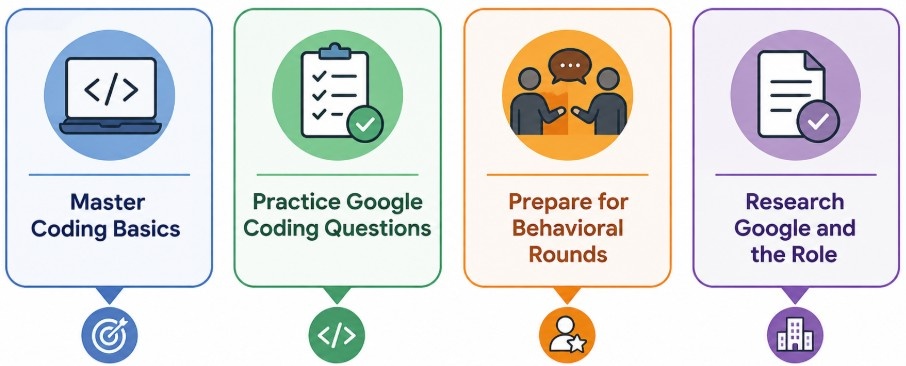
Preparing for Google Coding Interviews and Behavioral Rounds
- Practicing Coding Problems Regularly: Consistent practice on coding platforms helps candidates improve logical thinking, coding speed, debugging abilities, and confidence during Google’s technical interview process. Candidates can also Learn Coding Online with Top Programming Courses Available to strengthen their programming fundamentals and develop the practical coding skills required for technical interviews.
- Preparing for Technical Discussions: Candidates should practice explaining algorithms, discussing trade-offs, analyzing complexity, and communicating their problem-solving approach clearly throughout technical interviews.
- Using Mock Interviews Effectively: Participating in mock coding interviews simulates real interview conditions, helping candidates improve confidence, identify weaknesses, and refine communication skills.
- Preparing Behavioral Interview Answers: Behavioral interviews assess teamwork, leadership, adaptability, conflict resolution, and communication. Preparing structured examples from academic or project experiences strengthens interview performance.
- Improving Communication Skills: Google values candidates who can explain technical concepts clearly. Practicing verbal communication while solving coding problems improves collaboration and interview effectiveness.
Common Mistakes Freshers Should Avoid During Preparation
- Ignoring Data Structures and Algorithms: Many candidates spend excessive time learning frameworks while neglecting DSA fundamentals, which remain the primary focus of Google’s software engineering interviews.
- Memorizing Instead of Understanding Concepts: Relying solely on memorized coding solutions limits problem-solving ability. Candidates should understand underlying concepts and practice solving new variations independently.
- Neglecting Real-World Projects: Strong academic performance alone is insufficient. Building meaningful projects demonstrates practical software engineering skills and strengthens overall technical credibility. Candidates should also learn how to present their work effectively by following Project Description In Resume Strategies & Tips when showcasing projects to recruiters.
- Applying with a Generic Resume: Using the same resume for every application reduces effectiveness. Tailoring resumes to highlight relevant technical skills and achievements improves recruiter attention.
- Inconsistent Preparation and Practice: Irregular coding practice and poor interview preparation can reduce confidence and performance. Maintaining a disciplined learning schedule leads to continuous improvement and better interview results.
Conclusion: Starting Your Journey Toward a Google Software Engineer Career
Starting a career as a Google Software Engineer requires dedication, continuous learning, and a structured approach to skill development. Freshers who build strong programming fundamentals, master data structures and algorithms, understand software engineering principles, and develop practical project experience significantly improve their chances of succeeding in Google’s highly competitive recruitment process. Aspiring developers can strengthen their programming foundation through a Python Course, helping them develop practical coding skills that can support interview preparation and real-world software development. In addition to technical expertise, Google values candidates who demonstrate creativity, curiosity, collaboration, effective communication, and a passion for solving complex engineering problems. Building an impressive portfolio through real-world applications, contributing to open-source projects, participating in coding competitions, and maintaining a professional resume and GitHub profile can help candidates stand out among thousands of applicants. Consistent preparation for coding interviews, behavioral assessments, and technical discussions is equally important for demonstrating confidence and problem-solving abilities during the hiring process. Although securing a role at Google requires persistence and disciplined preparation, every project completed, algorithm mastered, and interview practiced contributes to long-term professional growth. Even if success does not come immediately, the skills developed while preparing for Google are highly valuable across the software industry and open opportunities at many leading technology companies. By staying committed to continuous improvement, embracing new technologies, and maintaining a growth mindset, aspiring software engineers can confidently pursue their goal of joining Google and build a rewarding career creating innovative software solutions that impact millions of users worldwide.