LMS
LMS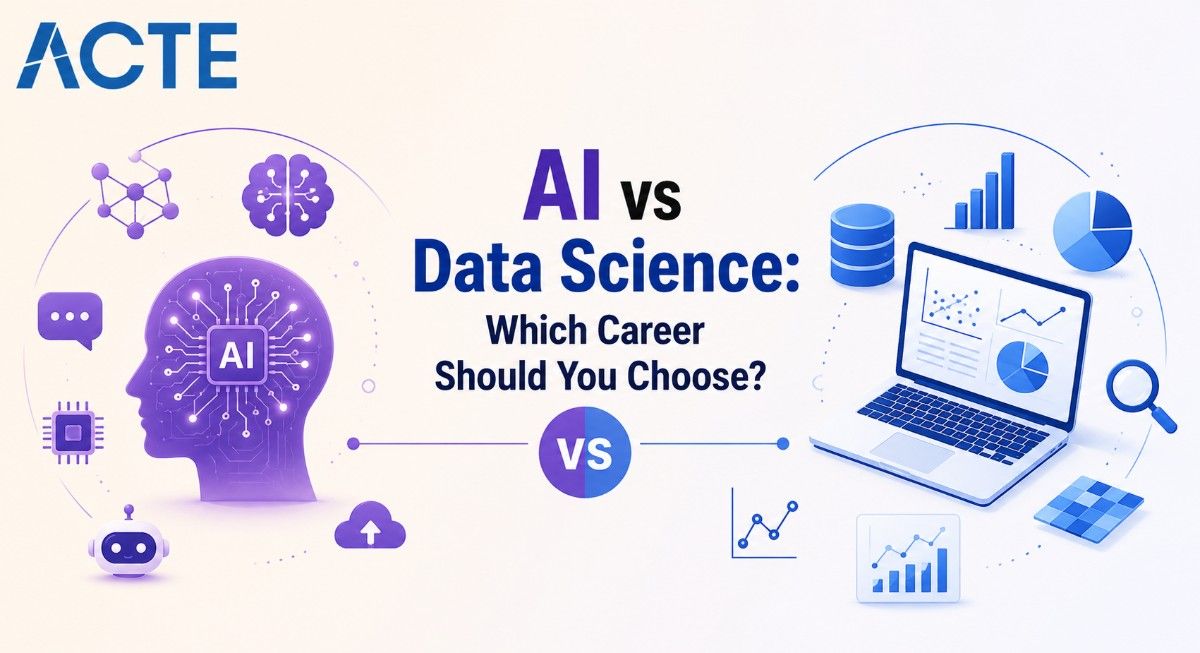
Last updated on 24th Jul 2026| 13286

- Introduction to AI and Data Science
- Understanding Artificial Intelligence and Data Science
- Key Differences Between AI and Data Science
- Skills Required for a Career in AI
- Skills Required for a Career in Data Science
- Career Opportunities and Job Roles in AI vs Data Science
- Salary Comparison and Future Scope
- How to Choose the Right Career Based on Your Interests
- Learning Roadmap and Certifications for AI and Data Science
- Conclusion: AI vs Data Science – Which Career is Right for You?
Introduction to AI and Data Science
Artificial Intelligence (AI) and Data Science are two of the fastest-growing and most in-demand career fields in the technology industry, offering excellent opportunities for students, fresh graduates, and working professionals. Although these fields are closely related, they focus on different objectives and require different skill sets. Artificial Intelligence is primarily concerned with developing intelligent systems that can learn from data, make decisions, understand language, recognize images, and perform tasks that normally require human intelligence. Students who want to gain practical knowledge and industry-ready skills can enroll in Artificial Intelligence Training to build a strong foundation in modern AI technologies. Data Science, on the other hand, focuses on collecting, processing, analyzing, and interpreting large volumes of data to generate meaningful insights that support business decision-making. Organizations across industries such as healthcare, banking, finance, e-commerce, manufacturing, education, retail, telecommunications, and cybersecurity are investing heavily in both AI and Data Science to improve operational efficiency, automate business processes, predict future trends, and deliver personalized customer experiences. This growing adoption has created numerous career opportunities for professionals skilled in programming, statistics, machine learning, data visualization, cloud computing, and analytical thinking. Fresh graduates often find it difficult to choose between AI and Data Science because both careers offer competitive salaries, global employment opportunities, continuous learning, and strong long-term growth. Understanding the differences between these fields, their required skills, career paths, responsibilities, and future scope is essential before making a career decision. While AI emphasizes building intelligent applications using machine learning, deep learning, natural language processing, computer vision, and Generative AI, Data Science focuses on extracting valuable insights from structured and unstructured data using statistical analysis, predictive modeling, and business intelligence techniques. Both careers play a vital role in digital transformation and are expected to remain among the most sought-after technology professions for many years. Choosing the right career depends on an individual’s interests, technical strengths, career goals, and willingness to continuously learn new technologies in this rapidly evolving digital landscape.
Understanding Artificial Intelligence and Data Science
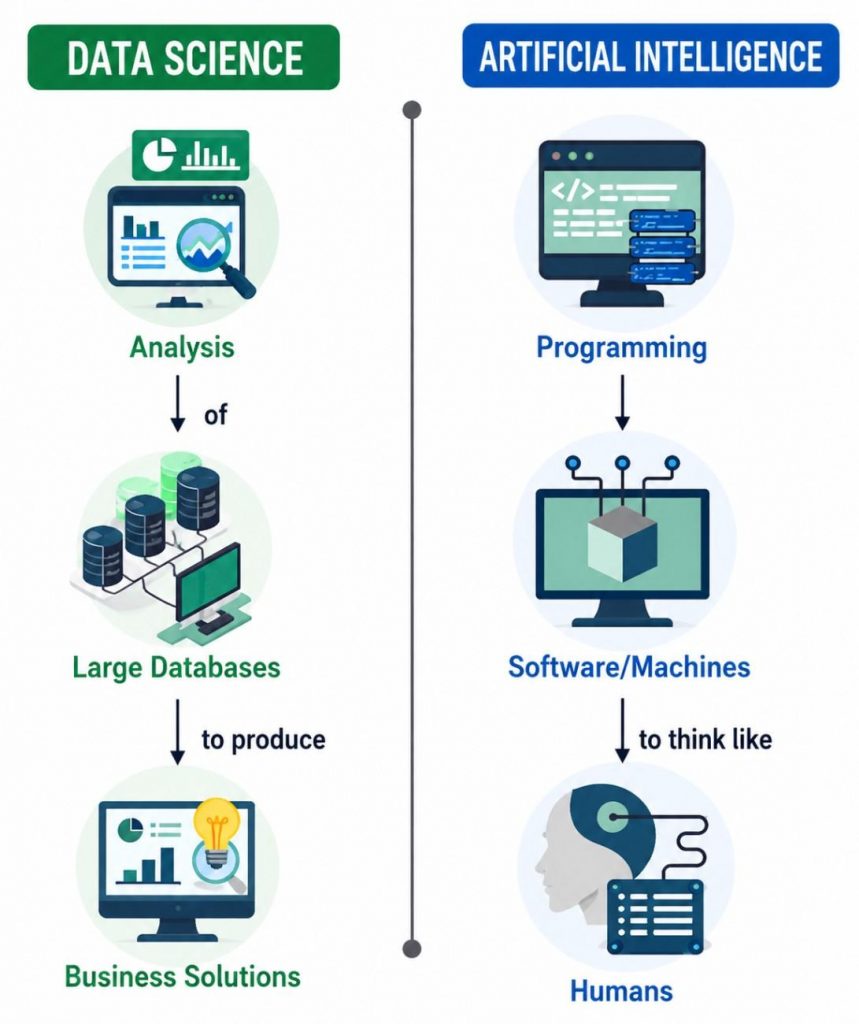
Artificial Intelligence and Data Science are closely connected disciplines, but they serve different purposes within an organization. Artificial Intelligence is a branch of computer science that focuses on developing intelligent machines capable of performing tasks such as learning, reasoning, decision-making, speech recognition, image analysis, language understanding, and content generation with minimal human intervention. AI professionals build intelligent systems using machine learning, deep learning, neural networks, natural language processing, computer vision, reinforcement learning, and Generative AI technologies. Individuals looking to build practical expertise in these technologies can join Artificial Intelligence Training to gain hands-on experience with industry-relevant tools and real-world projects. Their primary objective is to create applications that can automate complex tasks, improve efficiency, and continuously learn from new data. Data Science, in contrast, is an interdisciplinary field that combines statistics, mathematics, programming, data engineering, and business analysis to collect, clean, process, analyze, and visualize large datasets. Data Scientists identify hidden patterns, discover trends, build predictive models, and generate insights that help organizations make informed business decisions. They work extensively with structured and unstructured data using tools such as Python, SQL, R, Pandas, NumPy, Tableau, Power BI, and machine learning libraries.
Ready to Get Certified in Artificial Intelligence ? Explore the Program Now Artificial Intelligence Online Training Offered By ACTE Right Now!
Key Differences Between AI and Data Science
| Aspect | Artificial Intelligence (AI) | Data Science |
|---|---|---|
| Primary Objective | Develop intelligent systems that can learn, reason, automate tasks, and make decisions with minimal human intervention. | Analyze, process, and interpret data to generate meaningful insights for business decision-making. |
| Main Focus | Machine Learning, Deep Learning, Natural Language Processing, Computer Vision, Robotics, and Generative AI. | Data collection, cleaning, visualization, statistical analysis, predictive modeling, and business intelligence. |
| Nature of Work | Builds AI models, intelligent applications, recommendation systems, chatbots, virtual assistants, and automation solutions. | Works with structured and unstructured datasets to identify trends, patterns, and business opportunities. |
| Programming Languages | Python, C++, Java, SQL (depending on project requirements). | Python, SQL, R, Scala, and occasionally Java. |
| Core Technologies | TensorFlow, PyTorch, Hugging Face, LangChain, OpenAI APIs, Keras. | Pandas, NumPy, Scikit-learn, Tableau, Power BI, Apache Spark, Hadoop. |
| Mathematics Required | Linear Algebra, Probability, Statistics, Calculus, Optimization. | Statistics, Probability, Linear Algebra, Data Analysis, Predictive Modeling. |
| Typical Job Roles | AI Engineer, Machine Learning Engineer, NLP Engineer, Computer Vision Engineer, Generative AI Engineer. | Data Scientist, Data Analyst, Business Analyst, Data Engineer, Analytics Consultant. |
| Industries | Healthcare, Robotics, Automotive, Finance, Cybersecurity, Smart Manufacturing, Education. | Banking, Retail, Finance, Healthcare, Marketing, Telecommunications, E-commerce. |
| End Goal | Create intelligent systems capable of performing tasks automatically and continuously improving through learning. | Extract valuable insights from data to improve business performance and support strategic decisions. |
| Career Scope | Rapidly growing with opportunities in AI automation, AI agents, robotics, autonomous systems, and Generative AI. | Strong demand in analytics, business intelligence, predictive analytics, big data, and decision support systems. |

Develop Your Skills with Artificial Intelligence Training
Weekday / Weekend BatchesSee Batch DetailsSkills Required for a Career in AI
- Programming and Software Development: Strong knowledge of Python, SQL, data structures, algorithms, and object-oriented programming is essential for developing AI applications. These programming skills help build intelligent systems, automate tasks, and integrate AI models into real-world software solutions.
- Machine Learning and Deep Learning: AI professionals should understand supervised learning, unsupervised learning, neural networks, transformers, deep learning, and model optimization techniques. These concepts form the foundation for building intelligent systems capable of learning from data and making accurate predictions.
- AI Frameworks and Modern Technologies: Learning TensorFlow, PyTorch, Hugging Face, LangChain, OpenAI APIs, cloud platforms, and Generative AI tools is important for developing advanced AI applications. Exploring Top AI Tools Every Developer Should Know also helps candidates stay updated with evolving technologies and industry requirements.
- Analytical Thinking and Practical Experience: AI professionals should develop strong problem-solving abilities by working on real-world projects, internships, hackathons, and open-source contributions. Building a GitHub portfolio and continuously learning new AI technologies significantly enhances career growth and job opportunities.
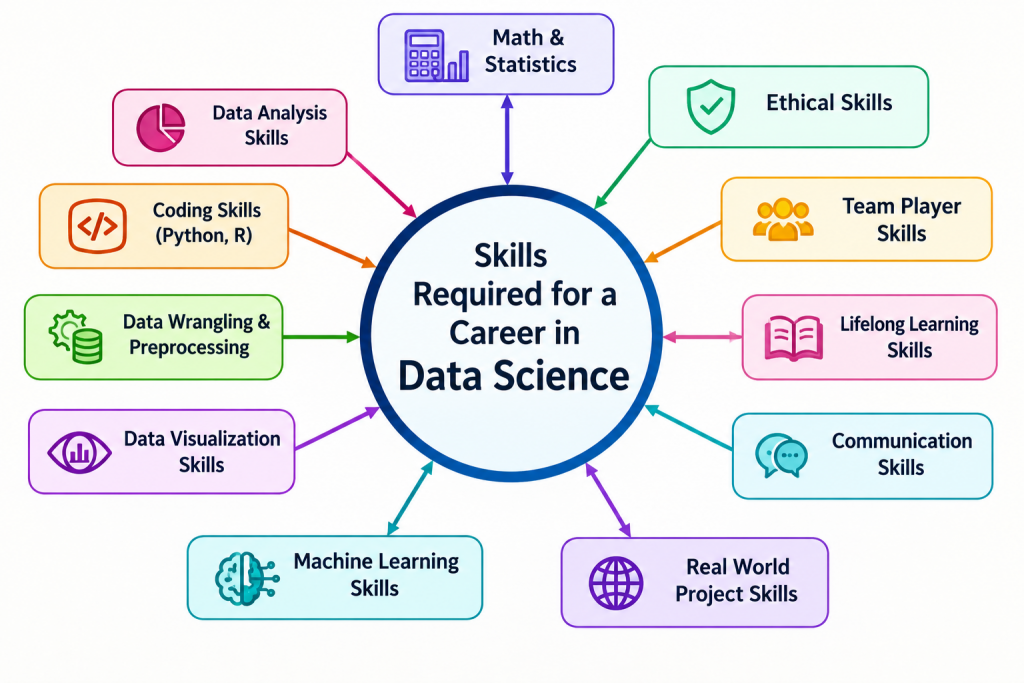
Skills Required for a Career in Data Science
- Programming and Database Management: Data Science professionals should have strong knowledge of Python, SQL, and basic R programming to collect, clean, process, and analyze large datasets efficiently. These programming skills are essential for building data-driven solutions and automating analytical workflows.
- Mathematics, Statistics, and Data Analysis: A solid understanding of statistics, probability, linear algebra, and data analysis techniques is necessary for identifying patterns, building predictive models, and making accurate business decisions. These concepts form the foundation of every Data Science project.
- Data Visualization and Business Intelligence: Data Scientists should be proficient in visualization tools such as Tableau, Power BI, Matplotlib, and Seaborn to present complex data in a simple and meaningful way. Effective visualization helps organizations understand trends and make informed strategic decisions.
- Machine Learning and Problem-Solving: Knowledge of machine learning algorithms, predictive analytics, feature engineering, and model evaluation is important for solving business problems using data. Exploring Exploring Career Paths in Artificial Intelligence for Freshers also helps aspiring professionals understand emerging opportunities while improving long-term career growth.
- Build Strong Programming and Mathematical Foundations: Start by learning Python, SQL, data structures, and basic programming concepts along with mathematics, including linear algebra, probability, statistics, and calculus. These subjects form the core foundation for both Artificial Intelligence and Data Science careers.
- Learn Machine Learning, Data Analysis, and AI Tools: Study machine learning algorithms, data preprocessing, visualization techniques, and deep learning while gaining practical experience with tools such as TensorFlow, PyTorch, Scikit-learn, Pandas, NumPy, Tableau, and Power BI. Hands-on practice is essential for mastering these technologies.
- Develop Real-World Projects and Earn Certifications: Build practical projects such as recommendation systems, predictive analytics models, AI chatbots, dashboards, image classifiers, and data analysis applications. Completing Best AI Certifications to Get Hired Faster can further validate your expertise and strengthen your professional portfolio.
- Gain Practical Experience and Continue Learning: Participate in internships, hackathons, open-source projects, and research activities to improve technical expertise and problem-solving skills. Stay updated with emerging technologies such as Generative AI, Large Language Models (LLMs), AI Agents, Big Data, and Cloud Analytics to remain competitive in the industry.
To ExploreArtificial Intelligence in Depth, Check Out Our Comprehensive Artificial Intelligence Online Training To Gain Insights From Our Experts!
Career Opportunities and Job Roles in AI vs Data Science
| Aspect | Artificial Intelligence (AI) | Data Science |
|---|---|---|
| Entry-Level Roles | AI Engineer, Junior Machine Learning Engineer, AI Developer, NLP Engineer. | Data Analyst, Junior Data Scientist, Business Analyst, Data Engineer. |
| Core Responsibilities | Develop intelligent systems, build machine learning models, automate tasks, and create AI-powered applications. | Analyze datasets, discover trends, build predictive models, and generate business insights from data. |
| Industries Hiring | Healthcare, Robotics, Automotive, Cybersecurity, Finance, Manufacturing, Education. | Banking, Finance, Retail, Healthcare, Marketing, Insurance, Telecommunications. |
| Primary Technologies | TensorFlow, PyTorch, Hugging Face, LangChain, OpenAI APIs, Computer Vision Tools. | Python, SQL, Pandas, NumPy, Scikit-learn, Tableau, Power BI, Apache Spark. |
| Career Progression | AI Engineer → Senior AI Engineer → AI Architect → AI Research Scientist → AI Director. | Data Analyst → Data Scientist → Senior Data Scientist → Lead Data Scientist → Head of Data Science. |
| Nature of Work | Focuses on building intelligent systems capable of learning, reasoning, automation, and decision-making. | Focuses on extracting insights from structured and unstructured data to solve business problems. |
| Future Opportunities | Generative AI, AI Agents, Robotics, Autonomous Systems, Intelligent Automation. | Big Data Analytics, Predictive Analytics, Business Intelligence, Data Engineering, Analytics Leadership. |
Salary Comparison and Future Scope
| Comparison Factor | Artificial Intelligence (AI) | Data Science |
|---|---|---|
| Entry-Level Salary | Generally offers competitive starting salaries due to high demand for AI, Machine Learning, and Generative AI professionals. Build job-ready skills with Artificial Intelligence Training. | Offers attractive salaries for graduates with strong analytical, programming, and statistical skills. |
| Mid-Level Career Growth | Professionals can become Senior AI Engineers, AI Architects, AI Consultants, or AI Research Scientists with excellent salary growth. | Professionals can advance to Senior Data Scientist, Lead Data Scientist, Analytics Manager, or Data Science Consultant roles. |
| Demand Across Industries | Demand is increasing rapidly in healthcare, robotics, finance, manufacturing, autonomous vehicles, cybersecurity, and Generative AI. | Strong demand exists across banking, healthcare, retail, marketing, finance, telecommunications, and e-commerce industries. |
| Emerging Technologies | Growth is driven by Large Language Models (LLMs), AI Agents, Computer Vision, Robotics, and Intelligent Automation. | Growth is driven by Big Data, Business Intelligence, Predictive Analytics, Data Engineering, and Cloud Analytics. |
| Long-Term Career Scope | Offers exceptional future opportunities due to increasing AI adoption and continuous technological innovation worldwide. | Continues to remain a highly valuable career because organizations increasingly depend on data-driven decision-making for business success. |
| Career Stability | Excellent long-term job security because AI technologies are becoming essential across nearly every industry. | Strong career stability as businesses continue generating massive amounts of data requiring expert analysis and interpretation. |
Looking to Master Machine Learning? Discover the Artificial Intelligence Expert Masters Program Training Course Available at ACTE Now!
How to Choose the Right Career Based on Your Interests
Choosing between Artificial Intelligence and Data Science depends on your interests, strengths, career aspirations, and preferred working style rather than simply following market trends. If you enjoy building intelligent systems, developing machine learning models, creating AI-powered applications, working with deep learning, natural language processing, computer vision, robotics, and Generative AI technologies, then Artificial Intelligence is likely the better career choice. AI professionals spend most of their time designing algorithms, training models, optimizing performance, and developing intelligent software capable of solving complex real-world problems. On the other hand, if you enjoy working with data, identifying hidden patterns, performing statistical analysis, creating dashboards, generating business insights, and helping organizations make data-driven decisions, then Data Science is a more suitable career path. Data Scientists focus on collecting, cleaning, analyzing, and interpreting large datasets while using visualization tools and predictive analytics to solve business challenges. Both careers require programming, analytical thinking, mathematics, and continuous learning, but AI places greater emphasis on automation and intelligent systems, whereas Data Science focuses on extracting knowledge and value from data. Beginners should also consider the type of projects they enjoy, whether they prefer developing AI applications or analyzing business data to support strategic decisions. Building small projects, completing online courses, participating in internships, and exploring both domains can help identify personal interests before choosing a specialization. For additional guidance, explore the AI Career Roadmap for Beginners to understand the skills and learning path needed for success. Since Artificial Intelligence and Data Science often overlap, professionals can also transition between these fields as they gain experience. Regardless of the path you choose, developing strong technical skills, practical experience, problem-solving abilities, and a commitment to continuous learning will help you build a successful, rewarding, and future-proof career in one of today’s most in-demand technology domains.
Preparing for Artificial Intelligence Job Interviews? Have a Look at Our Blog on Artificial Intelligence Interview Questions and Answers To Ace Your Interview!
Learning Roadmap and Certifications for AI and Data Science
Conclusion: AI vs Data Science – Which Career is Right for You?
Artificial Intelligence and Data Science are two of the most exciting and rewarding technology careers available today, each offering excellent job opportunities, competitive salaries, continuous learning, and long-term professional growth. Although both fields share common skills such as programming, mathematics, machine learning, and analytical thinking, they differ in their primary focus and day-to-day responsibilities. Artificial Intelligence is ideal for individuals who enjoy building intelligent systems, developing machine learning models, working with deep learning, natural language processing, computer vision, robotics, and Generative AI technologies to automate complex tasks and create innovative applications. Those looking to build practical expertise can enhance their skills through Artificial Intelligence Training programs that provide hands-on experience with real-world AI tools and projects. Data Science, on the other hand, is better suited for those who are passionate about analyzing large datasets, discovering meaningful patterns, building predictive models, creating visualizations, and helping organizations make data-driven business decisions. Choosing the right career depends on your interests, strengths, career goals, and the type of problems you enjoy solving. Beginners should explore both domains by completing online courses, building hands-on projects, earning industry-recognized certifications, and participating in internships before selecting a specialization. Since Artificial Intelligence and Data Science often complement each other, professionals can also expand their expertise and transition between these fields as their careers progress. With businesses across healthcare, finance, banking, retail, education, manufacturing, and many other industries investing heavily in AI-driven solutions and data analytics, the demand for skilled professionals in both domains will continue to grow for years to come. By continuously learning new technologies, improving practical skills, maintaining a strong project portfolio, and staying updated with industry advancements, graduates can build a successful, future-ready career in either Artificial Intelligence or Data Science and contribute to shaping the next generation of intelligent technologies and data-driven innovation.