LMS
LMS
Last updated on 14th Aug 2026| 12272

- Overview of Oracle Consulting Opportunities at Accenture
- Different Oracle Consultant Job Profiles at Accenture
- Who Can Apply for Accenture Oracle Consultant Positions?
- Oracle Fusion Cloud Functional Consultant Career Paths
- Oracle Application Development and Integration Roles
- Key Functional and Technical Competencies for Oracle Consultants
- Real-World Oracle Project Experience and Implementation Skills
- Accenture Oracle Consultant Interview and Selection Process
- Career Growth, Specializations, and Future Opportunities
- Conclusion: Preparing for a Long-Term Oracle Consulting Career at Accenture
Overview of Oracle Consulting Opportunities at Accenture
Oracle consulting opportunities at Accenture cover a wide range of enterprise technology areas, including Oracle Fusion Cloud, ERP, Financials, HCM, SCM, databases, integrations, and cloud infrastructure. Oracle Consultants help organizations implement, configure, integrate, modernize, and support business applications that manage important functions such as finance, human resources, procurement, supply chain, and operations. Depending on the position, professionals may work as functional consultants, technical consultants, application developers, integration specialists, cloud professionals, or solution architects. Professionals looking to build these skills can consider an Oracle Course to strengthen their foundation and prepare for Oracle consulting roles. Their responsibilities can include gathering requirements, analyzing business processes, configuring Oracle applications, developing integrations, performing data migration, testing solutions, troubleshooting issues, and supporting implementations. Professionals with expertise in Oracle Cloud applications, SQL, PL/SQL, APIs, OIC, reporting, and enterprise business processes can pursue different specialization paths. As organizations continue modernizing enterprise systems, developing both Oracle technology knowledge and business understanding can support long-term consulting opportunities at Accenture..
Different Oracle Consultant Job Profiles at Accenture
Oracle Consultant positions at Accenture can differ significantly depending on functional area, technology specialization, project requirements, and experience level. Functional professionals may work as Oracle Financials, HCM, SCM, Procurement, Order Management, or ERP Consultants, focusing primarily on business processes and application configuration. Technical professionals may specialize in SQL, PL/SQL, application development, reports, integrations, APIs, data migration, or Oracle Integration Cloud. Oracle Cloud specialists can work with Fusion applications and cloud-based enterprise solutions, while database professionals may focus on administration, performance, security, backup, and infrastructure. Experienced consultants can progress toward Functional Lead, Technical Lead, Integration Architect, Cloud Architect, or Solution Architect positions. Some professionals also develop hybrid functional-technical expertise, allowing them to understand business requirements while contributing to technical implementation. Choosing a specialization based on technical strengths, business interests, and career objectives can help candidates build deeper expertise and pursue progressively advanced Oracle consulting responsibilities.
Get Your Oracle Certification by Learning from Industry-Leading Experts and Advancing Your Career with ACTE’s Oracle Training.
Who Can Apply for Accenture Oracle Consultant Positions?
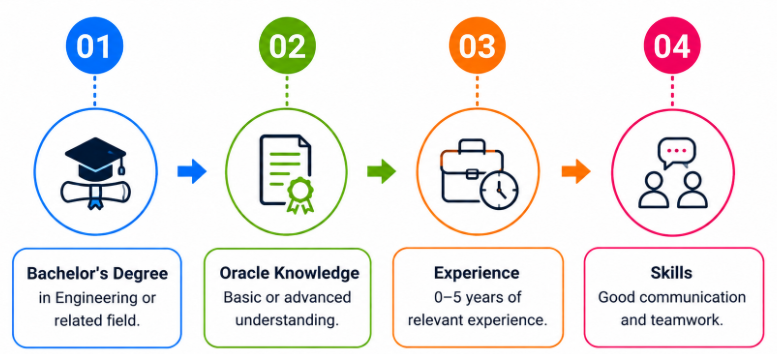
Eligibility for Accenture Oracle Consultant positions varies according to the specific job description, specialization, location, and required experience. Candidates with educational backgrounds in Computer Science, Information Technology, Engineering, Business, Finance, Human Resources, Supply Chain, or related disciplines may find relevant opportunities depending on whether they pursue technical or functional consulting. Technical candidates can strengthen their profiles through knowledge of Oracle databases, SQL, PL/SQL, APIs, integration technologies, cloud platforms, and application development. Functional candidates should develop strong knowledge of business processes and relevant Oracle modules such as Financials, HCM, SCM, Procurement, or ERP. Candidates who want to build practical Oracle knowledge before applying can consider an Oracle Course to strengthen their technical or functional foundation and improve their preparation for Oracle Consultant opportunities.
Oracle Fusion Cloud Functional Consultant Career Paths
- Oracle Financials Functional Consultant Professionals specializing in Oracle Financials work with modules such as General Ledger, Accounts Payable, Accounts Receivable, Fixed Assets, and Cash Management. They analyze finance requirements, configure applications, support testing, and help improve financial processes.
- Oracle HCM Functional Consultant HCM Consultants work with Oracle Human Capital Management solutions covering core HR, payroll, talent management, workforce processes, and employee information. Strong knowledge of HR processes and Oracle Fusion configuration supports career growth in this specialization.
- Oracle SCM Functional Consultant SCM Consultants focus on supply chain processes such as procurement, inventory, order management, planning, and logistics. They translate business requirements into Oracle Fusion configurations and support testing, implementation, and process improvements.
- Progressing to Functional Lead and Solution Architect Experienced consultants can progress toward Functional Lead, Solution Lead, or Solution Architect roles. These positions require cross-module expertise, solution-design skills, stakeholder management, implementation experience, and a strong understanding of enterprise processes. Professionals interested in understanding broader career opportunities can explore Capgemini Oracle Professionals and their potential job roles and career growth paths.
- Oracle Procurement Functional Consultant Procurement Consultants specialize in purchasing, supplier management, sourcing, approvals, and procurement workflows. They help organizations configure Oracle solutions that improve purchasing processes, supplier collaboration, and operational efficiency.

Oracle Application Development and Integration Roles
- Oracle Application Developer Oracle Application Developers build, customize, and maintain enterprise solutions using technologies such as SQL, PL/SQL, APIs, and Oracle development tools. They may also support reports, data processing, troubleshooting, and application enhancements.
- Oracle Integration Cloud Developer OIC Developers create integrations between Oracle Fusion applications and external systems. They work with adapters, mappings, orchestration, transformations, REST APIs, SOAP services, XML, and JSON to automate data exchange and business workflows.
- API and Web Services Specialist Integration professionals should understand REST and SOAP services, authentication, data formats, error handling, and API testing. These capabilities help connect Oracle applications with third-party platforms and other enterprise systems.
- Oracle Data Migration Specialist Data migration professionals extract, clean, transform, validate, and load information when organizations implement or upgrade Oracle applications. Strong SQL, data mapping, validation, and troubleshooting skills are valuable for these responsibilities. Professionals looking to develop practical Oracle skills for these technical roles can consider an Oracle Course to build a stronger foundation in Oracle technologies.
- Integration Lead and Architect Experienced integration professionals can progress toward Technical Lead or Integration Architect roles. They design integration strategies, establish standards, review solutions, manage technical risks, and guide development teams on complex enterprise projects.

Get JOB Oriented Oracle Training for Beginners By MNC Experts
- Instructor-led Sessions
- Real-life Case Studies
- Assignments
Key Functional and Technical Competencies for Oracle Consultants
- Business Process and Functional Knowledge Functional Consultants should understand processes related to their specialization, such as finance, HR, procurement, or supply chain. This knowledge helps them translate business requirements into suitable Oracle configurations and workflows.
- SQL and PL/SQL Knowledge SQL and PL/SQL skills are particularly valuable for technical Oracle professionals. Consultants can use them for querying information, validating data, troubleshooting issues, developing database logic, and supporting reports and integrations. Beginners looking to strengthen their database foundation can also explore Oracle Database Certification for Beginners to understand essential Oracle database concepts.
- Oracle Fusion Cloud Knowledge Candidates should understand the architecture, navigation, configuration, security, reporting, and functionality of the Oracle Fusion modules relevant to their roles. Cross-module knowledge can become increasingly valuable on complex implementations.
- Integration and API Skills Knowledge of OIC, REST APIs, SOAP services, XML, JSON, and integration patterns helps consultants connect Oracle applications with external systems and develop automated enterprise workflows.
- Communication and Stakeholder Management Oracle Consultants regularly interact with clients, developers, business users, testers, and project managers. Requirement gathering, documentation, presentation, teamwork, and problem-solving skills are therefore important alongside technical expertise.
Want to Master Oracle Training? Explore the Oracle Training Master Program Offered at ACTE Today!
Real-World Oracle Project Experience and Implementation Skills
- Requirement Gathering and Process Analysis Consultants should know how to collect requirements from stakeholders, understand existing processes, identify gaps, and document business needs before configuring or developing an Oracle solution.
- Oracle Application Configuration Functional professionals need hands-on experience configuring relevant Oracle modules according to business requirements. Practical configuration knowledge demonstrates the ability to translate functional requirements into working enterprise solutions.
- Data Migration and Validation Oracle implementations frequently require data to be transferred from existing systems. Consultants should understand data mapping, cleansing, transformation, loading, reconciliation, and validation to maintain data quality during migration.
- Testing and Issue Resolution Experience with unit testing, system integration testing, user acceptance testing, defect management, and troubleshooting helps consultants identify problems before production deployment and deliver more reliable solutions. Candidates preparing for Oracle development roles can also review the Infosys Oracle Developer Selection Process to understand the skills commonly relevant to Oracle-focused career opportunities.
- Go-Live and Post-Implementation Support Consultants may support deployment, user training, issue resolution, documentation, and stabilization after implementation. Understanding the complete project lifecycle helps candidates demonstrate stronger real-world Oracle consulting capabilities.
Accenture Oracle Consultant Interview and Selection Process
- Resume and Profile Screening The initial stage generally evaluates whether a candidate’s Oracle expertise, professional experience, certifications, projects, and functional or technical specialization align with the requirements of the specific position.
- Functional or Technical Assessment Candidates may face questions related to their specialization. Functional professionals should prepare module configuration and business-process concepts, while technical candidates should review SQL, PL/SQL, OIC, APIs, integrations, and troubleshooting. Candidates can strengthen their preparation by pursuing an Oracle Course to develop practical knowledge relevant to Oracle consulting roles.
- Scenario-Based Oracle Questions Interviewers may provide practical situations involving configurations, integrations, migration, reporting, or production issues. Candidates should explain how they would analyze the problem, identify possible causes, and develop an appropriate solution.
- Project Experience Discussion Candidates should be prepared to explain previous Oracle projects, including their responsibilities, modules, implementation stages, challenges, integrations, configurations, and outcomes. Clearly distinguishing personal contributions from team responsibilities is important.
- Behavioral and Client-Facing Assessment Oracle consulting requires collaboration with clients and cross-functional teams. Candidates should prepare examples demonstrating communication, teamwork, problem-solving, adaptability, conflict resolution, stakeholder management, and handling project deadlines.
Preparing for Oracle Training Job Interviews? Have a Look at Our Blog on Oracle Interview Questions and Answers To Ace Your Interview!
Career Growth, Specializations, and Future Opportunities
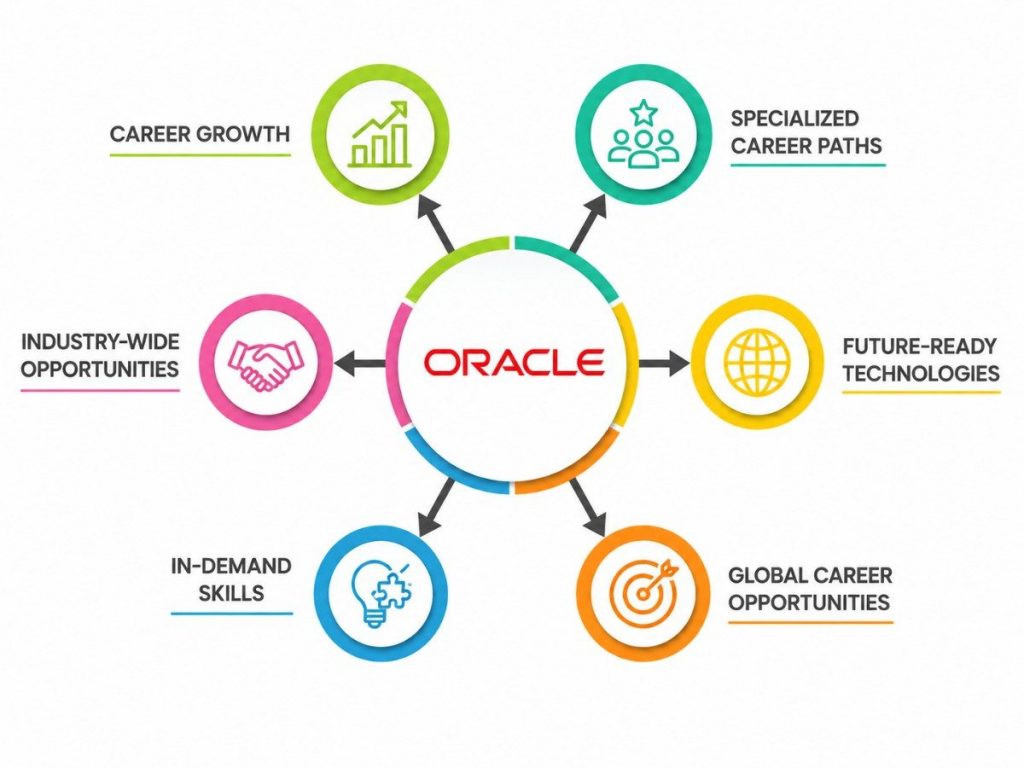
Oracle consulting offers multiple career paths for professionals who continuously strengthen their functional, technical, cloud, and business expertise. At Accenture, Oracle professionals can develop specializations across areas such as Oracle Fusion Financials, HCM, SCM, Procurement, ERP, Oracle Integration Cloud, database technologies, and cloud infrastructure. Professionals may begin as Oracle Consultants or Developers and progress toward Senior Consultant, Functional Lead, Technical Lead, Integration Lead, Solution Architect, or other leadership positions. Functional consultants can deepen their expertise in specific business modules, while technical professionals can specialize in integrations, APIs, application development, data migration, reporting, or cloud technologies.
Conclusion: Preparing for a Long-Term Oracle Consulting Career at Accenture
Preparing for a long-term Oracle consulting career at Accenture requires a balanced combination of Oracle product knowledge, practical implementation experience, business-process understanding, and professional skills. Candidates should choose a specialization aligned with their interests, such as Oracle Financials, HCM, SCM, Procurement, Fusion Cloud, OIC, database development, or cloud infrastructure, and gradually build deeper expertise in that area. Functional professionals should strengthen configuration, requirement gathering, process mapping, testing, and documentation skills, while technical professionals should focus on SQL, PL/SQL, APIs, integrations, data migration, and Oracle development technologies. Hands-on projects are particularly valuable because they demonstrate the ability to apply theoretical concepts to practical enterprise requirements. Relevant Oracle certifications can further strengthen professional profiles when supported by real implementation knowledge. Candidates looking to strengthen their Oracle knowledge and prepare for consulting opportunities can consider an Oracle Course to build relevant technical and functional skills. Candidates should also develop communication, teamwork, client interaction, analytical thinking, and problem-solving abilities to succeed in consulting environments. As experience grows, professionals can broaden their expertise across multiple Oracle technologies and move toward technical leadership, functional leadership, integration architecture, solution architecture, and transformation-focused roles. Consistent learning and practical exposure can provide a strong foundation for sustainable career growth in Oracle consulting at Accenture.