LMS
LMS
Last updated on 24th Jul 2026| 13281

- Introduction to High-Paying AI Careers in India
- Why AI Professionals Are in High Demand
- Artificial Intelligence Engineer
- Machine Learning Engineer
- Data Scientist
- Generative AI Engineer
- Natural Language Processing (NLP) Engineer
- Computer Vision Engineer
- AI Research Scientist
- AI Solutions Architect
- Conclusion: Choosing the Right High-Paying AI Career in India
Introduction to High-Paying AI Careers in India
Artificial Intelligence (AI) has become one of the fastest-growing technology domains in India, creating numerous high-paying career opportunities for skilled professionals across multiple industries. With rapid digital transformation, organizations are investing heavily in AI-driven technologies to automate business operations, improve customer experiences, analyze large datasets, enhance cybersecurity, and build intelligent products. Professionals can build these in-demand skills through Artificial Intelligence Training, which provides practical exposure to modern AI tools and technologies. Industries such as information technology, banking, healthcare, finance, manufacturing, retail, telecommunications, education, logistics, and e-commerce are actively recruiting AI professionals who can design, develop, and deploy advanced AI solutions. The emergence of Machine Learning, Deep Learning, Natural Language Processing (NLP), Computer Vision, Robotics, Large Language Models (LLMs), and Generative AI has further increased the demand for highly skilled AI engineers and specialists. Fresh graduates and experienced professionals who possess strong programming, mathematics, machine learning, cloud computing, and problem-solving skills have excellent opportunities to secure rewarding AI positions with competitive salary packages. India’s rapidly growing startup ecosystem, along with the expansion of global technology companies and research organizations, has significantly increased the number of AI-related job openings. Companies are not only looking for technical expertise but also for professionals who can innovate, solve complex business challenges, and develop scalable AI-powered applications. Continuous learning, industry-recognized certifications, practical projects, internships, and hands-on experience with modern AI frameworks greatly improve employability and career progression. As businesses continue adopting Artificial Intelligence to gain a competitive advantage, AI professionals enjoy excellent job security, rapid career growth, international employment opportunities, and the chance to work on cutting-edge technologies that are transforming industries. Choosing a career in Artificial Intelligence today provides one of the strongest pathways toward long-term professional success, financial stability, and continuous innovation in India’s technology-driven economy.
Why AI Professionals Are in High Demand
- Rapid Digital Transformation Across Industries: Organizations in healthcare, banking, finance, retail, manufacturing, education, logistics, and telecommunications are rapidly adopting Artificial Intelligence to automate processes, improve efficiency, and deliver better customer experiences. This widespread adoption has created a significant demand for skilled AI professionals across India.
- Growth of Generative AI and Intelligent Automation: Technologies such as Large Language Models (LLMs), AI Agents, Generative AI, Computer Vision, and Natural Language Processing are transforming how businesses operate. Companies require professionals who can build, deploy, manage, and optimize these advanced AI-powered solutions. Beginners can strengthen their skills by working on AI Projects for Freshers.
- Shortage of Skilled AI Talent: Although AI job opportunities continue to increase every year, the number of professionals with strong programming, machine learning, deep learning, cloud computing, and AI deployment skills remains limited. This talent gap has resulted in higher salaries and faster career growth for qualified candidates.
- Excellent Career Growth and Global Opportunities: AI professionals have opportunities to work with multinational companies, research organizations, startups, and global technology firms on innovative projects. Continuous advancements in Artificial Intelligence ensure long-term career stability, competitive salary packages, international job prospects, and continuous learning opportunities.
Ready to Get Certified in Artificial Intelligence ? Explore the Program Now Artificial Intelligence Online Training Offered By ACTE Right Now!
Artificial Intelligence Engineer
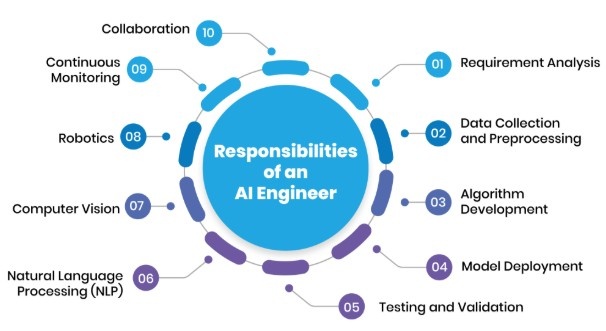
An Artificial Intelligence Engineer is one of the highest-paid technology professionals in India, responsible for designing, developing, deploying, and maintaining intelligent systems that simulate human intelligence to solve complex business problems. Professionals can build these industry-ready skills through Artificial Intelligence Training, which provides practical experience with modern AI tools and frameworks. Their primary responsibilities include collecting and preprocessing data, developing machine learning and deep learning models, training neural networks, optimizing algorithms, integrating AI solutions into software applications, and monitoring model performance in production environments. AI Engineers work extensively with programming languages such as Python, SQL, and sometimes C++ or Java while using advanced frameworks including TensorFlow, PyTorch, Keras, Hugging Face, LangChain, and cloud AI platforms such as Microsoft Azure, AWS, and Google Cloud. They build innovative applications including recommendation systems, virtual assistants, AI chatbots, fraud detection systems, predictive analytics platforms, autonomous systems, computer vision solutions, and Generative AI applications powered by Large Language Models (LLMs).

Develop Your Skills with Artificial Intelligence Training
Weekday / Weekend BatchesSee Batch DetailsMachine Learning Engineer
A Machine Learning Engineer is one of the most sought-after and highest-paying AI professionals in India because of their expertise in designing, developing, training, optimizing, and deploying machine learning models that enable computers to learn from data without being explicitly programmed. Their work begins with collecting, cleaning, and preprocessing large datasets before selecting appropriate machine learning algorithms to solve classification, regression, clustering, recommendation, forecasting, and anomaly detection problems. They develop predictive models using supervised learning, unsupervised learning, reinforcement learning, and deep learning techniques while continuously evaluating model accuracy and improving performance through feature engineering, hyperparameter tuning, and model optimization. Machine Learning Engineers use programming languages such as Python and SQL along with powerful frameworks including Scikit-learn, TensorFlow, PyTorch, XGBoost, and cloud platforms like AWS, Microsoft Azure, and Google Cloud to build scalable AI applications. Professionals who want to strengthen their profile can also refer to Best AI Certifications to Get Hired Faster. They collaborate with data scientists, AI engineers, software developers, and business teams to integrate machine learning models into real-world software systems that support intelligent decision-making and business automation. Their responsibilities also include deploying models into production, monitoring performance, retraining models with new data, ensuring scalability, and maintaining reliable AI systems. Machine Learning Engineers work across industries such as healthcare, finance, banking, insurance, e-commerce, manufacturing, logistics, cybersecurity, telecommunications, and autonomous technology, where predictive intelligence plays a critical role in business success. Fresh graduates with strong programming skills, mathematics, statistics, machine learning knowledge, and practical project experience can enter this field as Junior Machine Learning Engineers and gradually progress to Senior Machine Learning Engineer, AI Architect, AI Research Scientist, or Engineering Manager positions. With the rapid growth of Artificial Intelligence, Generative AI, intelligent automation, and cloud-based machine learning solutions, Machine Learning Engineering continues to offer exceptional salary packages, global career opportunities, excellent job security, and long-term professional growth in India’s expanding technology ecosystem.
Data Scientist
A Data Scientist is one of the highest-paying AI-related professionals in India because they help organizations transform large volumes of raw data into meaningful insights that drive strategic business decisions. Data Scientists collect data from multiple sources, clean and preprocess datasets, identify patterns, perform statistical analysis, build predictive models, and communicate findings through visualizations and reports. Their work combines programming, mathematics, statistics, machine learning, business intelligence, and domain expertise to solve real-world business challenges. They use programming languages such as Python, SQL, and R along with tools and libraries like Pandas, NumPy, Scikit-learn, TensorFlow, Matplotlib, Tableau, Power BI, Apache Spark, and Hadoop to analyze structured and unstructured data efficiently. Professionals planning to enter this field can also explore AI vs Data Science to understand the right career path. Data Scientists collaborate closely with business analysts, AI engineers, software developers, and management teams to develop data-driven solutions that improve operational efficiency, customer experience, marketing strategies, financial planning, fraud detection, demand forecasting, and product recommendations. They work across industries including banking, healthcare, insurance, retail, e-commerce, manufacturing, telecommunications, logistics, education, and government organizations. Fresh graduates often begin as Junior Data Scientists or Data Analysts before progressing to Senior Data Scientist, Lead Data Scientist, Principal Data Scientist, Analytics Manager, or Chief Data Officer roles with experience. In addition to technical expertise, strong communication, problem-solving, critical thinking, and business understanding are essential for success in this profession. As organizations continue generating massive amounts of data and relying on analytics for decision-making, the demand for skilled Data Scientists continues to rise rapidly. Continuous learning in machine learning, cloud computing, Generative AI, and big data technologies further enhances career opportunities and earning potential, making Data Science one of the most rewarding and future-proof careers in India’s technology industry.
To ExploreArtificial Intelligence in Depth, Check Out Our Comprehensive Artificial Intelligence Online Training To Gain Insights From Our Experts!
Generative AI Engineer
A Generative AI Engineer is among the newest and highest-paying AI professionals in India, specializing in the development of intelligent systems capable of generating text, images, code, audio, video, and other digital content using advanced Artificial Intelligence models. Professionals looking to build expertise in these cutting-edge technologies can strengthen their skills through Artificial Intelligence Training, which covers modern AI frameworks and real-world applications. With the rapid growth of Large Language Models (LLMs), Generative AI has become a key technology adopted by startups, multinational corporations, research organizations, healthcare providers, financial institutions, and educational platforms. Generative AI Engineers design, fine-tune, deploy, and optimize AI models that power virtual assistants, AI chatbots, automated content generation systems, coding assistants, search applications, recommendation engines, and enterprise AI solutions. They work extensively with transformer architectures, prompt engineering, Retrieval-Augmented Generation (RAG), AI Agents, vector databases, LangChain, LlamaIndex, Hugging Face, TensorFlow, PyTorch, OpenAI APIs, and cloud-based AI services. Their responsibilities include integrating AI models into business applications, improving response quality, reducing hallucinations, ensuring responsible AI usage, optimizing inference performance, and developing scalable AI-powered products. These professionals collaborate with software engineers, data scientists, product managers, UX designers, and cloud engineers to deliver innovative AI applications that improve business productivity and customer engagement. As organizations continue investing in intelligent automation and Generative AI technologies, the demand for experienced professionals has increased significantly, resulting in excellent salary packages and rapid career advancement. Fresh graduates with strong programming skills, machine learning knowledge, practical AI projects, and expertise in modern Generative AI frameworks can begin as Junior Generative AI Engineers and gradually progress to Senior AI Engineer, LLM Engineer, AI Solutions Architect, AI Research Scientist, or Generative AI Lead. This career offers exceptional opportunities for innovation, continuous learning, global employment, and long-term professional success in one of the fastest-evolving areas of Artificial Intelligence.
Natural Language Processing (NLP) Engineer
A Natural Language Processing (NLP) Engineer is a highly specialized AI professional responsible for developing intelligent systems that enable computers to understand, interpret, process, and generate human language naturally. NLP Engineers combine machine learning, deep learning, computational linguistics, and Artificial Intelligence techniques to build applications such as virtual assistants, AI chatbots, language translators, voice assistants, sentiment analysis systems, document summarization tools, search engines, question-answering systems, speech recognition software, and conversational AI platforms. They work extensively with transformer-based models, Large Language Models (LLMs), BERT, GPT architectures, Hugging Face Transformers, spaCy, NLTK, TensorFlow, PyTorch, and cloud AI services to develop accurate and scalable language-processing solutions. Professionals interested in this domain can also explore Top AI Tools Every Developer Should Know to stay updated with essential AI technologies. Their responsibilities include preprocessing text data, tokenization, feature extraction, language modeling, model training, fine-tuning, prompt engineering, performance evaluation, and continuous optimization of AI language systems. NLP Engineers collaborate with AI researchers, machine learning engineers, software developers, product managers, linguists, and business stakeholders to build intelligent applications capable of understanding multiple languages and delivering natural user interactions. Industries such as healthcare, banking, finance, legal services, customer support, education, media, e-commerce, cybersecurity, and telecommunications increasingly rely on NLP technologies to automate communication, improve customer service, analyze customer feedback, and process large volumes of textual information efficiently. Professionals entering this field require strong programming skills, machine learning expertise, linguistic understanding, mathematics, statistics, and practical experience with modern AI frameworks. As conversational AI, Generative AI, and intelligent virtual assistants continue to expand worldwide, NLP Engineering has become one of the highest-paying and fastest-growing AI career options in India, offering excellent salary packages, global career opportunities, continuous innovation, and significant long-term growth.
Looking to Master Machine Learning? Discover the Artificial Intelligence Expert Masters Program Training Course Available at ACTE Now!
Computer Vision Engineer
A Computer Vision Engineer is one of the highest-paid Artificial Intelligence professionals in India, specializing in developing AI systems that enable computers to interpret, analyze, and understand visual information from images and videos. Their primary responsibility is to build intelligent vision-based applications capable of object detection, facial recognition, image classification, medical image analysis, quality inspection, autonomous driving, surveillance, augmented reality, industrial automation, and robotics. Computer Vision Engineers use advanced machine learning and deep learning techniques, including Convolutional Neural Networks (CNNs), Vision Transformers (ViTs), object detection models such as YOLO and Faster R-CNN, image segmentation algorithms, and feature extraction methods to solve complex visual recognition problems. They work with programming languages like Python and C++, along with powerful frameworks such as OpenCV, TensorFlow, PyTorch, Keras, Detectron2, and cloud AI platforms to design, train, evaluate, and deploy high-performance computer vision models. Beginners looking to strengthen their foundation can refer to Programming Languages for AI Development. Their responsibilities also include collecting image datasets, data annotation, preprocessing, model optimization, real-time inference, deployment, performance monitoring, and continuous model improvement. Computer Vision Engineers collaborate with AI engineers, robotics experts, embedded system developers, software engineers, and product managers to develop intelligent products for healthcare diagnostics, autonomous vehicles, manufacturing quality control, retail analytics, smart cities, agriculture, defense, and security systems. As industries increasingly adopt automation and intelligent vision technologies, the demand for skilled Computer Vision Engineers continues to grow rapidly across India. Fresh graduates with expertise in programming, mathematics, deep learning, image processing, and AI frameworks can build highly rewarding careers in this field and advance into senior positions such as Lead Computer Vision Engineer, AI Architect, Robotics AI Specialist, AI Research Scientist, or Director of Artificial Intelligence. With continuous advancements in autonomous systems, smart devices, industrial automation, and visual intelligence, Computer Vision Engineering offers exceptional salary packages, exciting research opportunities, global career prospects, and long-term professional growth.
AI Research Scientist
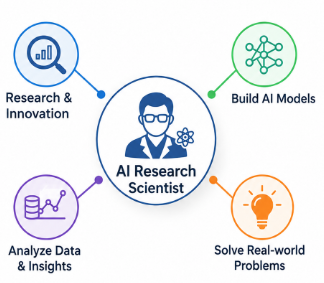
An AI Research Scientist is one of the most prestigious and highest-paying careers in the field of Artificial Intelligence, responsible for conducting advanced research to develop new algorithms, improve existing AI models, and solve complex scientific and industrial challenges. Unlike traditional AI Engineers who primarily focus on implementing existing technologies, AI Research Scientists work at the forefront of innovation by exploring new methods in machine learning, deep learning, reinforcement learning, computer vision, natural language processing, Generative AI, robotics, and autonomous systems. Their responsibilities include designing novel AI architectures, publishing research papers, developing experimental models, analyzing large-scale datasets, optimizing neural network performance, and contributing to the advancement of Artificial Intelligence through continuous experimentation. They frequently work with state-of-the-art technologies such as Large Language Models (LLMs), transformer architectures, multimodal AI, Retrieval-Augmented Generation (RAG), diffusion models, reinforcement learning from human feedback (RLHF), and AI Agents. Those interested in this career can explore Becoming an AI Engineer to build a strong foundation before moving into AI research. AI Research Scientists use programming languages such as Python, C++, and Java along with frameworks including TensorFlow, PyTorch, JAX, Hugging Face Transformers, and distributed computing platforms to develop highly sophisticated AI systems.
Preparing for Artificial Intelligence Job Interviews? Have a Look at Our Blog on Artificial Intelligence Interview Questions and Answers To Ace Your Interview!
AI Solutions Architect
An AI Solutions Architect is one of the highest-paying leadership roles in the Artificial Intelligence industry, responsible for designing, planning, and overseeing the implementation of enterprise-scale AI solutions that align with business objectives. Rather than focusing solely on developing machine learning models, AI Solutions Architects create complete AI ecosystems by combining machine learning, deep learning, cloud computing, data engineering, APIs, software architecture, cybersecurity, and scalable infrastructure into a unified solution. They work closely with business executives, AI engineers, data scientists, software developers, cloud architects, DevOps engineers, product managers, and stakeholders to understand organizational requirements and transform them into practical AI-driven solutions. Their responsibilities include selecting appropriate AI technologies, designing system architecture, integrating AI models into existing enterprise applications, ensuring scalability and security, optimizing system performance, managing cloud infrastructure, monitoring deployed AI systems, and maintaining compliance with organizational and regulatory standards. Professionals planning to build expertise in enterprise AI can also read Generative AI Engineer After Graduation. AI Solutions Architects possess expertise in cloud platforms such as Microsoft Azure, Amazon Web Services (AWS), and Google Cloud Platform (GCP), along with AI frameworks including TensorFlow, PyTorch, Hugging Face, LangChain, OpenAI APIs, Kubernetes, Docker, and MLOps tools for production deployment. They also guide organizations in adopting modern technologies such as Generative AI, AI Agents, Large Language Models (LLMs), Retrieval-Augmented Generation (RAG), intelligent automation, and multimodal AI applications. Strong technical leadership, communication skills, architecture design, business analysis, project management, and strategic thinking are essential because the role involves coordinating multiple technical teams while ensuring successful project delivery. AI Solutions Architects are employed by multinational corporations, consulting firms, cloud service providers, financial institutions, healthcare organizations, manufacturing companies, government agencies, and global technology enterprises. As organizations increasingly rely on Artificial Intelligence to modernize operations and gain competitive advantages, the demand for experienced AI Solutions Architects continues to grow significantly. This career offers outstanding salary packages, executive leadership opportunities, global employment prospects, and long-term professional growth for individuals capable of designing robust, scalable, secure, and innovative AI-powered enterprise solutions.
Conclusion: Choosing the Right High-Paying AI Career in India
Artificial Intelligence has become one of the most promising and financially rewarding career domains in India, offering diverse opportunities for students, fresh graduates, and experienced professionals who are passionate about innovation, technology, and problem-solving. Careers such as Artificial Intelligence Engineer, Machine Learning Engineer, Data Scientist, Generative AI Engineer, Natural Language Processing Engineer, Computer Vision Engineer, AI Research Scientist, and AI Solutions Architect have emerged as some of the highest-paying technology roles due to the increasing adoption of AI across healthcare, banking, finance, manufacturing, retail, education, cybersecurity, logistics, automotive, telecommunications, and government sectors. Each role requires a unique combination of programming knowledge, mathematics, machine learning expertise, cloud computing, analytical thinking, and practical experience, allowing professionals to choose a specialization based on their interests and long-term career goals. Fresh graduates should begin by building strong foundations in Python, SQL, data structures, algorithms, mathematics, statistics, and machine learning before advancing to specialized technologies such as deep learning, computer vision, natural language processing, cloud AI, MLOps, Large Language Models (LLMs), AI Agents, and Generative AI. Building these skills through Artificial Intelligence Training, along with practical experience through internships, real-world projects, hackathons, research activities, open-source contributions, and industry-recognized certifications, significantly improves employability and career progression. As professionals gain expertise, they can move into senior engineering, architecture, consulting, research, technical leadership, and executive management roles with substantially higher responsibilities and compensation. India’s rapidly expanding digital economy, thriving startup ecosystem, and growing investments in Artificial Intelligence ensure that skilled AI professionals will continue to enjoy exceptional salary packages, excellent job security, international career opportunities, continuous learning, and long-term professional growth. By selecting the right AI specialization, continuously upgrading technical skills, adapting to emerging technologies, and developing innovative solutions for real-world challenges, aspiring professionals can build highly successful and future-ready careers while contributing to the advancement of Artificial Intelligence and the digital transformation of industries across India and the world.