LMS
LMS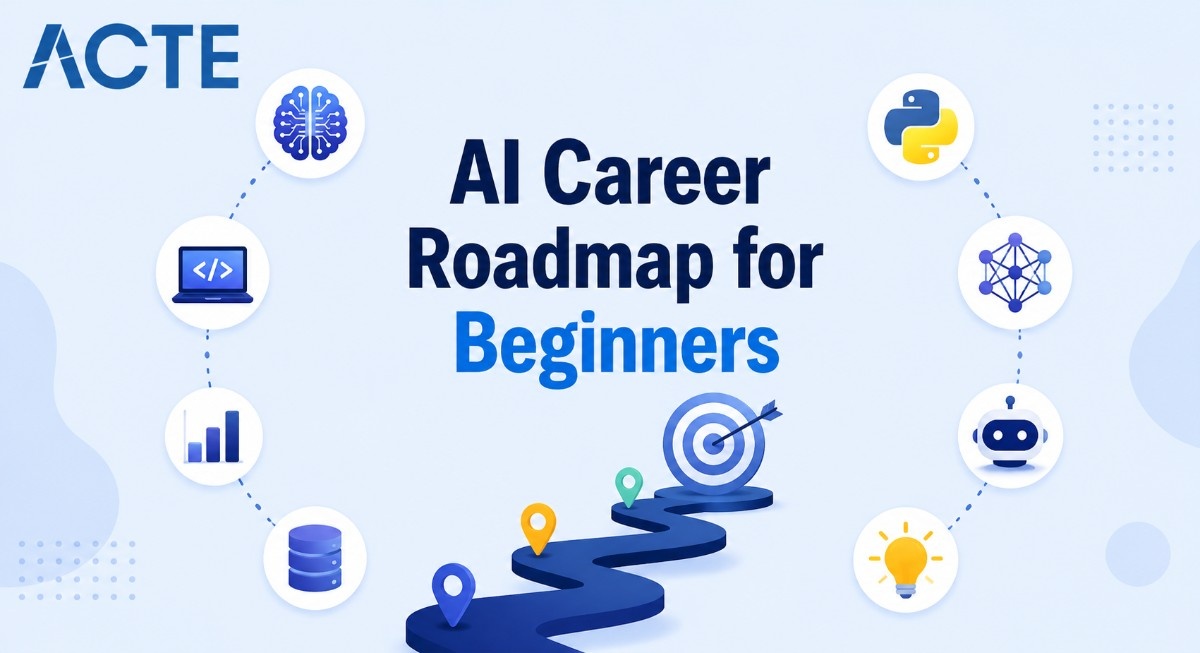
Last updated on 24th Jul 2026| 13281

- Introduction to Artificial Intelligence and Career Opportunities
- Why Choose a Career in Artificial Intelligence?
- Understanding the AI Career Roadmap for Beginners
- Essential Skills Required to Start an AI Career
- Programming Languages, Tools, and Frameworks You Should Learn
- Step-by-Step Learning Path to Become an AI Professional
- Hands-on Projects, Certifications, and Internship Opportunities
- Top AI Career Roles for Beginners
- Salary Expectations, Career Growth, and Future Scope in AI
- Conclusion: Start Your Journey Towards a Successful AI Career
Introduction to Artificial Intelligence and Career Opportunities
Artificial Intelligence (AI) is one of the most rapidly growing technologies in the modern digital world, transforming the way businesses operate and people interact with technology. AI enables machines to perform tasks such as learning, reasoning, decision-making, problem-solving, language understanding, and image recognition with minimal human intervention. Today, industries including healthcare, banking, finance, education, retail, manufacturing, transportation, agriculture, and cybersecurity rely on AI to improve efficiency, automate repetitive tasks, and deliver better customer experiences. This widespread adoption has created a huge demand for AI professionals across the globe. Beginners entering the AI field have access to numerous career opportunities, including AI Engineer, Machine Learning Engineer, Data Scientist, NLP Engineer, Computer Vision Engineer, and Generative AI Engineer. With the emergence of technologies such as Large Language Models (LLMs), AI Agents, and Generative AI, new job roles continue to be created every year. Fresh graduates can build industry-ready skills by enrolling in Artificial Intelligence Training, where they can learn modern AI tools, practice real-world projects, and understand industry best practices. They can further strengthen their expertise through programming, mathematics, machine learning, deep learning, and hands-on AI applications. The AI industry also offers competitive salaries, global employment opportunities, remote work options, and continuous career growth. By gaining practical experience through projects, certifications, internships, and open-source contributions, beginners can develop the skills needed to succeed in this rapidly evolving field. As Artificial Intelligence continues to reshape every industry, it remains one of the most promising and future-ready career paths for aspiring technology professionals.
Ready to Get Certified in Artificial Intelligence ? Explore the Program Now Artificial Intelligence Online Training Offered By ACTE Right Now!
Understanding the AI Career Roadmap for Beginners
The AI career roadmap provides a structured learning path that helps beginners develop the knowledge and practical skills required to become successful AI professionals. The journey begins with learning programming languages such as Python and SQL, followed by understanding mathematics, including linear algebra, probability, statistics, and calculus, which form the foundation of Artificial Intelligence. After building these basics, beginners should study machine learning concepts such as supervised learning, unsupervised learning, regression, classification, clustering, and model evaluation. The next step is learning deep learning using frameworks like TensorFlow and PyTorch while gaining knowledge of neural networks, transformers, and modern AI architectures. Beginners can accelerate their learning by joining Artificial Intelligence Training, where they gain hands-on experience with the latest AI tools, projects, and industry practices. They should also explore specialized domains such as Natural Language Processing, Computer Vision, and Generative AI to understand different AI applications.

Develop Your Skills with Artificial Intelligence Training
Weekday / Weekend BatchesSee Batch DetailsEssential Skills Required to Start an AI Career
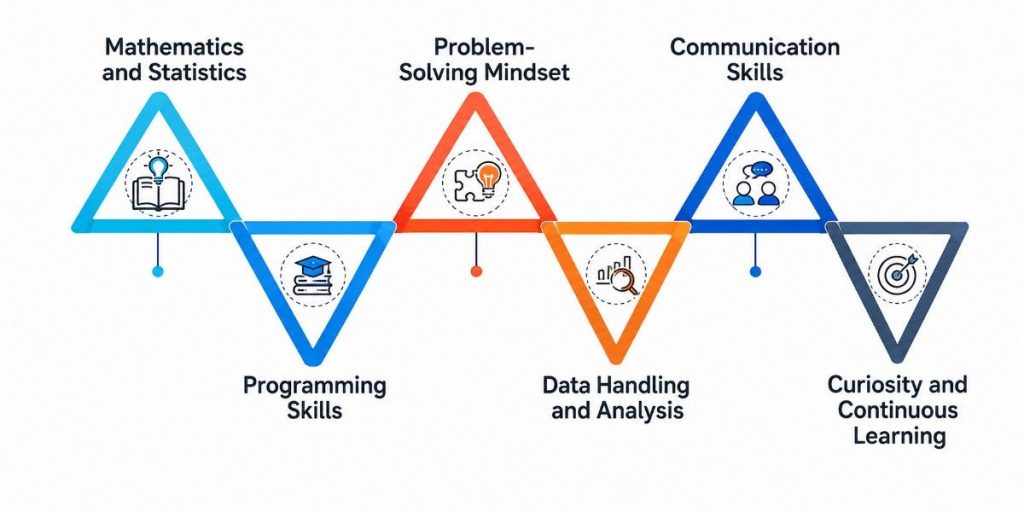
- Programming Fundamentals: Learn Python as your primary programming language along with basic SQL, data structures, algorithms, and object-oriented programming concepts. These skills form the foundation for developing AI applications and solving programming problems efficiently.
- Mathematics and Statistics: Build a strong understanding of linear algebra, probability, statistics, and basic calculus to understand how machine learning algorithms work. Mathematical knowledge helps in model development, optimization, and performance evaluation.
- Machine Learning and Deep Learning: Learn supervised learning, unsupervised learning, neural networks, deep learning, and model evaluation techniques using frameworks like TensorFlow and PyTorch. These concepts are essential for building intelligent AI systems.
- Practical Experience and Problem Solving: Develop real-world AI projects, participate in internships, earn certifications, and maintain a GitHub portfolio to showcase your skills. Working on Easy AI Projects for Freshers to Build Practical Experience helps strengthen your portfolio, improve confidence, enhance technical expertise, and increase job opportunities for beginners.
Programming Languages, Tools, and Frameworks You Should Learn
| Category | Technologies | Purpose |
|---|---|---|
| Programming Languages | Python , SQL | Python is the primary language for AI development, while SQL is used for managing and querying structured data efficiently. |
| Mathematics Libraries | NumPy, SciPy | Perform numerical computations, matrix operations, scientific calculations, and mathematical modeling for AI algorithms. |
| Data Analysis | Pandas, Matplotlib | Clean, analyze, visualize, and interpret datasets to extract meaningful insights before model training. |
| Machine Learning | Scikit-learn, XGBoost | Build, train, evaluate, and optimize machine learning models for prediction and classification tasks. |
| Deep Learning | TensorFlow, PyTorch, Keras | Develop neural networks, deep learning models, and advanced AI applications for real-world problems. |
| NLP Frameworks | Hugging Face, SpaCy, NLTK | Build chatbots, text summarizers, sentiment analysis systems, translation tools, and language models. |
| Computer Vision | OpenCV, YOLO | Develop image recognition, object detection, facial recognition, and video analysis applications. |
| Generative AI | LangChain, LlamaIndex, OpenAI SDK | Build AI assistants, Retrieval-Augmented Generation (RAG) systems, and LLM-powered applications. |
| Cloud Platforms | AWS, Microsoft Azure, Google Cloud | Deploy, scale, monitor, and manage AI models in production environments using cloud infrastructure. |
| Development Tools | Git, GitHub, Docker, VS Code, Jupyter Notebook | Manage source code, collaborate with teams, containerize applications, and develop AI projects efficiently. |
To ExploreArtificial Intelligence in Depth, Check Out Our Comprehensive Artificial Intelligence Online Training To Gain Insights From Our Experts!
Step-by-Step Learning Path to Become an AI Professional
- Learn Programming and Computer Science Fundamentals: Start by mastering Python programming, SQL, data structures, algorithms, object-oriented programming, and basic software development concepts. These skills provide the foundation for developing intelligent AI applications and solving programming challenges effectively.
- Build Strong Mathematical and Machine Learning Knowledge: Study linear algebra, probability, statistics, and calculus before learning supervised learning, unsupervised learning, regression, classification, clustering, and model evaluation. Mathematics helps you understand how AI algorithms work internally and improve model performance.
- Master Deep Learning and AI Frameworks: Learn neural networks, convolutional neural networks (CNNs), recurrent neural networks (RNNs), transformers, and attention mechanisms using TensorFlow and PyTorch. These frameworks are essential for building advanced AI and Generative AI applications.
- Develop Practical AI Projects: Create real-world applications such as chatbots, recommendation systems, sentiment analysis tools, image classifiers, AI assistants, and predictive analytics models. Practical projects demonstrate your technical skills and strengthen your professional portfolio.
- Learn Cloud Computing and AI Deployment: Understand Docker, Git, GitHub, REST APIs, AWS, Azure, Google Cloud, and MLOps concepts to deploy AI models efficiently. These deployment skills are highly valued by employers in production environments.
- Gain Industry Experience and Keep Learning: Complete Best AI Certifications to Get Hired Faster, participate in internships, contribute to open-source projects, attend hackathons, and stay updated with the latest AI research. Continuous learning helps you remain competitive in the rapidly evolving Artificial Intelligence industry.
Hands-on Projects, Certifications, and Internship Opportunities
To gain practical AI skills while working on these projects and certifications, learners can also join Artificial Intelligence Training, which provides hands-on experience with industry tools, real-world projects, and expert guidance.
| Learning Area | Examples | Benefits |
|---|---|---|
| Beginner AI Projects | Spam Detection, House Price Prediction, Iris Classification | Strengthens programming skills and introduces machine learning concepts through practical implementation. |
| Intermediate Projects | Chatbot, Sentiment Analysis, Image Classification, Recommendation System | Improves knowledge of NLP, Computer Vision, and machine learning model development. |
| Advanced Projects | Generative AI Chatbot, RAG Application, AI Assistant, LLM-based Q&A System | Demonstrates expertise in modern AI technologies and enhances your professional portfolio. |
| AI Certifications | Google AI, Microsoft AI, IBM AI, DeepLearning.AI, AWS AI | Validates technical skills and increases credibility during recruitment processes. |
| Internship Opportunities | AI Startups, IT Companies, Research Labs, MNCs | Provides real-world project experience, teamwork, and exposure to industry development practices. |
| Open Source Contributions | GitHub Projects, Hugging Face Community | Improves coding standards, collaboration skills, and visibility within the AI developer community. |
| Hackathons and Competitions | Kaggle Competitions, AI Challenges, University Hackathons | Enhances problem-solving abilities and provides opportunities to work on innovative AI solutions. |
| Portfolio Development | GitHub Repository, Personal Portfolio Website | Showcases projects, technical skills, certifications, and practical experience to recruiters. |
Looking to Master Machine Learning? Discover the Artificial Intelligence Expert Masters Program Training Course Available at ACTE Now!
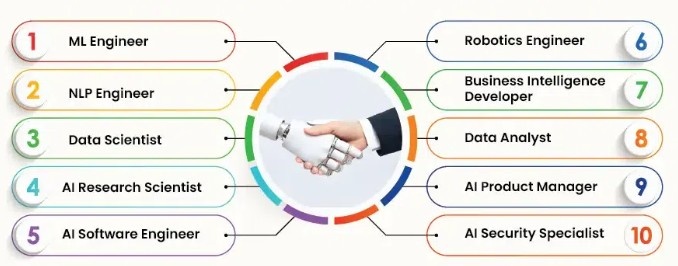
Top AI Career Roles for Beginners
- AI Engineer: AI Engineers develop, train, deploy, and maintain intelligent systems using machine learning and deep learning technologies. They build AI-powered applications that automate tasks, improve business operations, and solve complex real-world problems across multiple industries.
- Machine Learning Engineer: Machine Learning Engineers design predictive models, preprocess data, optimize algorithms, and improve model accuracy using statistical techniques. They work with large datasets to create intelligent systems capable of learning from data and making accurate predictions.
- Data Scientist: Data Scientists analyze structured and unstructured data using programming, statistics, and machine learning to generate valuable business insights. They help organizations make data-driven decisions through predictive analytics, visualization, and advanced analytical techniques.
- Generative AI Engineer: Generative AI Engineers build applications using Large Language Models (LLMs), prompt engineering, Retrieval-Augmented Generation (RAG), and AI agents. They develop intelligent systems capable of generating text, images, code, audio, and other creative digital content. Beginners can also explore Exploring Career Paths in Artificial Intelligence for Freshers to understand the opportunities available in this rapidly growing field.
- Natural Language Processing (NLP) Engineer: NLP Engineers develop AI systems that understand, process, and generate human language for chatbots, translation tools, virtual assistants, and sentiment analysis applications. Their work improves communication between humans and intelligent machines.
- Computer Vision Engineer: Computer Vision Engineers create AI models capable of analyzing images and videos for applications such as facial recognition, autonomous vehicles, medical imaging, industrial automation, and surveillance systems. They specialize in image processing and deep learning technologies.
Salary Expectations, Career Growth, and Future Scope in AI
- Competitive Salary Packages: AI professionals receive attractive salary packages even at the entry level due to the increasing demand for Artificial Intelligence skills across industries. Candidates with strong technical knowledge, certifications, internships, and practical projects often receive better compensation and faster career progression.
- Excellent Career Growth Opportunities: Fresh graduates can begin their careers as AI Engineers, Machine Learning Engineers, Data Scientists, or AI Developers and gradually advance to senior technical and leadership roles. Continuous learning and industry experience help professionals achieve faster promotions and greater responsibilities.
- Growing Demand Across Industries: Artificial Intelligence is being widely adopted in healthcare, banking, finance, retail, education, manufacturing, logistics, and cybersecurity. This widespread adoption creates numerous job opportunities and ensures long-term career stability for skilled AI professionals.
- Promising Future Scope: The future of AI continues to expand with emerging technologies such as Generative AI, Large Language Models (LLMs), AI Agents, Robotics, Autonomous Systems, and Intelligent Automation. Professionals who continuously upgrade their skills will remain highly valuable in the global technology industry. Learn more about The Impact of AI on the Future of IT Careers to understand how the industry is evolving.
Preparing for Artificial Intelligence Job Interviews? Have a Look at Our Blog on Artificial Intelligence Interview Questions and Answers To Ace Your Interview!
Conclusion: Start Your Journey Towards a Successful AI Career
Artificial Intelligence has become one of the most rewarding and future-oriented career paths for beginners who are passionate about technology, innovation, and problem-solving. By following a structured learning roadmap, mastering programming languages, understanding machine learning and deep learning concepts, working on real-world projects, earning industry-recognized certifications, and gaining internship experience, beginners can build a strong foundation for a successful AI career. Those looking for guided learning and hands-on industry exposure can enroll in Artificial Intelligence Training to strengthen their practical AI skills and accelerate their career growth. The AI industry offers diverse career opportunities in roles such as AI Engineer, Machine Learning Engineer, Data Scientist, NLP Engineer, Computer Vision Engineer, and Generative AI Engineer, allowing individuals to choose a specialization based on their interests and strengths. As organizations across the world continue to invest in Artificial Intelligence to improve efficiency, automate business processes, and develop intelligent products, the demand for skilled AI professionals will continue to grow rapidly. Continuous learning, practical experience, and staying updated with the latest AI tools, frameworks, and research are essential for long-term success in this field. Beginners who remain dedicated, build a strong portfolio, and consistently enhance their technical and problem-solving skills will enjoy excellent salary packages, global career opportunities, job security, and the chance to contribute to groundbreaking innovations that shape the future of technology and society.