LMS
LMS
Last updated on 22nd Jul 2026| 4824

- Introduction to Generative AI Internships
- Who Is a Generative AI Intern?
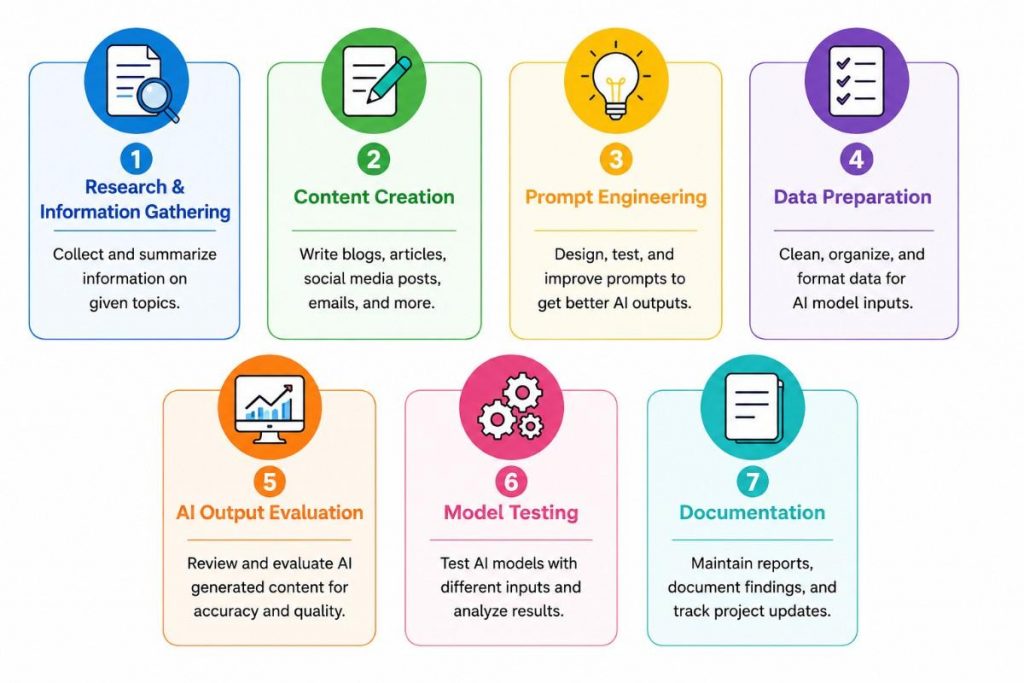
- Key Roles and Responsibilities of a Generative AI Intern
- Daily Tasks Performed by Generative AI Interns
- Essential Technical Skills Required
- Soft Skills Every AI Intern Should Develop
- Tools and Technologies Used by Generative AI Interns
- Industries Hiring Generative AI Interns
- Challenges Faced During a Generative AI Internship
- Career Growth and Opportunities After the Internship
- Conclusion: Is a Generative AI Internship the Right Career Choice?
Introduction to Generative AI Internships
Generative AI internships have become one of the most valuable opportunities for students, fresh graduates, and aspiring AI professionals who want to gain practical experience in the rapidly growing field of artificial intelligence. As organizations across industries increasingly adopt AI-powered technologies, the demand for professionals skilled in large language models, prompt engineering, machine learning, and intelligent automation continues to rise. A Generative AI internship allows candidates to bridge the gap between academic knowledge and real-world industry practices by working on live projects involving AI model development, chatbot creation, content generation, image generation, workflow automation, and model evaluation. Unlike traditional internships that focus mainly on theory, Generative AI internships provide exposure to modern AI tools, programming languages, cloud platforms, and development frameworks used by leading technology companies. Candidates looking to strengthen these practical skills can also benefit from professional Gen AI Training, which complements internship experience with structured, hands-on learning. Interns collaborate with AI engineers, data scientists, software developers, and product teams while learning how AI solutions are designed, tested, optimized, and deployed. During the internship, they gain hands-on experience with Python, OpenAI APIs, Hugging Face, TensorFlow, PyTorch, LangChain, vector databases, and cloud services while also understanding responsible AI practices, data privacy, ethical AI development, and model performance evaluation. These internships help interns strengthen their technical, analytical, and communication skills while preparing them for future roles in artificial intelligence. As industries such as healthcare, finance, education, e-commerce, cybersecurity, gaming, marketing, and software development continue integrating Generative AI into their operations, completing a Generative AI internship significantly improves employability, builds an impressive project portfolio, and creates a strong foundation for long-term career growth in one of the fastest-growing technology domains.
Who Is a Generative AI Intern?
A Generative AI Intern is an aspiring artificial intelligence professional who works under the guidance of experienced AI engineers, machine learning specialists, or data scientists to support the development, testing, and optimization of AI-powered applications. These interns are usually undergraduate students, postgraduate students, recent graduates, or career changers who possess a basic understanding of programming, machine learning concepts, and data analysis while looking to gain practical industry experience. Their primary responsibility is to assist in building, evaluating, and improving generative AI models capable of producing human-like text, images, code, audio, video, and other digital content. Instead of independently developing large-scale AI systems, interns contribute by researching new AI technologies, preparing datasets, writing effective prompts, testing AI-generated outputs, identifying model errors, documenting experiments, and optimizing application performance. To build these in-demand skills before or during an internship, many aspiring professionals also enroll in Gen AI Training, which provides hands-on experience with the latest AI tools and frameworks. They gain practical exposure to industry-standard technologies such as Python, OpenAI APIs, Hugging Face Transformers, TensorFlow, PyTorch, LangChain, vector databases, Git, and cloud-based AI platforms while participating in real software development workflows. Throughout the internship, Generative AI Interns collaborate with developers, product managers, researchers, designers, and AI engineers to transform business requirements into practical AI solutions. They also learn important concepts such as responsible AI development, model evaluation, bias reduction, data privacy, prompt engineering, and ethical use of artificial intelligence. Beyond technical expertise, interns develop communication, teamwork, analytical thinking, problem-solving, and professional documentation skills by participating in meetings, code reviews, brainstorming sessions, and project discussions. Through continuous learning, experimentation, and mentorship, a Generative AI Intern builds the practical knowledge and industry exposure required to pursue successful careers as an AI Engineer, Machine Learning Engineer, Prompt Engineer, NLP Engineer, Data Scientist, AI Researcher, or Intelligent Automation Specialist.
Ready to Pursue Your Gen AI Certificate? View The Gen AI Course Offered By ACTE Right Now!
Key Roles and Responsibilities of a Generative AI Intern
- Research and Understand AI Models: Generative AI Interns regularly study large language models, image generation models, multimodal AI systems, and the latest AI technologies. They read technical documentation, research papers, and product guides to understand how different AI models function and how they can be applied to solve business problems. Continuous learning helps interns stay updated with the rapidly evolving AI industry. Beginners can also explore ChatGPT and Generative AI Complete Guide to strengthen their practical knowledge.
- Develop and Test AI Applications: Interns assist in building AI-powered applications such as chatbots, virtual assistants, content generators, coding assistants, and workflow automation systems. They create prompts, evaluate AI-generated responses, identify inaccuracies, and improve output quality through repeated testing and experimentation. This practical experience strengthens their understanding of AI development and model behavior.
- Prepare and Manage Data: High-quality datasets are essential for successful AI systems. Interns help collect, clean, organize, validate, and preprocess data before it is used for model training or evaluation. Proper data preparation improves model accuracy, reduces bias, and enhances overall AI performance while teaching interns the importance of data quality.
- Collaborate with Development Teams: Generative AI Interns work closely with AI engineers, software developers, product managers, designers, and data scientists throughout the project lifecycle. They attend team meetings, discuss technical challenges, share progress updates, implement mentor feedback, and contribute to collaborative development activities while learning Agile software development practices.
- Document Results and Optimize Performance: Interns maintain detailed documentation of prompt experiments, AI model evaluations, testing results, and project progress. They analyze AI performance, compare outputs, identify improvement opportunities, and recommend optimization techniques that increase efficiency, reliability, and overall application quality.
Daily Tasks Performed by Generative AI Interns
The daily activities of a Generative AI Intern vary depending on the organization, project requirements, and technologies being used, but most internships combine research, software development, prompt engineering, testing, documentation, and collaboration. A typical workday usually begins with reviewing assigned tasks, attending team meetings, and discussing project progress with mentors or senior AI engineers. Interns spend time researching newly released AI models, reading technical documentation, and learning modern frameworks that can improve existing AI applications. Those starting their AI journey can also refer to Getting Started with Generative AI as a Fresher for foundational knowledge. A major part of their work involves writing and refining prompts, testing AI-generated outputs, identifying inaccuracies, comparing different model responses, and improving overall output quality through continuous experimentation. They frequently use programming languages such as Python along with AI frameworks like TensorFlow, PyTorch, Hugging Face Transformers, LangChain, and OpenAI APIs to build or enhance AI-powered solutions. Interns also assist in collecting, cleaning, organizing, and validating datasets required for model training and evaluation while documenting experiments, generating reports, and maintaining project records for future reference.

Essential Technical Skills Required
- Programming Skills: Python is the most widely used programming language for Generative AI development. Interns should understand variables, functions, loops, object-oriented programming, and libraries that help build AI applications. Good programming skills also simplify debugging, automation, and model integration while improving logical thinking and software development capabilities.
- Machine Learning Fundamentals: A basic understanding of supervised learning, unsupervised learning, neural networks, deep learning, and model evaluation helps interns understand how AI models learn from data and generate intelligent outputs. These concepts build the foundation for developing and improving modern AI applications.
- Prompt Engineering: Prompt engineering is one of the most important skills for Generative AI Interns because the quality of AI-generated responses depends on well-designed prompts. Interns learn how to write clear, structured, and optimized prompts that improve accuracy, relevance, and consistency across different AI models. For a stronger understanding of AI concepts, explore Top Generative AI vs Traditional AI.
- AI Frameworks and Libraries: Practical knowledge of AI frameworks such as TensorFlow, PyTorch, Hugging Face Transformers, and LangChain enables interns to build, test, and deploy AI-powered applications efficiently. Hands-on experience with these tools strengthens technical expertise and improves project productivity.
- Data Handling and Analysis: AI models depend heavily on high-quality data. Interns should know how to collect, clean, preprocess, organize, and analyze datasets using tools such as Pandas and NumPy. Proper data preparation improves model performance and reduces inaccurate outputs during training and testing.
- API Integration and Cloud Platforms: Modern AI applications frequently use APIs and cloud services to access advanced AI models. Interns should understand how to integrate APIs like OpenAI APIs and work with cloud platforms such as AWS, Microsoft Azure, and Google Cloud Platform to deploy and scale AI solutions efficiently.
Soft Skills Every AI Intern Should Develop
- Communication Skills: AI Interns should clearly communicate project updates, technical findings, ideas, and challenges with mentors and team members. Effective communication improves collaboration, reduces misunderstandings, and helps explain complex AI concepts in a simple and professional manner.
- Problem-Solving Ability: Developing AI applications often involves debugging code, improving prompts, optimizing model outputs, and resolving technical issues. Strong analytical thinking and creative problem-solving enable interns to identify root causes and develop efficient solutions for AI-related challenges.
- Teamwork and Collaboration: Generative AI projects involve AI engineers, developers, researchers, designers, and product managers working together. Interns should actively participate in discussions, share ideas, accept feedback, and contribute positively to collaborative development environments while learning from experienced professionals.
- Time Management: AI Interns frequently balance coding, research, documentation, testing, meetings, and learning new technologies. Effective time management helps complete assignments before deadlines, maintain productivity, reduce stress, and improve overall work quality throughout the internship.
- Adaptability and Continuous Learning: Artificial Intelligence evolves rapidly with new models, frameworks, and technologies being introduced regularly. Interns should remain curious, continuously update their knowledge, quickly adapt to changing project requirements, and stay informed about industry trends to remain competitive. Reading Why Freshers Should Learn Generative AI can help build the right learning mindset.
- Attention to Detail: Small mistakes in datasets, prompts, code, or documentation can significantly affect AI model performance. Carefully reviewing work, identifying errors, and maintaining accuracy improves application reliability, reduces debugging time, and ensures the successful completion of AI projects.
- Learning Advanced AI Concepts: Generative AI includes complex topics such as large language models, neural networks, transformers, prompt engineering, and vector databases. Interns often need to understand these technologies within a short period. Continuous learning through documentation, online resources, research papers, and hands-on experimentation helps them build a strong technical foundation. Working on Generative AI Projects for Beginners can make these concepts easier to understand through practical experience.
- Working with Large Datasets: AI applications require clean and organized datasets for training and evaluation. Interns spend time collecting, cleaning, validating, and preprocessing data before it can be used effectively. Poor-quality data can reduce model accuracy, making proper data management an essential responsibility.
- Debugging and Model Optimization: AI models do not always produce accurate or expected results. Interns regularly analyze model outputs, refine prompts, adjust parameters, identify errors, and test different approaches to improve response quality. This process develops patience, analytical thinking, and practical debugging skills.
- Keeping Up with Rapid Technology Changes: New AI models, frameworks, APIs, and development tools are introduced frequently. Interns must continuously update their technical knowledge while simultaneously working on assigned tasks. Staying informed about industry trends helps them remain competitive and adaptable.
- Managing Time and Multiple Responsibilities: Generative AI Interns often balance coding, documentation, meetings, testing, research, learning, and collaboration throughout the internship. Effective planning, prioritization, and time management are essential for completing projects successfully within deadlines.
- Understanding Ethical AI Practices: Responsible AI development requires interns to understand fairness, bias reduction, privacy protection, transparency, and secure AI deployment. Learning ethical AI practices ensures that AI applications remain reliable, trustworthy, and compliant with professional standards.
Excited to Obtaining Your Gen AI Certificate? View The Gen AI Course Offered By ACTE Right Now!
Tools and Technologies Used by Generative AI Interns
| Category | Popular Tools | Purpose |
|---|---|---|
| Programming Languages | Python, JavaScript | Develop AI applications, automate workflows, and build backend systems. |
| AI Frameworks | TensorFlow, PyTorch, Keras | Train, test, and deploy machine learning and deep learning models. |
| Generative AI Platforms | OpenAI GPT, Google Gemini, Claude, Llama | Generate text, images, code, and conversational AI responses. |
| Prompt Engineering Tools | LangChain, LlamaIndex | Create AI workflows, optimize prompts, and integrate language models. |
| Data Processing | Pandas, NumPy, Scikit-learn | Clean, preprocess, analyze, and prepare datasets for AI models. |
| Version Control | Git, GitHub | Manage source code, collaborate with teams, and track project changes. |
| Cloud Platforms | AWS, Microsoft Azure, Google Cloud Platform | Deploy AI applications, manage infrastructure, and scale AI solutions. |
| Development Environment | Visual Studio Code, Jupyter Notebook, Google Colab | Write, debug, test, and experiment with AI code efficiently. |
| Database & Vector Storage | MongoDB, PostgreSQL, Pinecone, FAISS | Store structured data and retrieve AI knowledge effectively. |
| Project Management | Jira, Trello, Notion | Track project progress, assign tasks, and collaborate with development teams. |
Industries Hiring Generative AI Interns
Generative AI Interns are in demand across numerous industries as businesses continue adopting artificial intelligence to improve productivity, automate workflows, and create intelligent digital solutions. Technology companies recruit interns to develop AI-powered applications, chatbots, coding assistants, recommendation systems, and automation tools. Healthcare organizations use Generative AI for medical research, patient support, clinical documentation, medical image analysis, and drug discovery. Financial institutions and fintech companies implement AI for fraud detection, customer service automation, risk assessment, financial forecasting, and intelligent document processing. In the education sector, AI interns contribute to personalized learning platforms, AI tutors, automated assessments, and virtual classroom solutions. E-commerce companies hire interns to develop product recommendation engines, AI customer support systems, automated product descriptions, inventory forecasting, and personalized shopping experiences. Marketing and advertising agencies use Generative AI for content creation, campaign planning, SEO optimization, social media automation, and customer behavior analysis. Professionals looking to build these practical skills can also benefit from Gen AI Training, which provides hands-on experience with modern AI tools and industry best practices. Media and entertainment companies leverage AI for script writing, video editing, music generation, gaming, and digital content production. Manufacturing industries apply AI to predictive maintenance, quality inspection, workflow automation, and production optimization, while logistics companies use AI for route planning, warehouse automation, and demand forecasting. Government organizations, consulting firms, legal technology companies, cybersecurity firms, and research institutions also recruit Generative AI Interns to support digital transformation, intelligent document processing, security analysis, policy research, and advanced AI innovation. As artificial intelligence continues transforming every major industry, internship opportunities continue to grow, providing students and fresh graduates with excellent career prospects and valuable real-world experience.
Are You Considering Pursuing a Gen AI Master’s Degree? Enroll For Gen AI Expert Masters Program Training Course Today!
Challenges Faced During a Generative AI Internship
Set to Ace Your Gen AI Job Interview? Check Out Our Blog on Gen AI Interview Questions & Answer
Career Growth and Opportunities After the Internship
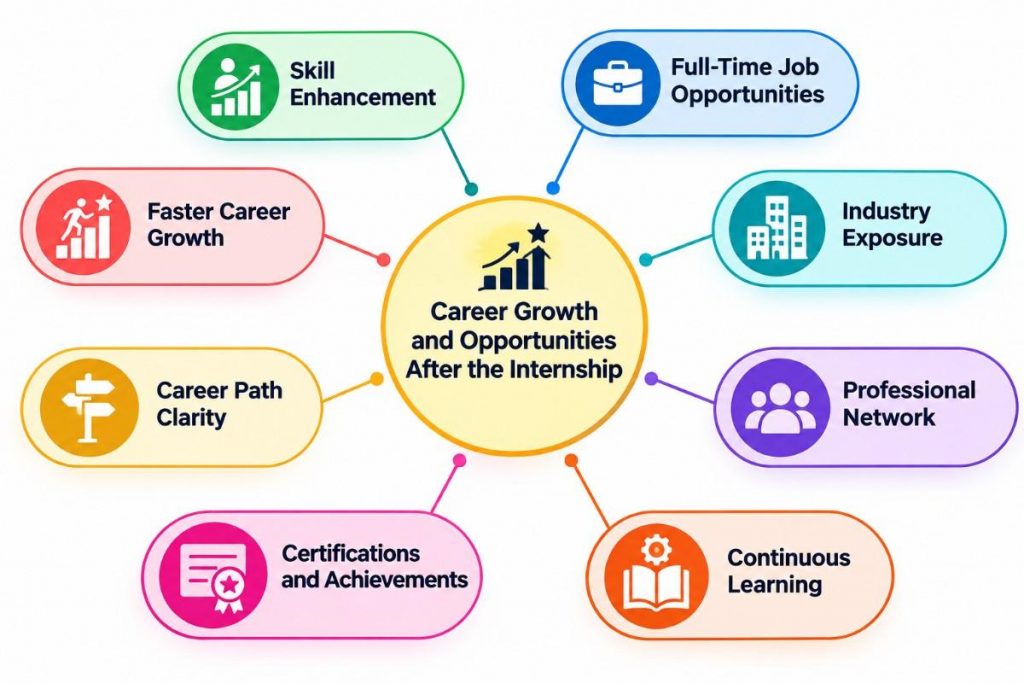
Completing a Generative AI internship creates excellent career opportunities in one of the fastest-growing fields in technology. The practical experience gained during the internship helps candidates build a strong portfolio by showcasing their ability to work with AI models, prompt engineering, machine learning frameworks, data processing, cloud platforms, and real-world AI applications. Employers highly value candidates with hands-on industry experience because they can contribute more effectively to AI projects from the beginning. Many interns receive pre-placement offers or full-time employment from the organizations where they complete their internships, while others use their experience to secure positions at leading technology companies, startups, research organizations, consulting firms, and multinational enterprises. Career paths after a Generative AI internship include roles such as AI Engineer, Machine Learning Engineer, Prompt Engineer, NLP Engineer, Data Scientist, AI Research Assistant, AI Solutions Developer, MLOps Engineer, AI Product Specialist, and Intelligent Automation Engineer.
Conclusion: Is a Generative AI Internship the Right Career Choice?
A Generative AI internship is an excellent starting point for students, fresh graduates, and aspiring professionals who want to build a successful career in artificial intelligence and machine learning. It provides valuable real-world experience that goes far beyond classroom learning by allowing interns to work on live projects, collaborate with experienced AI engineers, and gain practical exposure to industry-standard tools, frameworks, and cloud technologies. Throughout the internship, participants develop technical skills in programming, prompt engineering, AI model evaluation, data processing, machine learning, API integration, and workflow automation while also improving important soft skills such as communication, teamwork, problem-solving, adaptability, and time management. To further strengthen these industry-relevant skills, enrolling in Gen AI Training can complement internship experience with structured, hands-on learning and expert guidance. These experiences help interns understand how artificial intelligence is transforming industries including healthcare, finance, education, e-commerce, manufacturing, media, marketing, cybersecurity, and software development. In addition to strengthening technical expertise, a Generative AI internship helps build confidence, create professional networks, develop an impressive portfolio, and significantly improve future job opportunities. As businesses continue investing heavily in AI-powered solutions, the demand for skilled AI professionals is expected to grow rapidly for many years. Whether your career goal is to become an AI Engineer, Machine Learning Engineer, Prompt Engineer, NLP Engineer, Data Scientist, AI Researcher, or Intelligent Automation Specialist, completing a Generative AI internship provides the practical knowledge, industry exposure, and strong foundation needed for long-term career success. For anyone passionate about artificial intelligence, a Generative AI internship is not just a learning opportunity but a powerful stepping stone toward a future-ready, rewarding, and highly sought-after career in the technology industry.