LMS
LMS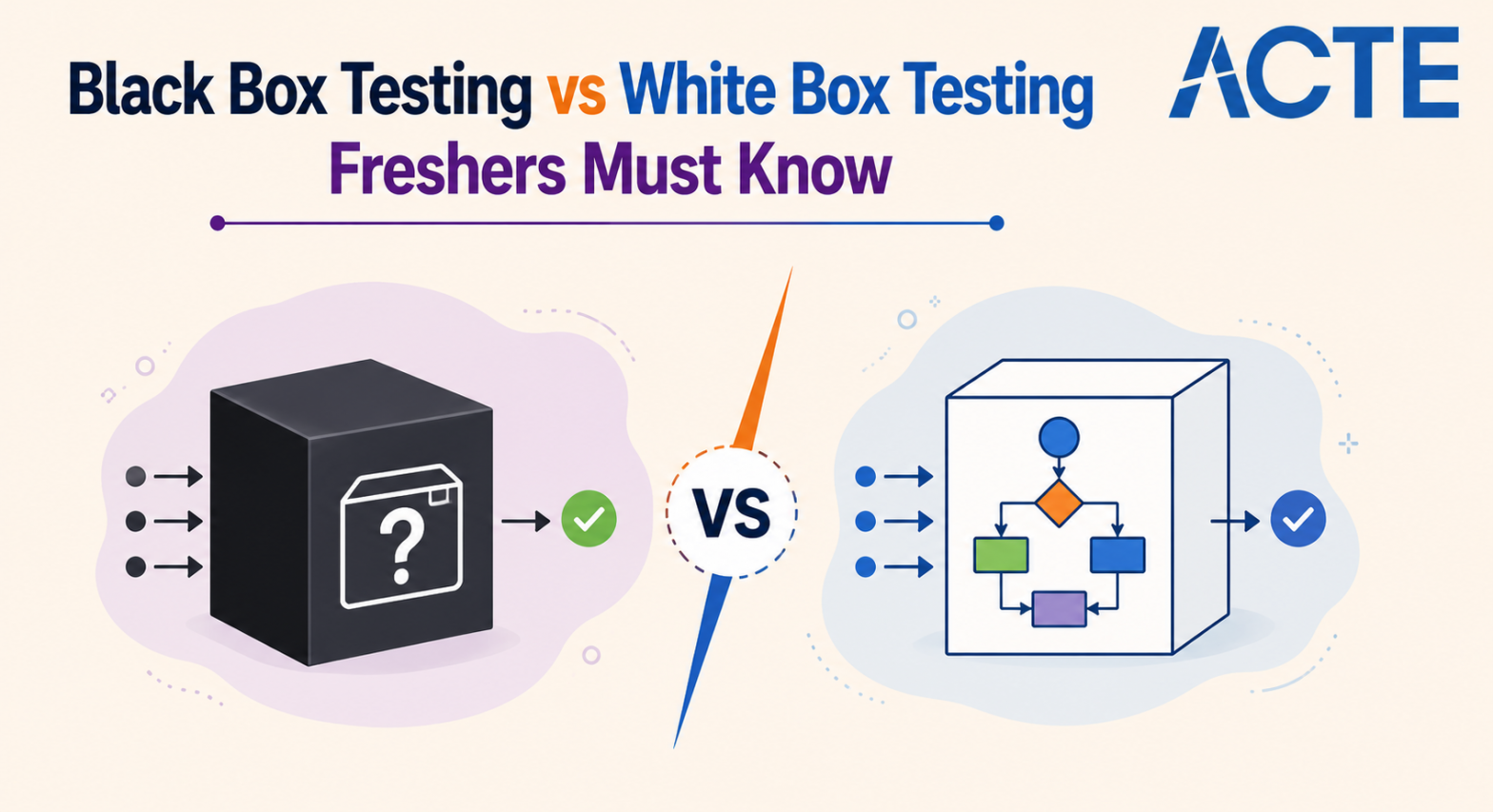
Last updated on 15th Jul 2026| 11379

- Introduction to Black Box Testing and White Box Testing
- Fundamentals of Black Box Testing
- Fundamentals of White Box Testing
- Major Differences Between Black Box Testing and White Box Testing
- Black Box Testing Techniques Every Fresher Should Know
- White Box Testing Techniques Every Fresher Should Know
- When to Use Black Box Testing and White Box Testing
- Skills Required for Black Box and White Box Testing
- Career Opportunities and Future Scope in Software Testing
- Conclusion: Black Box Testing vs White Box Testing – Which Should Freshers Learn?
Introduction to Black Box Testing and White Box Testing
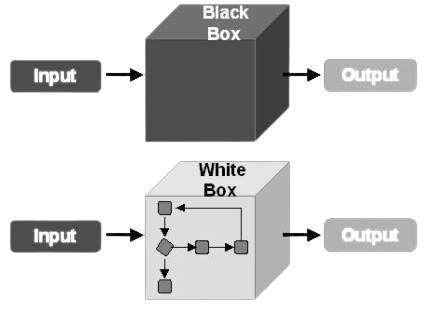
Software testing is an essential part of the Software Development Life Cycle (SDLC) because it helps ensure that applications work correctly, securely, and efficiently before they are delivered to users. Every software product, whether it is a banking application, e-commerce website, healthcare system, or mobile app, must be thoroughly tested to identify defects and improve quality. Without proper testing, software may contain errors that can lead to poor user experience, security vulnerabilities, financial losses, and customer dissatisfaction. Professionals can strengthen their practical knowledge by enrolling in Software Testing Training, which covers industry-relevant testing concepts and techniques. Among the many testing approaches used in the industry, Black Box Testing and White Box Testing are two of the most important methods that every fresher should understand. Black Box Testing focuses on testing the functionality of the software without looking at the internal source code. Testers verify inputs, outputs, and user interactions to ensure that the application behaves according to requirements. White Box Testing, on the other hand, examines the internal code, logic, conditions, and program structure to validate that the software works correctly from the inside. For freshers entering the software testing field, understanding the difference between these two approaches is extremely important. Black Box Testing helps testers think from an end-user perspective, while White Box Testing develops technical and programming-related skills. Modern software companies often use both methods together to achieve better software quality, improve test coverage, and detect defects at different stages of development. By learning these testing concepts, freshers can build a strong foundation and prepare themselves for successful careers in software quality assurance and testing.
Fundamentals of Black Box Testing
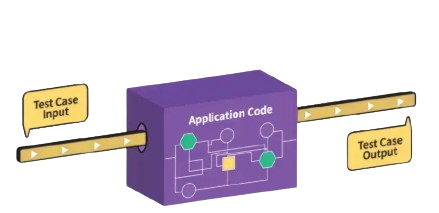
Black Box Testing is a software testing method in which the tester evaluates the functionality of an application without having knowledge of its internal code, design, or implementation. The tester interacts with the software as an end user would, providing inputs and verifying whether the outputs match the expected results. Since the internal working of the application is hidden from the tester, it is called “Black Box” testing. The primary objective of Black Box Testing is to ensure that the software behaves according to business requirements and user expectations. Testers focus on features, functionality, system behavior, and overall application performance from the user’s perspective. This approach is widely used in functional testing, system testing, integration testing, and user acceptance testing because it helps identify defects that affect the end-user experience. Black Box Testing is also one of the key concepts covered Different Types of Software Testing, helping learners recognize where it fits within the overall software testing process. One of the biggest advantages of Black Box Testing for freshers is that it does not require programming knowledge. Beginners can start learning software testing by understanding requirements, preparing test cases, executing tests, and reporting defects. It develops analytical thinking, attention to detail, and problem-solving skills while helping testers understand how real users interact with software applications. In real-world projects, Black Box Testing plays a crucial role in verifying that all features work correctly before the application is released. Even organizations that heavily use automation and advanced testing techniques continue to perform Black Box Testing because validating software from the user’s perspective remains essential for delivering high-quality products.
Fundamentals of White Box Testing
White Box Testing is a software testing method that examines the internal structure, source code, logic, and program flow of an application. Unlike Black Box Testing, testers or developers performing White Box Testing have access to the code and understand how the software is implemented internally. The goal is to verify that the code works correctly, all logical paths execute properly, and potential defects are identified before the software reaches users. This testing approach focuses on validating statements, branches, conditions, loops, functions, and execution paths within the program. By analyzing the internal code, testers can identify issues such as logical errors, incorrect conditions, unreachable code, security vulnerabilities, and performance-related problems. White Box Testing is commonly performed during unit testing and integration testing stages of software development.
Get Your Software Testing Certification by Learning from Industry-Leading Experts and Advancing Your Career with ACTE’s Software Testing Course.
Major Differences Between Black Box Testing and White Box Testing
| Feature | Black Box Testing | White Box Testing |
|---|---|---|
| Knowledge of Code | Internal code is not required. | Internal code knowledge is required. |
| Testing Focus | Tests software functionality and user behavior. | Tests code structure, logic, and execution paths. |
| Performed By | Testers, QA engineers, and end-user testers. | Developers and technical testers. |
| Programming Knowledge | Generally not required. | Usually required. |
| Main Objective | Verify software meets requirements. | Verify code works correctly internally. |
| Testing Level | Functional, system, and acceptance testing. | Unit and integration testing. |
| Test Case Basis | Requirements and user scenarios. | Source code and program logic. |
| Defects Found | Missing features, incorrect outputs, UI issues. | Logical errors, code defects, unreachable paths. |
| User Perspective | Strong focus on end-user experience. | Focus on internal implementation. |

Learn Software Testing Training Course to Build Your Skills
Weekday / Weekend BatchesSee Batch DetailsBlack Box Testing Techniques Every Fresher Should Know
Understanding these Black Box Testing techniques helps freshers build strong software testing skills and practical knowledge. Learners looking to gain hands-on experience can also enroll in Software Testing Training to master industry-standard testing tools, real-time projects, and testing methodologies.
- Equivalence Partitioning: Black Box Testing divides input data into different groups, known as equivalence classes, where each group is expected to behave similarly. Instead of testing every possible input, testers select one representative value from each class, reducing the number of test cases while maintaining test coverage.
- Boundary Value Analysis: This technique focuses on testing values at the boundaries of input ranges because defects are more likely to occur at these points. Testers verify the minimum, maximum, just below, and just above boundary values to ensure that the application correctly handles edge conditions.
- Decision Table Testing: Decision Table Testing is used when software behavior depends on multiple input conditions and business rules. Testers create a decision table containing various combinations of conditions and expected outcomes to ensure that every possible scenario is verified accurately.
- State Transition Testing: This technique validates how an application changes from one state to another based on user actions or system events. It is commonly applied to systems such as login modules, ATM machines, and online booking applications where different states influence software behavior.
- Error Guessing: Error Guessing relies on the tester’s experience, domain knowledge, and understanding of common software defects. Testers predict areas where failures are likely to occur and design additional test cases that may not be covered by formal testing techniques.
- Use Case Testing: Use Case Testing verifies that the software functions correctly from an end-user perspective by testing complete business scenarios. It ensures that all functional requirements are satisfied and that users can successfully perform their intended tasks without issues.
White Box Testing Techniques Every Fresher Should Know
- Statement Coverage: Statement Coverage ensures that every executable statement in the program is executed at least once during testing. This technique helps identify untested code segments and improves the overall quality of software by increasing test coverage.
- Branch Coverage: Branch Coverage verifies that every decision point in the program, such as if-else or switch statements, is tested for all possible outcomes. It ensures that each logical branch behaves correctly under different conditions.
- Path Coverage: Path Coverage focuses on testing all possible execution paths within the software. By validating different logical paths, testers can identify hidden defects that may appear only under specific execution sequences.
- Condition Coverage: Condition Coverage evaluates every individual condition in a decision statement by testing both true and false outcomes. This approach helps detect logical errors that may not be identified through statement or branch coverage alone.
- Loop Testing: Loop Testing verifies the correctness of loops by checking different execution scenarios such as zero iterations, single iteration, multiple iterations, and maximum allowable iterations. This ensures that loops execute and terminate correctly.
- Control Flow Testing: Control Flow Testing analyzes the order in which program statements are executed. Modern testing platforms increasingly enhance these techniques through intelligent automation and code analysis, making AI-Powered Software Testing an important topic for freshers to explore. It verifies that the software follows the intended execution flow and that control structures work correctly without unexpected behavior.

Get JOB Oriented Software TestingI Training for Beginners By MNC Experts
- Instructor-led Sessions
- Real-life Case Studies
- Assignments
When to Use Black Box Testing and White Box Testing
Black Box Testing and White Box Testing are used at different stages of software development depending on the testing objectives and project requirements. Choosing the correct testing method helps improve software quality, reduce defects, and ensure reliable application performance. Freshers should understand when each approach is most effective because software companies often combine both methods to achieve comprehensive testing. Those looking to strengthen their practical skills can also enroll in Software Testing Training to gain hands-on experience with real-time testing tools, automation frameworks, and industry best practices. Knowing the appropriate situations for each testing technique enables testers to create better test strategies and contribute more effectively to software development projects. Black Box Testing is primarily used when the focus is on validating the functional behavior of an application without considering its internal implementation. It is highly suitable during functional testing, system testing, integration testing, and user acceptance testing, where the objective is to verify that the software meets customer requirements and performs as expected. Testers evaluate different user scenarios, validate inputs and outputs, identify missing functionalities, and ensure that the application delivers a smooth and reliable user experience. Since Black Box Testing does not require programming knowledge, it is widely adopted by quality assurance teams and freshers beginning their careers in software testing. White Box Testing is generally applied during the development phase when developers or technical testers have access to the application’s source code. It is mainly used in unit testing and integration testing to verify the internal logic, algorithms, decision-making structures, loops, and execution paths within the software. By examining the code directly, testers can identify logical errors, security vulnerabilities, inefficient programming practices, and unreachable code segments before the software is integrated into larger systems. This proactive approach improves software reliability and reduces the cost of fixing defects later in the development cycle. In modern software development environments such as Agile, DevOps, and Continuous Integration/Continuous Deployment (CI/CD), both Black Box Testing and White Box Testing play complementary roles. White Box Testing helps developers detect and fix coding issues during development, while Black Box Testing ensures that the completed application satisfies business requirements and provides a positive user experience. Using both techniques together increases test coverage, minimizes software defects, enhances application stability, and contributes to the delivery of high-quality software products. For freshers, understanding when and how to apply these testing methods provides a strong foundation for building a successful career in software testing and quality assurance.
Want to Master Software Testing? Explore the Software Testing Master Program Offered at ACTE Today!
Skills Required for Black Box and White Box Testing
- Software Testing Fundamentals: Freshers should understand SDLC, STLC, testing levels, testing types, defect life cycle, and quality assurance concepts to build a strong foundation in software testing.
- Test Case Design and Execution: The ability to design effective test cases, execute them systematically, compare expected and actual results, and report defects accurately is essential for successful software testing.
- Programming Knowledge: Basic programming skills in languages such as Java, Python, C++, or JavaScript help freshers understand software logic and perform White Box Testing effectively.
- Analytical and Problem-Solving Skills: Testers should be able to analyze software requirements, identify possible defect scenarios, and create efficient testing strategies for different applications. These technical and analytical abilities are also valued by leading employers, as explained in QA Careers at Capgemini.
- Debugging Skills: Understanding debugging techniques helps identify the root cause of software defects and enables better collaboration with development teams during issue resolution.
- Communication and Documentation Skills: Testers must prepare clear bug reports, maintain testing documentation, and communicate testing results effectively with developers, managers, and stakeholders.
Want to Learn About Software Testing? Explore Our Software Testing Interview Questions and Answers Featuring the Most Frequently Asked Questions in Job Interviews.
Career Opportunities and Future Scope in Software Testing
Software testing has become one of the fastest-growing career domains in the IT industry because every software application requires quality assurance before reaching customers. Organizations developing banking systems, healthcare applications, e-commerce platforms, cloud solutions, and mobile applications continuously recruit skilled testing professionals to ensure software reliability and customer satisfaction. Freshers usually begin their careers as Manual Testers, QA Engineers, Software Test Engineers, or Associate Test Engineers, where they gain practical experience in software validation, defect reporting, and testing methodologies. Candidates preparing for leading IT companies can also explore How to Get Hired as a Software Tester at TCS to understand the skills and preparation required for a successful testing career. As professionals develop expertise in both Black Box Testing and White Box Testing, they can progress into advanced roles such as Automation Test Engineer, Software Development Engineer in Test (SDET), API Test Engineer, Performance Test Engineer, Security Tester, Test Lead, QA Manager, and Test Architect. Emerging technologies such as Artificial Intelligence (AI), Machine Learning (ML), Cloud Computing, DevOps, and Continuous Integration/Continuous Deployment (CI/CD) are increasing the demand for skilled software testers. Freshers who continuously improve their programming knowledge, automation skills, API testing expertise, and testing tool proficiency will enjoy excellent long-term career growth, higher salaries, and opportunities to work on innovative software projects across various industries.
Conclusion: Black Box Testing vs White Box Testing – Which Should Freshers Learn?
Black Box Testing and White Box Testing are both fundamental software testing approaches that contribute significantly to software quality and reliability. Black Box Testing focuses on validating software functionality from the user’s perspective without examining the internal source code, making it ideal for verifying business requirements, user interfaces, and application behavior. White Box Testing, on the other hand, concentrates on analyzing the internal code structure, program logic, execution paths, and algorithms to ensure that software components function correctly and efficiently. Since both testing methods serve different purposes, they complement each other rather than compete. For freshers, the best approach is to begin by learning the fundamentals of Black Box Testing because it builds a strong understanding of software testing concepts, test case design, and defect reporting. After gaining confidence in testing fundamentals, they should gradually develop programming skills and learn White Box Testing to understand software internals and improve technical expertise. To gain practical exposure to real-world testing projects, automation tools, and industry-standard practices, enrolling in Software Testing Training can further strengthen your technical skills and career prospects. Mastering both approaches enhances problem-solving abilities, increases employability, and prepares freshers for modern software development practices. By continuously learning new testing tools, automation frameworks, and emerging technologies, fresh graduates can build a successful and rewarding career in the software testing industry.