LMS
LMS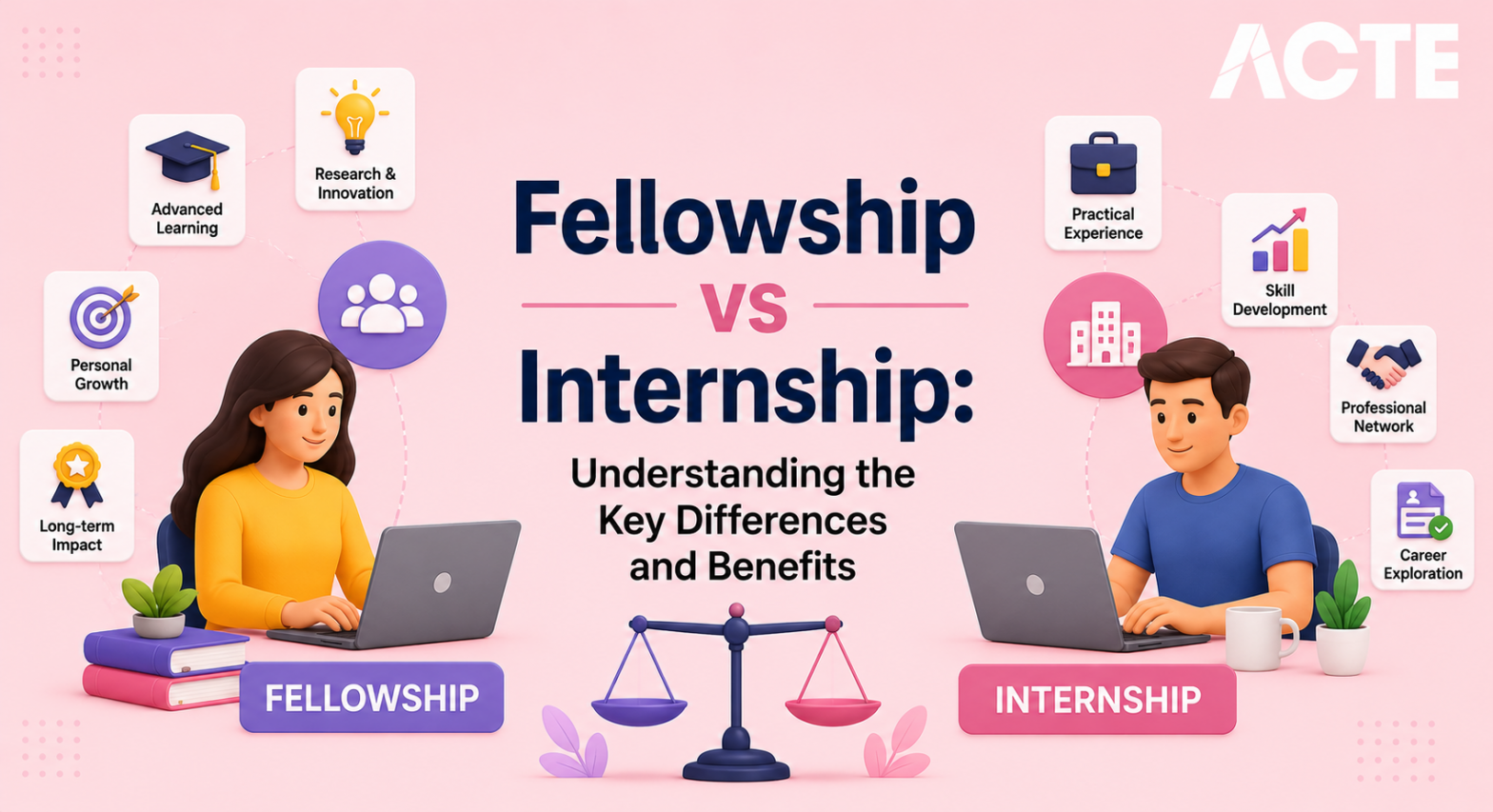
Last updated on 02nd Jul 2026| 12191

- Introduction to Fellowships and Internships
- What is an Internship? Definition and Overview
- What is a Fellowship? Meaning and Purpose
- Key Differences Between Fellowship and Internship
- Eligibility Criteria for Fellowships vs Internships
- Duration and Structure Comparison
- Skills Gained from Internships
- Skills and Benefits of Fellowships
- How to Choose Between a Fellowship and an Internship
- Conclusion: Which Path is Right for You?
Introduction to Fellowships and Internships
Fellowships and internships are two important pathways that help students and early-career professionals gain practical experience, develop skills, and build strong career foundations. While both provide exposure to real-world work environments, they differ in structure, purpose, and level of responsibility. Internships are typically short-term training programs offered by companies or organizations to help students understand industry practices and gain hands-on experience. If you are planning to begin your career, learning 10 Essential Internships Tips can help you make the most of your internship experience. Fellowships, on the other hand, are more advanced and often focus on research, leadership development, or specialized training in a specific field. They are usually competitive and may include funding or stipends. Understanding the difference between these two opportunities helps students choose the right path based on their career goals, academic level, and professional interests. This section introduces the concept of both programs and sets the foundation for a deeper comparison in the following sections.
What is an Internship? Definition and Overview
An internship is a short-term work experience program designed primarily for students or recent graduates to gain practical exposure in a professional environment. Internships are offered by companies, startups, government organizations, and NGOs across various fields such as IT, marketing, finance, data science, and engineering. The main goal of an internship is to help individuals apply theoretical knowledge in real-world situations while learning industry tools, workflows, and professional behavior. Internships can be paid or unpaid, and their duration typically ranges from a few weeks to several months. To better understand the advantages and challenges of different internship formats, you can explore Paid Vs Unpaid Internships. Interns usually work under the supervision of experienced professionals and are assigned tasks or projects that contribute to the organization. This experience helps build technical skills, communication abilities, teamwork, and problem-solving skills. Internships also play a crucial role in enhancing resumes and improving job opportunities after graduation, making them an essential step in career development.
Interested in Obtaining Your Python Certificate? View The Python Developer Course Offered By ACTE Right Now!
What is a Fellowship? Meaning and Purpose
A fellowship is a highly competitive and structured program that provides individuals with opportunities for advanced learning, research, leadership development, and specialized professional training. Unlike internships, which primarily focus on gaining practical work experience, fellowships are generally designed for graduates, postgraduates, researchers, or professionals who already possess foundational knowledge and wish to deepen their expertise in a particular field. Before choosing a career-building opportunity, it is helpful to understand the differences between Understanding Unpaid Internships and other professional development programs. Fellowships are offered by universities, government agencies, research institutions, nonprofit organizations, multinational companies, and international organizations to support innovation, academic excellence, and professional growth. Depending on the program, fellows may conduct independent research, contribute to high-impact projects, develop innovative solutions, collaborate with industry experts, or participate in policy-making and community initiatives.
Many fellowships provide financial benefits such as stipends, research grants, travel allowances, tuition support, or living expenses, allowing participants to focus entirely on their learning and research objectives. Fellows also gain access to mentorship, networking opportunities, workshops, conferences, and leadership training that help expand their professional skills and industry connections. Because fellowship programs are highly prestigious, the selection process is usually rigorous and based on academic excellence, research experience, technical expertise, leadership potential, and demonstrated achievements. Successfully completing a fellowship enhances career prospects, strengthens professional credibility, and prepares individuals for leadership positions in academia, research, industry, entrepreneurship, government, and public service.
To Explore Python Training Course in Depth, Check Out Our Comprehensive Python Online Training To Gain Insights From Our Experts!
Key Differences Between Fellowship and Internship
| Aspect | Internship | Fellowship |
|---|---|---|
| Purpose | To gain practical work experience and industry exposure | To develop advanced skills, research, or leadership expertise |
| Target Group | Students and fresh graduates | Graduates, researchers, or experienced professionals |
| Nature of Work | Training-based, supervised tasks | Independent or semi-independent high-level projects |
| Duration | Short-term (weeks to a few months) | Medium to long-term (months to years) |
| Selection Process | Less competitive, based on basic eligibility | Highly competitive, based on merit and achievements |
| Focus Area | Skill development and job readiness | Specialization, research, or innovation |
| Compensation | May be paid or unpaid | Often includes stipend, grant, or funding |
| Supervision | High level of supervision | Minimal supervision, more autonomy |
| Outcome | Work experience and employability | Expertise, leadership growth, or academic contribution |
| Career Stage | Entry-level career step | Advanced or mid-career development stage |

Develop Your Skills with Python Developer Certification Course
Weekday / Weekend BatchesSee Batch DetailsEligibility Criteria for Fellowships vs Internships
- Basic Educational Requirement: Internships are generally open to students currently pursuing or recently completed a degree. Top 10 Best Paying Internship Opportunities in India to understand the qualifications and skills employers look for.
- Academic Performance: For internships, average to good academic performance is usually sufficient depending on the company. Fellowships are more competitive and often require excellent academic records, publications, or outstanding achievements in a specific field.
- Experience Level: Internships are designed for beginners with little or no professional experience. Fellowships expect candidates to already have relevant experience in research, projects, or professional work in their chosen domain or specialization.
- Skill Requirements: Internships require basic foundational skills such as communication, teamwork, or basic technical knowledge. Fellowships demand advanced, specialized skills in research, leadership, or domain expertise relevant to the program focus.
- Selection Process: Internship selection is usually simple, involving resume screening and basic interviews or tests. Fellowship selection is highly competitive, often including essays, research proposals, interviews, and detailed evaluation of achievements.
- Time Period: Internships typically last from a few weeks to a few months depending on company requirements. Students looking for flexible learning opportunities can also explore Remote Internships Explained to understand how virtual internships are structured.
- Work Structure: Internships follow a structured and supervised work environment where tasks are assigned by mentors. Fellowships are more independent, allowing individuals to design, manage, and execute their own projects with minimal supervision.
- Learning Approach: Internships focus on practical, on-the-job training where participants learn by doing assigned tasks. Fellowships focus on deep learning, research, and innovation, encouraging critical thinking and independent exploration of topics.
- Project Type: Interns are usually given small or supportive tasks that contribute to larger team goals. Fellows work on high-impact, independent, or research-based projects that may influence organizations, policy, or academic outcomes.
- Flexibility: Internships usually have fixed working hours and schedules similar to regular jobs. Fellowships often provide flexible timing, allowing participants to work at their own pace while meeting project deadlines and milestones.
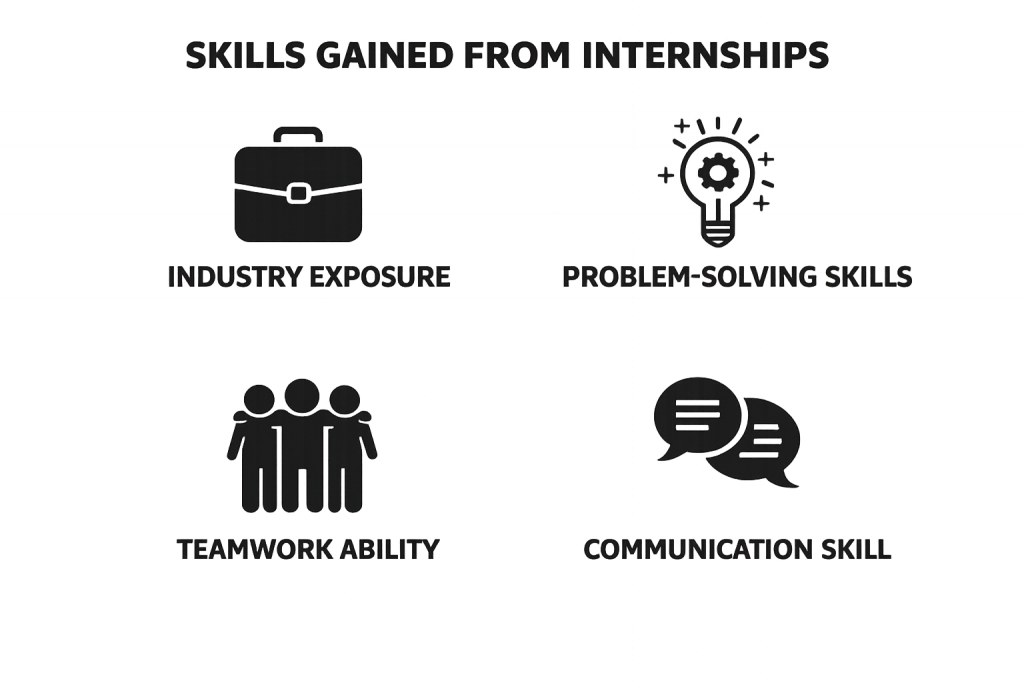
- Technical Skills: Internships help develop practical technical skills such as programming, data analysis, marketing tools, or business software. These skills are gained through real-world tasks that prepare students for full-time professional roles.
- Communication Skills: Interns improve communication by interacting with team members, writing reports, attending meetings, and presenting work. This helps build confidence in professional communication and workplace collaboration.
- Teamwork Ability: Internships teach how to work effectively in teams by collaborating with colleagues on shared tasks. Interns learn coordination, responsibility sharing, and how to contribute to group success in a professional environment.
- Problem-Solving Skills: Interns face real workplace challenges and learn how to analyze problems and find practical solutions. This improves logical thinking and the ability to handle tasks under deadlines and pressure. Students preparing for technical can also explore How to get a data science internship as a fresher to understand the skills and preparation required.
- Industry Exposure: Internships provide exposure to real industry environments, tools, workflows, and organizational culture. This helps students understand how companies operate and what skills are needed for future career growth.
- Advanced Expertise: Fellowships help individuals develop deep expertise in a specific domain such as research, policy, or technology. Participants gain advanced knowledge that goes beyond basic academic or entry-level understanding.
- Leadership Skills: Fellows often lead independent or high-impact projects, which helps build strong leadership skills. They learn decision-making, strategic planning, and how to manage complex tasks effectively and independently.
- Research Skills: Fellowships improve research, data analysis, and critical thinking through hands-on projects. Learn more from My Data Science Internship Experience to understand real-world career development.
- Networking Opportunities: Fellowships connect individuals with experts, mentors, and global professionals. These connections help in career growth, knowledge sharing, and accessing future opportunities in academia or industry.
- Career Advancement: Fellowships significantly enhance career prospects by providing prestige, recognition, and specialized experience. They open doors to higher academic roles, leadership positions, and advanced professional opportunities.
Gain Your Master’s Certification in Python Developer by Enrolling in Our Python Master Program Training Course Now!
Duration and Structure Comparison
Are You Preparing for Python Jobs? Check Out ACTE’s Python Interview Questions and Answers to Boost Your Preparation!
Skills Gained from Internships
Skills and Benefits of Fellowships
How to Choose Between a Fellowship and an Internship
Choosing between a fellowship and an internship depends on your current education level, career goals, and long-term aspirations. If you are a student or a fresher looking to gain practical exposure, develop basic industry skills, and understand workplace environments, an internship is the right choice. It helps you build foundational skills, explore different career paths, and improve your employability for entry-level jobs. To better understand career opportunities across different domains, you can explore Marketing Internships Explained, which provides insights into internship roles and career growth. Internships are ideal when you are still learning and want hands-on experience in a guided, structured environment. On the other hand, if you already have strong academic knowledge, research experience, or professional exposure, a fellowship may be more suitable. Fellowships are designed for individuals who want to specialize in a particular field, work on advanced research or leadership projects, and gain deeper expertise. They are more competitive and often provide financial support, mentorship, and opportunities to work on impactful or independent projects. Fellowships are best for those aiming for academic growth, policy work, innovation, or leadership roles. Ultimately, the choice depends on where you are in your career journey. If you are at the beginning stage, internships help you build a strong base. If you are at an advanced stage and want to specialize or lead, fellowships provide the next level of growth and recognition.
Conclusion: Which Path is Right for You?
There is no single “better” option between a fellowship and an internship, as both serve different purposes in career development. Internships are best suited for beginners who want to explore industries, gain practical experience, and improve job readiness. They act as a bridge between academic learning and professional work. If you are planning to secure an internship at a leading company, following Google Internship Student Roadmap can help you prepare effectively. Fellowships, however, are designed for individuals who are ready to dive deeper into a subject, contribute to meaningful research or projects, and develop advanced expertise. If your goal is to start your career, build skills, and understand how industries work, an internship is the right starting point. If your goal is to become a subject expert, researcher, or leader in your field, a fellowship is the better path. Many successful professionals follow both paths at different stages, starting with internships and later progressing to fellowships for specialization. The key is to choose based on your current skills, interests, and long-term career vision.