LMS
LMS
Last updated on 14th Aug 2026| 12267

- Introduction to Oracle Career Opportunities at Capgemini
- Oracle Functional Consultant Job Roles at Capgemini
- Oracle Technical Developer and Integration Career Opportunities
- Oracle ERP, HCM, SCM, and Finance Consultant Roles
- Oracle Database Administrator and Cloud Infrastructure Careers
- Oracle Integration Cloud and Technical Lead Opportunities
- Essential Oracle Skills, Tools, and Certifications
- Career Progression from Oracle Consultant to Solution Architect
- Salary Growth and Long-Term Career Opportunities at Capgemini
- Conclusion: Building a Successful Oracle Career at Capgemini
Introduction to Oracle Career Opportunities at Capgemini
Oracle professionals at Capgemini can explore career opportunities across enterprise applications, cloud solutions, database technologies, integrations, consulting, and digital transformation. Current Capgemini openings demonstrate demand for professionals with expertise in Oracle E-Business Suite, Oracle Cloud, Finance, HCM, SCM, EPM, Integration Cloud, SQL, and PL/SQL. Depending on their specialization, professionals may work on implementation, configuration, application development, data migration, integration, production support, testing, or solution design. Professionals looking to strengthen their Oracle skills can consider an Oracle Course to build practical knowledge of relevant technologies and enterprise applications. Capgemini’s Oracle projects can involve collaboration with business stakeholders, technical teams, and clients to improve enterprise processes and modernize technology environments. Professionals can develop careers as Oracle Functional Consultants, Technical Developers, Integration Specialists, Cloud Consultants, Technical Leads, and Solution Architects. Capgemini also highlights extensive learning resources and certifications for career development. Building strong Oracle product knowledge, business-process understanding, technical expertise, communication skills, and implementation experience can help professionals progress toward increasingly specialized and leadership-oriented Oracle roles.
Oracle Functional Consultant Job Roles at Capgemini
Oracle Functional Consultants at Capgemini focus on understanding business requirements and configuring Oracle applications to support organizational processes. Depending on the specialization, consultants may work across Finance, HCM, SCM, Procurement, Order Management, Inventory, Planning, and other enterprise functions. Their responsibilities can include requirement gathering, business-process mapping, solution design, system configuration, testing, data migration, user support, documentation, and implementation activities. Professionals preparing for Oracle consulting opportunities can also review the Infosys Oracle Developer Selection Process to gain insights into Oracle-related technical and selection requirements. With experience, functional consultants can progress toward Senior Consultant, Functional Lead, Subject Matter Expert, Engagement Lead, or Solution Architect positions. For example, current Capgemini Oracle Finance roles involve configuration and data migration across Oracle E-Business Suite financial modules, while Oracle Cloud SCM roles emphasize requirements, process mapping, configuration, full lifecycle implementation, and integration with other enterprise systems. Functional consultants need a combination of Oracle application expertise and strong business-process knowledge because they often act as a bridge between business stakeholders and technical teams. Communication, documentation, analytical thinking, troubleshooting, and stakeholder-management skills are also important.
Get Your Oracle Certification by Learning from Industry-Leading Experts and Advancing Your Career with ACTE’s Oracle Training.
Oracle Technical Developer and Integration Career Opportunities
Oracle Technical Developers and Integration professionals at Capgemini work on developing, customizing, connecting, and maintaining Oracle-based enterprise solutions. Technical roles can require expertise in SQL, PL/SQL, APIs, database development, data migration, reporting, testing, and application integration. Current Capgemini Oracle Integration Cloud roles involve designing and developing integrations between Oracle ERP, HCM, SCM, Finance, CX, EPM, other cloud applications, and third-party systems.
Oracle ERP, HCM, SCM, and Finance Consultant Roles
| Job Role | Key Responsibilities | Important Skills |
|---|---|---|
| Oracle ERP Functional Consultant | Works with business teams to understand requirements, configure Oracle ERP applications, support implementations, perform testing, assist data migration, and improve enterprise processes. | Oracle ERP, configuration, requirement analysis, testing, data migration, business processes |
| Oracle HCM Consultant | Supports Oracle Human Capital Management solutions covering HR processes such as workforce management, employee data, payroll-related workflows, talent processes, and system integrations. | Oracle HCM Cloud, HR processes, configuration, reporting, testing, integrations |
| Oracle SCM Consultant | Works with supply chain processes such as procurement, inventory, order management, demand planning, supply planning, logistics, and related Oracle solutions. | Oracle SCM, procurement, inventory, planning, process mapping, analytics, integration |
| Oracle Finance Functional Consultant | Configures and supports financial applications covering areas such as Payables, Receivables, Assets, Cash Management, Purchasing, and taxation while assisting implementation and migration activities. | Oracle Financials, AP, AR, Assets, Cash Management, E-Business Tax, PL/SQL basics |
| Oracle EBS Finance Support Consultant | Provides functional support for Oracle EBS Finance modules, troubleshoots user issues, manages incidents, and supports finance processes such as R2R, P2P, and O2C. | Oracle EBS, GL, AP, AR, FA, CM, R2R, P2P, O2C, troubleshooting |
| Oracle Cloud Functional Consultant | Helps organizations implement and optimize Oracle Cloud applications by gathering requirements, configuring modules, supporting integrations, testing solutions, and working with business stakeholders. | Oracle Cloud, functional configuration, testing, implementation, integration, stakeholder management |
| Oracle Integration Consultant | Connects ERP, HCM, SCM, Finance, and other applications using Oracle Integration Cloud and related technologies to create reliable end-to-end business workflows. | OIC, REST APIs, SOAP, integration design, Oracle Cloud applications, technical documentation |
| Oracle Solution Architect | Designs end-to-end Oracle architectures, leads solution-design activities, supports integrations and migrations, and aligns Oracle Cloud solutions with business transformation requirements. | Oracle ERP/HCM, solution architecture, Cloud, integration, migration, leadership, stakeholder management |

Oracle Database Administrator and Cloud Infrastructure Careers
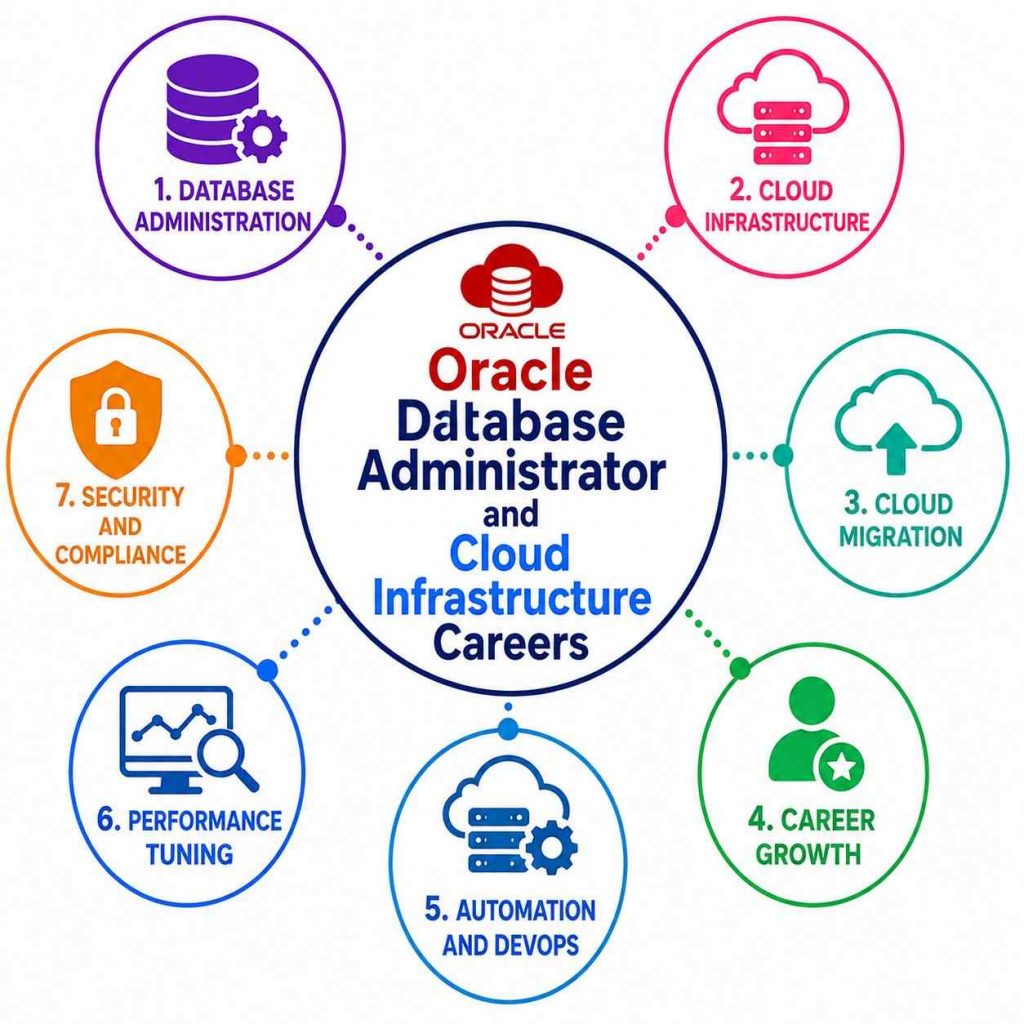
- Oracle Database Administration Oracle Database Administrators manage, maintain, and optimize enterprise database environments. Their responsibilities can include database installation, configuration, upgrades, patching, backup, recovery, monitoring, and troubleshooting to maintain reliable database operations.
- Database Performance Tuning DBAs monitor database performance and identify issues affecting application efficiency. Knowledge of SQL optimization, indexing, execution plans, memory management, and performance monitoring helps professionals improve database speed, stability, and resource utilization.
- Backup, Recovery, and High Availability Oracle professionals should understand backup and disaster-recovery strategies that protect critical business data. Knowledge of Oracle Recovery Manager (RMAN), Data Guard, replication, and high-availability concepts can be valuable for database infrastructure roles. Professionals planning their long-term growth can explore an Oracle Database Career Path to understand potential progression in database-focused roles.
- Oracle Cloud Infrastructure Oracle Cloud Infrastructure skills help professionals manage cloud-based compute, storage, networking, databases, identity, and security services. OCI knowledge can support organizations migrating traditional Oracle workloads into scalable cloud environments.
- Database Security and Access Management Database professionals help protect enterprise information by managing users, roles, privileges, authentication, auditing, and security policies. Understanding data protection and access-control practices is important for maintaining secure Oracle environments.
Oracle Integration Cloud and Technical Lead Opportunities
- Oracle Integration Cloud Development OIC professionals design and develop integrations connecting Oracle ERP, HCM, SCM, Finance, and other applications. Knowledge of integration patterns, adapters, mappings, transformations, and orchestration supports reliable business workflows.
- REST and SOAP API Integration Integration professionals should understand REST APIs, SOAP web services, JSON, XML, and authentication methods. These skills help connect Oracle applications with external platforms and exchange information securely between enterprise systems.
- Integration Monitoring and Troubleshooting Professionals monitor integrations, investigate failures, analyze logs, and resolve data or connectivity issues. Strong debugging and problem-solving abilities help maintain stable integrations across complex enterprise environments.
- Technical Lead Responsibilities Oracle Technical Leads coordinate development activities, review technical solutions, guide developers, resolve complex issues, and ensure that implementations meet project requirements. They may also communicate technical decisions to clients and stakeholders.
- Progressing Toward Integration Architecture Experienced OIC professionals can progress toward Integration Architect or Solution Architect roles. These positions require deeper knowledge of integration architecture, Oracle Cloud applications, security, scalability, governance, and enterprise solution design.

Get JOB Oriented Oracle Training for Beginners By MNC Experts
- Instructor-led Sessions
- Real-life Case Studies
- Assignments
Essential Oracle Skills, Tools, and Certifications
- SQL and PL/SQL Skills Strong SQL and PL/SQL knowledge is valuable for querying databases, developing procedures, troubleshooting data issues, creating reports, and supporting Oracle applications. Technical professionals should understand joins, functions, triggers, packages, and performance concepts.
- Oracle ERP and Cloud Application Knowledge Professionals should develop expertise in modules relevant to their career path, including Oracle ERP, Financials, HCM, SCM, EPM, or other Oracle Cloud applications. Functional knowledge should be supported by an understanding of real business processes.
- Oracle Integration and Development Tools Knowledge of Oracle Integration Cloud, REST and SOAP APIs, XML, JSON, Oracle APEX, Visual Builder, and related development technologies can strengthen profiles for technical, integration, and cloud-focused Oracle careers.
- Oracle Cloud Infrastructure Skills Understanding OCI services such as compute, storage, networking, databases, identity management, monitoring, and security can help professionals support cloud migrations and modern Oracle application environments.
- Oracle Certifications Oracle certifications aligned with areas such as Database, OCI, ERP, HCM, SCM, or Integration Cloud can validate specialized knowledge. Certifications are most valuable when combined with practical implementation, support, migration, or development experience.
Want to Master Oracle Training? Explore the Oracle Training Master Program Offered at ACTE Today!
Career Progression from Oracle Consultant to Solution Architect
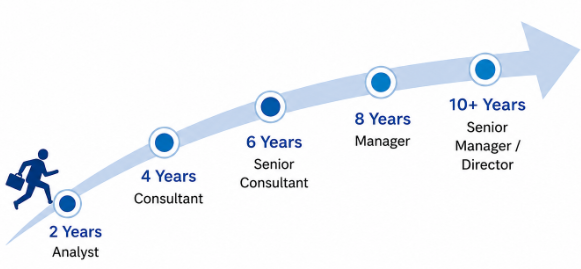
Career progression from an Oracle Consultant to a Solution Architect involves developing deeper functional knowledge, technical expertise, business understanding, and leadership capabilities. Professionals often begin as functional or technical consultants, working on configuration, development, integrations, testing, migration, support, and implementation activities. With experience, they can progress into Senior Consultant or Technical Lead roles where they handle complex requirements, guide team members, review solutions, and communicate with clients. Moving toward an Oracle Solution Architect position requires a broader understanding of Oracle ERP, HCM, SCM, Finance, databases, integrations, and cloud technologies. Professionals looking to strengthen their foundation can consider an Oracle Course to develop relevant technical and functional knowledge. Professionals should also strengthen their knowledge of Oracle Cloud Infrastructure, security, data migration, APIs, performance, scalability, and enterprise architecture. Solution Architects are expected to evaluate business requirements, design end-to-end solutions, identify technical risks, and coordinate with multiple teams. Strong communication, documentation, stakeholder management, and decision-making abilities become increasingly important at senior levels. Relevant Oracle certifications and experience with large implementation projects can further strengthen career development and prepare professionals for architecture and technology leadership opportunities.
Preparing for Oracle Training Job Interviews? Have a Look at Our Blog on Oracle Interview Questions and Answers To Ace Your Interview!
Salary Growth and Long-Term Career Opportunities at Capgemini
Salary growth for Oracle professionals at Capgemini can depend on experience, specialization, location, job level, project complexity, performance, and technical expertise. Professionals beginning in junior consulting or development roles can increase their earning potential as they gain implementation experience and progress toward Senior Consultant, Technical Lead, Functional Lead, Integration Architect, or Solution Architect positions. Specialized expertise in Oracle Cloud, ERP, HCM, SCM, Financials, OCI, OIC, databases, and enterprise integration can strengthen long-term career opportunities. Professionals who combine technical capabilities with business-process knowledge, client communication, project leadership, and solution-design skills may be better positioned for senior responsibilities. Building these skills through structured learning can help professionals prepare for evolving Oracle career opportunities, and an Oracle Course can provide relevant training in Oracle technologies and concepts.
Conclusion: Building a Successful Oracle Career at Capgemini
Building a successful Oracle career at Capgemini requires continuous development across technical expertise, functional knowledge, cloud technologies, and professional skills. Oracle professionals can pursue diverse career paths involving ERP, HCM, SCM, Financials, database administration, application development, Oracle Integration Cloud, and Oracle Cloud Infrastructure. Early-career professionals should focus on building strong fundamentals, understanding business processes, and gaining practical experience through implementation, support, integration, migration, and development projects. As experience grows, professionals can specialize in particular Oracle modules or broaden their expertise to pursue technical leadership and architecture positions. Professionals who want to strengthen their Oracle knowledge can consider an Oracle Course to build relevant technical and functional skills. Relevant certifications can help validate knowledge, while practical project experience demonstrates the ability to apply Oracle technologies to real business requirements. Communication, teamwork, stakeholder management, documentation, problem-solving, and leadership become increasingly valuable as professionals advance into senior positions. By staying current with Oracle Cloud technologies, strengthening both functional and technical capabilities, and taking on progressively complex responsibilities, professionals can create a strong foundation for long-term growth and pursue rewarding consulting, architecture, and leadership opportunities at Capgemini.