LMS
LMS
Last updated on 24th Jul 2026| 13292

- Introduction to Starting an AI Career with No Experience
- Can You Get an AI Job Without Experience?
- Understand the Fundamentals of Artificial Intelligence
- Learn Essential Programming Languages and Tools
- Build Strong Mathematics and Machine Learning Knowledge
- Develop Hands-on AI Projects and Build a Portfolio
- Earn AI Certifications and Complete Online Courses
- Gain Practical Experience Through Internships and Open-Source Contributions
- Prepare for AI Interviews and Build Professional Networks
- Top Entry-Level AI Jobs for Freshers
- Conclusion: Your Roadmap to Launching a Successful AI Career
Introduction to Starting an AI Career with No Experience
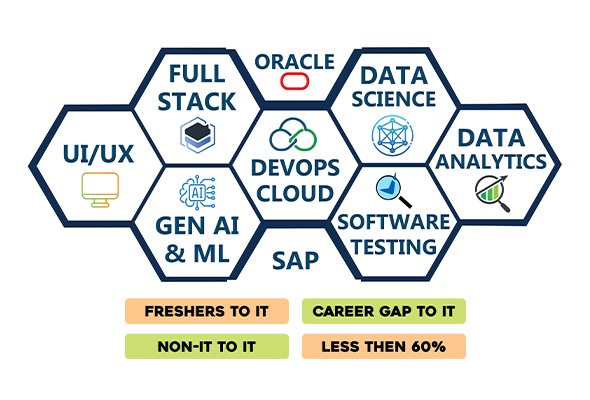
Starting a career in Artificial Intelligence (AI) without prior professional experience may seem challenging, but it has become more achievable than ever due to the availability of online learning platforms, open-source tools, industry-recognized certifications, and practical project opportunities. Enrolling in Artificial Intelligence Training can provide structured learning and hands-on experience for beginners. Artificial Intelligence has rapidly evolved into one of the fastest-growing technology fields, creating high demand for skilled professionals across industries such as healthcare, banking, finance, retail, manufacturing, education, cybersecurity, logistics, and e-commerce. Companies are actively looking for candidates who possess strong technical knowledge, problem-solving abilities, and practical skills rather than relying solely on years of work experience. This creates excellent opportunities for students, fresh graduates, career changers, and self-learners who are willing to invest time in learning AI concepts and developing hands-on expertise. A successful AI career begins with understanding programming, mathematics, machine learning, deep learning, data analysis, and cloud computing while gradually progressing toward advanced technologies such as Natural Language Processing, Computer Vision, Large Language Models (LLMs), Generative AI, AI Agents, and intelligent automation. Practical implementation is equally important because recruiters often evaluate portfolios, GitHub repositories, internships, hackathon participation, and real-world AI projects during the hiring process. Building recommendation systems, chatbots, image classification models, predictive analytics applications, and AI-powered automation tools demonstrates the ability to apply theoretical concepts to practical business problems. Continuous learning, consistency, curiosity, and adaptability are essential because Artificial Intelligence evolves rapidly with new frameworks, tools, and research emerging regularly. By following a structured learning roadmap, gaining practical experience through projects, earning recognized certifications, and actively participating in the AI community, anyone can successfully transition into the AI industry even without previous professional experience. With dedication and persistence, beginners can build rewarding careers that offer excellent salary packages, global employment opportunities, long-term job security, and the chance to contribute to groundbreaking technological innovations.
Can You Get an AI Job Without Experience?
Yes, it is entirely possible to secure an Artificial Intelligence job without previous work experience, provided you demonstrate strong technical skills, practical knowledge, and the ability to solve real-world problems using AI technologies. This is one reason why AI Is a Promising Career Option for IT Freshers continues to attract aspiring professionals. Modern technology companies increasingly prioritize skills, portfolios, certifications, internships, and project experience over traditional work history, especially for entry-level positions. Fresh graduates and self-taught learners who understand programming, machine learning, data analysis, mathematics, and AI fundamentals can compete successfully for junior AI roles by showcasing their abilities through practical implementations rather than relying solely on academic qualifications. Employers often evaluate GitHub repositories, personal AI projects, Kaggle competitions, hackathon participation, research contributions, technical blogs, and open-source involvement to assess a candidate’s capabilities. Building applications such as AI chatbots, recommendation systems, sentiment analysis tools, image recognition models, predictive analytics dashboards, and Generative AI applications demonstrates hands-on expertise and significantly improves employability. Completing certifications from recognized organizations such as Google, Microsoft, AWS, IBM, NVIDIA, and DeepLearning.AI further strengthens a candidate’s resume and validates industry-relevant skills. Internships, freelance projects, virtual work experiences, and collaborative open-source development also provide valuable practical exposure that compensates for limited professional experience. In addition to technical abilities, employers value communication, teamwork, analytical thinking, adaptability, and continuous learning because AI professionals frequently collaborate with multidisciplinary teams to develop innovative solutions. As Artificial Intelligence adoption continues to expand across every major industry, organizations are actively hiring motivated beginners who possess strong foundational knowledge, practical experience, and a willingness to continuously learn. Therefore, a lack of formal work experience should never discourage aspiring AI professionals, as dedication and persistence can successfully open the door to a rewarding career in Artificial Intelligence.
Ready to Get Certified in Artificial Intelligence ? Explore the Program Now Artificial Intelligence Online Training Offered By ACTE Right Now!
Understand the Fundamentals of Artificial Intelligence
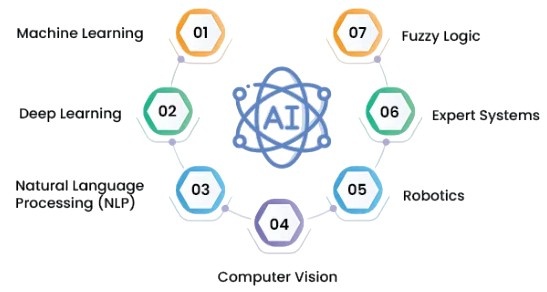
Before pursuing advanced Artificial Intelligence specializations, beginners should first develop a strong understanding of the core concepts that form the foundation of AI technologies. Enrolling in Artificial Intelligence Training helps learners build a structured foundation through expert guidance and practical exercises. Artificial Intelligence is a broad field that enables machines to perform tasks that typically require human intelligence, including learning, reasoning, decision-making, language understanding, image recognition, and problem-solving. Learning fundamental topics such as Machine Learning, Deep Learning, Neural Networks, Natural Language Processing (NLP), Computer Vision, Reinforcement Learning, Expert Systems, and Generative AI provides the conceptual knowledge required for building intelligent applications. Beginners should also understand how AI models are trained, how datasets are prepared, the importance of data preprocessing, model evaluation techniques, and the ethical considerations involved in developing responsible AI systems. Familiarity with concepts such as supervised learning, unsupervised learning, classification, regression, clustering, feature engineering, and model optimization creates a solid technical foundation before progressing to advanced AI frameworks.

Develop Your Skills with Artificial Intelligence Training
Weekday / Weekend BatchesSee Batch DetailsBuild Strong Mathematics and Machine Learning Knowledge
A strong understanding of mathematics and machine learning is one of the most important requirements for building a successful career in Artificial Intelligence. Although many beginner-friendly AI tools simplify model development, professionals who understand the mathematical principles behind AI algorithms are better equipped to develop accurate, efficient, and reliable solutions. Beginners should first learn statistics, probability, linear algebra, calculus, and optimization because these subjects form the mathematical foundation of machine learning and deep learning algorithms. Concepts such as vectors, matrices, derivatives, probability distributions, hypothesis testing, correlation, regression, and gradient descent help explain how AI models learn from data and improve over time. Alongside mathematics, learners should study supervised learning, unsupervised learning, reinforcement learning, classification, regression, clustering, decision trees, random forests, support vector machines, ensemble learning, neural networks, and deep learning techniques. Understanding feature engineering, data preprocessing, model evaluation, hyperparameter tuning, cross-validation, overfitting, underfitting, bias, variance, and performance metrics such as accuracy, precision, recall, and F1-score is equally important. Beginners should practice implementing these concepts using Essential Programming Languages for AI Development and Python libraries such as Scikit-learn, TensorFlow, PyTorch, Pandas, and NumPy while working with real-world datasets. Practical experimentation strengthens theoretical understanding and improves problem-solving abilities during interviews and real-world AI projects. As learners become more confident, they can gradually explore advanced topics including transformer architectures, Large Language Models (LLMs), Generative AI, Computer Vision, Natural Language Processing, AI Agents, and Retrieval-Augmented Generation (RAG). Building a solid foundation in mathematics and machine learning not only improves technical expertise but also enables professionals to understand research papers, optimize AI models, solve complex business challenges, and adapt to emerging AI technologies throughout their careers.
To ExploreArtificial Intelligence in Depth, Check Out Our Comprehensive Artificial Intelligence Online Training To Gain Insights From Our Experts!
Develop Hands-on AI Projects and Build a Portfolio
Practical experience is one of the most valuable assets for anyone starting an AI career without professional work experience. Employers often evaluate a candidate’s ability to apply theoretical concepts to real-world problems, making hands-on projects far more valuable than simply completing online courses. Beginners can strengthen their practical skills through Artificial Intelligence Training, which includes real-time projects and portfolio development. They should start by building small yet meaningful projects such as spam email classifiers, house price prediction models, movie recommendation systems, sentiment analysis applications, handwritten digit recognition, customer churn prediction, image classification systems, chatbot applications, and fraud detection models. As skills improve, learners can develop more advanced applications using Generative AI, Large Language Models (LLMs), AI Agents, Retrieval-Augmented Generation (RAG), document question-answering systems, AI-powered virtual assistants, intelligent search engines, and automated content generation platforms. Every project should include clear documentation, source code, datasets, implementation details, screenshots, and deployment links whenever possible. Maintaining an active GitHub repository demonstrates coding ability, project organization, version control knowledge, and continuous learning, while publishing technical blogs or LinkedIn posts about completed projects further showcases communication skills and subject expertise. Participating in Kaggle competitions, AI hackathons, open-source contributions, and collaborative research projects provides additional exposure to real-world datasets and industry-standard development practices. Beginners should also deploy projects using cloud platforms such as Microsoft Azure, AWS, Google Cloud, or Hugging Face Spaces to gain practical experience with production-ready AI applications. A strong portfolio not only increases interview confidence but also distinguishes candidates from others with similar academic qualifications. By consistently building diverse AI projects, documenting achievements, and demonstrating practical implementation skills, beginners significantly improve their chances of securing internships, entry-level AI positions, freelance opportunities, and long-term career growth.
Earn AI Certifications and Complete Online Courses
- Choose Industry-Recognized Certifications: Begin with certifications offered by Google, Microsoft, IBM, AWS, NVIDIA, and DeepLearning.AI that cover Artificial Intelligence, Machine Learning, Python, Deep Learning, and Generative AI. These certifications validate your technical knowledge and increase the credibility of your resume during job applications.
- Complete Practical Online Courses: Select courses that include coding exercises, real-world projects, quizzes, and hands-on laboratories instead of only theoretical lessons. Practical learning helps strengthen problem-solving abilities and prepares you for technical interviews and real AI development tasks.
- Learn Emerging AI Technologies: Expand your knowledge by studying Large Language Models (LLMs), Prompt Engineering, AI Agents, Retrieval-Augmented Generation (RAG), Computer Vision, Natural Language Processing, and cloud-based AI platforms. Learning modern AI technologies makes your skill set more relevant to current industry demands.
- Continue Learning and Upgrade Your Skills: Artificial Intelligence evolves rapidly, so regularly update your knowledge by attending webinars, workshops, technical conferences, online bootcamps, and AI Certifications to Get Hired Faster. Continuous learning helps professionals remain competitive and adapt to new AI tools, frameworks, and industry trends.
Gain Practical Experience Through Internships and Open-Source Contributions
One of the most effective ways to start an AI career without previous work experience is by gaining practical exposure through internships, open-source contributions, freelance projects, research collaborations, and technical communities. Even unpaid or virtual internships provide valuable opportunities to work on real-world AI problems, collaborate with experienced professionals, and understand industry workflows. During internships, beginners learn essential skills such as data preprocessing, machine learning model development, cloud deployment, project documentation, debugging, teamwork, and software development practices that are difficult to acquire through theory alone. Open-source contributions offer another excellent opportunity to improve programming skills while working alongside developers from around the world. Contributing to AI libraries, fixing bugs, improving documentation, implementing new features, or participating in community discussions helps build technical confidence and demonstrates collaboration skills to future employers. Beginners should also participate in Kaggle competitions, AI hackathons, coding challenges, university research projects, innovation contests, and AI Projects for Freshers to Build Practical Experience to solve practical business problems using Artificial Intelligence.
Looking to Master Machine Learning? Discover the Artificial Intelligence Expert Masters Program Training Course Available at ACTE Now!
Prepare for AI Interviews and Build Professional Networks
Preparing for AI interviews is one of the most important steps in securing an entry-level Artificial Intelligence job, especially for candidates who have little or no professional experience. Recruiters evaluate not only technical knowledge but also problem-solving ability, communication skills, practical project experience, and the candidate’s enthusiasm for learning new technologies. Beginners should thoroughly revise Python programming, SQL, data structures, algorithms, object-oriented programming, statistics, probability, linear algebra, machine learning fundamentals, deep learning concepts, and model evaluation techniques before attending interviews. Understanding supervised learning, unsupervised learning, neural networks, feature engineering, data preprocessing, model optimization, and common machine learning algorithms is essential because these topics are frequently discussed during technical interviews. Candidates should also be prepared to explain every project included in their resume, discussing the problem statement, dataset, methodology, algorithms used, challenges encountered, model performance, and possible improvements. Practicing coding questions, machine learning case studies, aptitude tests, mock interviews, and following AI Resume Tips for Freshers significantly improves confidence and communication skills. In addition to interview preparation, building a strong professional network plays a vital role in career growth. Creating a professional LinkedIn profile, maintaining an active GitHub repository, publishing AI projects, writing technical blogs, participating in webinars, workshops, hackathons, AI conferences, and developer communities helps learners connect with recruiters, mentors, researchers, and experienced AI professionals. Networking often leads to internship opportunities, referrals, mentorship, collaborations, and early access to job openings that may not be publicly advertised. Joining online AI communities, participating in open-source projects, attending technical meetups, and engaging in discussions about emerging technologies such as Generative AI, Large Language Models (LLMs), AI Agents, Computer Vision, and Natural Language Processing further strengthens industry knowledge and professional visibility. By combining thorough interview preparation with continuous networking and active participation in the AI community, beginners can significantly improve their chances of securing their first AI role and building a successful long-term career.
Top Entry-Level AI Jobs for Freshers
- AI Engineer (Junior): Assist in developing machine learning models, building AI-powered applications, testing intelligent systems, and integrating AI solutions into software products. This role provides exposure to Python, TensorFlow, PyTorch, cloud platforms, and real-world AI development.
- Machine Learning Engineer (Entry-Level): Work on preparing datasets, training predictive models, evaluating algorithm performance, and improving machine learning solutions while collaborating with senior engineers.
- Data Scientist or Data Analyst: Collect, clean, analyze, and visualize business data to generate valuable insights. These roles provide hands-on experience with Python, SQL, Power BI, Tableau, and machine learning techniques.
- Generative AI Developer or AI Research Assistant: Work with Large Language Models (LLMs), Prompt Engineering, AI Agents, and conversational AI systems while exploring Top AI Jobs for Freshers, gaining experience in cutting-edge AI research and enterprise applications.
Preparing for Artificial Intelligence Job Interviews? Have a Look at Our Blog on Artificial Intelligence Interview Questions and Answers To Ace Your Interview!
Conclusion: Your Roadmap to Launching a Successful AI Career
Starting a career in Artificial Intelligence without previous professional experience is entirely achievable for individuals who are committed to continuous learning, practical implementation, and consistent skill development. The journey begins by building a strong foundation in Python programming, mathematics, statistics, data structures, algorithms, machine learning, and deep learning before gradually progressing to advanced topics such as Natural Language Processing, Computer Vision, Generative AI, Large Language Models (LLMs), AI Agents, and cloud-based AI development. Completing industry-recognized certifications, building diverse real-world projects, maintaining an active GitHub portfolio, participating in internships, hackathons, Kaggle competitions, and open-source contributions significantly strengthens technical expertise and improves employability. Practical experience is often more valuable than theoretical knowledge alone because recruiters prefer candidates who can demonstrate their ability to solve real business problems using Artificial Intelligence technologies. Enrolling in Artificial Intelligence Training helps beginners gain practical exposure through real-world projects, expert mentorship, and industry-focused learning. Preparing thoroughly for technical interviews, improving communication skills, developing a strong professional network through LinkedIn and AI communities, and staying updated with emerging technologies further increase career opportunities. Beginners should remember that success in AI does not happen overnight but is achieved through patience, curiosity, persistence, and a willingness to continuously adapt to new tools and innovations. As Artificial Intelligence continues transforming industries such as healthcare, finance, manufacturing, education, retail, cybersecurity, logistics, and entertainment, the demand for skilled AI professionals will continue to grow rapidly. Those who consistently improve their technical knowledge, gain practical experience, and embrace lifelong learning will enjoy excellent salary packages, exciting career opportunities, global employment prospects, and long-term job security. By following a structured roadmap, staying motivated, and applying knowledge through meaningful projects, anyone can successfully launch a rewarding and future-ready career in Artificial Intelligence, even without prior work experience.