 LMS
Last updated on 15th Oct 2026| 4813

- Introduction to GPT-6 and Emerging Generative AI Career Opportunities
- How GPT-6 Is Transforming Software Development and Professional Work
- Top MNCs, Technology Companies, and Startups Exploring GPT-Powered AI
- Top AI and Generative AI Job Roles Emerging in the Industry
- Essential Python, Prompt Engineering, APIs, and Machine Learning Skills
- GPT-6 Applications, RAG, AI Agents, and Intelligent Workflow Automation
- Cloud Computing, AI Integration, Security, and Enterprise Deployment
- Generative AI Salary Trends, Experience Levels, and Future Career Growth
- Practical GPT-Powered Projects, Certifications, and Interview Preparation
- Conclusion: Building a Future-Ready Career in Generative AI
How GPT-6 Is Transforming Software Development and Professional Work
GPT-6 is expanding the ways people can use artificial intelligence for software development and professional tasks. AI-assisted workflows can help developers understand unfamiliar code, explore implementation approaches, investigate errors, prepare documentation, and work through complex technical problems. In business environments, GPT-powered applications can assist with document analysis, report preparation, information retrieval, structured content creation, and repetitive workflow support. Developers may also integrate model APIs into internal applications, customer-support systems, and knowledge assistants. Professionals interested in expanding their AI expertise can explore Gen AI Training to learn more about generative AI concepts and applications. However, AI-generated code and recommendations still require validation for correctness, security, privacy, and business suitability. Professionals need to understand the underlying systems rather than rely entirely on automated responses. This shift increases the importance of problem-solving, system design, critical evaluation, testing, and responsible AI implementation. Workers who combine domain expertise with practical AI skills can adapt more effectively to changing development practices and productivity expectations.
Top MNCs, Technology Companies, and Startups Exploring GPT-Powered AI
Multinational companies, technology businesses, consulting firms, and startups are exploring generative AI to improve software engineering, customer service, analytics, knowledge management, and business process automation. Major technology companies such as Microsoft, Amazon, Google, IBM, and Accenture operate in AI-related products, services, or enterprise technology, while many startups focus on AI assistants, document-processing tools, intelligent search, and automated workflows. GPT-powered solutions can be integrated into business applications through available APIs and compatible platforms, depending on the organization’s technical architecture and requirements. Companies may recruit AI engineers, software developers, data scientists, AI consultants, and automation specialists to design, implement, evaluate, and maintain these systems. Candidates can also explore Top 10 Companies Hiring Generative AI Professionals to learn about potential employers in this growing field. Candidates should verify current vacancies and technology requirements through official company career portals and public announcements. Developing skills in Python, API integration, prompt design, RAG, cloud deployment, and AI evaluation can help job seekers prepare for relevant opportunities across enterprise AI and generative AI product development.
Get Your Gen AI Certification by Learning from Industry-Leading Experts and Advancing Your Career with ACTE’s Gen AI Course.
Top AI and Generative AI Job Roles Emerging in the Industry
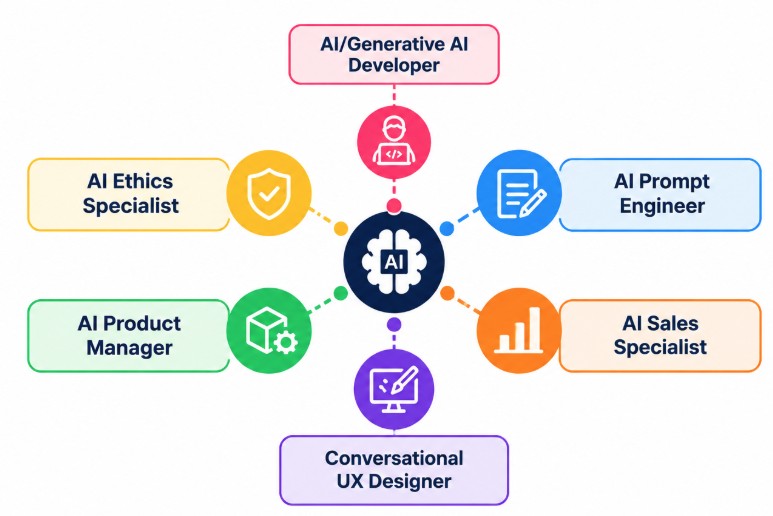
The growth of generative AI is creating demand for professionals who can develop applications, integrate models, manage data, and deploy reliable AI solutions. A Generative AI Engineer builds applications using large language models, while an AI Application Developer connects AI services with databases, APIs, and business software. An LLM Engineer focuses on model integration and application performance, whereas a RAG Engineer develops systems that retrieve relevant information from documents or knowledge bases before generating responses.

Essential Python, Prompt Engineering, APIs, and Machine Learning Skills
- Prompt Engineering: Prompt engineering involves designing clear instructions, providing relevant context, and testing outputs to improve the quality and consistency of AI-generated responses.
- API Integration: API skills help developers connect GPT-powered models with websites, databases, business applications, and external services to create useful AI-driven solutions.
- Python Programming: Python helps professionals build AI applications, process data and automate repetitive tasks using practical libraries and reusable code. Beginners can explore Gen AI Tools for Coding to understand how AI supports software development.
- Machine Learning Fundamentals: Understanding algorithms, neural networks, model evaluation, and data preparation helps professionals build reliable AI applications and interpret model limitations.
- AI Output Evaluation: Professionals must validate AI-generated answers, test edge cases, measure accuracy, and identify errors before integrating model outputs into important business workflows.
GPT-6 Applications, RAG, AI Agents, and Intelligent Workflow Automation
- Retrieval-Augmented Generation (RAG): RAG combines document retrieval with language models to generate context-aware answers, making it useful for enterprise knowledge assistants and document analysis systems.
- AI Agent Development: AI agents use language models, APIs, and approved tools to complete multi-step tasks, automate workflows, and support decision-making with suitable human oversight.
- GPT-Powered Application Development: GPT-powered technologies can support applications for research, content creation and business automation. Explore Top Generative AI Projects for Beginners for practical ideas to apply these capabilities.
- Intelligent Workflow Automation: AI-powered workflows can summarize reports, organize information, generate drafts, and assist with repetitive business processes to improve operational efficiency.
- AI Integration and Testing: Developers should connect AI tools to appropriate data sources, evaluate generated results, and test workflow reliability before using applications in real business environments.

Get JOB Oriented Gen AI Training for Beginners By MNC Experts
- Instructor-led Sessions
- Real-life Case Studies
- Assignments
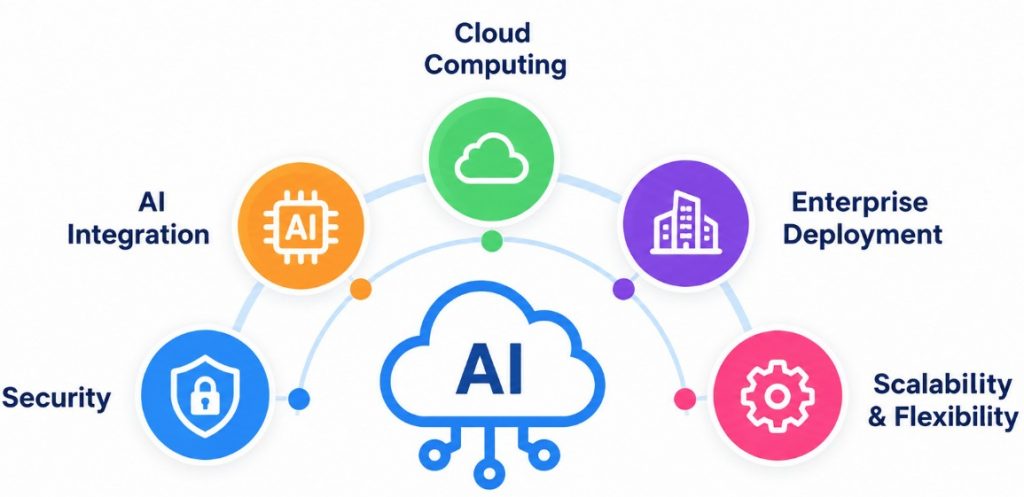
Cloud Computing, AI Integration, Security, and Enterprise Deployment
- Enterprise AI Integration: Developers connect GPT-powered applications with business systems, databases, and APIs to streamline operations and provide employees with intelligent digital assistants.
- AI Security and Data Privacy: Professionals must protect confidential information, manage access permissions, and follow organizational policies when building or deploying AI-powered enterprise applications.
- Cloud Platforms: Knowledge of AWS, Microsoft Azure, or Google Cloud helps professionals deploy AI applications, manage computing resources, and support scalable enterprise workloads. Understanding Challenges in Generative AI Development can also help candidates prepare for deployment and scalability issues.
- Application Deployment and Monitoring: Deployment skills include testing applications, monitoring performance, tracking errors, and managing updates to maintain reliable AI services in production environments.
- Responsible AI Governance: Responsible AI practices involve checking outputs, reducing bias, maintaining accountability, and establishing human approval for sensitive or high-impact automated decisions.
Want to Master Gen AI? Explore the Gen AI Master Program Offered at ACTE Today!
Generative AI Salary Trends, Experience Levels, and Future Career Growth
- Mid-Level Generative AI Roles: Experienced professionals can pursue AI application development, RAG engineering, and LLM integration roles by demonstrating reliable solutions and production-oriented development skills.
- Senior AI Engineering Careers: Senior professionals may progress into AI architecture, technical leadership, and enterprise automation by mastering system design, security, deployment, and performance optimization.
- Entry-Level AI Career Opportunities: Freshers can begin with junior AI development, software engineering, or automation roles by developing Python and practical AI project skills. Enrolling in Gen AI Training can help beginners understand generative AI concepts and explore practical applications.
- Factors Affecting AI Salaries: Compensation varies by experience, employer, location, technical specialization, and business responsibilities. Advanced AI skills can help, but no specific salary is guaranteed.
- Future Career Growth: Professionals who combine programming, AI integration, cloud deployment, and business knowledge can prepare for evolving opportunities in intelligent applications and enterprise automation.
Want to Learn About AI? Explore Our Artificial Intalligence Interview Questions and Answers Featuring the Most Frequently Asked Questions in Job Interviews.
Practical GPT-Powered Projects, Certifications, and Interview Preparation
Practical GPT-powered projects help learners apply Generative AI concepts to real-world business challenges by developing AI chatbots, virtual assistants and Retrieval-Augmented Generation (RAG) applications. These projects strengthen skills in Python, API integration, data processing, and AI workflow automation. Earning relevant certifications in Generative AI, machine learning, and cloud computing can validate technical knowledge and improve professional credibility. Interview preparation should focus on GPT architecture fundamentals, prompt optimization, model limitations, practical coding exercises, and project-based discussions. Building a portfolio with working AI applications demonstrates problem-solving abilities and helps candidates showcase their expertise to potential employers. Learners can explore this ChatGPT and Generative AI Learning Guide to strengthen their understanding of core concepts and practical applications. Practicing technical questions, explaining project outcomes, and understanding responsible AI practices can further improve interview confidence and career readiness.
Conclusion: Building a Future-Ready Career in Generative AI
Building a future-ready career in Generative AI requires continuous learning, practical experience, and adaptability to emerging technologies. As organizations increasingly adopt AI-powered solutions, professionals with expertise in GPT models, prompt engineering, Python programming, machine learning, and AI integration can explore diverse career opportunities. Enrolling in Gen AI Training can help learners develop relevant knowledge and explore practical applications of generative AI. Developing real-world projects, earning industry-relevant certifications, and preparing for technical interviews can help learners demonstrate their capabilities and stand out in a competitive job market. Understanding AI ethics, data privacy, security, and responsible model usage is equally important for creating reliable applications. Staying informed about technological advancements and improving problem-solving skills can support long-term professional growth. With consistent practice and a strong technical foundation, aspiring professionals can pursue roles such as Generative AI Engineer, AI Application Developer, Prompt Engineer, and AI Solutions Architect while contributing to innovative solutions across industries.