LMS
LMS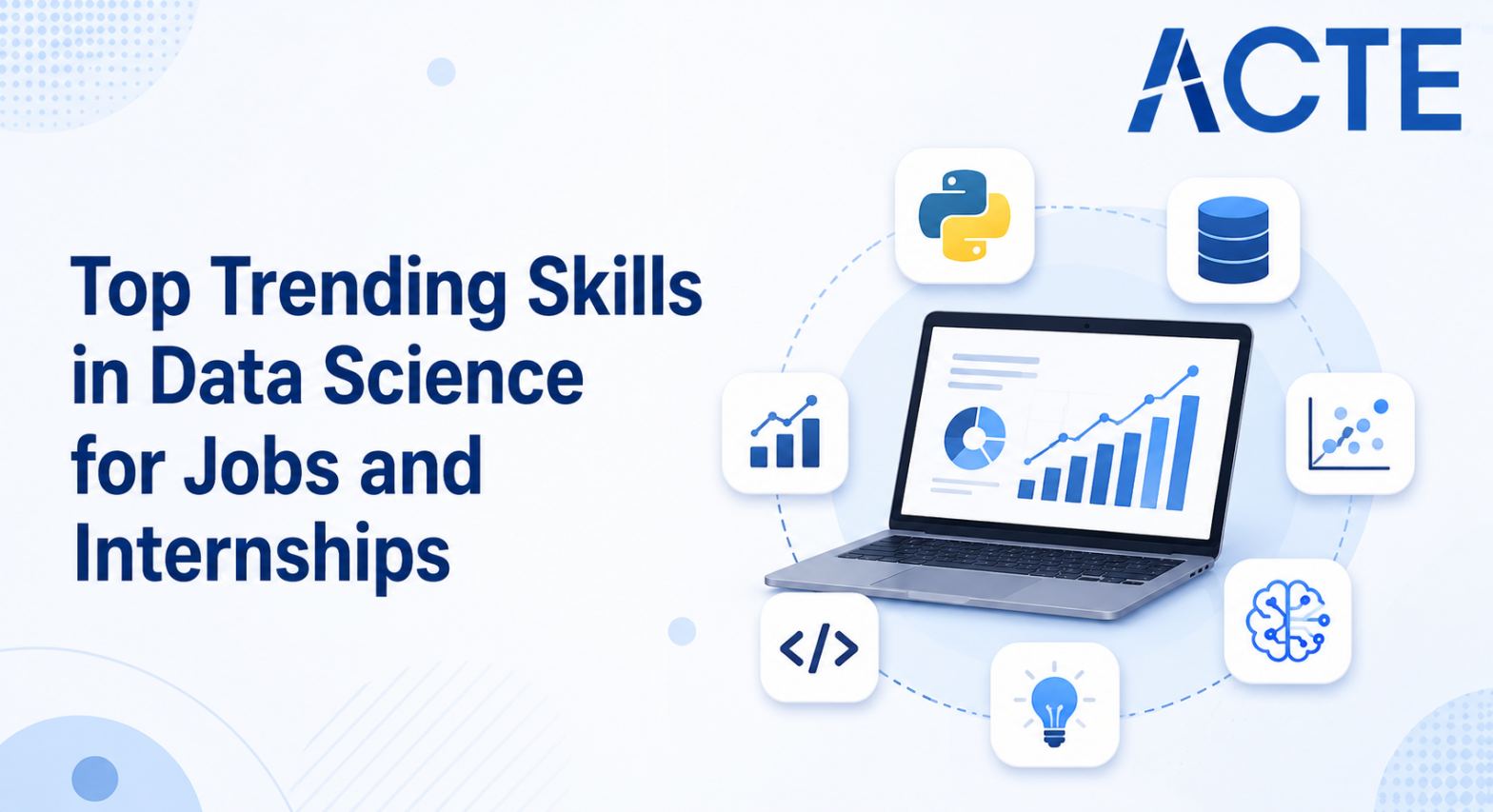
Last updated on 24th Jul 2026| 8225

- Introduction to Data Science Skills in Today’s Job Market
- Why Trending Data Science Skills Matter for Career Growth
- Programming Skills Every Data Science Professional Needs
- Data Analysis and Visualization Skills
- Machine Learning and Artificial Intelligence Skills
- Big Data and Cloud Computing Skills
- Database Management and SQL Skills
- Generative AI and Large Language Model (LLM) Skills
- Business, Communication, and Problem-Solving Skills
- How to Continuously Upgrade Your Data Science Skills
- Conclusion: Building Future-Ready Skills for Data Science Careers
Introduction to Data Science Skills in Today’s Job Market
Data Science has become one of the fastest-growing and most in-demand career fields across the world, creating exciting opportunities for students, fresh graduates, and experienced professionals. Organizations in healthcare, banking, finance, e-commerce, retail, manufacturing, education, telecommunications, cybersecurity, logistics, and entertainment rely heavily on data to make informed business decisions and gain a competitive advantage. As a result, employers are actively searching for candidates who possess the latest technical skills, analytical abilities, and business understanding required to work with large volumes of structured and unstructured data. Unlike a few years ago, today’s Data Science roles require much more than basic programming and statistical knowledge. Professionals are expected to understand machine learning, cloud computing, big data technologies, artificial intelligence, Generative AI, Large Language Models (LLMs), data visualization, database management, and business intelligence tools while continuously adapting to new technologies. Building these capabilities through professional learning programs such as Data Science Training helps learners gain practical expertise aligned with current industry requirements. Recruiters also value practical experience gained through internships, real-world projects, hackathons, open-source contributions, and certifications because these demonstrate the ability to apply technical concepts to solve practical business problems. In addition to technical expertise, soft skills such as communication, teamwork, adaptability, critical thinking, and problem-solving have become equally important since Data Scientists frequently collaborate with managers, software engineers, business analysts, and stakeholders from different departments. The increasing adoption of automation, predictive analytics, intelligent decision-making systems, and AI-powered business solutions has significantly expanded career opportunities for professionals who continuously upgrade their knowledge and stay updated with emerging technologies. Therefore, understanding the most trending Data Science skills is essential for anyone who wants to secure internships, entry-level jobs, or advanced positions in this rapidly evolving industry.
Why Trending Data Science Skills Matter for Career Growth
The Data Science industry evolves at an exceptionally fast pace, with new technologies, programming frameworks, machine learning techniques, cloud platforms, and Artificial Intelligence innovations emerging every year. Because of this continuous evolution, employers no longer hire candidates based solely on academic qualifications or traditional programming knowledge. Instead, organizations seek professionals who stay updated with the latest industry trends and possess skills that directly address current business challenges. Developing these in-demand capabilities through industry-focused programs such as Data Science Training equips learners with practical knowledge that aligns with current business requirements. Trending Data Science skills significantly improve employability because they enable professionals to work with modern technologies such as Machine Learning, Deep Learning, Big Data, Cloud Computing, Generative AI, Large Language Models (LLMs), AI Agents, and advanced analytics platforms.
Ready to Pursue Your Data Analytics Certificate? View The Data Science Course Training Offered By ACTE Right Now!
Programming Skills Every Data Science Professional Needs
- Python Programming: Python is the most widely used programming language in Data Science because of its simplicity, extensive libraries, and strong community support. Professionals should understand variables, loops, functions, object-oriented programming, file handling, exception handling, and automation while using libraries such as Pandas, NumPy, Matplotlib, and Scikit-learn for data analysis and machine learning. Beginners looking to strengthen their Python fundamentals can also explore Getting Started with Python for Data Science.
- SQL and Database Querying: SQL is an essential skill because Data Scientists spend a significant amount of time retrieving, filtering, joining, updating, and analyzing data stored in relational databases. Strong SQL knowledge enables professionals to efficiently manage structured data and prepare datasets for reporting, visualization, and predictive modeling.
- Version Control and Collaborative Development: Modern Data Science projects involve collaboration among multiple developers, making Git and GitHub essential skills for managing source code, tracking changes, reviewing contributions, and maintaining project history. Understanding version control improves teamwork and prepares candidates for professional software development environments.
- Programming Best Practices and Debugging: Writing clean, reusable, efficient, and well-documented code is as important as solving technical problems. Data Science professionals should follow coding standards, optimize program performance, debug errors systematically, test applications thoroughly, and maintain organized project structures for long-term maintainability.
Data Analysis and Visualization Skills
- Data Cleaning and Preprocessing: Real-world datasets often contain missing values, duplicate records, inconsistent formats, and incorrect information that must be corrected before analysis begins. Learning data cleaning, transformation, feature engineering, normalization, and preprocessing techniques ensures higher-quality insights and improves machine learning model performance.
- Exploratory Data Analysis (EDA): Data Scientists must examine datasets carefully to discover patterns, relationships, trends, and anomalies before building predictive models. Using statistical analysis and visualization techniques helps professionals understand business problems, identify important variables, and make informed analytical decisions.
- Data Visualization Tools: Visualization tools such as Power BI, Tableau, Matplotlib, Plotly, and Seaborn help transform complex datasets into meaningful charts, dashboards, and reports. Effective visualizations improve communication with business stakeholders and support faster, data-driven decision-making across organizations. To build practical expertise, beginners can also explore Data Science Tools and Technologies.
- Business Intelligence and Storytelling: Creating graphs alone is not enough; professionals must explain analytical findings in a meaningful business context. Strong data storytelling skills help communicate insights, recommendations, business impact, and future opportunities clearly to technical teams, managers, executives, and clients.
Machine Learning and Artificial Intelligence Skills
- Supervised and Unsupervised Machine Learning: Every Data Science professional should understand supervised learning algorithms such as Linear Regression, Logistic Regression, Decision Trees, Random Forest, and Support Vector Machines, along with unsupervised learning techniques like K-Means Clustering and Hierarchical Clustering. These algorithms help solve prediction, classification, segmentation, and recommendation problems across various industries. To understand how these techniques are applied in real-world projects, read Machine Learning in Data Science.
- Deep Learning and Neural Networks: Deep learning has become one of the most important skills because it powers advanced AI applications such as image recognition, speech processing, autonomous systems, and language translation. Learning Artificial Neural Networks (ANN), Convolutional Neural Networks (CNN), Recurrent Neural Networks (RNN), and Transformer architectures prepares professionals for modern AI development.
- Model Evaluation and Optimization: Building a machine learning model is only the first step; evaluating and improving its performance is equally important. Professionals should understand accuracy, precision, recall, F1-score, ROC-AUC, cross-validation, hyperparameter tuning, feature engineering, overfitting, underfitting, and model optimization techniques to create reliable AI solutions.
- Practical AI Development Using Industry Frameworks: Data Scientists should gain practical experience using TensorFlow, PyTorch, Scikit-learn, Keras, Hugging Face Transformers, and OpenCV for implementing real-world machine learning and deep learning applications. Hands-on projects involving prediction systems, recommendation engines, fraud detection, image classification, and NLP significantly improve technical expertise and employability.

Big Data and Cloud Computing Skills
- Big Data Processing Technologies: Modern organizations generate massive amounts of structured and unstructured data that cannot be processed using traditional tools alone. Learning technologies such as Apache Spark, Hadoop, Hive, Kafka, and distributed computing frameworks enables Data Scientists to efficiently process, analyze, and manage large-scale datasets in enterprise environments.
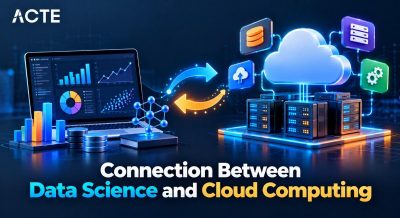
- Cloud Computing Platforms: Cloud platforms such as Microsoft Azure, Amazon Web Services (AWS), and Google Cloud Platform (GCP) have become essential because organizations deploy Data Science solutions on scalable cloud infrastructure. Professionals can strengthen these cloud and analytics skills by enrolling in Data Science Training, which provides practical exposure to modern cloud-based Data Science tools and technologies.
- Cloud-Based Machine Learning and Deployment: Building machine learning models is only part of a Data Scientist’s job; deploying them into production is equally important. Learning cloud AI services, REST APIs, Docker, Kubernetes, CI/CD pipelines, and MLOps practices helps professionals create scalable, secure, and production-ready AI applications.
- Data Security and Scalable Infrastructure: As businesses increasingly depend on cloud technologies, professionals must understand secure data storage, identity management, encryption, backup strategies, disaster recovery, and scalable infrastructure. These skills ensure reliable handling of sensitive organizational data while supporting high-performance analytics and AI workloads.
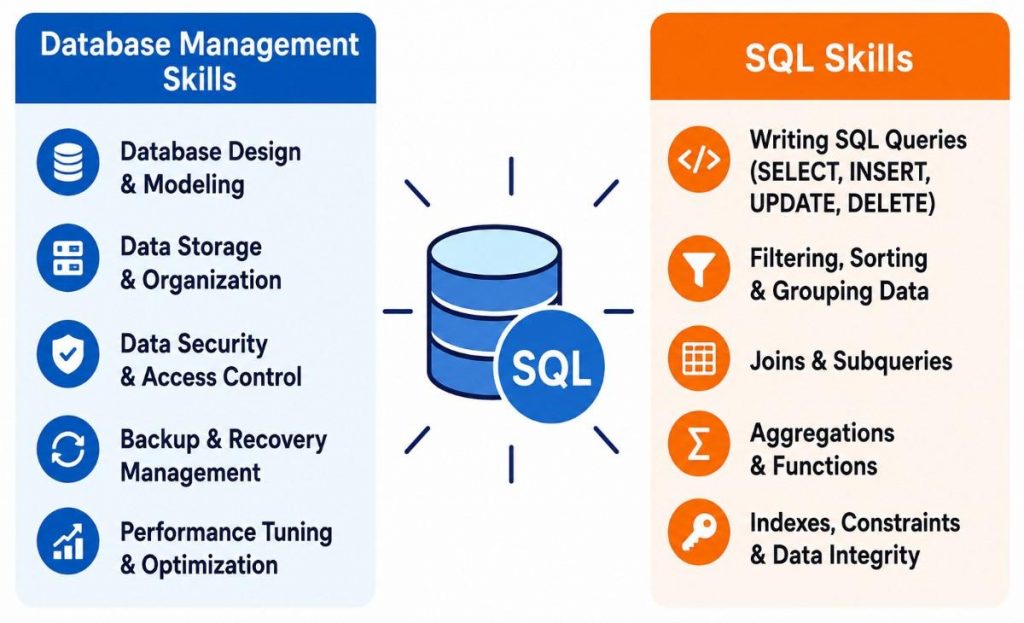
- Writing Efficient SQL Queries: SQL remains one of the most valuable skills in Data Science because professionals constantly retrieve, filter, aggregate, update, and analyze data stored in relational databases. Strong SQL knowledge allows Data Scientists to access business information efficiently and prepare datasets for reporting and predictive modeling. To understand which technical competencies employers value most, explore Top Data Science Skills That Drive Career Success.
- Database Design and Data Management: Understanding relational database concepts such as tables, primary keys, foreign keys, normalization, indexing, constraints, and relationships helps professionals organize and maintain structured data effectively. Well-designed databases improve performance, reduce redundancy, and ensure data consistency across enterprise applications.
- Working with Multiple Database Technologies: Modern Data Science projects involve both SQL and NoSQL databases depending on business requirements. Learning MySQL, PostgreSQL, Microsoft SQL Server, MongoDB, Cassandra, and Firebase provides flexibility in handling structured, semi-structured, and unstructured data across different platforms.
- Database Optimization and Performance Tuning: Efficient database management involves optimizing SQL queries, creating indexes, improving query execution plans, reducing response time, and ensuring fast data retrieval. These optimization skills become increasingly important when working with large enterprise databases and real-time analytical systems.
- Understanding Generative AI Fundamentals: Generative AI has become one of the fastest-growing technologies in the Data Science industry, enabling machines to generate text, images, code, audio, and videos. Professionals should understand how foundation models, transformer architectures, and generative models work to develop modern AI-powered applications. To learn how AI is transforming the field, read Evolution of Data Science.
- Prompt Engineering and LLM Interaction: Effective communication with Large Language Models requires strong prompt engineering skills. Learning how to design structured prompts, optimize instructions, evaluate AI-generated responses, and refine outputs helps professionals build intelligent applications that deliver accurate, reliable, and context-aware results.
- Building AI Applications Using Modern Frameworks: Data Scientists should gain practical experience with frameworks such as Hugging Face Transformers, LangChain, LlamaIndex, OpenAI APIs, vector databases, and Retrieval-Augmented Generation (RAG). These technologies enable the development of AI chatbots, virtual assistants, enterprise search systems, document analysis tools, and intelligent automation platforms.
- Responsible AI and Ethical AI Development: As Generative AI becomes more widely adopted, professionals must understand responsible AI principles including fairness, transparency, privacy, security, bias mitigation, hallucination detection, and ethical model deployment. Organizations increasingly value Data Scientists who can build AI systems that are accurate, trustworthy, secure, and compliant with responsible AI practices.
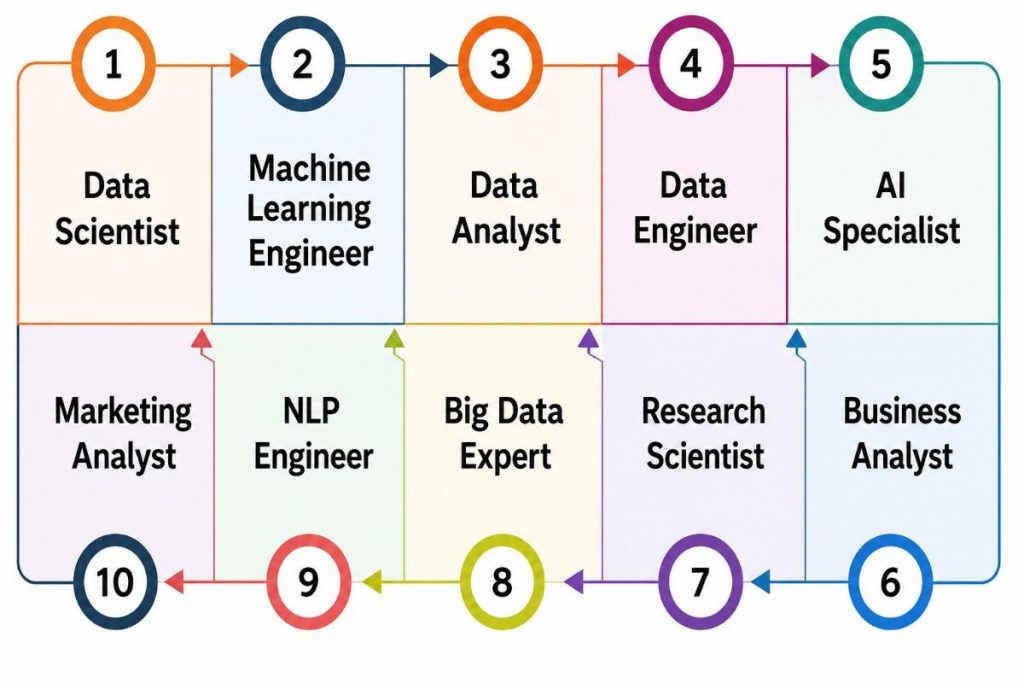
- Business Understanding: Data Scientists must understand business goals, industry requirements, and problem statements before applying technical solutions. This helps in building models that deliver meaningful and practical results aligned with organizational objectives. To understand how these skills are applied across different career paths, explore Data Science Roles Explained.
- Communication Skills: Professionals should be able to clearly explain technical concepts, analytical results, and insights to non-technical stakeholders such as managers, clients, and executives. Effective communication improves collaboration and ensures better decision-making.
- Problem-Solving Ability: Data Science involves solving complex real-world problems using data. Strong problem-solving skills help professionals break down problems, analyze possible solutions, and apply appropriate techniques to achieve accurate results.
- Critical Thinking: Data Scientists should evaluate data carefully, question assumptions, identify risks, and make logical decisions based on evidence. Critical thinking improves the quality of analysis and prevents incorrect conclusions.
- Decision-Making Skills: Professionals must use data-driven insights to support business decisions, improve operations, and create value for organizations. Good decision-making skills help in choosing the best possible solutions from multiple alternatives.
- Collaboration and Teamwork: Data Scientists often work with cross-functional teams including developers, analysts, and business stakeholders. Strong teamwork skills ensure smooth communication and successful project execution.
Excited to Obtaining Your Data Analytics Certificate? View The Data Science Course Training Offered By ACTE Right Now!
Database Management and SQL Skills
Generative AI and Large Language Model (LLM) Skills
Are You Considering Pursuing a Data Analytics Master’s Degree? Enroll For Data Science Expert Masters Program Training Course Today!
Business, Communication, and Problem-Solving Skills
How to Continuously Upgrade Your Data Science Skills
Continuously upgrading Data Science skills is essential for staying relevant in a rapidly evolving industry where new technologies, tools, and methodologies emerge frequently. Professionals should focus on consistent learning through online courses, certifications, technical blogs, research papers, and industry documentation to stay updated with the latest advancements in machine learning, artificial intelligence, big data, and cloud computing. Those planning to validate their expertise can also refer to Data Science Certification. Participating in hands-on projects, internships, and real-world problem-solving activities helps reinforce theoretical knowledge and develop practical expertise. Engaging in platforms such as GitHub, Kaggle, and open-source communities allows individuals to collaborate with other professionals, showcase their work, and gain exposure to real-world datasets and challenges. Attending webinars, workshops, and technical conferences provides insights into current industry trends and best practices followed by experts. Regularly practicing coding, improving problem-solving skills, and experimenting with new tools and frameworks ensures continuous growth and adaptability. Networking with professionals, joining Data Science communities, and learning from mentors can further accelerate career development. By maintaining a habit of continuous learning and staying curious about emerging technologies, Data Science professionals can remain competitive, improve their expertise, and achieve long-term career success.
Set to Ace Your Data Science Job Interview? Check Out Our Blog on Data Science Interview Questions & Answer
Conclusion: Building Future-Ready Skills for Data Science Careers
Building a successful career in Data Science requires a balanced combination of technical skills, analytical thinking, and business understanding. As the demand for data-driven decision-making continues to grow across industries, professionals who develop strong foundations in programming, data analysis, machine learning, cloud computing, databases, and emerging technologies such as Generative AI and Large Language Models will have a significant advantage in the job market. At the same time, soft skills such as communication, problem-solving, critical thinking, and teamwork play a crucial role in transforming technical insights into actionable business solutions. Continuous learning, hands-on project experience, and staying updated with industry trends are key factors that contribute to long-term success in this field. Enrolling in industry-oriented Data Science Training can further strengthen practical expertise and prepare learners for real-world Data Science roles. Rather than focusing on a single skill, aspiring Data Scientists should aim to build a comprehensive skill set that combines both theoretical knowledge and practical expertise. By consistently improving their abilities and adapting to new technologies, individuals can create strong career opportunities, achieve professional growth, and remain future-ready in the ever-evolving Data Science landscape.