LMS
LMS
Last updated on 17th Jul 2026| 11415

- Introduction to AI in Software Testing
- Why AI Is Transforming Software Testing
- Key Trends in AI-Powered Testing
- Popular AI-Based Testing Tools
- Benefits of AI in Test Automation
- Challenges of Adopting AI in Testing
- Skills Testers Need for AI-Driven Testing
- Role of Machine Learning in Test Case Generation
- Career Opportunities in AI-Powered Testing
- How to Upskill for AI Testing Roles
- Conclusion: The Future of AI in Software Testing
Introduction to AI in Software Testing
Artificial intelligence is steadily reshaping the software testing landscape, moving quality assurance beyond traditional scripted test cases toward intelligent systems capable of learning application behavior, predicting failure points, and generating test scenarios with minimal human intervention. As software systems grow more complex, with frequent releases and increasingly interconnected components, manual and even traditional automated testing approaches often struggle to keep pace with the speed of modern development cycles. AI-powered testing addresses this gap by introducing capabilities such as self-healing test scripts, visual validation, and predictive defect analysis, all of which reduce the manual effort required to maintain test suites over time. This shift is not limited to large technology companies; testing teams across banking, retail, healthcare, and telecom industries are increasingly adopting AI-driven tools to improve test coverage and release confidence. For testing professionals, understanding how AI is being applied within quality assurance has become essential, both for improving day-to-day efficiency and for staying relevant in a job market that increasingly values automation and AI literacy alongside traditional testing skills. As AI continues to evolve, testers are expected to work alongside intelligent tools rather than replace traditional testing practices entirely. Modern QA professionals can benefit by learning AI-assisted testing platforms, automation frameworks, and data-driven testing approaches through comprehensive Software Testing Training programs. Developing these skills helps testers improve productivity, identify defects earlier, and adapt to the changing expectations of the software industry.
Why AI Is Transforming Software Testing
The growing complexity of modern software applications, combined with the pressure of continuous integration and continuous delivery pipelines, has made traditional testing approaches difficult to sustain at scale. Applications today are built using microservices, deployed across multiple environments, and updated frequently, which means test suites must be maintained, updated, and executed far more often than in traditional release cycles. Artificial intelligence helps address these challenges by automating repetitive aspects of test maintenance, such as updating locators when a user interface changes, a capability commonly referred to as self-healing automation. The table below highlights how this shift compares with traditional testing approaches. AI also enables smarter test case prioritization, where machine learning models analyze historical defect data to identify which areas of an application are most likely to fail after a given code change, allowing teams to focus testing effort more efficiently. Together, these capabilities allow testing teams to maintain higher quality standards without proportionally increasing the size of their QA teams. Professionals looking to understand the foundation of different testing methodologies can also explore Understanding the Different Types of Software Testing to see how traditional testing practices are evolving with advanced technologies.
| Aspect | Traditional Testing | AI-Powered Testing |
|---|---|---|
| Test Maintenance | Manual updates required after every UI change | Self-healing scripts adapt automatically |
| Defect Prioritization | Based on tester judgment and experience | Based on predictive analytics from historical data |
| Visual Validation | Manual review or pixel comparison | Computer vision detects visual regressions |
| Test Creation | Requires scripting knowledge | Can be created using natural language input |
| Scalability | Limited by manual effort | Scales efficiently across large applications |
Key Trends in AI-Powered Testing
- Self-Healing Test Automation: Modern AI-powered tools can automatically detect and adjust to changes in application locators or UI elements, reducing the maintenance burden traditionally associated with automated test scripts. These tools continuously monitor application updates and automatically repair broken test scripts whenever possible. This significantly reduces maintenance effort, improves test reliability, and enables QA teams to focus on validating application functionality rather than fixing automation issues.
- Visual AI Testing: Tools that use computer vision to compare screenshots and detect visual regressions are becoming common, catching layout, font, and rendering issues that functional tests typically miss. AI-powered visual validation helps ensure consistent user experiences across different browsers, devices, and operating systems. It also detects subtle design inconsistencies that manual reviews and traditional automation may overlook.
- Predictive Test Analytics: AI models analyze historical defect and code change data to predict which parts of an application are most likely to break, helping teams prioritize testing efforts intelligently. By identifying high-risk components early, testing resources can be allocated more effectively to areas that need the most attention. This improves defect detection rates while reducing unnecessary testing on low-risk modules.
- Natural Language Test Creation: Emerging tools allow testers to describe test scenarios in plain English, which AI then converts into executable automated test scripts, lowering the barrier to automation. This enables business analysts, product owners, and manual testers to participate in automation without requiring programming expertise. As a result, test creation becomes faster, more collaborative, and easier to maintain.
- AI-Driven Test Data Generation: Machine learning techniques are increasingly used to generate realistic, varied test data automatically, reducing the manual effort involved in preparing datasets for comprehensive testing. AI can create diverse datasets that simulate real-world user behavior while maintaining privacy through synthetic or anonymized data. This improves test coverage and ensures applications are validated under a wide range of scenarios.
- Intelligent Test Case Optimization: AI algorithms identify redundant or overlapping test cases within large regression suites, helping teams reduce execution time without sacrificing meaningful test coverage. By eliminating duplicate or low-value test cases, organizations can accelerate regression testing and shorten release cycles. Optimized test suites also reduce infrastructure costs while maintaining confidence in software quality. As AI continues to improve test optimization strategies, understanding core testing approaches through Black Box Testing vs White Box Testing Freshers Must Know helps testers understand how different validation methods contribute to effective software quality assurance.
Get Your Software Testing Certification by Learning from Industry-Leading Experts and Advancing Your Career with ACTE’s Software Testing Course.
Popular AI-Based Testing Tools
- Testim: This AI-powered automation platform uses machine learning to create stable, self-healing test scripts that adapt automatically when application elements change during development cycles. It minimizes test maintenance by automatically updating element locators when UI changes occur. Testim also integrates with CI/CD pipelines, enabling faster and more reliable automated testing workflows.
- Applitools: Known primarily for visual AI testing, Applitools uses computer vision algorithms to detect visual regressions across web and mobile applications with high accuracy and minimal false positives. Its Visual AI engine validates layouts, fonts, colors, and responsive designs across multiple browsers and devices. This helps organizations deliver consistent user experiences while reducing manual visual inspection efforts.
- Mabl: This low-code testing platform incorporates AI to auto-heal broken tests and provide intelligent insights into application performance and quality trends across releases. Mabl continuously learns from test executions to improve stability and reduce flaky tests over time. It also provides detailed analytics that help QA teams identify recurring issues and optimize testing strategies.
- Functionize: This tool combines AI and machine learning to enable natural language test creation, allowing testers to write test scenarios in plain English that are converted into automated scripts. Its AI engine automatically maintains test cases as applications evolve, reducing long-term maintenance effort. Functionize also supports scalable cloud execution, making it suitable for enterprise-level testing environments.
- Katalon Studio with AI Features: Katalon has integrated AI-assisted capabilities for smart element identification and self-healing tests, making it popular among teams transitioning from traditional automation frameworks. The platform offers an intuitive interface that simplifies test creation for both beginners and experienced testers. AI-powered object recognition improves test reliability even when application interfaces frequently change.
- Sauce Labs Visual Testing: This cloud-based platform offers AI-driven visual regression testing alongside cross-browser and cross-device automation, helping teams validate application consistency across diverse environments. Its cloud infrastructure enables large-scale parallel testing to accelerate software delivery cycles. AI-based visual comparison quickly identifies rendering differences, ensuring high-quality releases across supported platforms. Professionals evaluating modern testing solutions can also understand the transition between traditional and advanced approaches through Manual vs Automation Testing and learn how automation tools are changing software quality practices.
- High Initial Learning Curve: Teams transitioning to AI-powered testing tools often face a steep learning curve, as testers need to understand new concepts like model training and confidence thresholds. Organizations must invest in training and upskilling programs to help QA professionals effectively use AI capabilities. With proper guidance and practice, teams can gradually overcome these challenges and improve testing efficiency. Building strong fundamentals through resources like Skills Required to Become a QA Engineer for Freshers can help professionals prepare for evolving AI-driven testing environments.
- Tool Selection Complexity: With numerous AI testing platforms available, choosing the right tool for a specific project or technology stack can be time-consuming and requires careful evaluation of features and cost. Businesses should compare integration options, scalability, pricing, and support before making a decision. Conducting pilot projects can help determine whether a tool meets long-term testing requirements.
- Data Quality Dependencies: AI models used for predictive analytics or test data generation rely heavily on the quality and volume of historical data, which may be limited in newer projects. Poor-quality or incomplete datasets can reduce prediction accuracy and limit AI effectiveness. Maintaining clean, well-organized testing data significantly improves the performance of AI-driven testing solutions.
- Integration with Existing Pipelines: Incorporating AI-powered tools into established continuous integration and continuous delivery pipelines can require significant configuration effort and coordination with development teams. Compatibility issues may arise when integrating with legacy systems or custom automation frameworks. Careful planning and phased implementation help ensure smoother adoption with minimal workflow disruption.
- Cost Considerations for Smaller Teams: Many advanced AI testing platforms come with subscription costs that can be difficult to justify for smaller organizations or teams with limited automation budgets. Companies should evaluate the expected return on investment before adopting enterprise-level AI solutions. Starting with free trials or limited-feature versions can help assess business value before full implementation.
- Over-Reliance on Automation: Excessive dependence on AI-generated test cases without human review can occasionally lead to gaps in exploratory testing, where human intuition remains valuable for catching unexpected issues. Manual testing remains essential for evaluating usability, customer experience, and complex business scenarios. Combining AI automation with skilled human testers provides the most effective and balanced testing strategy.
- Instructor-led Sessions
- Real-life Case Studies
- Assignments
- Understanding of Machine Learning Basics: Testers do not need to build models themselves, but a conceptual understanding of how machine learning works helps them use AI testing tools more effectively. Knowing concepts such as supervised learning, model accuracy, and data training enables testers to interpret AI-generated results with greater confidence. This foundational knowledge also helps teams make better decisions when selecting and implementing AI-based testing solutions.
- Familiarity with AI-Powered Testing Platforms: Hands-on experience with tools like Testim, Applitools, or Mabl is increasingly valued by employers looking to modernize their quality assurance processes. Practical knowledge of AI-enabled automation features improves productivity and reduces the time required to create and maintain test suites. Experience with multiple platforms also makes testers more adaptable to different organizational requirements.
- Strong Programming and Scripting Skills: Knowledge of languages such as Python or JavaScript remains important, since many AI testing tools still require scripting for custom test logic and integrations. Programming skills help testers extend AI capabilities, automate repetitive tasks, and integrate testing frameworks with CI/CD pipelines. Strong coding fundamentals also improve troubleshooting and test customization capabilities.
- Data Analysis Capabilities: The ability to interpret AI-generated insights, such as risk scores or predictive defect reports, helps testers make informed decisions about where to focus testing effort. Data analysis skills enable QA professionals to identify trends, measure testing effectiveness, and optimize test execution strategies. Making data-driven decisions leads to higher software quality and more efficient resource utilization.
- API and Cloud Testing Knowledge: Many AI-powered testing tools operate in cloud environments, so familiarity with API testing and cloud-based test execution platforms is a valuable complementary skill. Understanding REST APIs, cloud infrastructure, and distributed testing environments enhances the effectiveness of AI-driven automation. These skills are especially important for testing modern web applications and microservices-based architectures.
- Continuous Learning Mindset: Because AI testing tools evolve rapidly, testers benefit from staying updated through online courses, webinars, and community forums dedicated to AI-driven quality assurance practices. Regular learning helps professionals stay competitive and adapt to emerging technologies in software testing. A commitment to continuous improvement ensures long-term career growth in the rapidly changing QA industry. Professionals can strengthen their foundational and advanced testing knowledge through Software Testing Training programs that cover modern tools, techniques, and industry practices.
- Learn Machine Learning Fundamentals: Enrolling in beginner-friendly online courses covering machine learning concepts helps testers understand how AI-powered testing tools make decisions and generate predictions. A basic understanding of algorithms, datasets, and model evaluation makes it easier to work with AI-driven testing platforms. This knowledge also helps testers interpret AI-generated insights more accurately during software validation.
- Get Hands-On with AI Testing Tools: Practicing with free trials of platforms like Testim, Applitools, or Mabl helps build practical familiarity that can be discussed confidently during job interviews. Real-world experience improves understanding of self-healing automation, visual testing, and AI-assisted test creation. Building sample projects also strengthens a portfolio and demonstrates practical skills to employers.
- Strengthen Programming Skills: Improving proficiency in Python or JavaScript supports better integration and customization when working with AI-powered testing frameworks in real project environments. Strong coding skills allow testers to automate complex workflows and create reusable testing components. They also make troubleshooting and framework customization more efficient.
- Follow Industry Publications and Communities: Regularly reading testing blogs, joining LinkedIn groups, and following AI testing thought leaders helps professionals stay current with rapidly evolving tools and techniques. Engaging with the testing community provides valuable insights into industry best practices and emerging trends. Continuous learning helps testers remain competitive in the evolving software testing landscape.
- Pursue Relevant Certifications: Certifications focused on AI in software testing, offered by platforms like ISTQB or specific tool vendors, can strengthen a resume and demonstrate structured learning. Certified professionals often gain greater credibility during recruitment and career advancement opportunities. Certifications also validate practical knowledge of AI-powered testing concepts and tools.
- Work on Personal or Open Source Projects: Applying AI-powered testing tools to personal projects or contributing to open source testing frameworks provides practical experience that can be showcased to potential employers. Hands-on project work develops problem-solving abilities and exposes testers to real-world automation challenges. A strong project portfolio demonstrates initiative and practical expertise beyond theoretical knowledge. Gaining practical exposure through structured opportunities such as Software Testing Internship Step-by-Step Guide can help aspiring testers build industry-relevant skills and experience.

Learn Software Testing Training Course to Build Your Skills
Weekday / Weekend BatchesSee Batch DetailsBenefits of AI in Test Automation
The adoption of AI within test automation delivers several measurable benefits for quality assurance teams, starting with a significant reduction in the time spent maintaining automated test scripts. Self-healing capabilities mean that minor UI changes, which would traditionally break dozens of test cases, are automatically detected and corrected by AI algorithms, freeing testers to focus on designing new test scenarios rather than fixing existing ones. AI-powered visual testing also improves defect detection accuracy, catching subtle rendering or layout issues that might otherwise slip through manual review or traditional pixel-based comparisons. Beyond maintenance and accuracy improvements, predictive analytics capabilities allow teams to focus testing resources on high-risk areas of an application, improving overall test efficiency without requiring proportional increases in headcount. Faster feedback loops are another important benefit, since AI-driven test optimization can reduce the time needed to execute large regression suites by identifying and eliminating redundant test cases. Collectively, these advantages allow organizations to release software more frequently while maintaining, or even improving, overall quality standards. AI-based testing also improves collaboration between development and QA teams by providing faster insights into application quality and potential risks. By analyzing large volumes of testing data, AI tools can help teams make better decisions and prioritize critical issues. Professionals looking to master these modern testing techniques can strengthen their expertise through Software Testing Training. As organizations move toward Agile and DevOps practices, AI-powered automation becomes an important factor in achieving faster, more reliable software delivery.
Challenges of Adopting AI in Testing

Get JOB Oriented Software TestingI Training for Beginners By MNC Experts
Skills Testers Need for AI-Driven Testing
Role of Machine Learning in Test Case Generation
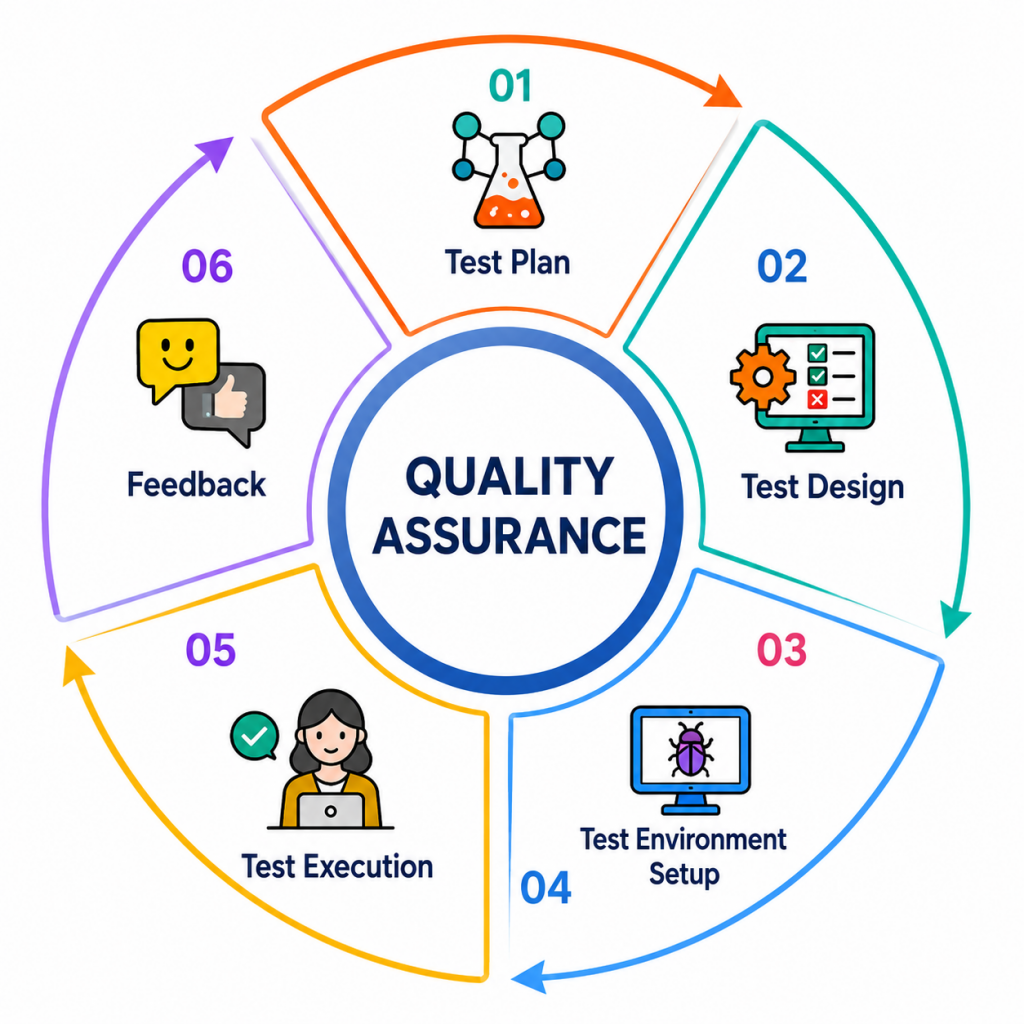
Machine learning plays an increasingly central role in generating test cases automatically, particularly for applications with complex user flows or frequently changing requirements. Rather than relying solely on manually written test scripts, AI-powered tools can analyze application usage patterns, historical defect data, and even user session recordings to identify scenarios that are most likely to reveal defects. Some platforms use reinforcement learning techniques to explore an application autonomously, discovering edge cases that human testers might overlook due to time constraints or unfamiliarity with every possible user path. Natural language processing capabilities also allow certain tools to convert plain English requirements or user stories directly into structured test cases, reducing the manual effort involved in translating business requirements into testable scenarios. While these AI-generated test cases still benefit from human review to ensure business relevance and accuracy, they significantly reduce the time required to build comprehensive test coverage, particularly for large applications with extensive functional scope. AI-generated test cases also help testing teams maintain consistency by reducing errors caused by repetitive manual test design. By continuously learning from new test results and defect patterns, machine learning models can improve their recommendations over time. Professionals who want to build expertise in AI-driven quality assurance can enhance their practical skills through Software Testing Training. This allows testers to focus more on exploratory testing, complex scenarios, and improving overall software quality rather than spending excessive time on routine tasks.
Want to Master Software Testing? Explore the Software Testing Master Program Offered at ACTE Today!
Career Opportunities in AI-Powered Testing
The rise of AI-powered testing has created new career opportunities for quality assurance professionals willing to expand their skill set beyond traditional manual and automation testing. Roles such as AI Test Engineer, Quality Engineer specializing in intelligent automation, and Test Automation Architect focused on AI-driven frameworks are becoming increasingly common in job postings across IT services and product companies. These roles typically offer higher compensation compared to traditional testing positions, reflecting the specialized skill set required to work effectively with AI-powered tools and interpret their outputs. Companies ranging from large IT services firms to product-focused technology companies are investing in AI-driven quality engineering teams, creating demand across both service-based and product-based organizations. For testers already working in automation, transitioning into AI-powered testing often represents a natural career progression rather than a completely new domain, since many underlying testing principles remain unchanged even as the tools and techniques evolve to incorporate artificial intelligence. Professionals who develop skills in machine learning basics, AI testing platforms, data analysis, and advanced automation frameworks can gain a competitive advantage in this evolving field. Continuous learning and hands-on practice with emerging tools are becoming essential for testers who want to remain relevant in the industry. As AI adoption grows, quality engineers who can combine testing expertise with AI knowledge will play a key role in building smarter and more reliable software systems. Exploring career pathways such as QA Careers at Capgemini can also help professionals understand industry expectations and opportunities available in quality assurance roles.
Want to Learn About Software Testing? Explore Our Software Testing Interview Questions and Answers Featuring the Most Frequently Asked Questions in Job Interviews.
How to Upskill for AI Testing Roles
Conclusion: The Future of AI in Software Testing
AI is transforming software testing by making quality assurance processes faster, smarter, and more efficient. While artificial intelligence can automate repetitive tasks, identify potential defects, and improve test coverage, human expertise remains essential for decision-making, creativity, and strategic testing approaches. Testers who combine traditional QA knowledge with AI tools, automation skills, and continuous learning will be better prepared for the future of the industry. As organizations increasingly adopt AI-driven testing practices, professionals who adapt to these changes can unlock new career opportunities and contribute to building more reliable software systems. The future of software testing will focus on collaboration between human testers and intelligent AI systems rather than complete automation. QA professionals who develop skills in AI-assisted testing, data analysis, and advanced automation frameworks will have a strong advantage in the evolving job market. Companies will continue to seek testers who can use AI tools effectively while understanding business requirements and user expectations. Enrolling in Software Testing Training can help professionals gain practical experience with AI-powered testing tools, automation frameworks, and industry best practices. By embracing AI as a supportive technology, testers can improve productivity, enhance software quality, and take on more strategic roles in the quality engineering field.