LMS
LMS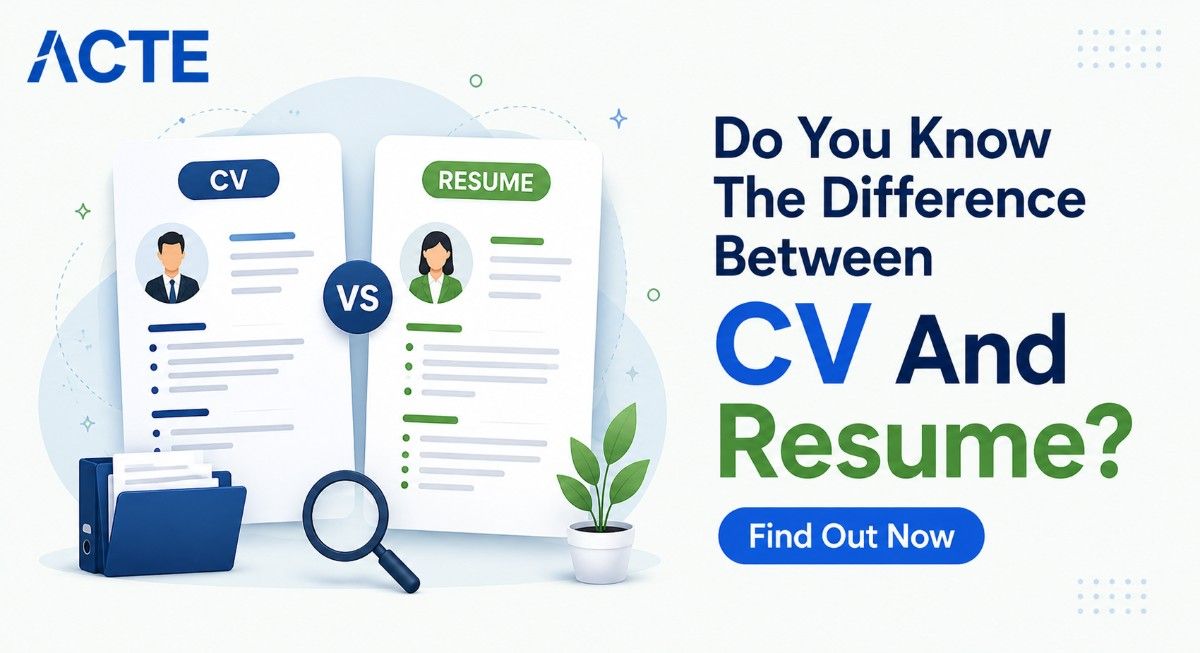
Last updated on 25th Jul 2026| 8185

- Introduction to CV and Resume
- What is a Curriculum Vitae (CV)?
- What is a Resume?
- Key Differences Between CV and Resume
- Length, Structure, and Content Differences
- When to Use a CV vs When to Use a Resume
- Regional and Industry-Based Usage Differences
- Common Misconceptions About CV and Resume
- Tips for Choosing the Right Document for Your Application
- Conclusion: Making the Right Choice Between CV and Resume
Introduction to CV and Resume
The terms “CV” and “resume” are frequently used interchangeably by students and job seekers, yet they refer to two distinct types of professional documents that serve different purposes, follow different structural conventions, and are expected in different contexts depending on the country, industry, and nature of the opportunity being pursued. This confusion often leads candidates to submit the wrong type of document for a given application, which can create an unfavorable impression even before their qualifications are properly reviewed, particularly in academic, research, or international contexts where the distinction carries significant weight. A curriculum vitae, commonly abbreviated as CV, is a comprehensive and detailed document that chronicles a candidate’s entire academic and professional history, including publications, research work, presentations, and detailed educational background, often extending across multiple pages. A resume, by contrast, is a concise, targeted summary of a candidate’s most relevant skills, experiences, and achievements, typically condensed to one or two pages and tailored specifically to the role being applied for. Understanding when to use each document, what content belongs in each, and how regional expectations differ is essential for candidates navigating both domestic and international job markets, as submitting an inappropriately formatted document can create confusion or even disqualify an application in certain contexts. Candidates pursuing technical careers should also ensure that their professional documents clearly present relevant skills, certifications, projects, and practical expertise, such as knowledge gained through Data Science Training. This article provides a detailed comparison between CVs and resumes, clarifying their distinct purposes, structures, and appropriate use cases to help candidates make informed and confident decisions when preparing their application materials.
What is a Curriculum Vitae (CV)?
A curriculum vitae, derived from the Latin phrase meaning “course of life,” is a comprehensive document designed to provide a complete and detailed record of an individual’s academic and professional journey, encompassing far more depth and breadth than a typical resume. A CV typically includes extensive sections covering educational qualifications, research experience, published papers, conference presentations, teaching experience, grants and fellowships received, professional affiliations, and detailed descriptions of academic projects or dissertations, making it particularly suited to academic, scientific, and research-oriented careers. Unlike a resume, which is deliberately kept concise, a CV can extend across several pages, growing in length as an individual accumulates more academic achievements, publications, and professional milestones throughout their career, since the goal is thorough documentation rather than brief summarization. Candidates preparing a concise resume can also benefit from reviewing Resume Summary Examples to understand how relevant qualifications and achievements can be presented effectively. CVs are most commonly required when applying for academic positions such as university faculty roles, postdoctoral research positions, doctoral program admissions, scientific research roles, or grant and fellowship applications, where evaluators need a comprehensive understanding of a candidate’s scholarly contributions and academic trajectory. In many countries outside the United States and Canada, particularly across Europe, Asia, and other regions, the term “CV” is used more broadly to refer to what would be considered a resume in American English, adding an additional layer of regional variation that candidates must be aware of when applying internationally. Within academic and research contexts specifically, however, a CV retains its comprehensive and detailed nature regardless of regional terminology differences, serving as an exhaustive record intended to demonstrate the full scope of a candidate’s scholarly and professional accomplishments over time.
Ready to Pursue Your Data Science Certificate? View The Data Science Course Training Offered By ACTE Right Now!
What is a Resume?
A resume is a concise, focused document that summarizes a candidate’s most relevant skills, work experience, education, and achievements, specifically tailored to align with the requirements of a particular job opportunity, typically condensed to a single page for early-career candidates or a maximum of two pages for more experienced professionals. Unlike the exhaustive nature of a CV, a resume is intentionally selective, requiring candidates to prioritize and include only the most impactful and relevant information that directly supports their candidacy for a specific role, while omitting details that do not add clear value to the application. This selective approach means that the same candidate may need to create multiple versions of their resume, each customized to emphasize different skills or experiences depending on the specific job or industry being targeted, ensuring maximum relevance for each individual application. Candidates entering technical fields should also highlight relevant skills, certifications, projects, and practical knowledge gained through programs such as Data Science Training, helping recruiters quickly understand their technical capabilities and career readiness. Resumes are the standard and expected document format for the vast majority of corporate, business, and industry job applications across most sectors, including technology, finance, marketing, engineering, and countless other professional fields, particularly within the United States and Canada. The structure of a resume typically follows one of several established formats, such as chronological, functional, or hybrid, and commonly includes sections for contact information, a professional summary, work experience, education, skills, and sometimes certifications or notable projects, all presented in a clear, scannable format designed for quick review by busy recruiters. Because resumes are meant to be read quickly, often within a matter of seconds during initial screening, clarity, conciseness, and strategic emphasis on the most compelling qualifications are essential characteristics of an effective resume.
Key Differences Between CV and Resume
| Feature | CV | Resume |
|---|---|---|
| Length | Multiple pages, expands over time | One to two pages, concise |
| Purpose | Comprehensive academic record | Targeted job application summary |
| Content Focus | Research, publications, academia | Skills, work experience, achievements |
| Customization | Generally static, minor updates | Tailored for each application |
| Common Use | Academia, research, fellowships | Corporate and industry jobs |
| Regional Usage | Standard term in Europe, Asia | Standard term in US, Canada |
| Update Frequency | Added to continuously | Revised per application |
Length, Structure, and Content Differences
The structural and content differences between a CV and a resume extend well beyond simple length, reflecting fundamentally different philosophies about what information should be included and how it should be organized for the intended audience. A CV follows a chronological and cumulative structure, where new achievements, publications, and academic milestones are continuously added over time without the need to remove earlier entries, resulting in a document that grows progressively longer throughout a person’s academic or research career, sometimes extending to ten pages or more for senior academics with decades of published work. In contrast, a resume requires active curation and editing for every application, with candidates needing to critically evaluate which experiences and skills are most relevant to the specific role and removing or condensing older or less relevant information to maintain the concise one-to-two-page format that recruiters expect. Content-wise, a CV places heavy emphasis on academic credentials, including detailed descriptions of research methodology, published papers with full citations, conference presentations, teaching philosophy, and grants received, sections that would rarely if ever appear on a standard corporate resume.

When to Use a CV vs When to Use a Resume
Determining whether to submit a CV or a resume depends primarily on the nature of the opportunity being pursued, the industry involved, and the specific expectations of the organization or institution receiving the application. A CV is the appropriate choice when applying for academic positions such as university teaching or research faculty roles, postdoctoral fellowships, doctoral or graduate program admissions, scientific research positions, or opportunities that specifically request a comprehensive record of scholarly work, publications, and academic achievements. Additionally, certain government positions, medical and healthcare roles in some countries, and international opportunities outside North America may also require a CV, particularly in fields where detailed documentation of qualifications and credentials is standard practice. A resume, on the other hand, is the expected document for the overwhelming majority of corporate, business, technology, and industry job applications, particularly within the United States and Canada, where employers expect a concise, targeted summary that can be reviewed quickly during the initial screening process. Candidates applying for internships, entry-level positions, mid-career corporate roles, or any position within the private sector should almost always prepare a resume rather than a CV, tailoring the content specifically to match the requirements outlined in the job description. Candidates targeting competitive corporate and technology roles can also benefit from reviewing Resume Tips Inspired by Candidates to understand how resumes can be strategically tailored for industry opportunities. When uncertain about which document is expected, candidates should carefully review the job posting for specific terminology used, and when possible, directly clarify with the hiring organization to ensure they submit the appropriate format, as this attention to detail itself reflects positively on the candidate’s professionalism and preparedness.
Excited to Obtaining Your Data Analytics Certificate? View The Data Science Course Training Offered By ACTE Right Now!
Regional and Industry-Based Usage Differences
The terminology and expectations surrounding CVs and resumes vary considerably depending on geographic region and industry sector, creating potential confusion for candidates applying internationally or transitioning between academic and corporate career paths. In the United States and Canada, the distinction between a CV and a resume is generally well maintained, with resumes being the standard document for virtually all industry and corporate job applications, while CVs are reserved specifically for academic, research, and certain specialized professional contexts. In many European countries, as well as in parts of Asia, Africa, and the Middle East, the term “CV” is used more broadly and often serves as the standard term for what Americans would call a resume, meaning that a “CV” requested in a job posting from these regions may actually refer to a concise, one-to-two-page document rather than the lengthy academic format used in North America. This regional variation makes it essential for candidates applying to international opportunities to research local conventions and expectations rather than assuming that terminology carries the same meaning universally. Candidates who need to adapt their resume structure for different professional requirements can also explore Resume Types Explained to understand how different formats can be used effectively. Within specific industries, certain fields such as academia, scientific research, and medicine tend to maintain the traditional, comprehensive CV format regardless of geographic location, given the emphasis these fields place on detailed documentation of publications, research contributions, and specialized training. Understanding these regional and industry-based nuances allows candidates to avoid the potentially costly mistake of submitting an inappropriately formatted document, which could create confusion or an unfavorable impression during the application review process.
Are You Considering Pursuing a Data Analytics Master’s Degree? Enroll For Data Science Expert Masters Program Training Course Today!
Common Misconceptions About CV and Resume
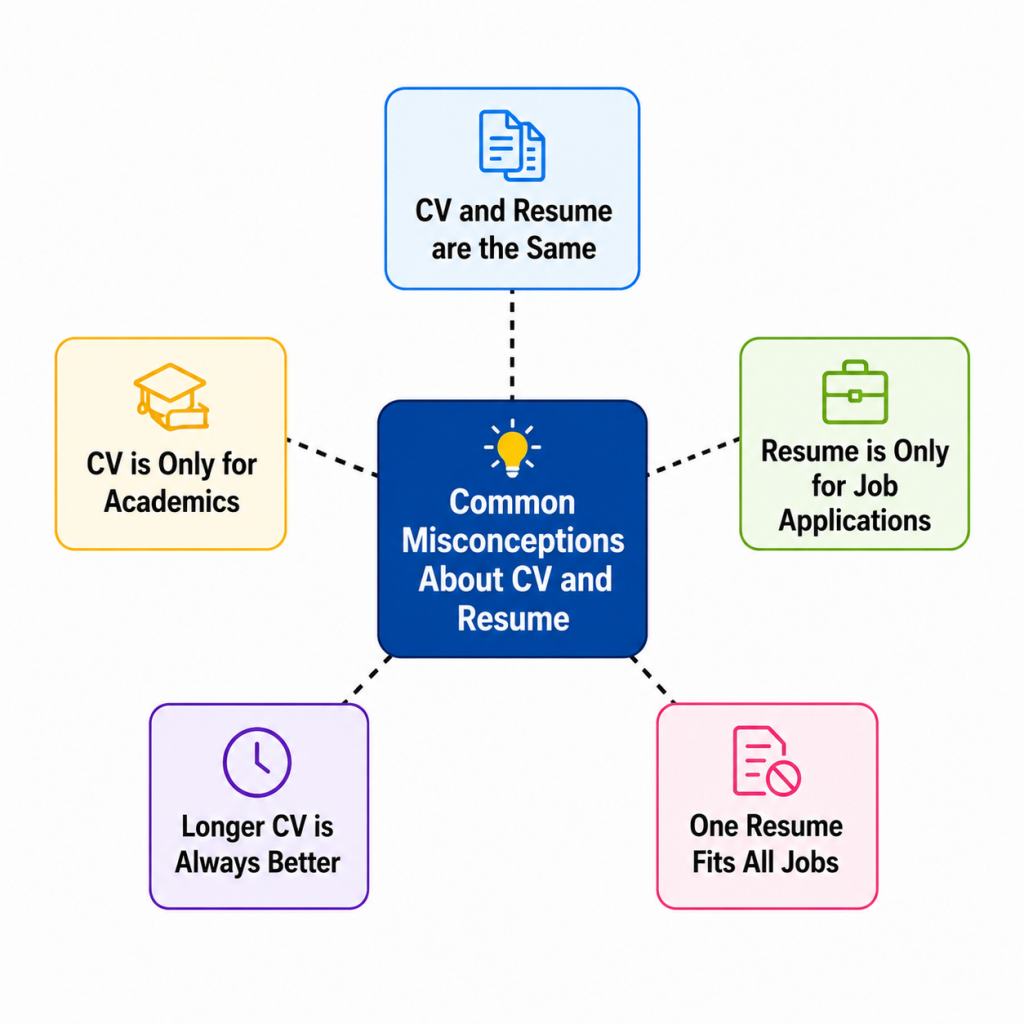
- Assuming the Terms Are Always Interchangeable: Many candidates assume “CV” and “resume” always mean the same thing, overlooking important regional and contextual differences that can affect application requirements.
- Believing a Longer Document Is Always More Impressive: Some candidates mistakenly think that a longer, CV-style document will appear more impressive for corporate applications, when in fact recruiters typically prefer concise, targeted resumes.
- Thinking CVs Are Only for Senior Academics: While CVs do expand with experience, even graduate students and early-career researchers are expected to maintain a CV when pursuing academic or research opportunities.
- Overlooking Country-Specific Terminology: Candidates applying internationally should research local conventions and highlight relevant qualifications, projects, and specialized skills, such as those gained through Data Science Training, to present their expertise effectively.
- Assuming One Document Works for All Applications: Using the same static document for academic and corporate applications may fail to meet the different expectations and content requirements of each context.
- Carefully Read the Job Posting Terminology: Pay close attention to whether the posting specifically requests a CV or a resume, and research what that term typically means within the relevant country and industry context.
- Research the Organization and Industry Norms: Academic institutions, research organizations, and certain international employers often have specific expectations that differ from standard corporate norms.
- Prepare Both Documents in Advance: Candidates pursuing both academic and industry opportunities should maintain updated versions of each document type, ready to submit depending on the specific application.
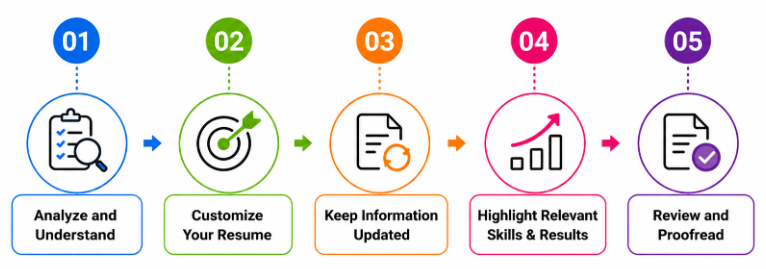
- Tailor Content to the Specific Opportunity: Regardless of which document is used, ensure the content is customized to highlight the most relevant qualifications for the specific role or opportunity being pursued. Candidates can also review Resume Writing Tips for additional guidance on presenting relevant skills and qualifications effectively.
- When in Doubt, Default to a Resume for Corporate Roles: Unless explicitly instructed otherwise or applying to academic or research positions, a concise resume is generally the safer and more appropriate choice for most job applications.
Set to Ace Your AWS Job Interview? Check Out Our Blog on Data Science Interview Questions & Answer
Tips for Choosing the Right Document for Your Application
Conclusion: Making the Right Choice Between CV and Resume
Understanding the distinction between a CV and a resume is essential for candidates seeking to present themselves appropriately and professionally across different types of opportunities, whether academic, research-oriented, or corporate in nature. While a CV serves as a comprehensive, ever-expanding record of academic and scholarly achievement suited to research and academic career paths, a resume functions as a concise, targeted summary designed to quickly demonstrate relevant qualifications for a specific job opportunity, particularly within corporate and industry contexts. Regional variations in terminology further complicate this distinction, making it important for candidates to research local conventions, particularly when applying to international opportunities where the term “CV” may carry a different meaning than expected. By carefully considering the nature of the opportunity, the expectations of the receiving organization, and relevant regional or industry norms, candidates can confidently determine which document format best serves their application and avoid the common mistake of submitting an inappropriately structured document. Candidates developing technical expertise can also strengthen their professional profiles by highlighting relevant skills, projects, and certifications gained through programs such as Data Science Training, helping employers better understand their capabilities and career readiness. Ultimately, whether preparing a detailed academic CV or a concise, results-driven resume, the goal remains the same: to present qualifications clearly, professionally, and in a manner that aligns with the specific expectations of the opportunity being pursued.