LMS
LMS
Last updated on 12th Aug 2026| 13501

- Introduction to Accenture Data Analytics Careers for Freshers
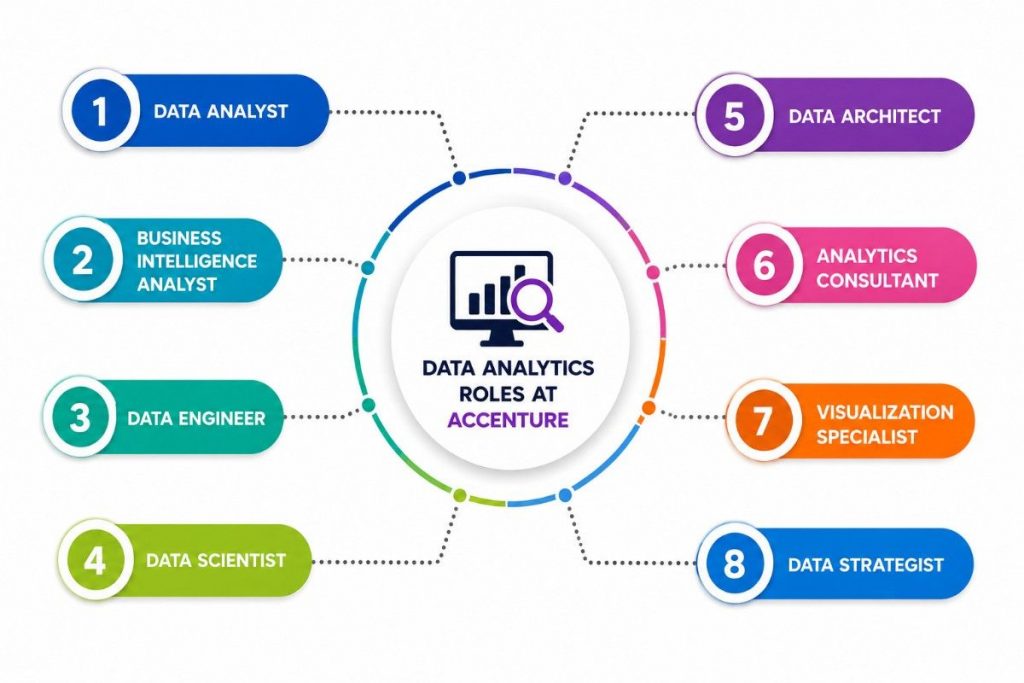
- Understanding Data Analytics Roles at Accenture
- Educational Qualifications Required for Freshers
- Essential Technical Skills for Accenture Data Analytics Jobs
- SQL, Python, Excel, and Data Visualization Skills
- Understanding Statistics, Data Analysis, and Business Intelligence
- Cloud, AI, Machine Learning, and Modern Data Technologies
- Soft Skills and Professional Qualities Accenture Looks For
- How Freshers Can Prepare for Accenture Data Analytics Jobs
- Conclusion: Building a Successful Data Analytics Career at Accenture
Introduction to Accenture Data Analytics Careers for Freshers
Data analytics is an increasingly important career path for freshers as organizations rely on data to improve operations, understand customers, optimize performance, and make informed business decisions. Accenture provides opportunities across data analytics, business intelligence, data engineering, artificial intelligence, and related technology areas. For fresh graduates, these roles can provide exposure to real-world datasets, enterprise technologies, client projects, and modern analytics practices. Candidates can prepare by developing skills in SQL, Python, Excel, statistics, data visualization, and business intelligence tools such as Power BI or Tableau. Practical experience through academic projects, internships, certifications, and hands-on assignments can further strengthen a fresher’s profile. Candidates looking to build a structured foundation can consider a Data Analytics Course to develop relevant technical and analytical skills. In addition to technical knowledge, analytical thinking, communication, teamwork, and adaptability are important for working effectively in professional environments. As data and AI technologies continue to evolve, freshers who build strong fundamentals and continuously update their skills can explore diverse career opportunities. A focused learning roadmap can help candidates develop the knowledge and confidence required to begin a successful data analytics career at Accenture.
Understanding Data Analytics Roles at Accenture
Data analytics roles at Accenture can involve analyzing business data, developing reports and dashboards, building data pipelines, supporting AI initiatives, and helping clients solve complex business problems. The exact responsibilities vary depending on the position, project, technology stack, and business unit. Entry-level professionals may work on tasks such as data collection, cleaning, validation, SQL analysis, visualization, reporting, and basic statistical analysis. Some roles may focus on business intelligence, while others can involve data engineering, machine learning, cloud analytics, or data and AI solutions.
Get Your Data Analytics Certification by Learning from Industry-Leading Experts and Advancing Your Career with ACTE’s Data Analytics Course.
Educational Qualifications Required for Freshers
- Relevant Bachelor’s Degree A degree in Computer Science, Information Technology, Data Science, Statistics, Mathematics, Engineering, or a related field can provide a strong foundation for entry-level data analytics roles.
- Academic Knowledge of Data and Analytics Freshers should have a basic understanding of statistics, mathematics, databases, data analysis, and programming. Strong academic fundamentals can help candidates understand real-world analytics problems.
- Postgraduate Qualifications A master’s degree in Data Science, Business Analytics, Statistics, Computer Science, or a related discipline can be beneficial for specialized analytics roles, although requirements vary by position.
- Certifications and Online Learning Relevant certifications in SQL, Python, Power BI, Tableau, cloud platforms, or data analytics can strengthen a fresher’s profile by demonstrating additional learning and practical interest. Candidates can also consider a Data Analytics Course to build structured knowledge and develop job-relevant skills.
- Practical Projects and Internships Academic qualifications become more valuable when supported by hands-on experience. Data analytics projects, internships, hackathons, and portfolio work can demonstrate the ability to apply concepts to practical business problems.

Learn Advanced Data Analytics Certification Training Course to Build Your Skills
Weekday / Weekend BatchesSee Batch DetailsEssential Technical Skills for Accenture Data Analytics Jobs
- SQL and Database Management Strong SQL skills help analysts extract, filter, combine, and analyze data from databases. Candidates should practice joins, subqueries, aggregations, window functions, views, and basic database concepts.
- Python for Data Analysis Python can be used for data cleaning, transformation, automation, and analysis. Freshers should become familiar with libraries such as Pandas and NumPy and understand how Python supports analytical workflows.
- Data Cleaning and Preprocessing Analysts need to identify missing values, duplicates, inconsistent formats, and inaccurate records before analysis. Learning systematic data-cleaning techniques helps ensure reliable and meaningful analytical results.
- Statistics and Analytical Thinking Knowledge of descriptive statistics, probability, distributions, correlation, sampling, and basic hypothesis testing helps candidates interpret datasets correctly and make evidence-based conclusions. Understanding these skills can also help candidates evaluate Data Analytics Salary Trends and understand how technical expertise and experience can influence career opportunities.
- Data Visualization and Business Intelligence Learning tools such as Power BI or Tableau helps analysts transform datasets into interactive dashboards and reports. Candidates should understand charts, filters, KPIs, data storytelling, and presenting insights clearly.

Get JOB Oriented Data Analytics Training for Beginners By MNC Experts
- Instructor-led Sessions
- Real-life Case Studies
- Assignments
SQL, Python, Excel, and Data Visualization Skills
- Writing Advanced SQL Queries Practice SELECT statements, joins, grouping, subqueries, CTEs, window functions, and aggregations. Strong SQL skills help freshers efficiently retrieve and analyze business information from large datasets.
- Using Python Analytics Libraries Learn Pandas for data manipulation, NumPy for numerical operations, and visualization libraries for presenting analytical results. Practice applying Python to real datasets rather than focusing only on syntax.
- Developing Advanced Excel Skills Excel remains useful for reporting and business analysis. Learn formulas, PivotTables, lookup functions, conditional formatting and basic automation to improve analytical productivity. Candidates can also strengthen their practical Excel knowledge through Excel Formulas for Data Analysis, particularly when preparing for data-focused roles.
- Creating Power BI and Tableau Dashboards Practice connecting datasets, creating calculated fields or measures, designing interactive dashboards, and selecting appropriate visualizations to communicate important business trends and performance indicators.
- Applying Data Storytelling Learn how to transform analytical findings into a clear business story. Select relevant metrics, highlight important patterns, explain their meaning, and provide actionable recommendations based on the data.
Want to Master Data Analytics? Explore the Data Analytics Master Program Offered at ACTE Today!
Understanding Statistics, Data Analysis, and Business Intelligence
Statistics, data analysis, and business intelligence form an important foundation for data analytics careers. Freshers should understand descriptive statistics, probability, distributions, correlation, sampling, and basic hypothesis testing to interpret data accurately. Data analysis involves collecting, cleaning, transforming, and examining datasets to identify patterns, trends, and useful insights. Those looking to strengthen these skills through structured learning can consider a Data Analytics Course to gain practical knowledge across essential analytics concepts and tools. Business intelligence focuses on converting analyzed data into reports, dashboards, KPIs, and actionable information that supports business decisions. Candidates should learn how to connect analytical findings with business objectives and communicate insights clearly to stakeholders. Practical experience with SQL, Excel, Python, Power BI, or Tableau can help freshers apply these concepts to real-world datasets and develop stronger analytical capabilities.
Cloud, AI, Machine Learning, and Modern Data Technologies
Knowledge of cloud, artificial intelligence, machine learning, and modern data technologies can help freshers prepare for the evolving data analytics landscape. Candidates should understand basic cloud concepts such as storage, computing, databases, security, and scalable data processing through platforms such as AWS, Microsoft Azure, or Google Cloud. Basic machine learning knowledge, including supervised and unsupervised learning, model training, prediction, and evaluation, can provide additional value. Freshers can also explore AI concepts, big data technologies, data engineering, automation, and modern analytics platforms to understand how large-scale data solutions are developed. For a broader understanding of how analytics is evolving with emerging technologies, candidates can explore Future Trends in Data Analytics. Hands-on projects using cloud services, Python, SQL, visualization tools, or machine learning libraries can demonstrate practical knowledge and improve a candidate’s readiness for modern data and AI opportunities at Accenture.
Want to Learn About Data Analytics? Explore Our Data Analytics Interview Questions and Answers Featuring the Most Frequently Asked Questions in Job Interviews.
Soft Skills and Professional Qualities Accenture Looks For
- Communication and Presentation Skills Data analytics professionals need to explain technical findings in a simple and understandable way. Freshers should practice presenting insights, creating clear reports, and communicating analytical results confidently with technical and non-technical stakeholders.
- Analytical Thinking and Problem-Solving Strong analytical thinking helps candidates understand business problems, identify patterns, evaluate information, and develop logical solutions. Freshers should practice case studies, data interpretation exercises, and real-world analytical problems to improve these abilities. Building these practical capabilities can also help candidates understand Get Data Analyst Jobs in 3 Months and prepare more effectively for entry-level opportunities.
- Teamwork and Collaboration Analytics projects often involve working with data engineers, developers, consultants, managers, and clients. Candidates should demonstrate their ability to collaborate, share ideas, listen to others, handle disagreements professionally, and contribute effectively to team objectives.
- Adaptability and Continuous Learning Data technologies change rapidly, so professionals need to learn new tools and approaches throughout their careers. Freshers should demonstrate curiosity, willingness to learn, and the ability to adapt when working with unfamiliar technologies or business requirements.
- Time Management and Professionalism Data analysts may handle multiple tasks, reports, datasets, and deadlines. Good organization, prioritization, attention to detail, accountability, and professional behavior help ensure that work is completed accurately and delivered on time.
How Freshers Can Prepare for Accenture Data Analytics Jobs
- Building Strong SQL and Python Skills Freshers should develop practical skills in SQL and Python for data extraction, cleaning, transformation, and analysis. Regularly solving SQL problems and working with Python libraries such as Pandas and NumPy can strengthen technical confidence.
- Creating Real-World Data Analytics Projects Build projects using realistic datasets to demonstrate data cleaning, exploratory analysis, visualization, and insight generation. Projects involving sales, finance, marketing, customer behavior, or operations can showcase practical problem-solving abilities.
- Learning Power BI or Tableau Develop hands-on experience with at least one business intelligence platform. Practice connecting datasets, creating charts and dashboards, defining KPIs, applying filters, and presenting business insights through interactive visualizations.
- Earning Relevant Certifications Certifications in data analytics, SQL, Python, Power BI, Tableau, cloud computing, or related technologies can demonstrate additional learning. Candidates should prioritize certifications that complement practical projects rather than relying on certificates alone. Exploring Data Analytics Reasons to Learn can also help freshers understand how structured training can support their technical preparation.
- Earning Relevant Certifications Certifications in data analytics, SQL, Python, Power BI, Tableau, cloud computing, or related technologies can demonstrate additional learning. Candidates should prioritize certifications that complement practical projects rather than relying on certificates alone.
- Preparing an ATS-Friendly Resume Create a concise resume that highlights technical skills, projects, internships, certifications, and measurable achievements. Include relevant keywords such as SQL, Python, Excel, Power BI, Tableau, data analysis, and business intelligence where appropriate.
- Practicing Technical Interviews Prepare for questions covering SQL, Python, statistics, Excel, data visualization, databases, and analytics concepts. Practice explaining your approach clearly and solving problems under time constraints to improve technical interview performance.
- Preparing for Behavioral Interviews Practice questions related to teamwork, leadership, problem-solving, adaptability, communication, strengths, weaknesses, and career goals. Use examples from academic projects, internships, competitions, or extracurricular activities to demonstrate your abilities.
- Building a Professional Portfolio Maintain a portfolio or GitHub profile showcasing relevant analytics projects, dashboards, SQL work, Python notebooks, and project documentation. A well-organized portfolio can provide practical evidence of your skills beyond academic qualifications.
Conclusion: Building a Successful Data Analytics Career at Accenture
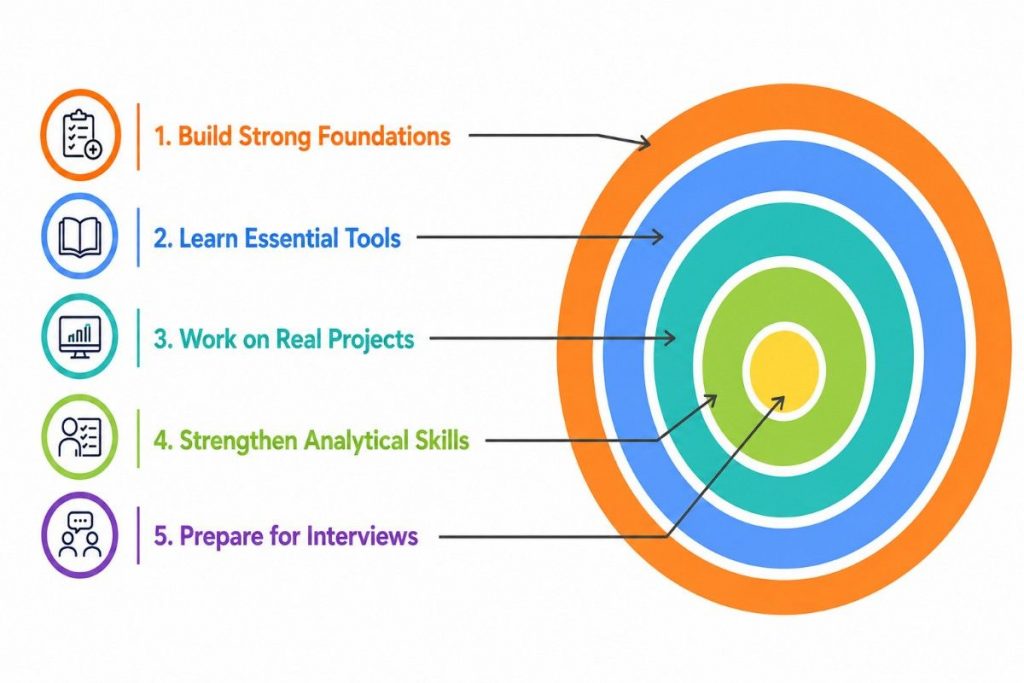
Building a successful Data Analytics career at Accenture requires a combination of technical knowledge, analytical thinking, business understanding, and strong professional skills. Freshers should begin by developing a solid foundation in SQL, Python, Excel, statistics, data visualization, and business intelligence tools such as Power BI or Tableau. Learning cloud computing, artificial intelligence, machine learning, and modern data technologies can further improve career readiness as analytics roles continue to evolve. Practical experience is equally important, so candidates should work on real-world projects involving data cleaning, reporting, and business problem-solving. Internships, certifications, hackathons, and portfolio projects can help demonstrate practical capabilities to recruiters. Along with technical expertise, communication, teamwork, adaptability, time management, and problem-solving skills are important for working effectively with clients and cross-functional teams. Aspiring professionals who want to strengthen their practical knowledge can consider a Data Analytics Course to build relevant skills and improve their career readiness. Freshers should also prepare an ATS-friendly resume and practice technical, analytical, and behavioral interview questions. Continuous learning and staying updated with emerging technologies can create opportunities for career progression into senior analytics, business intelligence, data engineering, consulting, and data science roles. With consistent skill development and practical experience, aspiring professionals can build a strong foundation for a rewarding and long-term data analytics career at Accenture.