LMS
LMS
Last updated on 20th Jul 2026| 11433

- Introduction to Data Analytics Career Opportunities for Freshers
- Understanding Different Data Analytics Job Roles
- Data Analyst Role: Responsibilities, Skills and Career Scope
- Business Analyst Role: Connecting Data with Business Decisions
- Data Scientist Role: Advanced Analytics and Machine Learning
- Business Intelligence Analyst Role: Data Visualization and Reporting
- Data Engineer Role: Managing Data Infrastructure and Pipelines
- Essential Skills Required to Start a Data Analytics Career
- Factors to Consider While Choosing the Right Data Analytics Role
- Career Growth Opportunities in Data Analytics for Freshers
- Conclusion: Choosing the Right Data Analytics Career Path as a Fresher
Introduction to Data Analytics Career Opportunities for Freshers
Data Analytics has become one of the most promising and rapidly growing career fields for freshers due to the increasing importance of data in modern businesses. Enrolling in a Data Analytics Course helps beginners build practical skills for this fast-growing industry. In today’s digital world, organizations generate massive amounts of data through customer interactions, online platforms, business operations, transactions, and various digital systems. However, raw data alone does not provide meaningful value unless it is properly collected, organized, analyzed, and interpreted. Data Analytics helps businesses transform large volumes of data into useful insights that support better decision-making, improve operational efficiency, understand customer behavior, identify market trends, and create effective business strategies. As companies continue to adopt technologies such as Artificial Intelligence, Machine Learning, Cloud Computing, and Big Data, the demand for professionals who can work with data is increasing across different industries. For freshers, Data Analytics provides a wide range of career opportunities because it combines technical skills, analytical thinking, and business understanding, making it suitable for candidates from various educational backgrounds such as computer science, engineering, mathematics, statistics, and management. A career in Data Analytics allows beginners to start with entry-level positions and gradually develop expertise in advanced areas based on their interests and career goals. Freshers can explore different roles such as Data Analyst, Business Analyst, Business Intelligence Analyst, Data Scientist, and Data Engineer, where each role focuses on different aspects of handling and analyzing data. The growing adoption of data-driven decision-making has created opportunities in industries such as information technology, healthcare, banking, finance, e-commerce, retail, manufacturing, marketing, and telecommunications. Companies rely on analytics professionals to identify patterns, predict future trends, optimize processes, reduce risks, and improve overall performance. Unlike many specialized technology fields that require extensive experience before entering, Data Analytics provides opportunities for beginners to develop skills gradually through learning, certifications, internships, and practical projects. By gaining knowledge in areas such as Excel, SQL, Python, statistics, data visualization, and database management, freshers can build a strong foundation and prepare themselves for analytics-related job roles. Choosing the right Data Analytics career path is an important decision because every role has different responsibilities, required skills, and growth opportunities. Understanding these roles helps freshers identify their strengths, select suitable learning paths, and focus on developing the skills needed for their desired position. With continuous learning and practical exposure, freshers can build successful careers in Data Analytics and grow into advanced roles while contributing to organizations through valuable data-driven insights.
Understanding Different Data Analytics Job Roles
Data Analytics is a broad career domain that includes multiple job roles, each focusing on different stages of collecting, managing, analyzing, and interpreting data. Many freshers often think that Data Analytics only refers to the Data Analyst position, but the field consists of several specialized roles that require different skill sets and responsibilities. Understanding these roles is important for beginners because it helps them choose the right career direction based on their interests, technical abilities, and long-term goals. Learners can build the required skills for these roles by enrolling in a Data Analytics Course. Each Data Analytics role contributes differently to an organization’s decision-making process. Some professionals focus on analyzing existing data and preparing reports, while others work on building predictive models, managing large-scale data systems, or creating business intelligence solutions. The Data Analyst role is one of the most common entry-level opportunities for freshers and focuses on collecting, cleaning, analyzing, and visualizing data to identify meaningful insights. Data Analysts work with structured datasets and use tools such as SQL, Excel, Python, Power BI, and Tableau to create reports and dashboards that help businesses understand their performance. The Business Analyst role focuses on connecting business requirements with analytical solutions. Business Analysts understand organizational challenges, gather requirements from stakeholders, analyze processes, and suggest improvements using data insights. This role is suitable for freshers who are interested in business strategies, communication, problem-solving, and process improvement. The Business Intelligence Analyst role focuses on transforming business data into interactive dashboards and reports that help organizations monitor important performance indicators. BI Analysts mainly work with visualization tools such as Power BI and Tableau to present complex information in a simple and understandable way. The Data Scientist role is an advanced career option that involves using statistical methods, machine learning algorithms, and artificial intelligence techniques to solve complex business problems. Data Scientists analyze large datasets, develop predictive models, and create solutions that help organizations forecast future outcomes. Although this role requires advanced technical knowledge, freshers with strong programming, mathematics, and analytical skills can gradually move toward this field. The Data Engineer role focuses on designing and maintaining the infrastructure required for storing, processing, and managing large amounts of data. Data Engineers build data pipelines, manage databases, and ensure that data is available for analysts and scientists.
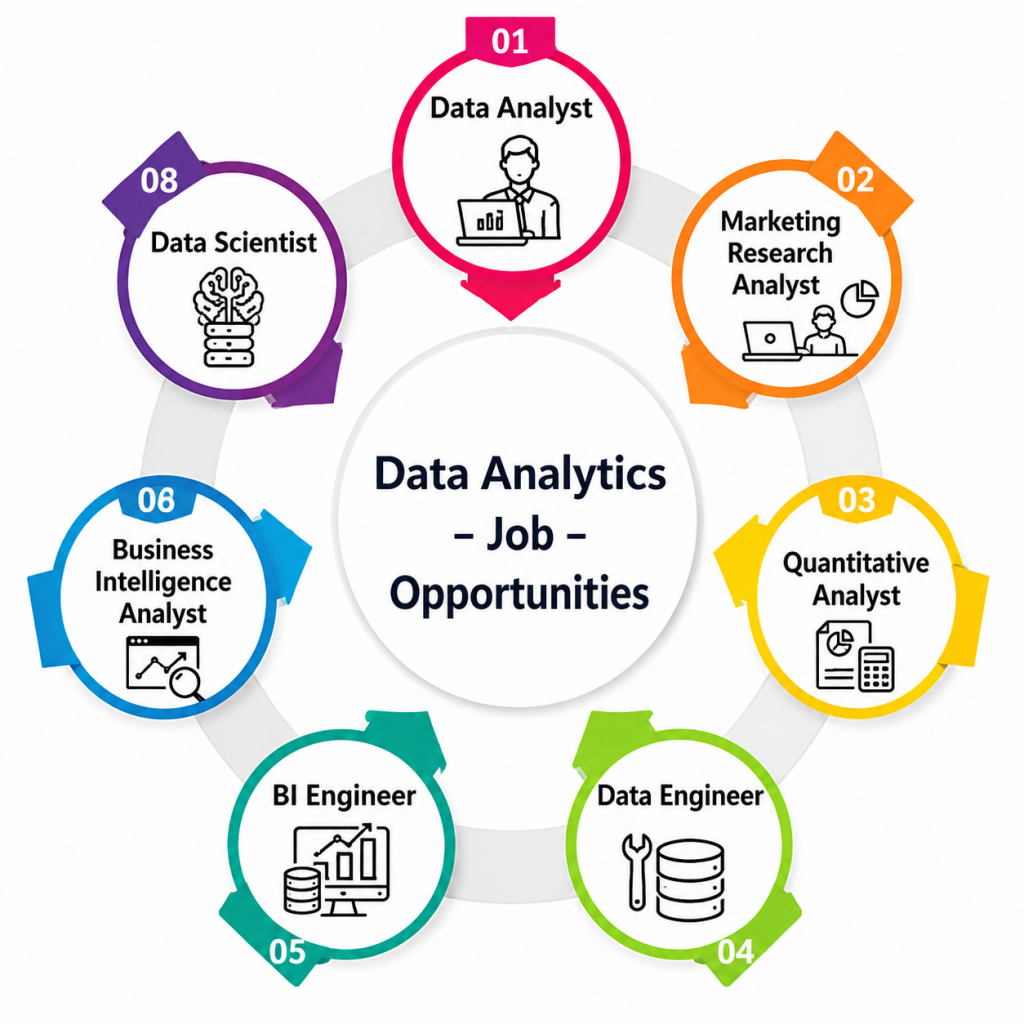
This role is suitable for freshers who are interested in business strategies, communication, problem-solving, and process improvement. The Business Intelligence Analyst role focuses on transforming business data into interactive dashboards and reports that help organizations monitor important performance indicators. BI Analysts mainly work with visualization tools such as Power BI and Tableau to present complex information in a simple and understandable way. The Data Scientist role is an advanced career option that involves using statistical methods, machine learning algorithms, and artificial intelligence techniques to solve complex business problems. Data Scientists analyze large datasets, develop predictive models, and create solutions that help organizations forecast future outcomes. Although this role requires advanced technical knowledge, freshers with strong programming, mathematics, and analytical skills can gradually move toward this field. The Data Engineer role focuses on designing and maintaining the infrastructure required for storing, processing, and managing large amounts of data. Data Engineers build data pipelines, manage databases, and ensure that data is available for analysts and scientists. This role is suitable for candidates who are interested in programming, database systems, cloud technologies, and backend development. Apart from these major roles, freshers can also explore specialized analytics careers such as Marketing Analyst, Financial Analyst, Product Analyst, and Healthcare Data Analyst depending on their interests. Selecting the right role requires understanding the responsibilities, required skills, and career growth opportunities associated with each position. By exploring different Data Analytics roles, freshers can create a focused learning plan, develop relevant technical skills, and prepare themselves for suitable career opportunities in the growing data-driven industry. Beginners can also strengthen their practical knowledge by working on Data Analytics Projects for Freshers.
Data Analyst Role: Responsibilities, Skills and Career Scope
The Data Analyst role is one of the most suitable and widely preferred career options for freshers who want to begin their journey in the Data Analytics field. A Data Analyst works with data to discover meaningful patterns, generate insights, and provide valuable information that supports business decision-making. Every organization collects large amounts of data from different sources such as customer activities, sales transactions, websites, applications, and operational systems. However, this raw data needs to be processed and analyzed before it can provide useful information. Data Analysts play an important role in converting unorganized data into structured information that helps companies improve their performance and achieve business objectives. The main responsibility of a Data Analyst begins with collecting data from different sources and preparing it for analysis. Since raw data may contain errors, missing information, or duplicate records, Data Analysts perform data cleaning and preprocessing to improve data quality. They organize datasets, identify inconsistencies, and ensure that the information used for analysis is accurate and reliable. After preparing the data, Data Analysts analyze it using different analytical methods to identify trends, patterns, relationships, and important insights. They study business data to understand customer behavior, sales performance, operational efficiency, and market conditions. Based on their analysis, they create reports and dashboards that help organizations understand their current performance and make better decisions. Data visualization is another important part of a Data Analyst’s role because complex data becomes easier to understand when represented through charts, graphs, and interactive dashboards. Tools such as Microsoft Excel, Power BI, Tableau, and Google Sheets are commonly used by Data Analysts to present information clearly to business teams and stakeholders. To become a successful Data Analyst, freshers need to develop a combination of technical and analytical skills. Knowledge of SQL is essential because it allows analysts to retrieve and manage data from databases. Excel skills are important for performing calculations, organizing information, and creating reports. Basic knowledge of Python helps analysts automate tasks and perform analysis on larger datasets. Understanding statistics helps in interpreting data correctly and identifying meaningful patterns. Along with technical skills, problem-solving ability, critical thinking, communication skills, and business understanding are also important for analyzing problems and explaining insights effectively. The career scope of a Data Analyst is continuously expanding because organizations across industries are adopting data-driven approaches. Freshers can start their careers as Junior Data Analysts and gradually progress into roles such as Data Analyst, Senior Data Analyst, Business Intelligence Analyst, Analytics Consultant, and Analytics Manager. With additional skills in machine learning, artificial intelligence, and advanced analytics, Data Analysts can also transition into specialized roles such as Data Scientist or Machine Learning Analyst. Data Analysts are required in industries including information technology, healthcare, banking, finance, e-commerce, marketing, manufacturing, and telecommunications. The increasing demand for professionals who can understand and analyze data makes this role an excellent choice for freshers who want to build a stable and growth-oriented career. By learning the right tools, gaining practical experience through Strong Data Analytics Portfolio, and continuously improving their analytical abilities, freshers can successfully enter the Data Analytics field and create strong career opportunities.
Get Your Data Analytics Certification by Learning from Industry-Leading Experts and Advancing Your Career with ACTE’s Data Analytics Course.
Business Analyst Role: Connecting Data with Business Decisions
The Business Analyst role is an excellent career option for freshers who enjoy solving business problems using data and strategic thinking. Business Analysts help organizations improve processes, understand business requirements, and support informed decision-making. They work closely with stakeholders, technical teams, and management to ensure business goals are achieved efficiently. Freshers who develop analytical, communication, and documentation skills can build a successful career in this field. To improve practical knowledge and job readiness, beginners can also explore Data Analyst Jobs in 3 Months.
- Understanding Business Requirements: A Business Analyst identifies business needs by communicating with stakeholders and different teams. They understand existing problems, gather requirements, and convert business expectations into clear solutions.
- Analyzing Business Processes: Business Analysts study current workflows and operations to identify areas where improvements can be made. They use data insights to suggest better processes that improve efficiency and productivity.
- Connecting Business and Technical Teams: A Business Analyst acts as a bridge between business users and technical teams. They explain business requirements to developers and ensure that the final solution meets organizational goals.
- Data-Based Decision Making: Business Analysts use reports, performance metrics, and analytical information to support decision-making. They help organizations make accurate decisions by identifying trends, opportunities, and challenges.
- Requirement Gathering and Documentation: One of the major responsibilities of a Business Analyst is collecting requirements from stakeholders. They prepare documents, reports, and specifications that guide project development.
- Problem Identification and Solution Planning: Business Analysts analyze business challenges and recommend suitable solutions. They evaluate different approaches and select strategies that provide maximum value to the organization.
- Communication and Stakeholder Management: Strong communication skills are essential for Business Analysts because they regularly interact with clients, managers, and technical teams. They explain findings and coordinate activities between different departments.
- Skills Required for Business Analyst Role: Freshers need skills such as SQL, Excel, data analysis, documentation, communication, problem-solving, and business understanding. These skills help them analyze information and provide effective solutions.
- Tools Used by Business Analysts: Business Analysts commonly use tools such as Microsoft Excel, SQL databases, Power BI, Tableau, Jira, and documentation tools. These tools help in analyzing data, tracking projects, and preparing reports.
- Career Growth Opportunities: Freshers can start as Business Analyst Trainees or Junior Business Analysts and gradually move into roles such as Senior Business Analyst, Product Analyst, Business Intelligence Consultant, or Project Manager.
- Industries Hiring Business Analysts: Business Analysts are required in industries such as IT, banking, healthcare, finance, retail, manufacturing, and e-commerce. Organizations depend on them to improve processes and achieve business objectives.

Learn Advanced Data Analytics Certification Training Course to Build Your Skills
Weekday / Weekend BatchesSee Batch DetailsData Scientist Role: Advanced Analytics and Machine Learning
The Data Scientist role is ideal for individuals who enjoy solving complex problems using data, statistics, and artificial intelligence. Data Scientists transform large volumes of data into meaningful insights that help organizations make smarter business decisions. By building strong programming and analytical skills, freshers can gradually progress into this high-demand career. Those interested in long-term growth can also explore Future Trends in Data Analytics to understand how the field is evolving.
- Introduction to Data Scientist Role: A Data Scientist is an advanced analytics professional who works with large datasets to discover patterns and create predictive solutions. They combine statistics, programming, machine learning, and artificial intelligence to solve complex problems.
- Advanced Data Analysis: Data Scientists analyze large and complex datasets to identify hidden patterns and relationships. Their analysis helps organizations understand trends and make future predictions.
- Machine Learning Model Development: Data Scientists build machine learning models that allow systems to learn from data. These models are used for prediction, classification, recommendation systems, and automation.
- Data Collection and Preparation: Data Scientists collect data from multiple sources and prepare it for analysis. They clean, transform, and organize data to ensure accurate results from analytical models.
- Predictive Analytics: A major responsibility of Data Scientists is predicting future outcomes using historical data. They help organizations forecast customer behavior, market trends, risks, and business opportunities.
- Artificial Intelligence Applications: Data Scientists work with AI technologies to develop intelligent systems. These solutions are used in areas such as healthcare prediction, fraud detection, voice recognition, and recommendation engines.
- Programming and Technical Skills: Data Scientists require strong programming knowledge in languages such as Python and R. They also need skills in statistics, mathematics, machine learning algorithms, databases, and cloud technologies.
- Data Visualization and Communication: Although Data Scientists work with advanced models, they must explain their findings clearly. They use visualization techniques to present insights to business teams and stakeholders.
- Tools Used by Data Scientists: Common tools used by Data Scientists include Python, R, TensorFlow, Scikit-learn, SQL, Jupyter Notebook, Power BI, and cloud platforms. These tools help in analysis, model development, and deployment.
- Career Growth Opportunities: Freshers can gradually move into Data Science roles by developing strong analytics skills. Career opportunities include Data Scientist, Machine Learning Engineer, AI Engineer, Research Analyst, and Data Science Consultant.
- Industries Hiring Data Scientists: Data Scientists are highly demanded in industries such as technology, healthcare, finance, banking, e-commerce, automotive, and research organizations due to the increasing use of artificial intelligence.
Business Intelligence Analyst Role: Data Visualization and Reporting
The Business Intelligence Analyst role focuses on converting raw business data into meaningful reports, dashboards, and visual insights that help organizations monitor performance and make informed decisions. In today’s competitive business environment, companies collect large amounts of information from different sources such as sales systems, customer platforms, financial applications, and operational databases. However, this data becomes valuable only when it is properly analyzed and presented in a way that decision-makers can easily understand. Business Intelligence Analysts play an important role in transforming complex datasets into simple and interactive visual reports that support business planning and strategy. Professionals looking to build these skills can start with a Data Analytics Course. Business Intelligence Analysts mainly work on data reporting, dashboard creation, and performance analysis. They collect information from different databases, organize the data, and use visualization techniques to identify important trends and patterns. They create dashboards that display key performance indicators such as sales growth, customer engagement, revenue performance, and operational efficiency. These dashboards allow managers and business teams to quickly understand the current status of the organization and take appropriate actions based on accurate information. One of the major responsibilities of a Business Intelligence Analyst is working with Business Intelligence tools such as Power BI, Tableau, and Excel to create interactive reports. These tools help analysts represent complex information using charts, graphs, and visual elements, making data easier to understand for both technical and non-technical users. BI Analysts also perform data analysis, report automation, and data modeling to ensure that organizations receive accurate and updated information whenever required. To become a successful Business Intelligence Analyst, freshers need to develop technical skills along with analytical thinking. Knowledge of SQL is important because BI Analysts frequently extract and manage data from databases. Data visualization skills help them create effective dashboards, while understanding business processes allows them to select relevant metrics and provide useful insights. Basic knowledge of statistics, Excel, database concepts, and reporting techniques helps beginners build a strong foundation for this role. The demand for Business Intelligence Analysts is increasing because organizations are becoming more dependent on data-driven strategies. Companies across industries such as information technology, banking, healthcare, retail, finance, manufacturing, and e-commerce require professionals who can analyze business performance and present valuable insights. Freshers can begin their careers as BI Analyst Trainees, Reporting Analysts, or Junior BI Analysts and gradually progress into roles such as Senior BI Analyst, BI Developer, Analytics Consultant, or Business Intelligence Manager. For freshers who are interested in working with data visualization, reporting, and business performance analysis, the Business Intelligence Analyst role provides an excellent career opportunity. It allows beginners to develop strong analytical skills, gain practical experience with industry tools, and build a successful career in the growing field of Data Analytics and Business Intelligence.

Get JOB Oriented Data Analytics Training for Beginners By MNC Experts
- Instructor-led Sessions
- Real-life Case Studies
- Assignments
Data Engineer Role: Managing Data Infrastructure and Pipelines
The Data Engineer role is a great career choice for freshers who enjoy programming, databases, and building scalable data systems. Data Engineers create the infrastructure that enables organizations to collect, process, and manage data efficiently for analytics and business intelligence. As companies continue to rely on data-driven strategies, this role offers excellent long-term career growth. Freshers can improve their career prospects by understanding Is Data Analytics a Good Career for Freshers before choosing their specialization.
- Introduction to Data Engineer Role: A Data Engineer is responsible for designing, developing, and maintaining the systems required to collect, store, and process large amounts of data. They create the foundation that allows organizations to use data effectively for analytics and decision-making.
- Building Data Pipelines: Data Engineers develop automated data pipelines that collect information from different sources and transfer it into databases or storage systems. These pipelines ensure that data moves efficiently while maintaining accuracy and reliability.
- Data Collection and Integration: Data Engineers collect data from applications, websites, business systems, and other sources. They integrate information from multiple platforms and convert it into a structured format suitable for analysis.
- Database Management: Data Engineers design and maintain databases, data warehouses, and storage systems. They ensure that data is properly organized, secure, and easily accessible for Data Analysts and Data Scientists.
- Data Processing and Transformation: They clean, process, and transform raw data into useful formats. This process improves data quality and ensures that organizations receive accurate information for analytical purposes.
- Working with Big Data Technologies: Data Engineers handle large-scale data processing using technologies such as Hadoop, Spark, and cloud-based platforms. These technologies help organizations manage massive amounts of information efficiently.
- Programming Skills Required: Freshers interested in Data Engineering should develop programming skills in languages such as Python, Java, and SQL. These skills help in building data solutions and managing complex data operations.
- Knowledge of Cloud Technologies: Cloud platforms such as AWS, Microsoft Azure, and Google Cloud are widely used in modern data systems. Understanding cloud technologies helps Data Engineers build scalable and reliable data infrastructure.
- Data Security and Quality Management: Data Engineers ensure that stored information remains secure and maintains high quality. They implement methods to protect data and prevent errors during processing.
- Career Growth Opportunities: Freshers can begin as Data Engineer Trainees or Junior Data Engineers and gradually move into roles such as Senior Data Engineer, Cloud Data Engineer, Big Data Engineer, and Data Architect.
- Industries Hiring Data Engineers: Data Engineers are required in industries such as IT, healthcare, finance, banking, e-commerce, telecommunications, and manufacturing due to the increasing importance of data systems.
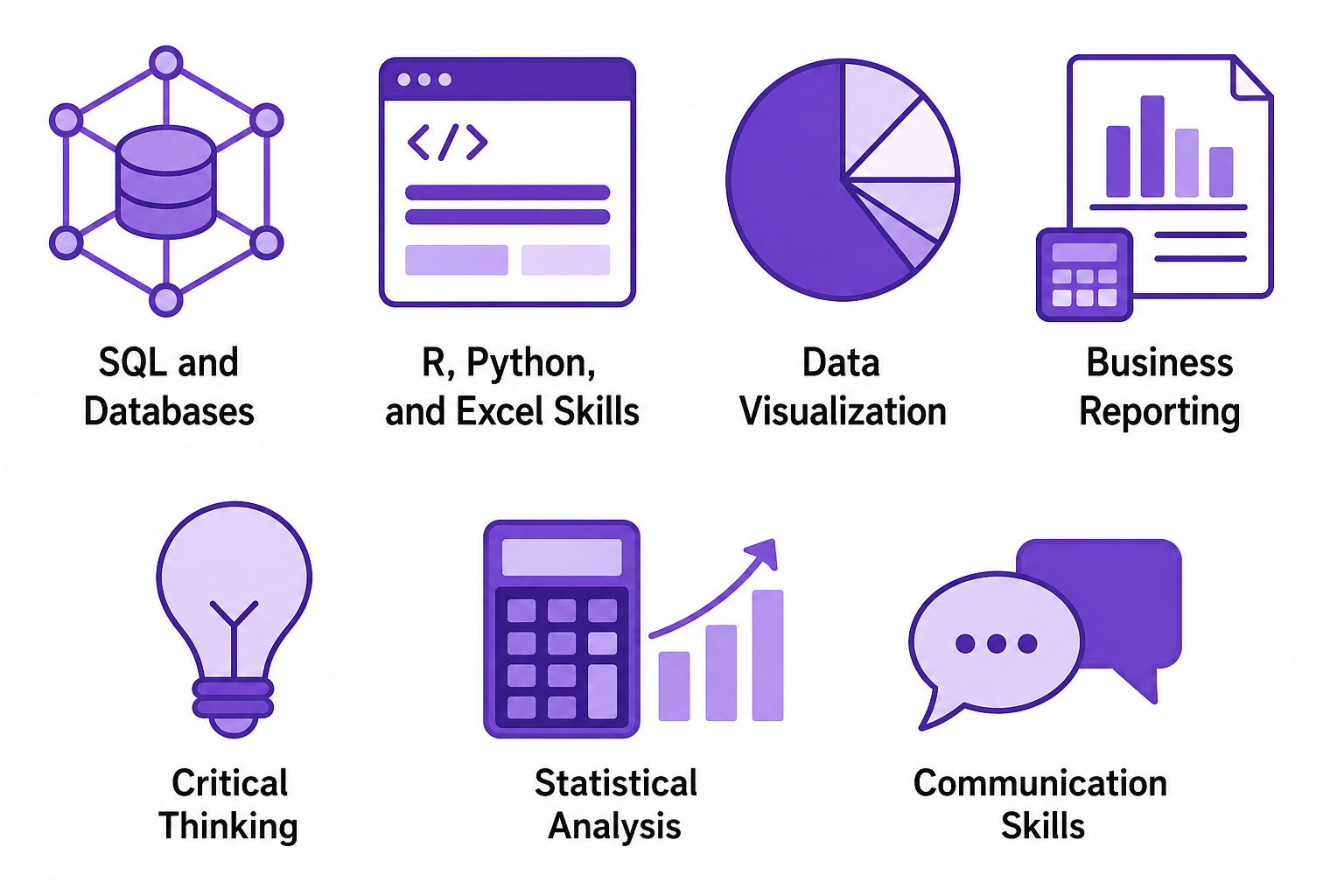
Essential Skills Required to Start a Data Analytics Career
Building a successful career in Data Analytics requires a combination of technical knowledge, analytical thinking, and practical problem-solving skills. Freshers should focus on mastering the core tools and concepts used across industries while continuously improving through hands-on practice. To avoid common beginner challenges and accelerate learning, it is also helpful to read Data Analytics Mistakes Freshers Make & How to Avoid Them.
- SQL Knowledge: SQL is one of the most important skills required in Data Analytics because it helps professionals retrieve, filter, and analyze information stored in databases. Strong SQL knowledge allows freshers to work effectively with real-world business data.
- Microsoft Excel Skills: Excel is widely used for organizing data, performing calculations, creating reports, and conducting basic analysis. Freshers should learn formulas, pivot tables, charts, and data management techniques.
- Programming Knowledge: Programming skills, especially Python, help analysts automate repetitive tasks and perform advanced data analysis. Python libraries such as Pandas and NumPy are commonly used for handling datasets.
- Statistics Understanding: Basic knowledge of statistics helps professionals understand data patterns, relationships, and trends. Concepts such as probability, averages, correlation, and data distribution are important for accurate analysis.
- Data Visualization Skills: Data visualization helps professionals present insights clearly using charts, graphs, and dashboards. Tools such as Power BI, Tableau, and Excel help convert complex information into understandable reports.
- Database Knowledge: Understanding databases helps freshers learn how data is stored, managed, and retrieved. Knowledge of database concepts improves efficiency while working with large datasets.
- Analytical Thinking: Analytical thinking helps professionals identify problems, study available information, and develop logical solutions. It is an essential skill for finding meaningful insights from data.
- Problem-Solving Skills: Data Analytics involves solving business challenges using available information. Strong problem-solving abilities help professionals analyze situations and recommend effective solutions.
- Communication Skills: Data professionals need communication skills to explain findings and insights to business teams. Clear presentation of analytical results helps organizations make better decisions.
- Business Understanding: Understanding business processes helps analysts connect data insights with real organizational goals. It allows professionals to focus on important metrics and provide valuable recommendations.
- Practical Project Experience: Working on real-world projects helps freshers apply their knowledge and develop confidence. Projects such as sales analysis, customer behavior analysis, and dashboard creation improve job readiness.
- Continuous Learning Ability: Data Analytics technologies continue to change with new tools and techniques. Freshers should continuously improve their skills through courses, certifications, and practical learning.
Want to Master Data Analytics? Explore the Data Analytics Master Program Offered at ACTE Today!
Factors to Consider While Choosing the Right Data Analytics Role
Choosing the right Data Analytics job role as a fresher is an important career decision because every role in the analytics field requires different skills, responsibilities, and areas of expertise. With multiple career options available, beginners may often feel confused about selecting the role that matches their interests and abilities. Understanding personal strengths, technical skills, career goals, and future opportunities helps freshers choose the most suitable career path and prepare effectively for the industry. The first factor to consider while selecting a Data Analytics role is personal interest and career preference. Freshers should identify the type of work they enjoy, whether it is analyzing data, solving business problems, developing technical solutions, creating visual reports, or working with advanced technologies. Candidates who enjoy working with datasets, identifying patterns, and creating reports may prefer the Data Analyst role, while those interested in business processes and communication may choose the Business Analyst role. Candidates who have strong interest in programming, artificial intelligence, and predictive analysis can explore Data Scientist roles, whereas those who enjoy databases, programming, and system development can consider Data Engineering opportunities. Skill requirements are another important factor when choosing the right Data Analytics career path. Different roles require different levels of technical knowledge and expertise. Entry-level roles such as Data Analyst and Business Analyst require skills such as SQL, Excel, data visualization, and basic analytics concepts, while advanced roles such as Data Scientist and Data Engineer require deeper knowledge of programming, machine learning, cloud computing, and database technologies. Freshers should evaluate their current skills and select a role where they can gradually improve their knowledge through learning and practice. Educational background can also influence career selection, but it should not limit opportunities because candidates from different fields can enter Data Analytics by developing the required skills. Students from computer science and engineering backgrounds may find programming-based roles easier, while candidates from mathematics, statistics, and business backgrounds may prefer analytical and business-focused positions. Career growth opportunities should also be considered before selecting a Data Analytics role. Freshers should understand the future possibilities available in each career path and choose a role that provides long-term professional development. Some professionals may progress from Data Analyst to Senior Analyst, Analytics Consultant, or Data Scientist, while others may grow from Data Engineer to Data Architect or Cloud Data Specialist. The tools and technologies used in each role are another important factor to consider. Data Analysts commonly work with SQL, Excel, Power BI, and Tableau, while Data Scientists use Python, machine learning frameworks, and statistical tools. Data Engineers work with databases, cloud platforms, and big data technologies. Understanding these tools helps freshers identify their interests and prepare themselves with the necessary technical knowledge. Industry demand and job opportunities are also important factors when choosing a Data Analytics role. Organizations across different sectors are increasingly adopting data-driven approaches, creating a high demand for professionals with analytics skills. Freshers should research job descriptions, required skills, and industry trends to understand which roles provide better opportunities based on their interests and abilities. Finally, continuous learning and practical experience are essential for success in any Data Analytics career. The field continues to evolve with new technologies and methods, so professionals need to regularly update their knowledge and improve their skills. By considering personal interests, technical abilities, career goals, growth opportunities, and industry requirements, freshers can choose the right Data Analytics role and build a successful long-term career in the data-driven industry. Beginners can also understand the complete career roadmap by reading How to Get Your First Job in Data Analytics.
Want to Learn About Data Analytics? Explore Our Data Analytics Interview Questions and Answers Featuring the Most Frequently Asked Questions in Job Interviews.
Career Growth Opportunities in Data Analytics for Freshers
Data Analytics provides excellent career growth opportunities for freshers because organizations across industries are increasingly adopting data-driven decision-making methods. In today’s digital world, companies generate huge amounts of data from customer interactions, online platforms, applications, business operations, and various digital systems. This increasing dependency on data has created a strong demand for professionals who can collect, analyze, interpret, and present information effectively. Freshers entering the Data Analytics field can explore multiple career paths based on their interests, technical skills, and career goals. The field allows beginners to start with entry-level positions and gradually progress into advanced roles with higher responsibilities and better career opportunities. Freshers generally begin their careers through roles such as Junior Data Analyst, Data Analyst Trainee, Business Analyst Trainee, Reporting Analyst, or Business Intelligence Analyst, where they gain practical experience in handling datasets, creating reports, developing dashboards, and understanding business requirements. During the initial stage, professionals focus on developing essential skills such as SQL, Excel, Python, statistics, data visualization, and database concepts. Working on real-world projects and solving practical business problems helps beginners improve their analytical abilities and gain confidence in applying their knowledge. With experience and continuous skill development, Data Analytics professionals can move into advanced positions such as Senior Data Analyst, Analytics Consultant, Business Intelligence Specialist, and Data Analytics Manager. These roles involve handling complex data, managing analytical projects, providing strategic insights, and supporting important business decisions. Professionals who develop advanced technical skills can also explore specialized career paths such as Data Scientist, Machine Learning Engineer, Artificial Intelligence Specialist, and Data Engineer. These roles require deeper knowledge of programming, machine learning, cloud technologies, statistical analysis, and large-scale data processing. Continuous learning is a major factor in achieving career growth in Data Analytics because technologies and tools are constantly evolving. Freshers need to regularly improve their skills by learning advanced analytics concepts, completing certifications, working on projects, and gaining practical experience. Knowledge of modern technologies such as artificial intelligence, machine learning, cloud computing, and big data platforms can create better career opportunities. Data Analytics professionals are required in various industries such as information technology, healthcare, banking, finance, retail, manufacturing, telecommunications, and e-commerce because every organization needs experts who can understand data and provide valuable insights. In the long term, professionals can progress into leadership positions such as Analytics Manager, Business Intelligence Manager, Data Strategy Consultant, and Chief Data Officer, where they guide teams and support organizations in making strategic decisions. With strong technical skills, business understanding, communication abilities, and continuous improvement, freshers can build a successful and rewarding career in the growing field of Data Analytics. Those planning long-term growth should also understand Data Analytics Salary Trends to set realistic career expectations.
Conclusion: Choosing the Right Data Analytics Career Path as a Fresher
Choosing the right Data Analytics job role as a fresher is an important step toward building a successful career in the rapidly growing technology industry. Data Analytics offers various career opportunities such as Data Analyst, Business Analyst, Business Intelligence Analyst, Data Scientist, and Data Engineer roles, where each position focuses on different aspects of collecting, managing, analyzing, and interpreting data. Since every role requires different skills, responsibilities, and technical knowledge, freshers should understand their interests, strengths, and career goals before selecting a specific path. Candidates who enjoy analyzing information, identifying patterns, and creating reports can consider starting their journey as Data Analysts, while those interested in business problem-solving and process improvement can explore Business Analyst roles. Freshers who enjoy visualization and reporting can choose Business Intelligence careers, whereas candidates interested in programming, artificial intelligence, and predictive analysis can gradually move toward Data Science roles. Similarly, individuals who enjoy database management, programming, and system development can consider Data Engineering opportunities. Building a successful career in Data Analytics requires continuous development of technical skills, analytical thinking, communication abilities, and practical experience. Skills such as SQL, Excel, Python, statistics, data visualization, database management, and business understanding help freshers prepare for industry requirements. Enrolling in a Data Analytics Course can further strengthen these skills through structured learning and practical exposure. Practical learning through internships, certifications, and real-world projects allows beginners to apply their knowledge and improve their job readiness. The future of Data Analytics is highly promising because organizations across industries are becoming more dependent on data for improving performance, understanding customers, reducing risks, and making strategic decisions. The growth of technologies such as artificial intelligence, machine learning, cloud computing, and big data continues to create new opportunities for analytics professionals. There is no single best Data Analytics role for every fresher because the right choice depends on individual interests, skills, learning ability, and career objectives. By understanding different job roles, developing the required skills, gaining practical experience, and continuously updating their knowledge, freshers can confidently choose the right Data Analytics career path and build a successful long-term career in the data-driven industry.