LMS
LMS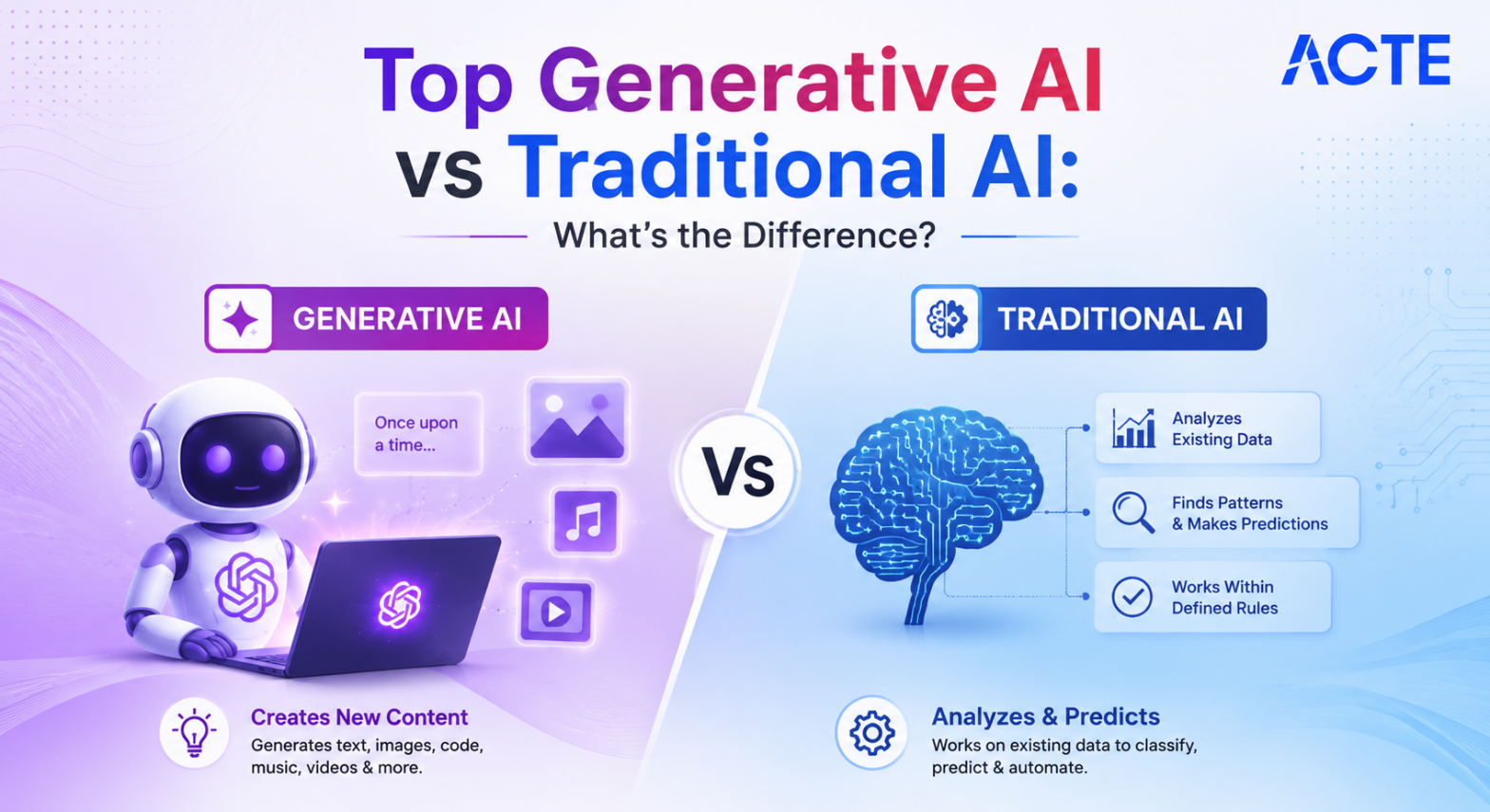
Last updated on 06th May 2026| 4592

- Introduction Gen AI vs Traditional AI
- Data Generation vs Pattern Recognition in Artificial Intelligence
- Predictable vs Creative Outputs in AI Systems
- Supervised Learning vs Unsupervised Creativity in AI
- Optimization vs Innovation in Artificial Intelligence
- Deterministic vs Probabilistic Nature of AI Models
- Domain-Specific vs Multimodal Capabilities in AI
- Human-Like Understanding vs Statistical Analysis in AI
- Conclusion
Introduction Gen AI vs Traditional AI
As artificial intelligence continues to evolve, understanding the difference between modern and conventional systems has become increasingly important, especially when discussing Gen AI vs Traditional AI. Traditional AI mainly focuses on analyzing data, following predefined rules, and making decisions based on programmed logic. It is commonly used in recommendation systems, fraud detection, and data classification tasks. In contrast, generative AI is designed to create new content such as text, images, audio, and even code by learning patterns from massive datasets. The debate around Gen AI vs Traditional AI has gained attention because both technologies serve different purposes in modern industries. Traditional AI works efficiently in structured environments where clear rules and historical data are available. However, generative AI introduces creativity and dynamic problem-solving capabilities that go beyond fixed automation. Tools powered by generative AI can assist in content creation, software development, and advanced customer interactions.
Data Generation vs Pattern Recognition in Artificial Intelligence
Data generation and pattern recognition are two important concepts in artificial intelligence and machine learning. Data generation focuses on creating new content such as text, images, music, or code using AI models. Pattern recognition focuses on identifying trends, structures, and relationships within existing data. Generative AI models like ChatGPT and Stable Diffusion are designed for data generation tasks. Traditional machine learning systems are mainly built for recognizing patterns and making predictions. Pattern recognition is commonly used in fraud detection, image classification, and recommendation systems. Data generation is more focused on creativity and content production. Both technologies rely on large datasets for training and improvement. Pattern recognition systems analyze input data to identify similarities and differences. Data generation models learn patterns and use them to create new outputs. Businesses use pattern recognition for analytics and decision-making processes. Generative systems are widely used in marketing, design, and automation. Pattern recognition usually produces analytical outputs based on existing information.
Data generation creates entirely new responses based on learned knowledge. Both approaches play a major role in modern AI applications. They are often combined in advanced AI systems for better performance. Understanding these differences helps developers choose the right AI solution. The future of AI will continue to blend generation and recognition technologies. Overall, both concepts are essential pillars of artificial intelligence development.
Ready to Pursue Your Gen AI Certificate? View The Gen AI Course Offered By ACTE Right Now!
Predictable vs Creative Outputs in AI Systems
Predictable outputs and creative outputs represent two different approaches in artificial intelligence systems. Predictable AI systems generate consistent and rule-based results from specific inputs. These systems are commonly used in calculations, recommendations, and automation tools. Creative AI systems are designed to produce original and dynamic content. Generative AI tools like DALL·E and ChatGPT are examples of creative output systems. Predictable systems focus on accuracy, reliability, and repeatable performance. Creative systems focus on innovation, imagination, and unique content generation. Businesses use predictable AI for financial analysis and operational tasks. Creative AI is used in content writing, image design, and music production. Predictable outputs are easier to test and validate because results remain stable. Creative outputs may vary depending on prompts and context. This variation makes creative AI more flexible and expressive. Predictable systems follow strict logic and structured rules. Creative systems learn patterns and generate new possibilities from them. Both types of AI have important applications across industries. Some modern AI tools combine predictable analysis with creative generation. This improves both efficiency and innovation in workflows. Understanding the balance between predictability and creativity is important in AI development. Overall, both approaches contribute significantly to the advancement of artificial intelligence.

Supervised Learning vs Unsupervised Creativity in AI
Supervised learning and unsupervised creativity are two major approaches used in artificial intelligence systems. Supervised learning involves training AI models using labeled datasets with known outputs. The system learns patterns and relationships from the provided examples. It is commonly used in classification, prediction, and recommendation tasks. Unsupervised creativity focuses on generating insights or content without explicit labels. Generative AI systems often use unsupervised or self-supervised learning techniques. Supervised learning is widely used in fraud detection and spam filtering applications. Unsupervised creativity is commonly seen in AI art, writing, and music generation tools. Supervised systems require human guidance and structured training data. Creative AI systems learn from large amounts of unstructured information. The goal of supervised learning is accuracy and prediction performance. The goal of creative AI is innovation and unique output generation. Both approaches rely heavily on machine learning algorithms and neural networks. Supervised learning is easier to evaluate because expected outputs are known.
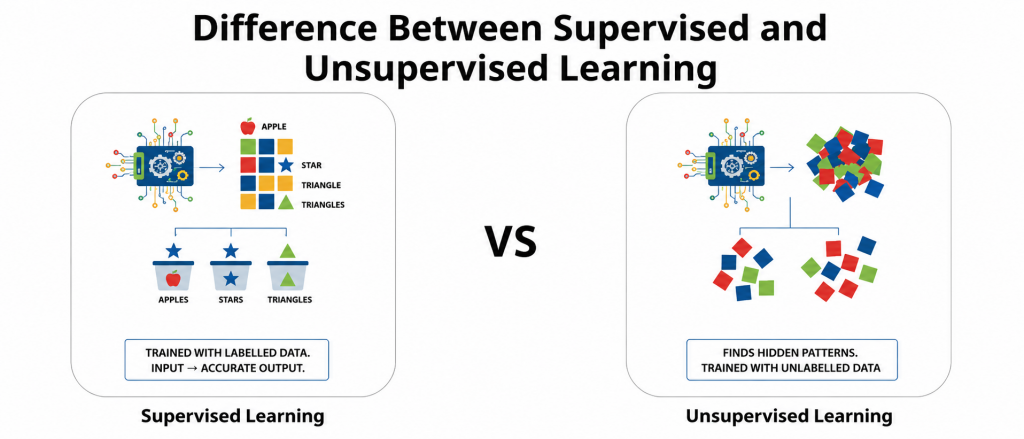
Creative systems are more difficult to measure due to subjective results. Many modern AI applications combine both learning methods for better performance. This combination helps create smarter and more adaptive systems. Understanding these methods is important for AI developers and researchers. They form the foundation of many modern AI technologies. Overall, supervised learning and unsupervised creativity play different but equally important roles in AI development.
Excited to Obtaining Your Gen AI Certificate? View The Gen AI Course Offered By ACTE Right Now!
Optimization vs Innovation in Artificial Intelligence
Optimization and innovation are two major goals in artificial intelligence and machine learning systems. Optimization focuses on improving efficiency, speed, and accuracy in existing processes. AI systems use optimization techniques to reduce errors and improve performance. Innovation focuses on creating new ideas, solutions, and creative outputs. Traditional AI systems are often built for optimization tasks such as prediction and automation. Generative AI models are more focused on innovation and content creation. Optimization is widely used in logistics, finance, and data analysis industries. Innovation is commonly applied in design, marketing, and creative industries. AI optimization helps businesses save time and operational costs. Innovative AI systems help generate unique ideas and digital content. Optimization follows structured rules and measurable outcomes. Innovation encourages experimentation and flexible thinking. Both approaches require large datasets and advanced algorithms. Businesses often combine optimization and innovation for better results. Optimized systems improve productivity while innovative systems drive creativity. Modern AI tools are increasingly capable of handling both functions together. This combination improves user experience and business efficiency. Understanding these concepts helps organizations implement AI effectively. The future of AI will depend on balancing optimization with innovation. Overall, both play a critical role in the growth of artificial intelligence technologies.
Deterministic vs Probabilistic Nature of AI Models
Deterministic and probabilistic approaches describe how artificial intelligence models generate outputs and make decisions. Deterministic systems produce the same output every time for the same input. These systems are predictable and follow fixed rules or logic. Probabilistic systems generate outputs based on probability and learned patterns. Generative AI models like ChatGPT work using probabilistic methods. Deterministic systems are commonly used in calculators and rule-based software. Probabilistic models are widely used in natural language processing and image generation. Deterministic outputs are stable and easy to verify. Probabilistic outputs can vary depending on context and randomness. This flexibility allows AI systems to produce more natural and creative responses. Deterministic models focus on precision and consistency. Probabilistic models focus on adaptability and prediction. Both methods are important in different areas of AI development. Businesses use deterministic systems for critical and sensitive operations. Probabilistic systems are used for conversational AI and recommendation engines. Modern AI often combines both approaches to improve reliability and flexibility. Understanding these concepts helps developers build more effective AI systems. The probabilistic nature of AI enables creativity and dynamic responses. Deterministic systems ensure control and predictable behavior. Overall, both approaches are essential in the evolution of artificial intelligence.
Are You Considering Pursuing a Gen AI Master’s Degree? Enroll For Data Analytics Expert Masters Program Training Course Today!
Domain-Specific vs Multimodal Capabilities in AI
Domain-specific AI and multimodal AI represent two different capabilities in artificial intelligence systems. Domain-specific AI is designed to perform tasks within a single industry or subject area. These systems are highly specialized and optimized for specific functions. Examples include medical diagnosis AI and financial prediction systems. Multimodal AI can process and understand multiple types of data simultaneously. It can work with text, images, audio, and video together. Tools like GPT-4 demonstrate multimodal capabilities. Domain-specific AI provides high accuracy within its focused area. Multimodal AI provides broader flexibility across different tasks and inputs. Businesses use domain-specific systems for precision and industry expertise. Multimodal systems are used for interactive applications and advanced automation. Domain-specific AI is easier to optimize for performance. Multimodal AI requires larger datasets and more computing power. Both approaches have unique advantages in AI development. Some companies combine both methods to create smarter systems. This helps achieve specialization along with broader understanding. Multimodal AI is becoming increasingly important in modern applications. It improves user interaction and cross-platform experiences. Understanding these capabilities helps organizations select the right AI solutions. Overall, both domain-specific and multimodal AI are shaping the future of intelligent technology.
Set to Ace Your AWS Job Interview? Check Out Our Blog on Data Analytics Interview Questions & Answer
Human-Like Understanding vs Statistical Analysis in AI
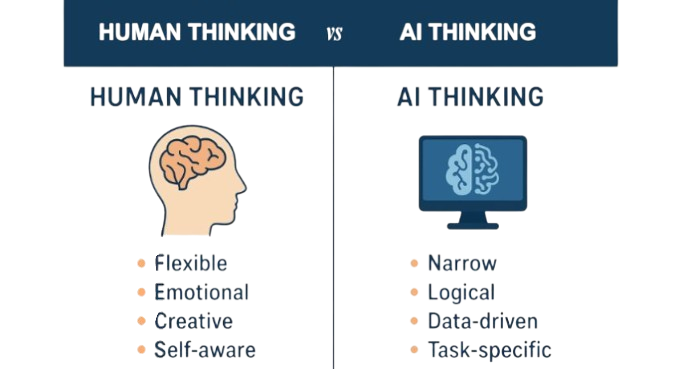
Human-like understanding and statistical analysis are two important concepts in artificial intelligence systems. Human-like understanding refers to AI systems that appear to understand language and context naturally. Statistical analysis focuses on identifying patterns and probabilities from large datasets. AI models like ChatGPT simulate human conversation using statistical learning methods. They do not truly think like humans but generate responses based on learned patterns. Statistical analysis is the core foundation behind most machine learning systems. Human-like AI aims to improve interaction and communication with users. Statistical AI focuses more on predictions, classifications, and data-driven decisions. Businesses use statistical models for forecasting and analytics tasks. Human-like systems are widely used in chatbots and virtual assistants. Human-like understanding improves user engagement and experience. Statistical analysis improves accuracy and decision-making efficiency.
Conclusion
The comparison between Gen AI vs Traditional AI highlights how artificial intelligence has evolved from rule-based systems to creative and adaptive technologies. Traditional AI remains highly effective for tasks that require structured analysis, decision-making, and pattern recognition. It plays a major role in automation, business intelligence, and predictive systems. On the other hand, generative AI expands possibilities by producing human-like content, designs, and solutions through advanced learning models. The discussion around Gen AI vs Traditional AI is important because it helps individuals and organizations understand which technology best fits their needs. Traditional AI offers reliability and efficiency in controlled environments, while generative AI provides flexibility and innovation in creative tasks. Together, they are transforming industries and redefining digital workflows. Businesses are increasingly combining both approaches to improve productivity and user experiences.