LMS
LMS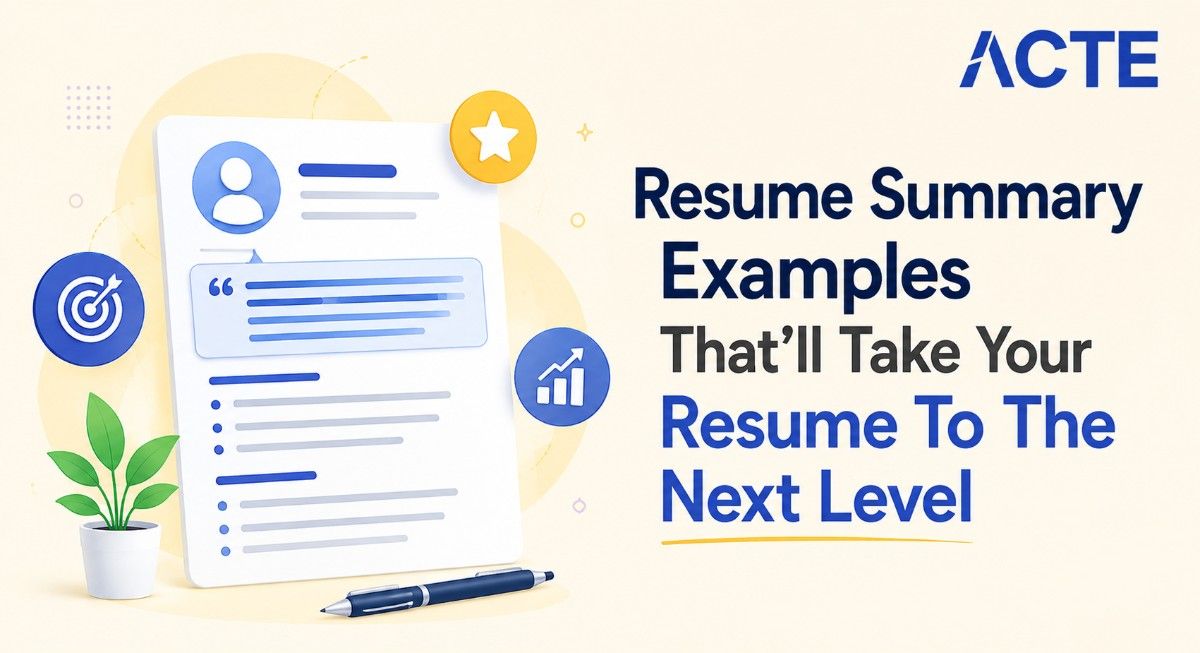
Last updated on 25th Jul 2026| 8202

- Introduction to Resume Summaries
- Why a Strong Resume Summary Matters
- Resume Summary vs Resume Objective
- Key Elements of an Effective Resume Summary
- How to Write a Resume Summary Step by Step
- Resume Summary Examples for Freshers
- Resume Summary Examples for Experienced Professionals
- Resume Summary Examples for Different Job Roles
- Common Mistakes to Avoid in Resume Summaries
- Conclusion: Crafting a Summary That Gets You Hired
Introduction to Resume Summaries
A resume summary is a short, powerful section placed at the very top of a resume, right below the candidate’s name and contact details, and it plays a crucial role in shaping the first impression a recruiter forms within the first few seconds of scanning a document. Unlike the rest of the resume, which is organized into sections such as education, skills, and experience, the summary condenses the candidate’s entire professional identity into three or four impactful sentences. It answers the recruiter’s most immediate question: why should this candidate be considered for the role? A well-written summary highlights years of experience, core skills, notable achievements, and career direction in a way that immediately signals relevance to the job description. For freshers, it becomes an opportunity to communicate potential, academic strengths, and eagerness to contribute, even without extensive work history. For example, candidates who have completed a Full Stack Developer Course can use their resume summary to briefly highlight relevant development skills, practical projects, and technical knowledge while demonstrating their readiness for entry-level opportunities. For experienced professionals, it becomes a chance to showcase measurable accomplishments and specialized expertise that set them apart from other applicants. Given that recruiters and hiring managers often spend only a few seconds on an initial resume scan, the summary functions as a strategic preview that determines whether the rest of the document gets read at all. This makes mastering the art of writing a compelling, tailored resume summary one of the most valuable skills a job seeker can develop, regardless of their industry, experience level, or career stage, because it directly influences whether an application advances to the next stage of the hiring process.
Why a Strong Resume Summary Matters
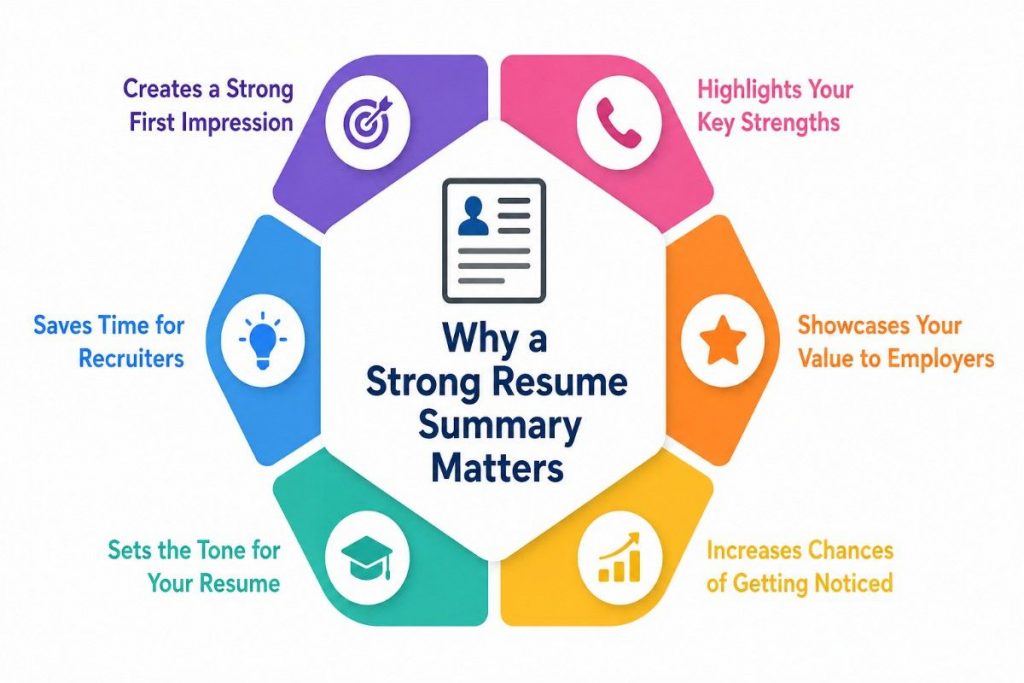
The importance of a resume summary cannot be overstated in today’s competitive job market, where recruiters often review dozens or even hundreds of applications for a single opening and rely heavily on quick visual scanning rather than detailed reading. A strong summary acts as a hook that captures attention immediately, encouraging the recruiter to continue reading the rest of the resume with genuine interest rather than skimming past it. It also serves as a filter that helps recruiters quickly determine whether a candidate’s background aligns with the requirements of the role, saving time for both parties in the hiring process. Beyond capturing attention, a well-crafted summary demonstrates communication skills, self-awareness, and the ability to synthesize complex information into a concise, digestible format, all of which are qualities that employers value across nearly every profession.
Get Your Full Stack Certification by Learning from Industry-Leading Experts and Advancing Your Career with ACTE’s Full Stack Course.
Resume Summary vs Resume Objective
Many candidates confuse the resume summary with the resume objective, but the two serve fundamentally different purposes and are suited to different stages of a career. A resume objective focuses on what the candidate wants to achieve, typically expressing career goals and the type of role being sought, and it was historically popular when resumes were used primarily to state intentions rather than demonstrate value. A resume summary, in contrast, focuses on what the candidate can offer the employer, emphasizing skills, achievements, and experience that directly benefit the organization. Modern recruiters generally prefer summaries because they are results-oriented and immediately communicate value rather than simply stating aspirations. Objectives are still occasionally useful for career changers or students with very limited experience who need to explain a shift in direction, but for most candidates, especially those applying to internships or professional roles, a summary creates a stronger and more persuasive first impression. For instance, candidates who have completed a Full Stack Developer Course can use a resume summary to emphasize their technical skills, development projects, and practical experience rather than simply stating their career aspirations. Choosing between the two ultimately depends on the candidate’s experience level and the message they want to send: a summary says “here is what I bring to the table,” while an objective says “here is what I am looking for.” Understanding this distinction helps job seekers select the format that best supports their overall resume strategy and align it with current hiring expectations across most industries and job functions.

Key Elements of an Effective Resume Summary
- Professional Title or Identity: A strong summary often begins by clearly stating the candidate’s professional identity, such as “Detail-oriented Data Analyst” or “Aspiring Embedded Systems Engineer.” This immediately tells the recruiter who they are looking at and sets the context for everything that follows in the resume.
- Years of Experience or Academic Background: Mentioning relevant experience, internships, or academic qualifications establishes credibility early. For freshers, this may include degree specialization and relevant coursework, while experienced professionals should state the number of years worked in the field.
- Core Skills and Technical Expertise: Highlighting two or three of the most relevant skills, tools, or technologies ensures the summary is tailored to the specific job description and passes both human and automated screening effectively. Candidates can also refer to this ATS Resume Guide to better understand how keywords and resume structure support applicant tracking system compatibility.
- Measurable Achievements: Wherever possible, including a quantifiable accomplishment such as improved efficiency, project outcomes, or academic distinctions adds credibility and makes the summary far more persuasive than a generic statement.
- Career Goals Aligned with the Role: A brief closing line connecting the candidate’s aspirations to the specific position or company demonstrates genuine interest and helps the summary feel tailored rather than copy-pasted from a template.

Get JOB Oriented Full Stack Training for Beginners By MNC Experts
- Instructor-led Sessions
- Real-life Case Studies
- Assignments
How to Write a Resume Summary Step by Step
Writing an effective resume summary begins with thoroughly reviewing the job description to identify the specific skills, qualifications, and keywords the employer is prioritizing, since this information should directly shape the language and focus of the summary. The next step involves listing out the candidate’s most relevant achievements, skills, and experiences, even if they come from academic projects, internships, or coursework rather than formal employment, because relevance matters more than the source of the experience. Once this raw material is gathered, the candidate should draft an opening sentence that establishes their professional identity and area of specialization in a confident, concise manner. The following one or two sentences should highlight specific skills and, ideally, a measurable achievement that demonstrates the practical application of those skills in a real context. The final sentence typically connects the candidate’s strengths to the value they intend to bring to the prospective employer, creating a natural transition into the rest of the resume. Throughout this process, it is essential to avoid vague, overused phrases such as “hardworking team player” without supporting evidence, and instead focus on specific, verifiable details that distinguish the candidate from others applying for the same role. Reviewing common issues highlighted in 10 Mistakes That Will Get Your Resume Rejected can also help candidates identify and eliminate errors that may weaken an otherwise strong resume. Finally, the summary should be revised and shortened until it fits within three to four sentences, since brevity combined with substance is what makes a summary genuinely effective in capturing recruiter attention.
Resume Summary Examples for Freshers
Freshers often worry that limited work experience makes it difficult to write a compelling summary, but academic projects, internships, and technical skills can be framed just as powerfully as professional experience when presented with confidence and specificity. The key for freshers is to emphasize their educational background, hands-on project work, technical proficiency, and eagerness to apply their knowledge in a professional setting, rather than trying to imitate the experience-heavy summaries written by seasoned professionals. A strong fresher summary typically mentions the degree and specialization, highlights one or two standout academic or personal projects, references specific tools or programming languages learned during study, and closes with a statement of enthusiasm for contributing to the prospective employer. For example, a computer science graduate who has completed a Full Stack Developer Course can highlight web development skills, programming languages, frameworks, and practical projects to demonstrate technical readiness. A computer science fresher might emphasize proficiency in specific programming languages alongside a personal or academic project that solved a real problem, while a business or commerce graduate might focus on analytical skills developed through coursework and case studies. Regardless of the discipline, freshers should avoid generic statements and instead anchor their summary in specific, verifiable details that show recruiters exactly what they bring to the table, even at an early career stage where formal work experience is naturally limited.
Want to Master Full Stack? Explore the Full Stack Master Program Offered at ACTE Today!
Resume Summary Examples for Experienced Professionals
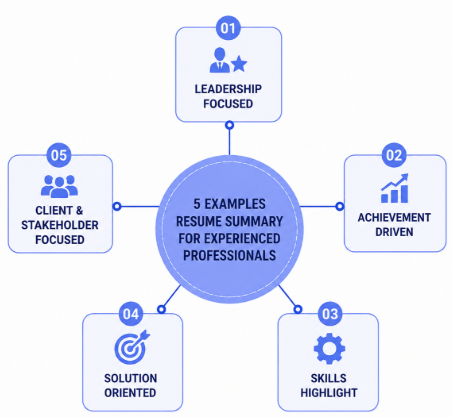
For experienced professionals, the resume summary carries a different weight because recruiters expect concrete evidence of impact rather than potential alone, making measurable achievements the centerpiece of an effective summary at this career stage. An experienced candidate should open with their job title and total years of relevant experience, followed by a sentence that highlights a significant accomplishment, ideally supported by numbers such as percentage improvements, revenue impact, team size managed, or efficiency gains achieved through their work. The summary should also reflect specialization, since hiring managers are often looking for candidates with deep expertise in a specific area rather than generalists, and naming that specialization clearly helps position the candidate appropriately for the role. Leadership experience, cross-functional collaboration, and the ability to manage complex projects are additional elements worth highlighting for mid-level and senior professionals, as these qualities distinguish candidates who are ready for greater responsibility.
Resume Summary Examples for Different Job Roles
| Job Role | Focus Area in Summary | Key Elements to Highlight |
|---|---|---|
| Data Analyst | Analytical and technical skills | SQL, Excel, data visualization, insights delivered |
| Software Developer | Programming and problem-solving | Languages known, projects built, coding efficiency |
| Embedded Systems Engineer | Hardware and firmware expertise | Microcontrollers, C programming, IoT projects |
| Marketing Executive | Campaign and growth impact | Engagement growth, campaign results, tools used |
| Human Resources Associate | People management and coordination | Recruitment cycles managed, onboarding, retention |
| QA Tester | Quality assurance and process rigor | Bugs identified, testing tools, defect reduction |
| Business Analyst | Requirement gathering and strategy | Stakeholder communication, process improvement |
Want to Learn About Full Stack? Explore Our Full Stack Interview Questions and Answers Featuring the Most Frequently Asked Questions in Job Interviews.
Common Mistakes to Avoid in Resume Summaries
- Using Generic, Overused Phrases: Phrases like “hardworking team player” or “passionate professional” without supporting evidence add little value and fail to differentiate a candidate from hundreds of similar applicants.
- Writing in the First Person: Resume summaries are typically written without personal pronouns such as “I” or “my,” using an implied first-person tone instead to maintain a professional, resume-appropriate style throughout.
- Making It Too Long: A summary that exceeds four or five sentences defeats its purpose, since recruiters expect a brief, scannable overview rather than a lengthy paragraph that mirrors the rest of the resume.
- Failing to Tailor for Each Application: Using the exact same summary for every job application, regardless of role or industry, reduces relevance and weakens the candidate’s chances of passing keyword-based screening.
- Omitting Measurable Results: Vague claims of skill without any quantifiable evidence make it difficult for recruiters to gauge actual impact, especially for experienced candidates who have accomplishments worth quantifying.
Conclusion: Crafting a Summary That Gets You Hired
A resume summary, though only a few sentences long, carries disproportionate weight in determining whether a candidate’s application receives serious consideration, making it one of the most important sections to refine before submitting any job application. Whether written by a fresher highlighting academic projects and technical foundations or by an experienced professional showcasing measurable career achievements, the most effective summaries share common traits: they are specific, tailored to the target role, free of generic filler language, and structured to immediately communicate value to the reader. By understanding the difference between a summary and an objective, incorporating the right combination of professional identity, skills, and achievements, and avoiding common pitfalls such as vague language or excessive length, candidates can transform this small section into one of the most persuasive parts of their entire resume. For example, candidates who have completed a Full Stack Developer Course can strengthen their summary by highlighting relevant programming skills, development projects, frameworks, and practical experience aligned with the target role. As hiring processes continue to rely on both automated systems and quick human judgment, investing time in crafting a sharp, results-oriented summary is no longer optional but essential for standing out in a crowded and competitive job market.