LMS
LMS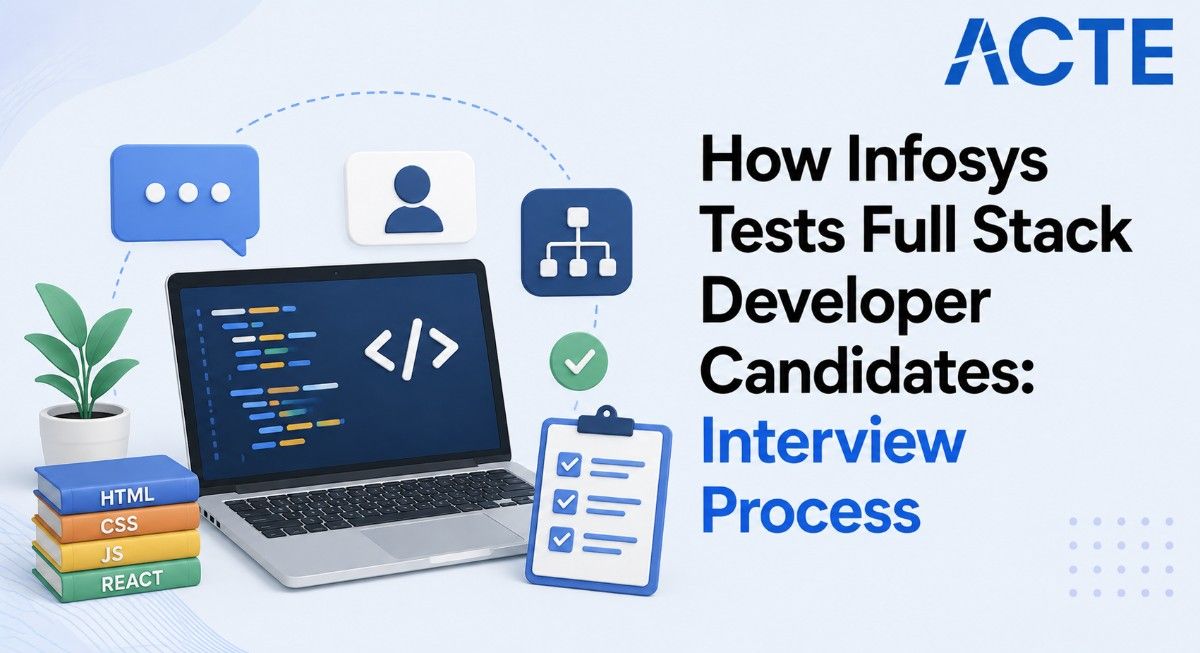
Last updated on 11th Aug 2026| 9258

- Introduction to the Infosys Full Stack Developer Interview Process
- Understanding Infosys Hiring and Selection Stages
- Preparing for the Infosys Online Assessment
- Coding and Problem-Solving Round for Full Stack Developers
- Frontend Development Skills Tested by Infosys
- Backend Development, APIs, and Database Questions
- Project-Based and Real-World Technical Questions
- HR, Behavioral, and Communication Interview Preparation
- Common Mistakes and Tips for Infosys Full Stack Interviews
- Conclusion: Successfully Preparing for an Infosys Full Stack Developer Career
Introduction to the Infosys Full Stack Developer Interview Process
The Infosys Full Stack Developer interview process is designed to evaluate a candidate’s programming knowledge, problem-solving ability, technical skills, communication, and overall suitability for software development roles. The exact selection process can vary depending on the job position, experience level, hiring program, and business requirements. Freshers may be assessed through online tests, coding exercises, technical interviews, and HR or behavioral discussions. Candidates are generally expected to demonstrate knowledge of programming fundamentals, data structures, algorithms, databases, web development, APIs, and software engineering concepts. For full stack roles, additional focus may be placed on frontend technologies such as HTML, CSS, JavaScript, React, or Angular, along with backend technologies such as Java, Spring Boot, .NET, Node.js, and database systems. Candidates preparing for these requirements can strengthen their practical knowledge through a Full Stack Developer Course, which can help build skills across frontend, backend, databases, and application development. Understanding the interview structure beforehand helps candidates prepare efficiently and approach each stage with greater confidence.
Understanding Infosys Hiring and Selection Stages
Infosys may use multiple assessment stages to evaluate candidates before making a final hiring decision. Depending on the recruitment route, the process can begin with an application and resume screening, followed by an online assessment that evaluates aptitude, logical reasoning, verbal ability, and programming skills. Candidates who meet the required criteria may progress to technical or coding assessments. The technical interview generally evaluates programming fundamentals, data structures, databases, object-oriented programming, web technologies, and project knowledge. Full stack candidates may also be asked about frontend frameworks, backend development, REST APIs, authentication, database connectivity, and application architecture. A behavioral or HR round may assess communication, teamwork, career goals, adaptability, and workplace attitude. Some roles may include additional technical discussions or project-based assessments. Since the exact stages can differ, candidates should carefully review the job description and recruitment communication received for their specific application. Preparing for each potential stage ensures that freshers are ready to demonstrate both technical capability and professional skills. Candidates can also learn more about the Infosys Full Stack Developer Interview Process to understand the technical and interview areas they may encounter.
Get Your Full Stack Certification by Learning from Industry-Leading Experts and Advancing Your Career with ACTE’s Full Stack Course.
Preparing for the Infosys Online Assessment
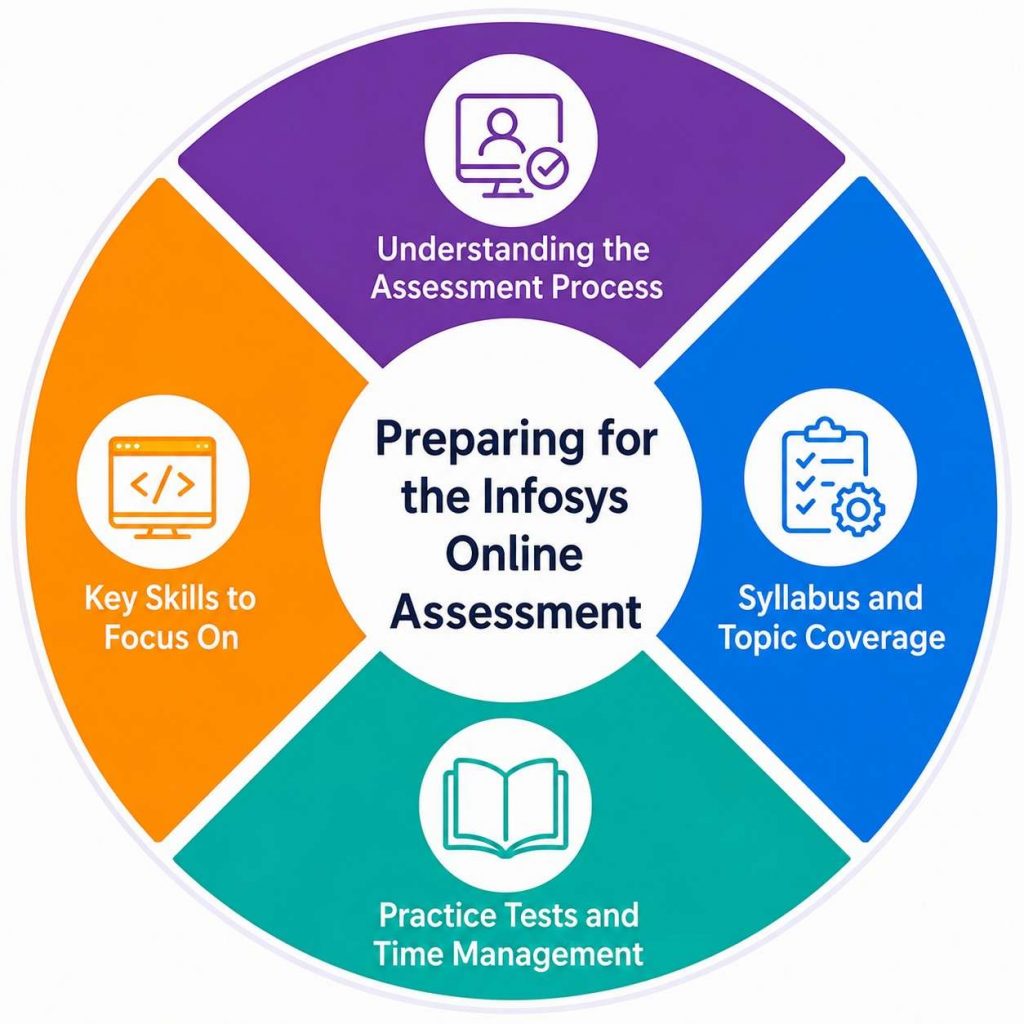
The Infosys online assessment is an important stage where candidates may be evaluated on aptitude, reasoning, verbal ability, and programming or technical skills, depending on the hiring program. Freshers should prepare quantitative aptitude topics such as percentages, ratios, averages, probability, time and work, numerical reasoning, and basic data interpretation. Logical reasoning preparation should cover patterns, sequences, coding-decoding, arrangements, logical puzzles, and analytical reasoning. Candidates should also improve reading comprehension, grammar, vocabulary, and written communication for verbal sections.

Coding and Problem-Solving Round for Full Stack Developers
The coding and problem-solving round evaluates how effectively candidates can analyze programming challenges and develop correct and efficient solutions. Full Stack Developer candidates should be comfortable with at least one programming language such as Java, Python, JavaScript, or another language relevant to the position. Important topics include arrays, strings, linked lists, stacks, queues, hash tables, sorting, searching, recursion, and basic algorithms. Candidates should focus on understanding the logic behind a solution rather than memorizing code. Interviewers may also evaluate time and space complexity, debugging ability, edge-case handling, and the candidate’s ability to explain their approach. Practicing coding problems regularly can improve problem-solving speed and confidence. Candidates can also strengthen their practical development knowledge through a Full Stack Developer Course, helping them build a stronger foundation across programming and application development. In addition to algorithmic questions, candidates should understand object-oriented programming, databases, APIs, and basic web development concepts relevant to full stack roles. During an interview, it is helpful to clarify requirements, explain the approach before coding, test the solution with examples, and discuss possible improvements. This structured approach demonstrates both programming ability and professional problem-solving skills.
Frontend Development Skills Tested by Infosys
- HTML and CSS Fundamentals Candidates should understand HTML structure, semantic elements, forms, CSS selectors, layouts, Flexbox, Grid, and responsive design. Interviewers may test how effectively candidates create accessible and mobile-friendly web interfaces.
- JavaScript Programming Concepts Prepare variables, functions, arrays, objects, events, DOM manipulation, promises, async/await, ES6 features, and error handling. Candidates should also be able to explain how JavaScript supports interactive application development.
- React and Angular Fundamentals Review components, props, state, lifecycle concepts, routing, forms, services, and API integration. Candidates may be asked to explain how they use React or Angular to build maintainable and reusable frontend applications.
- Responsive and User-Friendly Design Understand responsive layouts, browser compatibility, accessibility, and basic frontend performance optimization. Candidates should know how to create interfaces that provide consistent experiences across desktops, tablets, and mobile devices. Candidates can further strengthen their preparation by exploring Full Stack Developer Role, which provides additional insights into the responsibilities and technical expectations of full stack development.

Get JOB Oriented Full Stack Training for Beginners By MNC Experts
- Instructor-led Sessions
- Real-life Case Studies
- Assignments
Backend Development, APIs, and Database Questions
- Java, Spring Boot, or Node.js Prepare core concepts of your chosen backend technology, including object-oriented programming, application architecture, error handling, and service development. Be ready to explain how backend components support frontend applications.
- REST API Development Understand HTTP methods, status codes, JSON, authentication, validation, error handling, and API design. Candidates may be asked to explain how frontend applications communicate with backend services through RESTful APIs.
- SQL and Database Concepts Review queries, joins, subqueries, indexes, constraints, normalization, transactions, and database design. Candidates should be able to write SQL queries and explain how applications store and retrieve data efficiently.
- NoSQL Database Knowledge Understand basic concepts of MongoDB or other NoSQL databases, including collections, documents, flexible schemas, and suitable use cases. Be prepared to compare relational and NoSQL database approaches.
Want to Master Full Stack? Explore the Full Stack Master Program Offered at ACTE Today!
Project-Based and Real-World Technical Questions
- Explaining Your Project Architecture Candidates should be able to describe their project’s purpose, overall architecture, technologies used, database structure, APIs, frontend components, and personal responsibilities. A clear explanation demonstrates practical understanding and hands-on development experience.
- Discussing Technical Challenges Interviewers may ask candidates to describe difficulties they faced while developing a project and the solutions they implemented. Prepare examples related to debugging, application performance, API failures, database issues, or integrating different technologies.
- Justifying Technology Selection Be prepared to explain the reasons behind choosing a specific programming language, framework, database, or architectural approach. Discuss factors such as performance, scalability, maintainability, limitations, and project requirements.
- Testing and Deployment Experience Explain how you tested your application, identified and fixed defects, managed source code, and deployed the project. Familiarity with Git, CI/CD pipelines, cloud services, containers, and application monitoring can demonstrate stronger practical knowledge.
HR, Behavioral, and Communication Interview Preparation
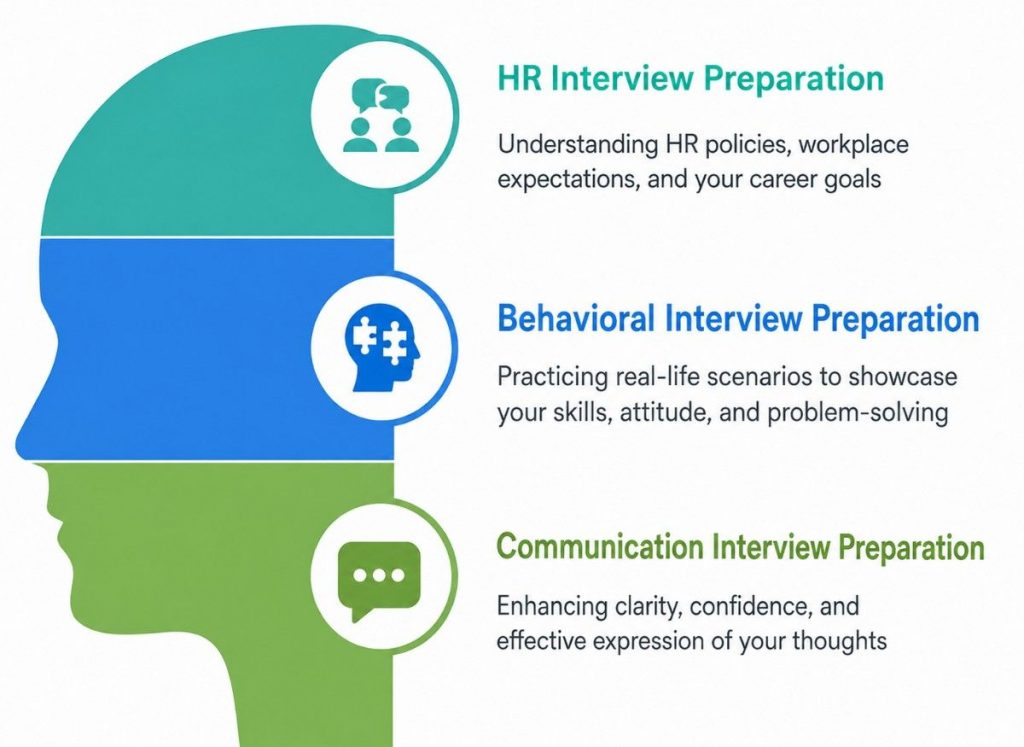
- Introducing Yourself Professionally Prepare a concise introduction covering your education, technical skills, projects, internships, achievements, and career interests. Keep the response structured and relevant to the Full Stack Developer position.
- Discussing Strengths and Weaknesses Prepare genuine examples that demonstrate strengths such as problem-solving, teamwork, adaptability, or learning ability. When discussing weaknesses, explain the steps you are taking to improve them.
- Answering Teamwork Questions Be prepared to discuss situations involving collaboration, disagreements, deadlines, or shared responsibilities. Use specific examples to demonstrate communication, cooperation, accountability, and professional behavior. Developing these skills alongside technical knowledge can be supported through a Full Stack Developer Course, where learners can build practical development and project experience.
- Explaining Career Goals Clearly communicate your short-term and long-term goals and explain how the Full Stack Developer role aligns with your interests. Show enthusiasm for continuous learning and professional development.
- Demonstrating Communication Skills Speak clearly, listen carefully, and organize answers logically. During technical discussions, explain your reasoning instead of providing only short answers, as effective communication is important in development teams.
Want to Learn About Full Stack? Explore Our Full Stack Interview Questions and Answers Featuring the Most Frequently Asked Questions in Job Interviews.
Common Mistakes and Tips for Infosys Full Stack Interviews
Candidates preparing for Infosys Full Stack Developer interviews can improve their performance by avoiding several common preparation mistakes. Focusing exclusively on frontend or backend development is one such mistake, as full stack roles require a balanced understanding of programming, HTML, CSS, JavaScript, frontend frameworks, backend technologies, databases, APIs, Git, testing, and basic cloud concepts. Another common issue is memorizing answers instead of understanding the concepts behind them. Interviewers may introduce practical scenarios or modify questions, making conceptual knowledge more valuable than memorized responses. Candidates should also avoid overlooking data structures, algorithms, SQL, and object-oriented programming, as these areas can be important during technical assessments. It is equally important to have a strong understanding of every project listed on the resume. Candidates should be ready to explain the project architecture, technologies used, challenges encountered, solutions implemented, and their individual contributions. Communication and confidence also play an important role, so answers should be clear, structured, and supported with relevant examples. Regular coding practice, technical revision, mock interviews, and project discussions can help candidates prepare more effectively. Candidates can also review Difference Between Full Stack and Software to better understand the responsibilities and technical expectations associated with full stack development roles. Finally, candidates should carefully review the specific Infosys job description and prioritize the technologies and skills mentioned for the position. Combining technical preparation with strong communication, professional behavior, and practical project knowledge can help candidates approach the interview with greater confidence.
Conclusion: Successfully Preparing for an Infosys Full Stack Developer Career
Preparing for an Infosys Full Stack Developer career requires a combination of technical knowledge, practical experience, problem-solving ability, and effective communication. Freshers should build strong foundations in programming and gradually develop expertise in frontend technologies, backend frameworks, databases, REST APIs, testing, version control, and cloud concepts. Working on real-world projects is especially valuable because it allows candidates to demonstrate how they apply theoretical knowledge to practical development challenges. Candidates looking to strengthen these skills can consider a Full Stack Developer Course to gain structured learning and practical exposure. Candidates should also prepare systematically for online assessments, coding rounds, technical interviews, project discussions, and HR interactions. Maintaining an updated resume that highlights relevant skills, projects, certifications, internships, and achievements can help create a stronger professional profile. Continuous practice with coding problems, SQL queries, debugging exercises, and technical interview questions can improve confidence and readiness. Beyond technical capabilities, communication, teamwork, adaptability, and willingness to learn are important qualities for succeeding in a professional software development environment. By following a structured preparation strategy and continuously improving their skills, freshers can approach Infosys Full Stack Developer interviews with greater confidence and build a strong foundation for long-term growth in software development.